Buy the book here.


Busy run-up
I set off for the 14th edition of my own special marathon with a hunch that things were going to go well, although not with the same level of conviction as the year before. Some of the kilos, I had lost had found their way back again, and I had been particularly busy at work and therefore hadn’t spent as much time training. Travelling to Chile had also taken up a couple of weeks in my calendar.
Reunion with Jamie
We landed at Beijing Airport on the morning of Wednesday 15th May, where we immediately found familiar faces. Our guide was Jens Peter, whom I got to know the year before, and Jakob was there as well as a guide for another group. And then there was a reunion with Jamie after two years. A job had taken her away from Beijing in 2012, but now she was back. The hotel was also familiar: I was very pleased indeed to be back at the Qianmen.
Jamie had already organised an evening for the two of us. We drove to her former college, which we also visited two years previously. This time we enjoyed a delicious meal, finishing off with Peking duck in the company of old friends and her former teachers.

Back at the Yuyang
After inspection day at the Wall on the Thursday, we arrived in Jixian, where we once again were to stay at the Jixian Yuyang Hotel. There were problems with the Internet as always, although this time they were solved. Whether the hotel had actually improved over the years, or whether I had simply become accustomed to the standard is hard to say. But that year I thought it was actually very nice to stay there.
Not much happened on the day before the marathon. Jamie and I went for a run, but otherwise spent most the time relaxing. After the evening pasta dinner, Jamie and I went out with her girlfriends for a stroll around town and enjoyed ice cream at a cosy restaurant.
Fantastic running weather
On marathon day, 18th May, we were blessed with the best possible weather ever. It was not cold in the morning, which may have betokened a hot day. But this was not the case.
I intended to run with my GoPro® camera headband throughout this marathon, just as I had done for the two races in February, and Francis from www.marathonphoto.com asked if he might have a copy of my video footage after the run. He was going to make a video and believed that my footage would make a good contribution. In return, I would be given photos of myself taken during the race.
Start delayed
The start of the marathon became unnecessarily hectic. Jamie had one of her girlfriends with her, who was going to video us during the start and look after our bags, so we didn’t have to leave them at the repository. But just as we were about to start, the girlfriend disappeared. It turned out that she had gone to the toilet, so we had to wait for her. We were to have started in group 1, but had now been delayed by a couple of minutes in relation to the official start.
Stronger than Jamie this time
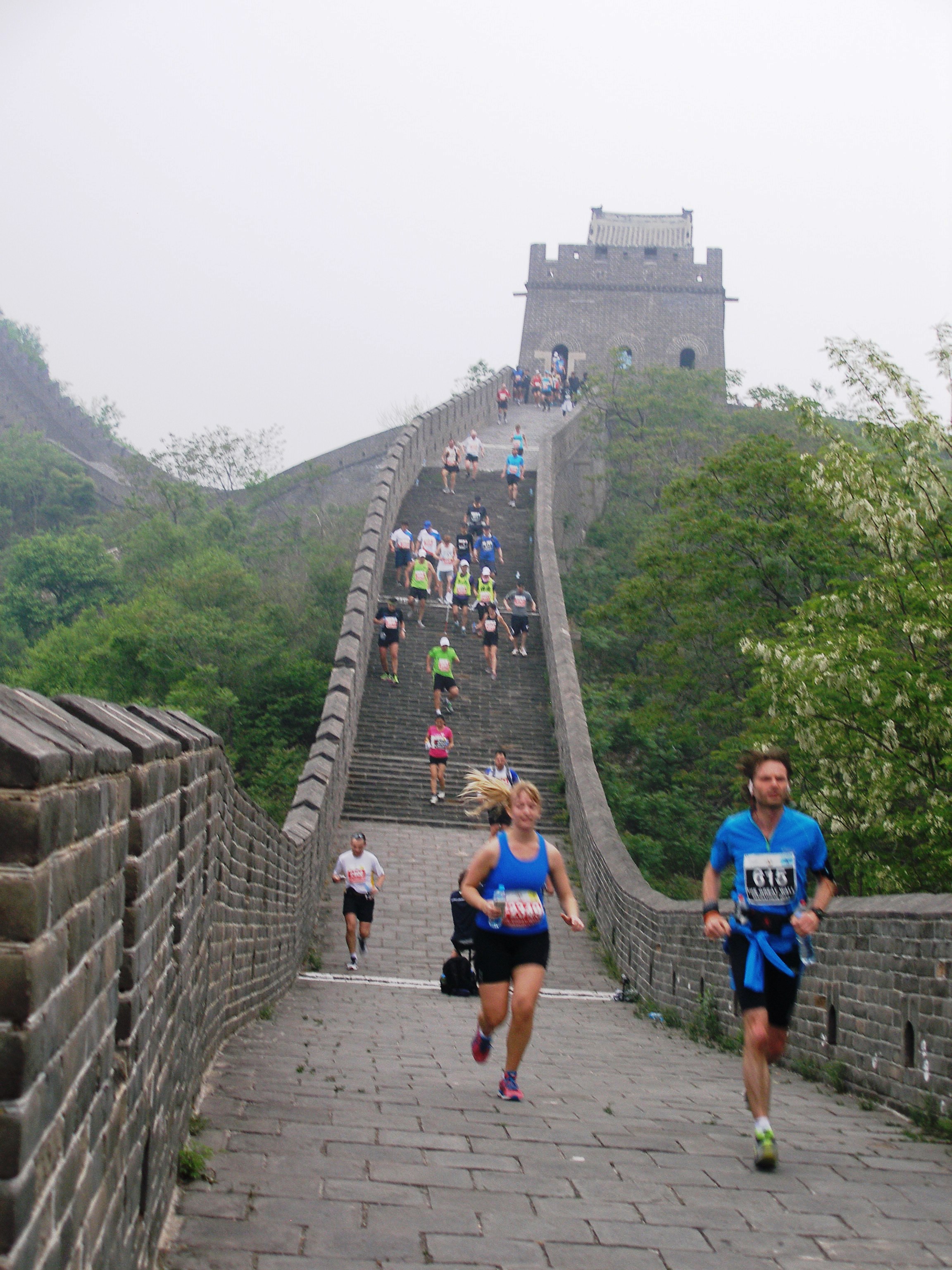
Jamie and I ran together as we had done two years previously, but this time I was a stronger runner. She slowed to a walk quite early in the race, and I had to wait for her several times. Shortly after we had crossed the Wall and passed Yin and Yang Square, I lost sight of Jamie and didn’t see her again before she crossed the finishing line that afternoon.
Although it would have been nice to run together with Jamie, it was also a relief to be able to run my own race. From then on, everything surpassed my expectations. The weather was fantastic. It wasn’t hot but slightly cloudy. Absolutely perfect. There is not much to tell about the run itself. Everything went completely according to plan. I had no crises and was in high spirits all the way to the finish.
Blind runner
On the way down the last steps on the Wall, I passed two very unusual Japanese runners. One of them was blind and was running with a white cane, and the other was his guide. You could hear the guide’s voice all the time as he precisely guided his partner down each of the steps.
The easiest Wall ever
My second crossing of the Wall went well beyond expectations. Never before had running The Great Wall Marathon been so “easy”. On the way down the mountainside, I rolled along as though it were child’s play. Halfway down, I treated myself to a little walk and some fluid, but otherwise I ran all the way.

I was “unreasonably” fresh when I crossed the finishing line. It was wonderful that Thomas once again was the person, who hung the medal round my neck after an absence of three years. My time was 6:23:35, my third fastest ever. This seemed incredible, considering neither my state of training nor my weight were optimal.
Jamie also had a good run, crossing the line in style three quarters of an hour after me.

Three winners
The finish of that year’s marathon was unique. Most unusual was the fact that there was not just one winner, but three. What was more, they all beat the all-time 1999 record, which no one believed could be beaten. Jorge Maravilla of the United States, Dimitris Theodorakakos of Greece and Jonathan Wyatt of New Zealand crossed the line together with a time of 3:09:17. That they crossed the line together was no coincidence, and this was not the first time they had run together. They were a tight-knit trio and ran in identical running kit.
More than 2,500 runners from 54 countries participated in that year’s three distances.

Vital Internet connection
Back at the Qianmen Hotel I had trouble getting onto the Internet. On this particular night, I really wanted to get onto the net and with a little technical assistance the problem was solved. After taking a bath and having a bite to eat, I went to bed. But not in order to sleep all night long, because I had other plans.
I had set my clock to wake me up in the middle of the night and woke up before that of my own accord. It was a historic night, which I did not want to miss.
Only Teardrops
Many Eurovision Song Contests had been held while I was in China. This had previously been of no consequence to me, but 2013 was entirely different. Earlier that year, a very young and unknown singer, Emmelie de Forest had won the Danish Melodi Grand Prix, which determines the country’s representative for Eurovision contest, with the song “Only Teardrops”. The song had taken Europe by storm in the months that followed, and bookmakers agreed that she was the top favourite for the final victory.
I had happy memories of the Olsen Brothers’ victory in 2000 and had no desire to lie asleep in a Chinese bed while something similar happened back home. I simply had to watch that show. The hotel had a vast number of TV channels, and I checked them all in the hope of finding the big international show on one of them. As I had feared, however, all the channels were Chinese. I had the same time been searching on my computer and had come up trumps.
The Eurovision Song Contest began at 3 a.m. Chinese time, which was 9 p.m. back home. I had completed my marathon and could, therefore, commit myself the luxury of red wine and snacks. I found out that the quality of the songs that year was pretty good, which meant tough competition for our own little darling.
As number 18 out of 26 participants, Emmelie entered the stage in bare feet to perform her song, accompanied by the flute and drum played by two lively young men from Copenhagen Drummers. It was fantastic. I was biased, of course, but I really did think that this was the best song of the evening.
Teardrops and jubilation
After a few hours, the voting began. It was soon evident that Denmark was being ranked number one time after time, with Emmelie taking the lead and keeping it all the way through to the final victory. I cheered and wept as she re-entered the stage to be declared that year’s winner of the European pop music championships.

After that night’s music show and the run of the day, before I slept until early afternoon, and before I knew, it was evening, and I had to leave for the traditional gala party with the subsequent visit to Bar Blue.
Cancer! Drove me up the wall
Monday morning, it was time for my group to fly home. Richard Lanigan and I were the only people from the group, who would be staying longer in China. I had already noticed Richard at Copenhagen airport on the day we left, because he was wearing a T-shirt with the logo of The Great Wall Marathon on it. But above that stood: “Cancer! Drove me up the wall”. On the days that followed he wore similar T-shirts only with different background colours. I had become interested in Richard’s story and had been asking him about it.
Richard is an Irishman, who lives in London. In the 1970s, he had lived in Denmark and was, therefore, able to understand our language, although he preferred to speak his own mother tongue. He had been a member of our group because he was travelling with Danish friends.
A year earlier, Richard had been diagnosed with cancer and told that he didn’t have long left to live. But despite his disease – or perhaps precisely because of it – Richard decided to complete The Great Wall Marathon, and that at a time when he was barely able to run 100 metres. People in his social circle shook their heads, but Richard had the necessary will and faith, which are, of course, the most important – “If you can dream it, you can do it”.

Richard’s inspiration for this crazy idea was the cyclist, Lance Armstrong, who having been diagnosed with cancer made a comeback and achieved fantastic results as a cyclist, even though the doping spectre had rather taken the shine off the American’s reputation.
We fell into conversation after the others had left. Richard told me that he was writing a book and was on Facebook with the group “Cancer! Drove me up the wall”. Richard raises money for “Penny Brohn Cancer Care” to support children with cancer. He also spoke of publishing a book about his struggle from a cancer patient under the threat of death to an athlete running the world’s toughest marathon. This got me thinking.
The inspiration for a book
Over the years, I had been telling time and time again anecdotes about The Great Wall Marathon and other runs, I had completed around the world. I had done exam projects, written articles and held lectures, as well as doing radio and TV interviews. The trouble was, though, that I never managed to tell my whole story. I was always able to tell people how I started and perhaps another fragment of the story. But now I was dying to tell the full story of how a sofa athlete became “Mr Great Wall” and marathon runner on the seven continents. I told Richard that I also fancied writing a book, and he urged me to do so. A few days later, I had written the first words of this book.
Those unreasonable free pleasures
Being “Mr Great Wall” may have given me contacts I otherwise never would have had. On that year’s last evening in Beijing, I was walking round the side streets looking for a place to eat my last supper of the trip. There, I fell into conversation with a young couple, who recognised me. We went together to a restaurant they recommended and had meat and vegetables cooked on a small table-top barbecue. It was absolutely delicious. When the bill arrived, I was not allowed to pay my share. That was a lovely gesture, though it had been quite unnecessary. I am neither royalty nor a rock star, though it does feel that way sometimes.

Having completed marathons on all seven continents, it was only natural for me to seek membership of the club for runners with the same accomplishment on their CVs. To my amazement, I ascertained that there were two clubs of that kind and that both clubs had two Danish members, although there were four different runners. I rather wondered why there wasn’t one club for everyone, but later discovered that approval depends on who you are. To me it seemed rather like the boxing world, where different organisations recognise each their own champions.
I wrote to one of the seven-continents clubs, but they soon let me know in no uncertain terms that I certainly wasn’t welcome. Basically, I ascertained that the club’s founder – who was also a travel and Marathon organiser – didn’t like Steve and therefore refused to recognise his runners. This organiser was, among other things, the organiser of a marathon further south on the Antarctica mainland. It was obviously a thorn in his side that someone else should organise a marathon on the White Continent. He angrily accused Steve of all sorts of crimes, from name theft to circumvention of the rules. He was furious that some of the runners had been allowed to complete their run in Punta Arenas and that a child had taken part in Steve’s run. He made me particularly aware of the fact that I actually hadn’t run a marathon in Antarctica because, in his opinion, King George Island was not part of that continent.
It was, of course, right enough that some of the runners had, because of unfortunate circumstances, had to divide their run between King George Island and Punta Arenas, but I was unaware of anybody having claimed on that background to having completed an official marathon in Antarctica. Allowing people to complete the run in Chile was simply a way of compensating them in a situation for which no one was responsible.
It was also correct that a boy took part in both the races on our trip, but he had been accompanied by his father throughout both. They had walked quite a lot of the time and were altogether pretty good at looking after themselves. In addition, a doctor had been keeping them – and the rest of the runners – under constant surveillance. For the rest of us on that trip, there was nothing dramatic or irresponsible about this, something which all the same had given a competitor in a completely different part of the world the ammunition to his dirty war.
I had no desire whatsoever to be a member of his club, which I also wrote to him. I found it necessary, however, to point out that I actually had completed the full distance on King George Island and that the island was, in accordance with the Antarctic Treaty of 23rd June 1961, officially a part of the White Continent. His next argument was that King George Island couldn’t be accepted because it was an island and not part of the mainland. I had no desire to try and change his conception of things, although I did feel I had to test his morals and sincerity. I, therefore, wrote to him again to ask whether he accepted the London Marathon as a European run and the Tokyo Marathon as an Asian one. Of course, he did.
This made no sense to me. I was simply able to ascertain that there was professional jealousy between competitors. As I said before, I wasn’t interested in joining his club and since became a member of Steve’s entirely new “The Official 7 Continents Marathon Club”. So now there are three clubs. Who knows where it will end?

I have since discovered that my experiences are by no means unique and have seen several examples of marathon organisers in disagreement with each other. Enmity arises in relation to names, rights and slogans when one organiser markets themselves on the basis of events organised by another. One of the things I have seen is an organiser handing out brochures for his own marathons at the finish of another organiser’s run, in which event many harsh words flew!
I think it’s a crying shame that it has to be that way. In my opinion, there should be room for everyone, and the resulting synergy would make everyone stronger. If only people could stand together in a sporting way instead of fighting each other.
Another trip with Elisabeth
The last two weeks of February 2013 were truly some of the most dramatic in my life, and I experienced the entire register of emotions.
The seed that had been sown one warm November day the previous year had germinated and grown into two marathons in a week. Not long after my return from the Solar Eclipse Marathon, I wrote to Kathy Loper and booked tickets, not just for me but also for Elisabeth, who once again was to join me on a foray into the world of running experiences.
Careful preparation
I had been preparing for this trip since the day I booked it. I had thoroughly acquainted myself with the kind of footwear I would need, as well as many other conditions relevant to running in the Antarctic. Among other things, I had read that, during the run in Antarctica, we could expect to run in temperatures around freezing point or perhaps slightly above. In some places, we would be running on ice and snow, while, in others, we would have undulating stone and dirt roads beneath our feet. Karin gave me a pair of track running shoes with Gore-Tex® for Christmas. I made good use of them in the months that followed, running as I did every weekend for a couple of hours in the woods at Boserup near our home. Here I was able to run on uneven and wet terrain. That winter was perfect for me because, for the first couple of months of the year, there was a good deal of snow and ice in the woods.
At Christmas, Karin also gave me a GoPro® camera to run with. The technical finesses of this tiny camera presented quite a few challenges, but I fortunately had plenty of time to test it and become familiar with it.
Not long before leaving, I had pain in my right knee and then in my back. These would later turn out to be minor problems in relation to what I otherwise had to endure.
Strike-bound airline
Just as we thought everything was in place and that we were ready to travel that coming Friday, we got the first shock on the Monday. On teletext and the Internet I read that the Spanish airline, Iberia, would be hit by strikes for five days. The company intended to make some staff redundant, while others would have their salaries reduced, and this had triggered the crisis. I have to admit that I went into something of a panic. Everything was ready; I had tested my equipment, and I was in good physical shape. Whether the trip would stand or fall depended entirely on whether we could get to South America. With such short notice, it would be difficult to find other flights, which were also sure to be very expensive.
Elisabeth and I called the airline as well as the agency where we had bought our tickets. Both were able to inform us that only selected departures were affected and that precisely our flight would leave according to schedule. It was good to hear that, but I didn’t feel entirely confident all the same. You can never tell what might happen in the event of industrial action, and I feared it might develop to include other departures.
However, on the afternoon of Friday 22nd February, our flight to Madrid did leave on time. Although it was great to be on my way, I was still not entirely at ease. I could just see us being stranded at the next airport and not being able to get any further.
Thankfully, things didn’t go wrong. After a few hours in the Spanish capital, we boarded our flight to Chile, and as the wheels left the runway, I was finally able to breathe a sigh of relief. Now nothing could go wrong. As the plane climbed into the air, it turned midnight, and it was my 54th birthday.

Missing suitcase
We didn’t have much time in Santiago, which made things a bit tricky. We landed at 9.40 a.m., and because our next flight left at 11.20, we really had to hurry to get hold of our baggage. Elisabeth’s suitcase turned up immediately, but we waited for a long time for mine. We subsequently discovered that it had actually arrived so quickly that someone had taken it off the baggage conveyor and put it down somewhere out of sight. It took ages for me to find, by which time we had been rebooked to a later domestic flight.
Finally in Punta Arenas
After a stopover in Puerto Montt, we arrived in Punta Arenas in the late afternoon. We had met four Americans on the way and now decided to share two taxis to our hotel. There wasn’t much room with all the baggage and Elisabeth, and I ended up on the back seat with two suitcases. The driver had to slam the door to shut it.
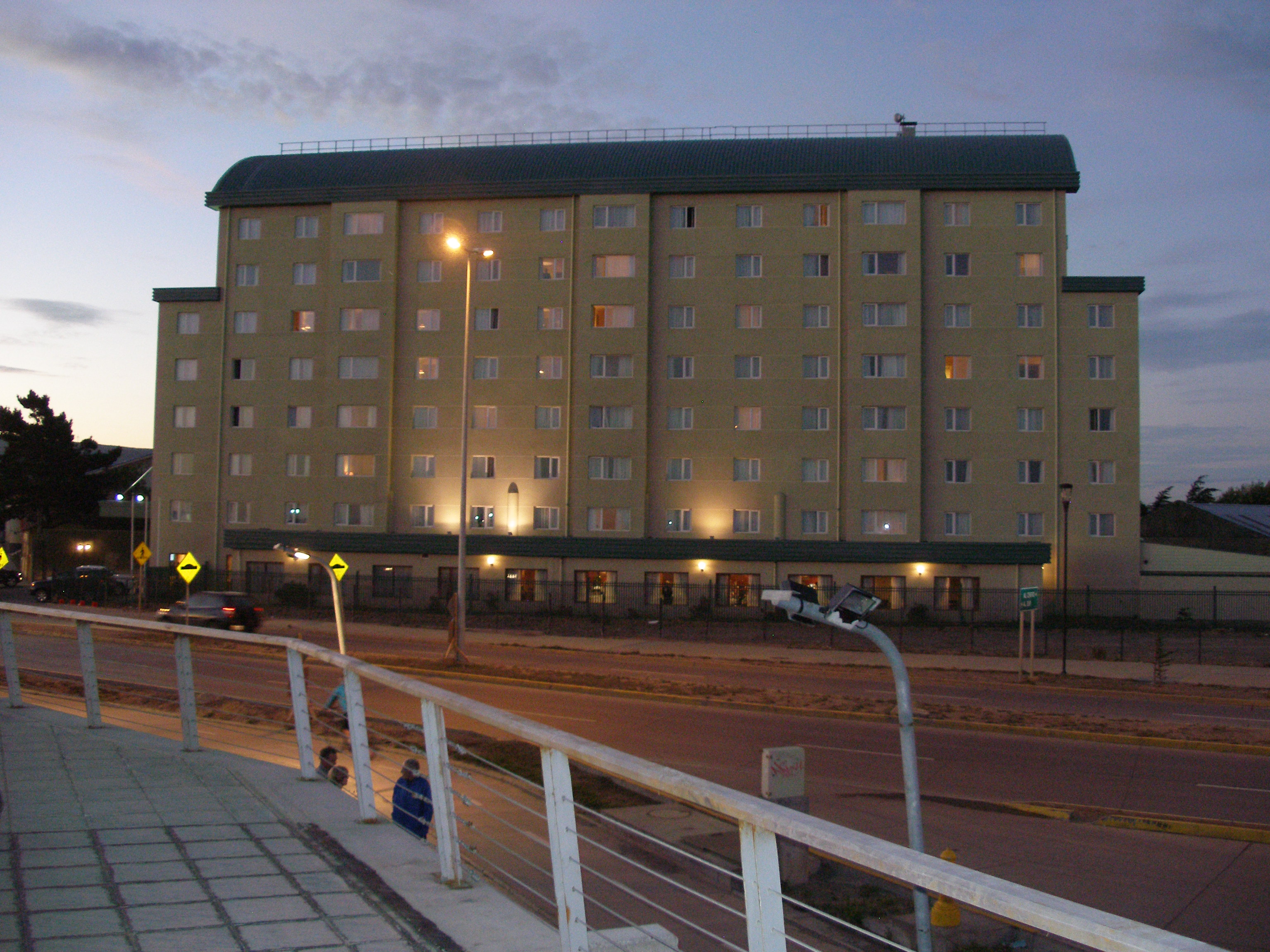
The Hotel Diego De Almagro was an excellent place, and we got a lovely room with a view of the sea on the seventh floor.
We were given our running bags on arrival and arranged to go out and eat together with some of the others. The others wanted to walk, but we had to take a taxi for the sake of Elisabeth. When we arrived at the restaurant, we couldn’t find the others, and we later discovered that they thought we weren’t coming anyhow and had gone into another restaurant along the way.
Birthday dinner
It turned out, however, that the restaurants didn’t open until later, so we found a place where we could enjoy an aperitif while we waited. We later went on to the Restaurante Detalle De Cuenta, an exquisite eating place, and had tasty steaks with good red wine.

While we were eating, somebody knocked on the window. It was Kathy Loper and about ten of her tourists, none of whom I knew. I ran outside, and as I gave Kathy a big hug, everybody started singing “Happy Birthday”. That was so nice.
Celebrity
Sunday, we went to have a look at the town on our own, joining the others later on for the obligatory pasta with meat sauce. As I walked into the restaurant, an American lady came over and asked: “Are you Mr Great Wall of China?” I was rather surprised, but had to confirm her assumption. During the days that followed, it turned out that there were a lot of people, who knew me, whom I didn’t know. Each of them had their own little story of how they could remember me from their trips to China.

Marathon Adventures
After we had eaten, we gathered for a briefing in a room next door. The two marathons were organised by Marathon Adventures, not to be confused with the Albatros subsidiary with the same two words backwards. Marathon Adventures is owned by a guy called Steve Hibbs. Kathy and Steve had met at The Great Wall Marathon 2012, where both were travel agents. Steve had told her about his marathon plans, and Kathy had joined him in a collaborative effort. This collaboration had been decisive to the realisation of this event. We were about 70 travellers, more or less evenly distributed between Kathy Loper Events and Marathon Adventures. About two thirds of the participants of the trip would be running the marathon, with the remaining third running the half-marathon. Apart from those appointed as officials, Elisabeth was the only person who would not be running.
The plan was that the next day we would run the White Continent Marathon followed by the Punta Arenas Marathon three days later. Running in the Antarctic was unlikely to be unproblematic. I had heard the story of a group that ended up running round the deck of a small Russian icebreaker to secure precisely this continent as part of their collection. As it would turn out, these runners were not alone in facing challenges when it came to the marathon on Earth’s southernmost continent.
Gobsmacked
Steve’s first words to us were: “We’re not flying to the Antarctic tomorrow”. You could have heard a pin drop. Everybody was gobsmacked. I actually believe that, as a foreigner among a majority of Americans, I had not properly understood his words. But his message was right enough.

King George Island, where the run was to take place, was fog-bound, and since safety naturally came first, the airline had announced that it would be unable to fly there on 25th February.
We were all shocked, but composed. The organisers had not been paralysed either and had rearranged the schedule for the following days. We were asked to turn out on Monday morning as there was at least a minimal chance of being able to run the marathon.
Isla Magdelena
On the Monday, we got out of bed on the day on which this exceptional marathon should have been run but wasn’t. The paper-thin chance of being able to run anyway had come to nothing.
In the late afternoon, we were driven by bus to the harbour, where we sailed to Isla Magdelena, a 1,575 square kilometre island with the status of a national park. It was a long trip. We began to wish we had brought a Yatzy beaker or cards with us, but as it turned out, the boat trip really was worth it. The island was teeming with penguins, and there were quite a few seagulls there too. It was a fantastic sight. We walked around and had a good look. Elisabeth also had an enjoyable walk, even though she had to remain near the boat.

Hope
On the way back, several people had been on the Internet and had ascertained that weather conditions on King George Island were fine. Weather forecasts and webcam images presented only good prospects. We were all happy and expectant in our belief that we would be running the White Continent Marathon the next day.
Yet another disappointing delay
At midnight, we all gathered for a briefing. We had had to wait for quite some time because the briefing was delayed time after time. Although this could easily have been perceived as ominous, many of us were full of optimism all the same. This would soon evaporate. The King George Island run had been delayed once more and this time, no immediately reasonable explanation was given. Steve had been engaged in lengthy discussions with the airline, but to no avail. We were all upset, frustrated and perhaps even a little angry. Thinking back on events with all the emotional aspects at a distance, I have to admit that airlines are undoubtedly far better judges of aviation weather and landing conditions than marathon runners. We now went to bed assured of the fact that next morning we would be running the Punta Arenas Marathon.
On the Tuesday morning, we got up to run the marathon two days earlier than originally planned. Never before had I got out of bed to run a marathon and experienced doing so as an anti-climax. That’s how it was that day, however. I had been looking forward to running the marathon in South America with high expectations and the thought of the run in Antarctica coming to nothing was unbearable.
Exultation
At the start of the Punta Arenas Marathon on the Tuesday morning at 8.20 a.m., Steve asked us if we were ready to leave for the Antarctic. Everybody cheered wildly. The weather forecast for King George Island was good, and we had to be prepared to leave at any moment. This meant that we might need to interrupt the day’s marathon early to travel to another continent to begin another marathon. It was a really weird way to begin a marathon.

Boring but unusual Marathon
Seen in isolation, the Punta Arenas Marathon was the most boring marathon I have ever run. We ran for five kilometres along the pavement on one side of which there was traffic. At the end of the stretch of pavement, we turned round a bollard and ran back in the opposite direction. We did this four times. Although I describe the run as boring, it actually wasn’t. Of course, it was very special to run on a new continent, which I had never visited before and probably never would again. That fact in itself represented a large carrot when it came to completing the distance. Before the run, I had decided that I would take my time. I would have no qualms about coming in last just one minute before the race was to close. But it didn’t turn out that way.
Having been told by the organisers that the run might be interrupted early in order to set off for King George Island, I started at a faster pace than I had originally planned. It was now just a question of completing this run before it got interrupted. When I still had half a circuit to run, one of my travel companions told me that the organisers would be meeting the airline at 4 p.m., which meant that we had plenty of time. I then began to take things easier once in a while.
After 4:41 I had put 39 kilometres behind me, so I decided to quicken my pace in the hope of crossing the finishing line in under five hours. I did so with just over a minute to spare with a time of 4:58:54. I was very pleased indeed to have conquered my sixth continent and just hoped that I soon would have bagged my seventh.

A tremendous relief
That evening, we gathered in the hotel restaurant to hear the organisers’ plans. Steve arrived, and we all thought it was rather strange when he asked us to form two lines in the hotel corridor and then to stand with our backs to the walls leaving a space between the two rows. After a while, Steve raised both arms in the air and indicated that we should do the same. I was immediately reminded of childhood dancing lessons and wondered, if we were going to dance “Bro bro brille” – a Danish dance which is a bit like “London Bridge is Falling Down” – but we weren’t. He started walking down the lines, giving high fives with each hand in turn to all the rather astonished marathon-goers. Then his face lit up with a big smile and everybody cheered like crazy. We were going!
We then went into the restaurant to hear more. There was only one chance left now, and we were to meet in the lobby at 1.30 a.m.
Having heard all about the plans for the following day, the prizes were distributed for that day’s marathon in Punta Arenas. Accolade was given for the first, second and third men and women to cross the line in the marathon and half-marathon.
The big day finally arrives
We got up at around midnight on Wednesday 27th February, and I really thought ten dramatic days of quivering excitement would be over. But as I would discover later that day that was not to be.
The bus came to pick us up at 1.30 a.m. precisely, and an hour and a half after that, the plane left Punta Arenas for King George Island. We arrived there two hours later, and as I stepped off the plane, I immediately fell onto my knees and kissed the ground. For a week and a half I had been floating between hope and desperation, but now we had finally arrived at the great goal.

King George Island is the largest of the South Shetlands and lies 120 kilometres from the Antarctic mainland. The island is uninhabited as such, although a number of countries have bases there.
Arrival in the dark of night
We landed on the island at around 5.20 a.m., and since we could only be there for six hours, we had no time to waste. We walked a kilometre through the dark to the area where the marathon was to start. Some of the runners had brought headband lamps with them, but there was no need for them. We were soon to experience an awesome sunrise with the most glorious red light on the horizon.

As the race began, I could feel how tired I was. The previous day’s marathon was still in my legs. But as I got going, I gradually shook off the discomfort.

Proper preparations
This marathon also involved running several laps of the same course. We were to run three and a half kilometres in one direction then back to the start and would do so six times.

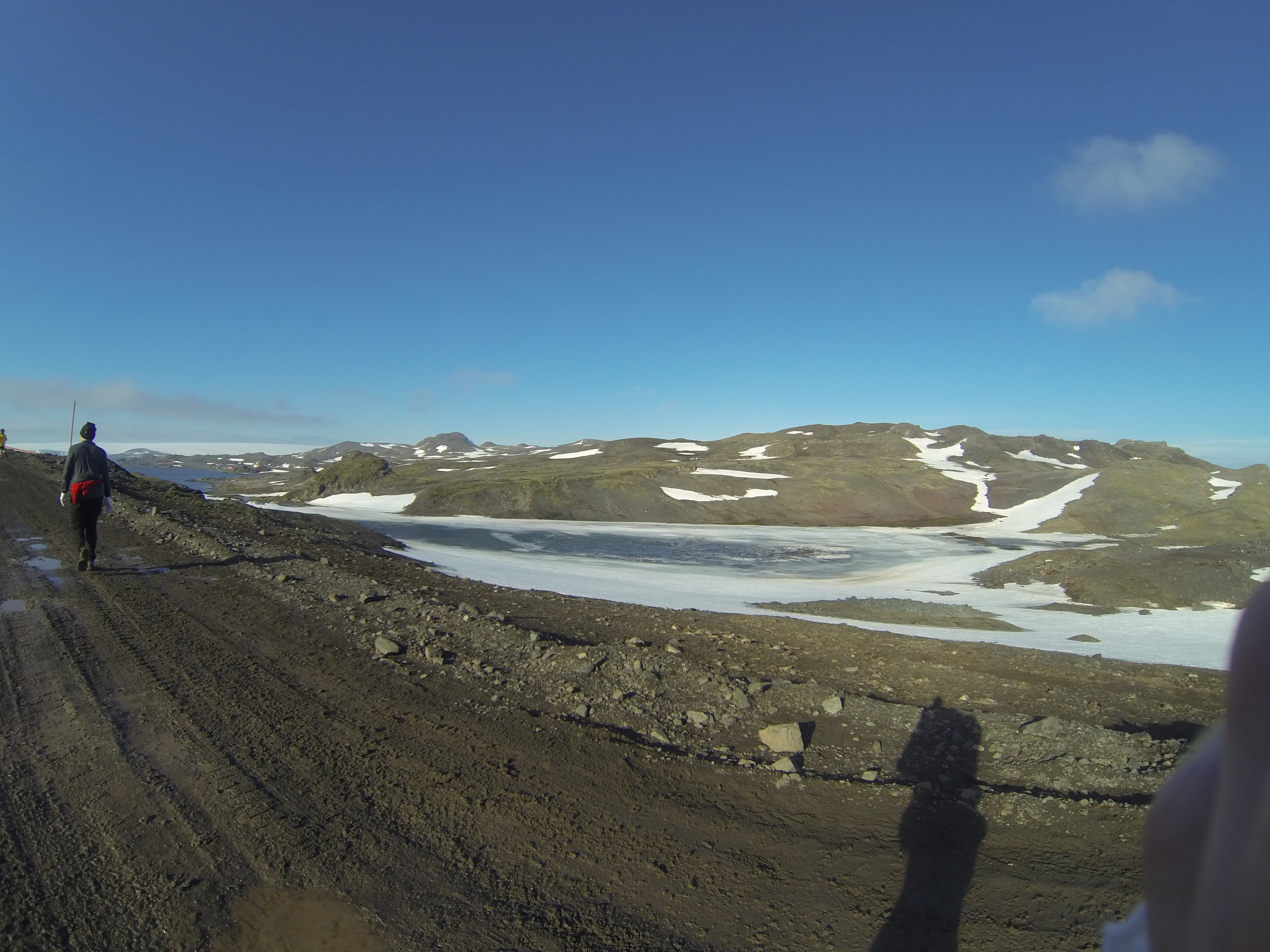
Comparing actual conditions to what I had read back home, I was not surprised, and my training in the woods at Boserup had set me in good stead. The course took us along dirt roads; a stretch surfaced with stone chippings and in several places across ice floes.
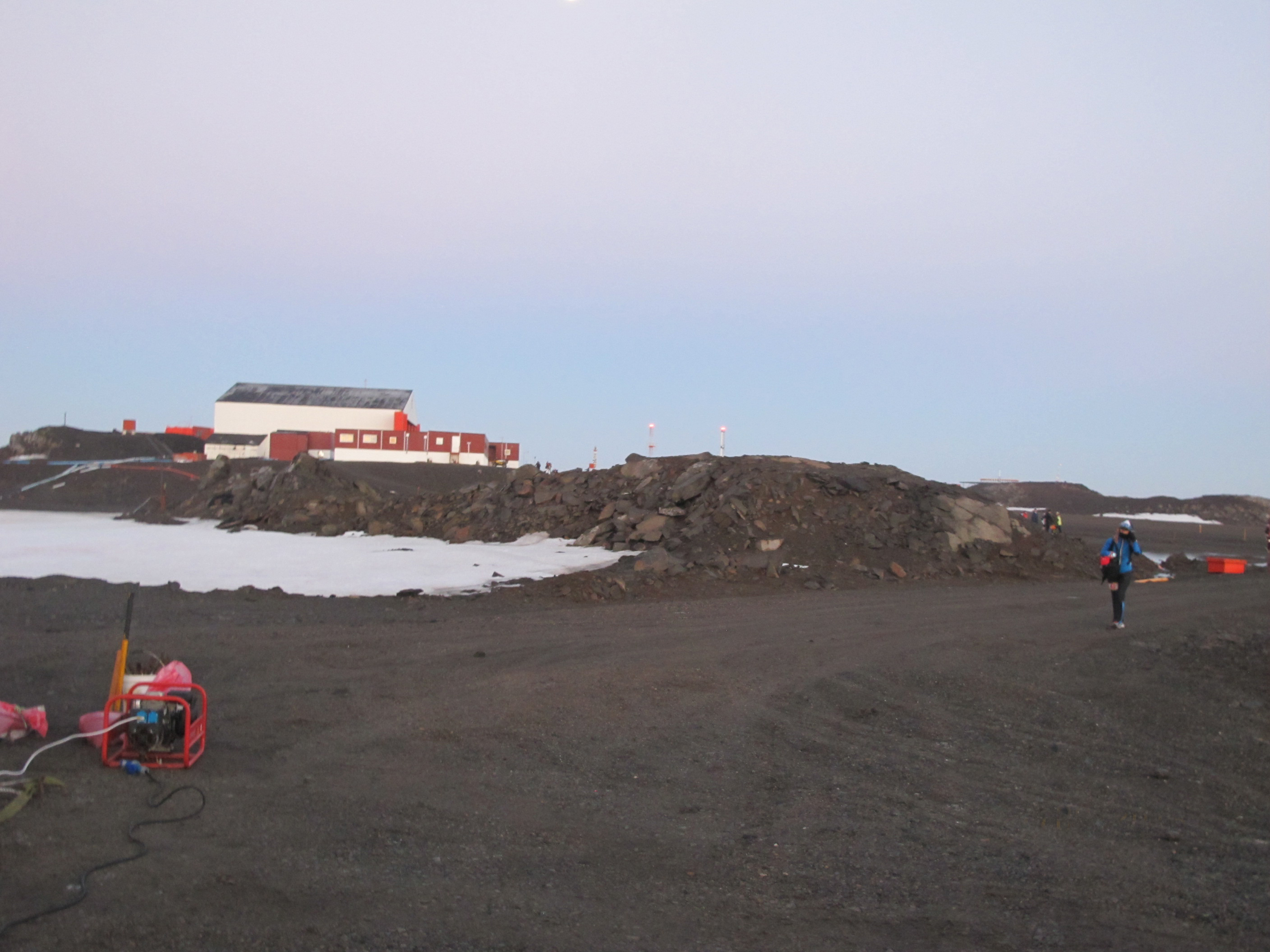
I had expected to experience rich animal life during the run, but there wasn’t much there. I only saw a couple of penguins and seals, but I wasn’t disappointed. All in all, it was an indescribable experience.

Shoes full of lead
As I approached the start for the second time, the temperature had just crept above freezing, which became a bit of a nuisance. The approach to the start was up a dirt ascent, and as the sun had come up, the frozen soil had not only thawed, it had turned into mud of the kind that sticks to the bottom of your shoes. Whereas to begin with I had felt relatively light of foot, it now felt as though my shoes were full of lead. My feet got very heavy, and there was nothing I could do about it. It was impossible to knock the mud off, so I had to accept things as they were. Having rounded the start, I had to run across the mud again before I reached a place, where I could hop up and down in a puddle and scrape the mud off on the stone chippings. I did the same every time I passed the start.

Optimism
On the fifth and penultimate lap, I was happy and glad. I was doing well time-wise in relation to the six hours we had been told we had, and my legs were in good shape. Up to that point, I had been taking photos and video with my GoPro®, which I had on a headband. Towards the end, I decided to run with my full-size camera and video in order to secure some even better photos.
Catastrophe strikes
After finishing my fifth lap in good time, I was as pleased as Punch. I only had one lap to go and nothing could go wrong – or so I thought. It was then catastrophe struck. In the run-up to the finish stood a Chilean official and said I had finished. With a smile, I told her I hadn’t, but she insisted. As it turned out, the weather conditions had taken a turn for the worse, and the run would now be interrupted. I was speechless. However, Elisabeth was standing at the finish and was able to confirm the disheartening news.
Resourcefulness
I could have thrown myself to the ground and wept, but I decided on a more creative approach. I was aware that there were still runners on the course and that they had to pack up. So without hesitating, I took my bags, ran up to the aircraft and put them down on the runway, after which I started running back and forth along the dirt track to the finish. I had nothing to lose.
After me I soon had a tail of runners, who had twigged was I was up to. First one, then another asked how far we had run. I answered them to begin with but before long it became too much for me. I couldn’t keep count of it all and certainly not get my mind around to answering their questions in English or converting my kilometres into their miles. In a possibly hopeless struggle with time, I continued in the hope of making the 42.195 kilometres, while we were still on that continent. I realised that my performance might not be recognised, but to me it was simply a question of completing a marathon on the White Continent – official or not.

Six runners were following me, and we ran out onto the runway, my intention being to turn at the end and run back again. But then some airport personnel came along in a 4×4 to tell us that we weren’t allowed to run there. We ran back to the area, where the other runners had gathered in a large group. My idea was to turn there and run back towards the aircraft, but this attempt was also thwarted. A local female official forbade us to run off any more. We had to stay in an area which was the size of a fairly normal garden. So we started running around a square of perhaps 25 x 25 metres. I got more and more stressed because I could sense that we were running out of time, and I still had a way to go before we reached our goal.
Before long, we were all asked to board the aircraft. We ran almost up to the aircraft only to run back again to take up the rear. My plan was to keep doing this for as long as possible, but this was also forbidden. We were quite simply ordered on board the aircraft.
In the end, it was almost as though we were in the grip of civil disobedience. This was pure and simple force majeure and every trick counted, so we began running along the side of the aircraft. There was hardly more than 25 metres before we had to turn round and ran back the same short distance. We continued in our hectic fight against time.
Absolutely the last moment
The last runners were about to reach the aircraft, and the female official was now really tired of this. I wondered whether they might tie our hands behind our backs and physically manhandle us onto the aircraft, but things didn’t get that bad. In the end, I despondently picked up my two bags and started to walk up the steps to the aircraft. At precisely that moment, my GPS watch registered the full marathon distance. Tears running down my face, I came to a standstill and realised that we had achieved what we had set out to accomplish. The six of us who had run the final stretch together gave each other big hugs, but there wasn’t much time, and we had to hurry aboard the aircraft.
I sat down in my seat. Inside I was in an indescribable state. I didn’t know whether to laugh or cry.
Official approval
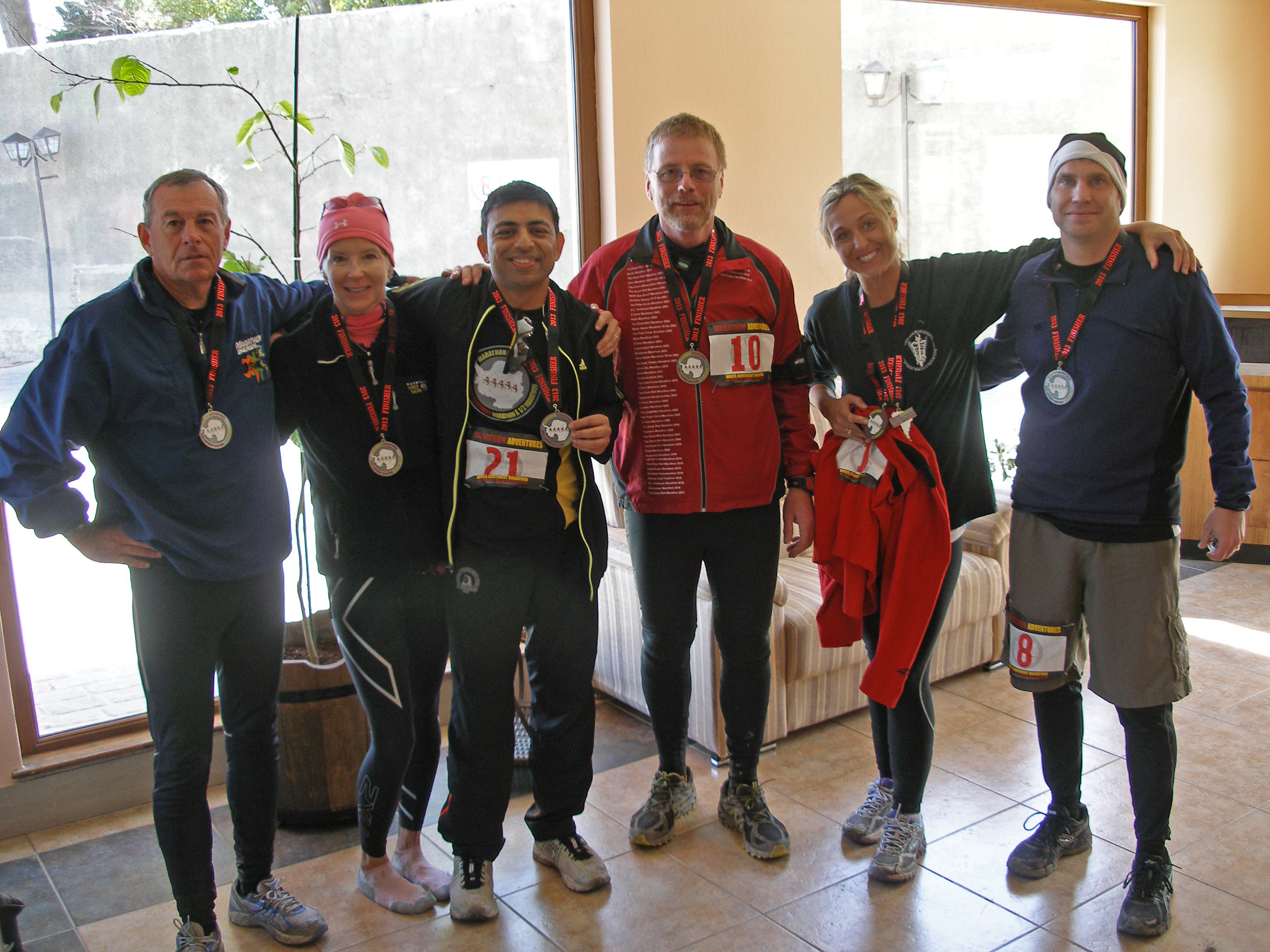
One of the others who ran the final seven kilometres approached Steve and explained what had happened. Steve called me to his seat, and I showed him my GPS watch. The documentation was good enough for him, so all six of us had our White Continent Marathons approved with an official time of 5:33:02, although we probably did it approximately ten minutes faster. I hadn’t switched off my GPS when we stopped running, so it had kept on ticking. But that was irrelevant then and at any time in the future. What was crucial for me was that I had completed this spectacular run, ten minutes more or less were neither here nor there.
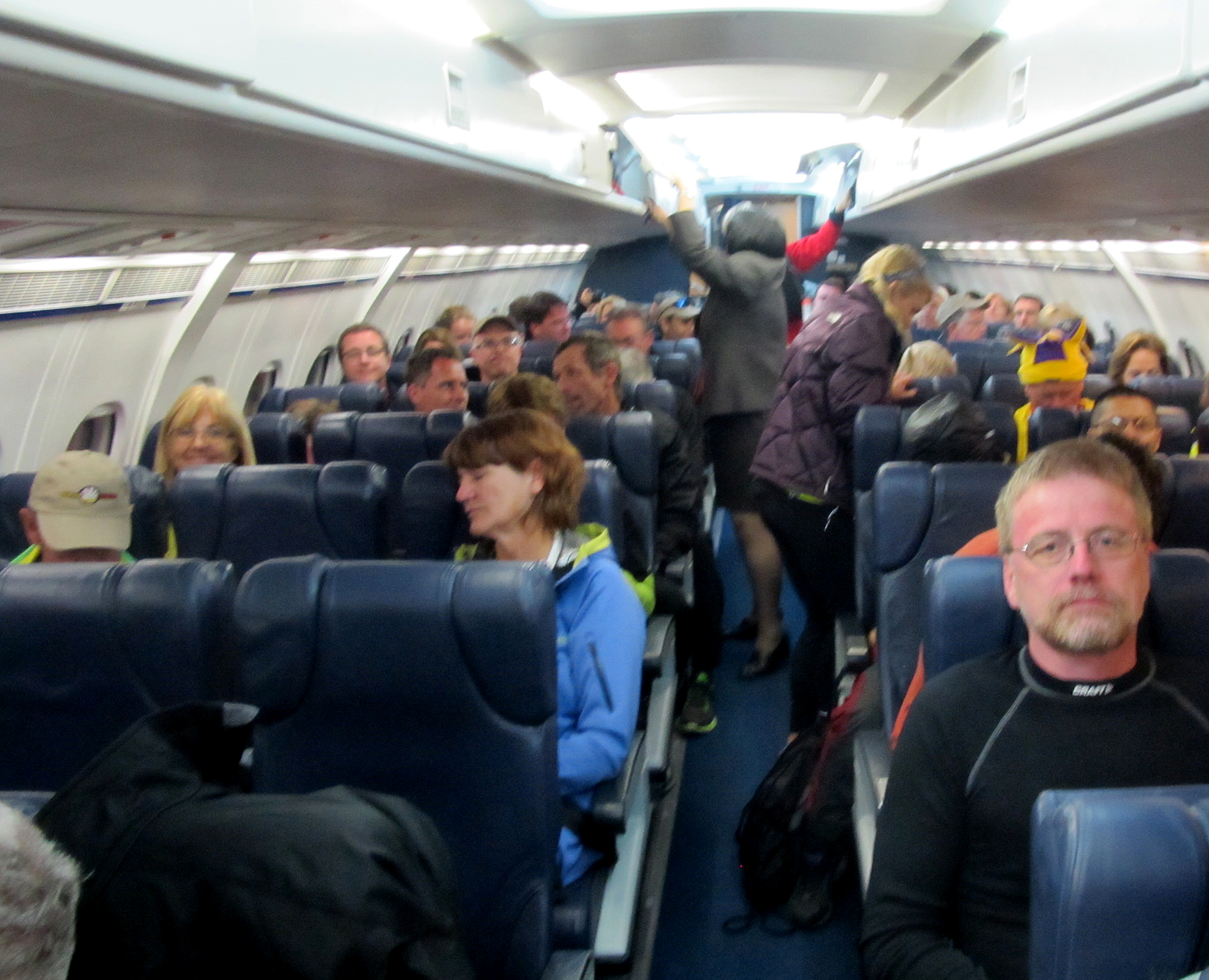
Back at the Hotel Diego De Almagro a few hours later, the six of us received our medals in the reception. It was a moving moment indeed.
Consolation run
Later in the afternoon, the other runners were allowed to complete their marathon after an interruption of four hours. They ran on the same stretch of pavement on which we had run an official marathon the day before. Their performances were probably not approved as an official marathon on Antarctica. I’m no judge of that, but it must have been some consolation for not having had the chance to finish the job on the island.
Half a day with very sore feet
That evening, we met up for the gala party in the hotel restaurant. We weren’t all there, however, because one runner was still struggling to complete the day’s marathon. An American by the name of Eddie had been rather reckless. He had turned out as a barefoot runner but had obviously not thought the whole thing through. After running a couple of laps across the sharp stone chippings, Eddie’s feet were bleeding and in a proper mess. He had, therefore, continued in running shoes and not surprisingly, he was one of the people, who didn’t manage to cross the line on King George Island before the run closed. He was in such a bad state that he was unable to run, but teetered along on his very sore feet. Eddie was, therefore, the very last person to cross the line that day. In actual fact, he came in more than four hours after the second to last runner. A group of us went out to receive Eddie with cheers and applause when he finished his run later that evening with a time of 11:22:55.

A visit to Argentina
We were to have run the Punta Arenas Marathon on 28th February, but since everything had been turned upside down we had already done so. Although we quite easily could have done with one more relaxing day without too many activities that was not the way, it was to be. Early that morning the bus departed to take us on a long but exciting day trip.

The first stop came after a few hours’ drive, where we were able to get out of the bus to stretch our legs and buy something to drink and a few souvenirs. We had actually stopped right by the border with Argentina, so we also got the opportunity to set foot on that country’s soil.

Torres Del Paine
Throughout the day, we arrived at one alluring landscape after another in the Torres Del Paine National Park, which is one of UNESCO’s heritage sites. Everywhere you could see magnificent, snow-clad mountains, blue lakes and a good few animals, too.

At a restaurant where we had lunch, prizes were given out for each category in the race of the day before. I was called to the front together with two others to be honoured for our completion of marathons on the seven continents. Later on, we came to a fabulous waterfall and bears cave in the rocks. Altogether it was a fascinating trip.

Relaxing conclusion
After a couple of extremely hectic days, it was great to have a well-earned day of rest. Nothing was planned, and many of the participants had already left for home. So Elisabeth and I were refreshed and relaxed when we got up already at 3.30 a.m. the following morning to begin our day-and-a-half journey back to Denmark. This final part of a highly dramatic trip was nice and quiet, so we arrived home to the Danish spring saturated with experiences for some time.

In the media spotlight
Not many people can boast of having run marathons on all seven continents. Thomas Thomsen and a press officer of Roskilde TRI both suggested that the story should be released to the press. I wrote my own report of the trip which was later quoted in both Roskilde newspapers and just less than two months later I guested a live broadcast on TV2 Lorry/Lounge.
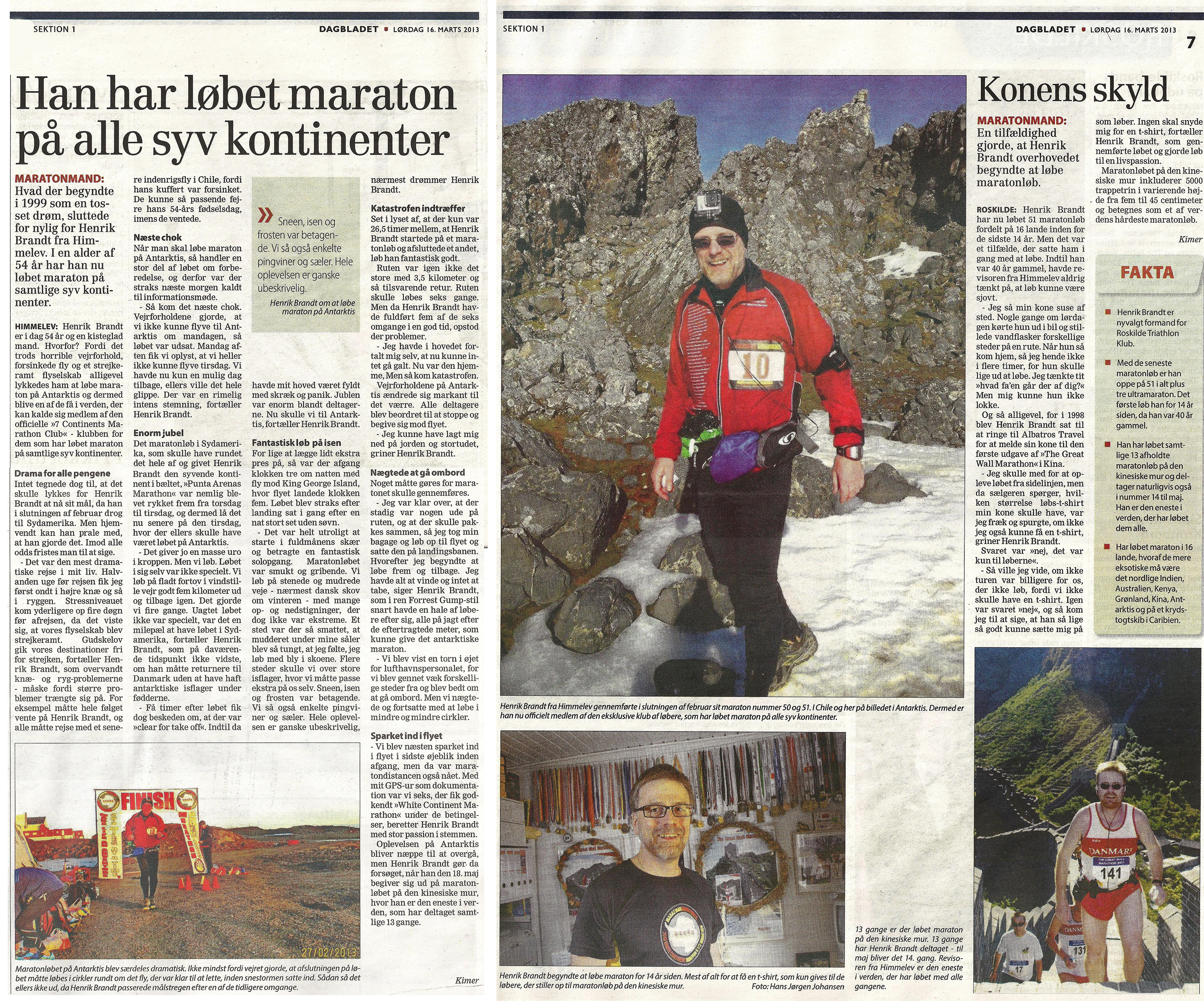
At the Great Wall Marathon in 2000, I made the acquaintance of a woman, whom I would look forward to meeting year after year.
In the marathon’s debut year, only Danish runners competed, but one year later runners of eight different nationalities took part. Although the event was still predominantly Danish, with almost three quarters of the runners coming from my home country, seven of those who completed the run were from the United States, among them Kathy Loper.

I met Kathy about a third of the way into the marathon. She was a slim, well-trained woman in her late fifties. We were running at the same pace on the asphalt road and started chatting. I don’t remember what we talked about, but it was unlikely to have been anything deeply intellectual. It got really hot that day, so most our energy would have been spent on moving forward. It was the year I got blisters on my feet, so after a while I ended up walking and watching Kathy disappear over the horizon.
When I arrived at the finishing line, I heard that Kathy’s arrival at the finish had been kind of dramatic. On crossing the line, she immediately collapsed. She had to be given a drop and was admitted to hospital, where she remained for two days.
Now you might think that, on that count, Kathy might have been finished with The Great Wall Marathon once and for all, but that was far from the case. At that time, she had run her business, Kathy Loper Events and International Running Tours for ten years or so. Now the company was going to take American tourists to the “marathon on the Wall” and 2001 was the first year Kathy took a group of tourists with her to the Middle Kingdom.
Kathy has been in China every year since 2000. She has not run the full marathon since the rather dramatic event in 2000, but over the years she has run both the half-marathon and the ten-kilometre run. She was not able to run at all in 2010, because she was confined to a wheelchair. A detail like that was not, however, going to stop her travelling with her protégés.
Meeting Kathy is always a happy affair. She has on several occasions given me T-shirts advertising her company, and I have made good use of them. I’ve also had the great pleasure of her company in Australia, and I took part in the double run White Continent Marathon and the Punta Arenas Marathon, as well, both with Kathy Loper Events.
Eclipse of the Sun
A total solar eclipse is a phenomenon that occurs early in the waxing phase of the Moon, when it is between the Earth and the Sun. During this phase, the Moon will cover the light of the Sun, casting a shadow on the part of the Earth’s surface. On the grounds, the lunar shadow is experienced as an eclipse of normal daylight.
With the help of astronomic calculations, solar eclipses can be accurately predicted many years into the future. It is known precisely where and with an accuracy of a few seconds when a new eclipse of the Sun will take place.
Three years’ notice
In December 2009, Adventure Marathon was able to present its next spectacular run, which would not take place until three years later.
On the morning of 14th November 2012, local time, there would be a total eclipse of the Sun over the holiday resort of Port Douglas, north of Cairns, in the north-east Australian state of Queensland. Albatros Travel had secured the right for participants of the Eclipse Marathon to have front seat tickets to this fabulous solar-lunar show, since the marathon would be starting at Four Mile Beach. From here, there is an unobstructed view of the Coral Sea. It would be possible to experience both the sunrise and the solar eclipse, the marathon starting immediately after the latter. This would make The Solar Eclipse Marathon the first sporting event in the world to have an intergalactic starting pistol.
The organisers most likely announced the new run with three years’ notice because the price would be way above what participants otherwise paid for marathon trips. With so much notice, runners would have plenty of opportunity to save up the necessary funds. From the time the announcement was made it was possible to sign up for a news e-mail in order to keep up to date with developments regarding the event.
Dilemma
I was dead keen from day one and really wanted to run this marathon, but there was something else that pulled in the opposite direction: The Solar Eclipse Marathon was to be run two days before Emil’s 18th birthday. I had always been together with Emil on his birthday and couldn’t imagine not being there with him on the day he came of age. Of course, I considered the idea of taking him with me, but at that time he would no longer be in year one, but already well up the education ladder. It was by no means certain that he would be allowed to miss out on lectures. At the same time, there was the financial aspect of it. It would be very expensive for me, and having to pay for others as well would involve an enormous outlay.
Limited places
As time went by, newsletters began to arrive relating to the marathon. As with so many of the other events, various packages would be available all according to how much you wanted to experience and how long you could spend away from home. For me, there was no doubt that any participation on my behalf would be on the shortest possible trip. It would have to fit in with work and private life at home, and finance would certainly play in as well. It was obvious that only a limited number of participants would be able to travel to Port Douglas. The number of hotel rooms and plane seats would impose a limit. During that period, marathon runners would not be the only people, who wanted to find their way to the beach. All sorts of people would want to experience this natural phenomenon. However, Albatros did expect to be able to secure seats for 2,000 participants.
As time went by, my dilemma regarding Emil’s birthday did not diminish. I spoke to Emil about it, and he couldn’t see a problem; I could just go as I had so many other times before. It didn’t matter to him if I was not there on his birthday. The problem was, though, that it still mattered to me.
Yet another family trip
As the time to make a final decision approached, Emil said he would like to come with me but that he had two conditions. His teenage indolence meant that he would not even consider running. He didn’t think, either, that it would be much of a thrill going alone with his dad. So if Steffen came along, so would he.
Steffen was dead keen and had been from the outset. Steffen had already been to Perth in Australia twice as part of his education. From August 2012, he would be attending school in San Diego, California for 18 months. It turned out that both Steffen and Emil were able to get time off college to travel to Australia. Steffen would be travelling from the US, and the family would get together “down under”.
Day and a half journey
Emil and I arrived at Copenhagen Airport in good time because I wanted to make absolutely sure that we could get an aisle seat on the flight. When we arrived, we were informed that our flight to Heathrow at 6 p.m. had been overbooked but that we could take a flight at 3.50 p.m. instead. I was not particularly keen on that, but we were told that if we couldn’t get a seat on the 6 p.m. flight our onward trip to Australia might be in jeopardy. We chose the stressful solution with rapid check-in, a bit of quick shopping and then to the gate.
The early departure didn’t shorten the journey; it simply gave us longer to wait in London, though we found a lounge and spent the time there.
The next leg of our flight left at 9.55 p.m. This was the long haul to Singapore, the journey of almost 13 hours. We arrived in Singapore in the morning local time and left soon again on the same plane. The next leg was also quite long, seven and three-quarter hours passed before we touched down in Sydney. “Oops,” I thought, “where did that day go?” It was suddenly 7 a.m. in Sydney, and the trip was not over yet. Our next flight left at 9.20 for Cairns, which took only three hours. We were nine hours ahead of Denmark and had been travelling for a day and a half. It was now 11.20 a.m.
We were met at the airport by Rune from Albatros. We got our suitcases and found our bus. Just over an hour later, we arrived at the Sheraton Mirage Hotel in Port Douglas. There sat Lars, also from Albatros, in the reception ready to receive us. We were checked in and shown up to our lovely room, where we settled in. Sleep soon got the better of us, and we both dropped off.
We awoke, as Steffen stepped into the room. He had tried to knock hard on the door, but we heard nothing, so he had had to go down to the reception to get his own key.
Sheep separated from goats
Every time Adventure Marathon does a new marathon, you meet people from previous trips. Some people turn up from time to time, whereas the hardcore turns out every time there is something new. In Australia, the sheep were veritably separated from the goats. There were several people I knew from other trips but apart from yours truly, only the married couple Anita and Flemming had participated in all seven previous events.
On the second Great Wall Marathon in 2000, I had had the pleasure of being in the same group as Anita and Flemming. Since then, they had been along every time there was a new Adventure Marathon, and they had also run marathons with other event organisers around the world. Karin and I have also enjoyed Anita’s and Flemming’s company outside the sphere of running. One lovely summer evening in 2004, we had a barbecue in our garden before setting off for a concert with the Lars Lilholt Band at Gisselfeld Castle in Haslev.
Never too late to restructure your life
Flemming is wonderful proof of the fact that it is never too late to change the way you live your life and that we have the resources we need to achieve our goals.
Flemming is a trained boilermaker, and in his youth he was a talented competition cyclist as well as doing athletics. Sport has not, however, followed Flemming all the way through life. For a period of five years, he was really on the ropes because of maniacal drinking. In his senselessly inebriated state, he didn’t care a damn about anyone or anything. Alcohol was all that mattered to him – even if that meant drinking Anita’s perfume to sustain his drunken stupor. Flemming had been on the way to a certain early death. His legs were so thin and wobbly that they were barely able to carry his bloated body. He rarely consumed solids, and Anita had to feed him to make sure he got the very basics. Not surprisingly, his kidneys and his liver were damaged by the severe treatment he was subjecting his body to.
Everyone had abandoned Flemming, apart from Anita, that is. She constantly stood by him like a faithful, unmoving rock, fighting for her dear husband and their marriage in the hope that things might change.
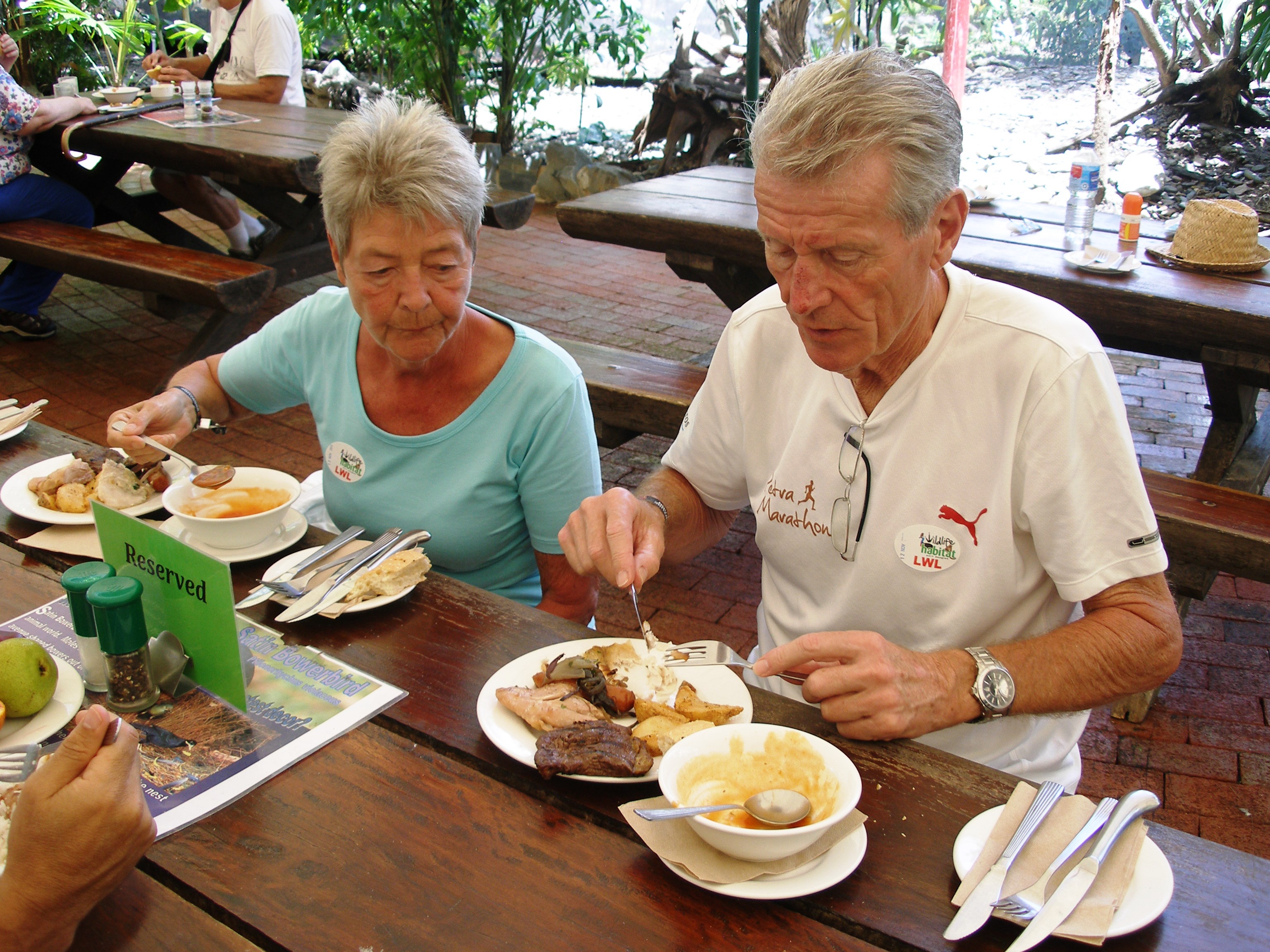
One day during the Barcelona Olympics in 1992, when Flemming was sitting watching television he concluded that enough was enough. With a will of iron which has since taken him through many marathons, he fought his way out of his alcohol abuse. Once an alcoholic always an alcoholic, but Flemming is now a dried-out alcoholic, who for many years has not even touched a piece of chocolate or a dessert that contains alcohol.
Running became Flemming’s new stimulant. It started in a small way, and the first time he could run a full kilometre without stopping was a fantastic victory. His membership of Kokkedal Running Club gave him meaningful companionship, and at the age of 53, Flemming ran his first marathon in Copenhagen in 1995 – with an excellent time of under three hours to boot. In the years that followed, Anita and Flemming have travelled the world to many marathons and tremendous experiences. Flemming is not just a runner, he is a fast runner and among his trophies is one for a Danish Championships in his age group.
Great Barrier Reef
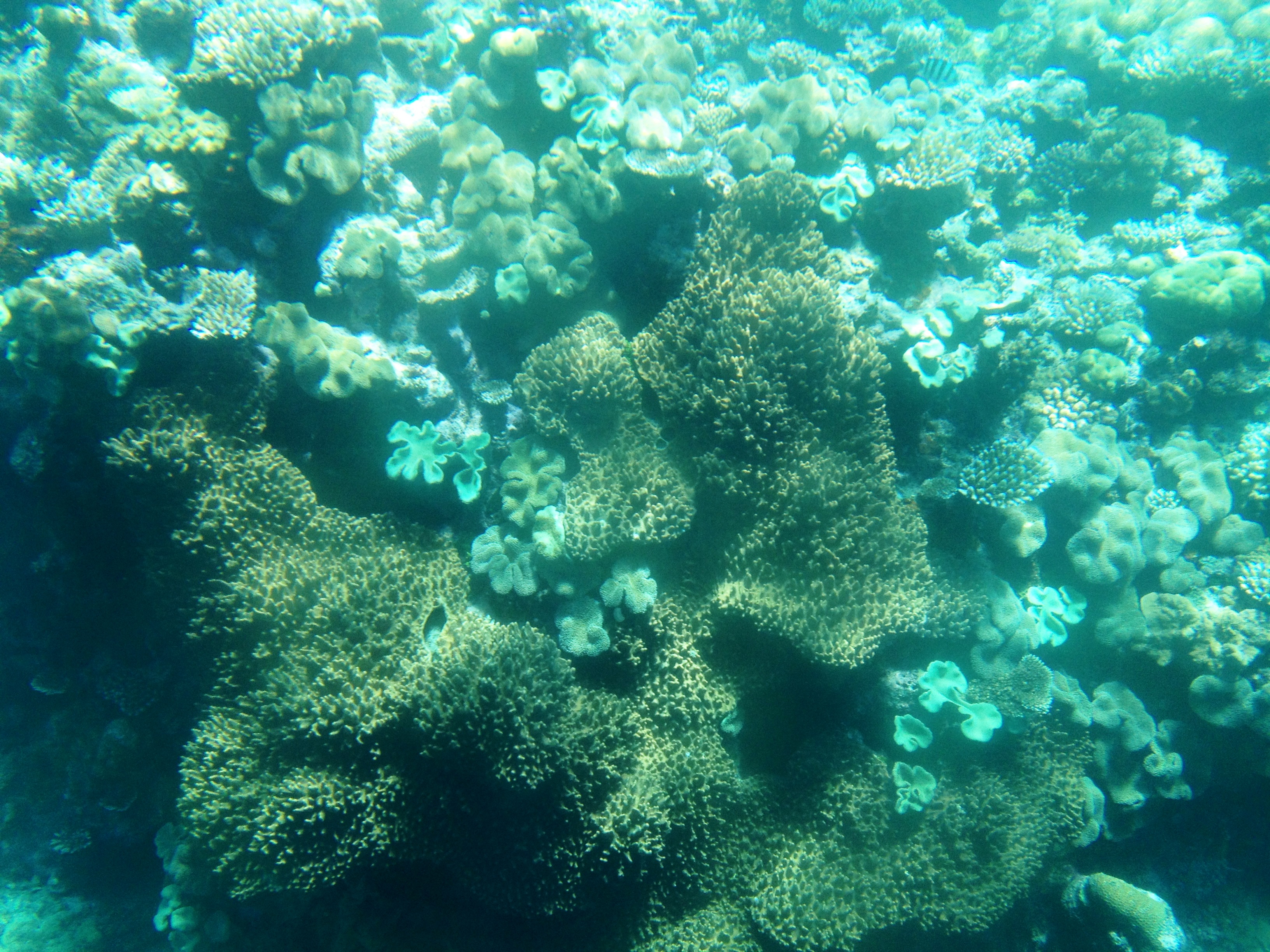
Sunday morning, we met up with a large group of people at the harbour in Port Douglas. We boarded a ship to take us to the world’s biggest coral reef, the Great Barrier Reef, a fantastic marine park on UNESCO’s World Heritage list. The Great Barrier Reef stretches for more than 2,600 kilometres and consists of 2,900 individual reefs and 900 islands, covering a total of 244,300 square kilometres. It goes without saying, of course, that we only experienced a tiny bit of this huge area. We snorkelled and were given a ride in a miniature submarine from which we could study the fantastic living world beneath the surface of the sea, with gorgeous corals and thousands of curious and colourful fish. We had lunch at sea, heading home in the middle of the afternoon.
Mossman Gorge
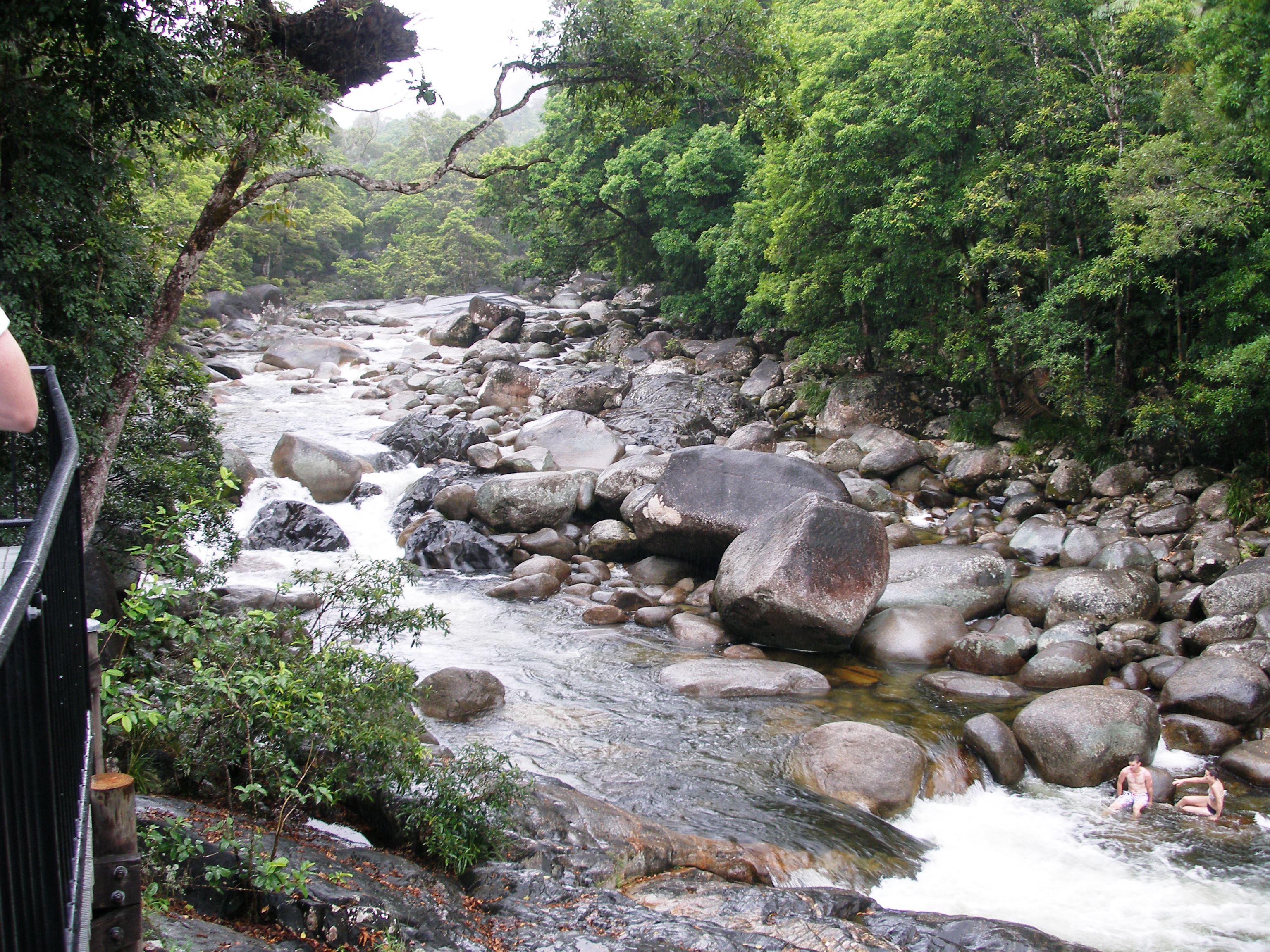
Monday morning, we drove as a group to the rainforest area around Mossman Gorge, where we had a bite to eat and were given some information. After this, we had about an hour to see the River Mossman, which meanders through the luxuriant green jungle.
Daintree
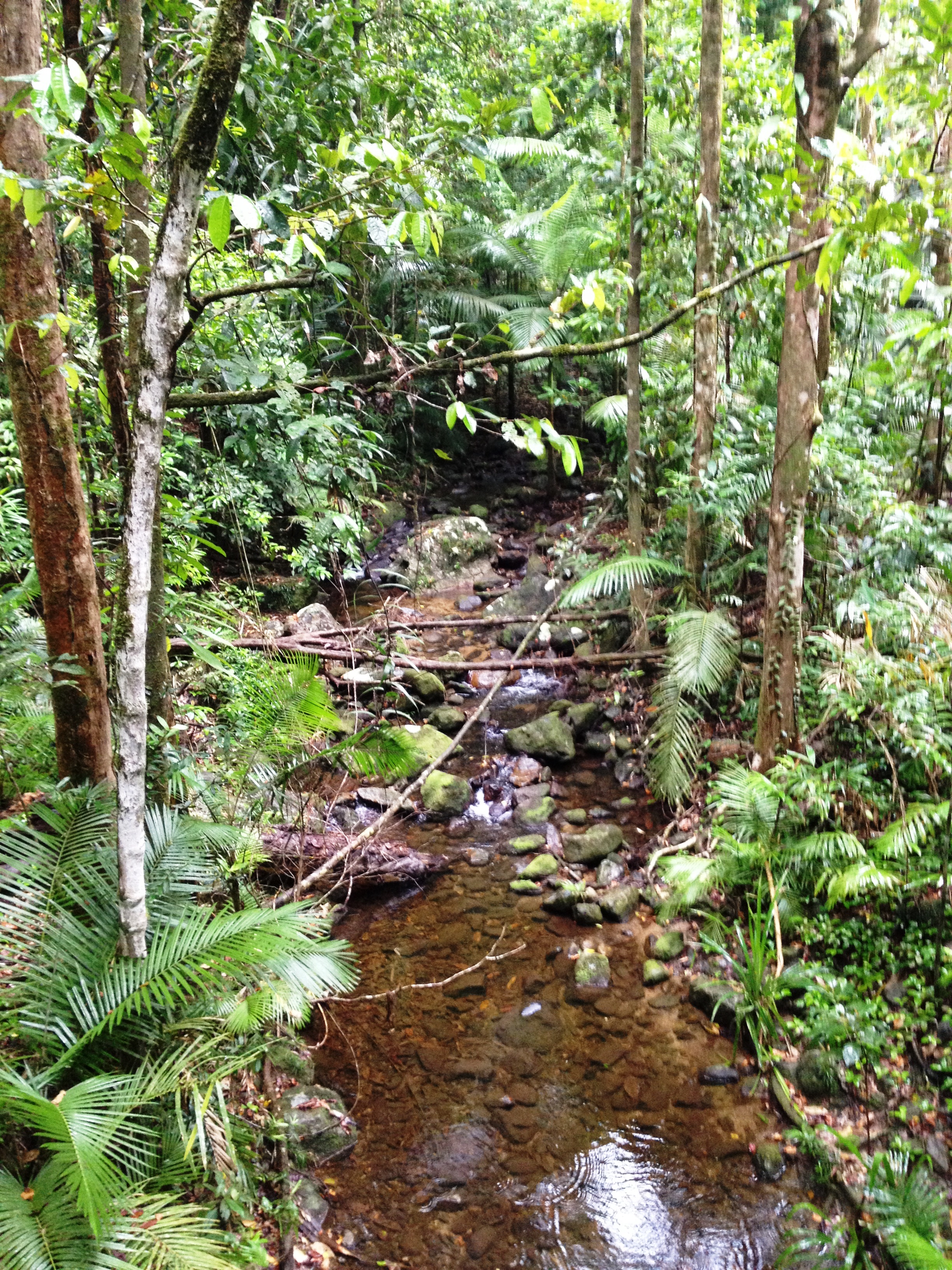
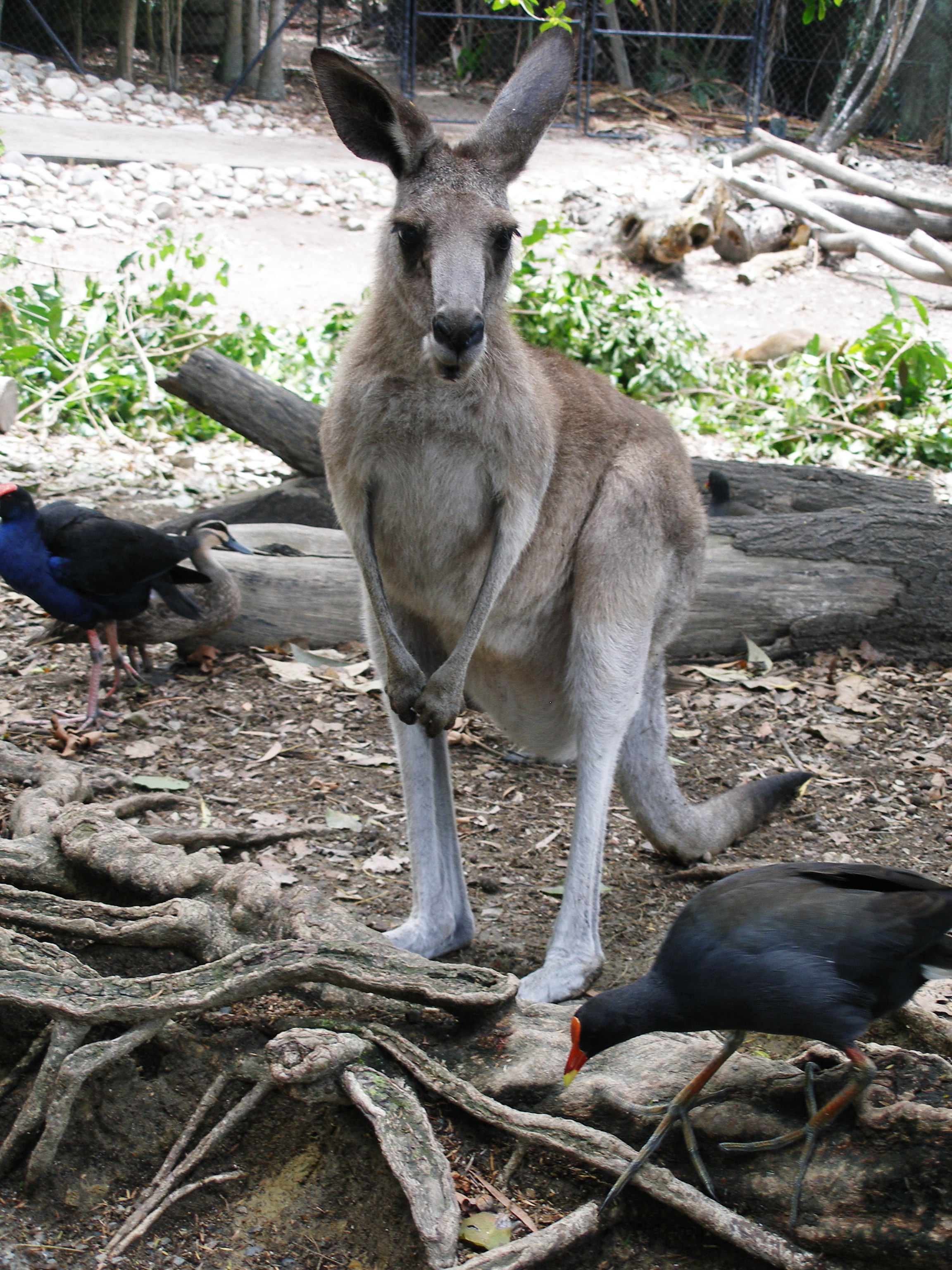
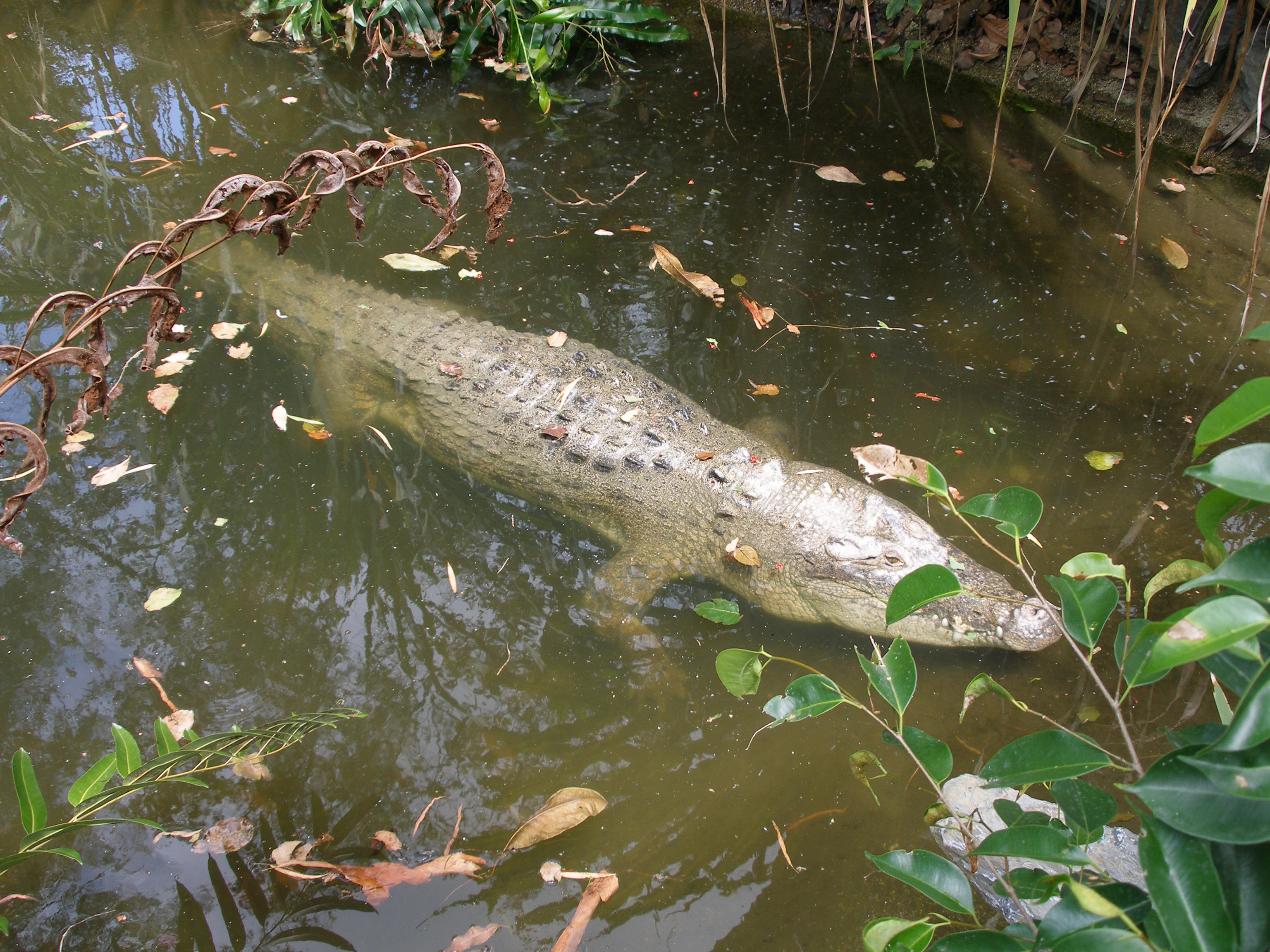
After this, we drove back to Port Douglas, where we visited the Daintree Rainforest National Park, which is part of the Wet Tropics of Queensland, also on UNESCO’s World Heritage list. Port Douglas is the only place in the world fortunate enough to be surrounded by two national parks on the World Heritage list. After lunch, we explored the park’s three areas, rain forest, wetlands and grassland. We saw a lot of animals including koala, kangaroo and crocodile.
A day on our own bat
We had the Tuesday to ourselves to prepare for the marathon. In the evening, we met up with the others in the hotel lobby and were driven to the harbour in Port Douglas for an information meeting and pasta party.
Quivering excitement and champagne
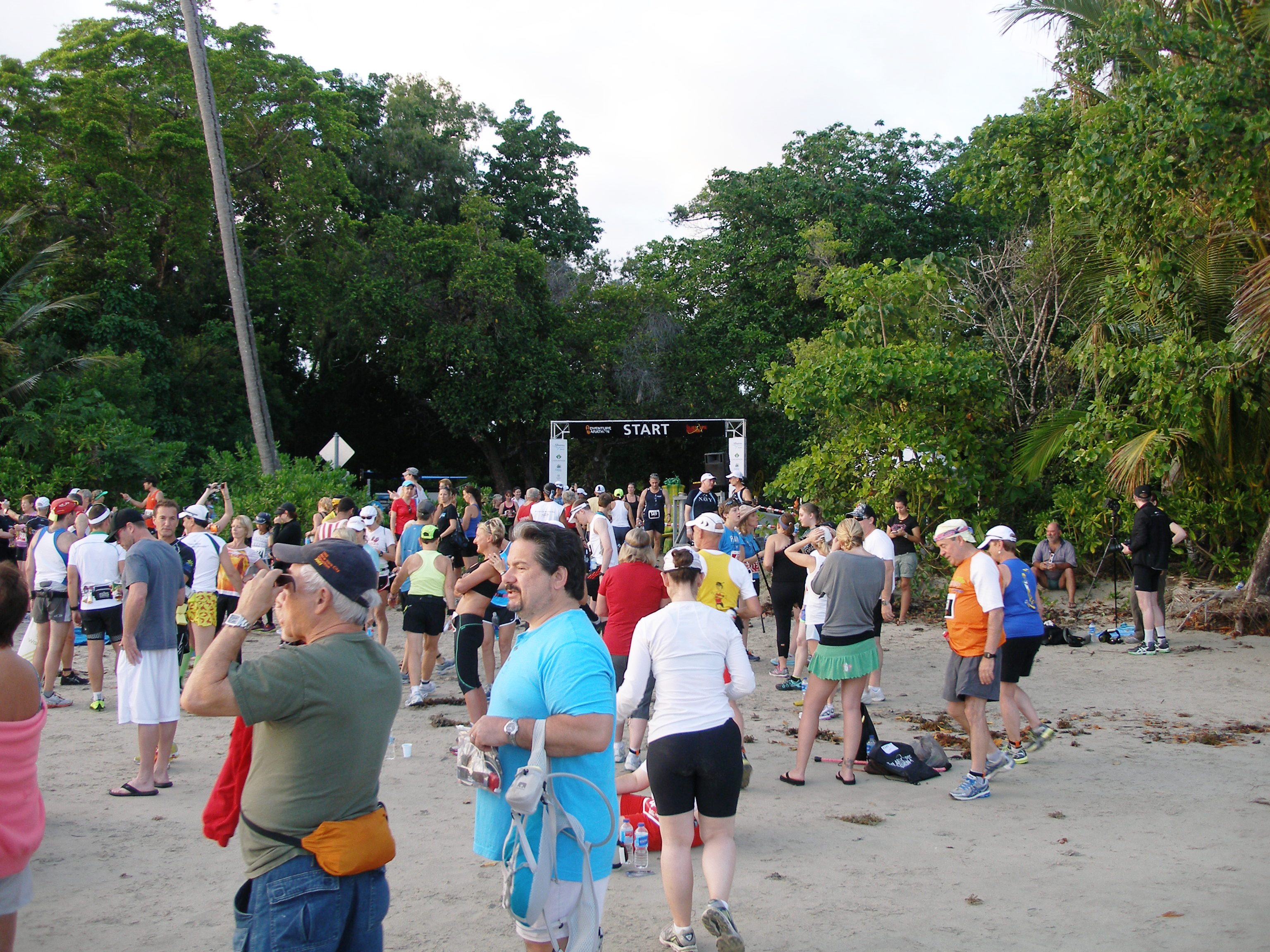
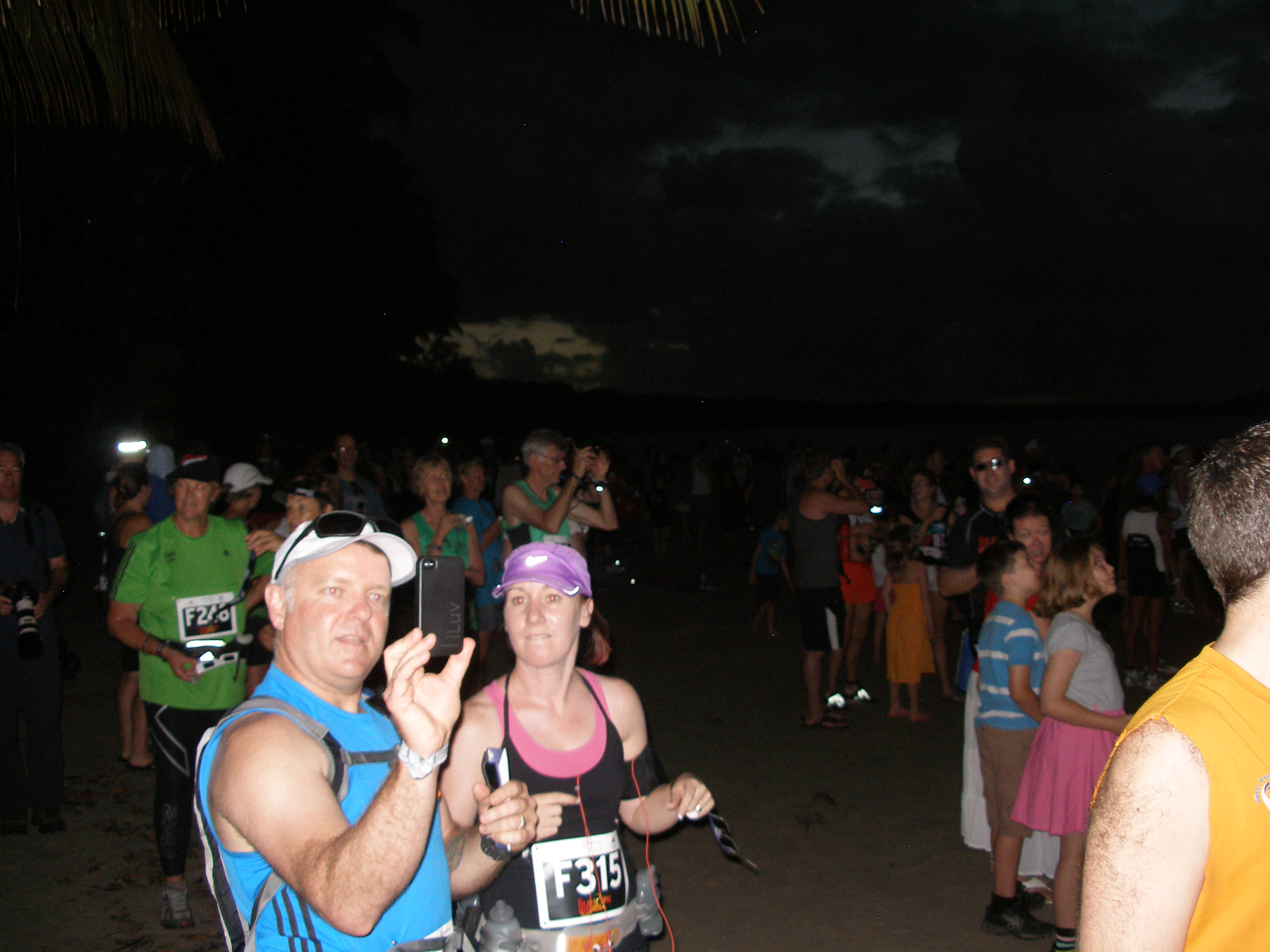
The great day, 14th November, had finally arrived. At 5.15 a.m., the bus left for the start on the beach. Here we could hand in our personal fluids and energy gel. We were given breakfast and were then ready for the excitement of the day. The beach was full of people as far as the eye could see. Excitement quivered among the crowd, some of whom had brought along champagne. None of the marathon runners, I hasten to add. Everybody was given special sunglasses with cardboard frames. Looking straight at the Sun without them could seriously damage your sight.
Day to night and night to day in two minutes
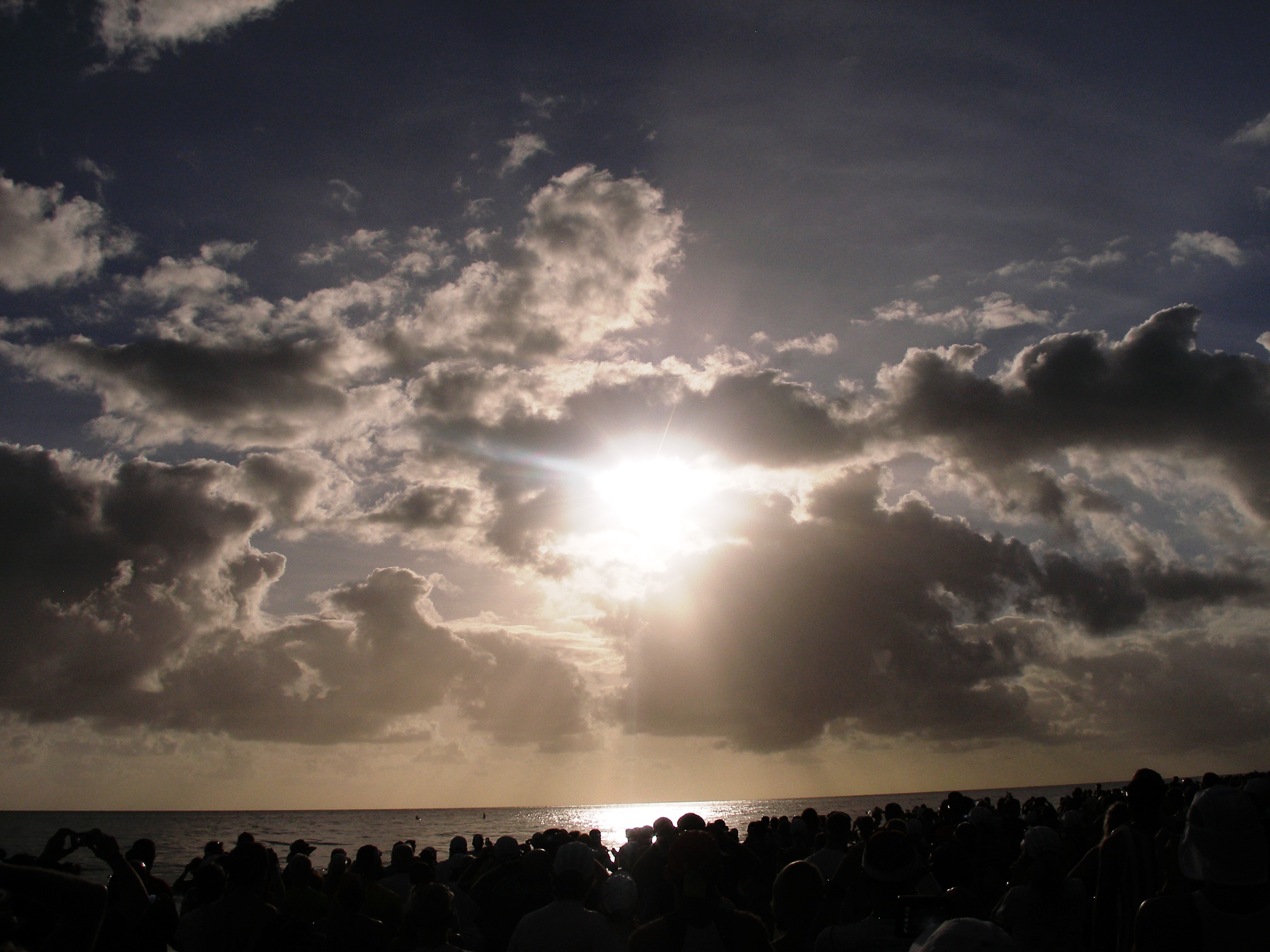
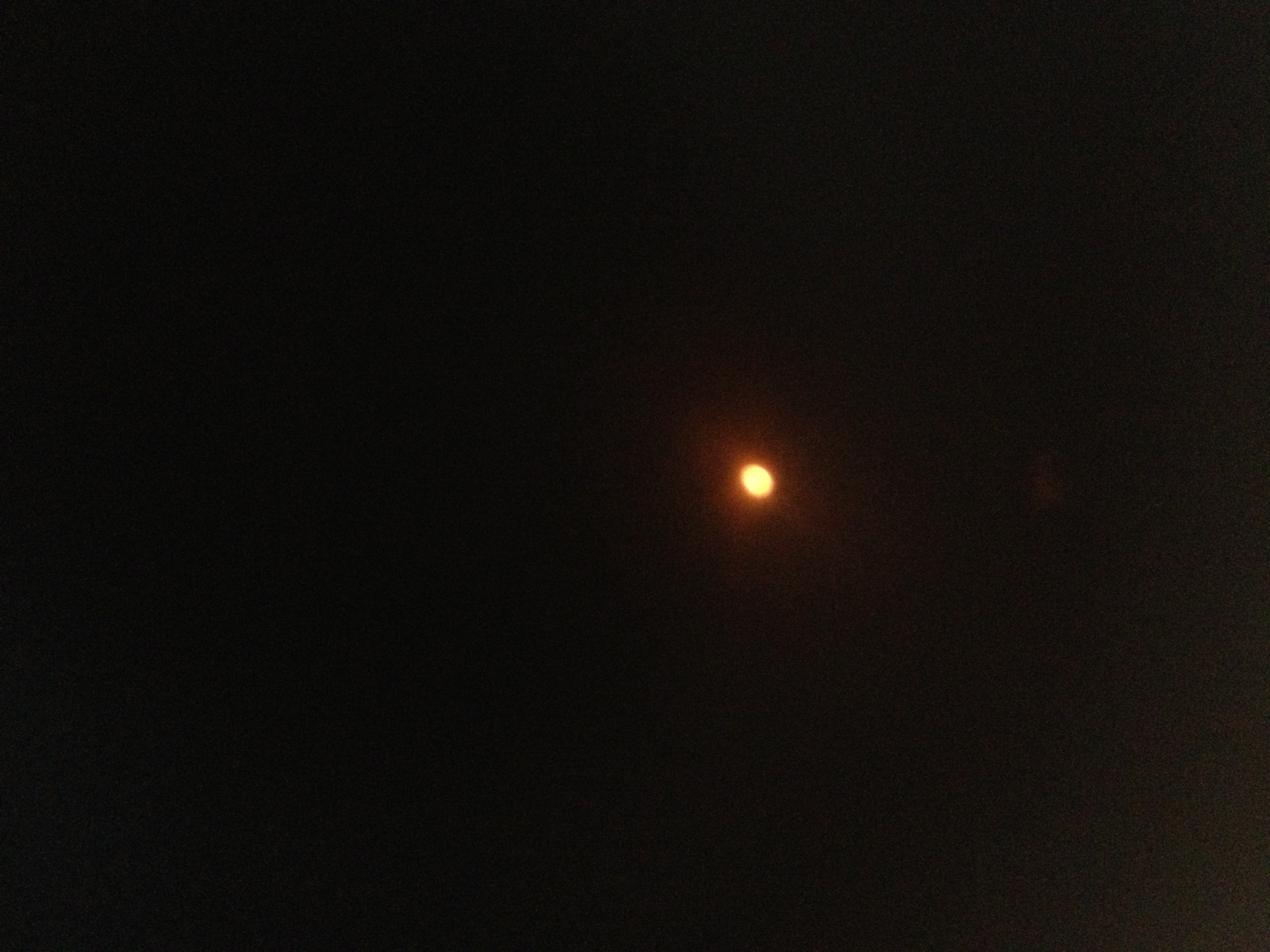
The Sun was magnificently positioned in the sky. Unfortunately, there were a lot of clouds, so it was not certain how beautiful the solar eclipse would be. We were soon able to see the incipient eclipse, which started at 5.51 a.m. The whole beach sighed as clouds covered the Sun, whilst there was jubilation when it came out again. The eclipse was total at 6:38:04. Experiencing day and night so close to each other was an enthralling phenomenon, a genuine once-in-a-lifetime experience. At 6:40:09 the total eclipse was over, and it became light again – absolutely incredible.
Solar eclipse travellers
Just as we travelled around the world to run marathons, we met several people who did the same to see eclipses of the Sun. We understood from them that what we experienced that morning had not been among the most fantastic of eclipses, but neither had it fallen into the lowest category. But we hadn’t experienced anything like it before, so for us it was unique.
Intergalactic starting pistol
The Solar Eclipse Marathon began just five minutes after the solar eclipse was over. It was morning, so the temperature was merciful. But it didn’t remain that way.
My GPS watch didn’t work. After we had arrived in Australia, it hadn’t been able to find the satellites. I had to switch it off and back on again, which made it work although I lacked the first half kilometre.
Fine start despite recent injury
The start went just fine. Earlier in the autumn, I had had to take a break from running because I had pulled a muscle one evening during training at Roskilde TRI. I couldn’t feel it, but I wasn’t in top shape. It gradually started to get hot, at which point I realised it was going to be a tough day.
Bump Track
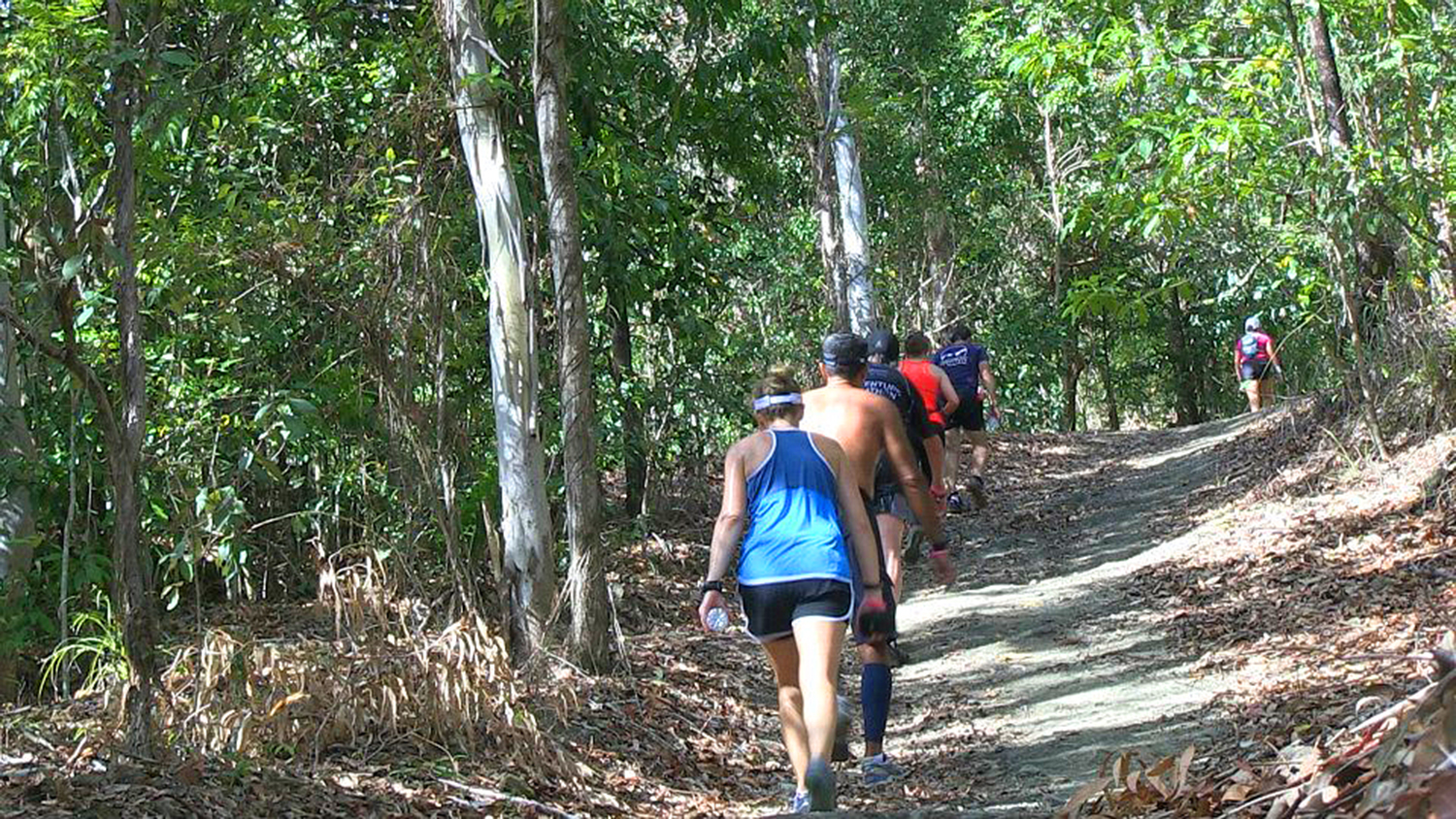
From Four Mile Beach, we ran out of Port Douglas, passing fields of sugarcane and mountains, until after 15 kilometres the course took a straight into the rainforest, where we had to negotiate the tough ascent known as the Bump Track. We were in the shade here, but that didn’t make it a bathing holiday. We had to run up a steep, hilly mountain path that seemed never to stop going up and up. Then I met runners on their way back down again and realised what was in store. It was not until after four kilometres that we reached the place, where we were given a rubber wristband and could turn round to go back again. Now we had to run the same four kilometres downwards, where I had met runners on the way up. Running wasn’t easy in this direction because you had to hold back and keep a watchful eye on the terrain to make sure you didn’t fall. It was lovely and cool in the shade, but I was looking forward to coming back onto the flat terrain.
Extremely hot
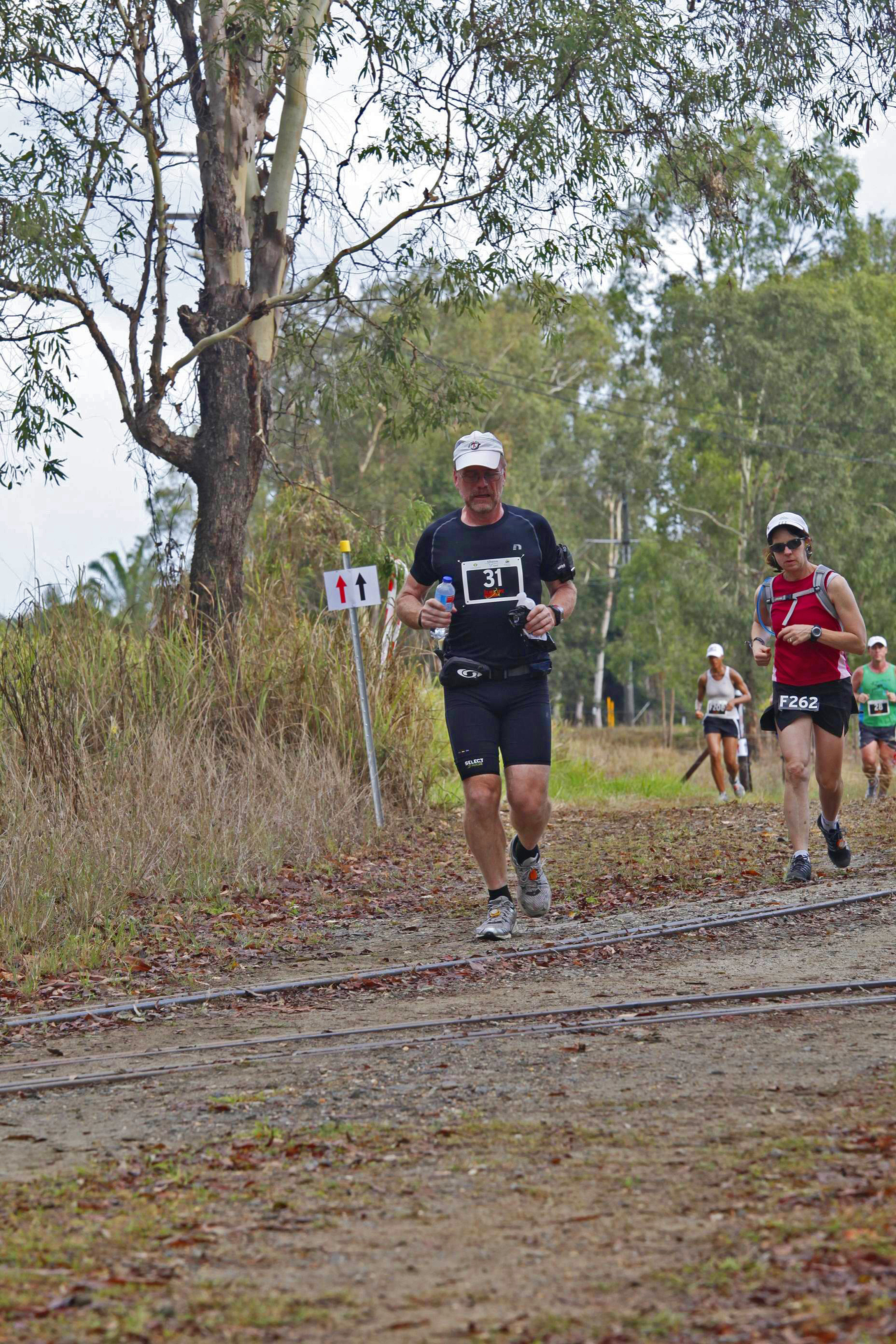
By the time we had come back down again, the sun had got really hot. In fact, I actually missed the mountain path. We didn’t experience any more shade. This was tough, and I felt sapped of all my strength. I couldn’t run very long at a time and often had to slow to a walk. After a while, I was actually only power walking. The surface varied a lot, and the view of the mountains was impressive.
Rumbling stomach
I had made sure I had plenty of power drink and energy gel distributed along the route. I actually had too much of it, so I started feeling nauseous, and my stomach began to rumble. I ended up throwing away the last two bottles and then put away the gels in my bum bag.
New Antarctic opening
I ran the final six kilometres together with an elderly American gentleman by the name of Greg, who was travelling with Kathy Loper Events. Greg had run more than 300 marathons. I asked him if he had run in every state in the US. He hadn’t yet, although he had run on all the seven continents. I had to ascertain that I was highly unlikely to experience that milestone. My comprehension was that the Antarctic was out of reach because of the price and the fact that you had to wait years for a place on the marathon. Greg told me that Kathy would soon have a run in the Antarctic that was affordable and which it was possible to sign up to.
Four Mile Beach
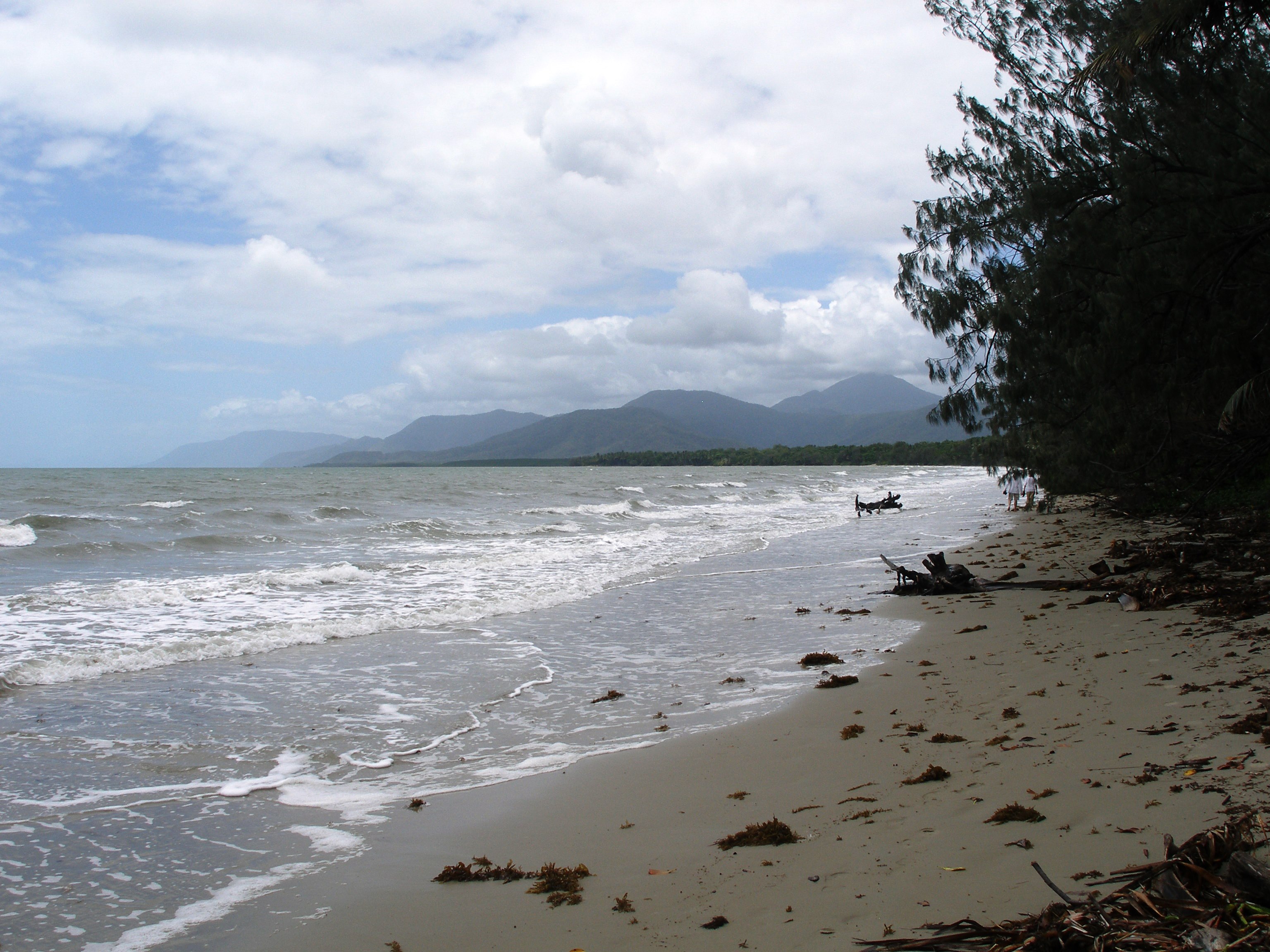
The last three kilometres took us along the beautiful Four Mile Beach. To say we ran would be a gross exaggeration. The heat was so extreme that Greg and I negotiated this stretch at walking pace.
Across the line with Steffen
Steffen and Emil were standing 100 metres before the finishing line to receive me. Emil was filming, and Steffen ran across the finishing line with me. He did so despite the fact that he was totally shattered after his own run, which he had completed in 5:47:36. My time was 6:36:39. By way of comparison, the winning time was 3:06:22, that of a local runner. The half-marathon distance was also won by an Australian with a time of 1:40:05. In all, 350 men and women completed the half and full marathons on a day with high humidity and about 30 degrees Celsius in the shade, which most of the day had been very difficult to find.
The finish lay in the palm-fringed Rex Smeal Park in Port Douglas on a peninsula with a view of the Coral Sea. Here I was loudly presented over the loudspeakers as Mr Great Wall Marathon by Lars Fyhr. I had something to eat, and both Steffen and I had a massage, after which we took a bus back to the hotel.
Seven Continents within reach
Thursday, on our way to breakfast we met Kathy Loper. I asked her about her plans to organise a marathon trip to the Antarctic. She actually had one on offer already in February 2013. I felt that was a little too soon for me, especially as I would also be running in both China and Myanmar that same year.
But after breakfast, I read up on the trip on Kathy’s website and became more and more enthusiastic. I realised that the trip not only involved a marathon in the Antarctic, but also one in South America. It would be tough going, of course. The idea of actually being relatively close to running a marathon on all seven continents excited me.
Gala party
The gala party was held that evening, and for us there was no problem getting there because it was held at our hotel. We had excellent food, some local entertainment and speeches by the people from Albatros.
There was no presentation of awards or highlighting of individual performances like in China, but it was a fine event.
Homeward bound on his 18th birthday
On the Friday, it was time to go home, and at the same time Emil’s birthday. It wasn’t exactly the most festive of birthdays, but we were prepared for that and had enjoyed some wonderful days beforehand.
I had been told the previous day that our bus would be leaving at 9.30 a.m., but when everyone else we had been with left at eight we were suddenly not so sure. And it turned out that we were also supposed to have left at that time, but couldn’t possibly make it because we hadn’t packed yet. We were told that it wouldn’t be a problem, but I wasn’t so sure, and felt a bit stressed.
We arrived in Cairns at 11 a.m. to new problems because the check-in queue was very long. We had to run around in a state of panic to find staff, who could help us get through more quickly. We also had to say goodbye to Steffen, who was to spend the day alone in Cairns because his flight to the US didn’t leave until the following night.
Also in Sydney, we had our work cut out because our next flight left very quickly after we landed there. We were to stop over in Singapore, where we didn’t have much time, either. I just managed to turn my clock back to UK time before midnight. By doing so, we kept Emil’s 18th birthday alive.
The last stopover was London Heathrow, where we had a bit more time and could sit down for breakfast. It was getting difficult to keep track of time, but it was now morning in Europe. We were back home in Denmark before noon, and yet another amazing journey was over, and a unique marathon had been run.
Unrepeatable run
Astute folks are bound to be able to calculate when the next solar eclipse will be visible from the beach in Port Douglas. It will no doubt be in many years from now and not in my time, probably not even in my great-grandchildren’s time. The Solar Eclipse Marathon was thus a one-off run, though the name could, of course, be reused elsewhere in the world.
Short distance triathlon
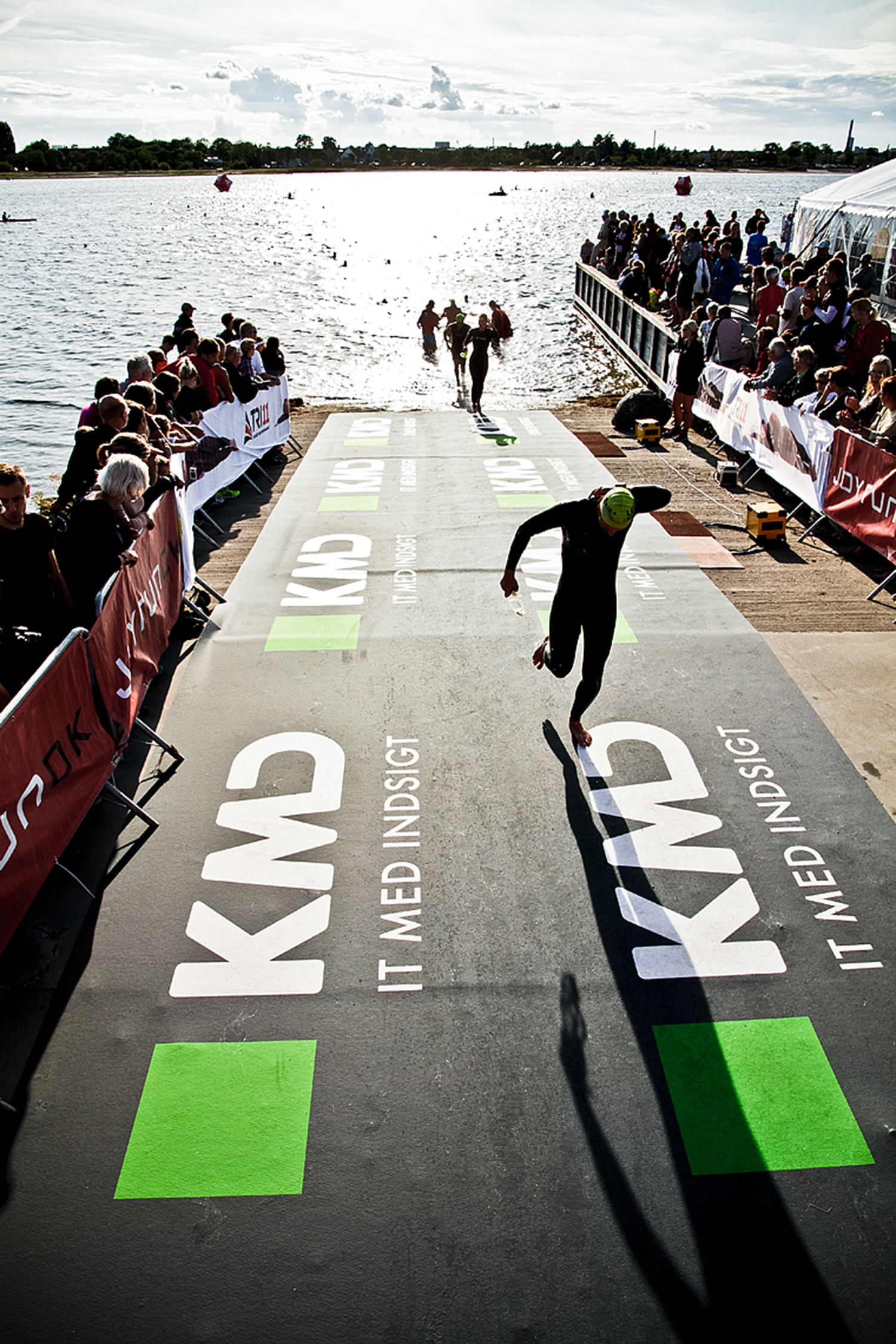
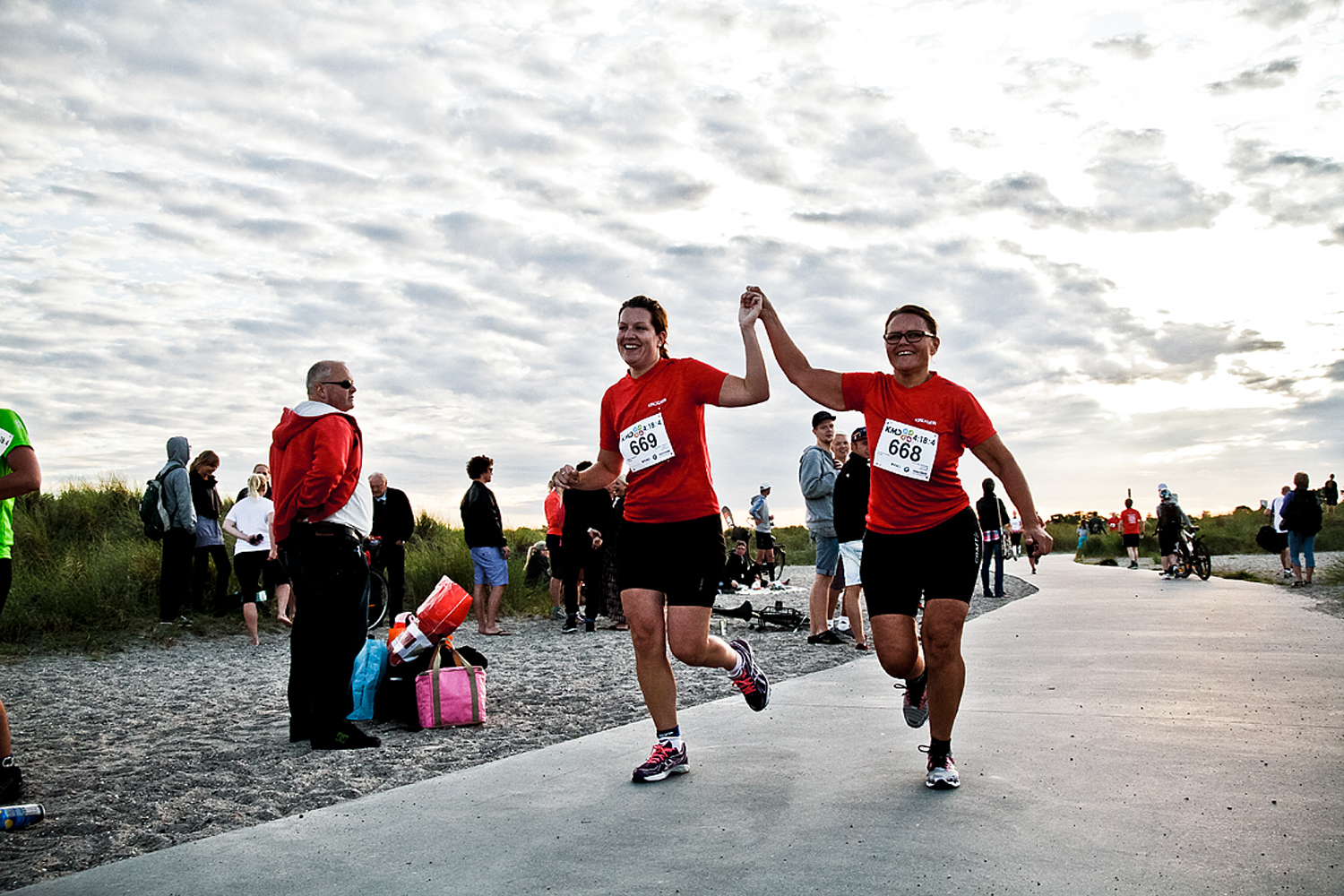
For many years, the KMD Challenge Copenhagen has been Denmark’s biggest triathlon event. In 2013, it was given the blue stamp of approval and its name was changed to KMD Ironman Copenhagen. In 2012, I took part in the short distance, the 4:18:4, which stands for 400 metres swimming, 18 kilometres cycling and a four-kilometre run.
Prize
I took part in this event because I won a prize. In April, I had taken part in Roskilde TRI’s IRT and won a running number in that year’s KMD 4:18:4.
What is IRT?
IRT is TRI spelt backwards, which is precisely what it is. The three disciplines are run the other way round. In this event, it is not a question of winning, but of taking part. IRT takes place at the end of the club season, when the whole family can take part. Participants do not start cycling until all the runners have crossed the line, and the same applies to the swimming. So there is no transition, where everybody has to be as fast as possible. The whole thing is concluded with coffee and home-baked cake, and there are prizes as well, although not for people’s individual performance. Winners are decided by lottery. The prizes are donated by sponsors, and I won the last prize that year, a running number for the KMD 4:18:4 on 10th August.
The event took place at Amager Strandpark south of Copenhagen, and Karin and our foster son, Nick, came along. We got there in good time to get parking space and to have a look around the course at our leisure.
Swimmers all bunched up
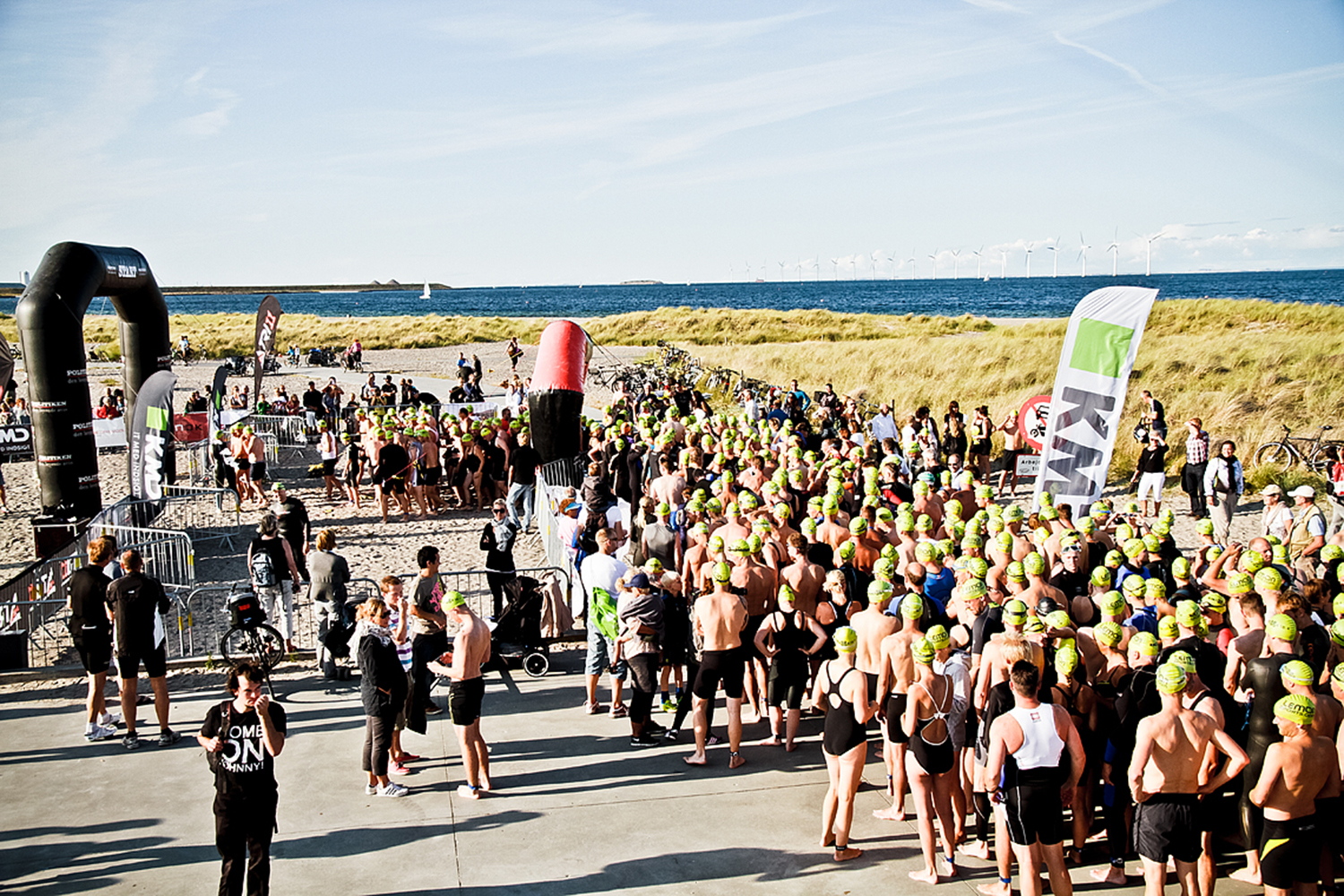
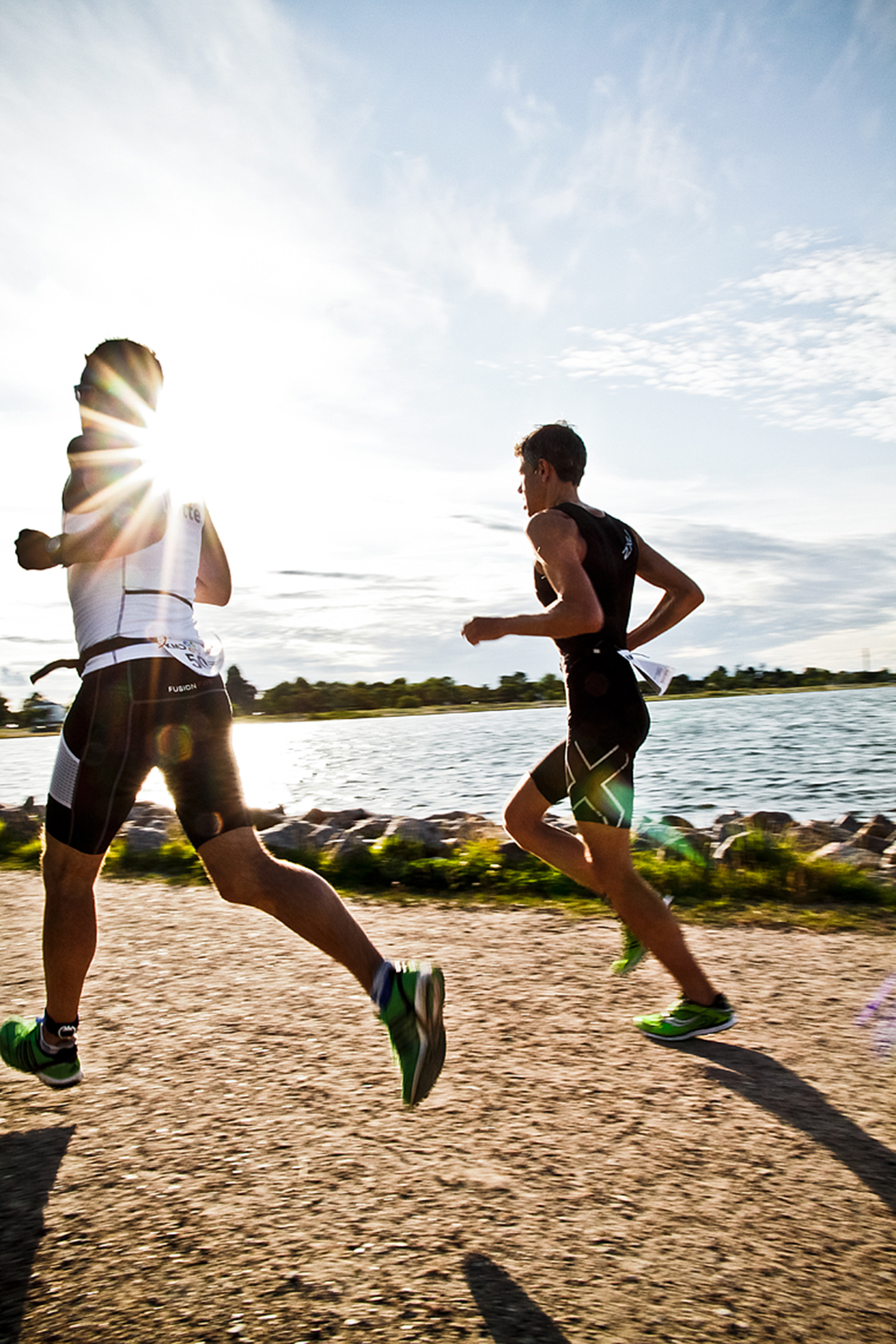
The first athletes were to enter the water at 6 p.m., and I stayed up front to make sure I was among the first, so that I wouldn’t have to stand there freezing, and so that we could get home again fairly early. At three-minute intervals, 50 athletes were dispatched at a time. I was in the second or third group and was a bit too eager, because I ended up in the middle, whereas I should probably have kept further to the back. I was almost “run over”, and was struck several times by other athletes’ arms and legs, including a blow to my face.
Totally shattered
I swam reasonably well to begin with, alternating between crawl and breaststroke. We were to swim around two buoys before heading back to land. But when I reached the second buoy, I was completely shattered from one second to the next. I felt just like a ball that had punctured. I had no energy left to swim at all, and swimming on my back was also a problem.
As instructed by the organisers, I called a nearby safety kayak. A female athlete also offered to haul me ashore, but I turned her down. Instead, I hung on to the kayak for a couple of minutes, after which I was ready to carry on swimming.
About 50 metres from land, I got into problems again. Again I called out to a safety kayak, but the oarsman was obviously so busy enjoying the good weather that his focus was not on the swimmers in the water. By the time it finally occurred to him that I needed help; I was so close to the shore that I shook my head and managed the final metres under my own steam.
Blood in my spit
After I got back on land, I was coughing incessantly and spitting blood. It felt as though I had sandpaper in my throat, which was most unpleasant. While I coughed and spat, I went up to my bike, took off my wetsuit and got onto the bike. The transition took rather a long time.
Good cycling – lousy run
The cycling bit went very well. I was still coughing as I rode, as well as spitting blood-red phlegm. The run, on the other hand, didn’t go at all well. I had absolutely no energy left. I alternated by running for a few hundred metres and then walking for quite a way. The four kilometres took me 29:30 altogether, which was incredibly slow.
My overall time was 1:34:15. Despite my throat irritation I had plenty of appetite, so we enjoyed a good meal with wine to go with it at one of Amager’s restaurants before driving home to Roskilde.
No serious damage
For the next few days, I still felt as though I had sandpaper in my throat, so as a precaution, I went to see my GP. There was nothing to worry about, and I was soon as right as rain.
Strong conviction
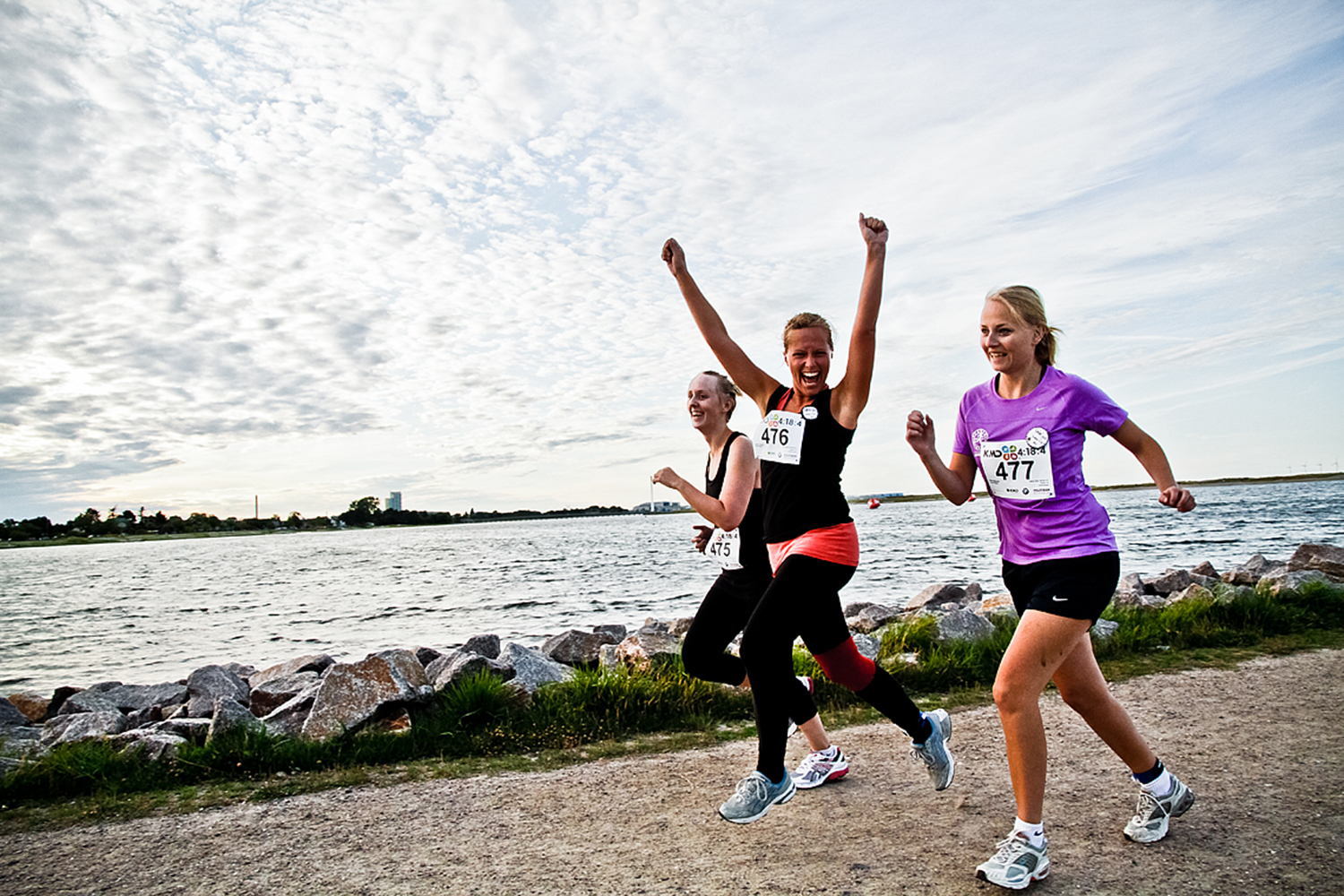
It was with entirely different convictions than a year earlier that I signed up for The Great Wall Marathon 2012. After a year with a heel injury and the fear of having to drop out, I was now free of injuries, well-trained and several kilos lighter.
With Karin again
Because Karin had been with me in China three years previously, I had not expected her to join me again for many years, so I was very pleased when she said she’d like to come. This time she would not make do with five kilometres, but seriously intended to complete a marathon.
As in 2009, we were not going to make do with the short trip, which only allowed travellers enough time for the run itself. So in collaboration with Albatros Travel, we planned an additional trip that would fulfil our special wishes.
Oh no, Far East again
When we received our travel documents, I could see that, in Beijing, we were to be staying at the Far East Hotel. Recalling our experiences in 2007, my reaction was: “Oh no!” I called Albatros, but it was difficult for them to make changes, and they just hoped that things would have improved.
Visa problems
Leaving Copenhagen as usual on Tuesday evening, we arrived in Beijing at around noon on 16th May. Here, one member of the group had a problem that delayed the rest of us. The Chinese authorities refused to accept his visa. As a result, he had to fly to Hong Kong to get a new one before he could return and enter the capital. I didn’t understand the logic of that and simply had to accept that that was the way it was.
Far East – far out
We arrived at the Far East Hotel in the middle of the afternoon. It was not good, in fact, it was horrible The place had been bad enough in 2007, but now it was far worse. In the meantime, it had become a youth hostel. The restaurant had closed, and there was no service of any kind. We were to eat at a nearby restaurant. First we got a room that stank of tobacco smoke. We didn’t want that, so we were given another. This one didn’t smell of smoke, but it was of an abysmal standard in every respect.
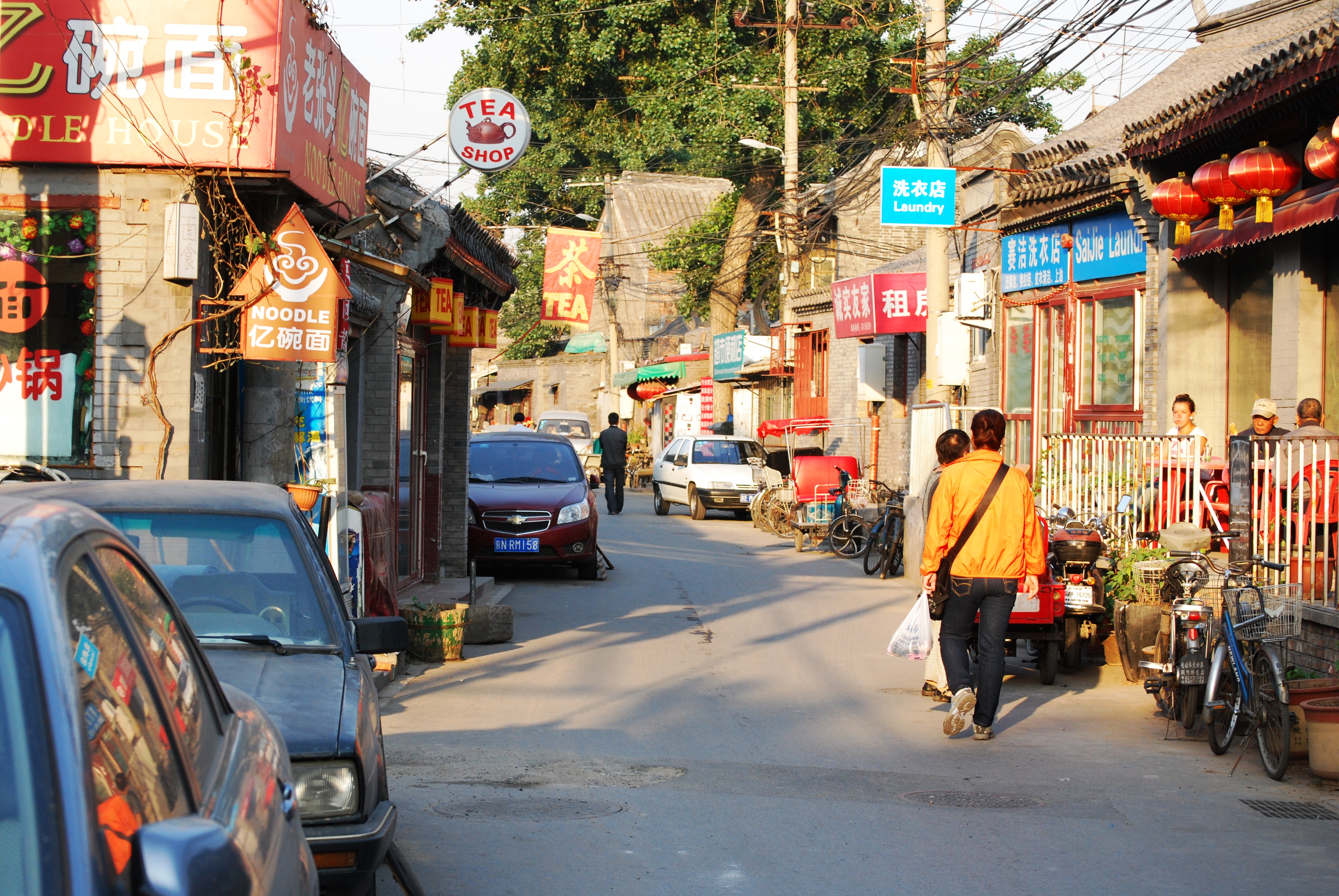
We were not alone in our dissatisfaction with conditions at the Far East. Everybody was up in arms, and nobody wanted to stay there. That year’s guide, Henrik, set about finding out what could be done. Of course nothing could be done on the first day, but people wanted another place to return to for the nights after the trip to Jixian and the marathon.
Karin to run half-marathon
During the Thursday inspection visit, Karin decided to downgrade to the half-marathon. Together with our respective adult sons, we had run the Helvede i Nord (Hell in North) in Tisvilde on the North Zealand coast a month earlier. The rigours had changed Karin’s belief that running a marathon in China was realistic.
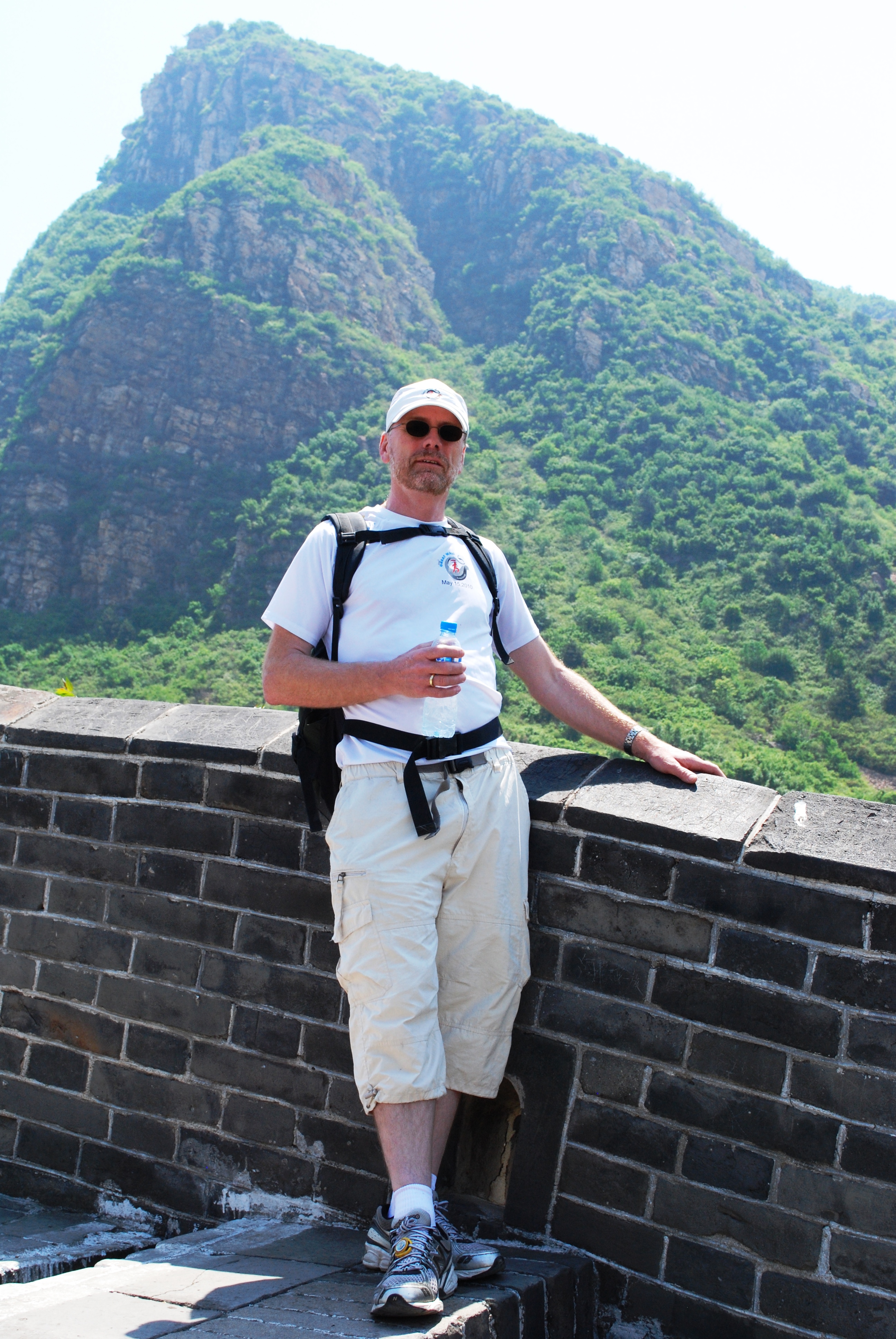
A day to charge our batteries
Whereas we were accustomed to a drop in standards when we arrived at the hotel in Jixian, things were quite different this time. We stayed for the first time at the Star Pattern Hotel, which was pure luxury compared to the Far East.
We spent most of the Friday charging our batteries. We ran three kilometres and otherwise spent the day relaxing and preparing for the big run. In the evening, we were driven to the familiar Yuyang hotel, where we enjoyed the evening pasta party with the other groups.
Far East – good-bye!
That evening’s great news was that we were not going back to the Far East Hotel. They had found a far better place for us to stay.
I don’t think that Albatros Travel had realised beforehand what an awful place we had been sent to. A local agent is sure to have made a packet buying cheap and selling dear. Let’s hope that agent is no longer in business.
Well charged
My sleep that night was the best ever before a Great Wall Marathon, but Karin slept really badly. The guides had made sure we had plenty of bananas, raisins, bread and marmalade, so we filled our stomachs well before the marathon.
At Yin and Yang Square there is a secure deposit area for the runners’ luggage, but we didn’t need to queue up for that because the group had found a place for us by the grandstand. Not everybody in the group would be running so our baggage would be under constant surveillance.
Flying
My legs were in fine shape and for the first time ever, I didn’t walk on the way up the mountain, and I reached the Wall after precisely half an hour. That really was a record. Everything went well over the Wall as well, so I was back at the Yin and Yang Square after an hour and a quarter.
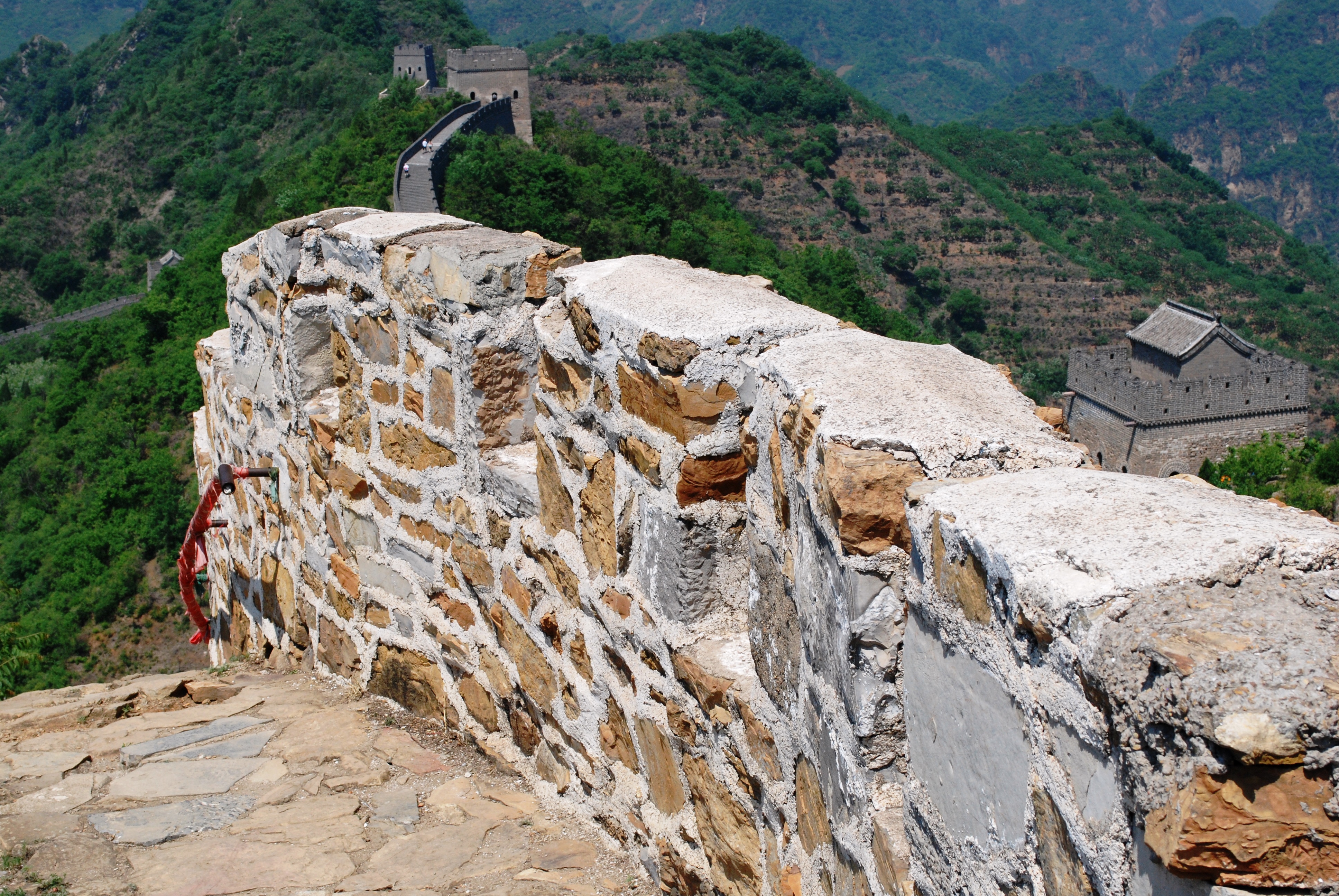
Everything went very well on the flat, too. I felt as though I were flying along and only walked briefly when I was getting supplies. I had deposited plenty of gel, power drink and salt capsules at the pick-up points.
Unprovoked fall
After 16 kilometres, I fell as far as I am tall. It was on a completely level asphalt road and happened without provocation. I grazed both my knees and had a few cuts on the palms of my hands. I was bleeding quite a lot, but I was okay. At that very moment the doctor, Mogens, came driving by and asked if I was okay. I assured him that I was. He had been called out on an emergency and had to get on, which was fine by me. I quickly got over the incident and got going again.
It later transpired that a tourist with a GoPro camera had captured the moment when I fell. He later sent me the file with the small film clip.
A minor crisis
It was not until halfway through the run at the mountain that I got a bit short of energy. At that time, I had been going for about two and a half hours. I walked most of the way up the mountain, but was in good spirits, and after I reached the top, I ran most of the way down again. On the stretch that followed, I ran most of the time, although I did have to walk once in a while when picking up provisions and summoning some more energy. I got a bit of cramp after I came down the mountain but got rid of it by running and doing some stretching exercises.
Meticulous medics
At the 30-kilometre mark, a Chinese medic was of the opinion that I ought to have something done about my grazed knees. I told her that everything was okay and that the doctor, Mogens, had given me a once-over. She was not entirely convinced, however, and was about to call someone. But I was convincing enough and able to continue. Only a few minutes later, someone said, “Hi Henrik”. It was Karin. She gave me a kiss, and we walked together for a while until I started running again.
In good cheer
I was back at Yin and Yang Square again after 4:14. I was well aware that this was an excellent time. But now the question was how well I would manage the Wall. Of course, it wasn’t easy, but I didn’t have to sit down more than once or twice. I also got cramp a couple of times but then I used the old trick of walking sideways and backwards, and it still worked. In some of the most difficult places, I crawled on all four.
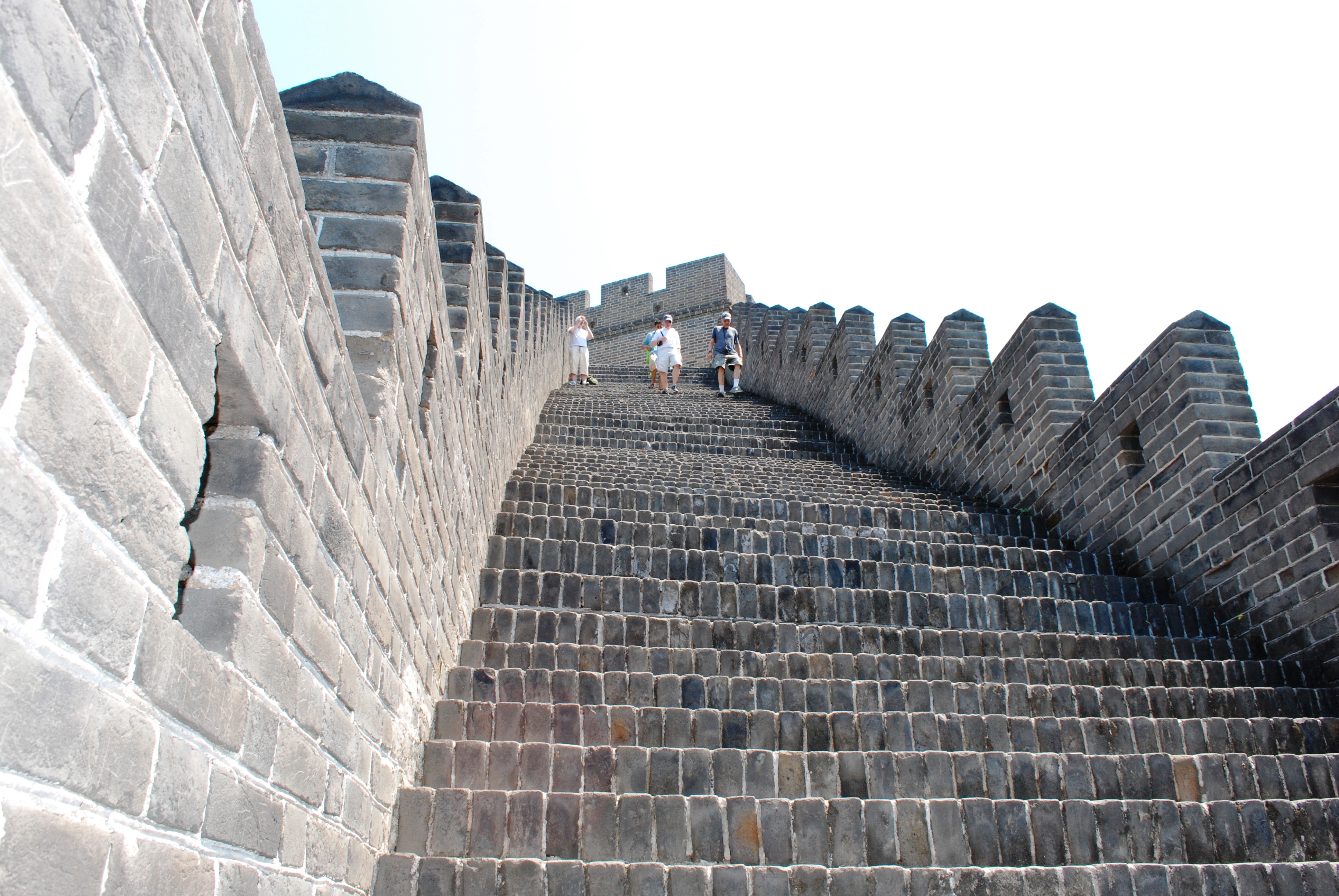
Personal record
When I got right over the Wall, I was about 48 minutes away from my 1999 personal record. This made me very happy, and it was now obvious to me that this record would fall. I kept running for the first three kilometres up the mountain. I was tempted to stop for a breath but didn’t want to take a break while I was running so well. Finally, as the course flattened out I allowed myself the luxury of walking for a while, during which time I had a drink before running on. At the bridge after 41 kilometres, I slowed to walk, but immediately started running again. I walked a bit near the car park to freshen up for the final stretch, after which I happily ran the last couple of hundred metres across the finishing line at Yin and Yang Square, where I was received by Karin. She had done her half marathon in 4:13:52. In the morning, she had had to wait almost 45 minutes at the highest point on the Wall, because so many runners had been dispatched at the same time that it caused a bottleneck.
Unlucky number 13 – says who?
On my 13th Great Wall Marathon, I knocked 13 minutes of my 13-year-old personal record. So who says 13 is an unlucky number?
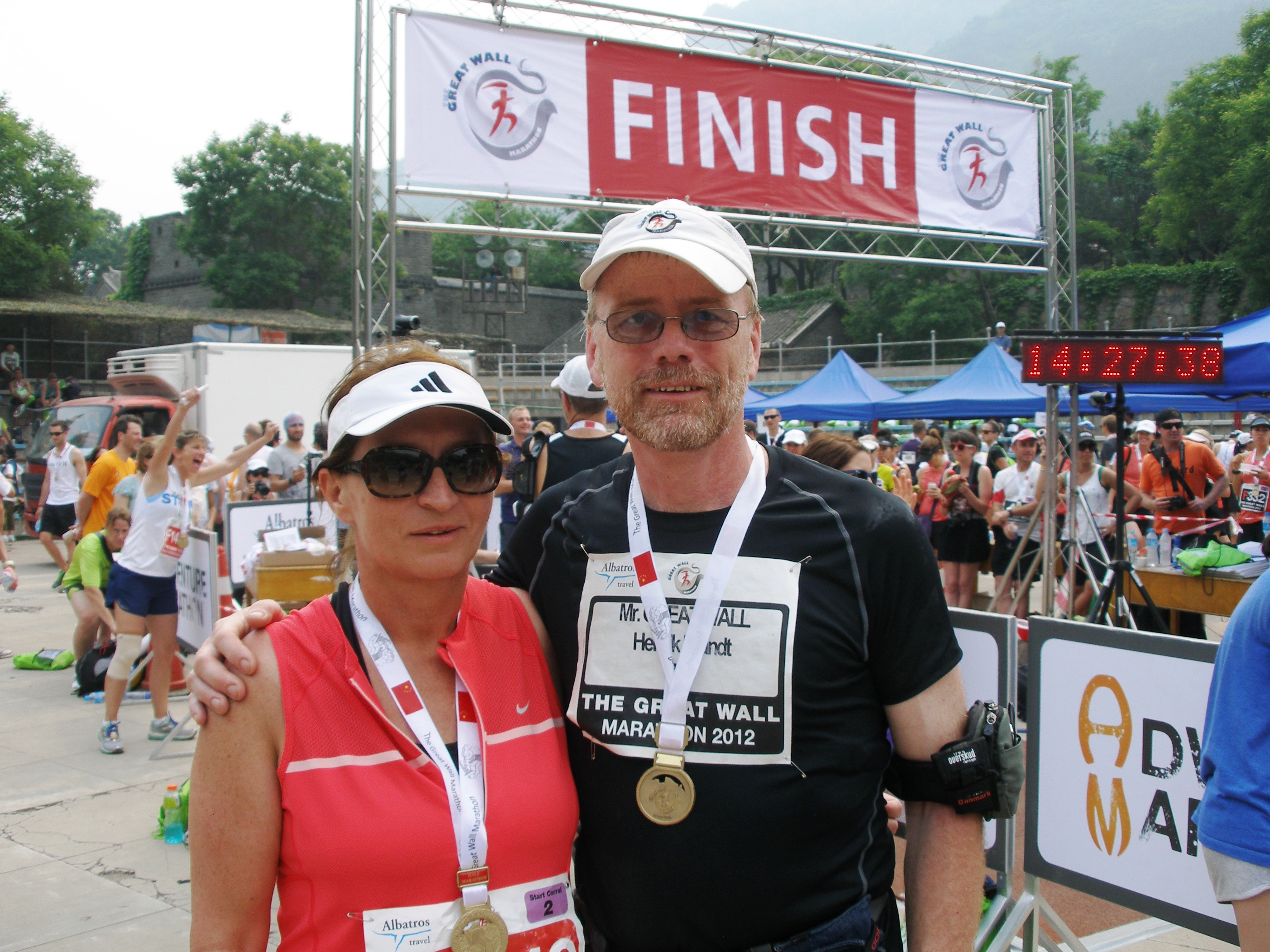
It was almost surrealistic for me to be at the finishing line watching other runners continue on up to the Wall for the second time. And just think, I was there while the gate was still open. It was also really odd that I was not the last Dane, who everybody else was waiting for. In actual fact, quite a few people crossed the line after me.
Extreme heat and high humidity
The reason for my good time was not that the marathon had been easier that year. The air was very humid, and the average temperature was 32 degrees Celsius in the shade. A total of 119 runners had been forced to drop out because of dehydration, but there had been no serious incidents. That year’s winner was the Spaniard Luis Alonso, with a time of 3:39:28, which was just under 21 minutes slower than the previous year’s winning time. So in every way, I was able to conclude that my good time was due to hard, persistent training.
Back to Qianmen
It had been a good day, and it ended well too. On our return to Beijing, it turned out that we were to live at the Qianmen Hotel we knew so well. It was lovely to check into a decent hotel.
We spent the Sunday relaxing and took a trip into the city, where we did quite a lot of shopping. In the evening, our guide brought us our train tickets for the following day. I got a shock. On the tickets, it said that we were to depart at 8.09 a.m. I immediately vetoed this, refusing to accept it because we had asked for an afternoon departure and would not be able to leave that early after a night party. Fortunately, our guide secured us a later departure, at 3.31 p.m.
Same table as the officials
The gala party was held at the Beijing Hotel again that year. Our group was supposed to sit at the same table, but two of us would have to sit at the neighbouring table. Since this table was for the Albatros staff and the medics, it was only natural for Karin and me to sit there because we wouldn’t feel out of it.
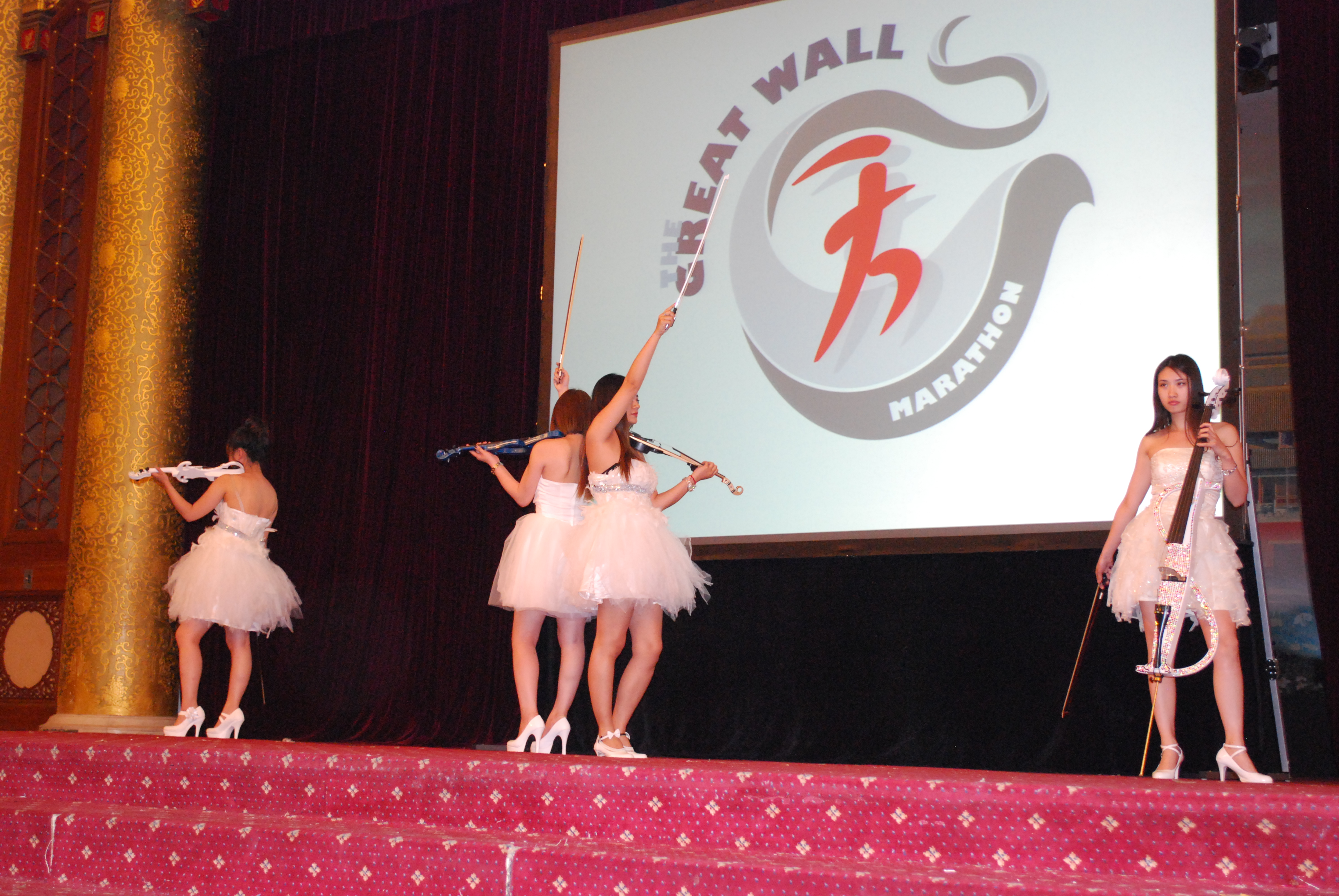
The evening proceeded according to the well tried principal. I had no anniversary that year, but was called up on stage all the same because Fran was telling about my performances through the 13 years.
The after party was also the same as usual and held at the Blue Bar. The hours passed in agreeable company, and we didn’t get back to the hotel until 4.30 a.m., so it was a good job we didn’t have to catch the train at 8.09.
Night train to Tai Yuan
Monday morning, I had practically no voice left. It’d started on the Sunday afternoon, and the night party had probably not improved matters. After breakfast and a little time in our room, we bade farewell to our group, who would be leaving that day for Denmark.
We were picked up just after noon and driven to the train station. This left us about an hour and a half to wait until the train left at 3.31. Inspired by a similar situation in 2009, we spent the time playing Yatzy.
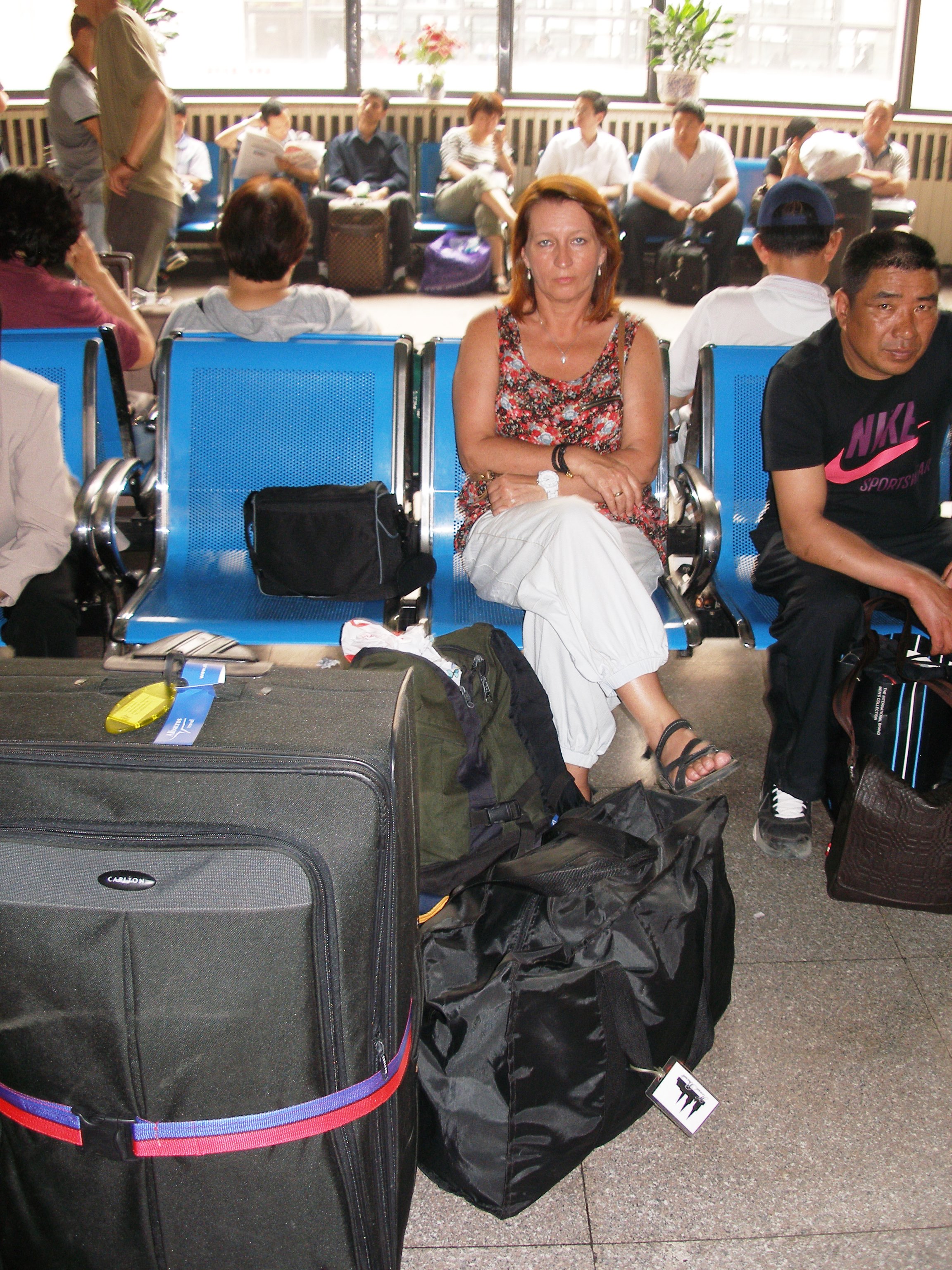
We had a very nice train journey indeed. We had good seats with plenty of leg space and fold-up tables. We managed to watch a film and a half on the laptop before it ran out of power. We then played Yatzy again until the arrival in Tai Yuan at 7.22 p.m.
Cosy guesthouse in Pingyan
We were picked up by a driver, who was to take us to Pingyan. We thought it was just around the corner, but he drove for more than two hours before we arrived at the De Ju Yuan Hotel at around 9.30 p.m. It was a really cosy little guesthouse. We were shown to our room where we left our luggage to go and get some much-needed supper.
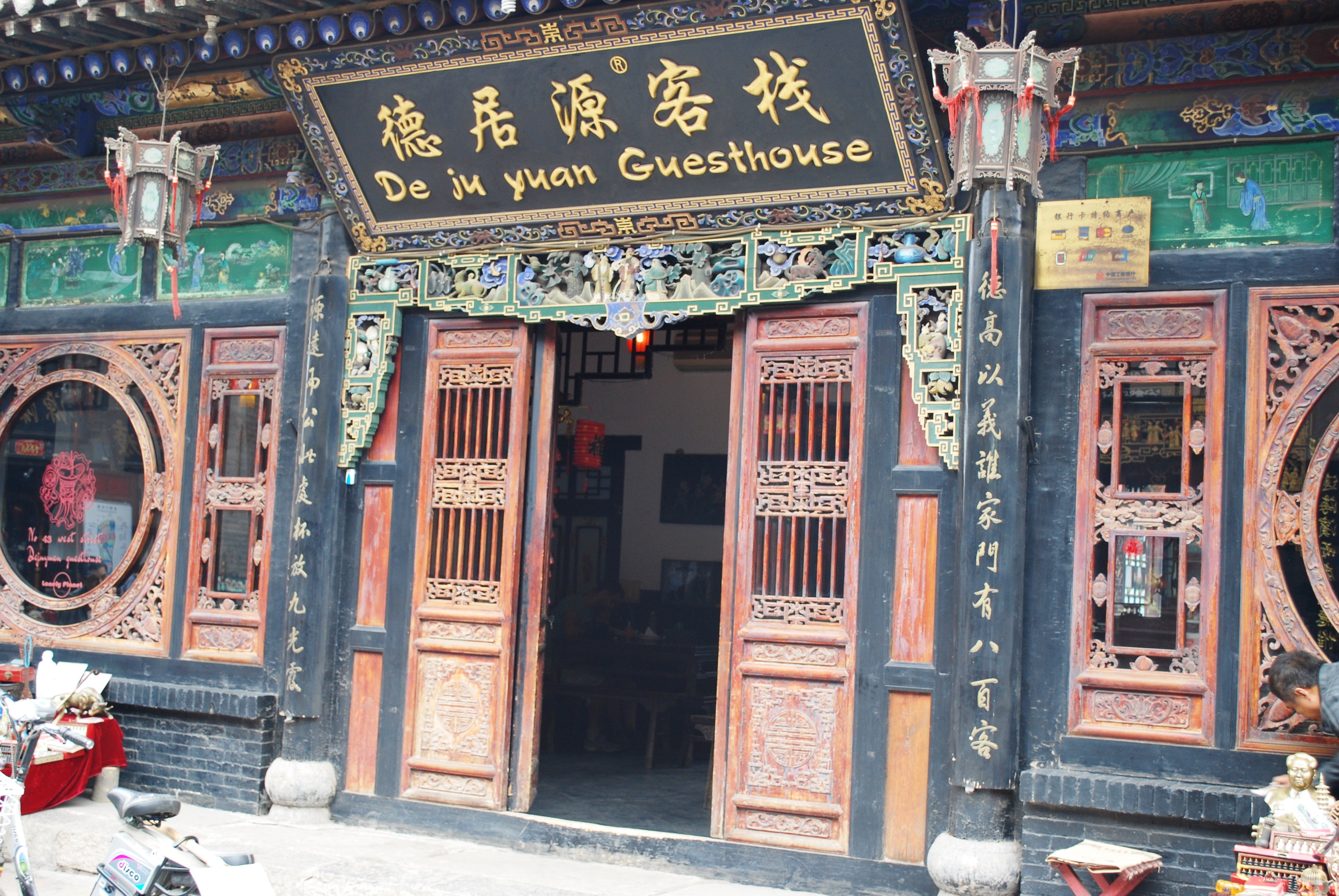
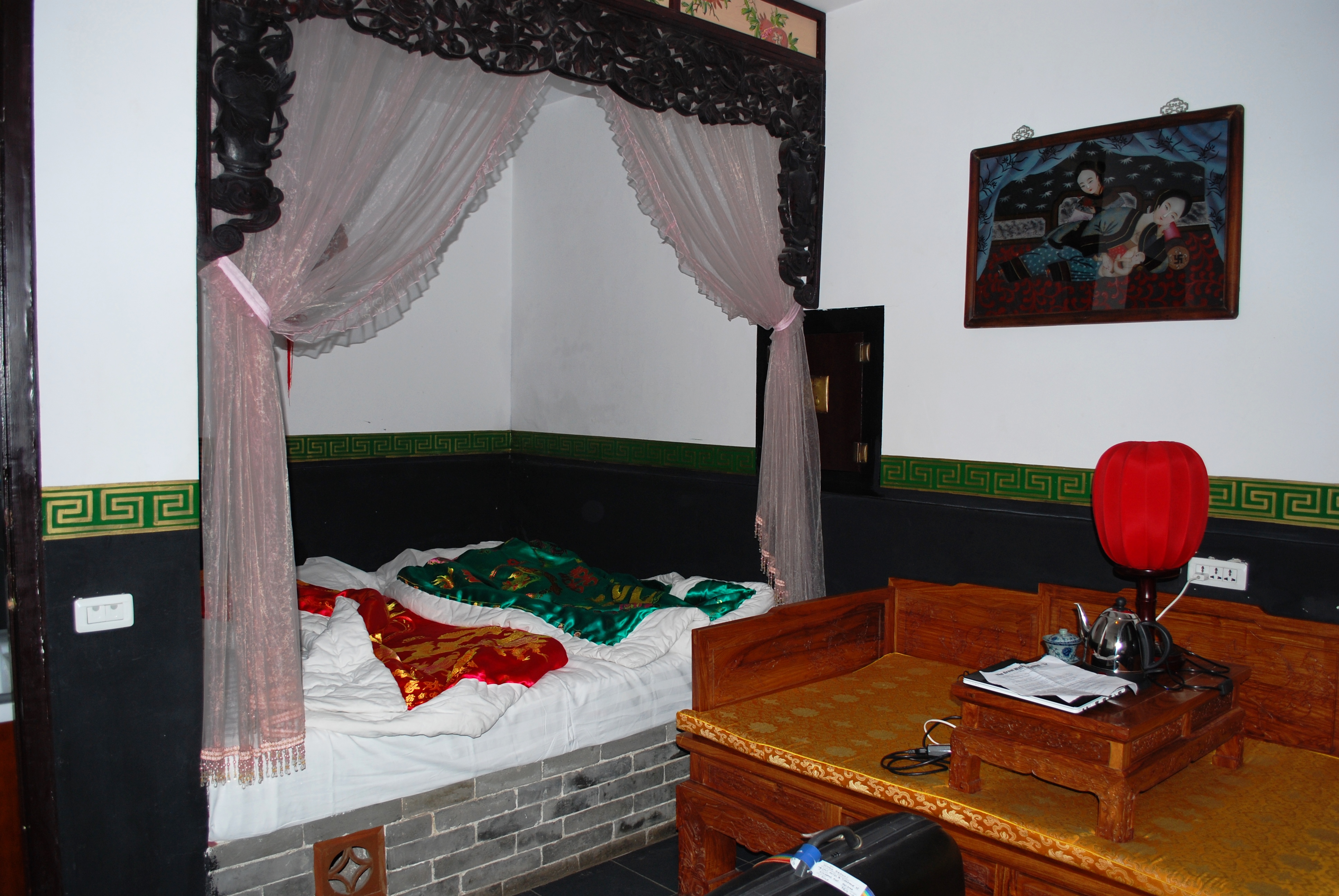
To the bank and jail
After breakfast on the Tuesday, we met our local guide, Lisa, who had a schedule ready for the day. First stop was the first bank in China, which opened in Pingyan. It had a very interesting story. After this, we visited the town’s old jail, which was not exactly boring, either. We were told a lot about the “good” old days, when a man took his punishment like a man. The women did not exactly avoid punishment, either. What we heard about was pure torture.
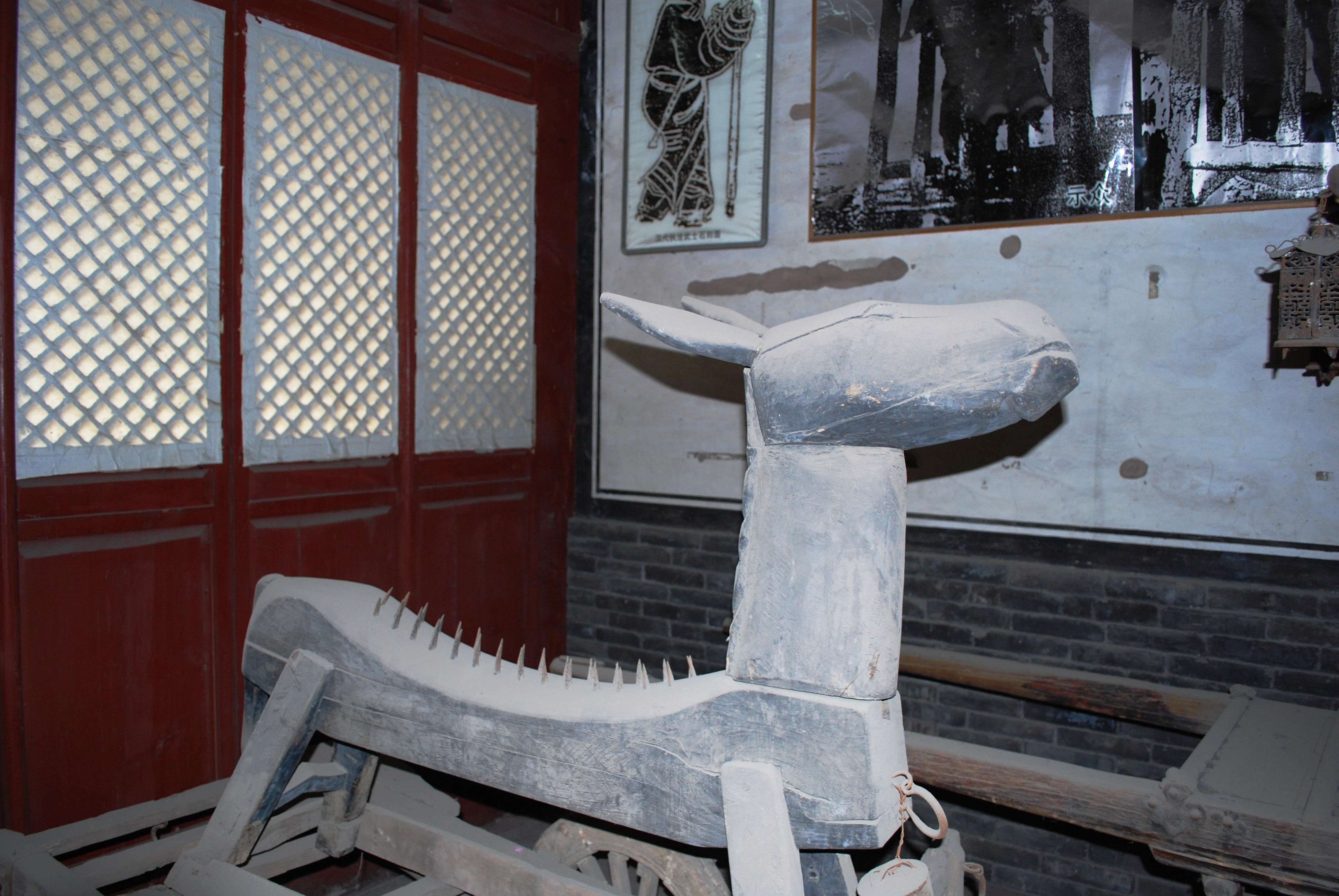
After that, we went back to the hotel, had lunch and checked out. After this, we heard about the town wall and enjoyed a little time on our own.
Massage with unpleasant after-effects
I decided to have my aching legs massaged, which I shouldn’t have. I got an extremely rigorous leg massage, and also a foot massage, as did Karin. But after we left, I started to feel cold and shortly afterwards I was completely drained of all energy. We went to sit at a cafe. I felt really cold and going back to the hotel to pick up a jumper didn’t help.
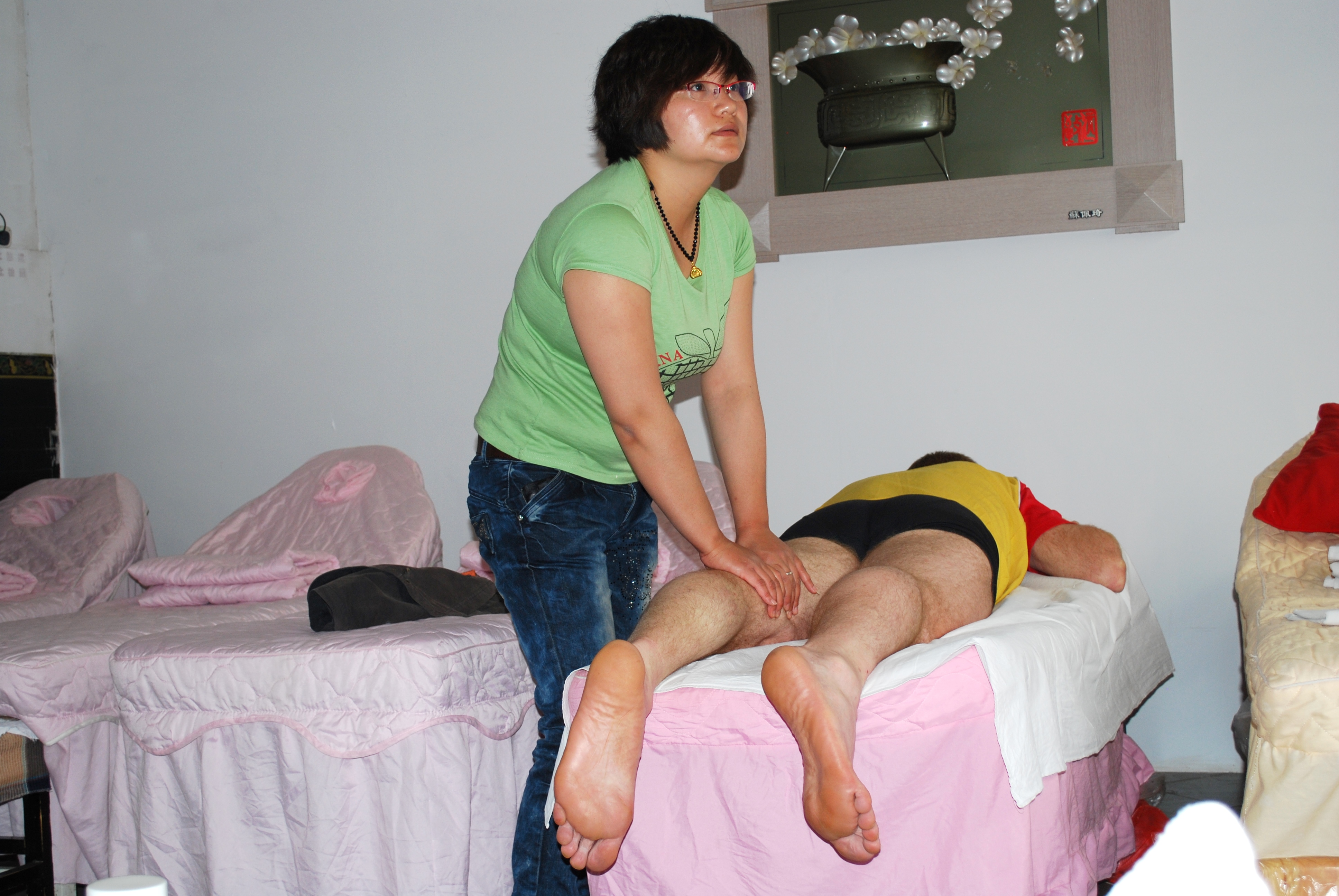
At 6 p.m., we were back at the hotel for supper. I had no appetite at all and just slept while Karin was eating. We were driven to the local train station just before 8 p.m., where we boarded the night train to Xian. In the meantime, I had eaten a couple of energy bars and felt a bit better.
Terracotta warriors
Thursday morning, we met up with a guide, who took us to visit tombs containing the Terracotta Warriors. The figures were of life-size warriors and horses. Dating from 210 BCE, they are part of the necropolis of China’s first Emperor, Qin Shi Huang. They started building the tomb in 221 BCE, when Qin Shi Huang ascended the throne at the age of 13. All the figures were in pits some seven metres below ground level with a ceiling and several metres of soil above them so they could not be seen from the surface.
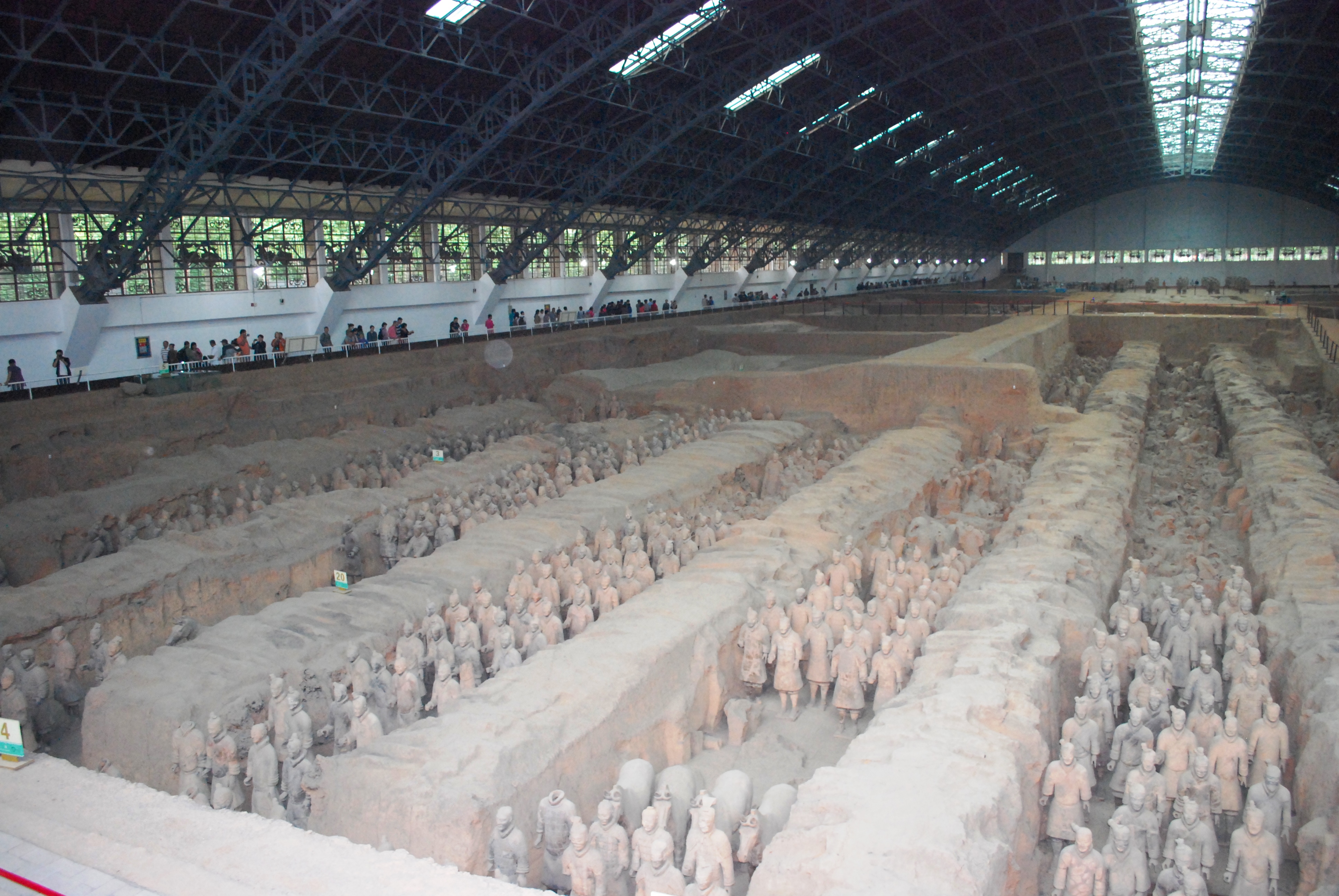
The tombs are about a kilometre east of Qin Shi Huang’s mausoleum, 36 kilometres north-east of Xian in Shaanxi province.
The figures were discovered quite by chance in 1974 by a group of farmers, and more pits are still being found in the area, making it one of the largest necropolises in the world. The mausoleum itself has not been excavated, and many of the other pits have been only partially excavated, both because of their size and because the objects in the pits are so fragile after many years under the ground.
We spent a good three hours at the place, where we also had lunch. It was impressive and very interesting, but by the end we had seen quite enough. Our guide tried to convince us to buy souvenirs, but we didn’t want to. I’ll bet he had agreed a cut with the sellers. We felt that although the figures were very impressive in China they didn’t really fit in our home back in Denmark.
School visit
In the afternoon, we were back in Xian, where we first visited a tea shop. After that came the actual highlight of the day: a visit to a school. Two teachers showed us around and told us about the place. After that, we visited a class with 39 pupils at the age of 16. It was a language school, so they spoke English very well. They were very sweet and candid and asked a lot of questions about us and Denmark, showing particular interest in Hans Christian Andersen. They asked us to sing a song, so we gave a recital of a very Danish song about a little fellow with a big nose and the Danish version of “Incy wincy spider”. Afterwards, it was their turn to perform for us. Since then I have not been able to listen to “The Lazy Song” with Bruno Mars without smiling and seeing the Chinese youngsters singing that day. When we left, we gave the teacher 100 Yuan, so the class could have some fun one day.
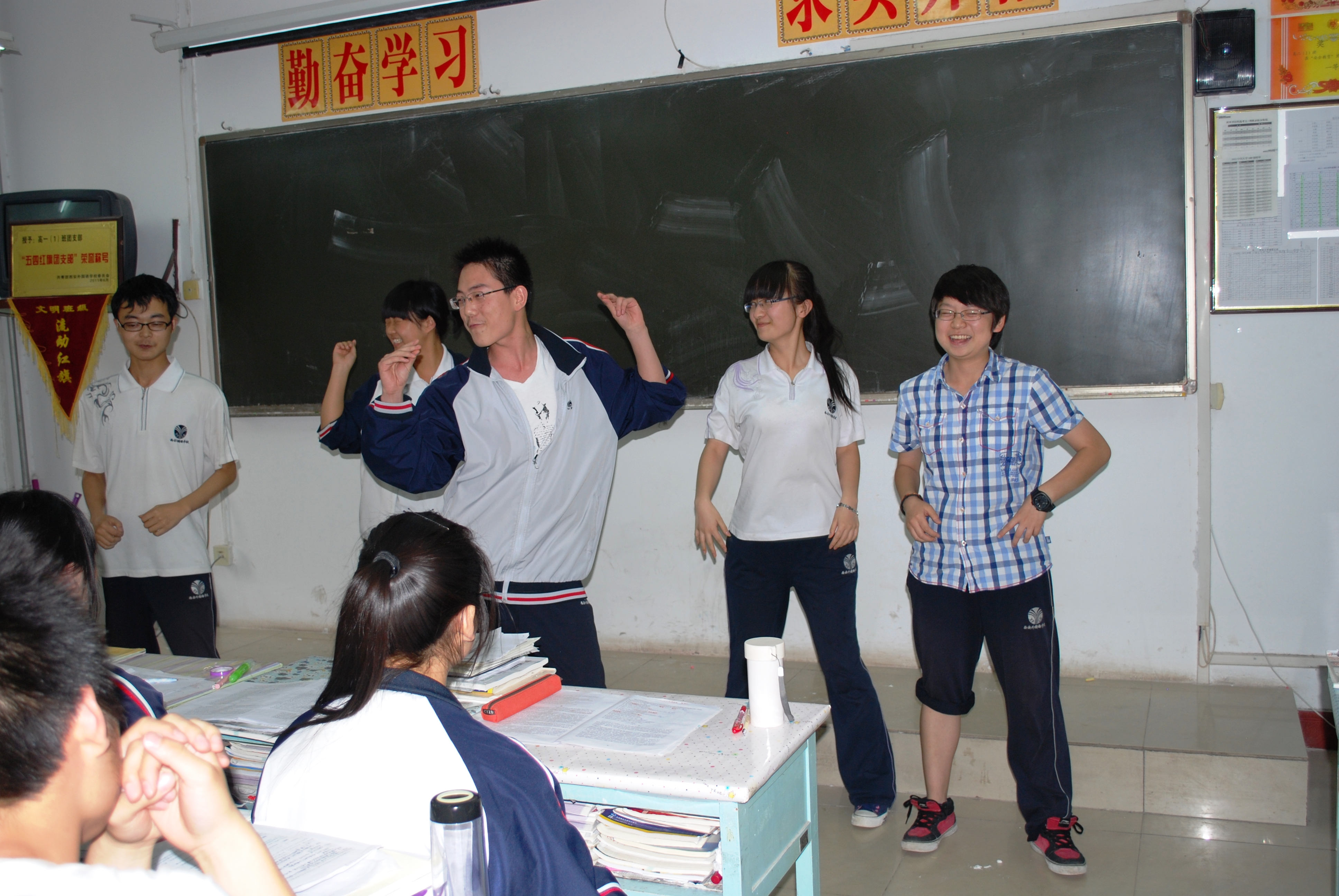
Late in the afternoon, we checked into the Grand New World Hotel in Xian. We had supper in the hotel theatre after which we saw an hour-long performance of traditional Chinese dance and music.
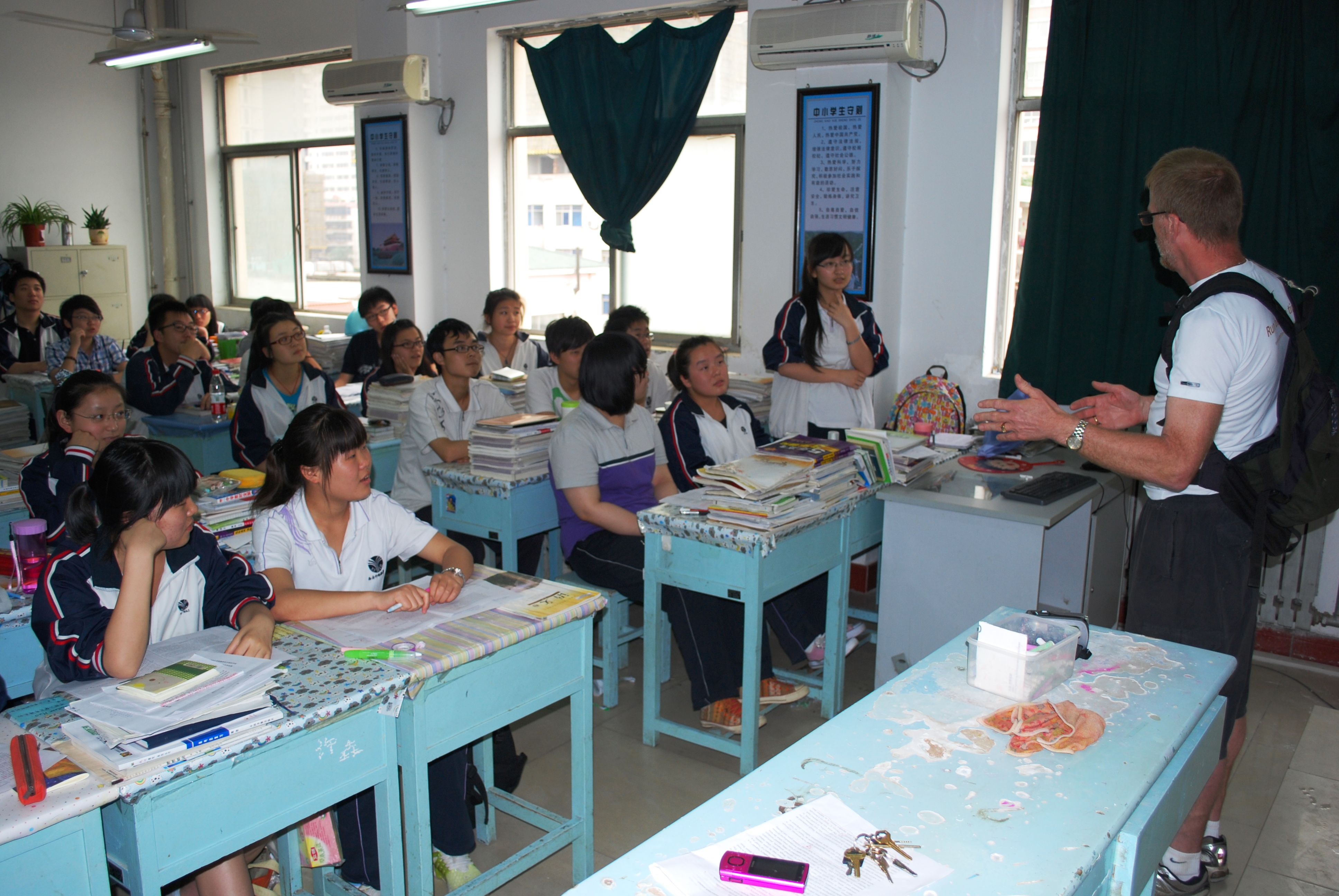
Another night train
We had some time to ourselves on the Friday, which we chose to spend at the markets and in shops, generally inhaling local life. In the evening, we were driven to the train station for an enjoyable return journey by night train to Beijing.
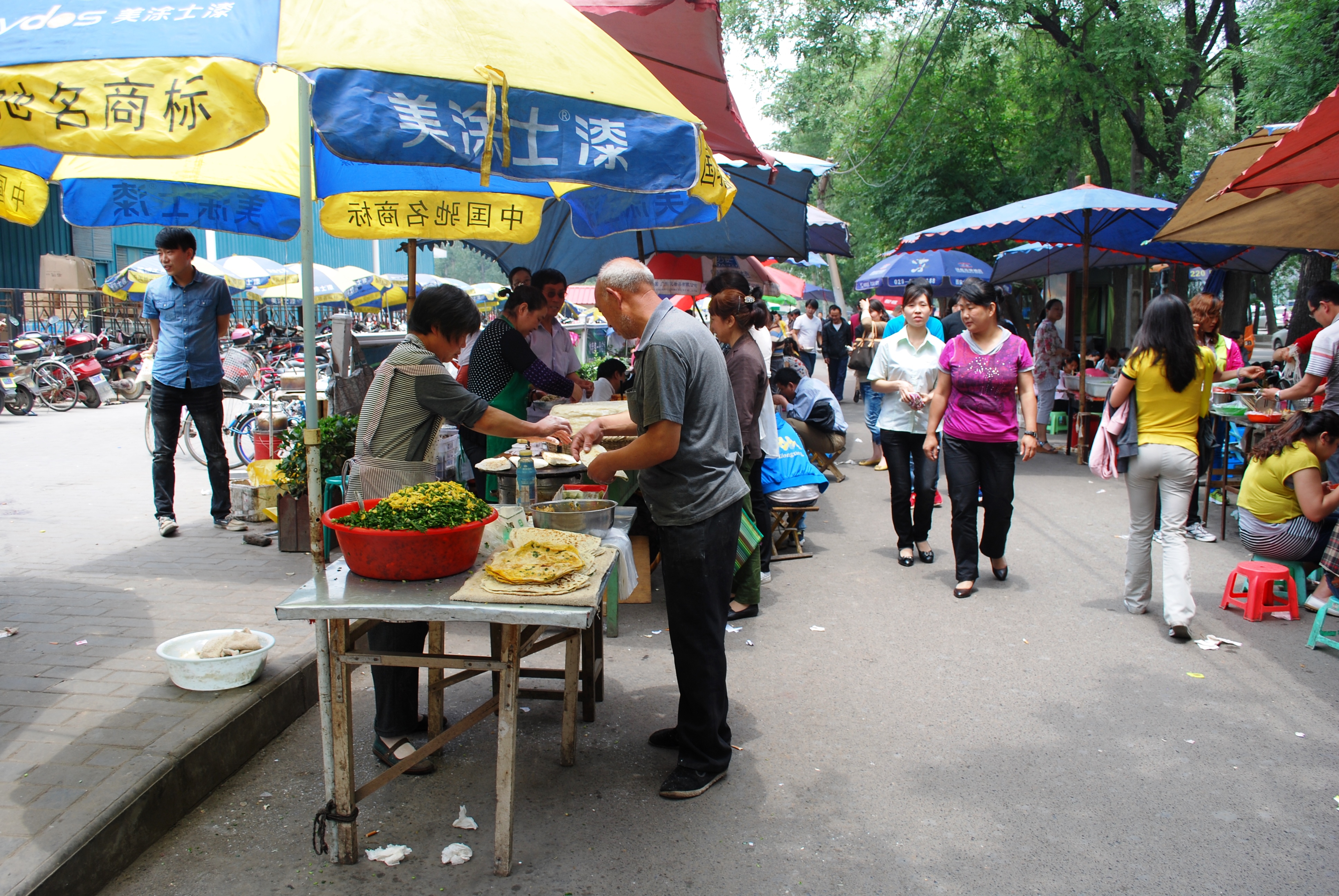
On our last day, we were picked up at the train station by our guide, who took us to the Qianmen Hotel for breakfast. During the morning, we visited a cloisonné factory before leaving for the airport at the end of a wonderful holiday.
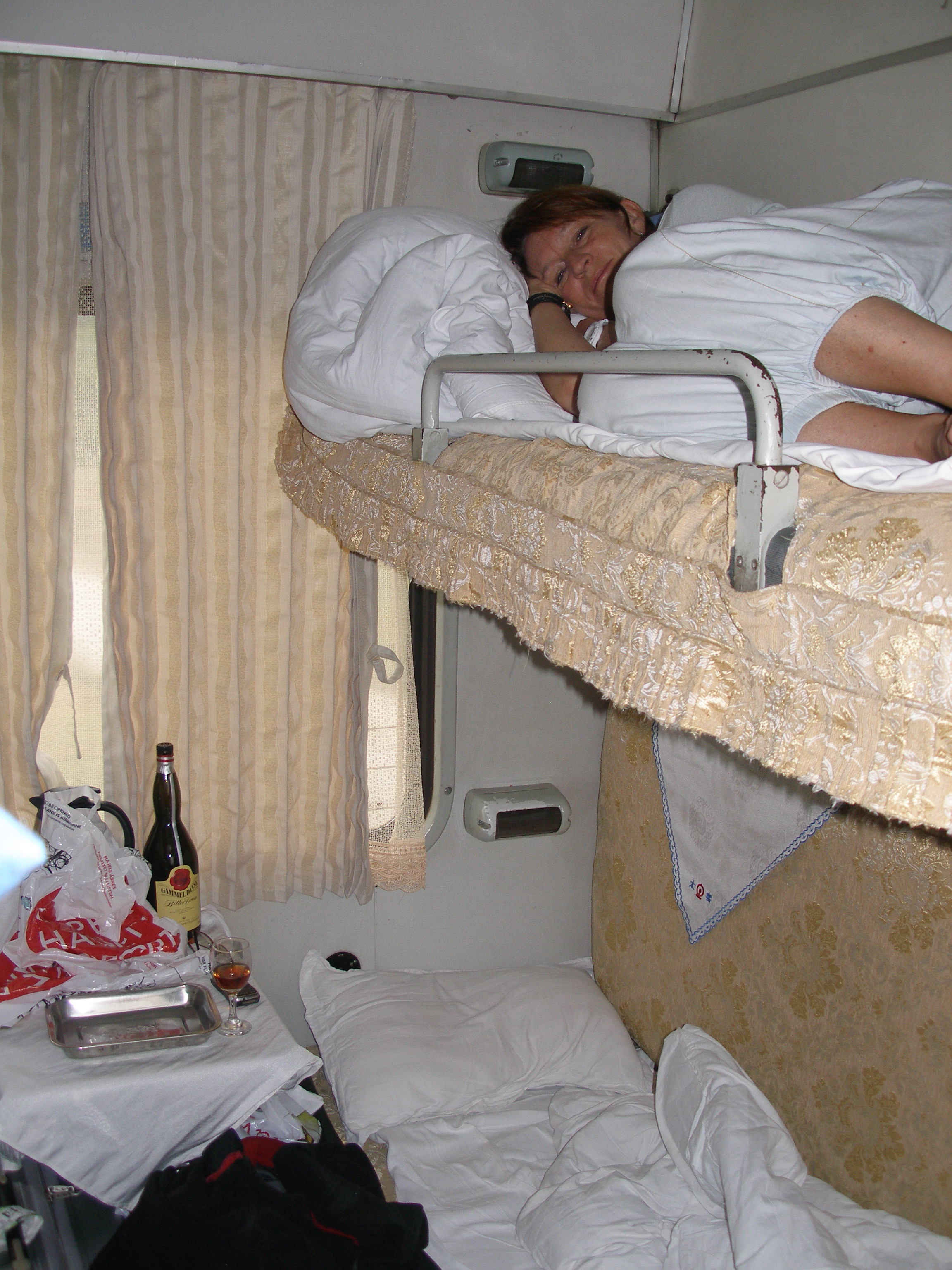
Indescribable emotions
My emotions after this trip were indescribable. After the huge problems I’d had been through with my heel injury, it was absolutely fantastic to return at full strength, and to beat the personal record I never believed it would be possible to get anywhere near.
Karin and I received an invitation in the autumn of 2011. Thomas Thomsen would be 75 years old on 2nd January, and this was to be celebrated with a reception and brunch in Hvidovre, a suburb of Copenhagen, the following Saturday. My first thoughts were about what I should give Thomas. The present we had given him at the reception when he retired from DAF had brought him joy, so my thoughts were on something else creative.
An idea quickly dawned on me. That same morning I had thrown out some old, worn out running shoes. I delved into the rubbish bin and took them out, washed them and hung them out to dry. I then found an expanded-polystyrene box, which I covered in paper bearing the logo of The Great Wall Marathon. I put the shoes into it and inserted a small plant in each. To one of the shoes I attached a label which read “The Great Wall Marathon Finisher” and to the other one a label with “Amsterdam Marathon Finisher” on it. Between the two shoes, I laid a bottle of champagne before scattering on wrapped chocolates. The whole package was wrapped in cellophane with labels bearing the Great Wall Marathon logo. Finally, I tied bows in red and yellow to represent the Chinese flag. I made the card myself, and on the front was a picture of Thomas and me taken in 2009, with him giving me a little hare in celebration of the marathon’s tenth anniversary.
The present went down extremely well, and we enjoyed several pleasurable hours, during which time many familiar faces turned up. Albatros Travel arranged a little stunt during which Thomas received a variety of fun gifts.
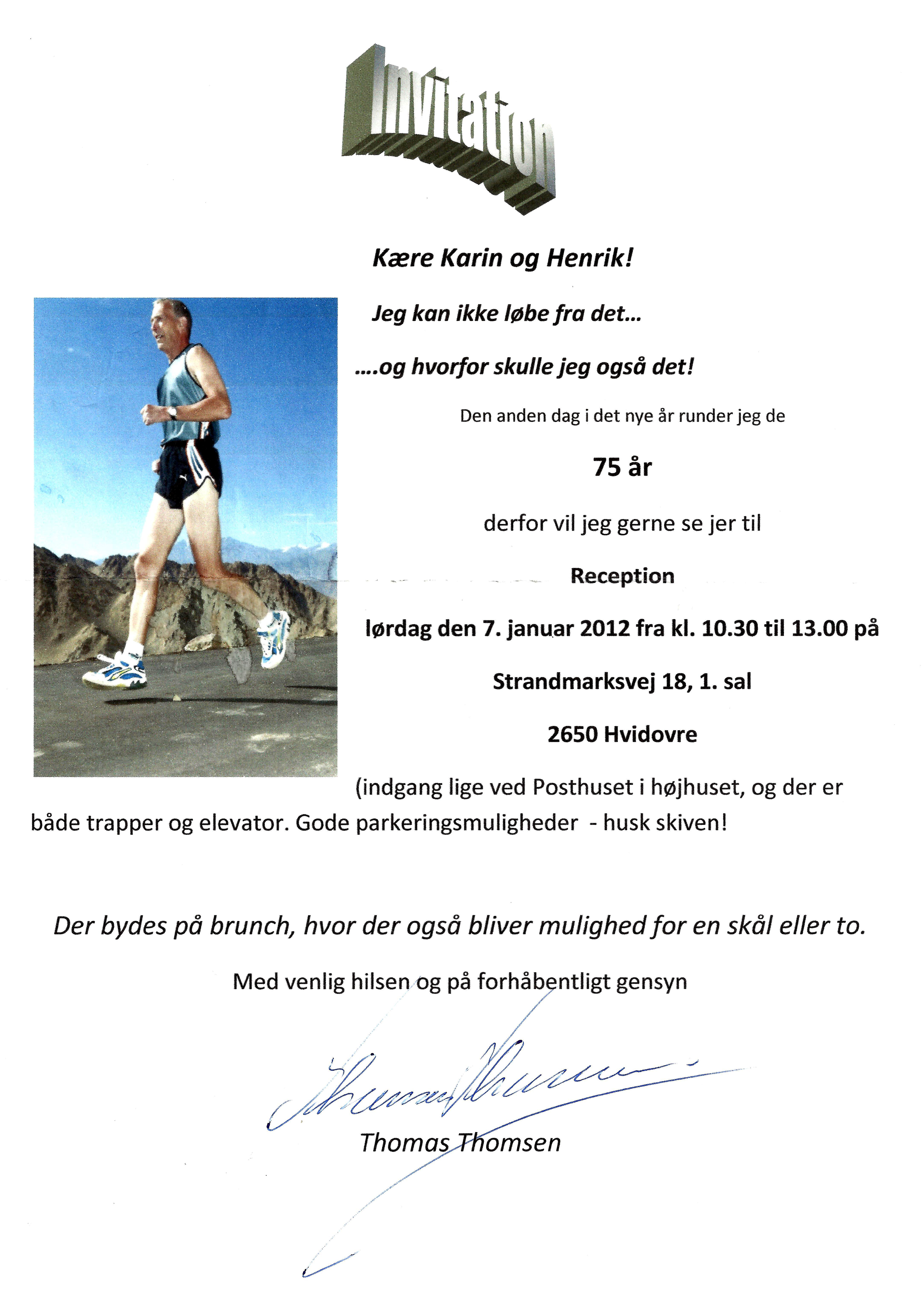

Information meeting
In October 2011, I followed Morten Fenger’s recommendation and turned up at an information meeting at Roskilde TRI. The club has existed since the late 1980s and was quite small, although, like sport in general, it was growing. At that time, it had around 35 members.
Not enough swimming pools
The club didn’t have a permanent base, and the information meeting was held at the public swimming pool in Fløng a few kilometres from Roskilde. This was rather strange, considering the level of activity in the area, but Roskilde simply didn’t have enough space for one of its own sports clubs. The problem was swimming pool capacity. As a relatively large provincial town, it was unable to offer time to all of the municipality’s swimming clubs, and in this case, a triathlon club. Several municipal schools and a high school had their own pools at one stage, but these had closed eventually, and at the same time, the heavy demand for swimming pools increased. The politicians had been engaged in negotiations on a new swimming pool, but this had been more likely to be an aqua park with play facilities and entertainment rather than actual swimming lanes for teaching and training purposes.
Away from home
Therefore, in order to find the proper facilities, Roskilde TRI had made an agreement with the swimming club of a neighbouring town. The members of the TRI club then had to join that club in order to swim there. Things were entirely different in the summer. At the very feet of the club’s steps lay Roskilde Fjord with all the water the heart could desire, weather permitting.
Unlike swimming, there were plenty of opportunities for the club’s members when it came to running and cycling. There was unlimited access to public roads and woodland. During the winter months, it was possible to go spinning at one of the town’s fitness centres.
An introduction to the sport
At the information meeting, the club’s chairman and Morten Fenger presented an introduction to the sport and what the club had to offer. Quite a few people had turned up, and this was great for the club, which was not accustomed to so much interest being shown in its activities. After the meeting, we were invited to take part in swimming training that evening.
Competent swimming coaches
I was positively surprised by the swimming coaching I received on that introductory evening. I had tried to learn to swim before, but never really got anywhere. Here I experienced extremely competent coaches, who could teach me a better technique, so I finally had good reason to believe that I would learn the crawl. Therefore, I decided to join the club.
Everybody trained together
For many years, I had been a lone wolf, who always trained on his own. And for a while, I had really enjoyed running with Run for Your Life. Now I was a member of a club and took part in joint training on most days of the week. They swam twice a week, as well as running together once and cycling once. In addition, members organised all sorts of training events which they announced on Facebook. I hadn’t used Facebook very much before then, but in this club, the popular social media was used for most communication. I have to admit that it worked very well.
New equipment
In addition to training together with the others, I also did some on my own. I followed Morten’s training programme, which presented challenges almost daily although it did include one day of rest more or less once a week. I bought a turbo trainer, which allowed me to use my own bike indoors. I mounted my bike on the turbo trainer and used the garden shed as my training room. Here I was able to train come hail, rain or shine, and I could watch TV or listen to the radio at the same time. Cycling on a turbo trainer is very tough going and really makes you sweat. I followed Morten’s instructions and uploaded my results over the Internet. It became an obligation I had to meet.
I also went cycling along main roads, even during the winter sometimes. It was a question of finding out what equipment was most important. I soon found out that rainwear and cycling shoes were indispensable, and not long after that, I had to acknowledge that my old racing bike wasn’t good enough for road racing, although it was perfect in the turbo trainer. So I had to buy a new bike.
Sponsor
I only joined the club as an ordinary member to learn to swim, but one thing led to another. First, my company signed up as a sponsor, so my logo is now on the club’s suits and website, and there was more to come.
Executive committee member
After I had been a member for a few months, there was an annual general meeting. This was “harmless” enough, because there was no prospect of changes being made to the executive committee. But that was not how it was to be, because Morten decided, at the last moment, to stand down from his post. Nobody else stood for election, however, and I was actually urged to do so. I hesitatingly agreed, convinced that being an ordinary member of the executive committee would not be too time-consuming.
As expected, being a member of the executive committee of Roskilde TRI didn’t involve very much work, although quite a lot happened during my first year as a member. The membership almost doubled in size, and far more activities were realised. Some of the members were passionate people, who came up with all sorts of great ideas, and the once sleepy club gradually became rather active.
The chair
At the 2013 annual general meeting, the chairman stood down, and a replacement had to be found. New club rules allowed the committee to be extended by two extra members. Unlike the year before, finding new members for the executive committee was no problem, but now people were suddenly suggesting that I should take over the chair, which seemed rather surrealistic. I had only been a member for a year. In terms of the sport, I was one of the weakest in the club, and my knowledge of the triathlon was pretty limited. On the other hand, I did have other resources and could see that I could be a candidate if I had the necessary backing of the rest of the executive committee. On Tuesday 12th March, I was elected chairman of Roskilde TRI, a club in a state of rapid development in terms of both activities and challenges.
I’m still dreaming, but…
My swimming is nowhere near as good as I would like it to be. This is due neither to Roskilde TRI’s coaches nor any lack of effort on my part. I have faithfully trained both indoors and out in my wet suit, and for a period, I paid private lessons. But I still have problems with my breathing. I’m convinced that this is not all down to technique and that the answer lies deeper within my psyche. I have been working on it but have not yet found a solution.
I have participated in a few triathlon meets over shorter distances, and I still mostly swim breaststroke, which I would like to do something about. My iron man is still a long way off and may be a goal I never achieve. So be it. The dream is still there, but deep blockages are obstructing the route.