
Your Roskilde 22 April 2020
April 22 2020




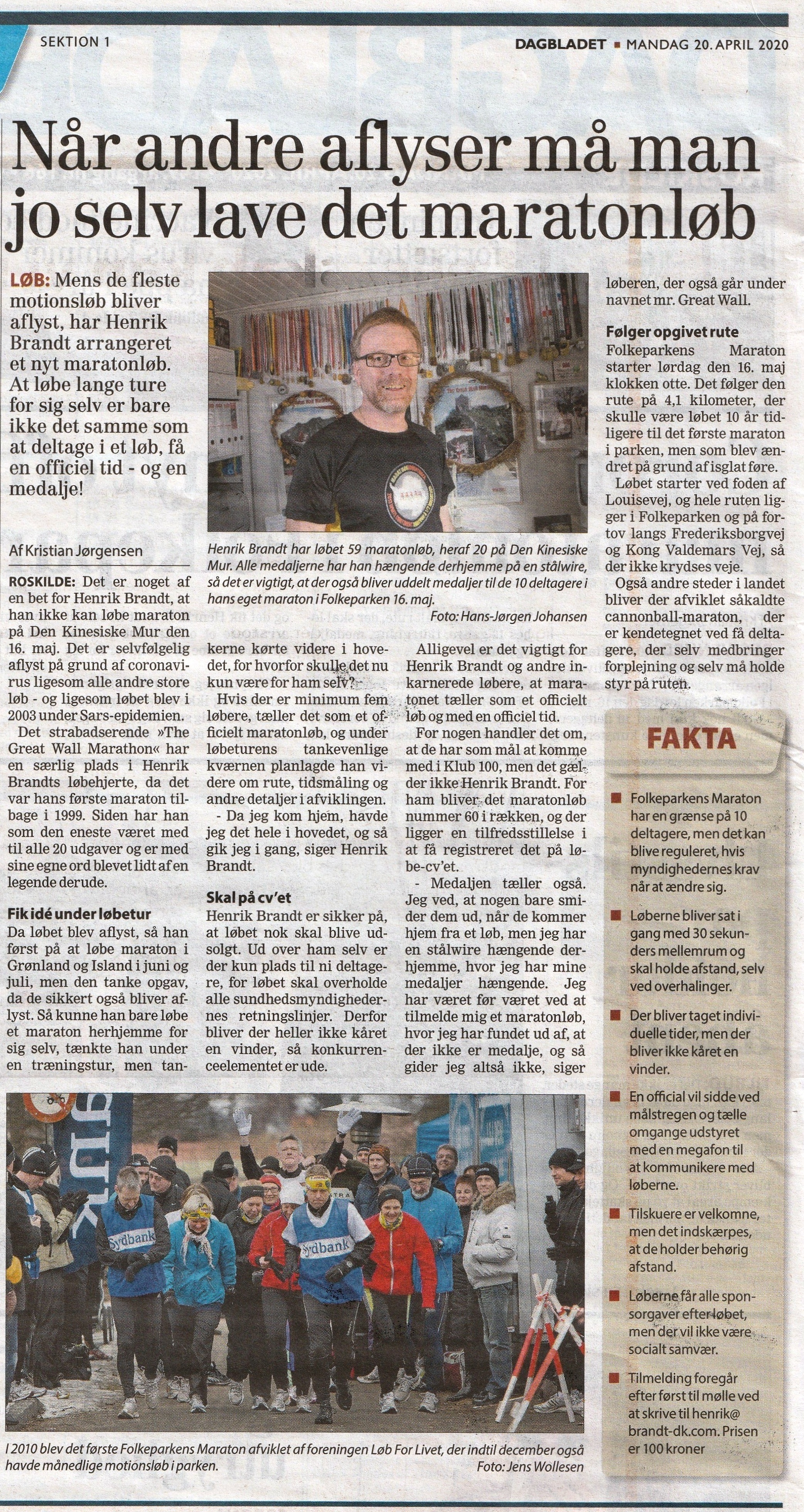
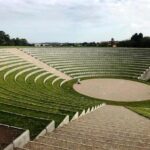
At a time when most sports events around the world have been canceled or postponed, and life in many ways has turned upside down, Mr. Great Wall arrange an intimate marathon race in he’s home town Roskilde’s city center. The race will take place May 16th, 2020 on the original day of the 21st Great Wall Marathon.
As elsewhere in the world, freedom of assembly is limited in Denmark at this time. Likewise, everyone is encouraged to distance themselves from one another. Peoples Park Marathon 2020 shows respect for these rules and the participant’s health.
Peoples Park Marathon 2020 is a cannonball marathon with 10 participants starting every 30 seconds. It is emphasized that the participants throughout the race keep distance between each other and avoid close contact by overtaking.
Peoples Park Marathon 2020 is run in and around Roskilde’s most beautiful park. It is a prologue of 560 meters to be run twice, followed by a 4108 meter route to be completed 10 times.
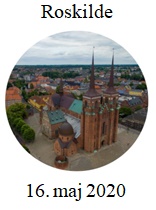
An almost similar marathon was run on March 7th, 2010. Read about Running for Life Marathon 2010 (The Run for Your Life Marathon 2010) here.




On February 17, 2017, “The Official 7 Continents Marathon Club” acknowledged Zelandia as the 8th continent of the world and thus established “The Official 8 Continent Marathon Club.
On July 15, 2017, I ran the “WUU-2K Wellington Marathon” and became the first member of The Official 8 Continent Marathon Club.
http://www.official8continentsmarathonclub.com/member_list/finisher_list
My marathons in general – and The Great Wall Marathon in particular – have been an important part of my life. My regular training sessions, my acquisition of new equipment, all the sports-related items on my birthday wish lists and, not least, my travels to the corners of the earth to run marathons continue to prove just how important the sport is to me.
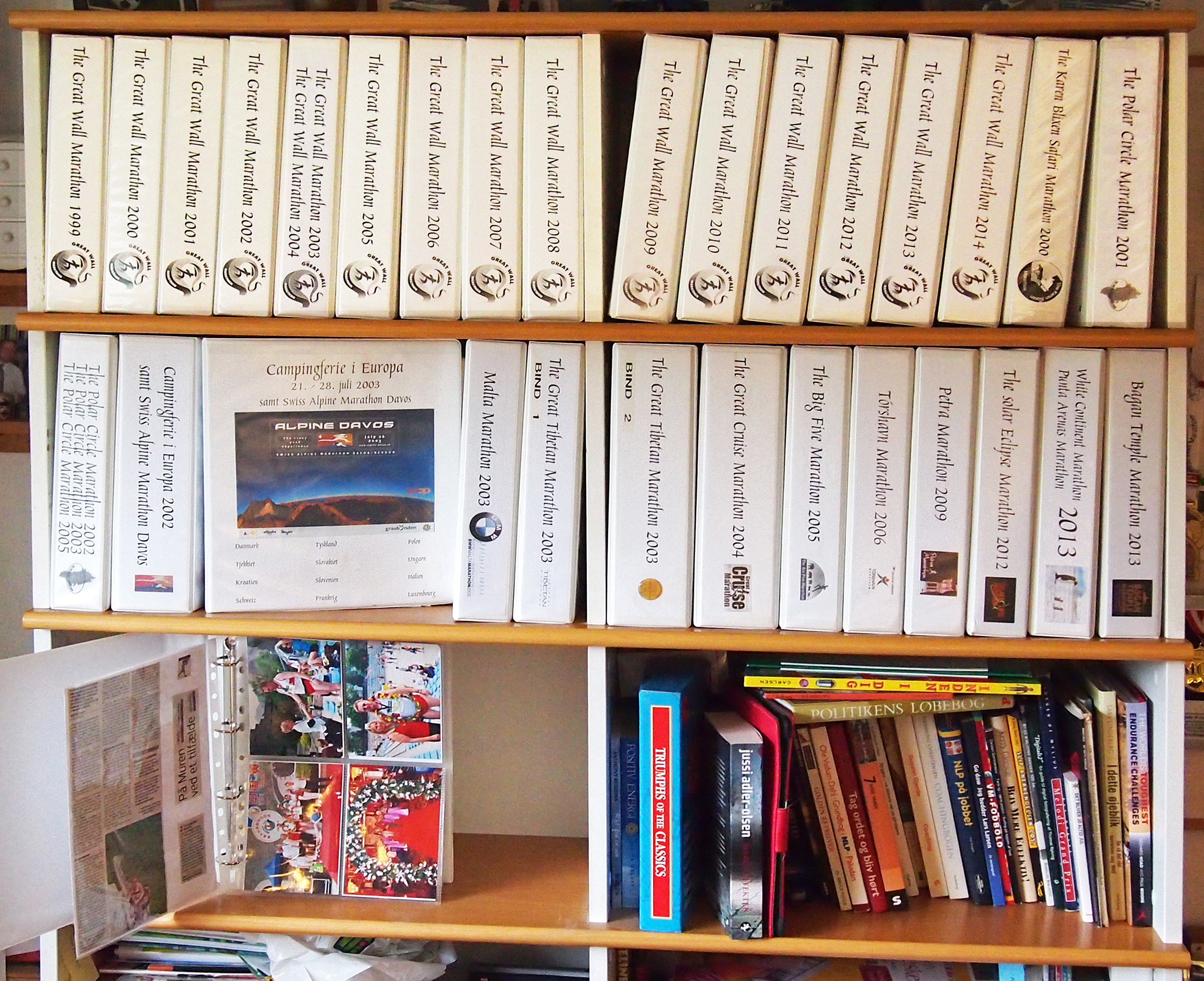
In one of my cupboards, I have 30 ring binders of photographs, tickets, running numbers and souvenirs of every imaginable kind. Karin chuckles at me, saying that all I need to do is to copy last year’s pictures. She’s actually not far wrong, but I still need a new ring binder for each trip. I also take video footage each time. In many ways, they are also pretty similar. But things are not as clear-cut as you might think. Each individual run and each trip has its own stories and anecdotes. This is something I have become very aware of while writing this book. Without my scrapbooks and my films, my book would never have seen the light of day.

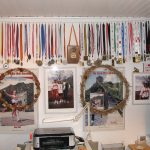
An entire wall in my office bears the hallmark of my sport. On a steel wire stretched beneath the ceiling hang all the medals I have won over the years. It is actually against my principles to take part in marathons that do not award medals. On the same wall, in frames, hang the large photos I have been given and the garlands given me by Thomas at the finishing line in China in 2007 and 2009.

The famous T-shirt that started it all no longer exists, but I have many others. Most marathons throw in a free T-shirt, so this is not something I need to buy. On the other hand, I have jackets and trousers with the names of marathons and their logos printed on them. As the accountant of a company that prints sports clothing, access to these has never been a problem.
I have made many acquaintances over the years, and even more people have become acquainted with me. I have been interviewed for newspapers, weekly magazines, radio and television, and I have been mentioned in books. I have used my experiences in examinations as well as in writing articles and presenting many lectures to clubs and associations. And now I have written my own book.

I could have saved an awful lot of money over the years had I had not reacted to a provocation one March day in 1999, but the experiences I have been given are indescribable and inestimable. In particular, the many trips I have been on with my two sons have given me memories for the rest of my life and fill me with gratitude.
My travels as a marathon runner are by no means over, and it is my declared ambition to climb the Great Wall of China at least 25 times. Being a realist, however, I am extremely aware that my health may throw a spanner into the works at any moment. I have no idea what will happen if I lose one of these races, although I imagine that the magic is likely to disappear.
For me, The Great Wall Marathon will always be the ultimate. However, the future will also have many challenges to offer. “If you can dream it, you can do it.” I still have dreams, but one should never share every dream with others.


Doubtful participant
This, the ninth of Adventure Marathon destinations, was the first about which I had my doubts. The run was announced in the autumn of 2012 before we ran the Solar Eclipse Marathon. This meant that there were two new marathons in the offing rather than just one.
My doubts were due to a variety of reasons. I had previously tried the combination of temples and a marathon, and though The Great Tibetan Marathon had been quite an experience, an entirely different kind of novelty would have been much more attractive for me.
Another consideration was the extent to which I could be egotistical enough to travel on my own using family funds. I had already been on an extended trip to China earlier that year, albeit together with Karin. But now I had the prospect of a very long trip to Australia, in which the boys were also invited to partake, and less than six months after, that I would be off to China again. My doubts were not exactly allayed by the fact that I had decided to travel to Chile and Antarctica to run there, too.
My doubts were now further exacerbated by the fact that I had fallen ill less than five months before the marathon and been given a pacemaker. For a whole month, I had been so exhausted that I required rehab. At that time, another marathon seemed far away.
But in the midst of my doubts, there was a voice telling me I couldn’t possibly miss an Adventure Marathon debut run. This book was certainly instrumental in my final decision to go. Without this trip, an essential chapter would have been missing.
Myanmar
The Bagan Temple Marathon was run in Myanmar, formerly known as Burma, situated in south-east Asia bordering on Bangladesh and India to the West, China to the North East, Laos to the East and Thailand to the South-east. The country is not particularly well-known in our part of the world. It has received a lot of press coverage because of the freedom fighter Aung San and his Nobel prize-winner daughter Aung San Suu Kyi, who spent many years under house arrest. The trip would show that this fantastic country has much more to offer than two celebrities.

On my own for the first time
I travelled for the first time to a debut marathon without any of my loved ones, and like at so many of the other trips there were several travel packages on offer. I chose the shortest of them, which meant that I would be away from home for less than a week.
When I left on 30th October I wasn’t in the best condition training-wise, but fit enough to convince myself that I could complete this race. Rehabilitation after the operation had gone well, although I had not fully recovered. With the risk of sounding supercilious, I actually thought: “Running a lousy Marathon should be easy enough”. A bit snooty, you might say, but for a person in my situation it was invaluable.
Family gatherings a thing of the past

I had previously felt that the family party atmosphere of the marathons was firmly in the past, and that was certainly the case at this event. Already at the airport, I discovered that I was the “last Mohican”. Although I recognised quite a few people from previous Adventure Marathon destinations, none of the pioneers from the first years around the millennium were there.
Although the old crowd was not there, I was in no doubt that I was part of a good, homogenous group of people, who loved running spectacular marathons. There were 26 of us altogether plus a travel guide. Some, like me, would be going home after six days, while others would be going on an additional tour, some of them even on a few days bathing holiday afterwards.
Prejudices confirmed and disproven
I had expected the country to be rather backward and not particularly civilised, and at the airport I found there was no mobile coverage for non-residents because they had no roaming agreements with foreign owned companies. Entering the country was slow and bureaucratic, with checks of passports and visas. After that, however, I was only positively surprised by conditions in the country.

Yangon excursion
Yangon is Myanmar’s biggest city and was the country’s capital from 1885, when the British conquered the north of the country, until 2005 when the entire state administration was moved 320 kilometres northwards to the town of Pyinmana.

Our only overnight stay in Yangon was at the excellent Traders Hotel. Just a few weeks before our arrival, the hotel had been attacked by terrorists. Foreign businessmen had been staying there, and their presence was not welcomed by everybody. There had been explosions, but we saw no evidence of them.

We visited many of the city’s sights on our day of arrival. First we visited the city centre, where we were surrounded by street sellers, who wanted us to buy all sorts of things, particularly postcards. Most unusual was the fact that you could buy a bird for five dollars. When a tourist bought a little bird it was released and flew up into the air. Now, five dollars less well-off, the tourist had done his good deed of the day. Whether the release had any religious significance, I don’t know.

We were, of course, expected to show respect at the various holy sites. On our arrival, we took off our shoes and covered our shoulders and lower legs. Our first visit was to the Chaukhtatkyi shrine with its impressive 67-metre long reclining Buddha statue – the biggest of its kind in South-east Asia.

The Shwedagon Pagoda
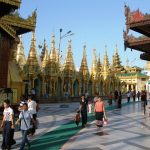
After this, we continued on to the most famous of Yangon’s buildings: the enthrallingly beautiful, gilded Shwedagon, or Great Dragon Pagoda, on the holy Singuttara Hill dominating the skyline. Wherever you are in the city, you can orientate yourself in relation to the 98 metre high pagoda which, like a lighthouse, keeps people on the right track. According to legend, the Shwedagon Pagoda is 2,500 years old, although some archaeologists believe it was built between our sixth and tenth centuries. The pagoda is the country’s most important Buddhist shrine and is visited by many thousands of pilgrims every year. It is said that it was built to protect eight hairs from the head of Buddha himself.

It was fascinating to walk around the Shwedagon pagoda and see all the gilded structures. It was almost as though we were in part of Disneyland. They had disfigured parts of the charming ancient surroundings with distasteful modern blinking coloured LED lamps.

Bagan
Our visit to the big city was brief, as we left the following morning by domestic flight to our actual destination: Bagan. Our hotel, Myanmar Treasure Resorts, was beautiful and very charming.

The 42 square kilometre Bagan Plains are home to more than 3,000 historic temples. Huge, characteristic pointed golden pagodas pop up from the flat landscape as far as the eye can see. It has a mystical unreal tinge to it.

The first temple on the Bagan Plains was built in 1057. One king after another built one temple after the other until Kublai Khan’s Mongolian troops conquered the area 230 years later. They had managed to build 4,400 temples and, despite natural challenges such as earthquakes, floods and erosion, the vast majority of the temples survive today. The area is now a candidate for UNESCO’s Heritage list, though a dispute between the authorities and UNESCO about how the structures will be renovated has put the process on standby.

Sunset and pasta party
In the late afternoon, we visited one of the many temples on the plane. I could see that the steps on the Great Wall of China were child’s play to what I could see and feel here. As we climbed to the top of the pagoda, we had to negotiate very steep, narrow steps, probably about 35 centimetres high. It was fantastic to see one temple after the other both close-up and further out on the horizon. We stayed there so long that we managed to experience that beautiful moment when the sun went down.

The last event of the day was the pasta dinner and briefing about the marathon for all the participants.

Bagan Temple Marathon
It is not unusual to be woken up at 4 a.m. on a marathon day, so the procedure 2nd November was entirely by the book. After we had got ready and eaten breakfast, it was time to be driven to the start at the Htilominio Temple, where we arrived early. I like to get to the start in good time. Absorbing all the impressions is part of the atmosphere. You have to see it all, feel and smell it. There also has to be time to talk to other runners and get it all under your skin before the race begins.

At the start, we experienced the morning sun, while six hot air balloons slowly climbed into the blue sky, a most beautiful sight between the pagodas.

Shortly before the start of the marathon, there was an official speech by His Excellency U Htay Aung, the Union Minister for Hotels & Tourism, who wished us a good run. The starting pistol went off as planned at 7 a.m., and a very special atmosphere spread through the field. Taking my first steps always makes me high with expectation, while my inner computer ascertains that the finishing line is a long way off.

As we got going, I got quite a surprise. Contrary to expectations I was quickly running out of breath. It wasn’t because I had started at too fast a pace, so I have no explanation for this phenomenon. After a while, however, I didn’t feel so out of breath.

At the start of the marathon, we passed one temple after another. It really was very special running in such surroundings. Everywhere we ran, we were met by happy, warm-hearted and hospitable locals, who were very supportive. The children were very interested in it all, but unlike in China I didn’t experience them slapping high-fives with their tiny hands.
Flashback to the Great Wall Marathon 2000
A few days before the marathon, it had been raining very heavily, and the organisers had been extremely concerned. The course had been flooded and muddy in some places. Passage had been impossible, and there were no real alternatives. However, the strong heat had caused the water level to fall visibly every day. Now it was just a question of hoping that there would be no new heavy rainfall.

Although the worst of the mud had dried out there were a few places early in the run where we had to leap zigzag to get across. Although I did my utmost, I didn’t succeed every time. On a couple of occasions, I went straight in and got wet feet and muddy shoes. Not surprisingly, I had a flashback to The Great Wall Marathon 2000 when I had carelessly splashed water all over my body and got wet feet, resulting in blisters. I was naturally concerned that this might happen again. However, whereas, in 2000, it was my own fault because of ignorance, this situation was not one I was in control of.

A scorching hot day
As expected, it got very hot. The temperature rose to 36 degrees Celsius, which was a bit of an ordeal. Of course, I was no stranger to running in the heat, but that kind of thing never becomes pure routine.

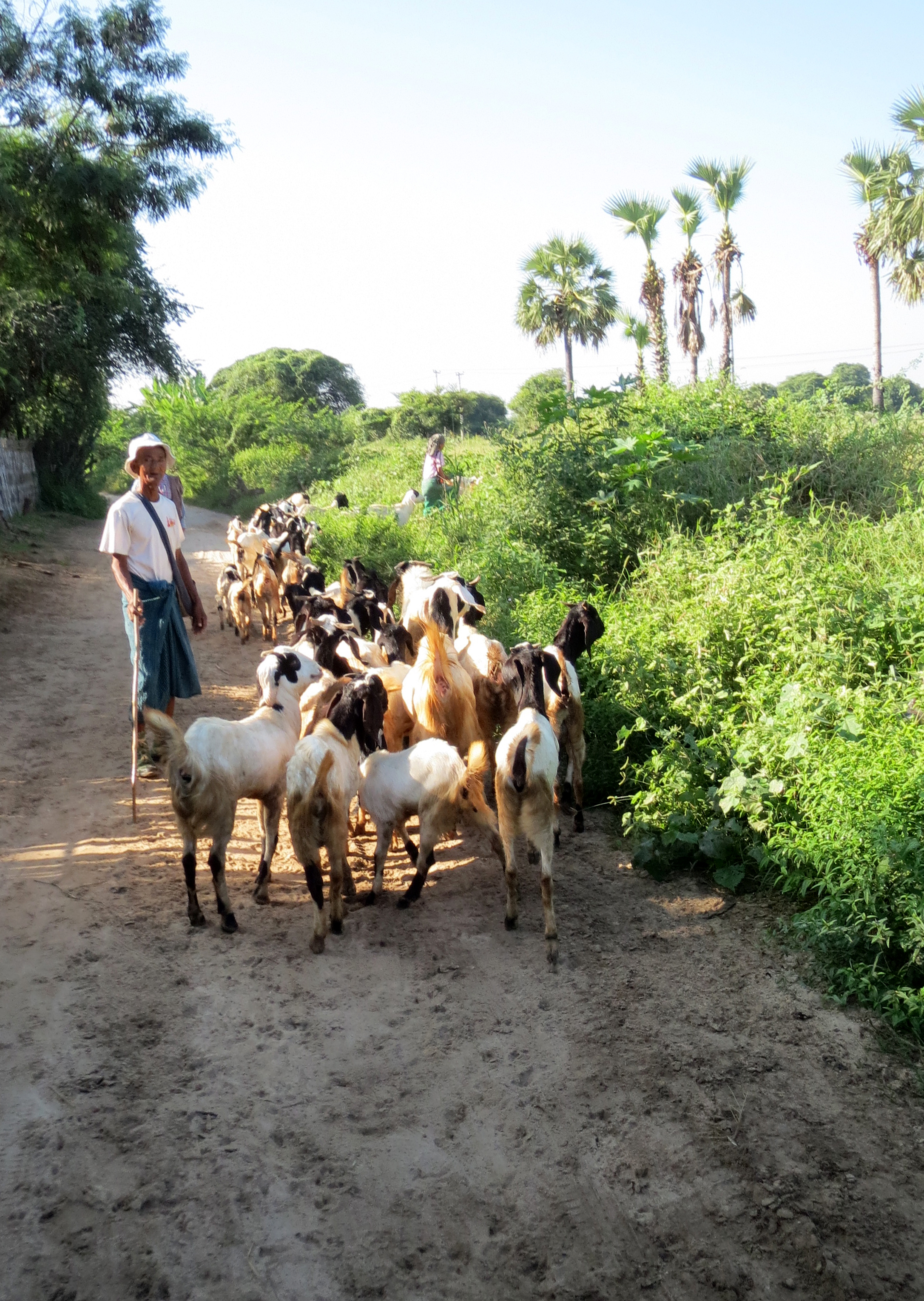
Although the run was gruelling, it was generally more of a pleasure than an ordeal. Most of the course was along dusty dirt tracks and paths. The first section and the end were in the temple area while the rest of the marathon took us through the surrounding villages. I had to stop several times to make room for a shepherd and his flock to pass, and once I had to pass through the middle of a herd of cattle. The village dogs were not at all used to oddballs like us, so we were often met by barking. They weren’t aggressive, however, and kept their distance for their own safety’s sake.
Much-feared blisters
My pacemaker operation a few months previously and the subsequent physical dip were noticeable on such a long run in extreme conditions. However, I was always in good spirits and convinced that I would complete the run. As I got closer to the finish, I became convinced that I would be able to cross the line in under six hours. That was not to be, however.

After about 35 kilometres, I could feel that my feet were not in good shape and that there had to be blisters. My concern had become a reality, though fate had shown mercy on me and spared me trouble until the last part of the run. I had to shelve my ambition for finishing time under six hours. Now it was simply a question of getting across the finishing line, which never became a problem.

Much of the last part of the course was on asphalt roads although we were back on tracks past characteristic temples as we approached the finish.

A wonderful gesture
I had a firm strategy. I would walk as far as possible at a time, and when I did run I would have to pay the price with pain in my feet. I was, however, determined to run across the line.
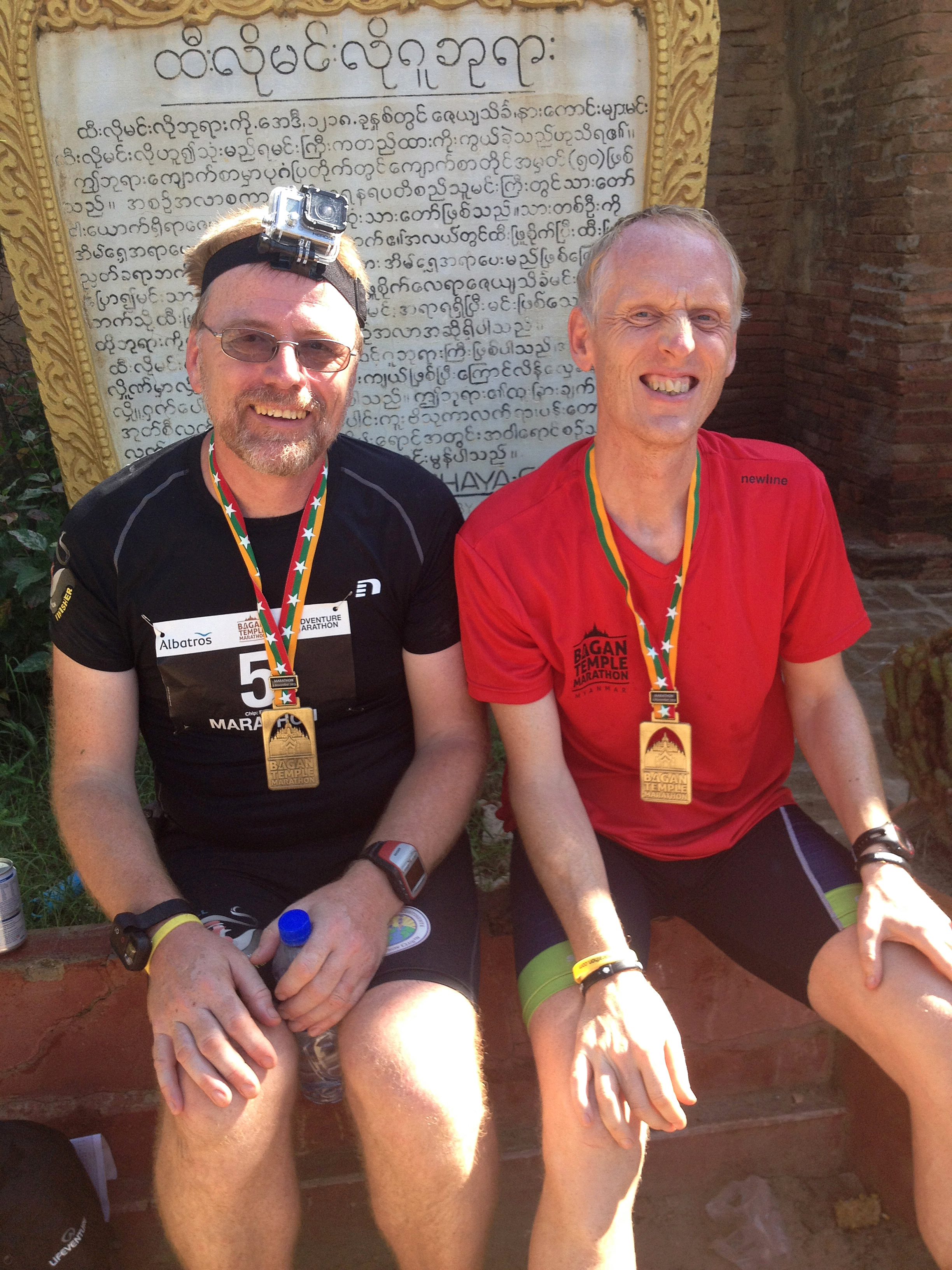
Half a kilometre before the finish, while I was still on the last section of asphalt road, I was met by Jan Petersen, who ran by my side and gave me encouragement all the way to the finish.
Jan had crossed the line precisely three hours before I did – and in fifth place, beaten only by four local elite runners. After that, he had received the runners from our group one after the other, re-running the homestretch at least ten times.

Jan is one of sport’s gentlemen, as he demonstrated that afternoon. But that is always his attitude: glad, positive and sociable. He never puts on airs, and I have never felt inferior to him because of my comparatively poor physical performance.
A wonderful welcome
As we approached the finishing line at the Htilominio Temple, we were met by several members of our group, who gave us a warm welcome and applause. It is moments like these that make being a marathon runner so wonderful.

At the finish, I was also welcomed in style by Thomas. There was nothing special about that, but this never becomes trivial routine. It is a tremendous feeling every time.
My finishing time was 6:18:01, which was perfectly acceptable. I was incredibly happy to have completed my first marathon after being so low, and I was also incredibly grateful.
Busy medics
The medics Karin and Karin had their work cut out in the medical tent. The heat had taken its toll on many runners and several of them were lying there with drips when I crossed the line. One of the runners had got stuck in the mud and broken his leg. That was an annoying, disagreeable way to end the Bagan Temple Marathon.
Outing on the Bagan Plains
The day after the run, there was no time to rest on our laurels. We left on an excursion immediately after breakfast. We started the morning by visiting a small village where the women and children were weaving and looking after the animals. Many of the women were smoking pipes and cigars. They also succeeded in selling some of their cigars to the Nordic tourists. We didn’t see much of the men. Officially, they were in the fields, although some said they were sitting in a cafe watching football. Sharing the work is always a good thing.

Our next stop was at the market, where the stalls were bursting with fresh fruit, vegetables, arts and crafts and textiles in all sorts of colours. Of course, the traders wanted to do business with us, but they weren’t too aggressive about it.

The time had come for our final temple visit on this trip. We had visited some of the area’s most important temples, including the Shwezigon Pagoda, said to conceal one of the Buddha’s teeth and a piece of his bone. Next stop was the Ananda Temple, a whitewashed masterpiece which combines Mon and Indian architecture. According to legend, King Kyanzittha had the eight monks who built it executed to prevent them building anything similar elsewhere.

Our last temple visit was also to one of the largest on the Bagan Plains: the Dhammayangyi Temple built by King Narathu. He killed his father and brother to secure power, and it is said that he built the temple to atone for his sins.

Walking round the temples in bare feet with blisters was not easy for me. I didn’t want to miss out on anything, however, so I choose to take the bitter with the sweet.
After lunch, there were another couple of items on our agenda, but many of us chose to get off at our hotel to pack and charge our batteries for the evening’s gala party.
Bagan Temple Marathon gala party
Sunday came to an end with the mandatory gala party, which was held outside our hotel. Entirely according to tradition, we enjoyed a delicious buffet while we were entertained by local musicians and artists. We were welcomed by a representative of the local tourist board. He was happy, proud and touched that this event had come to his part of the world.
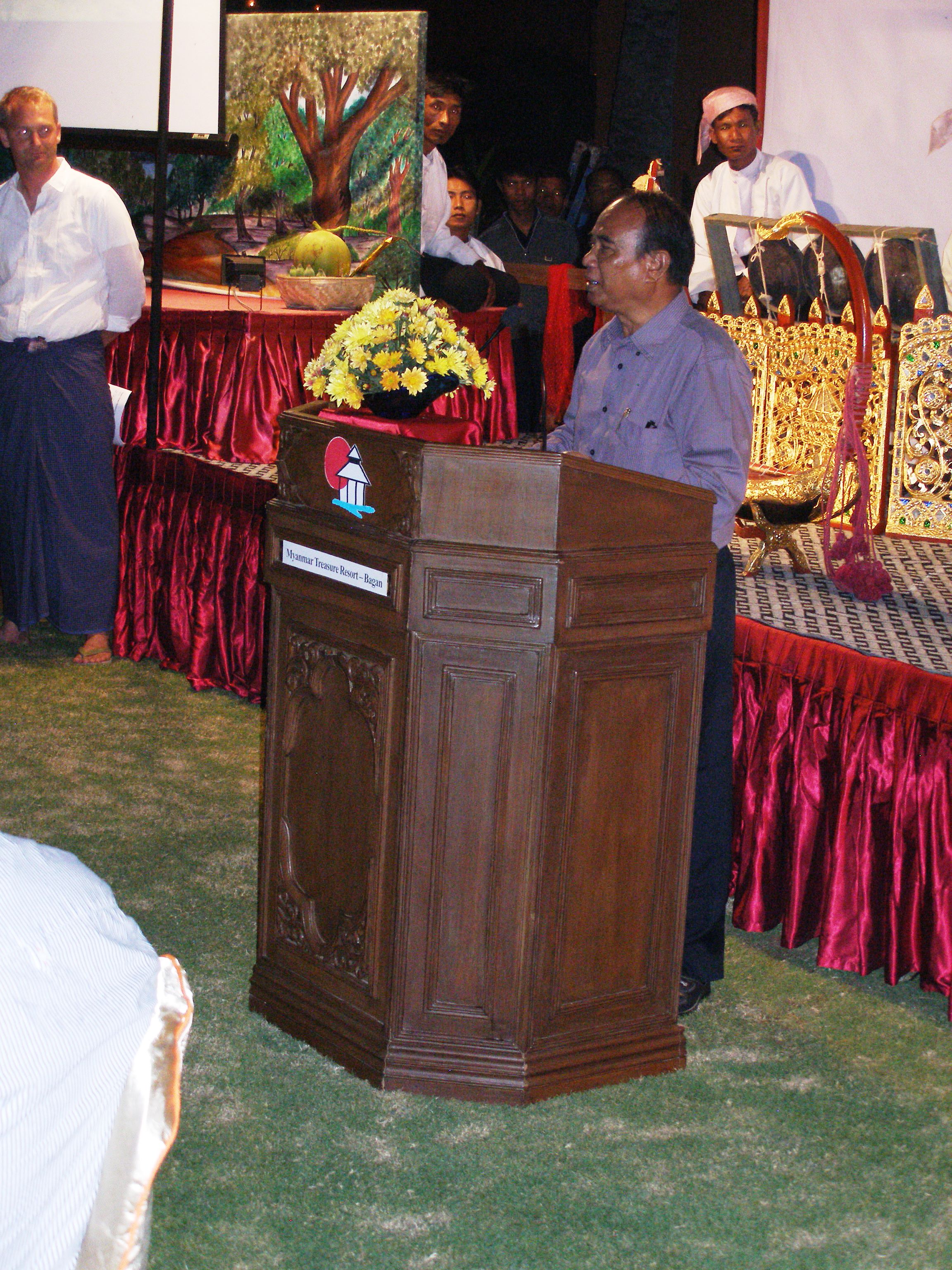
At the awards ceremony, we were able to ascertain that the local runners had more or less made a clean sweep. There were prizes for the three fastest runners in each of four categories. The vast majority of awards went to people from Myanmar, who seemed well prepared for the up-coming Asian Games. In all, there were 194 runners from 27 nations.

Day in Yangon
On the morning of the day of our departure, we flew to Yangon and enjoyed the last few experiences of this fantastic trip.
This time we were shown the southern part of the city, and during the bus tour a local guide told us a bit about conditions in the country. Things had changed since the time of the dictatorship, but an elephant must be eaten a little at a time, as the saying goes. From this, we understood that she was referring to human rights. As the guide put it, they now had partial democracy.

We also drove down to the harbour where, like in so many other places before, we were met by children selling postcards. They had difficulty being turned down, but were terribly sweet and charming. We had many weird experiences on board a ferry across the Yangon River. There were vendors everywhere, selling everything, newspapers, sweets, tobacco and toys. There were women with eggs in large dishes which they carried on their heads without holding on with their hands. Men hauled bicycles on board with hundreds of live chickens tied in bundles to the handlebars and luggage rack, while others lugged huge sacks of corn. On a bench lay an officer fast asleep. Life around us was an experience in itself.

In the Dala Township harbour area, the noise and bustle seemed almost surrealistic, although things got a bit quieter the further we went up the road. We were driven by rickshaw along dusty roads full of potholes through villages and plantations. Here we visited an orphanage and saw how several classes were being taught by volunteer female teachers. Each class had one teacher and as many as 65 pupils. The state administration provided little support, so the orphanage and the school were financed by donations and led by Buddhist monks. We experienced lessons with happy, well-nourished children repeating sentences in chorus. It could well have been the alphabet, but we understood none of it. The conditions seemed poor, but the children were clean and presentable and wearing decent clothes. They appeared to be thriving.

After the orphanage, we returned to the city by rickshaw and ferry before heading to the airport for our journey home to Denmark.

The doubtful journey that became a personal victory
I had entertained considerable doubts about my trip to Myanmar, but I was so pleased that I had made the journey. Running the 42-kilometre distance again represented a personal victory, which gave me back my faith when it came to running future marathons. It was a beautiful, inspiring country with a warm-hearted, hospitable population. I don’t know exactly what I had expected, but my experiences during this trip of a lifetime had been positive in every sense.
We can create training schedules and go on a diet and steer our lives as best we can towards the goals we have set ourselves. We cannot, however, always safeguard ourselves against the unexpected. One such unexpected factor is the state of our health. Change can come like a bolt from the blue when we least expect it. I have had quite a few experiences like that in my life.
I remember my childhood as a time when I was ill relatively often and had to lie at home in bed. There was the “annual” middle ear infection, the flu, measles, German measles (rubella), chickenpox and lots more. During those periods, I lay in bed for a week and was not allowed to get up. And I absolutely HAD to drink hot milk with honey and have my temperature taken all the time. Being ill also had its advantages, of course, like when granny came visiting with Donald Duck magazines and sweets. In those days, it was also the norm for the doctor to come visiting, something which today is almost unthinkable. I remember it as if he came every afternoon to take my temperature, check my reflexes, eyes, ears and much more. That is probably far from the truth, however. Many of us remember our childhood summers in shorts, with the sun shining for four months, winters with deep snow and ice on the pond from December to well into March. Far removed from the statistical truth, of course.
The hardest moment in my life was when I was six years old and lost my Mum. I lay sick then, too, on the day I was told about her demise, on the day she was buried, as well as during the days that followed with the house in a state of turmoil as it was chaotically cleaned from cellar to loft.
As an adult I have been almost entirely spared from lying in bed sick. My working life has not been characterised by days off sick, and I have turned up for work every morning almost without fail. On those rare occasions when I have been incapacitated, I have ended up in hospital. I have been operated for a crooked nasal wall, had my tonsils removed and have had issues with a painful abscess on my backside.
In June 2013, however, I was hospitalised once again, and this time, I really did fear that my sporting career might be over. Fortunately, though, things didn’t get that bad.
As I mentioned earlier, I had fallen for no apparent reason on an asphalt road during The Great Wall Marathon 2012. I had the same sort of unpleasant experience on several occasions during the months that followed. I thought it was nothing, just clumsiness and a sign that I no longer concentrated as well as I used to. But perhaps this was the precursor of what was to happen a year later.
On the first Tuesday in June, I went with my old friend, Ole, for our annual medical check-up. Although he is old enough to be my father, Ole and I have been good friends since I was a teenager. Ole is a widower after a childless marriage, and it is perfectly natural for me to visit him at regular intervals. I usually do some shopping for him and then we enjoy a little chat. Once a year we go together to the doctor, which was what we were doing on that Tuesday.
Just as traditional as our visit to the doctor, is the delicious lunch we enjoy afterwards, of Danish open sandwiches – bought ready-made – along with a beer and a chaser. That day in June 2013 was no exception, and in preparation for enjoying the cosy tradition together with Ole, I had taken my ordinary gent’s bike with me so as to leave my car at his place and cycle home. I hadn’t taken my helmet with me because I’d thought “what’s the point, it’s only an ordinary bike after all”.
On the way home, however, I fell off my bike and ended up with some unpleasant knocks. I grazed my forehead, knee and left-hand, and my shoulders and back also took quite a bashing. But I got back on my bike and struggled home, going straight to bed as soon as I got there to relax and recover.
The following day, I was visiting one of my clients in Copenhagen. I had felt fine all day and noticed nothing untoward as I left to drive home along Vesterbrogade in central Copenhagen. Just as I set off something went terribly wrong. I don’t remember any details, but within a split second I went completely limp. The next thing I remember was waking up with my head on the steering wheel in the middle of the busy thoroughfare. I was immediately aware that I must have blacked out. I pulled over to the side of the road and got out of the car to get some fresh air. Then I carefully drove home after the nasty shock. Not many hours were to pass before the next nasty fright.
After supper, I sat down at the computer and had another blackout. This time it came without warning, and I didn’t discover what had happened until it had. Having sat there wide awake working, the next thing I knew was that I was struggling to lift my head from the desk and had spots before my eyes. At that time, I didn’t know where I was, what day or what time it was. It felt as though my head and upper body had been locked into place, so that I couldn’t get up. I don’t know if I wept, cried out or just moaned. But I eventually did manage to get up just as Karin came dashing into me. She immediately ordered me to bed, and I obeyed.
I attributed the two blackouts that Wednesday to the fall from my bike the previous day. Three days now passed without similar problems, so I trusted my own conclusions and thought I would have to be more cautious when cycling with alcohol in my blood. There was more to come, however.
On the Sunday after morning coffee and a bite of bread, I again sat down at the computer. Karin was sitting next to me at her own machine, and we were chatting perfectly normally. What happened next I don’t know, but from what Karin told me it sounded very much like a repetition of Wednesday evening. Suddenly, as we sat there talking, I lost consciousness and slumped onto the desk. My spectacles flew off, my coffee spilled all over the place, and the two otherwise easy-going dogs lying on the floor sprang to their feet. It was like a flashback from Wednesday evening. I had to struggle to lift my head, saw spots before my eyes and had no sense of time or place. This time, Karin didn’t send me to bed, but straight to the out of hours medical service.
What I thought would be an examination lasting a couple of hours, actually involved admission to hospital and surgery. At Roskilde Hospital I was well received by extremely competent staff, who gave me a thorough examination.
As it turned out, falling off my bike had not been the cause of the subsequent blackouts. On the contrary, at the hospital they were convinced that the fall was more likely to have been caused by a blackout than by drinking alcohol. During one test at the hospital, I experienced another minor loss of consciousness and they were able to measure that at precisely that point in time my heart rhythm was abnormal.
They subjected me to their entire examination routine. Scans, X-rays, blood tests, pulse, temperature – well, the works. By the middle of the afternoon, I was on the operating table being fitted with a pacemaker that would regulate the beating of my heart going forward. This was not what I had envisaged as I sat drinking my morning coffee earlier that day.
I stayed in hospital overnight and was discharged the following day after the morning rounds. The watchword was plain: I was to take it easy for a month or so, after which I could live my life exactly as before. This came as a tremendous relief. I had of course had fears for my mobility, my ability to work and my sport. But modern technology and medical science had proven their excellence and my life could go on unchanged.
The subsequent period was, however, rather turbulent. In physical terms, I felt quite weak and had difficulty lifting a ring binder. I ran out of breath for practically no reason at all, for example while singing at a silver wedding. At times my hands shook violently. This was not visible, but it felt like it. My memory was not what it had been, either. I had completely forgotten that I had called Steffen and told him about my operation, I couldn’t remember how to put my mobile into silent mode or how to tie a flagpole knot. Skills I had previously mastered without thinking were now a problem.
Some weeks after the operation, my body started shaking as I was driving along the motorway, so I pulled over onto the hard shoulder and called the emergency services. An admission to hospital, a consultation with my own GP and a hospital check-up showed that I was in fine physical shape and that everything was working as it should. But there was something wrong, nevertheless. I experienced myself on several occasions starting to cry when someone enquired about my health, and driving also scared me. I forced myself to drive, however, so as not to lose the courage to do so, and to get from A to B, of course.
Once again I chose to seek alternative treatment, and a single visit to a craniosacral therapist made a big difference. Two subsequent sessions and some relaxation exercises, and I was soon on the right track. Things slowly began to improve.
I had to force myself to run for the first time after the operation. I didn’t really feel I was ready, but wanted passionately to get back on my horse, so to speak. I doubted I would even be able to run 100 metres, but actually managed to do all the six kilometres I had set myself, even though it was pretty gruelling. The words “if you can dream it, you can do it,” made perfect sense once again.
Looking back on what happened, I am convinced that I had simply taken too much upon myself for a while and that my body simply said stop one more time. I had just been through a busy six months with a lot of annual reports to be completed by 1st July. When I had my blackouts, I was almost finished with the accounts and didn’t feel stressed. In truth, however, I probably still was stressed. It is not by any means unusual that a reaction comes when the pressure is almost over.
When I look back on the physical problems, I have experienced for several years and which are described in this book, I can see a common thread whenever I have taken on more than I can handle. That’s the way it was when I had to drop out in South Africa and refrain from running in Oslo, had a long-term heel injury and finally had to have a pacemaker. Although you learn something each time, it is so easy to fall into the trap again. When, like me, you have difficulty sitting still and are constantly on the look-out for new goals, it is difficult to hold yourself back. A lot of this book was written just after I had my pacemaker fitted. During the months that followed, when there wasn’t very much work to do, I frequently sat up well into the night. Experience makes us wiser, but it is far from always that we actually take it to heart.

A different kind of school project
Sometime during the evening of 19th February 2013, Karin and I sat watching television. On the local station, TV2 Lorry, they had a peculiar story about some yellow plastic bath ducks.
Five girls from grade 8 and 9 at the independent school in Vester Skerninge on South Funen had inaugurated a campaign against prejudice. As part of a three-week project, the girls had to hand in a report and make a presentation on the theme “Oddball”. The purpose of the project was to come up with an idea that would benefit others. While brainstorming one day, the girls concluded that individuals regarded as oddballs stand out in relation to other people in society and easily become subject to prejudice. Their subsequent interviews provided knowledge, confirmation and surprises. The girls discovered that prejudice is not entirely disadvantageous to people, but on the contrary can lead to something constructive in the right doses. They also discovered that prejudice can, to a large extent, be attributable to ignorance. They set about trying to get people to stop and think about their own prejudices and thereby become aware that things are not always as they immediately assume them to be.

The girls had heard of the Russian happening, which involved writing controversial and illegal messages on labels and then tying these around the neck of small teddy bears which were then “released” into the public space. This became the inspiration for “Ducks against prejudice”.
On 6th February, the girls released 200 plastic bath ducks in Svendborg, Odense, Aarhus and Copenhagen. The ducks were unique in that they were all numbered from 1 to 200 and around their necks they had a laminated message in both Danish and English. The idea was that the ducks would move to other destinations based on the desire for as many people as possible being encouraged to ponder any prejudices they might have.
Facebook group
The girls also created a Facebook group, which urged anyone, who had found or received a duck to share a picture of it with text, so that everyone would be able to follow the ducks’ travels around the world.
These bright schoolgirls had given their project the blanket name “Them and us”, and the subject was prejudice, why we have prejudices, what consequences they can have and how we can mitigate. No one can entirely banish their prejudices, but together we can help to broaden the norms and make space for diversity and multiplicity. The messages of the little ducks were to act as a catalyst to make people stop and think one extra time.
TV feature
The TV feature focused on duck no. 77, which for a time had been driving round on a Copenhagen bus number 1A before the driver gave it to a florist on Store Kongensgade in the city centre. Now the florist was rather excited to find out where it would be going next.

I found the initiative amusing, but not just that. I also saw the real purpose of the law. I know that people’s convictions, thoughts, actions and behaviour can be changed in a more desirable direction, if they really want them to. There are many ways of achieving this, and a little yellow plastic bath duck with a good message can quite easily be precisely what is necessary to give the mind and the thoughts new terms of the way we act.
Mission
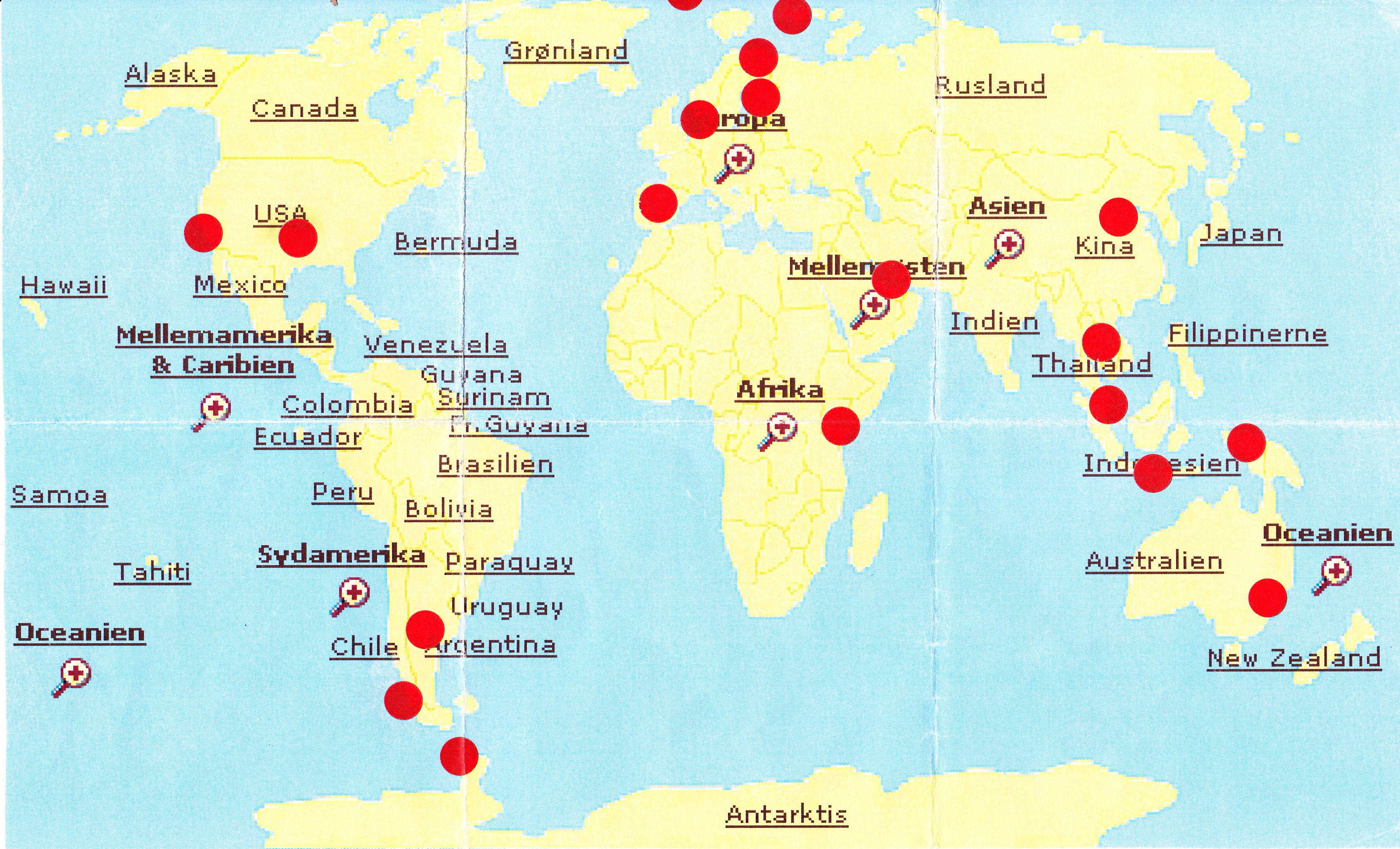
I immediately had the bright idea of the duck coming with me to Chile three days later. And that was not all. It was going to spread its admirable message to the rest of the world. I took on the mission of introducing duck no. 77 to all the world’s seven continents. This mission was later extended to include the North Pole as well. This would give no. 77 the Grand Slam status, which is given to marathon runners who run on all seven continents plus the Earth’s northernmost point. I contacted the florist, who was immediately in on the idea, and the following day I went to pick up duck no. 77.

So there were actually three of us, who set course for South America on 22nd February. No. 77 was with us throughout the trip and also took part in all the excursions. Most of all, no. 77 was witness to the dramatic events in Antarctica.
Changed convictions
Before we travelled to Chile, I was convinced that almost all South Americans were robbers and bandits. Exaggeration promotes understanding, but I believed it was almost certain that we would be attacked and taken away as hostages to the jungle for the next four years. The truth was that the Chileans, I met, were agreeable, upstanding and helpful people. I have, for instance, never before experienced every single car stopping at a zebra crossing to let pedestrians cross the street. One mustn’t generalise, of course, not even when it comes to South Americans. And here I fortunately got rid of one of my prejudices.

What prejudices no. 77’s subsequent travelling companions may have banished, I don’t know. But I firmly believe that the little yellow plastic duck has continued to make a difference, if not only at the subconscious level.
Memorial run for terror victims
From Chile, no. 77 flew with another runner, Kerm Trout to Texas and then on to San Diego to Kathy Loper, who took it with her on a Memorial run for the victims of the Boston Marathon. The Massachusetts capital had distinguished itself in 1972 by being the first place in the world to allow women to run the marathon. Now this great run was on everybody’s lips once more, when an atrocious terror attack had struck the event several weeks previously.
Down under
In May, Kathy took the duck with her to China, where it ran The Great Wall Marathon with me. From there it went to Australia via Singapore with Fran and Dave, where it, among other things, visited a national park before being returned to Denmark by post.

90 degrees North
The little ducks never got the chance to relax, because now it was to head for the North Pole together with Elisabeth. After stopovers in Helsinki and Murmansk, it continued its journey on a Russian icebreaker until it reached its final destination of 90 degrees north.

Mission accomplished
On the last leg of its world tour, the duck accompanied an Albatros guide on the way to Africa, where no. 77 visited Karen Blixen’s farm, just as I had done before. Within less than six months, duck no. 77 had completed its world tour and secured its Grand Slam.

After the mission was accomplished, the travel-hungry duck went on yet another tour with Albatros. This time it went on a round trip to Thailand, Bali, Komodo, Qatar, Indonesia and Papua New Guinea.
Wanderlust
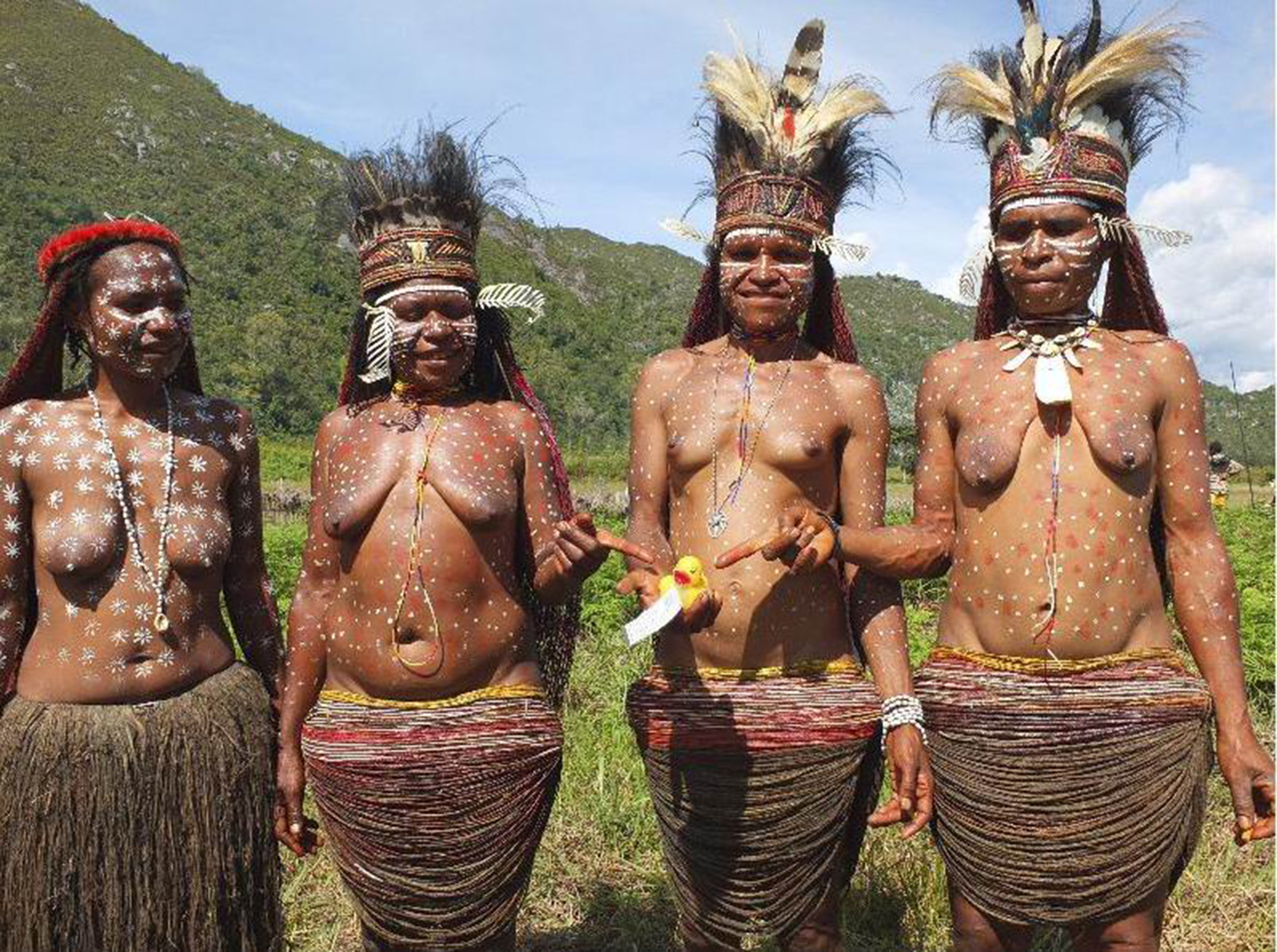
Duck no. 77 has had a great many experiences. It has flown in a hot air balloon across the savannah, has almost got eaten by a giraffe, and has ridden on the back of a crocodile. In Papua New Guinea, it attended the world’s most awesome festival, the “Singh Sing”, where it participated with great pleasure in the song and dance of the Dani tribe with their characteristic Koteka, or penis gourd. Well, the list is endless.

Unknown destinies
Why of all the 200 bath ducks should it be precisely no. 77 that had all these fantastic experiences? One can only guess. It ended up visiting the seven continents and crossing the seven oceans. Was that just a coincidence?

What happened to the other 199 ducks? Again, one can only guess. Pictures of no. 77 certainly dominated the Facebook group pages. Only very seldom was there heard a faint quack from one of the other ducks. A good number of them may well have perished and be gone forever.
Bleak future
My intention was for destiny to carry no. 77 forward after my mission had been accomplished. It would then have grown up, and I would have to let it go. It was a beautiful thought, but also quite a scary one. Perhaps at the end of the next week, it would find itself in “small inseparable objects” at the local recycling station.

Retirement
However, the bus driver, who had dropped the duck off at the florist’s, came up with a great idea for no. 77’s future. Having travelled the world, it had to be time for the little duck to enjoy some peace and quiet in retirement. No. 77 is now back at the florist’s shop in central Copenhagen, where it has gone into retirement and is floating about in a tub just like when I first caught sight of it on television that evening in February 2013.
Another TV show
I came full circle on 25th September 2013, when I appeared on TV2 Lorry/Lounge with no. 77 to talk about its wonderful journey to the corners of the earth. TV2 was the very station on which I had first seen my little yellow friend.
Top marks
The four bright girls from South Funen, who launched this original project were rightly awarded top marks for their assignment.