Author Archives: Henrik Brandt

???????????????????????????????

London Marathon 2005

October 7 2015

Not so straightforward


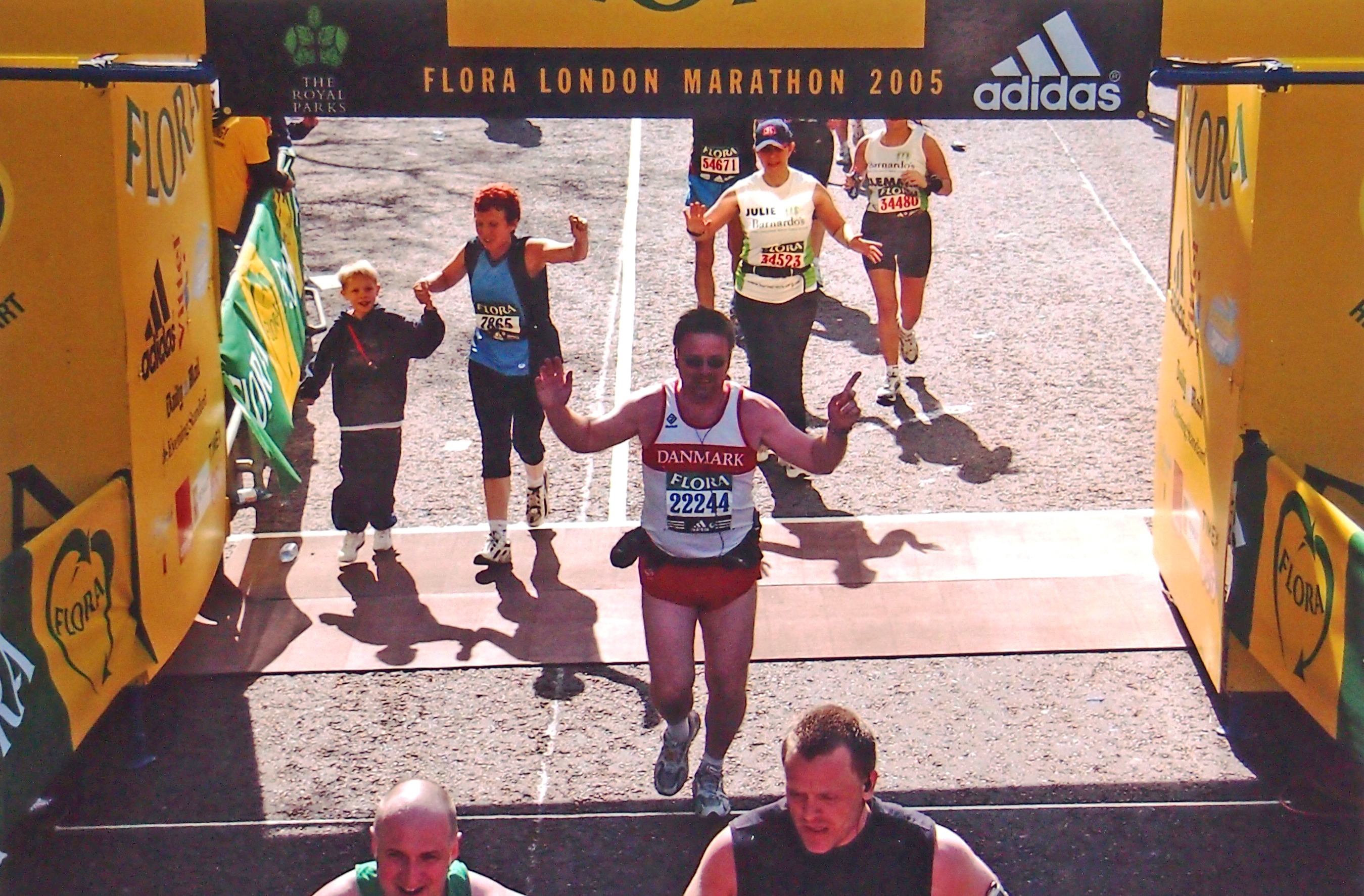
My first city marathon in Berlin in 1999 had given me a taste for big, famous marathons, and I wanted to try another one. Elisabeth was living in central London at the time, just a stone’s throw from Hyde Park, and during the Christmas holidays of 1999, I ran in the park several times and got the idea of running the marathon in the city. This would turn out not to be so easy.


My intention was to take a cheap flight to England and stay with Elisabeth. All I needed now was a running number, but this was to be quite a challenge.


It would have been possible for me to run the London Marathon, if I simply bought an expensive package solution from a travel agent with a flight and hotel room. I could also have raised money for charity, but for me, neither of these options was possible, or what I wanted.


Limited number of runners


Run for the first time in 1981, the London Marathon has since developed into one of the biggest and most famous of its kind. Interest in the run is huge. If the city could accommodate them, 100,000 people would gladly turn out, but there simply isn’t enough space. Some 40,000 start numbers are issued, and many apply in vain. A very limited number of running numbers are sold by the piece, and a ballot is held among the runners. Getting through is down to a lot of luck.


Draw


In 2000, I decided to try and buy a running number and investigated the possibilities. It turned out that there were two ballots. One of them was for UK residents, the other for those who lived elsewhere, but I made use of both. Because I was able to use Elisabeth’s abode as a c/o address I could put my name on both lists – we shared the same surname at the time. The London system required that you should send them a cheque, and there was a box you could tick to indicate that you would donate the amount to charity if your name was not drawn. If that happened, your name would go into a fresh ballot. I decided to make use of that possibility and was thus potentially included in three ballots. As I had expected, however, I didn’t get a running number in 2000. On the other hand, I did receive a polo-necked jersey with the marathon logo for the amount I had donated.


This repeated itself over the following years, 2001, 2002 and 2003. I was starting to get hopeful though, because I had heard that if you didn’t get through the eye of the ballot needle five years in succession you were certain of getting a running number the following year. But it didn’t take that long.


From glee to frustration to relief


Early in 2004, Elisabeth called to say that I had received a letter at her address, and I immediately asked her to open it. The letter congratulated me on having won a running number for the London Marathon on 18th April 2004. This made me very happy, of course, but frustration soon took over. On that very weekend, I was supposed to be on a course in connection with my NLP-training. Failure to attend would mean that my qualification would be delayed by a whole year. In actual fact, it was not really very much of a dilemma because I was fully aware of the significance of this training. All the same, not being able to go to London was very disappointing. When I later received the letter itself I was greatly relieved. I could see from the small print that it was possible to send in a coupon and have your running number transferred to the following year. That would be no problem, so I immediately sent off the coupon to England.


Delicious food and great hospitality


Friday, 15th April 2005 in the evening, Karin and I flew with Maersk Air to London Gatwick, where Elisabeth met us. She had in the meantime moved to St Michael’s in Surrey, just south of London. We were entertained with good food and a drink or two in her new, beautiful surroundings before it was time to retire to bed.


A day in central London


Saturday, Karin and I went to London to pick up my race number and go exploring. Elisabeth drove us to the train station after breakfast, and we took the train into London and the ExCel Exhibition and Convention Centre at Royal Victoria Docks in London’s East End. After I had picked up my race number, we gave ourselves plenty of time to see the huge exhibition that included everything a relic hunter could wish for. We spent the rest of the day sightseeing and shopping in central London before Elisabeth joined us in the evening. We then went out to eat before returning to St Michael’s to get some well-deserved sleep.


City positively oozes marathon


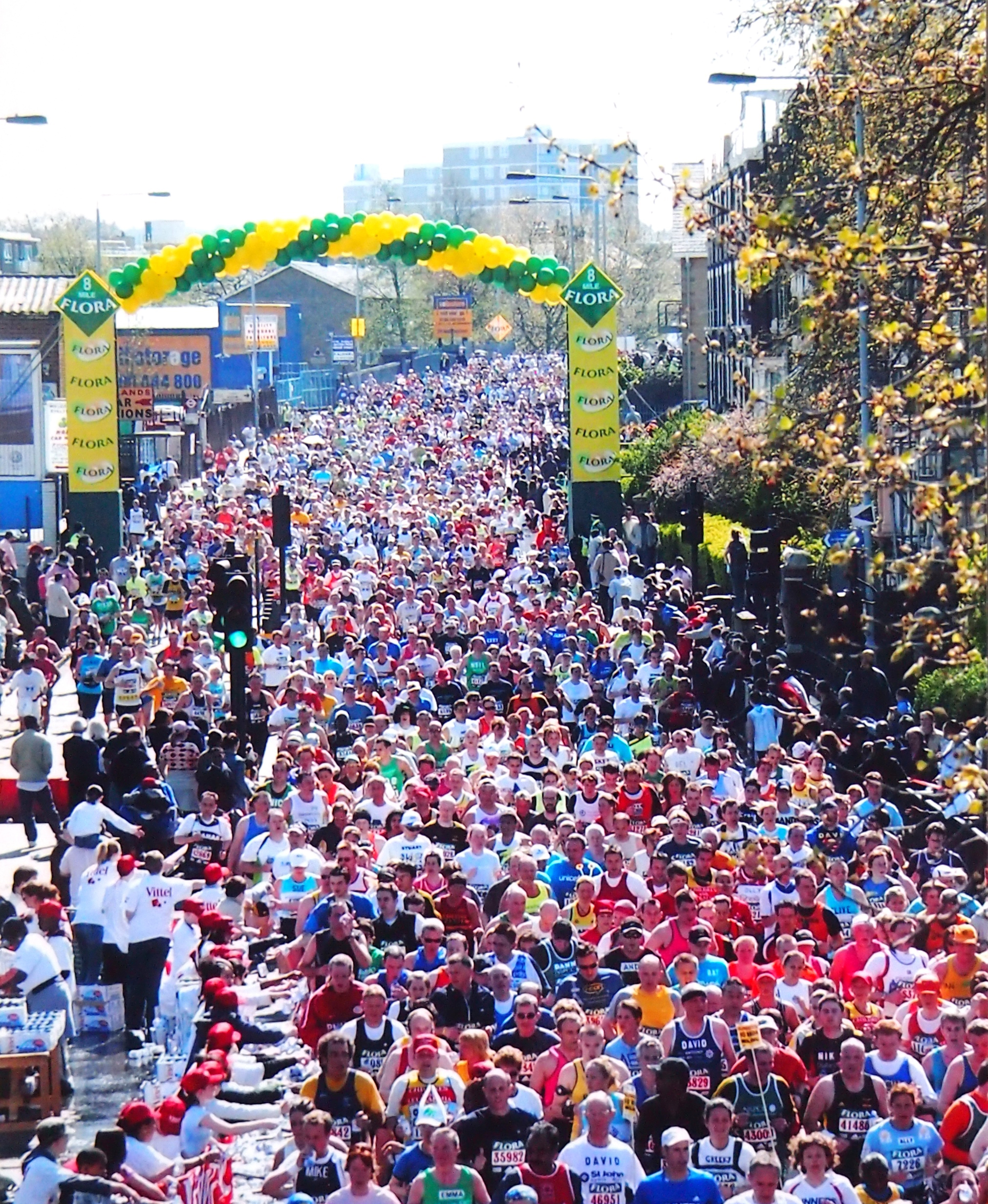
On Sunday 17th April, it was time for the jubilee run, the 25th London Marathon. Elisabeth drove us to the station after breakfast, and we took the train up to town for the big race. There was no need to buy a ticket for the Underground because travel was free on the occasion of the marathon. This was probably more of a practical measure than a gesture to the runners. Not surprisingly, the place was teeming with people in running gear. The train and Underground were packed, and roads had been closed to make room for the marathon.


The start was near Blackheath station. The runners would not all be starting at the same time and place, but would soon join the same route. My running number was 22244, and I was in the blue start group starting from Shooters Hill Road. Here we divided up into smaller start groups according to our expected finishing times. It goes without saying that I wasn’t in the fastest group, so I found my way to group 8, where I belonged.


Imaginative runners


It was a pleasant spring morning with cheerful people all over the place. There was plenty of opportunity to get something to drink and use the lavatories if necessary, so all the runners were fully prepared for the start. It was fun and rather interesting to see all the festive, imaginative runners who had turned out. As I had previously experienced in Berlin, people were demonstrating the most fantastic creativity, particularly the runners raising money for charity who were wearing the weirdest costumes.


???????????????????????????????


The marathon


My group set off at 9.25. Starting at the back of such a large group means that you don’t start running immediately, but that didn’t matter. It was fine for me to save my strength; there would be plenty of need for it later.


After about five kilometres, we were on the proper route, all the runners having filtered in from the three start areas. There was a lively atmosphere throughout the day. The route began east of Greenwich on the south bank of the Thames, and basically followed the river, first on the south bank, then on the north. We crossed the Thames at London’s famous Tower Bridge, almost halfway through the race. The finish was on the Mall with our backs to Buckingham Palace.


There was plenty to drink throughout. Towards the end of the run, a spectator made me a tempting offer by reaching out a can of beer to me. Although I’d drunk enough water by that time, I made the wise decision not to touch alcohol until later.


???????????????????????????????


Hello – where are you?


I crossed the line happy and in a good state of health with a time of 5:22:37, three and quarter hours after the winner. My next job was to find Karin, which wasn’t that easy given that the mobile phone network was overloaded. And then there was the explaining, where each of us was in relation to each other. But we succeeded, and Elisabeth, who also came to town during the afternoon, met up with us later.


On the way to the railway station, I suddenly felt really cold. It was probably because I had been drained of all energy, but it was a good thing we were in London with all its pubs. We found one and sat down to enjoy something a bit stronger than energy drink. I got my strength back, and we could head for home. This, however, caused us unforeseen problems.


Journey home with obstacles


We were to take the East Grinstead train from London Victoria. The station was packed, and everything was rather chaotic, but we did find the right train, which was clearly indicated by signs on the platform.


Not long into the journey, however, Elisabeth began to have her doubts about the route the train was taking. We ended up getting off at the station of a sleepy little town way off the beaten track, and we hadn’t a clue what to do. We found the phone number of a train company on the platform, but when we called, we found they had nothing to do with our train. It wasn’t the poor representative’s fault that we had ended up in some mysterious place, and he told us so.


There was a lady on the platform who was in the same boat as us. She had been taking the train from Victoria for 20 years and was quite certain that neither she nor we had done anything wrong and that the train company must have screwed up.


After a while, we walked down to what might resemble a town. There were almost no shops, and it seemed pretty deserted. But there was a gym, so we went inside. It turned out to be a very big gym, which seemed a bit odd for such a small, almost uninhabited town. But with the help of one of the staff we managed to find a taxi, which we shared with the stranded lady. We drove past her house first to drop her off before finally heading for St Michael’s. It was an expensive taxi ride, but it did give us a few stories to tell.


Five-year struggle finally over


It was wonderful to finally get home again and take a long bath and something to eat after a long, albeit experience-rich day. Next morning we took the plane home, arriving in Copenhagen around lunchtime. A five-year struggle to participate in one of the world’s largest, most popular marathons had come to a successful end.


Buy the book here.


Engelsk forside

OLYMPUS DIGITAL CAMERA

Aabenraa Bjergmarathon 2004 (Aabenraa Mountain Marathon)

September 30 2015

Two marathon partisans


I first met Anne Grete and Holger Jacobsen from Aabenraa in Southern Jutland on the trip to Greenland in 2001. Two years later, In Tibet, I was in the same group as them, and we got to know each other better. Anne Grete and Holger are wonderful people, and I have since had the pleasure of their company in South Africa, Jordan and Australia.


OLYMPUS DIGITAL CAMERA


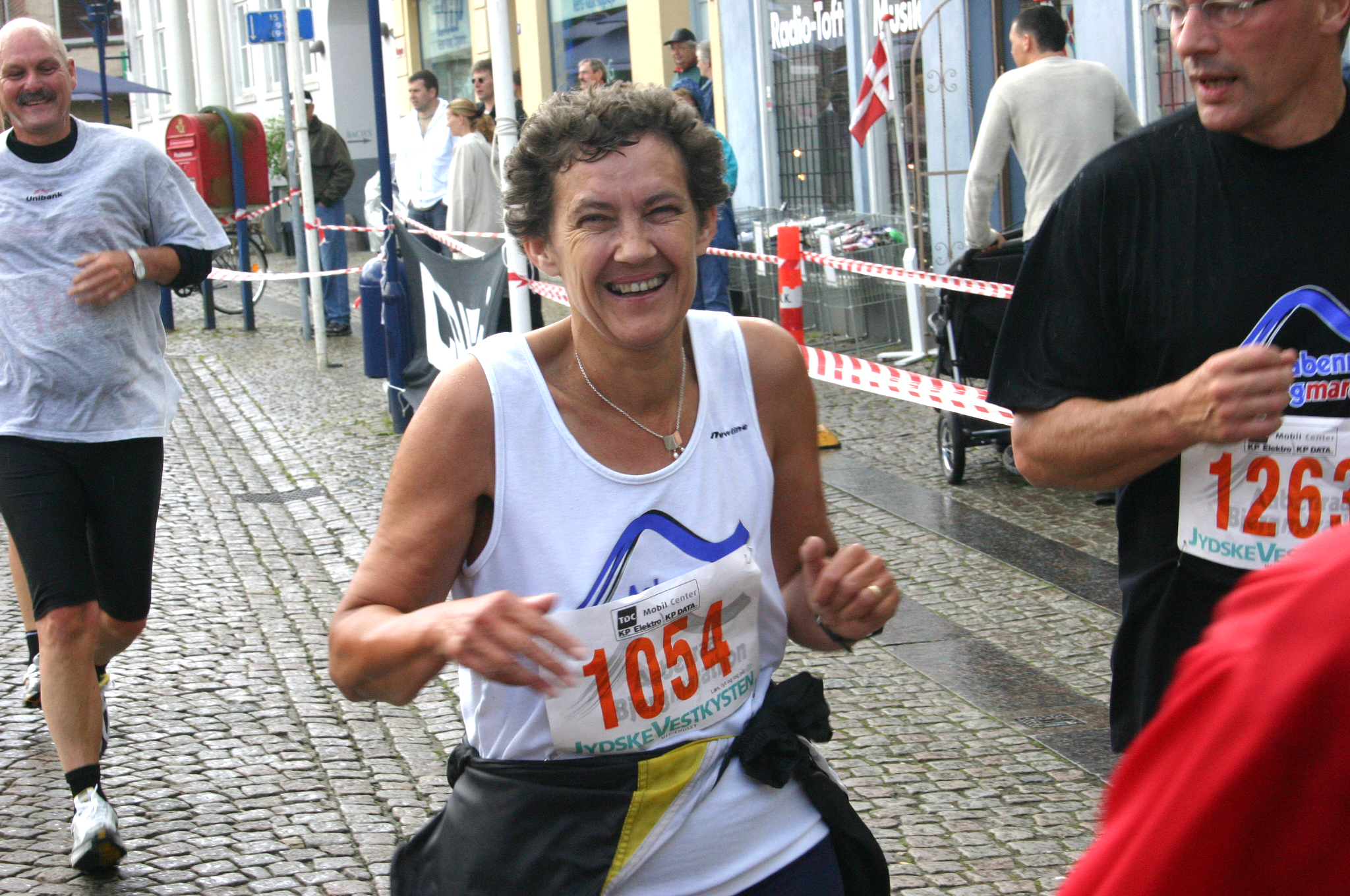
Anne Grete and Holger are passionate about Aabenraa Bjergmarathon in their home town, and you are reminded of it every time you meet them abroad wearing jerseys and jackets bearing the marathon’s characteristic logo.


We’ll meet again


During a pleasant meal on the journey to The Great Tibetan Marathon in 2003, we formed the idea of getting the whole group together in Southern Jutland the following summer. Many of them had run together in exotic places all over the world, so what could be more natural than to meet at a Danish marathon. The idea became reality. With all but a couple of exceptions, all the runners in The Great Tibetan Marathon signed up for Aabenraa Bjergmarathon 2004 (“bjerg” means mountain). Even two Norwegian couples, who had travelled with us to Tibet organised a farmhouse holiday to visit Danish running friends and take in one more marathon.


An exciting run


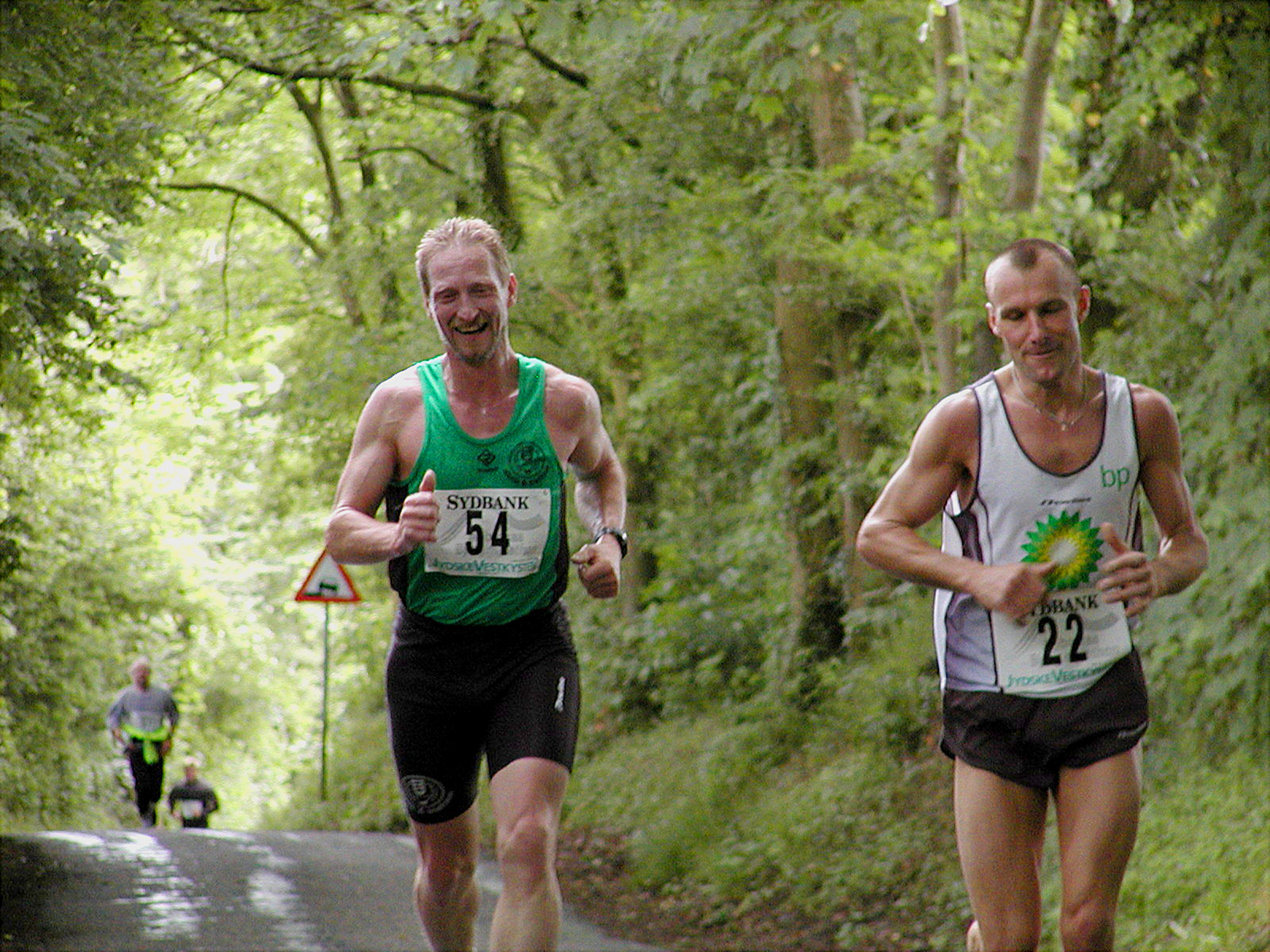
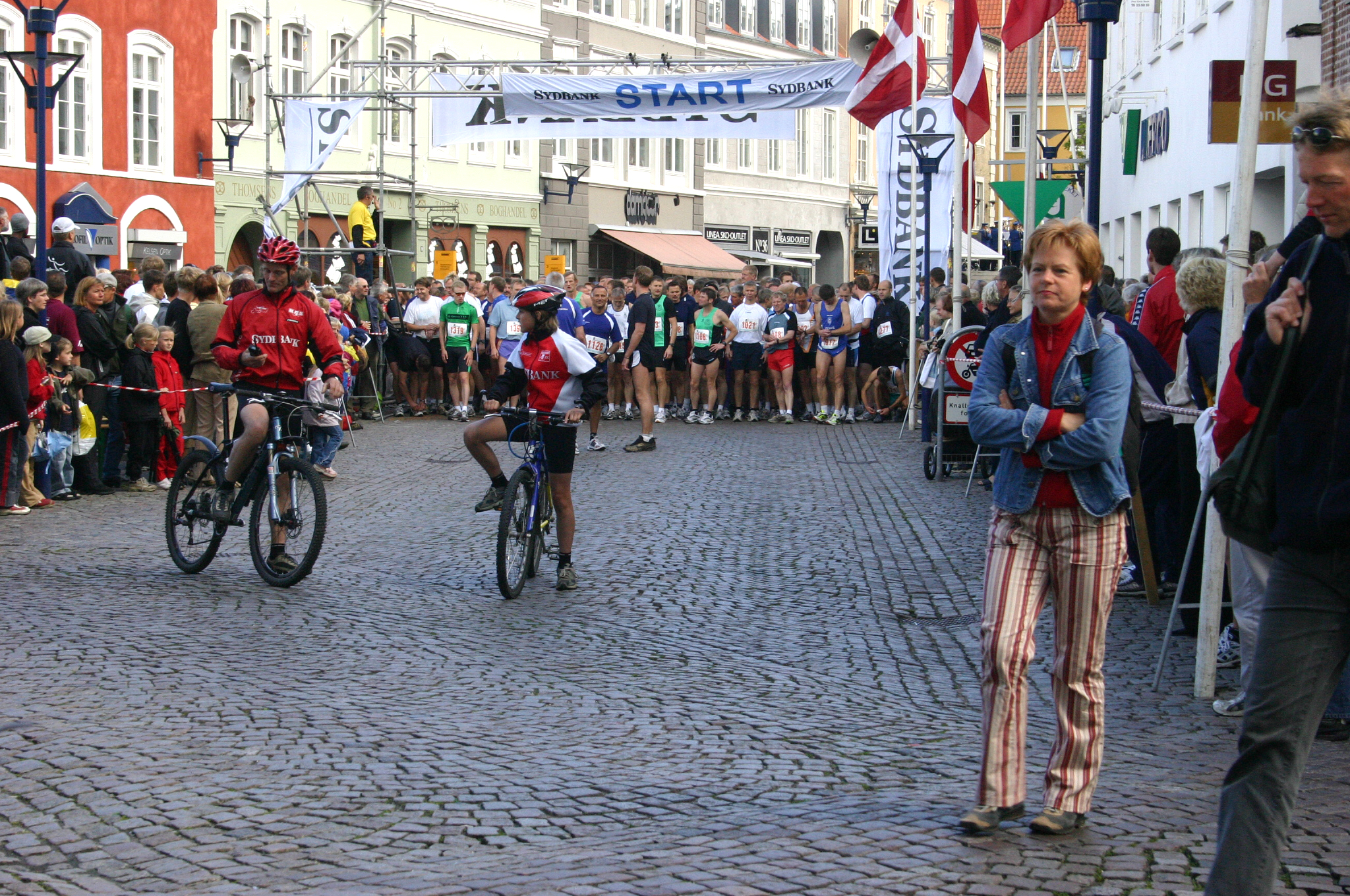
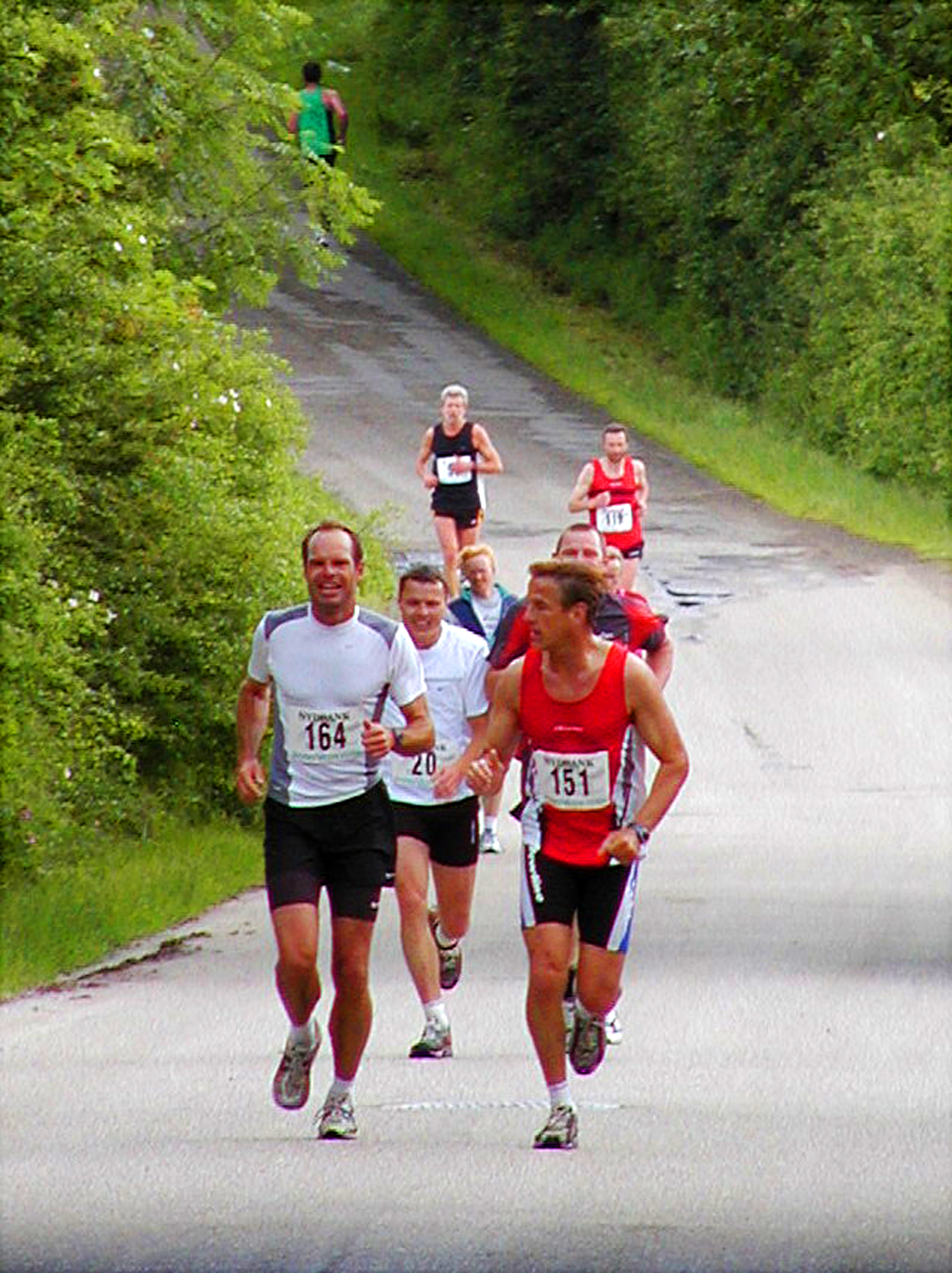
Aabenraa Bjergmarathon has been run since the turn of the millennium, and characteristic of the marathon is its few but long ascents. The steepest of these is on Hjarupvej, part of one of four loops, each of which start from the town square, Storetorv, the location of the race start and finish.


2004.06.19 Aabenraa bjergmarathon__00001


The runners must run all four loops, starting with the east route, followed by the west, south and ultimately the north route. Along the way, you encounter five steep hills, each some 50 – 75 metres from the bottom to the top. So although it isn’t a real mountain marathon it certainly feels like one. The run attracts runners because it is demanding, but it also scares some of them off for the same reason.


The marathon is traditionally run on the Saturday before St. John’s Day, and it greatly pleased one marathon-running priest that the run was not, like most others, held on a Sunday when it came into conflict with church.


OLYMPUS DIGITAL CAMERA


The run has become very popular over the years, attracting a large number of runners from far and wide. The event brings the town together, which is obvious from the large number of advertisers, primarily local.


2004.06.19 Aabenraa bjergmarathon__00033


One novelty on the year we ran was that the marathon got its own wine. Local artist and runner, Dagmar Poulsen, was responsible for that year’s Mountain Marathon wine. The race also had the backing of the town’s day care institutions. The kids had been very creative and made dolls that were used as signposts for the run. Happily, the dolls were just a supplement to live helpers along the way.


Up early


The marathon was run on 19th June. Karin, who was not going to run, had decided to join me on the trip to South Jutland. Because the run started at 10 a.m., we had to leave Zealand early to drive the 250 kilometres. This was not unlike many other races around the world. We picked up fellow runner Susanne Bruun in Sorø. Her parents, who had also faithfully travelled the world to run marathons, were unable to attend that day.


Gorm


The starting pistol for our run went off at ten, while the shorter distances started later. As had been the case since the first race, TV personality Hans Georg Møller, alias Gorm, entertained the crowd in the start/finish area.


Summer and sun, up and down the hills


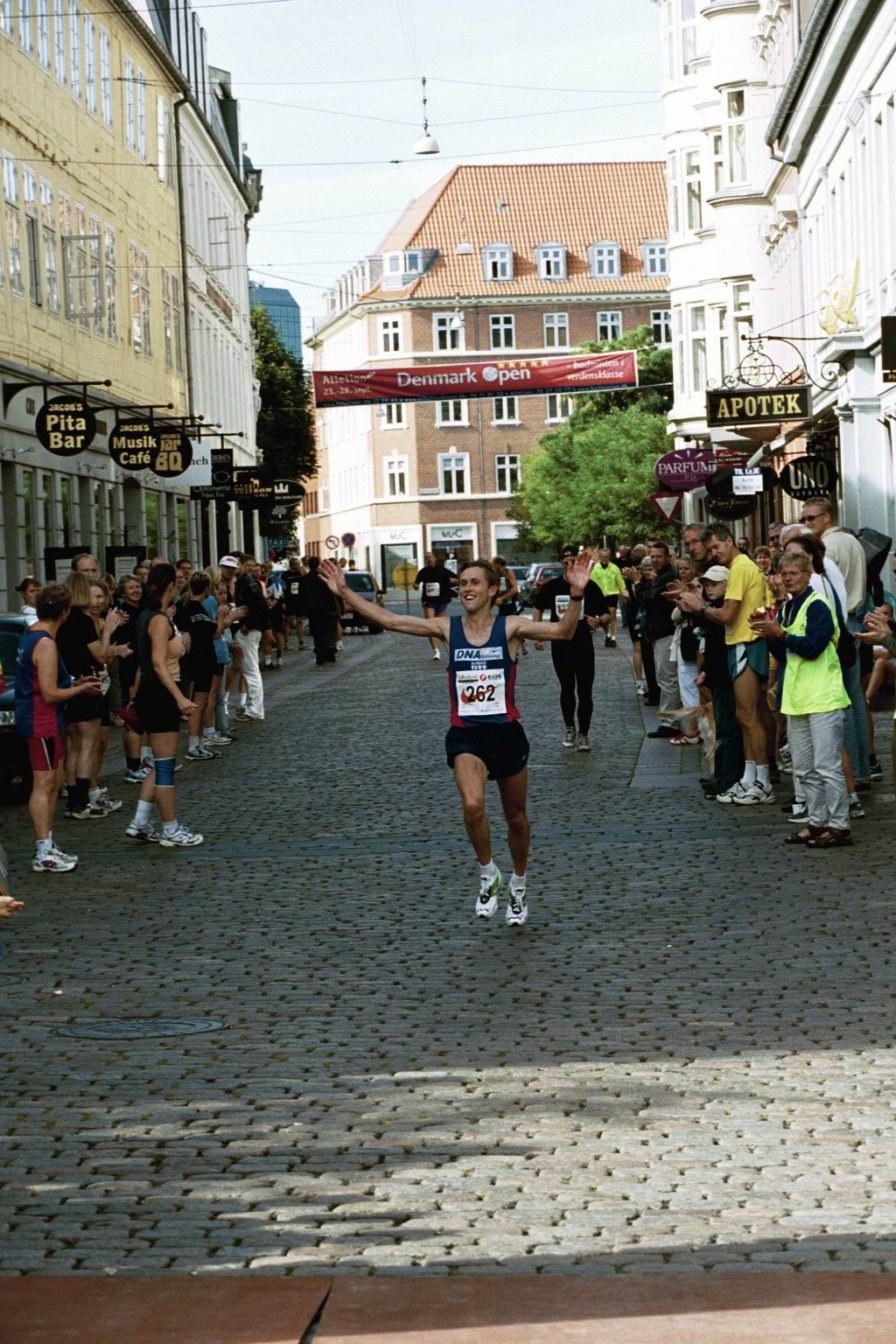
It was summer and could we feel it! The hills along the course pulled teeth, but it was invigorating to finish each loop and cross Storetorv to the onlookers’ applause and Gorm’s cheeky remarks. The catering was excellent throughout what was altogether a very well organised race. I well understand Anne Grete and Holger proudly showing off their run logo all over the world.


OLYMPUS DIGITAL CAMERA


Our Norwegian friends had sniggered at the idea of us running a mountain marathon, but after the run they had to admit that they could feel they had been running up and down hills. They frankly declared that they now understood the name Mountain Marathon.


Prizes


As per tradition, I wasn’t fast, with a time of 5:23:26, while the winner came in at 2:43:51. Susanne Bruun made her mark as the third woman to cross the line. Apart from prizes for the best runs, there was also a prize draw. I had brought along some prizes from the company we owned at the time, Wolle’s Nature System, along with some books and herbal products, which we laid out so everyone could take a sample home with them.


Communal eating and hospitable accommodation


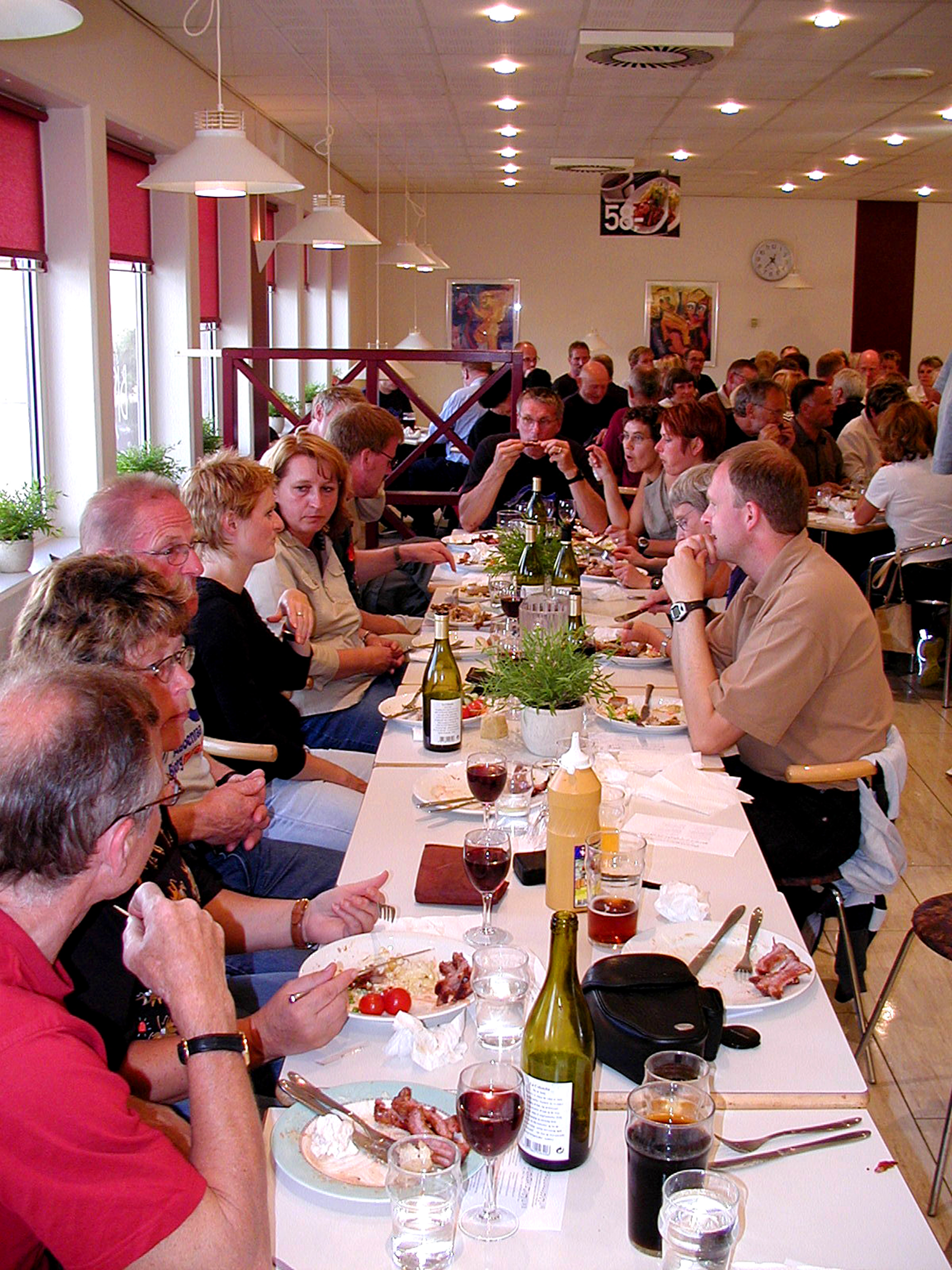
In the evening, we met up with many of the marathon’s participants and officials to eat together in the cafeteria of the Føtex department store. We had a really pleasant evening, which ended with a nice cold drink at one of the town’s less salubrious pubs.


After a long day and cheerful evening we drove to Agerskov, 22 kilometres from Aabenraa, where we had been invited to stay the night with Gerda and Jakob, who served a delicious breakfast before we set off back to Zealand after an admirable visit to Jutland.days.


OLYMPUS DIGITAL CAMERA


Buy the book here.


Engelsk forside

???????????????????????????????

The Great Wall Marathon 2004

September 23 2015

A small group


Delayed by a whole year, the fifth Great Wall Marathon was run in May 2004. As Søren had promised three years previously, I didn’t have to pay for the trip itself.


We set off on the evening of Tuesday 18th May with the smallest group I had travelled with to date. Group 8 consisted of only nine guests and a guide. I was partly responsible myself for the limited size of the group, since I was to be unaccompanied in China for the first time. But being in a small group was very cosy. We were always able to sit together at mealtimes, and this made the atmosphere more intimate.


Smile for the photographer


We were to have started with the traditional visit to the Summer Palace. Fortunately, this was postponed, and I didn’t have to visit this otherwise very interesting place, which I had visited several times before. Instead, I was able to drive straight to Jianguo Hotel, an excellent hotel in the city centre.


Peter Fredberg had challenged us to a short afternoon run, which would also frame an article in the tabloid BT. Only three of us took up the challenge, however. We went by taxi to the Forbidden City, where Peter took some pictures of us running. When he had taken the pictures, we ran around the Forbidden City for a while and then returned to the hotel.


New route


The next couple of days followed the usual routine, including the long trip on the run area, where we attended an information meeting, walked along the Wall and some of the route.


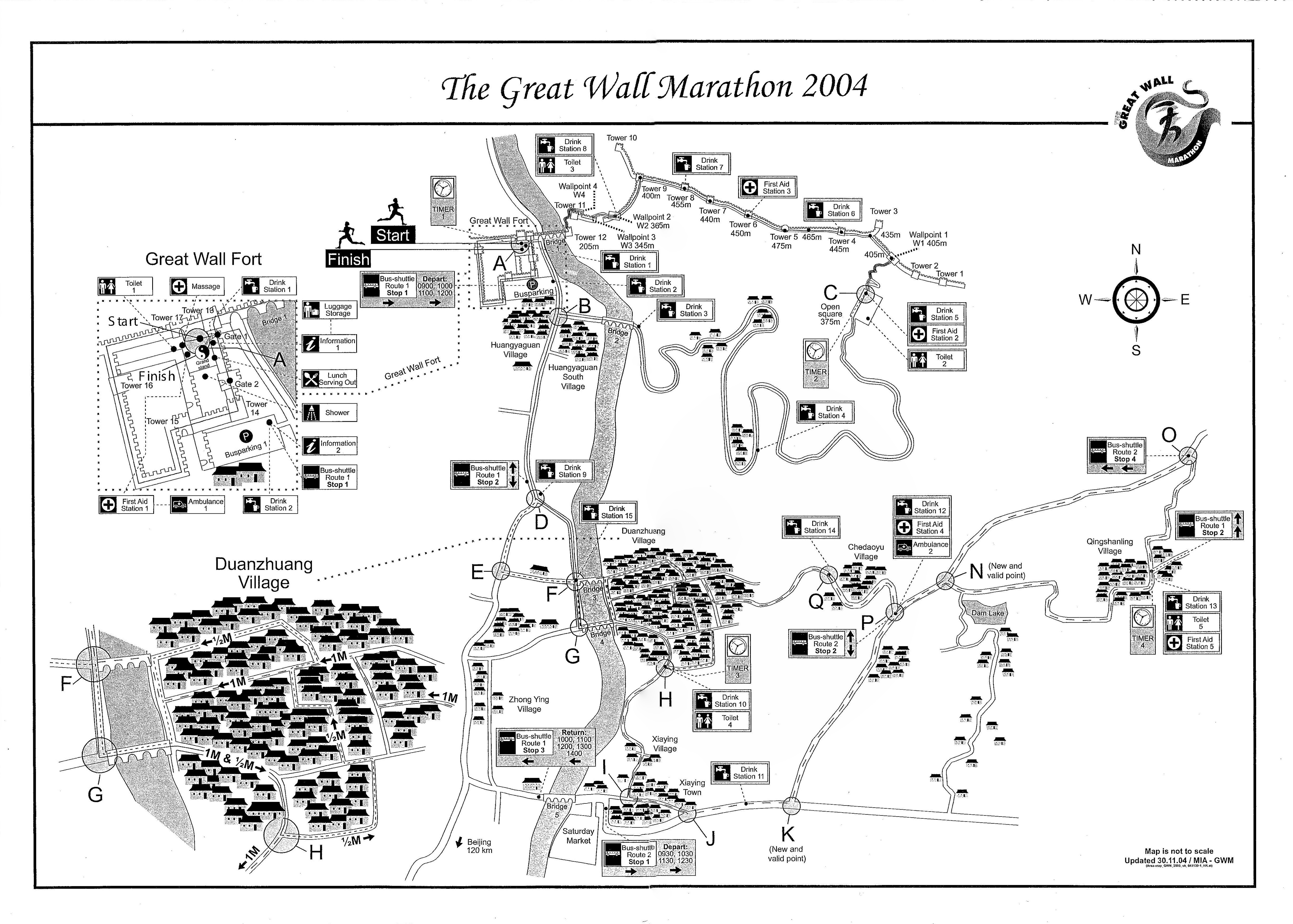
The route was changed after the debut year and was not changed again for the next three years. But now the time for a change had come. This was not because the organisers wanted it, but since we were last here, the vagaries of nature had changed the course. Negotiating one of the areas we previously had been able to run would have required a boat or kayak now.


marathon-rute 2004_edited-1


We had previously run from Xiying Town up to Zhong Ying Village and from there onto a loop in a south-westerly direction towards Beijing, through some small villages, and then in a northerly direction towards Yin and Yang Square. This was no longer possible, however, and a new route had to be marked up.


The first time the route had been changed, they decided on an even more demanding one than the original. This strategy was also chosen on this occasion, so in future we would be even more aware of the fact that this was the world’s toughest marathon.


From Xiying Town, the route headed north-west. A short distance before reaching the half-way mark, we were to run up a mountain track for a couple of kilometres. At the top of this stretch, we would pass through Qingshanling Village, where our chips would also be checked. From here, we would continue round and down the mountain track on the other side until we were back at the foot of the mountain where we had started out five kilometres previously. From here the route would take us through Chedaoyu Village to the larger, familiar Duanzhuang Village. From here, we were now on the same route as the previous years on the way to Yin and Yang Square. The route has been the same for the last ten years.


Bitterly cold


This year, the big day was on 22nd May, and in keeping with tradition we had to get up early to make the long bus trip to the run. It was a bit cold when we arrived, so I was pleased I had a jersey with me. Thomas told me that a few hours earlier, before they had started preparations, the temperature had been around zero and the wind icy.


The trio became a duo


As it had now become a tradition, also this year, a joint photo was taken of Peter, Søren and me – the only people to be there for the fifth time. However, Søren’s statistics were somewhat amputated, because he had to make do with a half marathon this time due to an injury. This caused Peter to exclaim: “Bloody hell, Søren, the sissies’ race?” A few years later that remark would hit him like a boomerang.


A race by the book


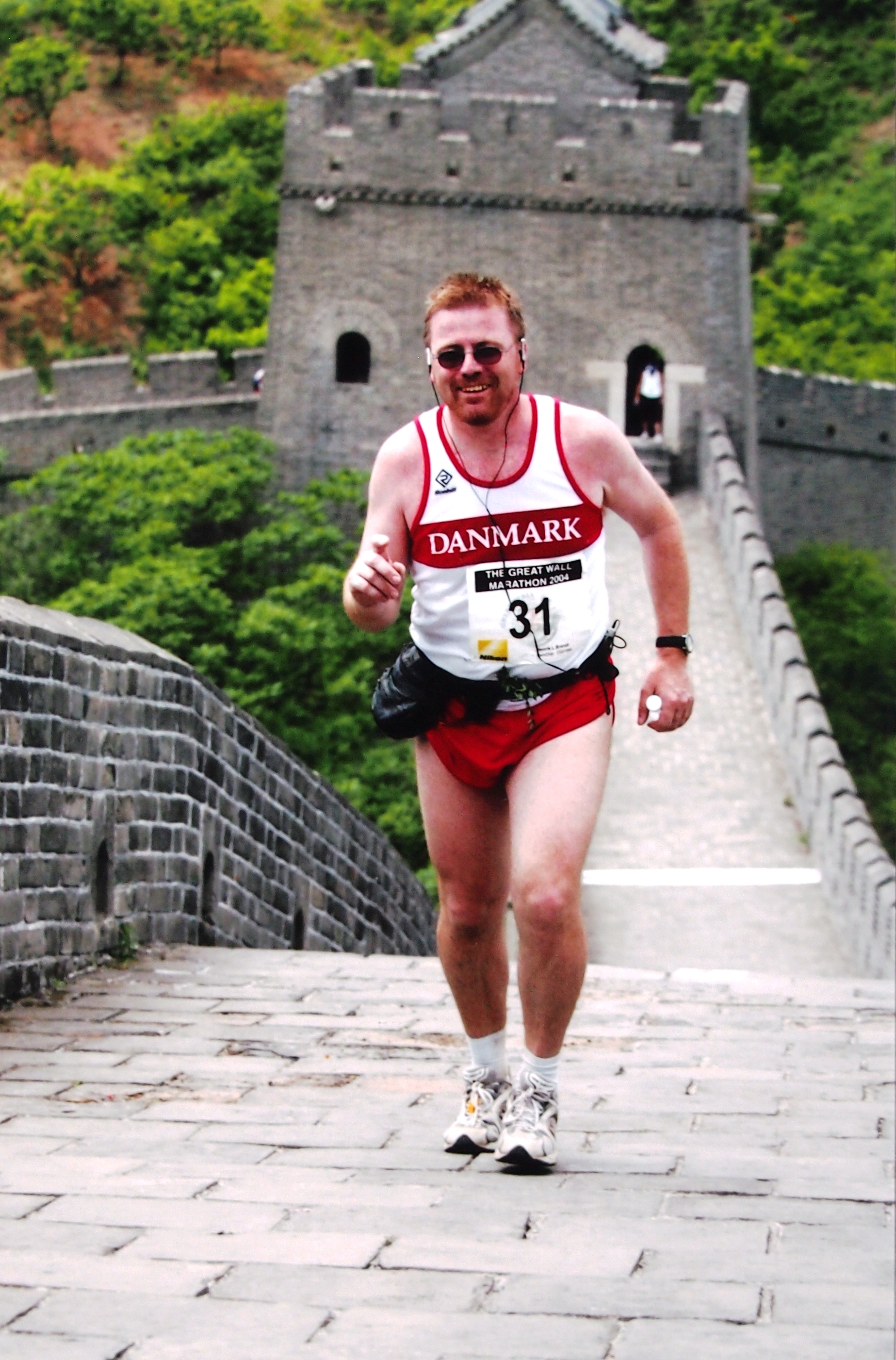
The race itself developed more or less as expected. On the new ascent halfway into the race, I decided to walk and simply enjoy the view. On my way, up a girl came towards me and gave me a bouquet of wild flowers, which I put in my running belt and had with me right until the finish, by which time they were so miserable that I had to get rid of them. When I reached the top of the new section, I got my legs working again and ran practically all the way down.


???????????????????????????????


There is nothing particular to tell about the race. It went according to plan with the usual ups and downs until I crossed the line in style.


Five times, then you are something special


Crossing the line, on the other hand, was a fantastic experience. My entire group was sitting together waiting for me. I had reckoned on each of them taking a bus home after finishing, but they had decided to wait as a group, which was an extremely moving gesture.


Crossing the line at The Great Wall Marathon is always a special experience, but this time I really did feel how special it was to have completed the race every time. Dave announced to the crowd that I was one of only two runners ever to have done this five times. There was a roaring applause and both unknown and familiar people came over to congratulate me, and I was asked to be photographed with quite a few people. I did not of course see the winner crossing the line, although I have difficulty imagining him attracting as much attention. I was now in no doubt that the following year would be The Great Wall Marathon Part VI.


???????????????????????????????


No hat-trick


I was anxious to hear whether the local man, Zhi Jixiang, would win for the third time in a row. After his victory in 2002, he had proclaimed that he would return to run as long as the race existed. He did not, however return, nor has he done since. Zhi Jixiang is, however, the only runner ever to have won twice. This year’s winner was the Austrian Josef Miesraher with a time of 3:38:35. My time was 7:16:04.


An outburst of exhaustion


Two brothers from the Netherlands came in 10th and 11th, one of them almost dragging the other across the line. It later turned out that one brother had suffered a fatigue fracture in his shin. Apart from this incident, the day had been comparatively quiet for the doctors and nurses. Two runners dehydrated and needed to go onto drips. Otherwise, there were only a dozen or so minor injuries such as grazes, sprains and blisters.


Back to Beijing as a group


Luckily, our own fantastic driver was still in Huangyaguan, and our guide, Ida, had hired him to drive the group back to Beijing. It was really nice to be with my own group on the way home. This had never happened before.


We met up again at the hotel’s pavement cafe that evening, where we drank delicious draught beer and had a wonderful chat. After that, we went on to a good restaurant, which Ida had found. We enjoyed a rather special delicious Chinese fondue. A delightful day came to an end soon afterwards.


Alternative entertainment


We spent the Sunday relaxing and wandering around town with others from the group. In a pedestrian precinct, we had rather an odd experience, when a father with a son about two years old went completely berserk in the foyer of a department store. He shouted and screamed at one of the department store’s female staff. She responded by throwing something in his face, whereupon the boy started screaming. Experiences can take many different shapes and forms.


Gala party with a gift


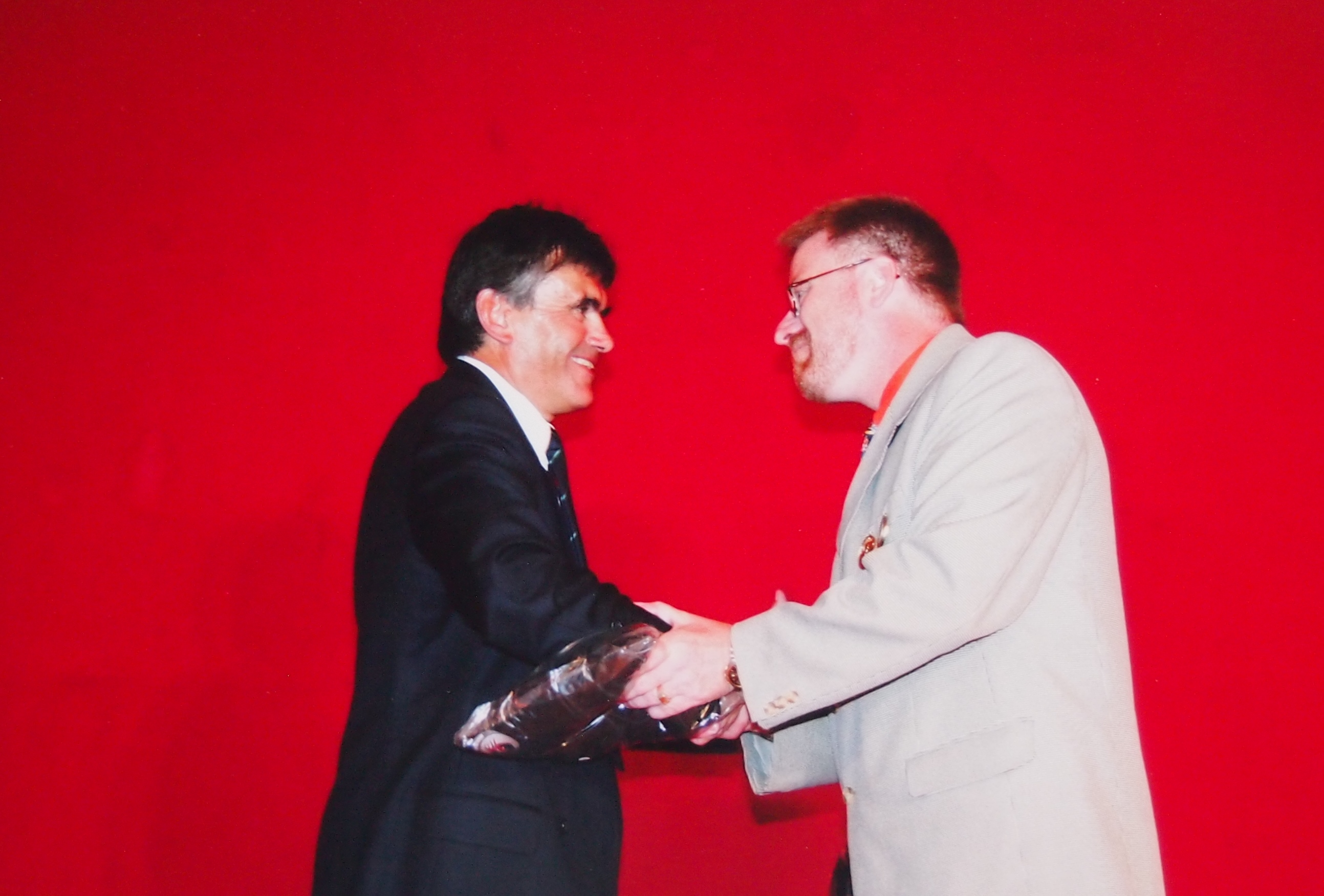
The evening gala party was in keeping with tradition, with dinner afterwards, and during the presentation of prizes, Peter and I were called to the rostrum to receive a jersey each bearing the race logo.


???????????????????????????????


A lot of shopping


In the years during the middle of the first decade of the millennium I had a long shopping list with me when I was in China. Family and friends, but also remote acquaintances, would ask me to buy various things for them. Of course, I was willing to help, but things gradually got a bit out of hand. This time, I certainly should have been better at saying no. The thing was that the task had gradually become more and more time-consuming, and meant that I missed out on trips, which, apart from the run, should have been a relaxing pleasure.


???????????????????????????????


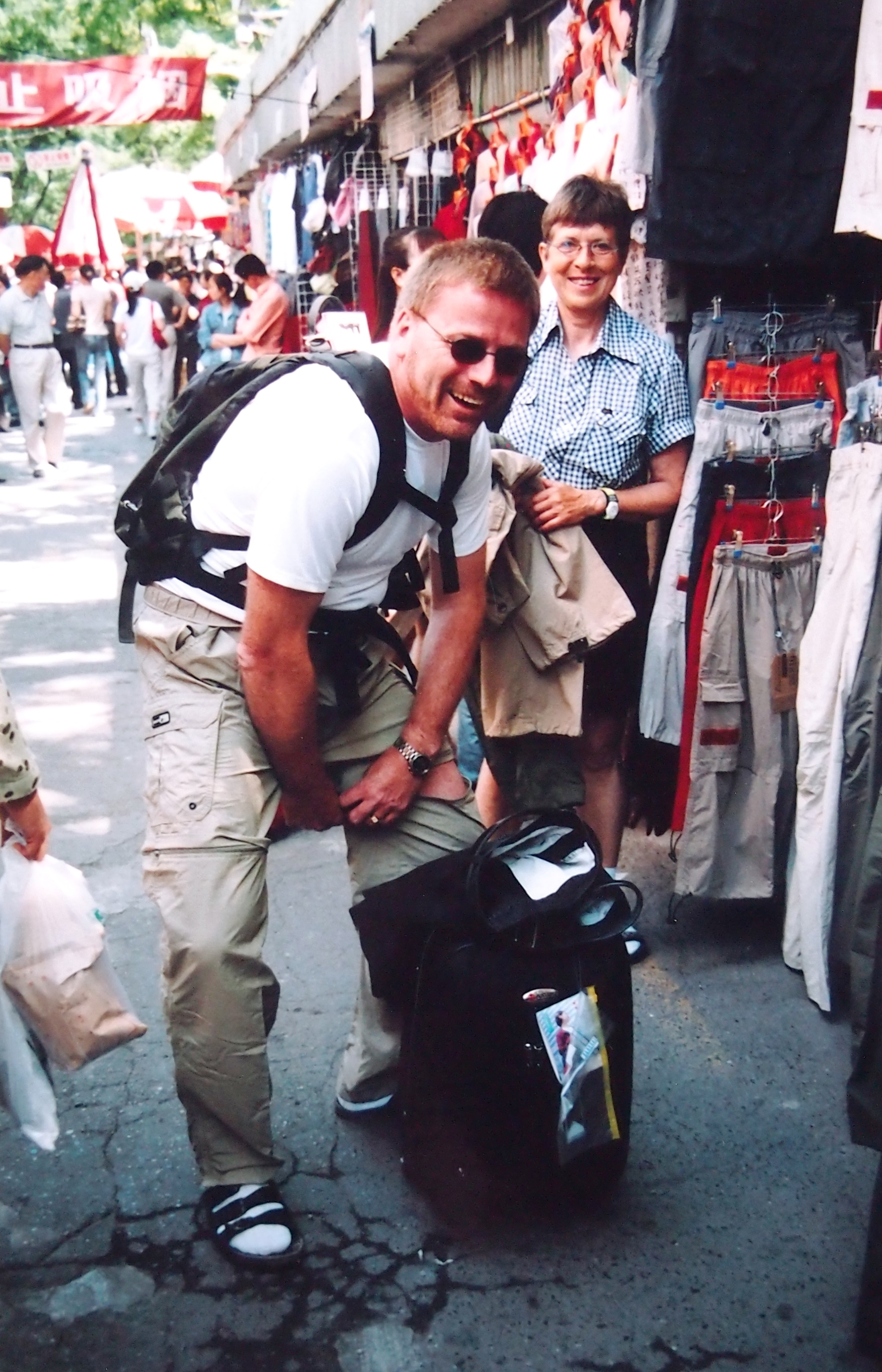
I spent a lot of time visiting markets, finding various things and haggling over prices, and it took extra-long before the chains of pearls were put together with the right closure. I had a long shopping list, from which articles were crossed off as I went along, and it was a great relief when I had bought everything on it. Until then, I could not relax.


This Monday morning after the run, I was out shopping at the silk market. I went along with two fellow travellers, who wanted to make the most of my experience when it came to finding the right price.


After lunch, I visited various places in Beijing with the group. I had visited all of them previously, but chose all the same to enjoy the company of the others in the group.


A rainy day


On Tuesday, there was again a full schedule for the group, and once again it was all a repeat for me. For this reason, I chose to stay at the hotel, so that I could relax and do my packing in peace and quiet. It was a very fortunate choice.


It was a cold day, and later in the morning the wind began to blow. Later it got even worse, so the group came home from the Forbidden City dripping wet and frozen stiff.


On the last evening, we enjoyed Peking duck together followed by beer at the pavement restaurant, by which time the weather was fine again.


Excess baggage


The journey home on 26th May went very well apart from a single challenge. I had done a lot of shopping, both for myself and others, and furthermore, I was particularly bad at prioritising, during that particular period, when it came to what I should have with me on the outward journey. As a result, I had a lot of excess baggage. At that time, the Chinese airport personnel were not terribly strict about excess baggage, so I didn’t have to pay more. On the other hand, all these extra kilos were heavy and difficult to handle, particularly on the leg of the journey home by train from Copenhagen Airport.


Buy the book here.


Engelsk forside

OLYMPUS DIGITAL CAMERA

Thomas Thomsen’s reception on leaving DAF

September 16 2015

I became acquainted with Thomas Thomsen on the very first day of my very first marathon trip to China in 1999. This would turn out from the very beginning to be a close and lasting friendship.


Thomas has from the outset been at the heart of Adventure Marathon runs. Together with Søren Rasmussen and Peter Fredberg, he has been on the organisation committee since The Great Wall Marathon 1999.


Thomas was born in Ulfborg in West Jutland in 1937 and trained as a draper and interior designer. As a young man, Thomas was a middle distance runner, with cross country as his speciality. Parallel with his own firm in the textile industry, Thomas has occupied various positions of trust in athletics and was elected chairman of the Danish Athletics Association in 1996.


In March 2004, I received an invitation from the Danish Athletics Association. After 24 years on the board of DAF, the last eight years as chairman, Thomas had decided that the time had come to retire. He would, however, continue as the Association’s representative at marathons organised by Adventure Marathon. On the occasion of Thomas’s retirement, I was invited to a reception on 1st April at Idrættens Hus (House of Sports) in Brøndby near Copenhagen.


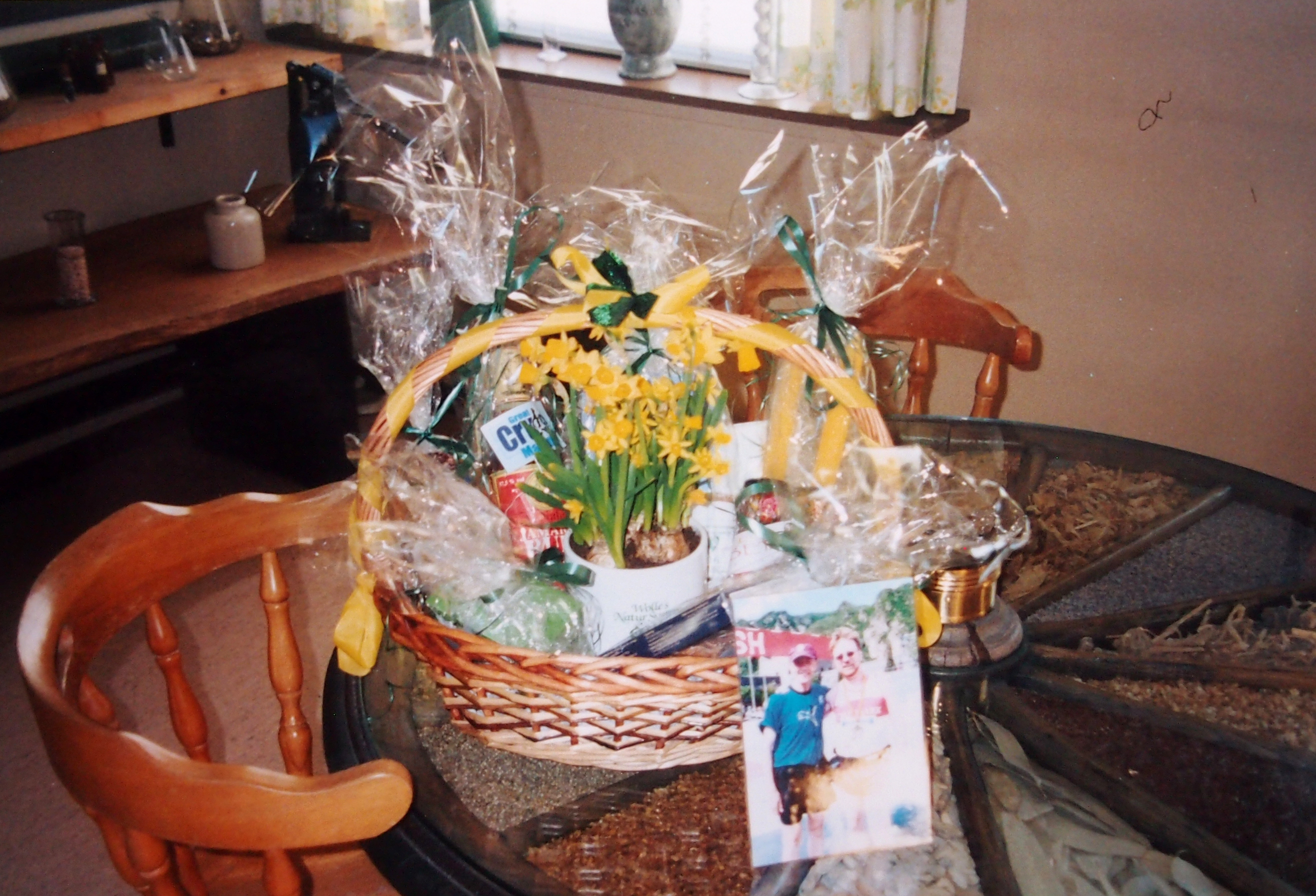
Of course I would be attending; the question was what gift I would take along. The idea came to me quite quickly, and after that it was plain sailing. Thomas was to have a memento from each of the trips we had been on together. I put together a basket of Chinese stress relief balls; coffee from Kenya; and a packet of Greenland shrimps from which, for health reasons, I had removed the shrimps and replaced with a sum of money, so that Thomas could buy his own fresh shrimps. From Tibet there were two candlesticks with Danish Easter candles in them, and a bottle of rum from Jamaica. Because it was Easter, he also got a pot of daffodils; and from our family company, Wolle, I added a book and some health giving products. The whole lot was wrapped in cellophane and tied with yellow and green ribbons.


OLYMPUS DIGITAL CAMERA


I got the impression that Thomas was pleased with his present. He has since mentioned it on many occasions. He did, however, have one scruple as he went through the contents. It was not because of the shrimps, but because of the true sportsmanship Thomas stands for, he wanted to be absolutely sure that the herbal products from Wolle were doping-free. I could assure him that they were.


Buy the book here.


Engelsk forside

???????????????????????????????

The Great Cruise Marathon 2004

September 9 2015

Marathon at sea


Running a marathon on the open sea – is that at all possible? As a matter of fact, it is! I ran one with a group of runners who shared my fondness of experiences with a difference. Not only did we run on the water, we also did so on my birthday. This meant I had run marathons on my birthday two years in a row, because I had run the same distance the previous year in Malta.


A unique event


In the summer of 2003, Adventure Marathon announced the launch of the new, entirely different kind of run. This time it would not be a particularly tough run although it would definitely stand out from the rest. Unlike earlier runs, this would not be a recurring event, but a one-off job.


The Danish West Indies


The marathon was to be run on board the Norwegian Cruise Lines’ flagship, the S/S Norway, as she sailed the stretch of water between Miami in Florida and St Thomas in the former Danish West Indies. The artificial course on the Olympics deck was 444 metres long and would thus be run 95 times.

Built in 1962, the S/S Norway was the world’s biggest cruise liner at the time. Some 350 metres in length with a crew of 1,000, it could accommodate 2,000 passengers.

During the cruise, we would be going ashore on St Thomas, one of Denmark’s former colonies. We would also be calling in at St Maarten, which is the smallest piece of land in the world to be shared by two nations, since France and the Netherlands have a piece each.


The idea that became a reality


In December 2002, Peter Fredberg was in Southampton in the South of England for the world premiere of the luxury cruise liner, Norwegian Dawn, about which he was to write an article. On a tour of the ship, Peter came onto the upper deck, where he saw a round track with an artificial surface. He could see its potential and subsequently wrote an article “What about a marathon at sea?” This article was obviously read in Oslo because Peter later got a call. It turned out that representatives of the shipping company wanted to come to Copenhagen for preliminary talks about the idea. Søren Rasmussen was also informed, and the meeting took place at the Albatros Travel office at Kultorvet, in Copenhagen. Albatros Travel had at that time never been involved in cruises, and this was the beginning of an entirely new market for the travel agency.


Tried that before


This would not, however, be the world premiere of a marathon at sea. A few years previously, a group of marathon runners had been on a journey to the Antarctic to run the classic distance there, but because of bad weather they had been unable to get ashore to complete the mission they had travelled so far to accomplish. Some creative souls among them came up with the idea of measuring up the ship and organising a run on board. On the little Russian icebreaker, they ran up and down the steps and in and out of the saloon. The participants had to take it in turns running as well as counting laps for each other. There is no doubt that the marathon must have been quite irksome to run, but probably also quite fun. And most important of all, the runners succeeded in putting the distance behind them while they were geographically located on the White Continent.


Change of plan


I immediately took to the idea, as did Karin. We both really wanted to visit the Danish West Indies. But that was not the way it would be.

The S/S Norway had, unfortunately, been damaged and had to go into dock, for which reason the event had been transferred to a rather more exclusive boat. The route would also be different. It vexed Karin and me that we would miss a visit to St Thomas, but we still liked the idea.


Norwegian Sun


An entirely worthy alternative was found for The Great Cruise Marathon with the same shipping company, Norwegian Cruise Lines. The event would still be held in the Caribbean on an equally exciting and interesting route but on board the S/S Norwegian Sun.

The Norwegian Sun was built at the Lloyd Shipyard in Bremerhaven and launched in 2001. She is equipped with every thinkable kind of convenience, including a gym, various sports facilities and not least the excellent running track that was to be the crux of this trip. The 480-metre long track goes unbroken all the way round the ship. With its artificial surface, the track is located on deck number six, which is the least used and one where joggers will not be interrupted by swinging doors. It also has the advantage that you are not entirely exposed to the sun.


???????????????????????????????


Participation goes without saying


By the time Karin and I had seen the final programme and had got over our disappointment at not visiting the Danish West Indies we were in no doubt. Of course, we were going to go. We signed up already in October 2003.


Study trip


We flew out of Copenhagen Airport on the morning of Saturday 21st February, and on this trip we were 68 travellers in the same group consisting of tourists, members of the press and organisers. It had not exactly been easy to sell this marathon trip. It was, therefore, arranged in collaboration with the weekly glossy magazine Se & Hør, whose readers were offered a discount. So a good number of people in the group had no background in the marathon sport whatsoever and were just going on a lovely cruise in the Caribbean. As it turned out, however, this was not a disadvantage at all.


A flying visit to the capital – then on to Florida


After eight hours in the air we arrived at the United States capital, Washington DC. We had to get our skates on here because we had to check our baggage out and then in again before departing on a domestic flight within an hour. Everything went according to plan, however, and we arrived two and a half hours later in Miami, Florida.


Hotel hassles


We arrived at the Fairfield Inn & Suites just before 9 p.m. but here various problems arose for the group. We were fortunately not affected. Some people’s luggage had been left stranded in Washington, whilst others couldn’t have their rooms. The former was the kind of thing that happens, which you can do nothing about, but the latter had to do with both a lack of professionalism and poor service on the part of the hotel. After a very long journey, some people had to sit at the reception for several hours before being shown to their rooms.


Morning in Miami


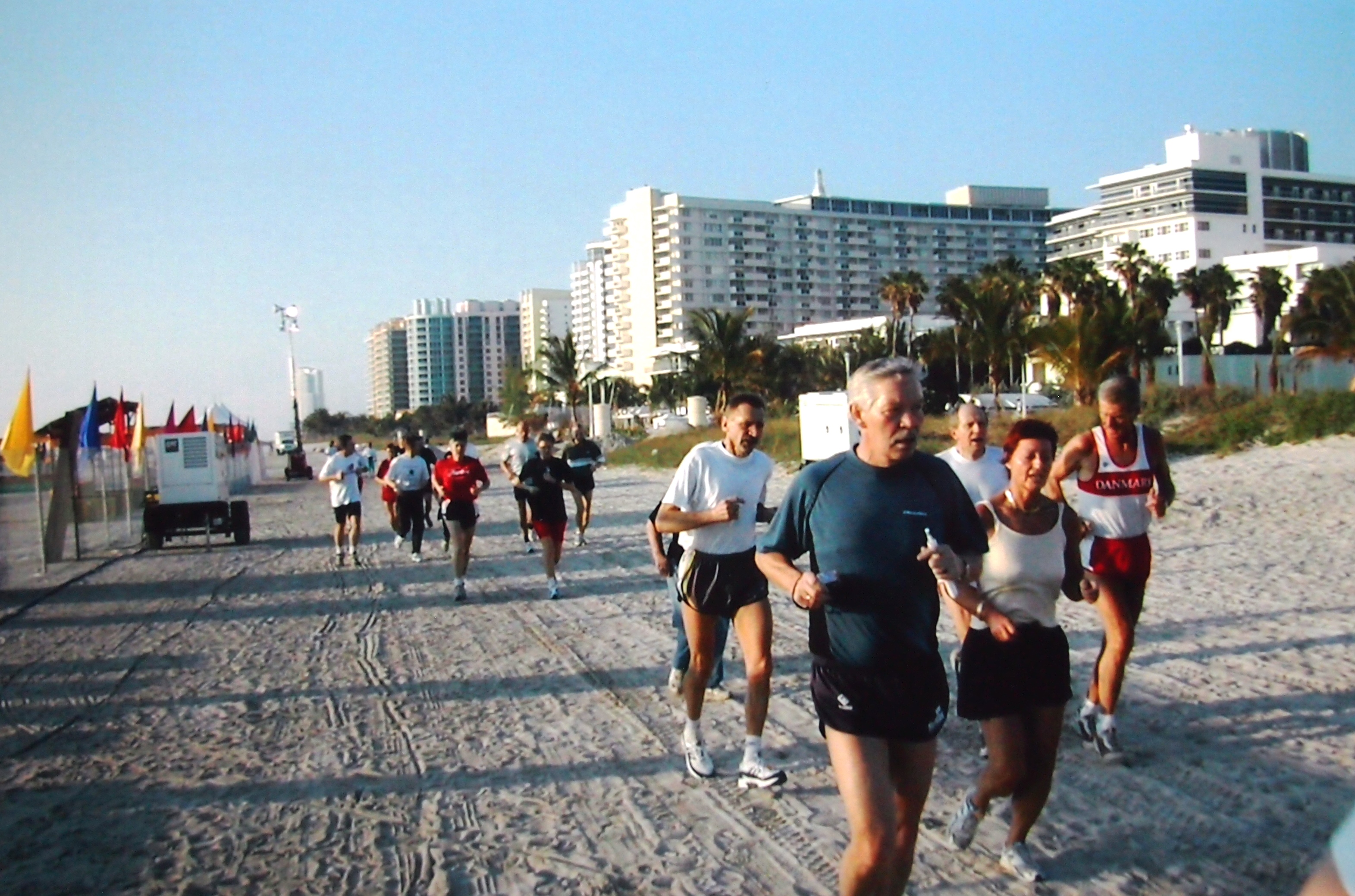
We didn’t get much sleep because at 7 a.m. a group of us went on a morning run along the beach down to Gianni Versace’s house on Ocean Drive. It was in front of this very house that he was shot on 15th July 1997.


???????????????????????????????


After breakfast, an information meeting was held outdoors, after which we had a couple of hours to sniff around town on our own.


???????????????????????????????


Reassuring security check


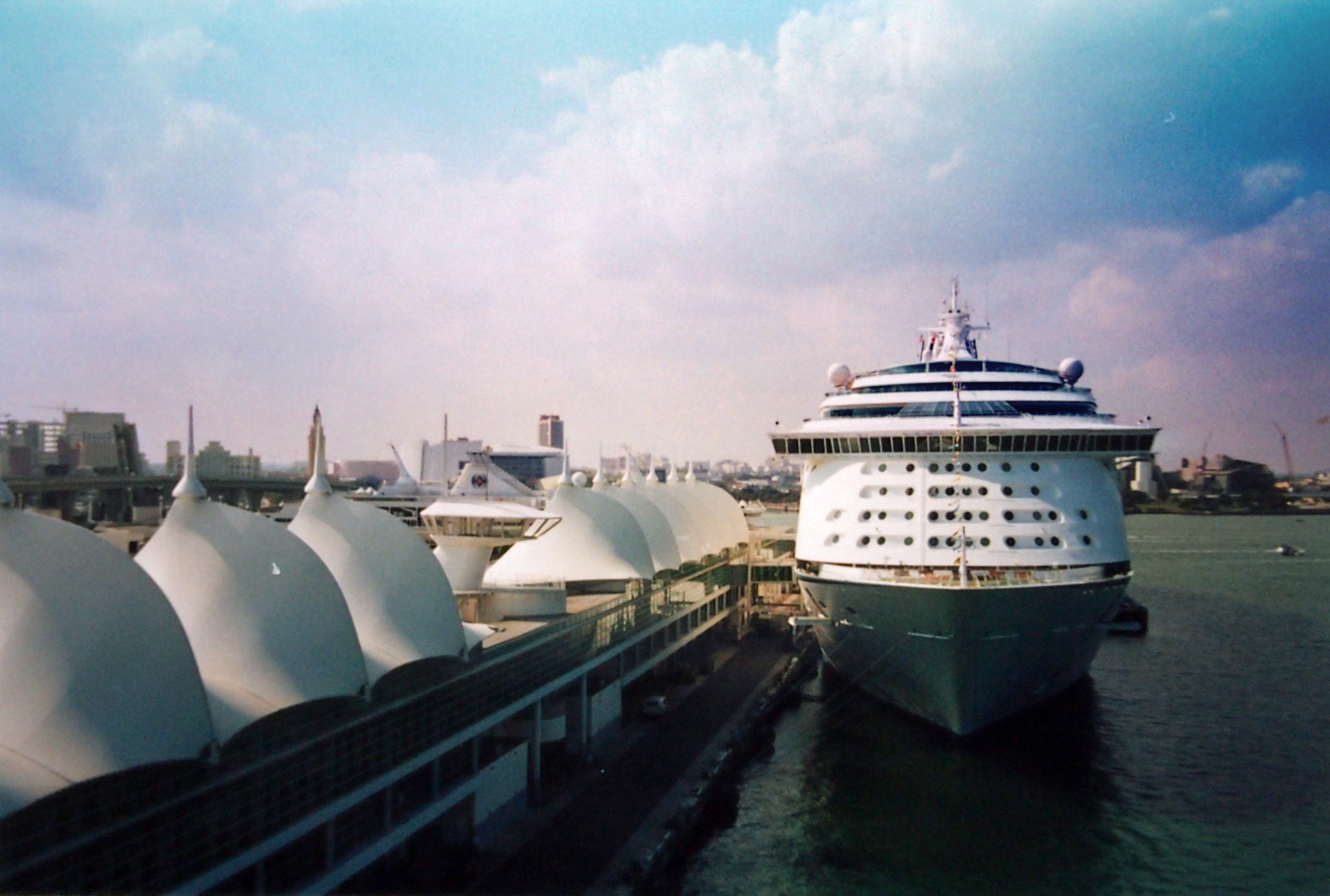
At around midday, we headed for the harbour, where one huge cruise ship after the other lay by the quayside and our “Norwegian Sun” was no less impressive than the others. It was actually the first time we had been on such a big cruise ship, and it was fun to note how similar check-in security was to that at an airport. Our luggage was scanned, and everyone had to walk through a metal detector. During the registration, we were all photographed, and each given a card to be used partly for boarding and disembarking, partly as a cabin key, and partly as a means of payment. We had to pay a deposit by credit card. This proved to be both effective and rather clever. The first thing they did was to draw an amount to cover tips. That amount was standard, so that was over and done with!


???????????????????????????????


We got an excellent cabin on deck five. Fortunately, we had booked a cabin with a window with a view of the sea on our voyage. That was money well spent.


???????????????????????????????


Restaurants for every taste


Then it was time for lunch, and the ship had one attractive restaurant after the other, nine in all. There was something for every taste, including fish, French cuisine and sushi, to mention but a few. In addition to that, there were no fewer than 11 bars and cafes to choose from and you could, of course, order room service. Food and restaurants were included in the price, while drinks and room service were charged to your card.


???????????????????????????????


We ate together with Anita and Flemming, whom we had known from previous trips. They were among those whose suitcases had disappeared in Washington and had not yet come on board. Fortunately, Flemming was wearing his running shoes, but he had to borrow running clothes and other garments for a few days until his suitcase turned up at one of the destinations along the route.


Oh no you don’t


We also had a problem with our suitcases, although that was our own fault. When we arrived at the cabin, where our luggage was supposed to have been delivered, two suitcases were missing. At the reception, we were referred to a place, where our suitcases stood with a red band wrapped around them. It turned out that security had found a couple of bottles we had bought duty-free to enjoy in our cabin. But that was not permitted. We had to hand over the bottles and get a receipt, so that we could get them back at the end of the cruise.


Evacuation exercise


Later in the afternoon, came the obligatory evacuation exercise. The alarm went, and we had to assemble at point H wearing a life jacket. Here we were given various instructions about any possible evacuation to the lifeboats.


Everybody took part


Monday was both run day and my birthday. I had been given my birthday present at home, but Karin had brought an extra surprise along which I was given before breakfast.

After breakfast, it was time to pick up my start number and get ready for the day’s race which was due to start at nine. Quite a few of our fellow travellers were not runners, although it would turn out that everybody was very enthusiastic about the day’s event. Actually, I think everyone had signed up for one distance or other. Apart from the marathon, there were the half-marathon and a 4.8 kilometre run. It was all a question of how many laps people had to complete. Because we had the whole day at our disposal, there was a lot of interest in either walking or running. One of the runners had recently undergone hip surgery, but even so he walked 4.8 kilometres with a stick in one hand and the other on the railing. He later said with a twinkle in his eye that if they had given him a cloth he could have polished the railings as he went along.


Chip count


Thomas Thomsen of the Danish Athletics Association had measured the course, so it fully complied with all requirements. We marathon runners were to do 88 laps minus a chunk of 45 metres. For this reason, we started 45 metres after the finish, which we then had to cross 88 times. Ultimate Sport Service was there to ensure accurate timekeeping.

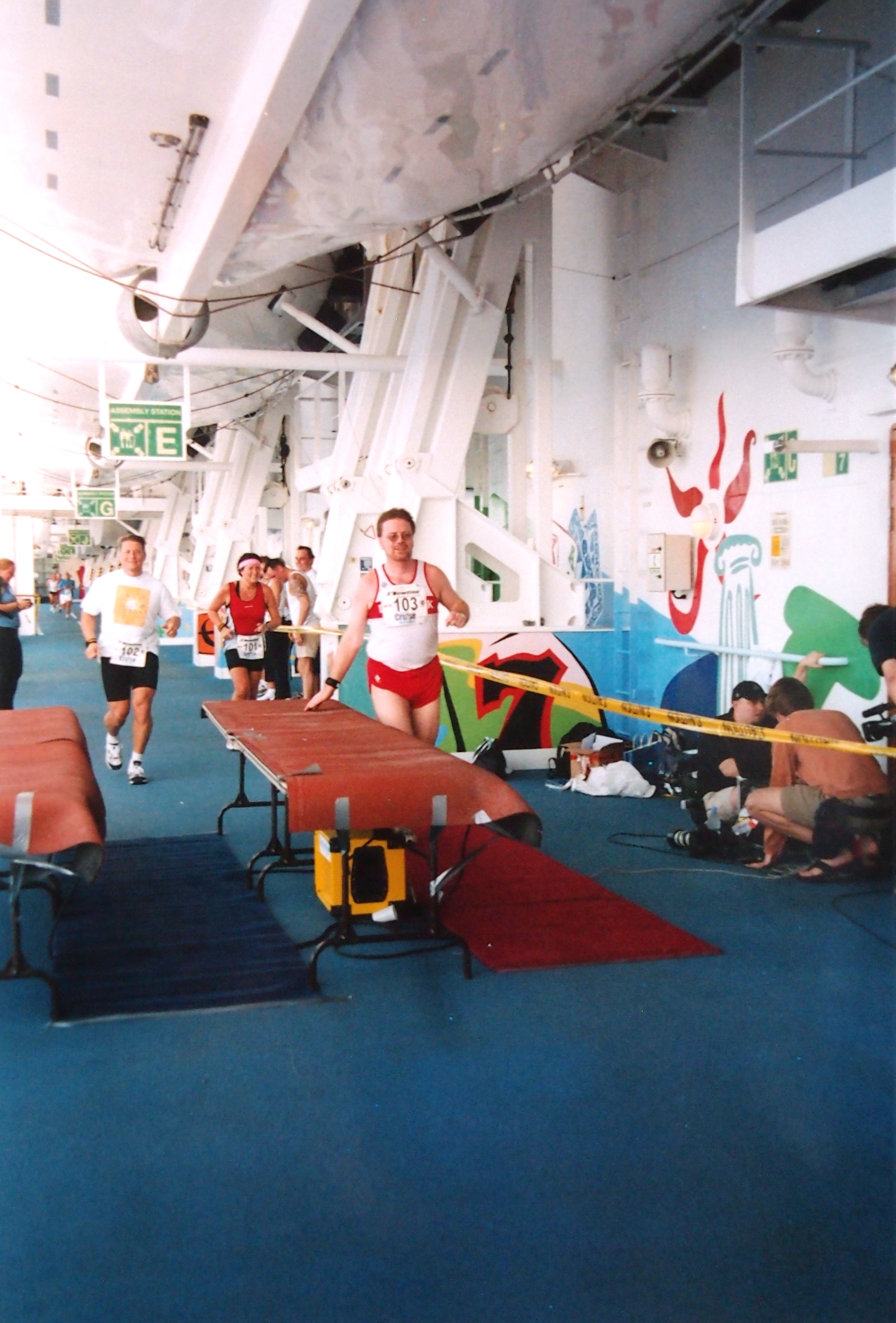
The chip-based accounting system was a bit of a problem because the metal in the deck caused a conflict between the transmitters and the receiver. In the end they put the measuring mat on the table and the runners wore the chips around their wrists. So all we had to do was to remember to pass the wrist over the mat every time we had completed a lap. A bit further along, there was a TV screen where you could see how many laps you had done and how many you had to go. It was all quite simple.


???????????????????????????????


Chlorinated water


Bodil Thomsen was responsible for the run’s water station, and shortly after the run had begun she became aware of the fact that the water tanks they had set up contained chlorinated water. She, therefore, had to stop Thomas, who at that time was running his 4.8 kilometres. The issue was resolved by replacing the tanks with mineral water in plastic bottles.


Party, party


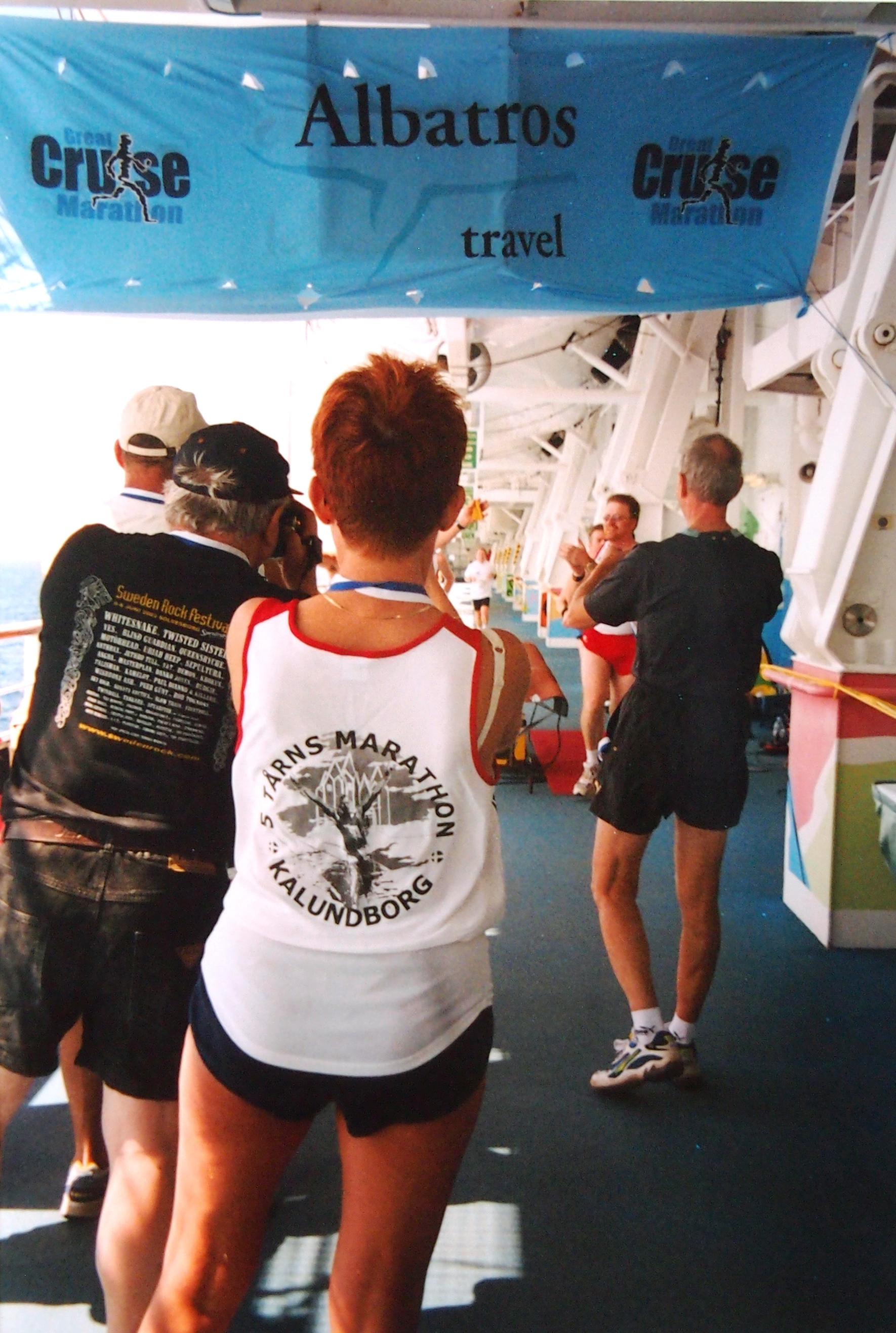
The run began along one of the sides of the ship. There were soft turns at the bows and stern, and at the finish there were refreshments, water and fruit. It was also here that most of the spectators stood cheering as we ran past. A music system had also been set up with festive tones from the home country emanating from the loudspeakers. During many marathons, there are long stretches where the runners are alone and there are no onlookers. Here we were never even half a kilometre away from our loved ones with hugs and loving taunts. It was a highly festive occasion, and by no means boring and monotonous.

On the other side of the ship, there was a station serving energy drinks. Never before have I participated in a run with such a short distance between the refreshment points.

The ship’s other passengers were curious to see what this peculiar phenomenon was. They stood agape, staring through portholes, windows and door openings while a flock of crazy Danes ran round and round.


???????????????????????????????


It goes without saying that the course was quite flat, although there was an Internet in one place which you didn’t notice during the first of many laps. The sea was quite smooth, and there was only a slight breeze which was very refreshing for a sweaty face. To begin with, there were quite a few runners. Fifteen of us were running a marathon, seven a half marathon and 25 were to run 4.8 kilometres. So when the 4.8-kilometre runners had finished, followed a while later by those running the half-marathon, we marathon runners were the only ones left.

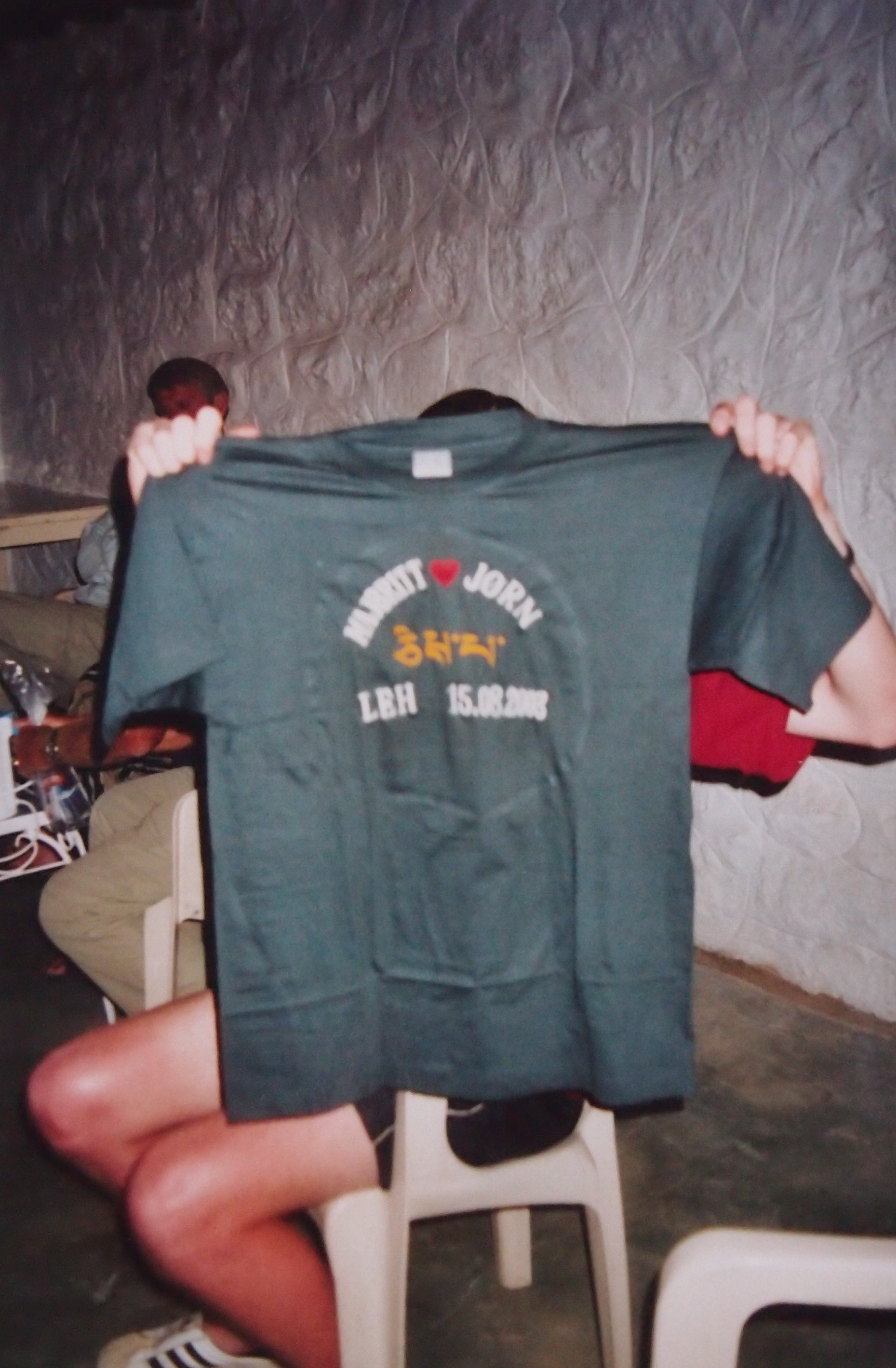
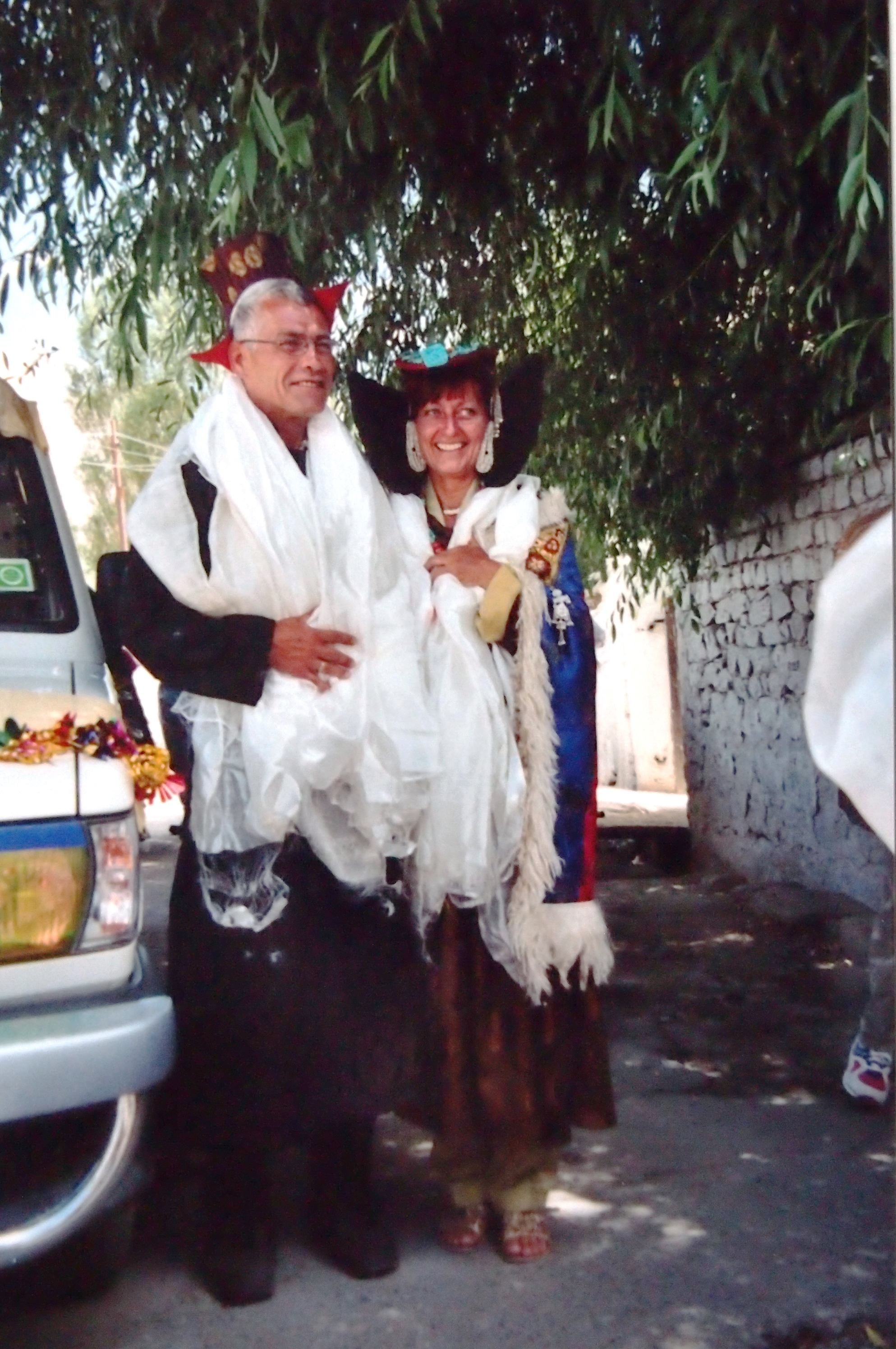
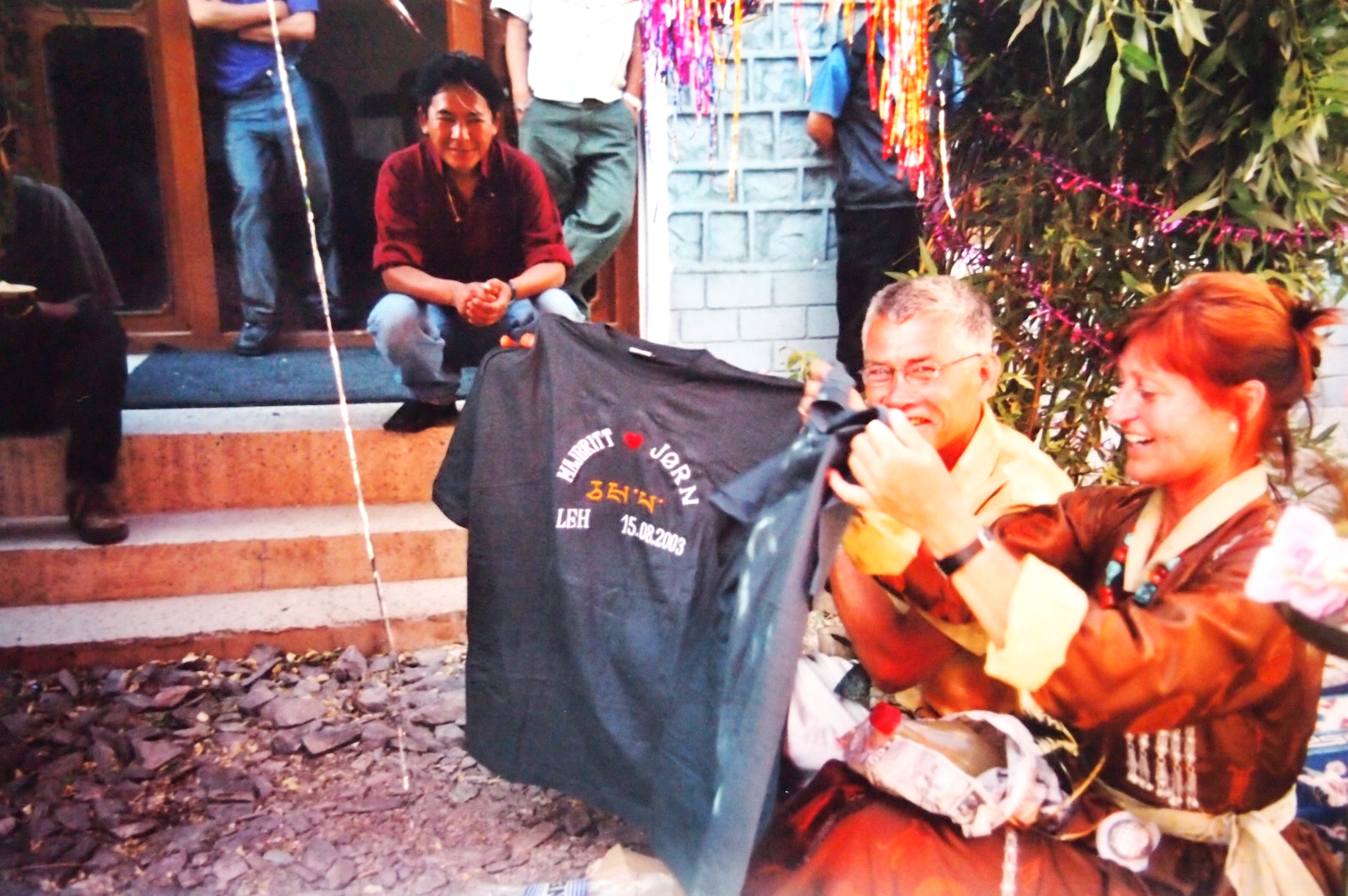
The marathon runners eventually began to cross the line. After his very special wedding to Majbritt in Tibet, Jørn was now spending his honeymoon winning The Great Cruise Marathon with a time of 3:20:26. I was fortunate to accompany him on his last half lap, so I experienced his victory and medal presentation. At that time, I still had 30 laps to go.


Trials and tribulations


During the run, my right foot started hurting, and I changed to new running shoes. This helped for a while, but the pain returned, and I had to change back. This repeated itself several times.

As the day drew on, it got baking hot on the side of the ship where the finish was and where we now could see the coast of Cuba on the horizon. Meanwhile, there was shade on the other side of the ship, and it was nice and cool. When I still had about 15 laps to go, I was pretty worn out and began to switch between walking and running. I walked along the side of the ship, where there was shade and ran along the other, where the afternoon sun had taken over. In this way, I also enjoyed the roar of the spectators as I passed through the finish area.


Loving company


When I had two and a half laps left to go, Karin met me and ran a lap and a half with me. Then she stopped to film me as I crossed the line. She had run the short distance in fine style in sandals because she didn’t have any running shoes with her on the trip. In actual fact, Karin ran 5.28 kilometres, but during the first lap her chip was on the wrong wrist, so it was not recorded. She then continued to run ten laps, all of which were recorded properly.

After I had completed the run in 5:24.16, we went to the bar for well-earned refreshments, and then I took a one-hour nap.


Champagne


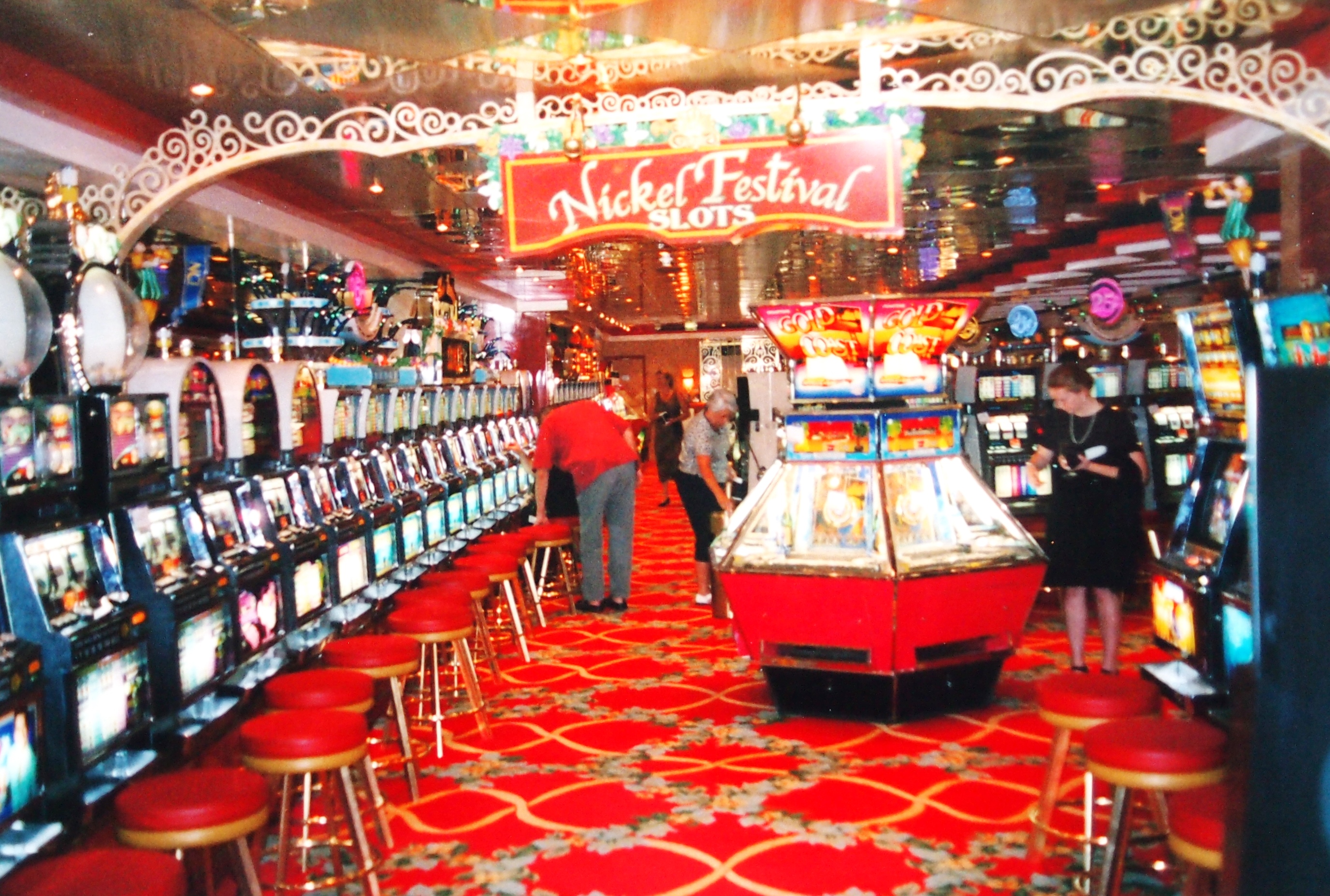
In the early evening, champagne was served in the reception area for all the passengers. The ship was almost a city in itself with no fewer than 12 decks and countless facilities. Apart from the many restaurants and bars, there were two swimming pools with spas, a large gym, a church, hairdresser, shops, theatre, disco, casino and various forms of entertainment.


Gala dinner


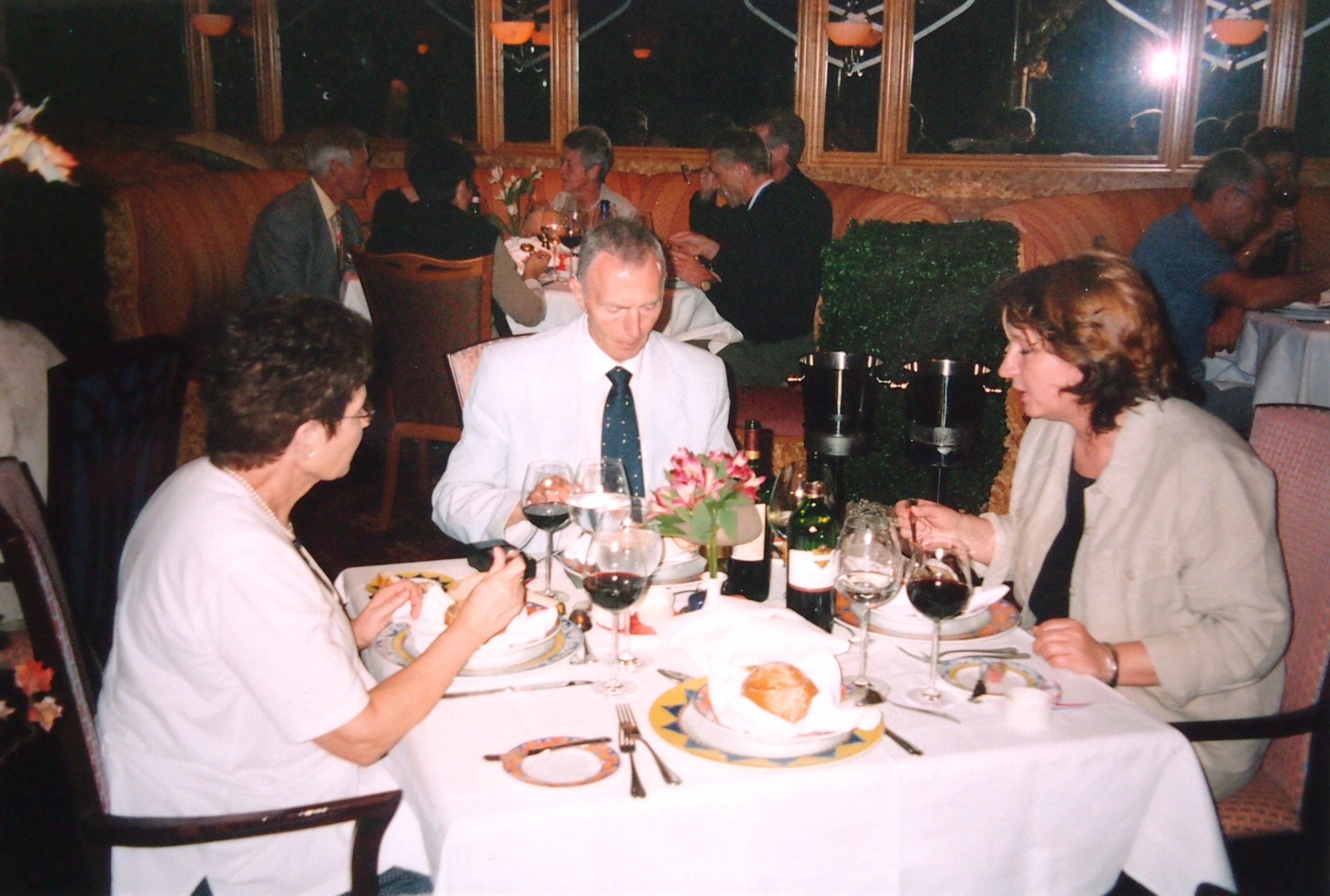
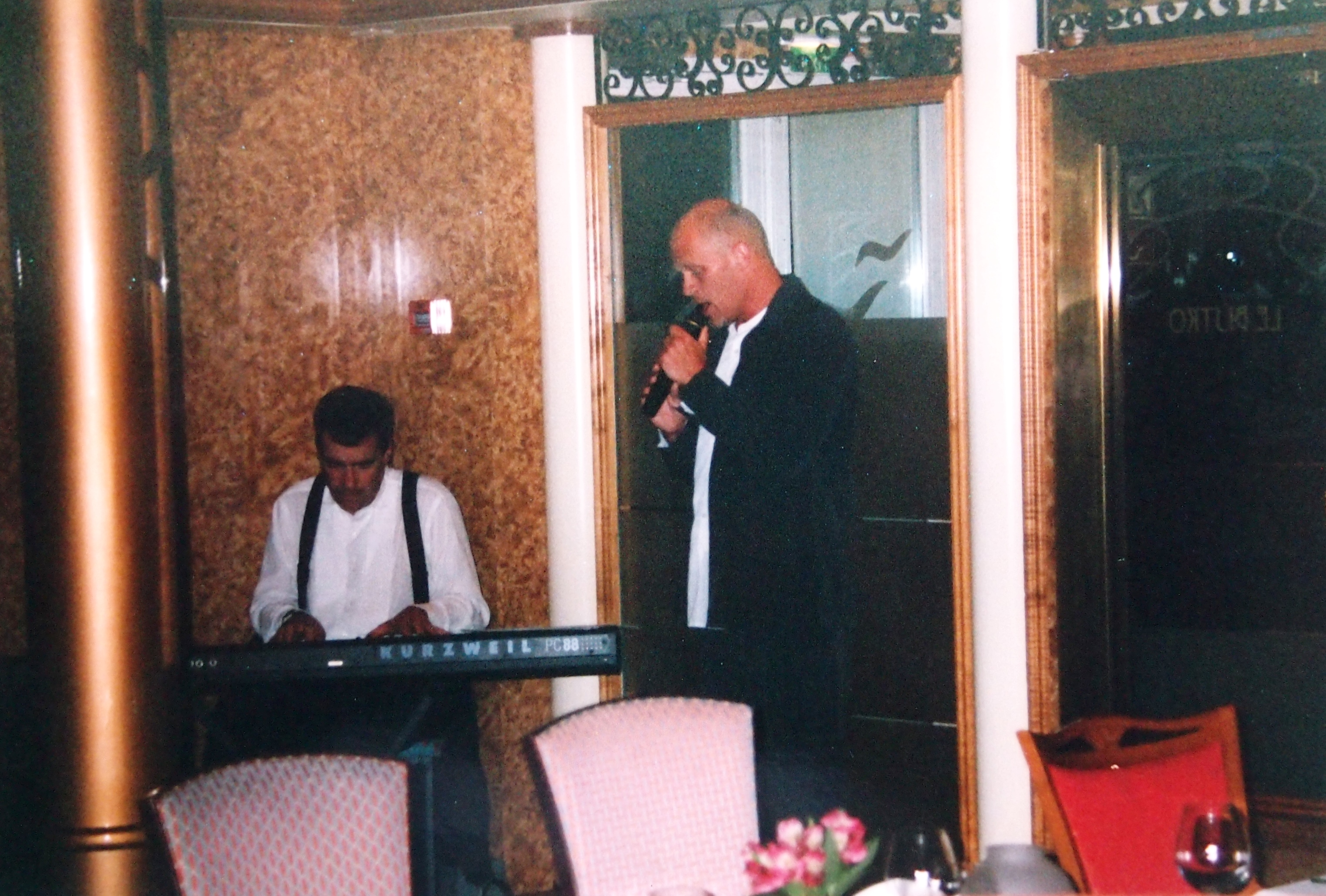
At nine in the evening, there was a gala dinner for the marathon group in one of the ship’s restaurants. We had good food, speeches were made and tributes were paid to some for noble acts of some kind or another. Later in the evening, the Danish actor, Lars Bom, entertained us with songs by the Beatles.


???????????????????????????????


A little before midnight, Karin and I went up to retire, but just before we got to our cabin, I discovered that I had left my rucksack, so we had to go back to the restaurant.


Lars Bom sings a birthday song


By the time we came back up to get my rucksack, it wasn’t my birthday any more, technically speaking, because it was past midnight, but when one of the guests shouted a birthday greeting and people realised I had run on my birthday, we weren’t allowed to disappear again. Lars Bom took the lead, but the whole company got to their feet and sang “Happy Birthday”. Thomas then got up and told them that not only had I run on my birthday, but that I had also run my 25th marathon on my 45th. After this we retired to bed exhausted.


???????????????????????????????


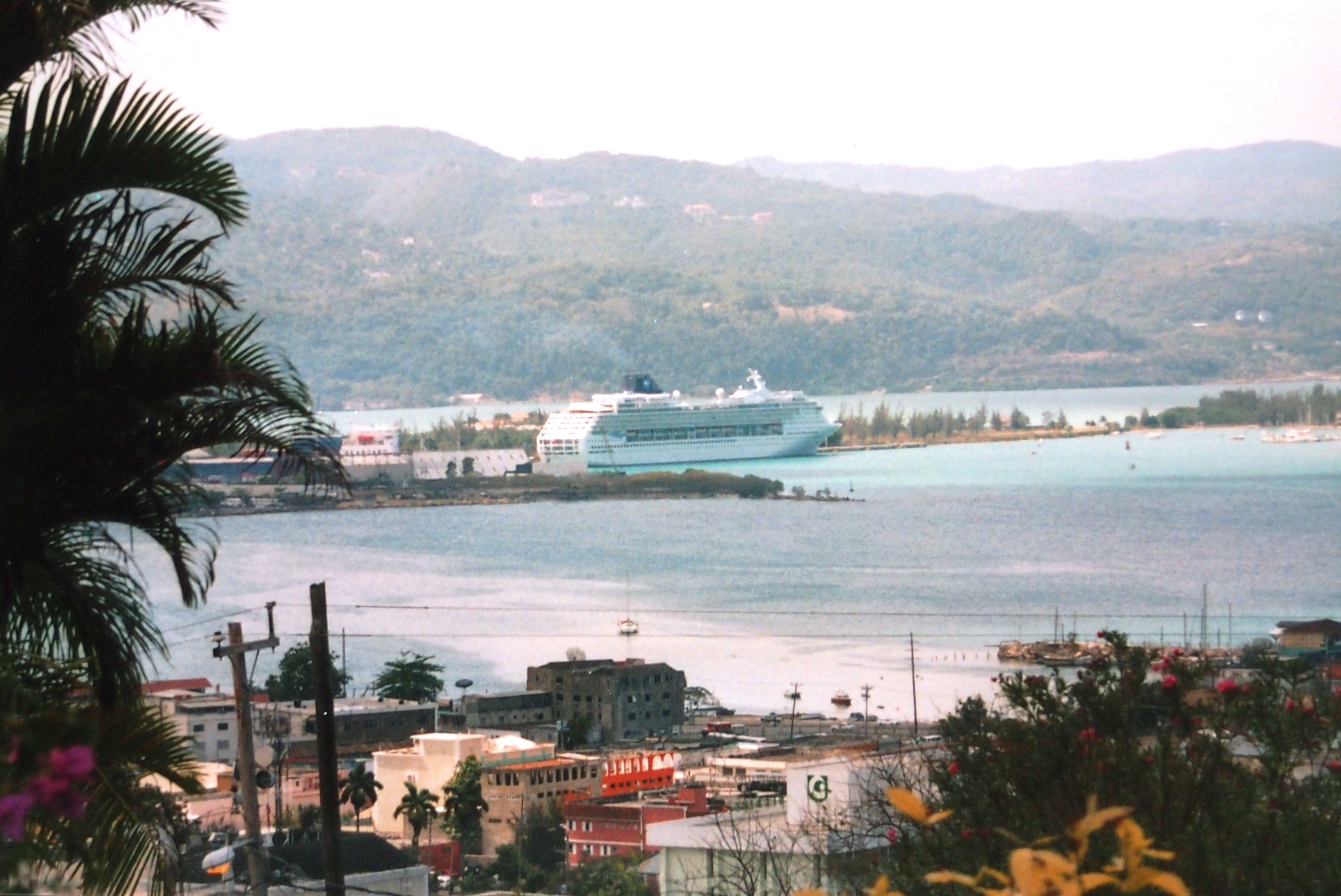
Jamaica


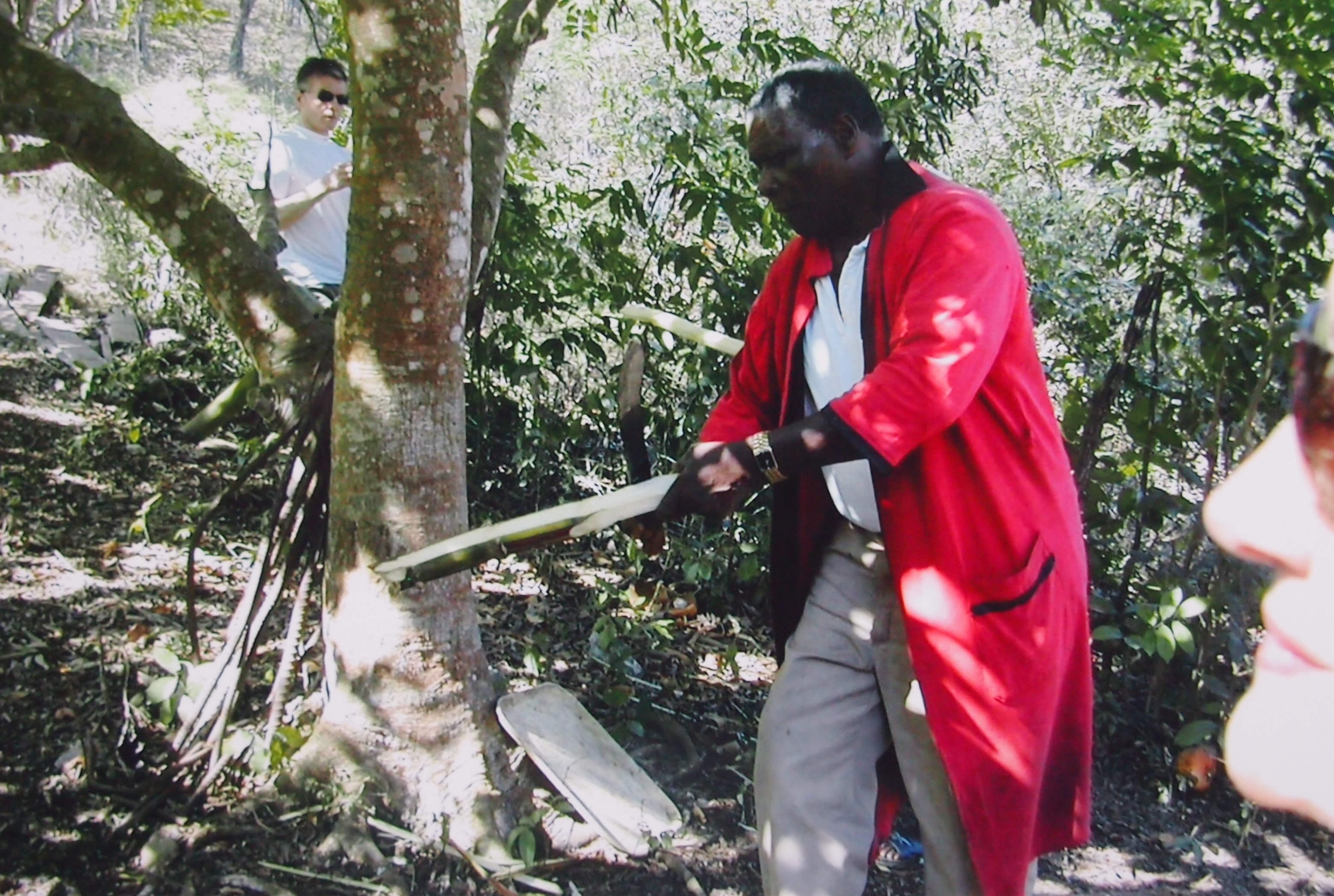
Next morning, we laid to at the luxuriant Caribbean island of Jamaica in Montego Bay. On the south side of the island lie some of the world’s most beautiful beaches at Negril, and if you head for the unrivalled Dunn’s River Falls you will experience lush forests and have the opportunity to go rafting. Our itinerary didn’t allow for this, however. Our first stop was with a “bush doctor”, a local herb doctor who made medicines and wine from home-grown fruits, all of which were cultivated without the use of chemicals.


???????????????????????????????


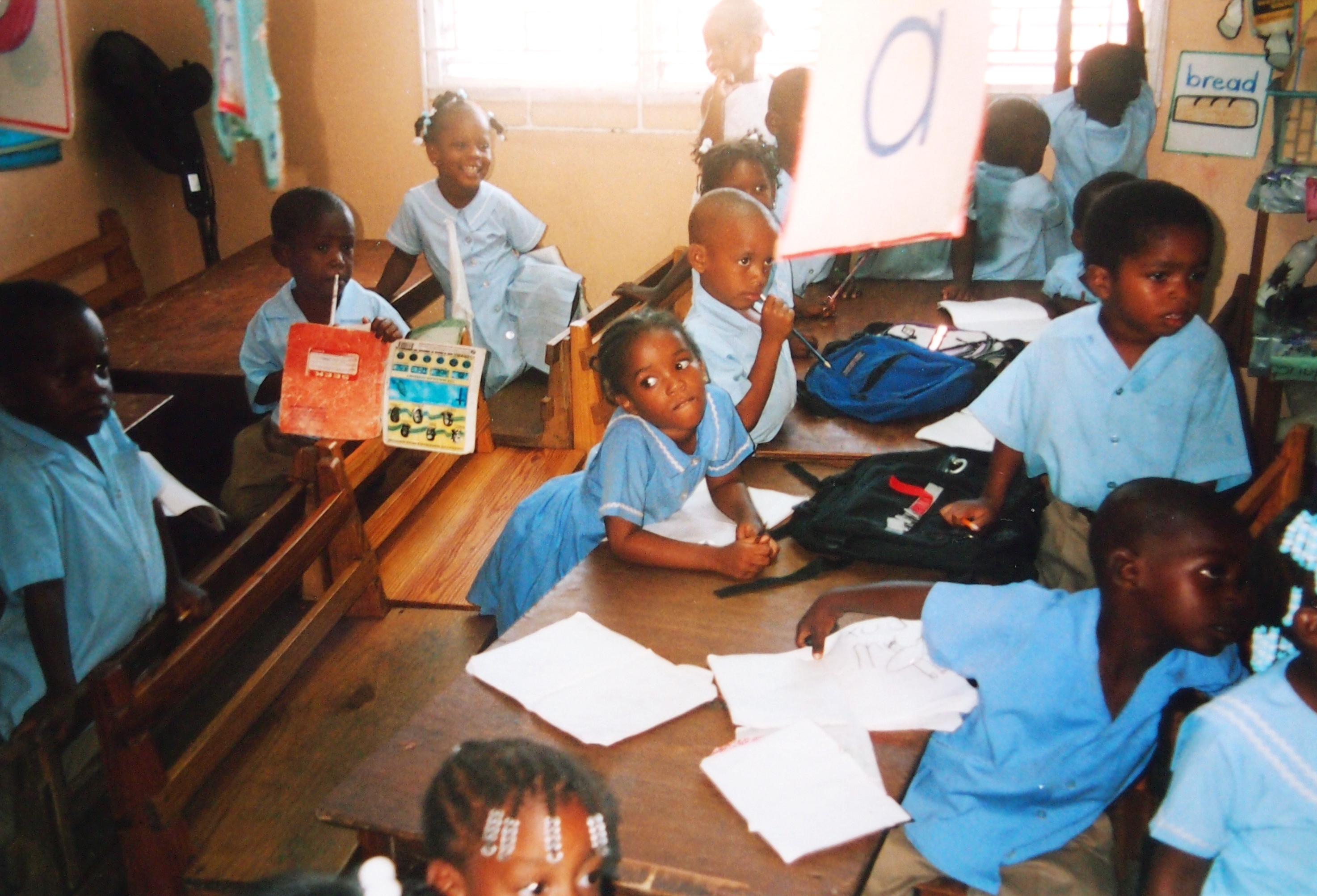
Then we visited a local school with children in the three-to-six age group and were received by some incredibly sweet kids. There were 28 of them in a very small room and perhaps 80 in all at the school. They were learning the letters of the alphabet, and what they sound like, already as infants. They were doing really well.


???????????????????????????????


We spent the rest of the day looking around town, and those who wanted, went to the beach. This was, however, not a beautiful sandy beach but one covered with large stones.


Grand Cayman


On Wednesday, we visited Grand Cayman, the largest of three Cayman Islands. It is best known for its shell corporations, dodgy banks, and as a tax haven. But it is also a genuine luxury holiday island with high price levels.


???????????????????????????????


The locals are convinced that they have the world’s best beach, Seven Mile Beach, and apart from that, the island is especially well-known for two natural phenomena: great sea turtles and vast numbers of stingrays which literally swim about between the legs of the bathers and allow themselves to be stroked on their velvety skin.


???????????????????????????????


The Norwegian Sun was unable to dock at the island, so we were ferried ashore in smaller boats. Several cruise ships were visiting that day, so there was a welter of tourists and locals everywhere.


Hell


???????????????????????????????

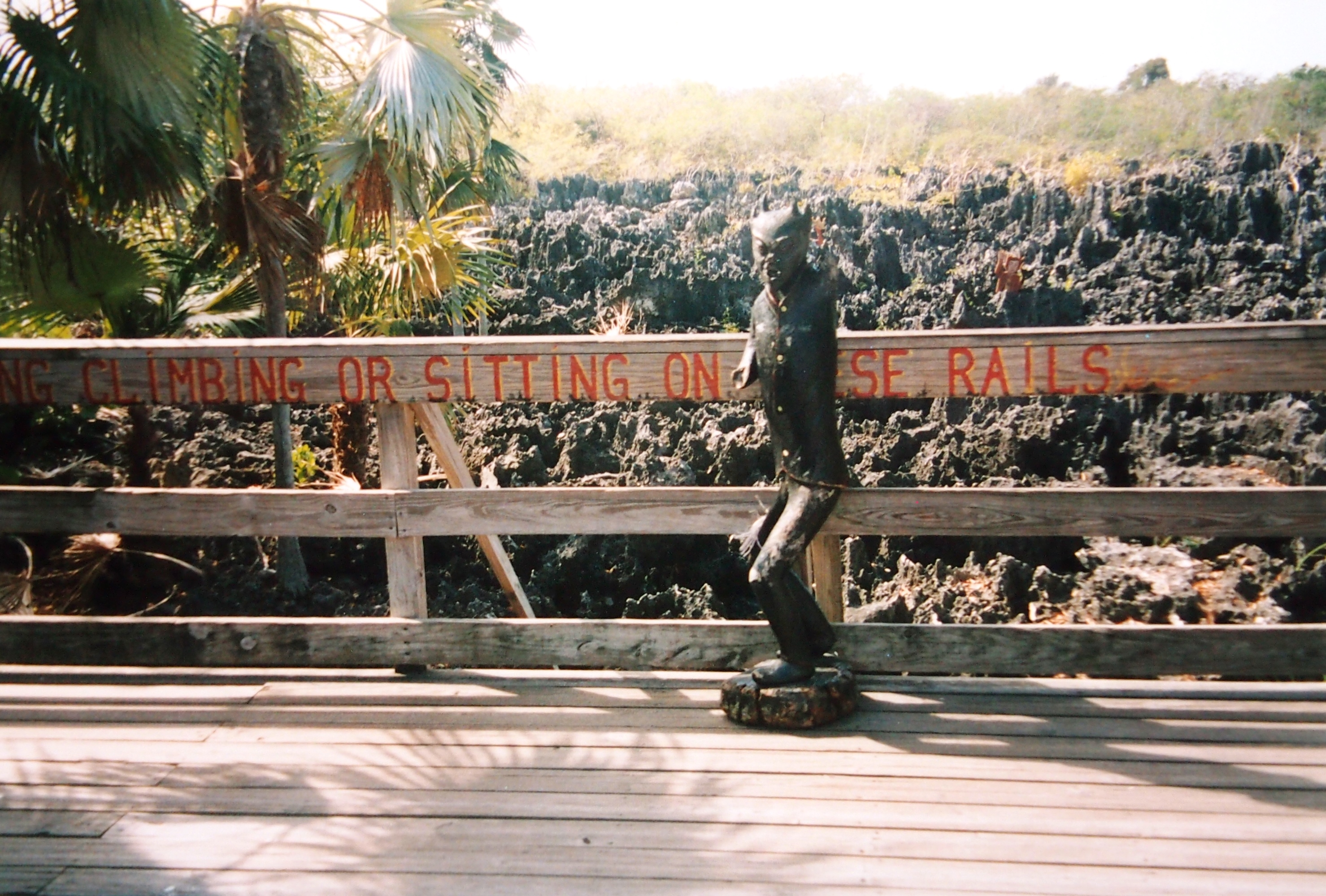
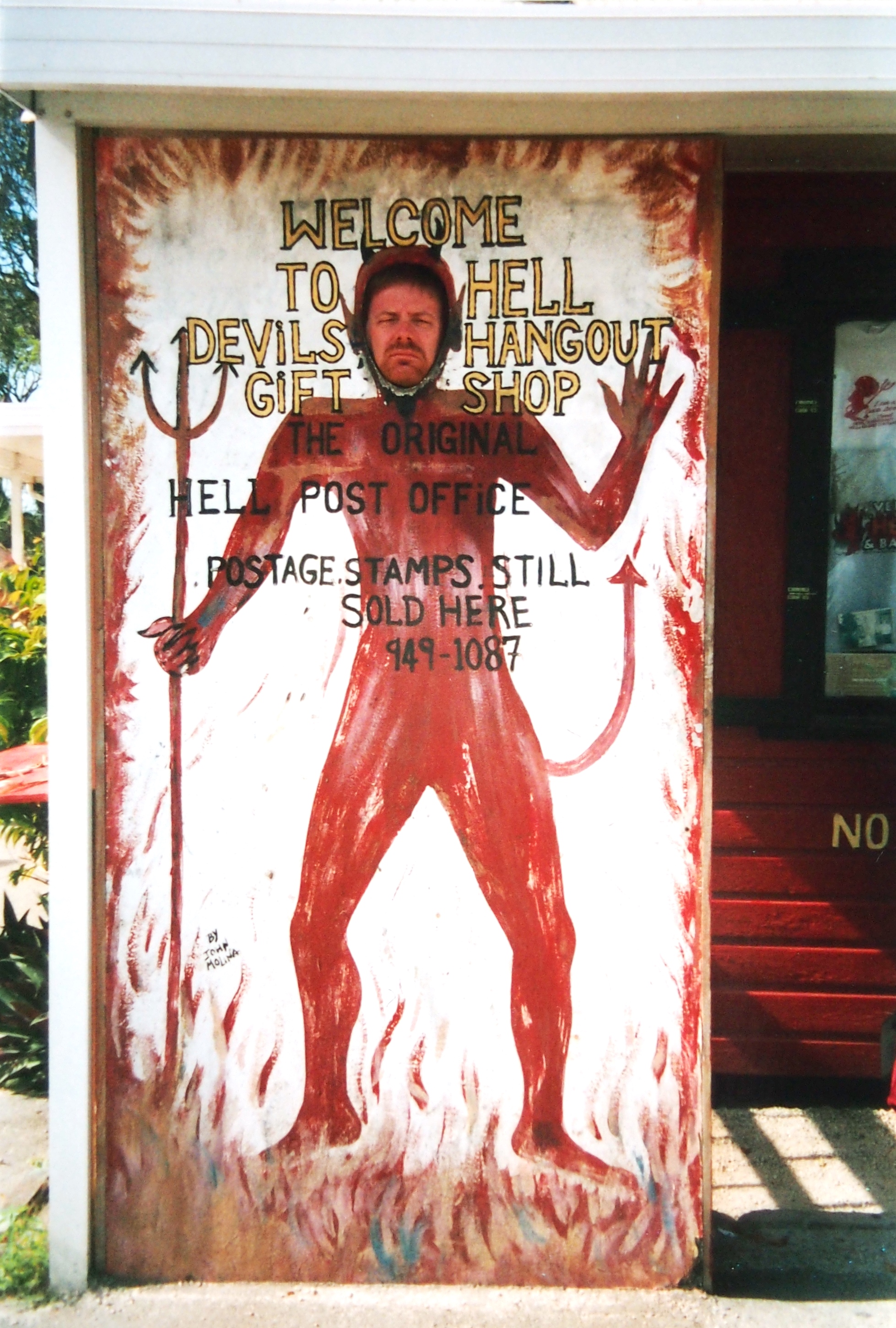
Our first visit was to an area known as Hell, where rock-like corals had developed which, with a little imagination, could resemble the fires of hell. But it was just a load of tourist hogwash and had actually harmed this natural tourist attraction. Among other things, you could stick your head through a hole in a figure and be photographed as the Devil himself, and in the shop you could buy all sorts of distasteful things with Hell and the Devil on them. One of the sales staff asked what the hell we were doing here. It might have been fun to look at, but it was all so vulgar.


???????????????????????????????


Turtle farm


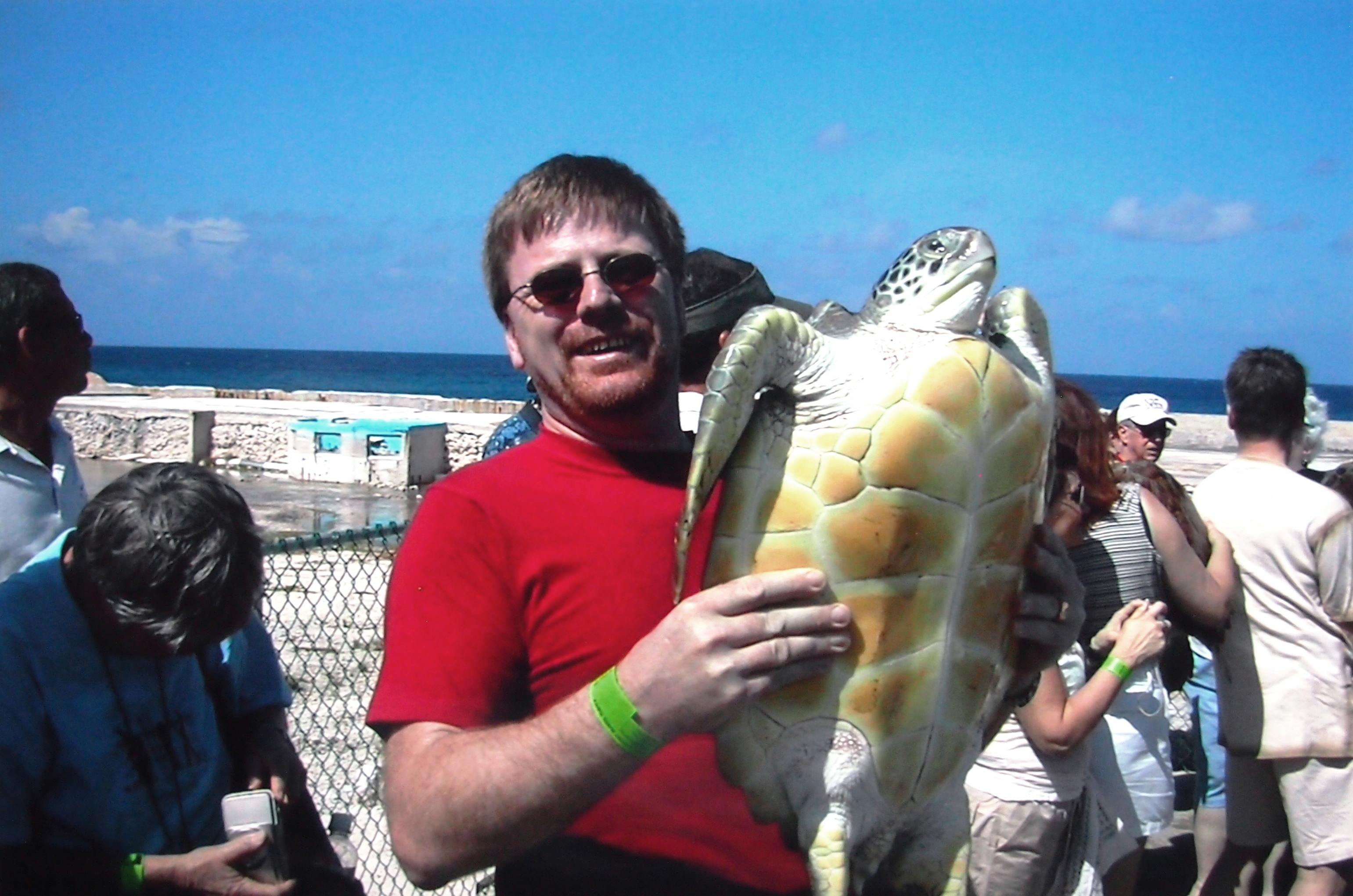
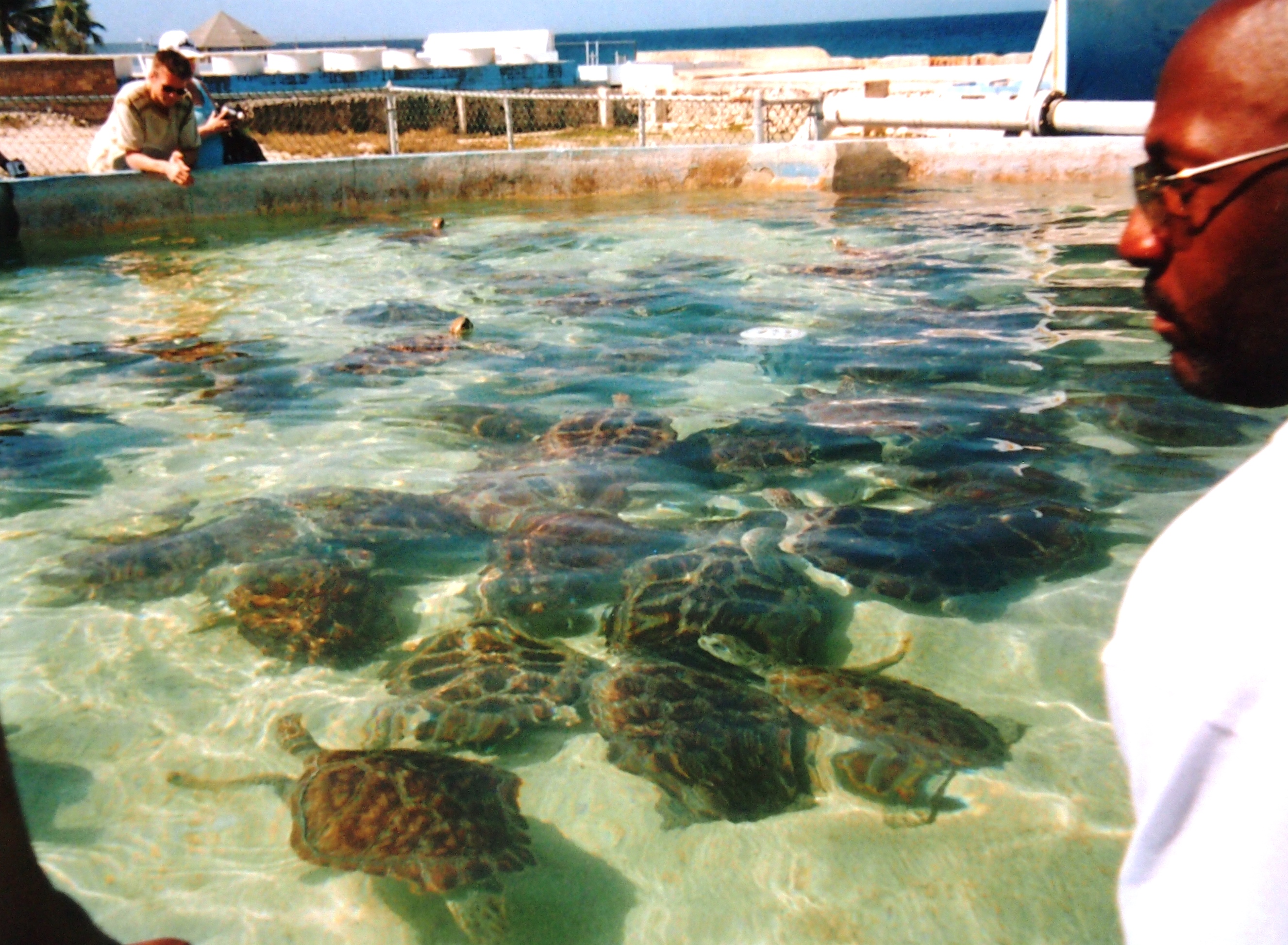
After this rather inanely dejection, we were driven to another place which we weren’t particularly thrilled by, either. At Cayman Turtle Farm, we went to see turtles kept in small swimming pools in broad sunlight. We didn’t think the conditions could be particularly pleasant for the creatures, which were constantly being picked up and photographed by and with tourists. No doubt it provided excellent tourism income, but we couldn’t see the animal welfare aspect of it.


??????????????????????

The final visit on the island was a trip to the town, which didn’t engender much enthusiasm either. Again, income from tourists was more important than anything else.

My description of our visit to Grand Cayman can be interpreted as quite a disappointment, but that was not the case. We had quite a nice day, but simply felt that this island paradise had been ruined by commercialism and was completely different than it could have been.


???????????????????????????????


Relaxation on Norwegian Sun


After our visit with rather mixed impressions of Grand Cayman we spent a cosy relaxed afternoon and evening on the ship with good food and drink.


???????????????????????????????


Costa Maya


After a Thursday morning by the ship’s pool in a stiff wind, we docked just after lunch in Costa Maya on the south side of Mexico’s Yucatan Peninsula. The peninsula is reputed for its gorgeous beaches with shimmering white coral sand, clear azure blue seawater and its colourful coral reefs. The Maya ruins at Tulum are beautifully situated and provide an excellent impression of Maya architecture.


???????????????????????????????


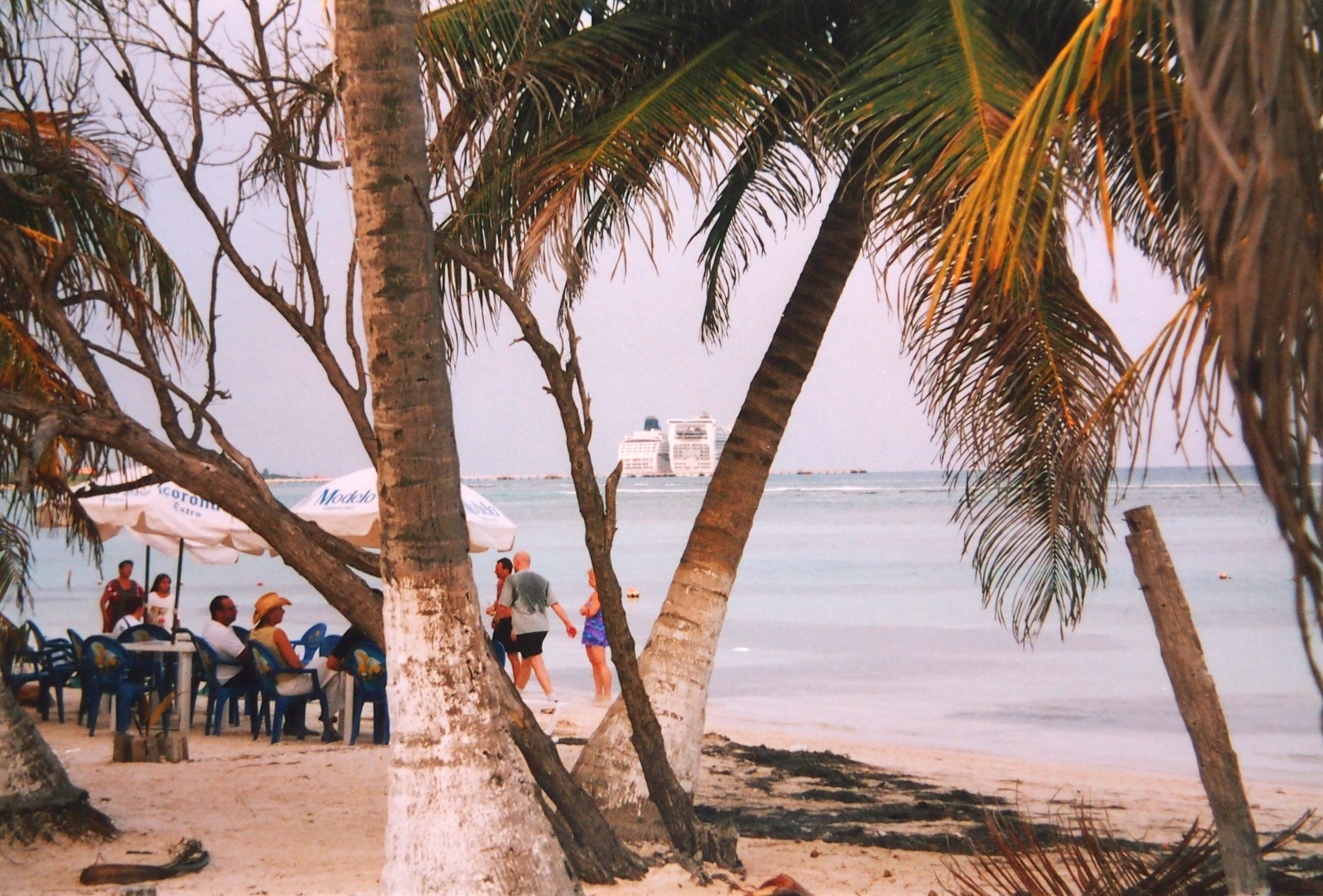
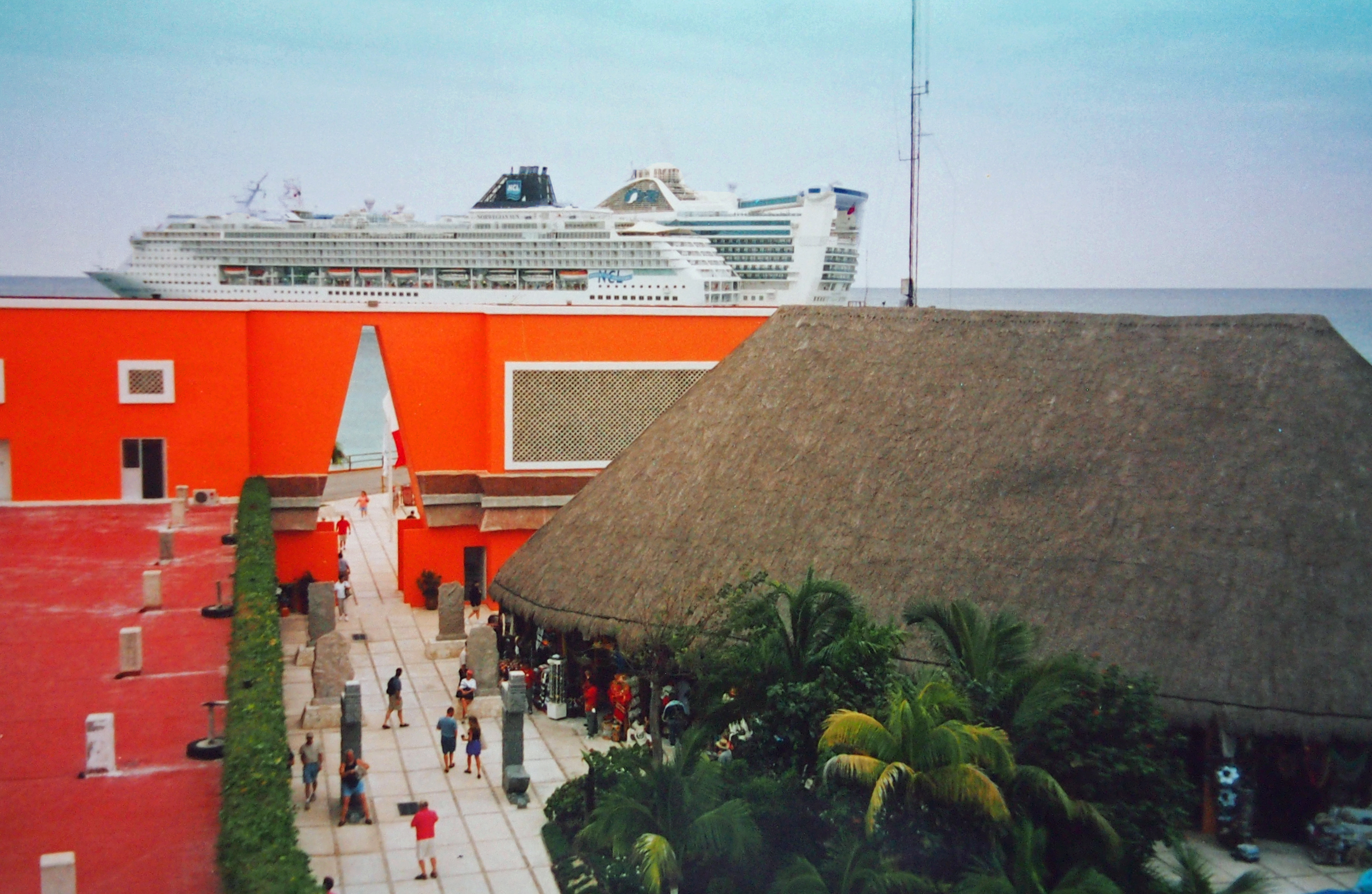
After the worst disembarkation chaos had subsided, we left the ship and walked straight into a nondescript touristy area, so we decided to go for a walk along the beach to a local village, where we drank a beer before heading back. Near the harbour we visited an Internet café and bought a few postcards before going back on board the Norwegian Sun.

We spent our evening at “Las Ramblas Tapas Bar & Restaurant” for hors d’oevres on deck 12 followed by dinner in the “Seven Seas Restaurant” on deck five.


Cozumel


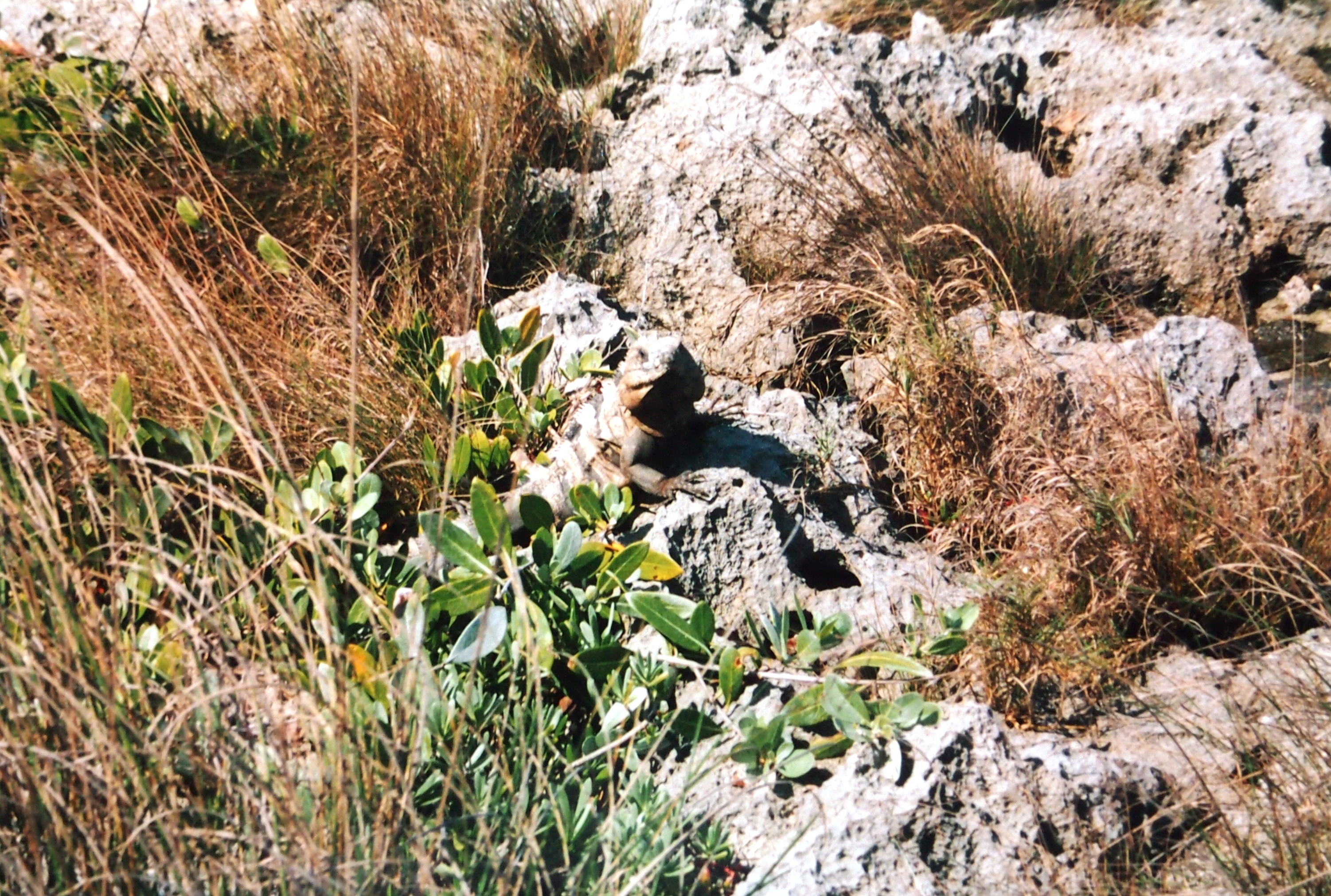
On the Friday, we visited Cozumel, a delightful Caribbean island only 16 kilometres off the mainland. The island came into being because the rock sea bed rose some 15 metres above sea level. The scenery on this, Mexico’s biggest Caribbean island, is wonderful. Some 47 kilometres long by 15 wide, it was inhabited by the Maya from 300 AD. Most of the island is wild and uncultivated, with swamp, scrub and extensive coastal rail forest with outstanding fauna, including parrots, herons, giant lizards and coati. Most tourists come here to bathe, snorkel and relax on the island’s kilometre-long sandy beaches surrounded by coral reefs with colourful fish darting among them.


???????????????????????????????


A morning at the beach


There were many tourist attractions on offer on the island, but we decided to have a relaxing day on our own. We took a taxi to a beach, where it was possible to swim with dolphins, but because this activity cost a fortune we chose to lie on the beach and relax before returning to the ship for lunch.


???????????????????????????????

In mid-afternoon, we disembarked again and visited the small, rather touristy town. Six other cruise ships were in the area on that day, so there were masses of people. Like most other places it was all just a bit too touristy, but fun all the same.


A strange intermission


That evening we were sitting on a bench on the jetty by the steps to the ship. We were just sitting there enjoying the view, watching the world go by in the delightfully cool air after a day under the blazing sun. Along the jetty came a man with a smile on his face and a cardboard box containing a pizza he had bought in town. It was obvious that he was really looking forward to enjoying his Italian meal in his cabin on board. We smiled for two reasons. For one thing, all food on board was included in the price and there were many restaurants, including an Italian one. For another, it had been made blatantly clear that food was neither to be brought on nor taken off board. We just sat there wondering what would happen. Of course, the deliciously smelling cardboard box did not make it through the tough security check, and the hungry tourists was given the choice between throwing the pizza away and sitting on the jetty to eat it there. He chose the latter.

At around 6:30 p.m. we went back on board the ship – for the last time on this trip. First we went up to find some fruit, after which we went to our cabin and took a shower in preparation for the evening meal.


Karaoke


We ended our cosy evening with good food at the “Four Seasons Restaurant” at the bar on deck 12. Here we were entertained with karaoke until retiring to bed in the small hours.


Great Cruise Home Run Mini Marathon


We now approached the end of our voyage in the Caribbean and spent all day Saturday bound for Miami. After everyone had digested their morning meal, the whole group gathered for a Great Cruise Home Run Mini Marathon of 4.8 kilometres. Almost everybody took part, and Karin and I ran together, giving ourselves plenty of time to enjoy this pleasant run.


Social finale


After a shower, we all met up on the terrace on deck 11 for a lunch get-together and the presentation of awards for our efforts.

We spent the afternoon packing our bags and relaxing before meeting the others early in the evening for our last evening meal at the “Seven Seas Restaurant”. More or less everyone turned out for these pleasant few hours together. One couple was celebrating their silver wedding, and we sang for them. One of the participants had written a farewell song, and Peter Fredberg distributed prizes from a raffle. It was a really nice evening after a fantastic week.


Delayed disembarkation


On that infrequent date, Sunday 29th February, we got up early to get ready to disembark at 6.15 a.m. Before that we had to finish packing, have breakfast and pick up the bottles we had had to hand over on embarkation as well as our passports, which we had deposited in the Stardust Lounge.

We felt a bit of a laughing stock standing in a long queue to register with the American immigration authorities. They were about 25 minutes behind schedule, so we just stood there waiting. It took ages for every single one of us to have our passport checked and stamped. It was rather stressful for us in the marathon group because we didn’t have much time before our flight.


An arrogant officer


As our turn got closer, we could see police officers sitting at a row of tables performing the necessary checks. They took a passport, looked at the traveller, checked the photo and other details, stamped it and gave it back. We overheard quite an arrogant conversation between two of the officers. One of them said he couldn’t be bothered to have anything to do with tourists unless he was going to arrest them. Just think, saying such a thing with people right there listening. He didn’t say a thing to the travellers, he just took their passport and gave it back when he had finished inspecting it.

I ended up in front of that very same arrogant officer. When he gave back my passport, we made eye contact, and with a smile he said: “Here you are”! I was about to make some clever remark, but then I thought it best to refrain and just get out of there.

When we thought everything was in order and we could leave the ship, we ended up standing there again waiting for “ages”. Some of the passengers had obviously not turned up at the check-out, which further delayed disembarkation. We finally got ashore, but now we really had to get our skates on to catch our plane.


Excess baggage problems


New problems arose when we got to the airport. This time, the overall weight of the group’s baggage was the issue. We swapped a few things among us so that each of us came under the set limit, but that didn’t help. We had time-keeping equipment with us from Ultimate, which weighed quite a lot. Discussion didn’t help, and we couldn’t just pay an excess baggage fee. It all ended with us leaving behind a guide and two staff from Ultimate. I checked in the guide’s baggage with my own, so I had that to deliver, too, when we got home.


A really bad decision


On the way home, we had a seven-hour stopover in Chicago. Several people decided to go into the city, but unfortunately we didn’t. Because we were afraid time would run away with us and might lead to problems trying to get back in to the airport, we decided to stay put. That was a really silly decision, and an expression of the kind of exaggerated cautiousness we ought to have overcome by then.

We thought we had arrived at a large international airport with masses of restaurants, shops and activities. But that was not the case – at least not where we were. A McDonald’s and a few shops were all they could entertain us with, at one of the world’s largest airports. We went round and looked at what little there was to see, read a bit, ate some food and slept. Seven hours is a long time to spend doing that kind of thing. We should have gone to see the city with the others.


What on earth – are you here?


By the time we landed on schedule back in Copenhagen Airport after a long journey it was Monday afternoon on 1st March. I weighed up the idea of calling Albatros Travel from the airport to arrange for delivery of the extra suitcase I had with me, but that turned out not to be necessary. When we got through customs, there stood the three people we had left behind in Miami, big smiles on their faces, and all the time-keeping equipment. Somehow or the other they had found an excellent solution not long after waving goodbye to us. They had arrived back in Copenhagen ahead of us via a route without a long wait, and everything ended happily like a proper fairy tale.


TV coverage again


As with previous marathon events, Danish TV had been on the spot again on this special trip. Their footage became a six-minute feature in a sports programme.

As was intended from the outset, The Great Cruise Marathon was a one-off job. It had been a fun, interesting trip and the run had been rather crazy, and I’m glad I decided to include it. Like other trips, it had given me some wonderful memories I would have for the rest of my days.


Buy the book here.


Engelsk forside

??????????????????????

Socialmarathon 2003 (Social Marathon 2003)

September 2 2015

Run a marathon on New Year’s Eve? Have you ever heard anything like it?! But that’s just what I did in the New Year 2003/2004, which meant that I had run nine marathons in a year, the most I have done and perhaps also my limit.


The Social Marathon was run for the first time in 2001 but unfortunately had to be cancelled in 2002 because of the lack of registrations. The noble purpose of the run was to raise money for RIGO, the children’s department at Rigshospitalet, Copenhagen University Hospital, and 100 Danish kroner of the registration fee went in full to charity.


??????????????????????


It was announced that the marathon would be run regardless of wind and weather, but the weather on the day was quite nice, with neither snow nor hard frost.


The name Social Marathon also signified that people would be running in two groups. One would run in four hours, and the other in four and a half. The idea was that there would be half an hour between the start of the two groups and that they would finish at the same time. I signed up for the slow group which started at 8.45 a.m.


We started at Frederiksberg Swimming Baths and ran via Damhussøen to the suburb of Rødovre, through the south harbour, Sydhavnen, and across the protected moorland area of West Amager. From Ørestaden, we ran across the motorway bridge and through green areas to Rødovre and back to Frederiksberg. Since the race was run before the latest municipal reform in Denmark, we actually ran through all of six municipalities!


???????????????????????????????


I did not manage to keep up with the group the whole way. But I was not the only one, and towards the end of the marathon, three of us were running together. Since the route was not marked, it had been difficult to find the way in certain places, although we did succeed. My fellow runners were two very experienced gentlemen. One of them was Erhard Filtenborg, one of the Danes to have run the most marathons over the years.


Along the way, we were given water, juice, hot drinks and bananas, but at the finish there was a real party. Here there was beer, champagne and traditional marzipan ring cake. I took it easy because I had to drive home, and there would be much more in store later in the day.


??????????????????????


After many marathons, I have been very tired and lacking in appetite. I rather wondered how things would be this time around. It was New Year’s Eve after all, and I wanted to be able to celebrate the last day of the year appropriately. And I did. Fortunately I had both the appetite and plenty of energy to party into 2004.


Buy the book here.


Engelsk forside

Berlin 01

Berlin Marathon 2003

August 26 2015

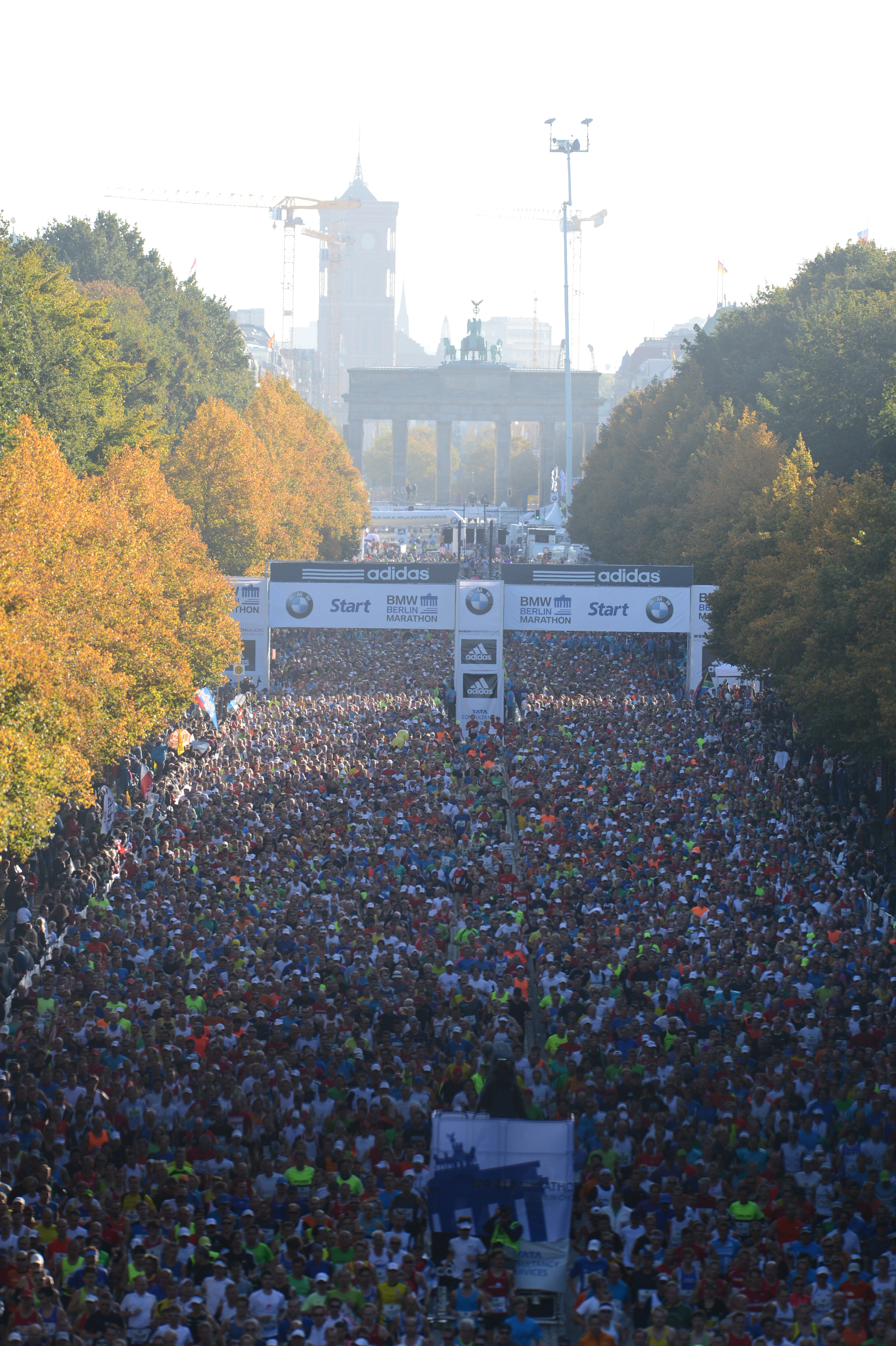
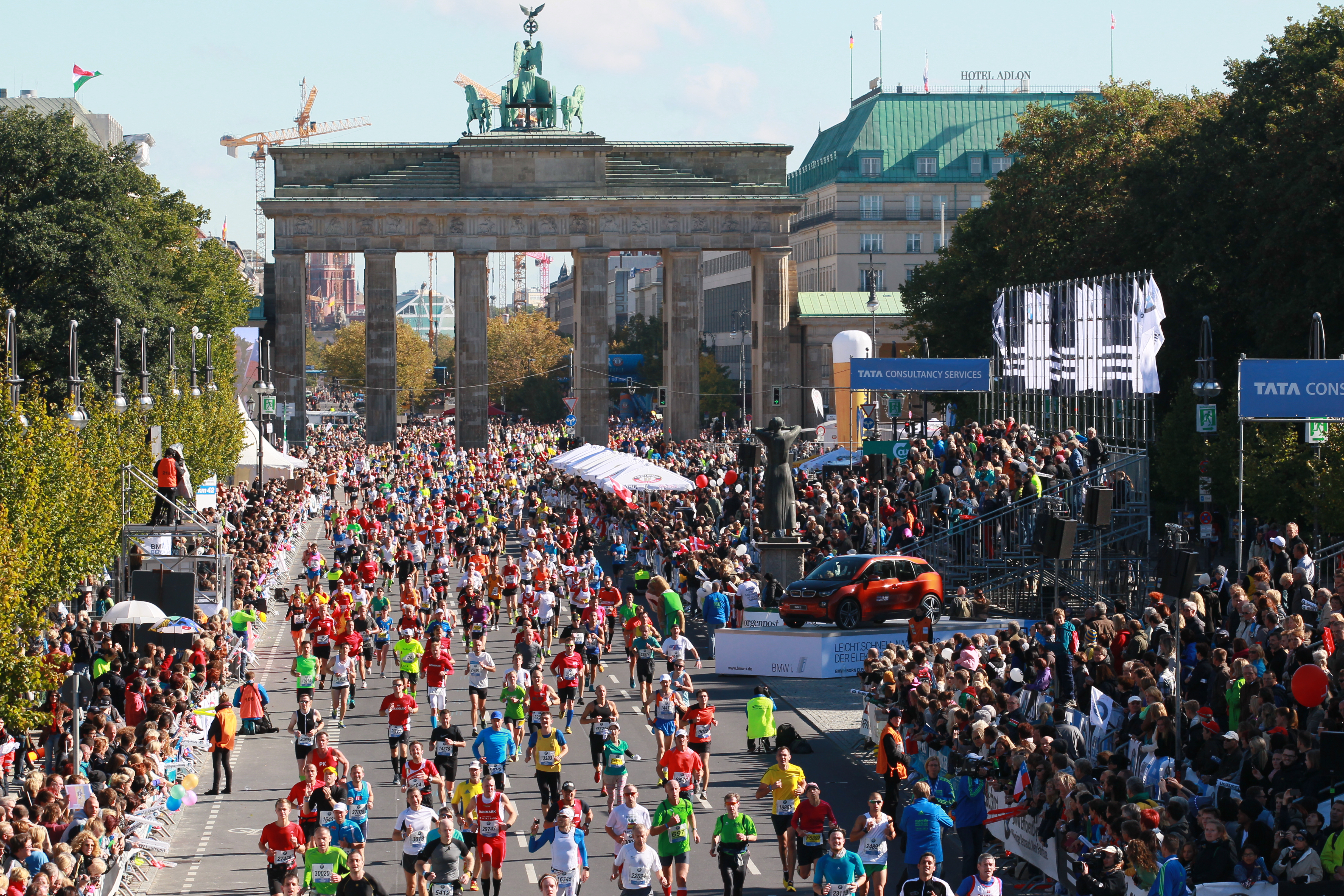
My first city Marathon in Berlin in 1999 had been a tremendous experience, so a return visit was on my wish list. After my visit to Stockholm in June with Karin, we decided to go on another weekend with a tent, sleeping bags and marathon for me. This was to be in Berlin on 28th September, when the 30th addition of the marathon was to be run.


I was aware of the fact that it was difficult to get start numbers for several of the major marathons because everything would be sold out. Naively enough, I didn’t think this would be the case in Berlin, so I got a disappointment when I wanted to book. Sold out. There was nothing to be done.


Berlin 04


Purely by chance, on the Internet I found a runner, who wanted to sell his number because he had sustained an injury. Transferring a start number was not strictly legal but that’s what happened. Oddly enough his name was also Henrik, and he was born the same year as me. On arrival in Berlin, I succeeded in reregistering the surname, so everything was as it should be.


After work on Friday 26th September, we took the ferry from Gedser to Rostock in Germany and drove the 200 or so kilometres towards Berlin. We had reserved a pitch for our tent at DC–Campingplatz Berlin Am Krossinsee. But when we got there, it was dark and we were lazy. We arranged to spend the first night in a room, so that we could wait until the following day to put up our tent. However, the laziness persisted, and we stayed in the room. It was very comfortable. The building had four rooms withshared shower and lavatory, as well as a kitchen, although we never used it.


Berlin 01


On Saturday, we picked up my start number and explored the city together. Everything was new to Karin, and although I had been there before there was plenty for me to enjoy, too.


The run began on Sunday at nine. It was quite impossible to drive to the start, so we parked the car in a central place and got there by public transport.


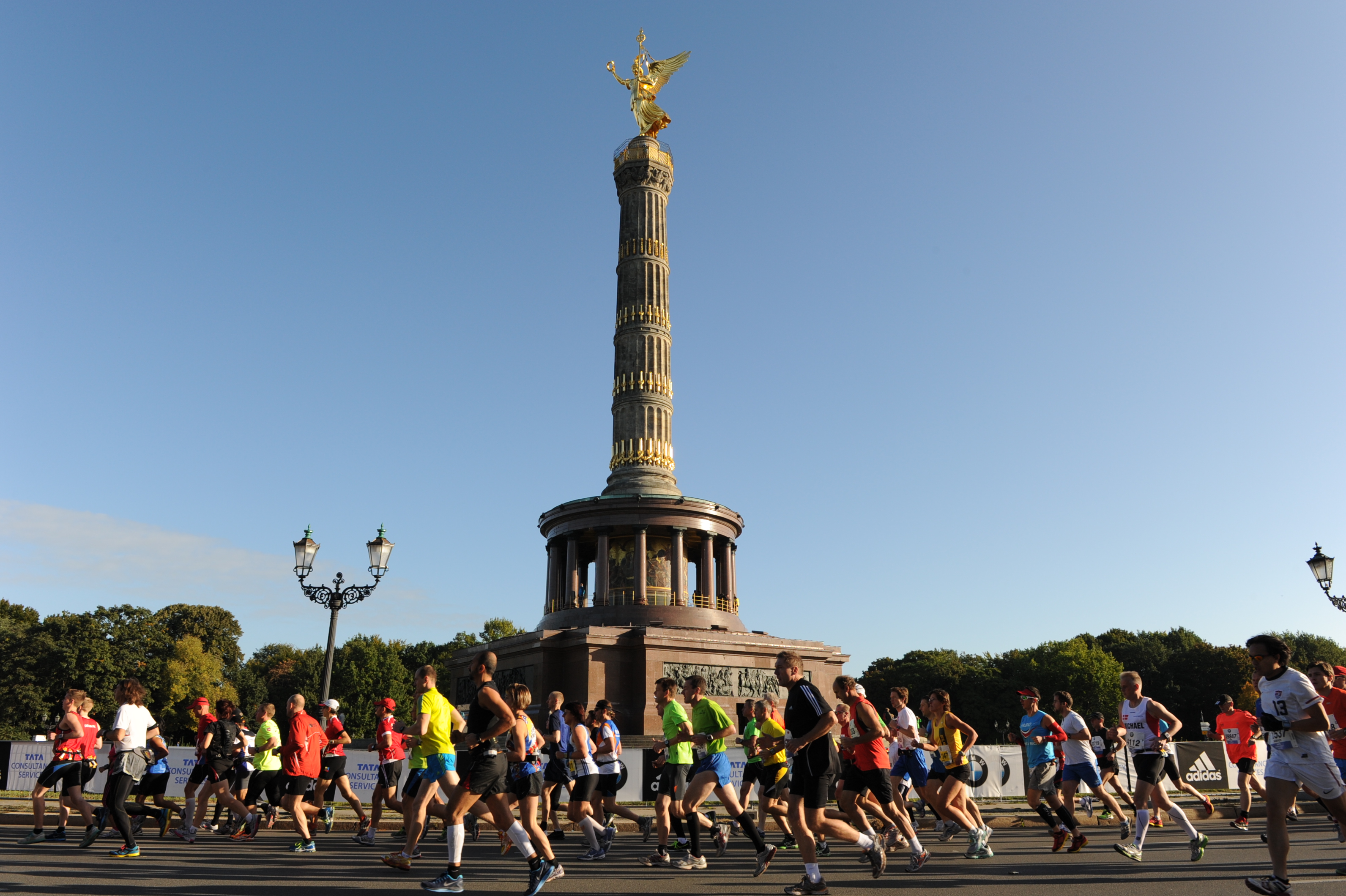
The weather was good, and the route was the same as four years previously. It had been a tremendous experience the first time, and the second was as just good. Again, happy people were partying everywhere. A large group of Danes ran around carrying Brandenburger Tor throughout the race. They had made a model of the historic city gates and mounted it on a wood panel the size of a door. The whole thing was on wheels, and the runners took turns pushing the structure.


Berlin 02


My time was not as fast as in my first race, but then that was not unexpected. I ended at 4:34:33, having run fairly constantly throughout the day. Not surprisingly, three Kenyans came in first, and Paul Tergat won with a record time of 2:04:55.


After Karin and I had found each other again, it was time to set off back to Denmark to work the following day.


Buy the book here.


Engelsk forside

Roll4033

Aarhus City Marathon 2003

August 19 2015

The Aarhus City Marathon was organised by the athletics club Aarhus 1900. The marathon is, unfortunately, no longer run, but I was lucky to run in the Jutland capital while I could. I ran on Sunday 14th September 2003 and was alone on this trip.


The start was at 10 a.m., and running numbers could be picked up at Aarhus Cathedral School from eight. I had to get up early to make the 280-kilometre journey back in time.


The Cathedral School is not far from Store Torv (Big Square) and Lille Torv (Little Square) which were the start and finish of the run, respectively.


The marathon was run on a beautiful autumn day, and despite the name Aarhus City Marathon, we also ran through the suburbs of the city and into the green belt. There were water stations approximately every five kilometres along the route, which meant we got fresh water and energy drinks eight times during the race. At the finish, I also got apples and pieces of bananas.


I wasn’t in the best shape that day. That is to say that to start with things went very well, and I passed the half distance with the time 2:06:16. After that, my energy began to wane.


Somewhere after the 30-kilometre mark, I had to walk. That actually didn’t bother me because I wasn’t there to break any records or to finish within a specific time, so I decided to take things easy. But that was a mistake, however. A fellow runner told me that they had set a five-hour limit on the race, so I was suddenly in a hurry. Being satisfied with a slow time is one thing, but there was no way I wanted to risk having driven to the other end of the country just to drop out of the marathon because of the time limit.


So I was in a hurry and had to run the whole time for the next six to eight kilometres. A man’s got to do, what a man’s got to do. And I had to, so I did it. My time was 4:54:17. Once again I succeeded in crossing the line within the time limit in a race, where I got very close to the limit.


Roll4033


I am convinced that it is in situations like these when the mind takes over. “What you don’t have in your legs, you must have in your head”.


The journey home turned out to be rather trying. Having started a long day driving as well as running a marathon, I had very little energy left by the end of the afternoon. Half way across the island of Funen I got really tired, and I actually think I may have dropped off for a second. That scared me and made me extra attentive, so I wound down the windows and slowed down, while I looked for a service station, but there was none. It wasn’t until I got to Zealand that I found a service area just after the Great Belt Bridge. Here I tried to get some sleep in the car but didn’t succeed. However, by relaxing I did regain some lost resources, and after 15-20 minutes I was ready to complete my drive across Zealand. The following night I slept extremely well.


Buy the book here.


Engelsk forside

??????????????????????

The Great Tibetan Marathon 2003

August 12 2015

Beneath the roof of the world


A year had passed with no new runs from Adventure Marathon, but now something happened. The event had already been presented in 2002 and sounded just as exciting as any of its predecessors.


After almost six months of preparations, a new marathon event was presented which would include unique cultural experiences on the “roof of the world”. The Great Tibetan Marathon would be run in thin air at 3,400-3,800 metres above sea level in the fascinating colourful Tibetan world high up in the breathlessly awe-inspiring Himalaya mountain chain.


The marathon would be run in the former Tibetan kingdom of Ladakh, which is now a politically integrated part of North-western India. From Ladakh, the gentle teachings of the Buddha spread to other parts of Tibet. Tibetan Buddhism is more characteristic of western Tibet in India and Ladakh than it is of the eastern Tibet in China, where monasteries and holy places were destroyed or closed, and thousands of Tibetans were killed during the Chinese Cultural Revolution.


Infrastructure problems


Organising a run which requires several hundred people being flown from Copenhagen to the Tibetan plateau turned out to be somewhat more of a task than expected. The airlines were reticent, to say the least, when it came to confirming the necessary seats at an anywhere near reasonable price. Hotels and transport also presented considerable challenges. Because there were no buses in the area, more than 100 4x4s would be needed on the day of the run.


Consideration also had to be taken off a host of other things, such as a team of chefs to ensure food quality, and a medical team which needed to bring with it everything from bottles of oxygen to resuscitation equipment. In addition to this was the timekeeping and radio communication team, which had to bring along 100 walkie-talkies, satellite phones and the timekeeping equipment itself. Furthermore, piles of other things had to be transported from the Indian lowlands, for instance 15,000 bottles of water.


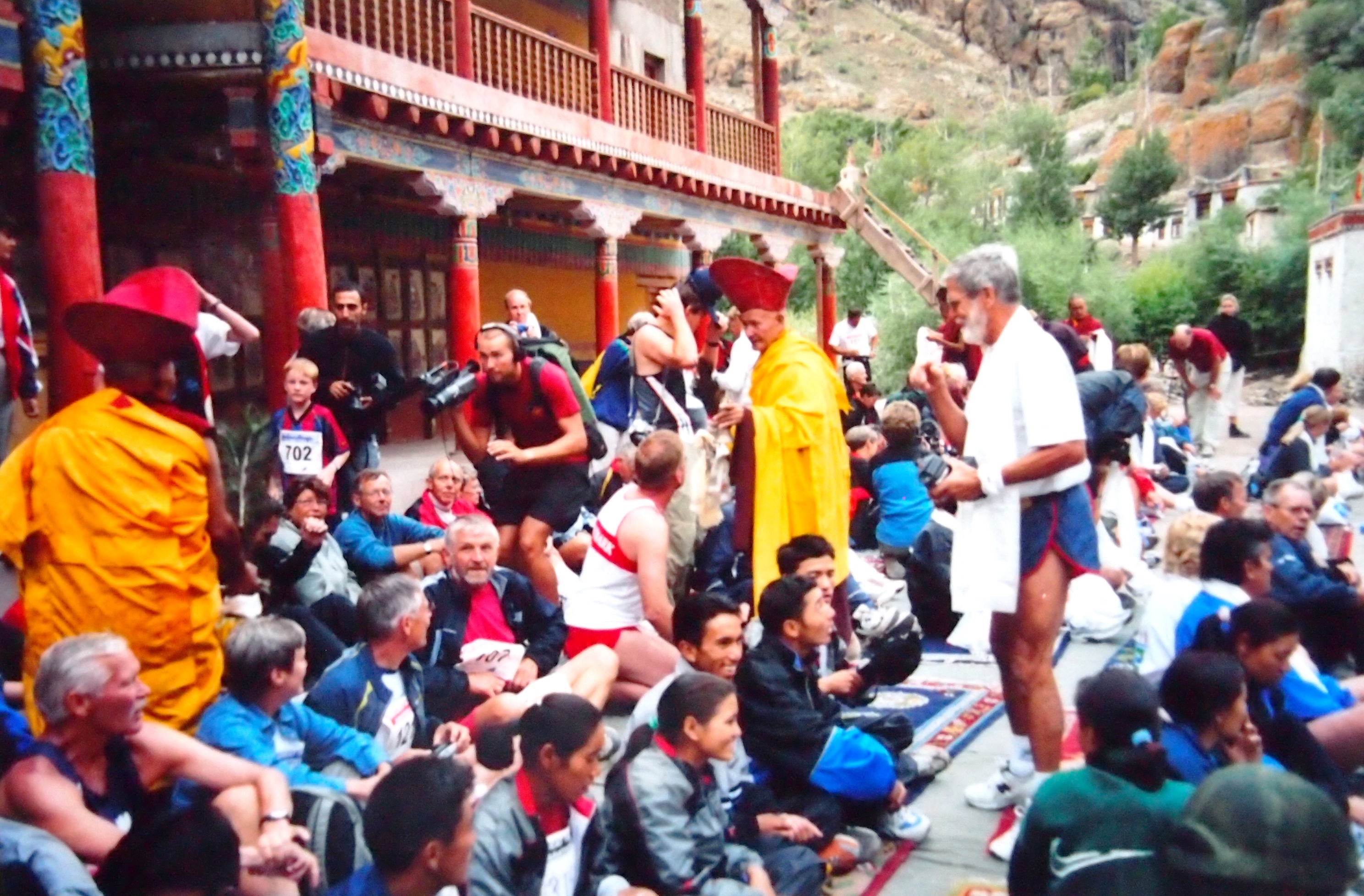
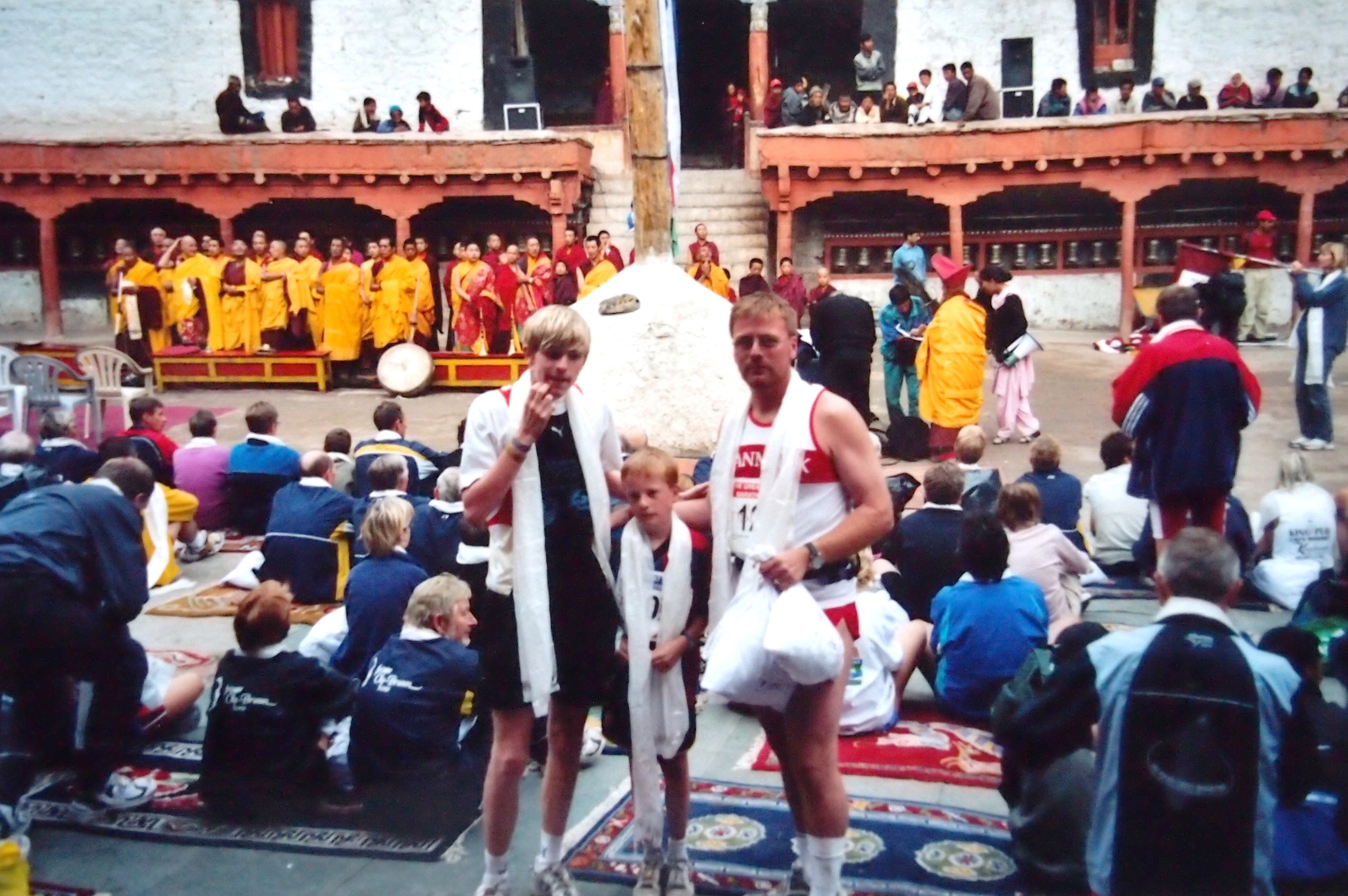
It had also been incredibly important to establish good relations with a number of monasteries and the monks in the area as they would be involved in the event as active participants in The Great Tibetan Marathon. This had not been easy because the religion and the monasteries on the plateau are very much alive and fully active and absolutely not something perpetuated for the sake of the tourist. There was a lot to be negotiated for everything to fall into place. But Albatros Travel did a marvellous job, as always.


Limited number of participants


Albatros had several travel packages on offer. There would be only 280 travellers from Denmark, and they were fully aware that there wouldn’t be enough places for everyone who was interested. A number of us had paid a deposit up front to make sure of a seat.


We had paid a deposit for six passengers. Apart from the boys and me, my stepmother Elisabeth, my sister and my niece would be joining us on the trip.


Information meeting before departure


It was nothing new for me to attend an information meeting prior to a marathon. I had been to a few at Yin and Yang Square in China. But the information meeting for this marathon was held in Denmark almost two months before the race itself.


We were invited to attend an information meeting on Thursday 16th June in the conference room of the Berlingske newspaper group in Copenhagen and a similar meeting was held the following day in Aarhus. At the meeting, we were told what to expect in Ladakh. They also went over insurance issues and made suggestions as to what we ought to take along. Particularly important was the knowledge that we might suffer altitude sickness, and we were informed how to avoid it. Of course there was plenty of opportunity to ask questions about the trip, and the marathon.


Also in good time, we received written information from the Travel Clinic about altitude sickness, diarrhoea and dengue fever, as well as treatments and recommended preventative medicine. Having learnt from previous experience, the boys and I visited the Travel Clinic to get the necessary vaccinations.


Departure


The departure date was Wednesday 6th August, just a week after we returned home from the Swiss Alpine Marathon. However, we were fully prepared to travel, and my legs felt fine. I had had no reason to do much training as I was already in good shape.


We were picked up by a maxi taxi at 5.45 a.m. by our three fellow travellers and drove to Copenhagen Airport. Here we met group 6, which consisted of 22 travellers and one guide. We knew quite a few of them from previous marathon trips.


First stop was the Austrian capital Vienna, where we spent a few hours in transit. We then flew for seven hours to Delhi. We spent the time eating, sleeping and playing board games.


On arrival in Delhi, we had to put our clocks forward three and a half hours, which meant it was now midnight. They checked our travel documents very thoroughly, so getting through customs took quite a long time. We didn’t have to wait long for our baggage, however.


Delhi


We spent the night in the Indian capital at the Park Hotel, which had five stars, albeit by Indian standards, which meant that it was satisfactory but not luxurious.


Thursday’s schedule began around midday, when we met the rest of the group and had lunch in the hotel restaurant. It was a help yourself buffet with a variety of hot dishes, rice, vegetables and different types of meat. Some of it was pretty hot, so it helped provoke your natural thirst.


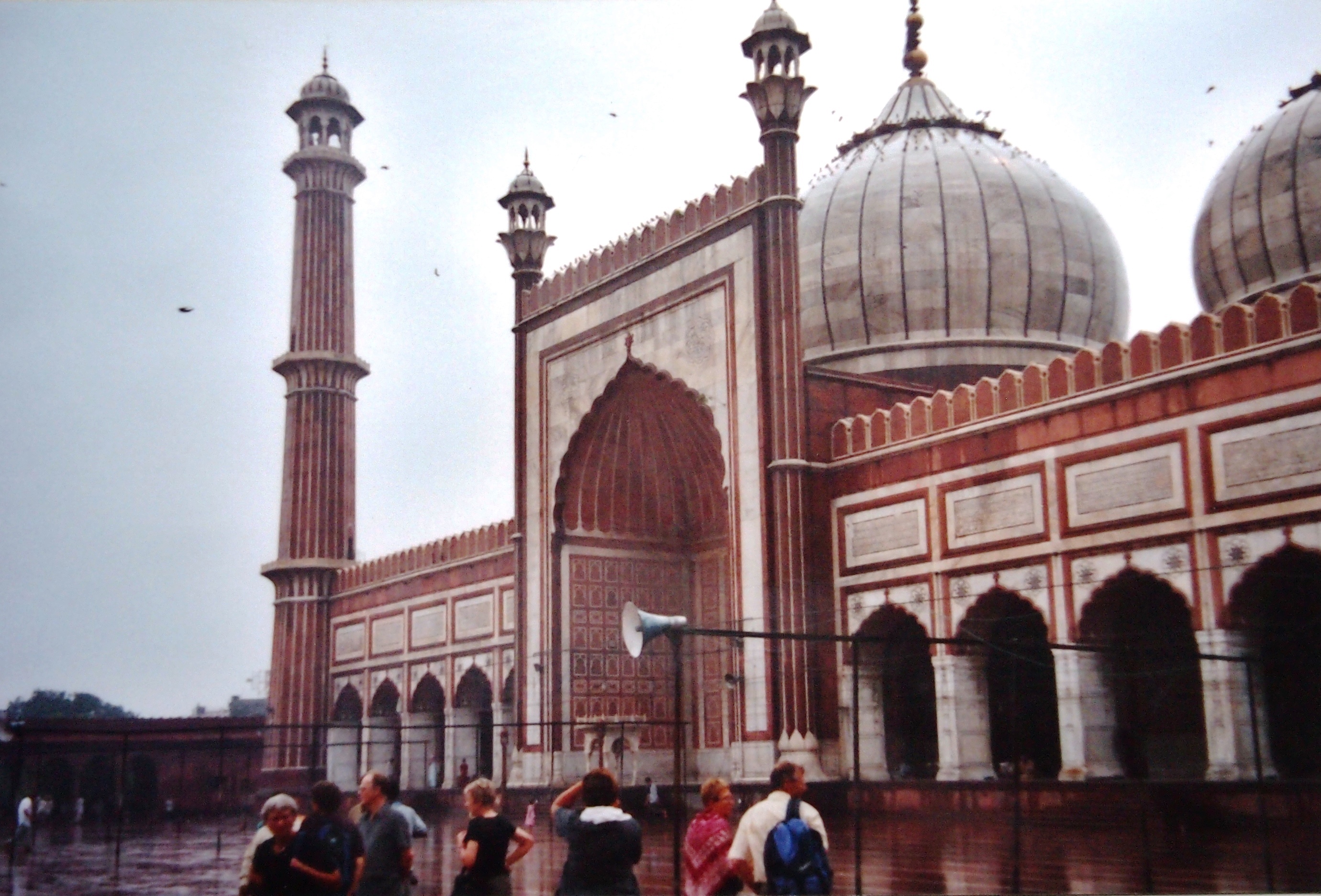
After lunch, it was time for an afternoon excursion, and we were driven by bus through the streets of Delhi. The first stop was at the impressive Jama mosque, built of red sandstone and white marble. We spent half an hour or so here studying the monument. We arrived in a heavy monsoon downpour, but it soon stopped.


After that, we were taken on a round trip through the streets of Delhi in bicycle rickshaws. This really gave us an impression of everyday living in this huge city. The streets thronged with bicycles and scooters, but practically no cars. It all seemed like total chaos to us, but it probably isn’t. The city was teeming with life and street sellers, stalls, thousands of people, a myriad of smells and visual impressions.
 

??????????????????????


During the last two minutes of our ride, our driver started huffing and puffing as though tormented. There had been no sign of this earlier, but we soon got an explanation. He naturally wanted to bring to our attention the tremendous effort he had made, so that we would give him an extra-large tip. Our guide had paid for the trip and given us explicit instructions as to how big a tip to give. The driver did not seem satisfied with this, but we suspected it was a play to the gallery. We just followed the guide’s instructions and left him to mope.


After this experience, we drove past the place where the great politician and spiritual leader Mahatma Gandhi had been cremated. We made a short stop here before driving back to the hotel. We also made a brief stop at India Gate, a monument to fallen soldiers.


We spent the evening at the hotel, eating supper and getting some more information about Friday’s schedule before going to bed early.


Thorough security check


Our last night in Delhi was very short. We were woken at two in the morning, got dressed and left our suitcases outside the door before going down for breakfast.


At three, the bus drove us to the domestic airport where we underwent an extremely thorough security check. First we found out that nobody was allowed into the domestic departure hall without a ticket. Our guide showed the guard 23 tickets, but for some reason a stranger entered the area with us. So after we had got through, the guard came over to me and asked me for my ticket. I had to call on our guide, who was told that 24 people had come through. The stranger was pointed out and asked to show his ticket.


We were not allowed to carry batteries in our hand luggage. This meant that cameras, video cameras and mobile phones had to be packed into our suitcases, and the same applied to the battery of our computer. Our suitcases were scanned and sealed. Our hand luggage was also scanned and checked by hand. Each piece of luggage was given a stamped label, and because my niece had forgotten hers she had to go back to the check-in desk.


A very special flight


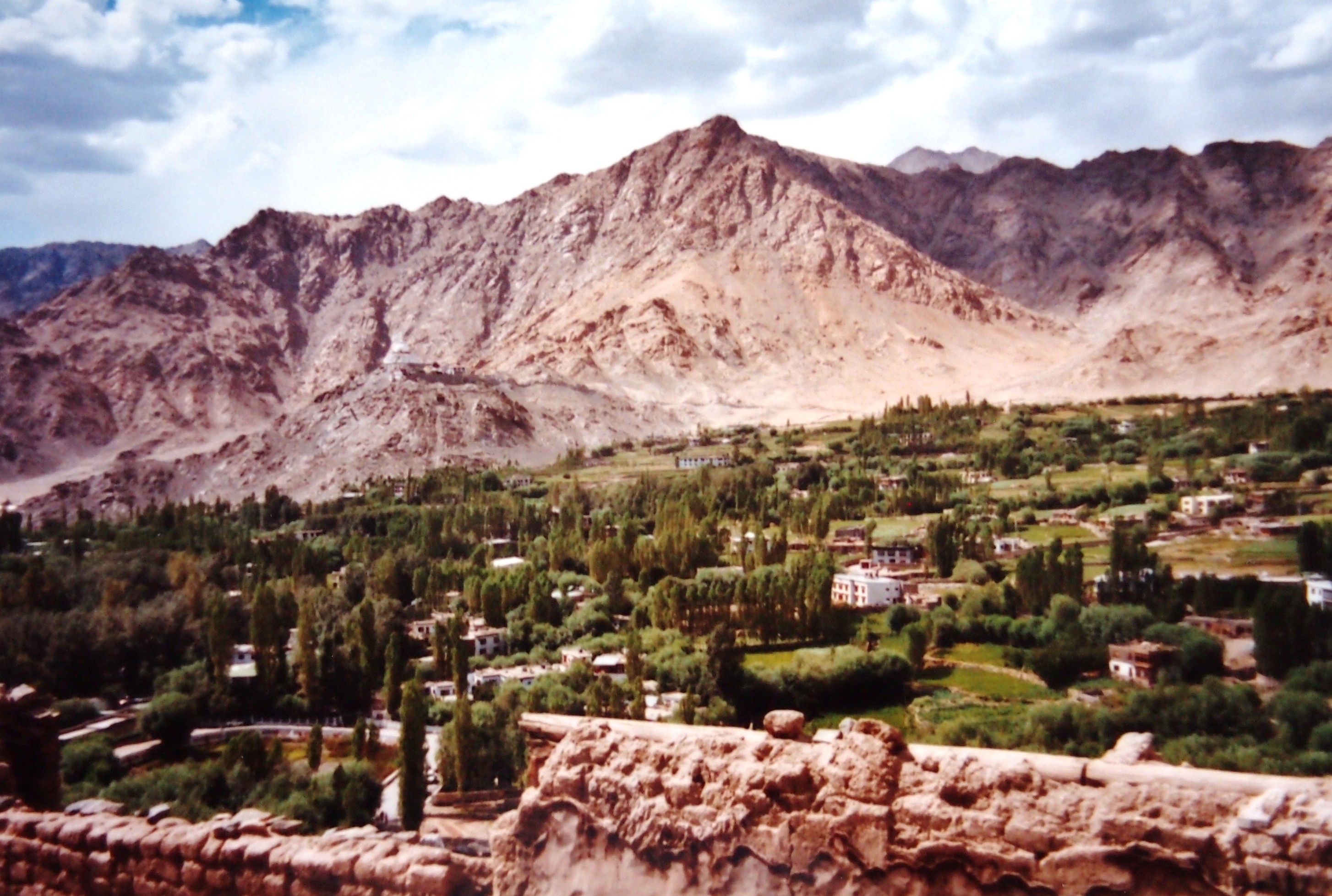
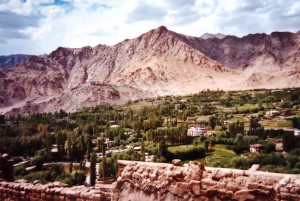
Our flight departed just after five, and we just managed to get a meal inside us before landing just over an hour later in Leh, the small capital of Ladakh on the Tibetan plateau in the Himalayas. This was a tremendous experience for people with window seats. The flat Indian plains were replaced by the deep valleys and white peaks of the Himalayas, which in turn were replaced by high desert plains. We were floating only a thousand metres above some of the highest mountains in the world. Landing in the narrow Indus Valley took us through mountain passes before we landed in the almost lunar-like landscape around the great River Indus.


We were now 3,520 metres above sea level, and I could feel it. I had to breathe faster than normal, and I felt dizzy. The temperature had also dropped in comparison with Delhi. Here it was cooler and altogether more pleasant.


We arrived in Leh just less than a week before the run because of the experiences that awaited us, but just as much because it was vital for us to get acclimatised to the thin air before setting out on a marathon run.


Relaxed afternoon


Having received our baggage, we were driven in 4x4s five kilometres south westward to Leh and the hotel Lha-Ri-Mo. We had to wait here for a few hours while our rooms were made ready and during that time we were offered coffee and tea.


The boys and I were thoroughly worn out after that short night. At the same time, we had been given strict instructions not to overdo things so as to avoid altitude sickness in the thin atmosphere. We lay down to sleep immediately, which was not difficult.


We got up fairly late in the afternoon and got lunch. Then we watched a film together on the computer. This was something of a challenge because the power in Leh was in the habit of coming and going, which meant we had to run on batteries at times.


Tibetan folklore


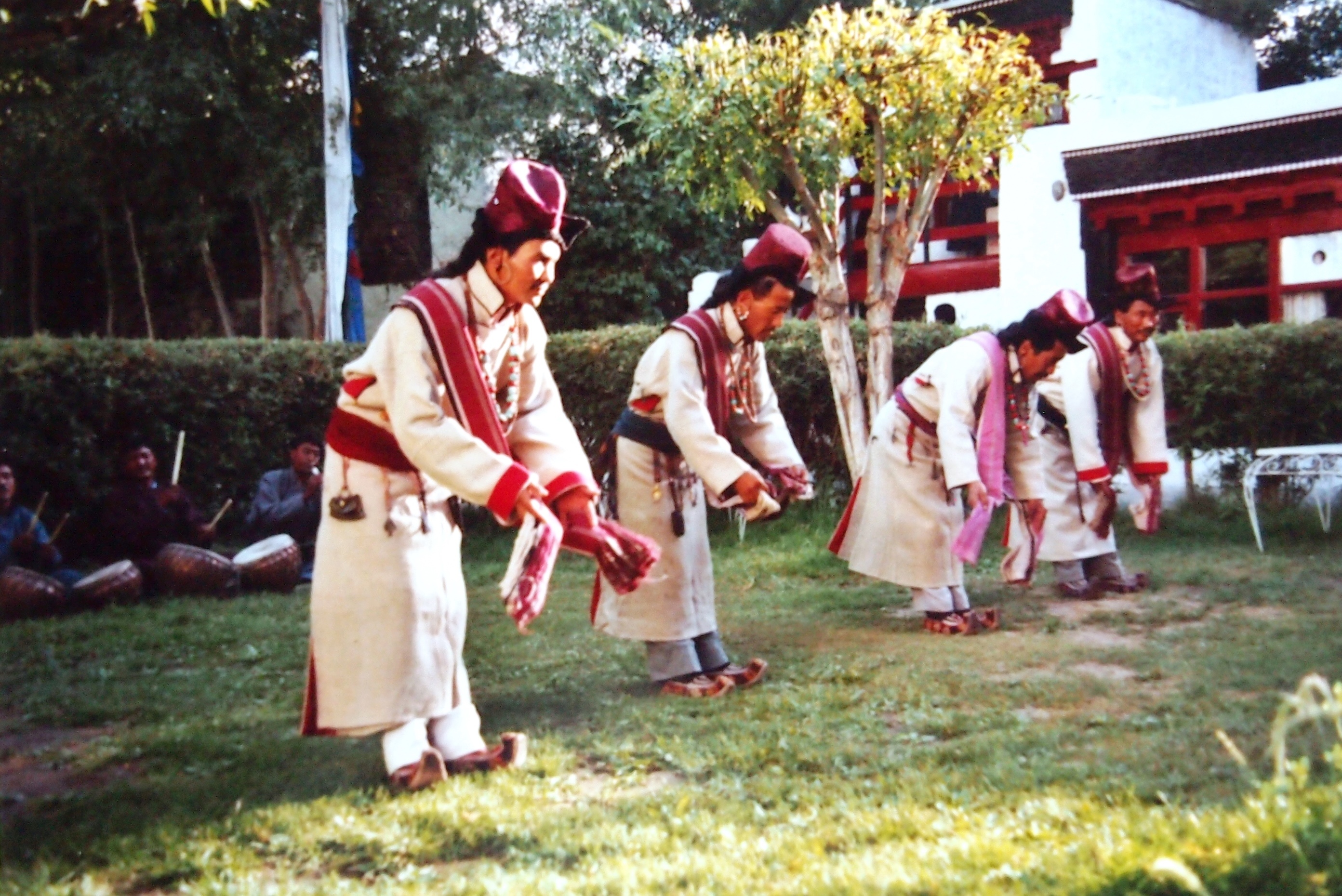
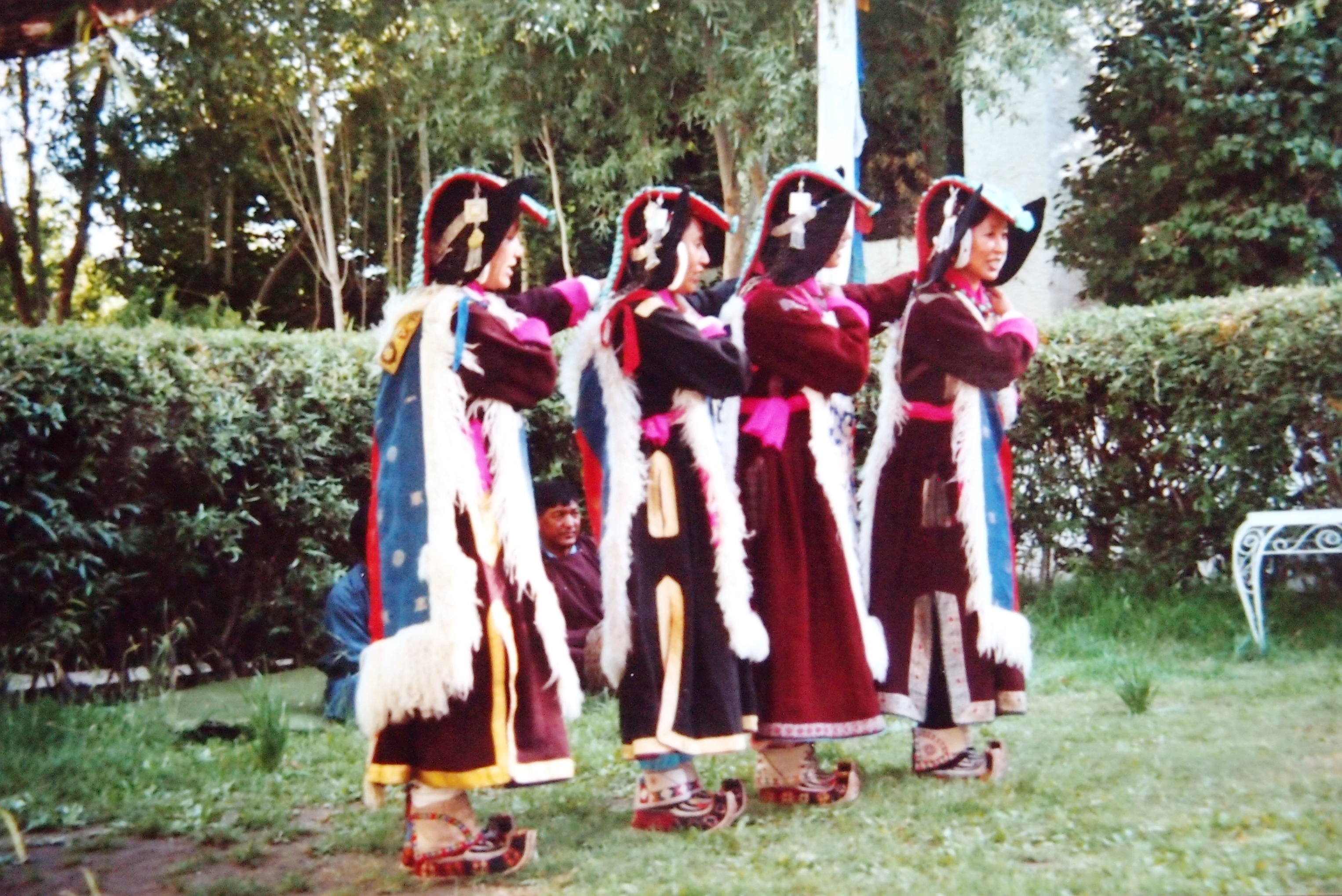
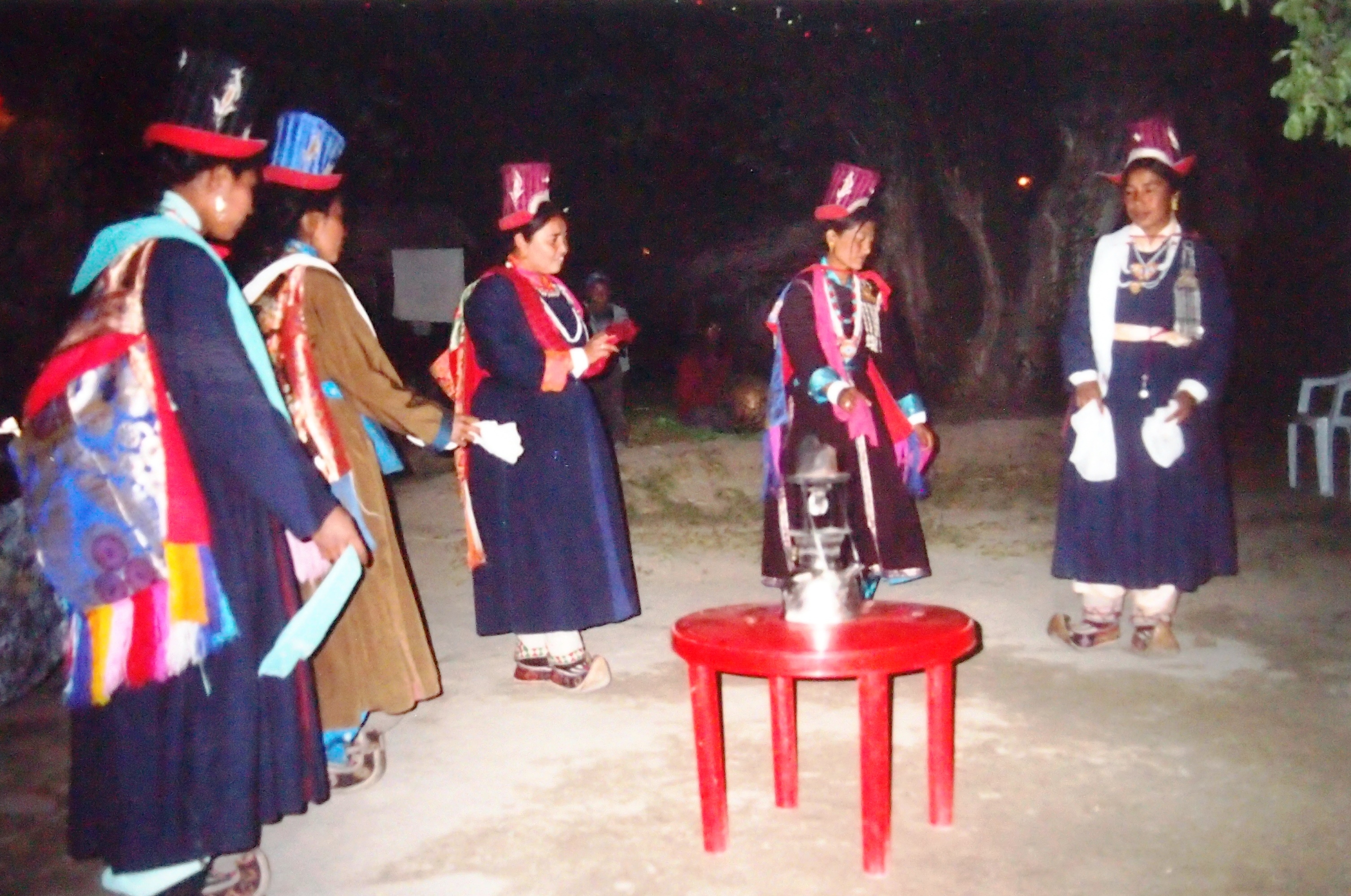
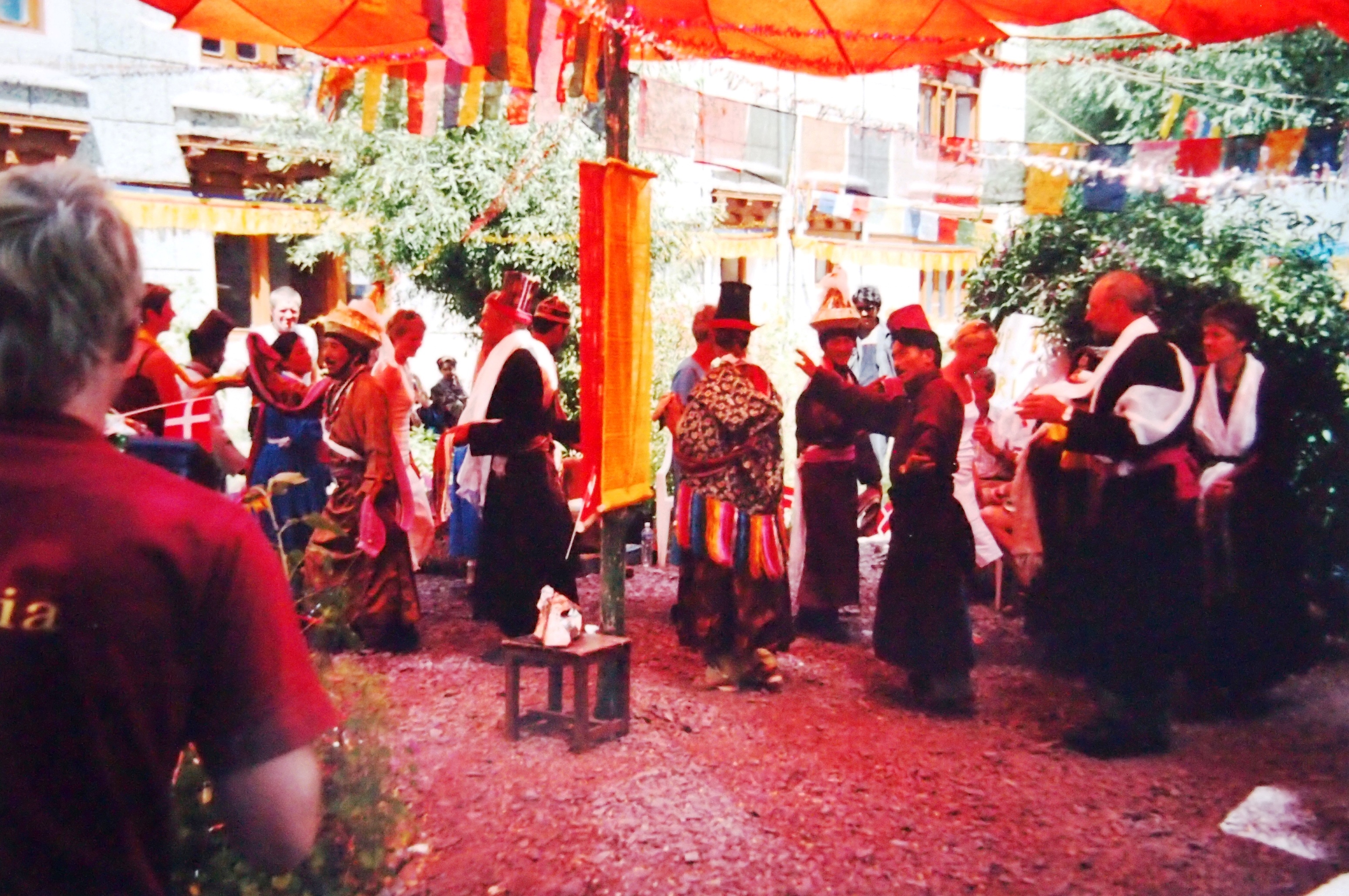
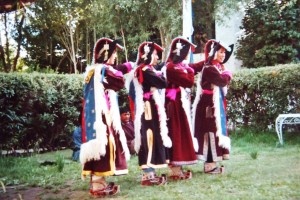
In the late afternoon, we heard music in the garden and went down there so as not to miss anything. It was Tibetan folklore. Two men sat on the grass playing drums while a third played flute, and dancers in national dress entered, singing. The performance consisted of groups of four women and four men, who performed and sang in turn. It was great fun and most impressive.
 

??????????????????????


After the performance, it was time to take a bath. As with the electric power, it was a question of doing things while there was time, because at the hotel there was only hot water between six and eight in the evening.
??????????????????????


The group met for supper in the restaurant, and we spent the evening relaxing, retiring before midnight.


Sleep and health problems


Our night sleep was interrupted because there were masses of dogs barking in the town. This happened every night, but on the first night I wasn’t used to it and didn’t get enough sleep.


I also had a problem on the Friday, when I awoke with pain in one eye. My sister fortunately had eye drops with her which I took several times during the day, and by the time evening came the problem was solved.
 

??????????????????????


We had the morning to ourselves. The boys went down to the town to look at the shops and experience street life in this little corner of the world. As long as we took things easy, we experienced no problems in the thin atmosphere. The temperature was really rather pleasant, probably 22°C or so, and the air was very clean.


A trip to Leh


We met with the rest of the group after lunch and set off in 4x4s for the impressive Leh Palace built in the 16th century. The palace was still owned by the royal family in Ladakh but was empty and uninhabited. It was almost like a ghost castle, although there was a fantastic view from the roof of the palace over old Leh, with its green, luxuriant groves and white mountain peaks.


From the palace, we continued on down the streets of Leh to a traditional Tibetan home where we were shown round and served the local “beer”, Chang, and a special local butter tea, Po Cha.
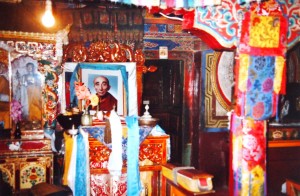
 

??????????????????????


In the late afternoon, we visited the Sankar monastery in Leh, which belongs to the Yellow Hat sect and his Holiness the Dalai Lama. With only 20 monks the monastery is one of the smallest in the valley. We were to have experienced the monastery’s evening pooja (a ritual daily worship with sacrifices such as flowers, incense, candles or fruit). The large temples have many priests and functionaries and ceremonies are performed every day in honour of the Buddha, but the event we were supposed to experience was not held because there were not enough monks to receive us that day.


Rafting trip


On Sunday 10th August, we were woken up early to begin the day’s packed and exciting schedule. After breakfast, we were driven by 4x4s to the River Indus to go on a dramatic rafting trip. We had to wait quite a long time at the bank of the river. The rubber rafts had not yet arrived, and they then had to be inflated, after which we could don lifebelts and helmets. We were then given the necessary safety instruction and finally set off on the exciting, rather nippy trip down the Indus.


It was a cloudy day without any sun, so it was a bit chilly. We rafted down the river, where at times the waves formed metre-high cascades, which meant there was no way to avoid getting soaking wet. Some of us got really cold, although I was not one of them. Steffen and Emil had been given waterproof overalls by the rafting guides and managed just fine.
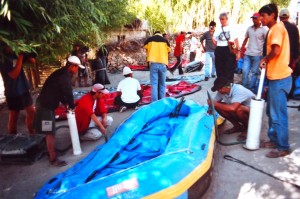
 

??????????????????????


The rafting trip was a tremendous experience. Everything was constantly changing; the pace, the waterline and the scenery. Here there was mountain desert, rapidly followed by green oasis villages. One moment the water was mirror-smooth, the next we were riding giant waves and getting soaked to the skin. We really were at the mercy of Mother Nature.


A broken arm


A good half way along the river, we had a break to take a leak and have something to eat. Here, something happened that really should not have. Ketty, a very sweet lady from our group lost her balance and broke her left arm in the fall, which meant she had to go with medic Mogens Rishøj to hospital to get her arm put in plaster. The rest of us continued the trip one rubber raft short.
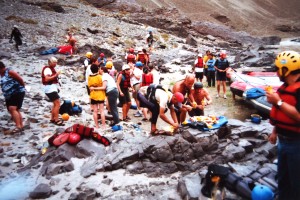
 

??????????????????????


Impressive scenery and buildings


After three hours on the water, we met our 4x4s at the oasis village of Nimu, where the crystal clear River Indus merged with the muddy waters of the River Zanskar.
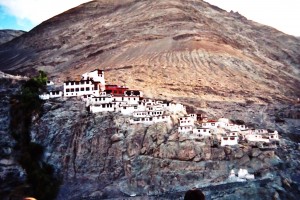
 

??????????????????????


We now continued westward along the main road, through deep valleys, past dramatic mountains and gorges. At the town of Basgo, we took a short break by the rocks with the most fantastic colours; yellow, ochre, terracotta and violet. In this part of the world, all the Buddhist monasteries and palaces were built as fortresses to resist invasions from the surrounding areas.


Further on down the road, we made another stop-off, where we were able to see how people lived in the villages. Many older women still wore the traditional costume, with headdresses full of magnificent turquoises.


After lunch, we turned off the main road towards the lush green tributary valley, where the Alchi monastery is situated. The fact that this monastery lies at the bottom of the valley makes it atypical. It housed some gorgeous thousand-year-old frescoes, and from a historic point of view it was the most interesting monastery in Ladakh.


We didn’t get back to the hotel until early evening. We had supper, and Ketty was there and in good spirits. It had been a clean break, and she had not abandoned the idea of running a marathon on this trip.


Morning visit to the Thikse monastery


On Monday, we were to leave for our outing at five in the morning and stood there waiting for our 4x4s to pick us up, but they didn’t come. We were then invited into the restaurant and given tea until the 4×4’s arrived three quarters of an hour later.
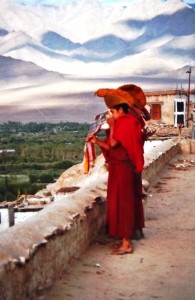
 

??????????????????????


We set off across the extensive plains around the Indus, where, among others, the Thikse and Memis monasteries are located; and visited Thikse, some 20 kilometres east of Leh. Here, we did experience the morning prayer – the so-called “pooja”. About 100 Yellow Hat monks belong to this monastery, and when the sun comes up, giant horns in the monastery roof were blown. The monks then arranged themselves in the small hall of the monastery, where po cha, a butter tea, was served together with tsampa barley or millet during a ceremonial matra or jupa in accordance with the Holy Scriptures. We visited the kitchen, where they made the butter tea and were also offered a taste. After the pooja, we went onto the roof of the upper temple to enjoy the fantastic view of the Indus Valley’s willow and poplar trees.


Across the world’s highest road pass


Back at the hotel, we had breakfast before setting off on a two-day trip. We drove north to the remote Nubra Valley on the ancient Silk Road, the trade route which connected central Tibet with Turkistan. The route went via the Khardung-La pass, 5,602 metres (18,380 feet) above sea level. We got up there through a vast number of hairpin bends and saw the most incredible scenery you can imagine.
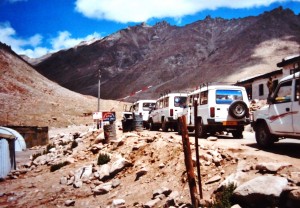
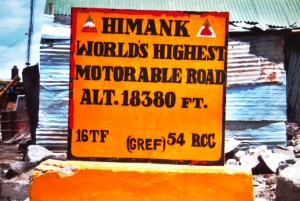
 

??????????????????????

??????????????????????


It really was a very special experience to be right here. The road itself and the buildings around it were not a pretty sight, but the view was indescribable. Apart from the poles, this is the place in the world with the most glaciers. Hundreds of prayer flags were hanging from the mountainsides, and we were in no doubt as to where we were.
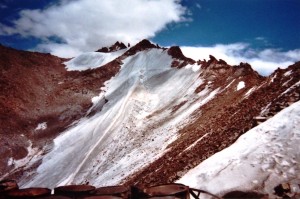
 

??????????????????????


My sister had a nasty attack of altitude sickness on the trip, and while the rest of us ate lunch she went to get treatment at a military hospital. After lunch, we had a walk with many beautiful sensory impressions on the narrow mountain roads, but unfortunately we had to leave my sister behind. She was in no condition to continue at that point.
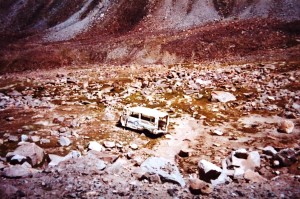
 

??????????????????????


Camp on the Tigrid


The schedule lasted for most of the day, and we arrived late in the afternoon at our camp at Tigrid. We were offered tea and coffee before being shown to our tents, which were rather comfortable with proper beds. Steffen and I got a two-man tent, whilst Emil was to share one with Elisabeth. However, Emil wanted to sleep with us and ended up sharing a bed with Steffen, whilst Elisabeth got a tent on her own. The camp toilets and showers were secluded, but the wash hand basin and mirror were outside.
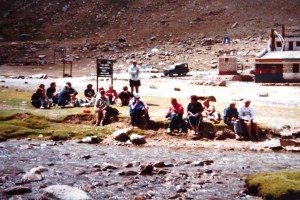
 

??????????????????????


Of course the supply of hot water was not unlimited, and they fired up the boiler with firewood when we wanted a shower. This was just what we needed on a hot, dusty day. Newly washed and freshened up we met the other members of the group to enjoy the company and a glass of red wine. My sister had arrived rather later than the rest of us because her hospitalisation had been longer than expected. She and another person with the same problem had to remain lying down for the rest of the day.
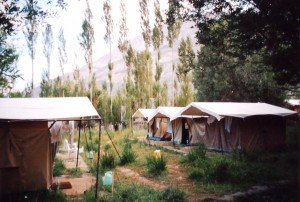
 

??????????????????????


A “Helge”


??????????????????????


With us on the trip were Anne Grete and Holger Jacobsen, a delightful married couple from Aabenraa in Southern Jutland whom I knew from previous marathon trips. These merry, creative people had the idea of making a birthday present for our guide Helge, who was turning 55. We weren’t going to build a Buddha, because that would have been blasphemy. Instead, we made a “Helge”. “Helge” was basically a figure made from branches covered in items of all sorts. The head was made from an old jerry can. Some of the things tied onto “Helge” we found in the woods and others were donated by participants. There were all sorts of things, from a petrol cap to red wine. During supper, Holger presented “Helge” to Helge. Holger has a wonderful sense of humour and really knows how to make a speech and get people smiling. This was also the case with Helge, who was happy with, and moved by, a rather curious present.
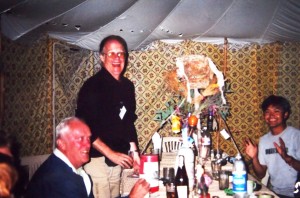
 

??????????????????????


Hot springs


We completely missed our morning call on Tuesday. A man had walked round the camp ringing a small bell to wake us up, but we didn’t hear it. We awoke slightly later of our own accord.
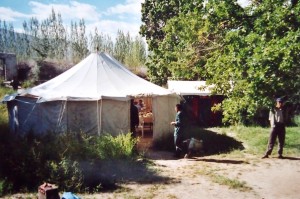
 

??????????????????????


The two altitude sickness sufferers were bright and cheery again and had no further problems. So after breakfast the whole group left for an area where there were hot springs. The water that poured over the rocks was scalding hot, I would imagine it was at least 70°C.
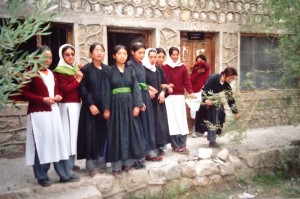
 

??????????????????????


Just after midday we reached a river basin near Diskyid, the main town in Nubra, and continued along the River Shayok to Hunder. Along the way, we passed an area with Sahara-like sand dunes.


An afternoon at schools and monasteries


In the early afternoon, we visited a local school with 125 pupils. Conditions here were entirely different to what we were used to in our part of the world. The children had neither tables nor chairs in a classroom. They were taught sitting on the floor or out in the school yard under primitive conditions. Although this was primitive in our eyes, it looked as though the kids were healthy and happy and got the best possible education under the circumstances.
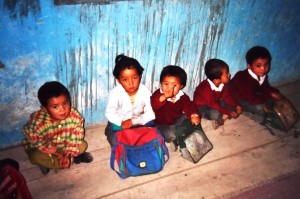
 

??????????????????????


In mid-afternoon, we made a halt in a town where we had half an hour to find something to drink and do a bit of shopping. Later we visited a monastery and then stopped at a building site, where a new monastery was being built.
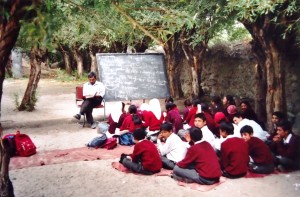
 

??????????????????????


Folklore on the lawn


Early in the evening we returned to the camp for supper. Later on there was a folklore performance on the lawn and soon after that we went to bed tired.
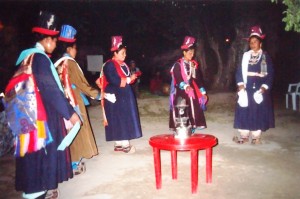
 

??????????????????????


A non-existent bomb


On the Wednesday, we left the camp after breakfast. We set off, but after half an hour’s drive, the road was completely blocked off, and a “sea” of cars had queued up in the summer heat. Nobody could explain what had happened, although rumour had it that there was a box with a bomb in it further down the road. We waited for an hour or so and were then suddenly able to move on. We never did find out what had happened, but they assured us that there had been no bomb.
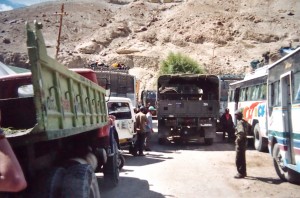
 

??????????????????????


An altitude-sick driver


After the “bomb threat”, we drove on without hindrance, although the boys and I witnessed our driver of the 4×4 getting altitude sickness as we approached the top. I thought this could only happen to tourists, but it can affect anyone. The driver, Monsut, had to get out for some fresh air, and as we drove on, he was given something to drink and a piece of cloth on his brow. I sat talking to him, although our communication potential was limited. Monsut began to feel better, and we returned safe and sound to Leh.
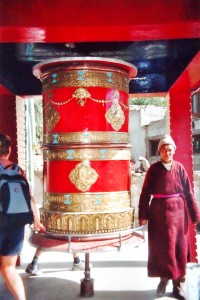
 

??????????????????????


Sightseeing in Leh


We were back at our hotel in the middle of the afternoon. We were shown to the same room as we had before, after which coffee and toast were served.


The boys and I spent the afternoon in Leh, where we met runners from other groups, a good many of whom we already knew from other trips.


There were many places in town where locals sat embroidering T-shirts, many of which were ordered by tourists, with their own names and the text of the upcoming run. I ordered a T-shirt with the logos of the four marathons I had run to date with Adventure Marathon.


We were back at the hotel by early evening and got ready to eat. Envelopes were distributed during supper containing our start numbers and T-shirts, and we were also brought up-to-date with the latest practical information about the run.


A long hike


There is no such thing as sleeping in and lying by the swimming pool when you’re on a marathon trip. There are activities going on all the time, so there is no excuse for not being in shape for the race itself. That’s the way it was this time, too.


We got up early on Thursday, and at seven we set off for a six-hour hike around the area. On this walk, we met the others involved in the race; both runners, medics, officials and others.


Wedding invitation


Jørn Pedersen was naturally with us on this trip, as so many times before, as was his girlfriend until then, Majbritt. They had met three years earlier at town festivities in Kalundborg. Majbritt had, therefore, not had the pleasure of experiencing The Karen Blixen Marathon, although she had devoutly been on every marathon trip since then. As it turned out, this loving couple was soon to be much more. Like many of the other participants, the boys and I now received an invitation to the wedding reception of Majbritt and Jørn, who were to be married the following day.


After lunch, we went to town to buy wedding presents. Together with other running acquaintances we ordered some fun romantic T-shirts with their names embroidered on them, along with the date, place and the Tibetan word for love. We also bought the couple a bottle of Chang and a silk scarf for each of them from each of us.
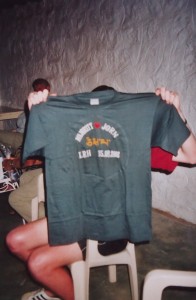
 

???????????????????????????????


It is customary in Tibet to honour people with silk scarves. We also experienced this two days later at the start of the run. At the same time, some of these scarves had the purpose of putting spells on evil spirits and demons.


Back at the hotel, a local nun visited us during the afternoon and told us what life was like for her in Ladakh.


Morning run


Friday started with a morning run, and we walked to Polo Square in Leh, where all the marathon participants stood ready before seven o’clock for the start of the race.
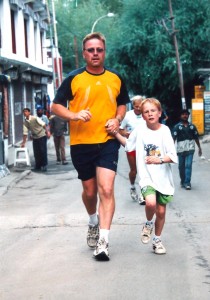
 

???????????????????????????????


First Thomas Thomsen and the medical team gave us some practical information, and after this, I ran with Emil. But Emil was so fit and young that he soon left behind his father, who had to conserve his energy. We were in no doubt that the air was thinner than we were used to and when, about halfway through the run, it started to go uphill we could really feel it. We slowed down, and many others had to walk. After a while, I caught up with Emil, who by that stage also had to walk from time to time. I took him by the hand, and we accompanied each other on the final stretch. Emil and I ran most of the time and after about half an hour we had finished our morning training. By that time, Steffen had crossed the line some time ago.
 

???????????????????????????????


Wedding reception


??????????????????????


We arrived at the wedding reception at 12 o’clock. Quite a few other people were there too, most of whom we knew from earlier trips. The bridal couple arrived at 12.30 in a delightfully decorated car. They were clad in full formal dress, Buddhist wedding garments, each with an impressive headdress. Both were perspiring as though they were in a sauna. Prior to this, they had been married by four monks in the kitchen of a local private home. In accordance with Buddhist tradition, the bridegroom had had to wait for half an hour for his bride. The original idea had been for them to get married in the middle of the race, but they had opted for a traditional Tibetan wedding instead.
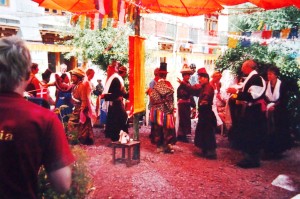
 

??????????????????????


When the bridal couple arrived, all of us hung a silk scarf around their necks. After the photographs had been taken, we were shown to mattresses to sit on in the hotel yard. Here there was a performance by the local folklore group we had seen earlier. Later on there was dancing and a delicious buffet. The guests gradually began to leave the party, but we stayed for a while to see our present unwrapped. We got the impression that it gave them pleasure.
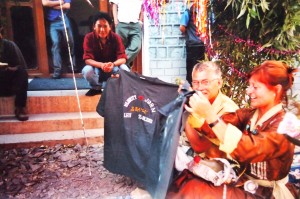
 

??????????????????????


Pasta party


We had the afternoon to ourselves and spent some of the time enjoying the company of several other people from our group. Later on, there was a pasta party at a restaurant near our hotel, but soon after that was over we went home to bed because we had a marathon to run the following day.
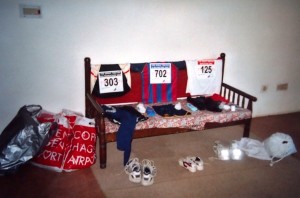
 

??????????????????????


Blackout


Saturday 16th August was the day of the big run. We were not unaccustomed to getting up early for a marathon, so our waking call at 3.30 a.m. was not a problem. But there were other problems, because there was no electricity anywhere in the hotel. To begin with we had to make do with the light given off by the screen of my mobile phone. It was a good thing, we had already laid out our running gear in logical order and pinned our start numbers to our jerseys. Fortunately, one of the hotel staff brought us two candles, which made things much easier.


We had breakfast and sang a birthday song together for a lady who just turned 37, and we were ready to leave at 4.30. During the drive of just over 45 kilometres, we experienced rain for the first time, but although it was refreshing, it had stopped before we got out of the car.


Prayers and blessings


At 5.45 we were standing at 3,800 metres above sea level at the almost 350-year-old Hemis monastery. This is the biggest monastery in the area, as well as the wealthiest, with 500 orange-clad Buddhist monks. The monastery courtyard is famous for its huge religious festival, where masked monks perform ritual dances to the monotonous sound of traditional Tibetan long horns. Morning prayers were being said, and all the runners were blessed by the monastery elders. We were given silk scarves and holy water, and speeches were made.
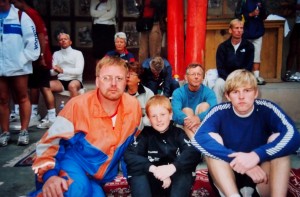
 

??????????????????????


After the ritual was over, the runners of the half-marathon, ten-kilometre and five-kilometre runs were driven to their respective starts. Steffen was to run a half marathon, while Emil was accompanied by a lady who, like him, was to run the five kilometres.
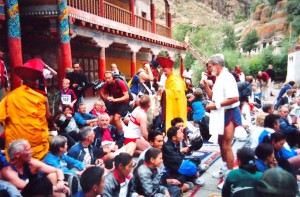
 

??????????????????????


The Great Tibetan Marathon


Of course, there’s no way you start a marathon in the Himalayas with a starting pistol. Instead, we were sent off at seven o’clock with great religious festivity at the prayer flag and to the tones of the long Tibetan horns which could be heard throughout the entire Indus Valley.
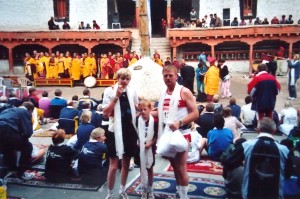
 

??????????????????????


The start was in front of the door of the impressive main building of the monastery, and we left the courtyard through a gateway. There were 12 steps down to this gateway, which had particularly tall doorsteps signifying the building’s importance.
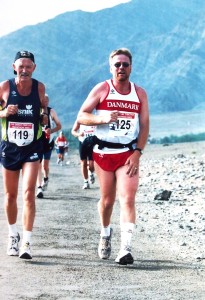
 

???????????????????????????????


After the gateway, the route continued first down 29 and then 15 steps before we had solid ground under our feet. From here, there was a short stretch to a small car park before we reached the tarmac road and could find the right rhythm.


There were distance signs marking every kilometre along the route, and on this occasion we were counting down. So the signs were also compatible with the other distances, as we gradually reached their running areas. Water and toilet facilities were available every five kilometres. We were in safe hands in every sense.


We ran downhill for the first five kilometres, but we were advised to take it easy, which we did.


To begin with, I accompanied Peter Fredberg, as I had done on so many occasions, and it was nice to have the company. Later in the run, I was accompanied by others, although I ran alone most of the time.


The Indus Valley


The first few kilometres took us down to the bottom of the huge Indus Valley, where we followed the foaming greenish-blue River Indus. From here, we ran through small villages, passing Buddhist monasteries in lonely majesty on steep mountain slopes.


From the road, we could see a Mani wall which stretched from the monastery all the way down to the Indus, making it one of the longest of its kind in Ladakh. Mani walls consist of stone tablets bearing Buddhist inscriptions.


Variation


The ground varied between tarmac, stone and gravel, and boggy fields. In some places, we really did run “off piste” and one stretch of road was in a particularly poor state of repair. It had once been tarmacked, but on parts of the road the surface had been washed away by melt water from the mountains.


As we gradually descended, the area changed character from the barren rocky desert of the mountains with its harsh, desolate scenery to more colourful areas with tall, slender poplars along the roadside providing much-needed shade.


During the run, we passed several monasteries and ran through several villages. Some of these were populated by Tibetans and others by Muslims. As in other places I have run we were given a wonderful reception by the local inhabitants, who were out in large numbers to follow the day’s event and to applaud us.


We passed by a huge prayer mill, soon followed by a large mosque, and after 30 kilometres we came to Chusod Yokilometera. This large Buddhist monastery is where descendants of Ladakh’s ancient royal family live. At this point, I began to have difficulty breathing. I don’t know whether it was the thin atmosphere that was to blame, or overheating.


Along the stretch where the ten-kilometre run began, we ran parallel with the river and the road led us through a mostly Tibetan village consisting of large stone houses built in the traditional style. Here we saw stupas, prayer flags and lots of small Mani walls. We could be in no doubt that we were running on the “roof of the world”.


We crossed the River Indus three times along the final stretch to the finish and a delightful cool breeze along the river made it all much easier.


The last five kilometres went very slowly for me. I ran through fields and marshy areas scattered with trees and grazing goats, sheep and cattle.


Celebs


As in previous marathons there were a couple of celebs with us, both from China 1999. Henrik Ørum, who had come to fame in Denmark through his participation in the TV programme the Robinson Expedition, was running his second marathon, while Bettina Aller was an experienced marathon runner. I ran alongside Bettina on this last stretch, where we ran with the same rhythm and had the energy to chat. We were eventually able to hear the traditional Ladakhi music and realised that we were approaching the finish at the Spituk monastery half a dozen or so kilometres outside Leh.
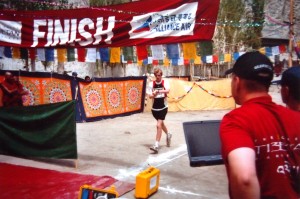
 

??????????????????????


Just before the finish, Bettina’s daughter came running towards her. Like her mother, Bettina’s daughter was wearing a number seven on her chest, and they ran together across the line while I deliberately held back a bit, so they could have their finishing photo together without me cluttering up the picture.


Completed


I crossed the line with a time of 5:49:16, and as well as the clapping, I was also welcomed by the monks’ drums and monotonous prayers. I was able to ascertain that the run had not been tougher than The Great Wall Marathon, even though somebody had claimed it would be. It had been tough, though. We had run from a height of 3,800 to 3,400 metres, and I could feel it. I was both tired and happy but made a brief, uneventful visit to the medical tent for fluid and ventilation.


Steffen had also experienced problems but came in with a good time of 2:37:35. He, too, had paid a visit to the medical tent for treatment. Emil also did well in his five-kilometre run with a time of 0:34:36.
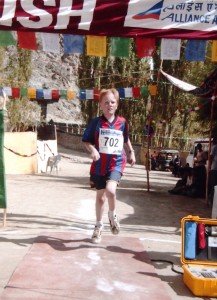
 

??????????????????????


The race had been dominated by Danes, but three Indians crossed the line in the first three places, the winner with a time of 2:59:43. There was sure to have been one person who was glad not to have lost 18 seconds.


A very special gesture


After I had regained my strength and had some food, Elisabeth told me that some young people had been standing at the finish waving a Danish flag and a banner with my name on it. Elisabeth had spoken to them, and they also wanted to meet me.


I walked over to the two young people, who turned out to be a young couple in their mid-20s. They had been in the area for a month or so and had now suddenly met a crowd of Danes. They had spoken, among others, to Peter Fredberg, who had told them about The Great Tibetan Marathon. The woman had run four marathons herself, and being keen on the sport they had decided to follow the run as spectators. They had also e-mailed the folks back home and told them that they would be watching The Great Tibetan Marathon. As fate would have it the woman, Trine Juncher Jensen, was the niece of Jens Juncher Jensen from Lejre. At that time, he was the chairman of Roskilde Swimming Club, of which I was the treasurer. Juncher had written back to Trine and Christian and asked them to send me his greetings. Trine and Christian had, therefore, made a banner with best wishes from Juncher and his family, and had sewn a large Danish flag, and the stood waving these all day as runners crossed the line. When I realised the connection, I was very moved and could feel tears forming in the corners of my eyes. They presented me the banner which I still have in my folder as a memento from that run.
 

???????????????????????????????


Christoffer from Albatros Travel had caught sight of Trine and Christian and sussed out their connection with the run. He asked if it was okay with me that they were invited to the gala dinner, because then the organising committee would bid them welcome as guests. Of course, I wanted them to join us at the gala dinner, and it was agreed that they would drive with us from our hotel that evening.


Completed with a broken arm


Ketty with a broken arm crossed the line in style, and for the second time I was so moved that I felt the tears welling forth. I really thought it was wonderful that only six days after her accident she had been able to run a marathon with her arm in plaster. I had, however, not been in doubt at any time that she had the will to do so, and I knew that she could complete the race. There was actually another lady who ran the race with her arm in plaster – iron ladies.


The First Minister of Ladakh, Kashmir and Jammu


Thomas came over to me at the finish to tell me that the First Minister of Ladakh, Kashmir and Jammu would be coming to make a speech and present medals to some of the race’s participants. Thomas had decided that the boys and I should be among these runners. He, therefore, asked me to be on standby when the minister arrived.


This assembly very nearly took place without Steffen’s participation. He was resting and was not feeling too good. Our nurse, Nini, had noticed Steffen was not in what she would call a satisfactory state of health and had, therefore, sent him to the medical tent to be examined. Fortunately he turned out to be reasonably well, but it was reassuring that Nini had been so observant and responsible.


A parody


The ministerial visit developed into a pure parody. First we had to wait for him for ages, which to me seemed highly disrespectful. Then it turned out that he was completely unprepared for the event. In his speech he welcomed us Danes as inhabitants of England, Germany and Holland. There had been no runners from any of these countries, and nor did he know what distances we had run.
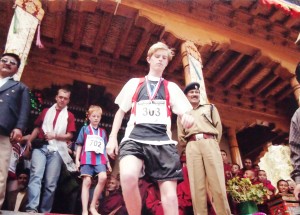
 

??????????????????????


Our brief encounter with the minister was completely superficial on his part. He was not in any way interested in us or our run. His agenda was simply to score some goodwill from his voters. We could well have done without the wait and the perfunctory scene. It was fun to talk about it afterwards but on that day we would rather have been back at our hotel.


Taking stock


The run had been feared for a number of reasons, not least the thin atmosphere. All the precautions that had been taken meant that the marathon had been run without much complication. The doctors concluded that four runners had dehydrated and needed to be put on a drip; seven were treated for grazes after falling, four had vomited and one diabetic had experienced blood sugar problems. All of them had recovered, however.


Rain, extremely rare in this area, had fallen the evening before the race and afforded the runners almost perfect conditions. The air was clean and clear, and the temperature stayed below 22°C in the shade.


Champagne, wine and beer


In the middle of the afternoon, we gathered on the lawn in front of the hotel, where champagne, wine and beer was served, and we had a good time. It was all well-deserved on top of the day’s achievements. Unfortunately, Steffen didn’t feel too well and didn’t take part. He had to stay in his room and rest all afternoon.


Emil and I went for a walk together into the town, and when we returned, I also felt unwell and very hot. I really had to force myself to pack my bags and get ready for the evening gala dinner. Both Steffen and I benefited from some fresh air later on.


Avenue of torches


At 7.30 p.m., the group met in the garden, where we were joined by Trine and Christian. We were then driven to the evening gala party.


It all began very ostentatiously when we arrived at an outdoor area which we entered through an avenue of flaming torches. It was actually a whole sea of torches and incredibly beautiful. We were then shown to mattresses in front of an open area on the lawn.


Festive folklore – while it lasted


Without any formal introduction, the folklore group we had already experienced twice began its performance. Between each number, a spokeswoman told us about the dances. It was all very splendid, but the problem was that it felt as though it would never end. We waited to something else to happen, but they obviously intended to be the main act of the day.


We sat and waited for a welcome speech by our organiser, which would also involve being given the signal to eat. But it didn’t happen simply because they didn’t get the chance. A member of the Albatros staff took the microphone and tried to start the official programme, but the initiative was ignored by the locals who were in control of the technology and organisation of the event.


Anarchy


People gradually began to get impatient, and as they did, they went and fetched beer and water. The food was being set out on tables, and there was no doubt that this was to have been just as grand as the beautiful avenue of torches we had previously walked through. But that’s not the way it was to be. On the contrary.


People from the local area who had nothing to do with the gala dinner for The Great Tibetan Marathon had quietly wandered into the area. They eventually formed the majority and started a gruesome fight over the delicious food. People were simply plundering the dishes before they had been laid out properly. It was really repulsive and uncivilised.


Corrupt minister


It turned out that the First Minister of Ladakh, Kashmir and Jammu and his followers had arrived without invitation or warning at the party. Apparently it was they who had invited the local population. The lengths to which people will go to score votes!


When the folklore group finally took a break, the spokeswoman made a speech. It wasn’t for the runners, though; it was for the Minister. We were completely ignored, and our gala party was usurped. Noisy disco music soon rang out of the loudspeakers, and the locals danced wildly as we looked on, gobsmacked. Our organisers attempted in vain to intervene and start the official programme of speeches and tributes to the runners. But it was no use, the battle had been lost. In the end, we crept off home and had a beer in the restaurant at the hotel before bedtime.


Farewell to Leh


You would think that, after a tough marathon and an attempt to hold a gala dinner, you might be allowed to sleep a little longer on the Sunday. But we were not. We were woken at four. Fortunately the lights were on that morning, so we could pack properly, eat breakfast and leave within an hour.


We flew out of Leh at 7.30 a.m. and were in Delhi an hour later. True to tradition, Elisabeth nearly didn’t make the flight because she had her all-important stick with her, and this had been considered a potential terror weapon.
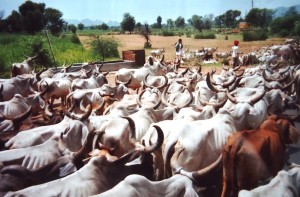
 

???????????????????????????????


From Delhi, we drove to Jaipur, which was a long trip with stops for lunch and other necessities. Fortunately, several of us managed to get some sleep on the bus journey.


Jaipur


In mid-afternoon, we arrived in Jaipur, also known as the “Pink City”, and set out on a sightseeing tour. Everywhere we went we were more or less assaulted by street sellers pedalling all kinds of things. For instance, we visited the palace in central Jaipur with its unique sampling of royal costumes, carpets and weapons.
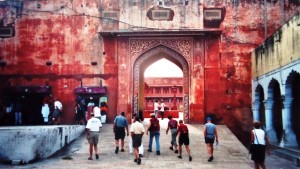
 

??????????????????????


That evening we checked in at the charming Rajputana Palace Sheraton Hotel, which without a doubt overshadowed all the other places we had stayed at on this trip. We had supper there before retiring just before midnight.


Palace of the Winds


Monday, we were allowed to sleep a little longer than usual and after breakfast we continued on our tour.


The first stop was the Palace of Winds, an architectural wonder, with its spectacular pyramid shaped facade and overhanging leaded windows, domes and spire.


Outside the palace, I was about to come to grief because I twisted my right ankle stepping onto the road from the very high pavement. I immediately envisaged a sprain like the one a year ago and yet another period without being able to run. But I was fortunate, and one of the irritating street sellers helped me up and subsequently made a trade out of it. My foot felt sore the next day or so, but fortunately that was all.


The back of an elephant


We continued on to the Amber Fort, which is located high on a hill, surrounded by a broad ring of jagged watchtowers and fortifications from which there is an outstanding view of the Moatha Lake. We were taken up to the fort on the back of elephants. Each elephant could carry four people, and it was a fun and unrivalled experience. But the elephant driver was no different from other Indians, and he asked for a tip even before we had stopped. Of course, he wasn’t satisfied with what we gave him, but we had given him the going rate according to our guide.


There was a lot to see at the fort, so we spent quite a long time there and were fortunate enough to be shown a room tourists are otherwise not allowed to see. It was a dark room with small mirrors all over the walls, so when you lit a candle the sight was fantastic.
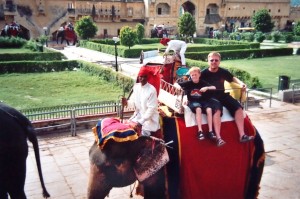
 

??????????????????????


Rug trade


Before lunch, we visited a rug factory, where we saw the incredible work that goes into making an oriental rug. This kind of rug involves months of work, so the price they charge is actually incredibly cheap. Having seen them being made we were offered rum and cola while we were presented with the finished products. Emil was given a small rug while the rest of us were shown rugs worth from hundreds of US dollars up to tens of thousands of dollars. The most expensive rugs were made of silk on silk.
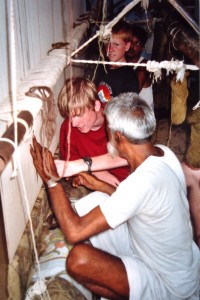
 

??????????????????????


I had not intended to buy a rug but ended up doing so all the same, and because several of us made purchases we were able to obtain a “family discount”.
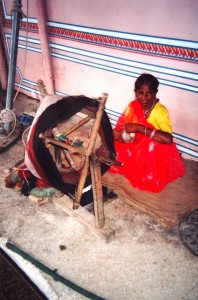
 

???????????????????????????????


An exhausting bus ride


We ate lunch at the hotel, which was a bit hard to reach due to traffic chaos caused by a demonstration in the town. Afterwards, we gathered our luggage and were now ready to leave Jaipur.


Our next stop before we left town was at the fantastic Jantar Mantar Observatory, where they had been able to interpret the position and movement of the planets since ancient times.
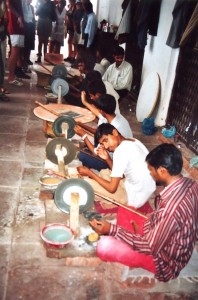
 

??????????????????????


We then set off on a long and rather exhausting trip to Agra. We drove down bumpy roads full of traffic and through small villages. Thousands of cyclists were riding along the dark roads, and none of them had lights on. I sat there fantasising about the fortune I could make selling bike lamps in a place like this. But that would likely end in disappointment as I would be unlikely to be able to sell very many of them.


As we approached Agra, one of the windows in the bus was smashed, which put paid to the efficiency of the bus’s air conditioning system. It was a good job this happened late in the day. I never found out why the window broke.


Bag-in-the-box wine


We arrived at the Hotel Mughal Sheraton at ten in the evening, and it was of the same standard we had experienced in Jaipur. After being shown to our rooms, we went to eat supper in the restaurant.


Later on, some of us gathered in one of the rooms to empty a bag-in-the-box wine bought at Copenhagen Airport. We went to bed around midnight.


Taj Mahal


During our final night in India, we were allowed to sleep a little later and after breakfast we set off on a morning excursion. Fortunately, the broken window in the bus had been replaced by a sheet of tin.


First stop was the area’s absolute prime attraction, the Taj Mahal. A very brief version of the story of the Taj Mahal is the sad love story of the Mughal Emperor, Shah Jahan, who in the mid-17th century lost his beloved favourite wife as she was giving birth to their fourteenth child. Shah Jahan decided that she should be buried in a mausoleum of timeless beauty, and this was to become the Taj Mahal, which is absolutely worth a visit.
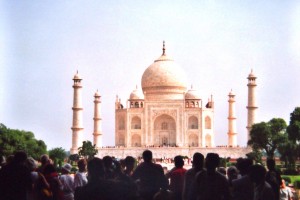
 

??????????????????????


After the Taj Mahal, we visited the Red Fort. The Red Fort in Delhi we had visited earlier was a copy of the one in Agra, so naturally there were many similarities.
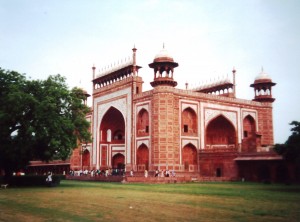
 

??????????????????????


From a balcony in delicately carved marble in the Red Fort, there was a view over the River Yamuna to the Taj Mahal. Shah Jahan had enjoyed the same view in his later years, during which he was put under house arrest by his power hungry son Auranbzeb, who had killed his brother and seized power from his father.


Yet another long drive


After lunch at the hotel, our first stop was at a marble factory where we of course were able to buy their products, but also many other things.


Then it was time for another long drive, this time to Delhi. During the evening, we spent some time in Delhi’s wealthy quarter, where we saw buildings and roads that really bore the stamp of lots of money. Although India seems poor, we were told that an astronomical number of dollar millionaires lives there. But with a population of more than a billion, the rich constitute an infinitesimally small proportion.


At 9 p.m., we arrived at the Radisson Hotel, where we were only to eat supper. Here the buffet offered everything one could wish for. It was really delicious.


On the way to the airport, we stopped at a red light, and really got to see the contrast. Someone knocked on the bus, and I looked out of the window. Down below I saw a little girl about six years old with her probably two-year-old naked sister hanging from her arm. She had her free hand stretched towards me to ask for money. Eleven in the evening in the middle of a busy road, and there stood two kids begging for money. That was not pleasant, and it makes you feel awful that there’s nothing you can do about the fact that life is like this in so many parts of the world.


Once in a lifetime run


It was now Wednesday 20th August, and our plane left Delhi at two in the morning local time. After transit in Vienna, we were right on schedule in Copenhagen in the morning. Two wonderful active weeks had come to an end, during which time I had participated in a very special run and together with the boys had enjoyed a fantastic, once-in-a-lifetime experience.


The Great Tibetan Marathon was a one-off for me. The run was not repeated the following year, as had otherwise been advertised, although it was put on again later. It was run for the last time in 2009 but on that occasion no Danes took part, and nor did very many other Europeans, for that matter.


TV coverage


As with many other Adventure Marathon events, the Danish Broadcasting Corporation, DR, was on the spot. Journalists Helle Lyster and Peter Wath followed the fantastic run, and their report resulted in the broadcast “Marathon on the Roof of the World”, which aired several times that December on DR’s channels as part of an “Out in nature” series broadcast.


Buy the book here.
 

Engelsk forside

Swissalpine Marathon: Grossartiges Alpenpanorama bei der Keschhuette

Swiss Alpine Marathon 2003

August 5 2015

Time for revenge


I had long since recovered from my foot injury from the Swiss Alpine Marathon in 2002. On the other hand, I had not got over the fact that I didn’t complete the planned 78 kilometres across the Alps. At the prize presentation ceremony in 2002, I had told the boys that we would return the following year, and we did.


From West to East


The 2002 trip involved some wonderful experiences for all three of us, and a sort of repeat lay ahead of us although we wanted to see something new this time. In 2002, we had travelled around Western Europe and visited three major football stadiums, but now we decided to visit Eastern Europe. This time without football stadiums, though, since the possibilities were not quite the same.


Poland – a different world


On Monday 21st July, we set off on the camping holiday of the year. We took the morning ferry from Gedser in south-eastern Denmark to Rostock. From here we drove through Germany, past Berlin and Cottbus to Poland. As soon as we crossed the border, the GPS system was no longer of any use to us. There were no digital maps of Eastern Europe and from here on we had to rely on old-fashioned road maps.


We were soon to be reminded that we had arrived to a completely different part of the world than the one we were used to. By the roadside stood child beggars, their eyes pleading us to stop, and in some places there were prostitutes waiting for drive-by customers.


We had originally intended to drive to Warsaw, but we discovered that we would not reach Switzerland on time if we were to spend whole days visiting cities. So we drove to Wroclaw instead and then continued on to the Czech border where we drove past a campsite at the town of Lewin. Since we had no idea when another opportunity would turn up, we decided to spend the night there. It was a small cosy campsite without many facilities. After putting up our tent, we found some rather boring food at the site cafeteria and then turned in.


??????????????????????


Passing through


I awoke on the Tuesday morning to the sound of rain drumming on the roof of the tent. Ugh! Oh well, so be it. We were on a camping holiday after all, with everything that goes with this. We packed up and headed for the Czech border just a few kilometres away.


We spent the day in the car, bypassing Brno and heading for Slovakia, where we also bypassed the capital Bratislava and continued on to Hungary. Here we had planned to spend the next night. We drove towards Budapest for a few hours, and a good ten kilometres from the city we found a campsite, where we pitched our tent.


Sightseeing with obstacles in Budapest


It turned out to be a lovely campsite with excellent facilities. We put up our tent and took the bus into the city. Steffen was our guide in Budapest, and we saw the streets and shops he had visited with his school class on a trip the previous autumn. We also dropped by at their hotel and ate a good meal at their “favourite” restaurant. After our meal, we took the bus home, but then things went horribly wrong. We didn’t get off in time and had to walk several circuits asking the way until we gave up and took a taxi back to the campsite.


A day of rough weather


We got up early on Wednesday, had breakfast, packed up our tent and got a move on. That was a lucky choice because it started to rain shortly after we left. We were now on our way out of Hungary headed for Croatia, and when we got there, it started raining rather heavily. We drove past Zagreb at around lunchtime and continued into Slovenia in the direction of the capital Ljubljana, where there were some terrific showers.


We only got to drive through Croatia and Slovenia before entering Italy during the afternoon. Here, too, we were met by periodic wet weather, which made driving quite unpleasant.


Traffic accident


We had a most unpleasant experience in the vicinity of Venice, where we arrived at a row of six to eight toll booths on the motorway. We stopped at one of the innermost booths to the left. We were to pay with cash and had, therefore, come to a complete standstill. On payment, the boom went up and we drove forward into a bay that led straight ahead onto the three-lane motorway. But after a few metres, we were hit from the right by a lorry and trailer which came in from a bay to the right of us. The driver was also joining the three-lane motorway, so he had to feed in, but he hadn’t checked to see if anything else was coming. Apparently, he had neither seen nor heard that he had hit us and just kept on driving.


We drew alongside him and made signs, but his only reaction was to make a derisive gesture. He made no sign of intending to stop, and I drove in front of him to get him to pull over by switching on my warning lights and sticking my hand out of the window to point to the right. But the driver of the lorry didn’t seem to see me. On the contrary, he slowed down to put some distance between us. It was my impression that he hoped that we would get separated, which would put an end to the matter. But I also slowed down and stayed there right in front of him while I called the Italian police – a challenge in itself because they only spoke Italian.


After a quarter of an hour, I finally succeeded in getting the lorry driver to pull into a service area. Here I got the chance to see the damage to my car. The door mirror had been smashed; the front door and bumper had been scratched, the headlamp was ruined and the bonnet dented. The driver only spoke Italian, so I had to explain myself in sign language and by gesticulating. In many Italian words and gesticulations he described an entirely different sequence of events.


Fortunately, my phone call must have made sense, because the police arrived on the scene shortly afterwards. Unfortunately they, too, only spoke Italian. A male officer was in charge of the paperwork while his female colleague surveyed the damage and spoke to the lorry driver and me. As I said, the officers only spoke Italian, although the woman did have a few words of English and German. By means of limited foreign language, gesticulation and drawings I managed to carry on a reasonable “conversation” with her. She got my explanation and, of course, that of the other driver. You didn’t need language skills to understand that he was proclaiming pure innocence.


But I was in no doubt that the female officer had got the gist of what happened, and to my advantage. She could ascertain that I had brought my car to a complete standstill in order to pay, while the lorry, with its automatic payment system, had driven through at some speed and pulled over into another lane without checking properly.


All this took about an hour, after which we were able to continue our journey. I had quite a battle with the insurance company later although the case did end in my favour.


New obstacles


In the evening, we reached Verona, but because of road works it was very difficult to find our way around. By the time we had finally found a campsite everything was taken up, and we had to carry on. We didn’t find another campsite until nine in the evening, so we put the tent up in the dark, had a delicious piece of pizza each in the campsite restaurant and hit the sack in a tent hot as an oven.


Change of plan


We woke up on Thursday morning to the sound of thunder and a tremendous shower. We stayed in the tent until it stopped raining, and we could eat breakfast outside. The air had been cleansed, so we felt really comfortable.


But just as we were about to pack up the tent, it started raining again, this time beating all records. Dressed in rain jackets, we packed up the tent as best we could. The tent was thoroughly soaked and covered in soil and grass, so it had to be packed, along with several other things, in plastic bags.


The idea had been that we would continue to Como, but due to the weather we decided not to camp one more night and to try and drive straight to Davos. I called the hotel and asked if we could spend an extra night and that was no problem.


Back to civilisation


The drive to Switzerland went without a hitch although it did rain quite heavily from time to time. We eventually got up into the Alps away from the motorway and everything slowed down.


Occasionally it was quite a challenge to drive in the Alps without a right door mirror, so in the end we bought a hand mirror in a general store along with some gaffer tape. We then attached our new investment to the miserable remnants of what had once been a door mirror.


??????????????????????


We arrived at the border in the late afternoon, and it began to rain again quite heavily, which slowed us down a bit. However, we finally arrived in Davos in one piece and at the Hotel Beau Sejour, where we were welcomed by the receptionist who remembered us from the previous year. She had also reserved the same good room for us.


??????????????????????


We lugged everything up to the room, which soon became so incredibly untidy. We rinsed off the tent under the shower and hung it up in the bathroom. The groundsheet and our towels hung on the cupboard doors. Rainwear had been rinsed and hung up over the shower curtain rail. Other bits of wet clothing were hung up all over the place, and we had laid our sleeping mats and sleeping bags on the floor to dry. It really was a mess, but we were glad to be in the dry with beds, a shower and decent sanitary arrangements.


A relaxed day with good weather


This gave us an extra half day in Davos, and we really appreciated the opportunity to relax and just enjoy life.


We now hung the tent over the balcony in the sunshine, and it was dry by evening. Before going to bed we shrugged off all the grass and dirt. We also got the rest more or less under control, and our room looked like it was supposed to.


During the day, we went to the Congress Centre to pick up my start number and sign Emil up for the mini-marathon. We then just spent the day wandering round, eating and playing computer games.


???????????????????????????????


At 5 p.m., we went down to the start, where Emil was to run in the children’s mini-marathon. He did very well, running 2.1 kilometres in ten minutes.


Shortly after the traditional pasta party at the town’s ice rink, we went home to relax and charge up our batteries for the big race of the following day.


????????


A morning fright


On Saturday morning 26th July, we got up early because the race was to begin at eight. We ate breakfast at the hotel, after which I got changed for the run. But on the way to the start, I had a rather nasty experience. There was a sudden click in the back of my left knee, and I began to limp. I immediately thought back to 2002 when I twisted my ankle and wondered whether I would be able to start at all this year. Fortunately, the pain began to disappear and was gone all together while I was waiting at the start. I didn’t notice it at all after that.


????????


A relief to pass the 30-kilometre mark


It was a great pleasure for me when the starting gun went. I really believed that I would complete the run this time.


????????


The first few kilometres took us through the town of Davos. After this, the route continued through hilly terrain uphill as well as down, although mostly down to begin with. When I reached the wooded area around the 18-kilometre mark where things went wrong in 2002, there was a lot running around in my head; and when I reached the first aid post where I received my first treatment in 2002, a shudder went through me. But passing the 30-kilometre mark at Filisur, where I had been forced to pull out the previous year was a huge relief. I waved down to the first aid post as I ran on. From this point on, everything would be a Swiss Alpine Marathon course record for me.


????????


Optimism despite trials and tribulations


Now things seemed to be becoming a bit of an uphill struggle, or rather I thought they were. As it turned out they were set to get much worse. After around 32 kilometres, I experienced my first crisis. I had to stop running and start walking, and I had great difficulty envisaging another 46 kilometres ahead of me.


????????????????????


At around 40 kilometres, I came to Bergün, where the marathon finished and those of us continuing on the 78-kilometre run still had just as far to go yet. Here I met a group of Danes cheering with red-and-white flags in their hands. It warmed my heart, and I told them how nice it was to meet them. It had taken me around four and a half hours to get this far, so I had around seven and a half hours in which to manage the remaining 38 kilometres. That ought to be enough – at least in theory. But I was to learn.


????????


Mountaineering


The next many hours had nothing to do with running. It was mountaineering or almost a fight for survival. Now the route took us along narrow paths of dirt and loose stones, and it felt almost as though they were vertical, although it was unlikely to have been that bad. Things were not made much better by the fact that it was a sunny day and therefore frightfully hot. At one of the water stations, I drank nine paper cups of fluid. I had water, energy drink, Coca-Cola, ice tea, bouillon and hot tea. In addition to that, I was given glucose tablets, bananas and various types of energy bars.


Swissalpine Marathon: Grossartiges Alpenpanorama bei der Keschhuette


The next five kilometres took an awful long time. It seemed like an eternity and felt as though it would never end. At around 53 kilometres, I reached the top of the alp. I thought it would be downhill from there, which it was, but it was NEVER a “bathing holiday”.


????????


Under pressure of time


Every fifth kilometre was signposted and after I had passed the 50-kilometre post a long time passed before the next one. I began to be convinced that I had missed one of the signs, or that it had disappeared. When I finally saw a post in the distance, I was glad and relieved because I was convinced that it must be 60 kilometres. It was like having a bucket of cold water over my head when I got there to see that I had only come 55 kilometres.


????????


From then on until around 64 kilometres, I went through a mountain pass. I had to walk most of the way although there were some short stretches where I could trot. I began to feel a bit stressed by the pressure of time and was calculating like mad all the time to try and work out if I could get there in time at 8 p.m. I ran whenever I could when I had the energy to do so.


????????????????????


Dispensation – no thank-you


At one stage I met a Danish runner, and we started chatting. He was not worried and assured me that the organisers would not take the 12-hour time limit too seriously and that our efforts would be acknowledged even if it took us a little longer. But this was absolutely no consolation to me. Like previously on Bornholm, I had no intention of finishing on the basis of dispensation from the rules. His words just made me more stubborn and intent on crossing the line in time, so I ran on leaving him behind.


????????????????????


The final ordeal


After the mountain pass, came a three-kilometre stretch down the mountainside. Here we were running on perilous rolling stones, so we had to be careful all the time. And that took time too. At one stage, the route crossed a stream, and I managed to dip my left foot in the water, which rather reminded me of China in 2000 when I ended up with blisters. It wasn’t as blisteringly hot here, however, and nothing happened. The worst trials were over by the time I reached 64 kilometres but because I didn’t have much energy left, this was no pleasure run.


???????????????????????????????


The next 11 kilometres took us along narrow field paths and mainly downhill. I still felt stressed by the 12-hour time limit but had begun to believe that I could succeed if I just kept going.


Calm down


Imagine the joy as I passed the 75-kilometre signpost which was rapidly followed by a tarmac road. The pleasure was brief, however. After a few hundred metres, we turned off down a forest path again, which continued uphill and downhill. Because it wasn’t quite so light anymore you had to use valuable resources to orient yourself.


????????


When I left the forest path, there was just over a kilometre left but it was all tarmac. I was now able to hear the loudspeakers at the finish and met spectators along the road, who welcomed me with cheering. I was very touched by the situation. It was now clear to me that I would cross the line within the time limit, and the cheering gave me goose bumps. I think I had tears in my eyes all throughout the final kilometre. I kept on running and saying out aloud: “I did it, dammit. I did it, dammit.”


A fantastic feeling


About a hundred metres before the entrance to the stadium stood a Dane with a Danish flag rooting for me. “Somebody’s been waiting for you for a long time,” he said and gave me his flag. I now ran the last 250 metres into the stadium with the Danish flag in my right hand, giving high-five to the kids standing in the inner circle reaching out their hands to me. It was very moving.


??????????????????????


I crossed the line with a time of 11:49, that is to say just 11 minutes before the deadline. Here I was met by Steffen and Emil, who were taking photos and video of me.


Experience of a lifetime


It was indescribable to finish this race, something I had failed to do the year before and which had been an ordeal. Although the run had pushed me to the extreme, it had also been a tremendous experience. It is almost impossible to describe the experiences I had been through and the vistas I had seen. Here there were impressive mountain ranges, ski lifts, streams and rivers, cows with bells around their necks and much more. It is naturally difficult to say which of my running experiences have been the most extreme, but this certainly belonged to the toughest of them all – if not the toughest.


The missing medal


I received a smashing “finisher” T-shirt but no medal. The 78-kilometre runners got a T-shirt while all the other distances got medals. I was rather disappointed by this, although I did later manage to secure a marathon medal, which for me has become the symbol of this fantastic run.


Totally shattered


Getting back to the hotel took a long time. Having to use my legs again that day was almost inhuman. But there was no way round it. The plan was that we would later walk to the ice rink to attend the presentation ceremony. As it turned out I simply didn’t have the energy.


A bath about which nothing should be written


Back in the room, I lay on the bed with a beer and had no energy to do anything but lie down. But I had to take a bath and apply cream to my chafed thighs and armpits, which were hurting like mad. Emil filled the bath and helped me into it because I could barely move my arms and legs. It wasn’t a very thorough bath because I was so thoroughly worn out. I managed to do what I had to, but as I got up and pulled out the plug I felt really awful and was sick into the bathwater. Steffen came and helped me up whilst Emil stood there crying. But I managed to dry myself off, after which the boys help me to bed where I immediately fell asleep.


A restless night


I had a very unrestful night. I dreamt a lot, woke up several times and talked a lot in my sleep. In fact, I talked so much in my sleep that I could remember some of what I said, and there were many swear words.


Once-in-a-lifetime


I got up at eight in the morning, and the boys woke up shortly afterwards. We packed and had breakfast at the hotel. We left just after 10 a.m., and I said to the receptionist that we wouldn’t be back next year because this had been a “once-in-a-lifetime” experience.


Detour for a restaurant that was closed


Steffen wanted to eat at a special Indian restaurant in Luxembourg we had visited in 2001, so we set off for the principality, where we arrived around 5.30 p.m. It was chucking it down with rain at the time, and as we drove past the hotel where we had spent the night in 2001, we decided to stay the night there rather than find a campsite, put up a tent and pack it again in a wet state on Monday morning.


We got a double room where all three of us were to sleep in the same bed. There was not an awful lot of space, but that was okay.

Having found our room and taken a shower, we went out to eat at the Indian restaurant. But as fate would have it, it was closed on Sundays. However, we found another perfectly good restaurant where we had a good meal before returning to our hotel and our shared double bed.


A quiet night


I had spent a restless night last night in Davos, but in Luxembourg I got my beauty sleep and did not wake up until the morning.


The final stretch


Monday morning, we got ready for the final stretch home. The journey was problem-free although Steffen a couple of times did have to adjust the temporary mirror I had taped onto the right side of the car.


We had passed through Germany by late afternoon and arrived at the ferry terminal in Puttgarden. We weren’t able to sail until 5.15 p.m., but had no trouble passing the time. The sailing takes three quarters of an hour, so we did a bit of shopping and before we knew it we had arrived in Rødby. We filled up with petrol otherwise we would not have made it all the way home.


The last part of the journey, through Denmark, went without a hitch, and we were home by eight. We had had a wonderful trip, but were glad to be back. We had driven 3,940 kilometres in a week. And the three of us had shared yet another once-in-a-lifetime experience.


Buy the book here.
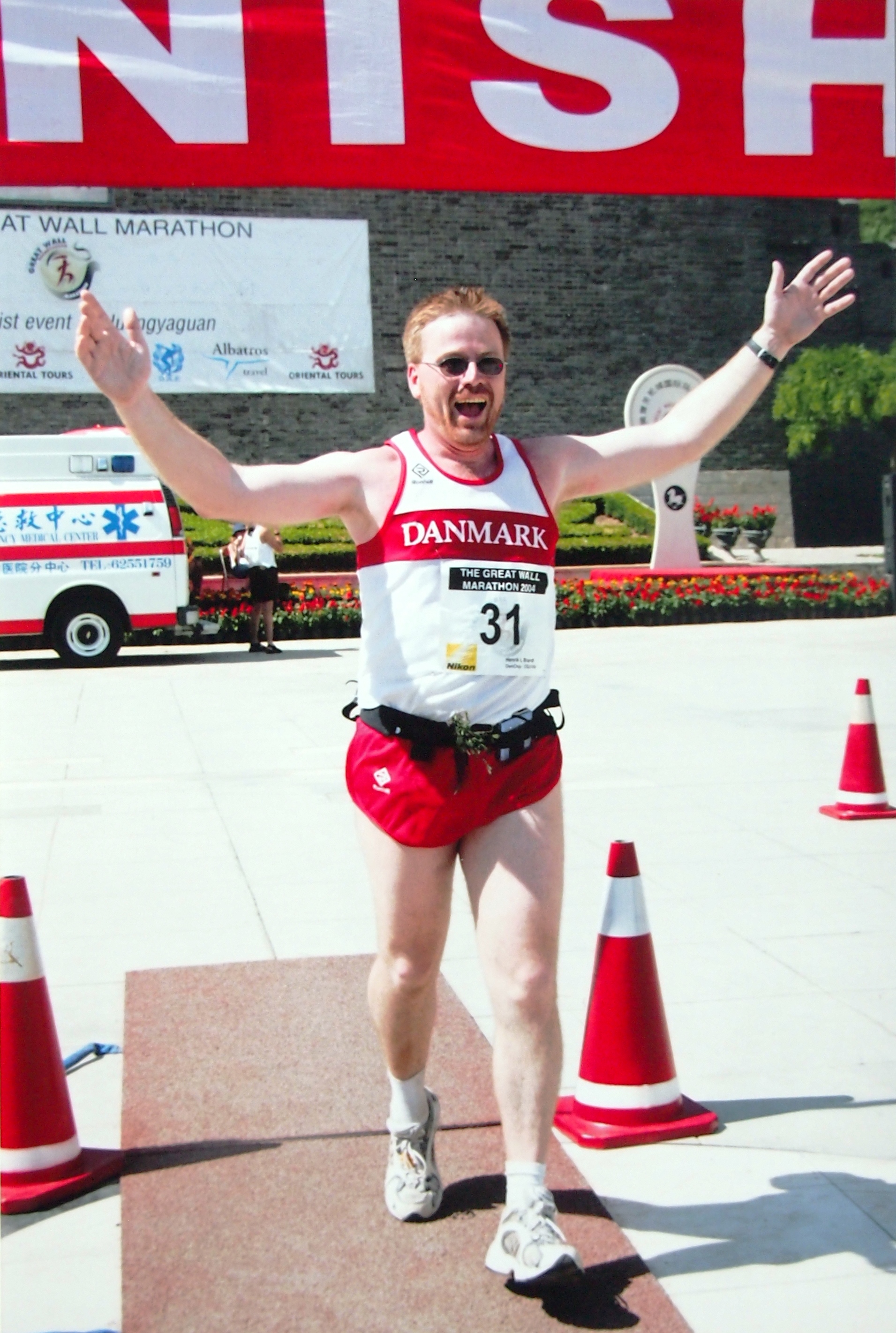
 

Engelsk forside