


Beneath the roof of the world
A year had passed with no new runs from Adventure Marathon, but now something happened. The event had already been presented in 2002 and sounded just as exciting as any of its predecessors.
After almost six months of preparations, a new marathon event was presented which would include unique cultural experiences on the “roof of the world”. The Great Tibetan Marathon would be run in thin air at 3,400-3,800 metres above sea level in the fascinating colourful Tibetan world high up in the breathlessly awe-inspiring Himalaya mountain chain.
The marathon would be run in the former Tibetan kingdom of Ladakh, which is now a politically integrated part of North-western India. From Ladakh, the gentle teachings of the Buddha spread to other parts of Tibet. Tibetan Buddhism is more characteristic of western Tibet in India and Ladakh than it is of the eastern Tibet in China, where monasteries and holy places were destroyed or closed, and thousands of Tibetans were killed during the Chinese Cultural Revolution.
Infrastructure problems
Organising a run which requires several hundred people being flown from Copenhagen to the Tibetan plateau turned out to be somewhat more of a task than expected. The airlines were reticent, to say the least, when it came to confirming the necessary seats at an anywhere near reasonable price. Hotels and transport also presented considerable challenges. Because there were no buses in the area, more than 100 4x4s would be needed on the day of the run.
Consideration also had to be taken off a host of other things, such as a team of chefs to ensure food quality, and a medical team which needed to bring with it everything from bottles of oxygen to resuscitation equipment. In addition to this was the timekeeping and radio communication team, which had to bring along 100 walkie-talkies, satellite phones and the timekeeping equipment itself. Furthermore, piles of other things had to be transported from the Indian lowlands, for instance 15,000 bottles of water.
It had also been incredibly important to establish good relations with a number of monasteries and the monks in the area as they would be involved in the event as active participants in The Great Tibetan Marathon. This had not been easy because the religion and the monasteries on the plateau are very much alive and fully active and absolutely not something perpetuated for the sake of the tourist. There was a lot to be negotiated for everything to fall into place. But Albatros Travel did a marvellous job, as always.
Limited number of participants
Albatros had several travel packages on offer. There would be only 280 travellers from Denmark, and they were fully aware that there wouldn’t be enough places for everyone who was interested. A number of us had paid a deposit up front to make sure of a seat.
We had paid a deposit for six passengers. Apart from the boys and me, my stepmother Elisabeth, my sister and my niece would be joining us on the trip.
Information meeting before departure
It was nothing new for me to attend an information meeting prior to a marathon. I had been to a few at Yin and Yang Square in China. But the information meeting for this marathon was held in Denmark almost two months before the race itself.
We were invited to attend an information meeting on Thursday 16th June in the conference room of the Berlingske newspaper group in Copenhagen and a similar meeting was held the following day in Aarhus. At the meeting, we were told what to expect in Ladakh. They also went over insurance issues and made suggestions as to what we ought to take along. Particularly important was the knowledge that we might suffer altitude sickness, and we were informed how to avoid it. Of course there was plenty of opportunity to ask questions about the trip, and the marathon.
Also in good time, we received written information from the Travel Clinic about altitude sickness, diarrhoea and dengue fever, as well as treatments and recommended preventative medicine. Having learnt from previous experience, the boys and I visited the Travel Clinic to get the necessary vaccinations.
Departure
The departure date was Wednesday 6th August, just a week after we returned home from the Swiss Alpine Marathon. However, we were fully prepared to travel, and my legs felt fine. I had had no reason to do much training as I was already in good shape.
We were picked up by a maxi taxi at 5.45 a.m. by our three fellow travellers and drove to Copenhagen Airport. Here we met group 6, which consisted of 22 travellers and one guide. We knew quite a few of them from previous marathon trips.
First stop was the Austrian capital Vienna, where we spent a few hours in transit. We then flew for seven hours to Delhi. We spent the time eating, sleeping and playing board games.
On arrival in Delhi, we had to put our clocks forward three and a half hours, which meant it was now midnight. They checked our travel documents very thoroughly, so getting through customs took quite a long time. We didn’t have to wait long for our baggage, however.
Delhi
We spent the night in the Indian capital at the Park Hotel, which had five stars, albeit by Indian standards, which meant that it was satisfactory but not luxurious.
Thursday’s schedule began around midday, when we met the rest of the group and had lunch in the hotel restaurant. It was a help yourself buffet with a variety of hot dishes, rice, vegetables and different types of meat. Some of it was pretty hot, so it helped provoke your natural thirst.
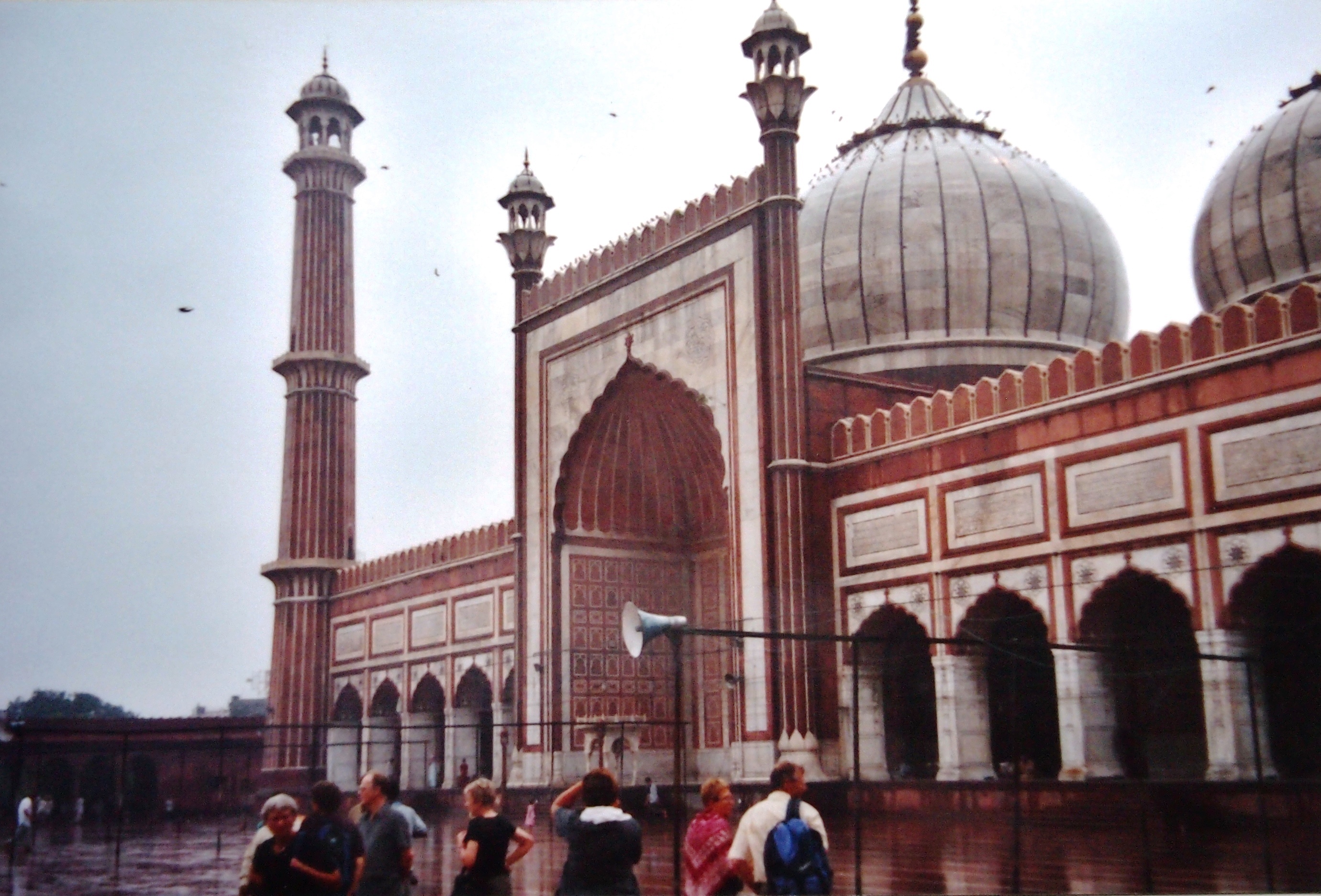
After lunch, it was time for an afternoon excursion, and we were driven by bus through the streets of Delhi. The first stop was at the impressive Jama mosque, built of red sandstone and white marble. We spent half an hour or so here studying the monument. We arrived in a heavy monsoon downpour, but it soon stopped.
After that, we were taken on a round trip through the streets of Delhi in bicycle rickshaws. This really gave us an impression of everyday living in this huge city. The streets thronged with bicycles and scooters, but practically no cars. It all seemed like total chaos to us, but it probably isn’t. The city was teeming with life and street sellers, stalls, thousands of people, a myriad of smells and visual impressions.
During the last two minutes of our ride, our driver started huffing and puffing as though tormented. There had been no sign of this earlier, but we soon got an explanation. He naturally wanted to bring to our attention the tremendous effort he had made, so that we would give him an extra-large tip. Our guide had paid for the trip and given us explicit instructions as to how big a tip to give. The driver did not seem satisfied with this, but we suspected it was a play to the gallery. We just followed the guide’s instructions and left him to mope.
After this experience, we drove past the place where the great politician and spiritual leader Mahatma Gandhi had been cremated. We made a short stop here before driving back to the hotel. We also made a brief stop at India Gate, a monument to fallen soldiers.
We spent the evening at the hotel, eating supper and getting some more information about Friday’s schedule before going to bed early.
Thorough security check
Our last night in Delhi was very short. We were woken at two in the morning, got dressed and left our suitcases outside the door before going down for breakfast.
At three, the bus drove us to the domestic airport where we underwent an extremely thorough security check. First we found out that nobody was allowed into the domestic departure hall without a ticket. Our guide showed the guard 23 tickets, but for some reason a stranger entered the area with us. So after we had got through, the guard came over to me and asked me for my ticket. I had to call on our guide, who was told that 24 people had come through. The stranger was pointed out and asked to show his ticket.
We were not allowed to carry batteries in our hand luggage. This meant that cameras, video cameras and mobile phones had to be packed into our suitcases, and the same applied to the battery of our computer. Our suitcases were scanned and sealed. Our hand luggage was also scanned and checked by hand. Each piece of luggage was given a stamped label, and because my niece had forgotten hers she had to go back to the check-in desk.
A very special flight
Our flight departed just after five, and we just managed to get a meal inside us before landing just over an hour later in Leh, the small capital of Ladakh on the Tibetan plateau in the Himalayas. This was a tremendous experience for people with window seats. The flat Indian plains were replaced by the deep valleys and white peaks of the Himalayas, which in turn were replaced by high desert plains. We were floating only a thousand metres above some of the highest mountains in the world. Landing in the narrow Indus Valley took us through mountain passes before we landed in the almost lunar-like landscape around the great River Indus.
We were now 3,520 metres above sea level, and I could feel it. I had to breathe faster than normal, and I felt dizzy. The temperature had also dropped in comparison with Delhi. Here it was cooler and altogether more pleasant.
We arrived in Leh just less than a week before the run because of the experiences that awaited us, but just as much because it was vital for us to get acclimatised to the thin air before setting out on a marathon run.
Relaxed afternoon
Having received our baggage, we were driven in 4x4s five kilometres south westward to Leh and the hotel Lha-Ri-Mo. We had to wait here for a few hours while our rooms were made ready and during that time we were offered coffee and tea.
The boys and I were thoroughly worn out after that short night. At the same time, we had been given strict instructions not to overdo things so as to avoid altitude sickness in the thin atmosphere. We lay down to sleep immediately, which was not difficult.
We got up fairly late in the afternoon and got lunch. Then we watched a film together on the computer. This was something of a challenge because the power in Leh was in the habit of coming and going, which meant we had to run on batteries at times.
Tibetan folklore
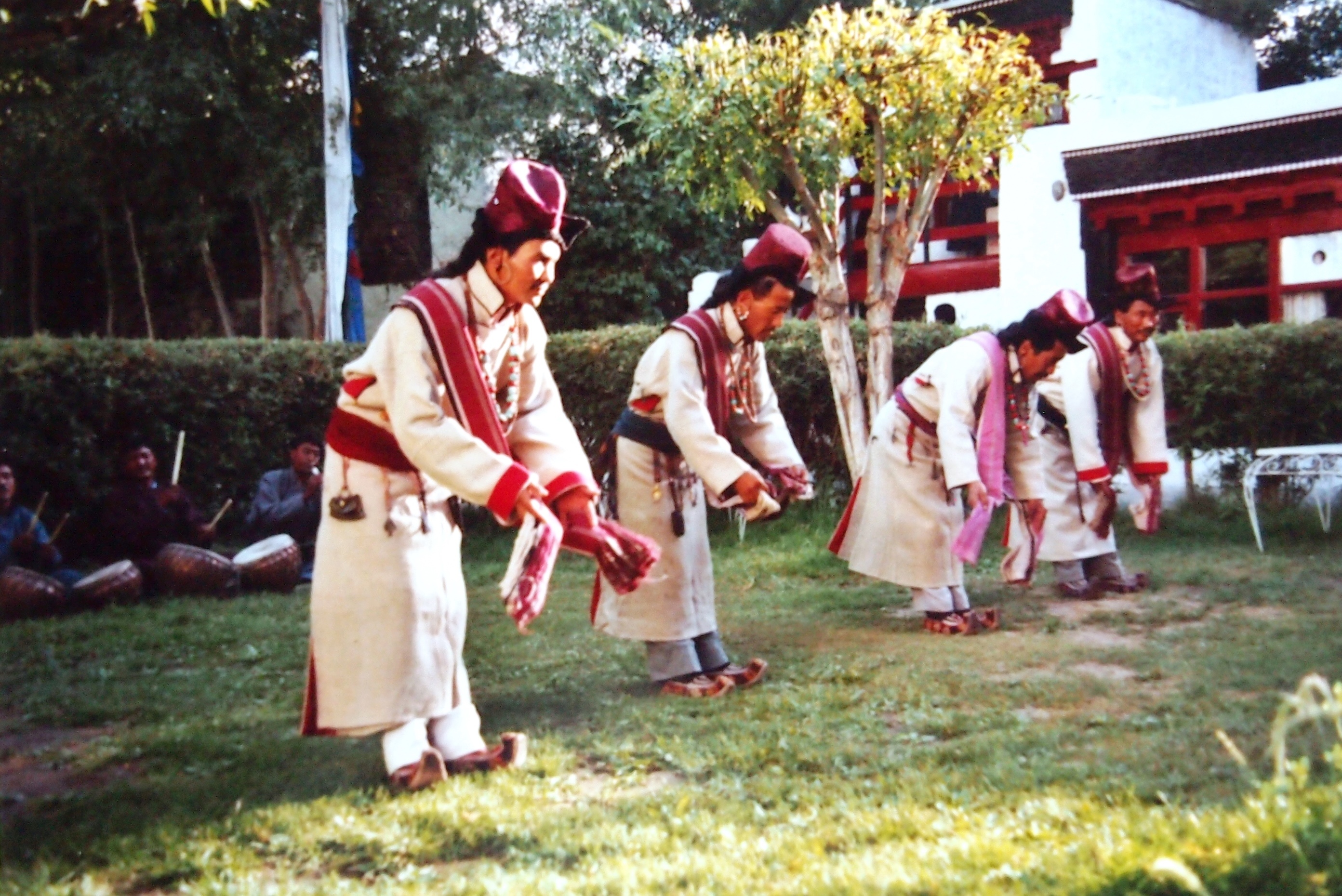
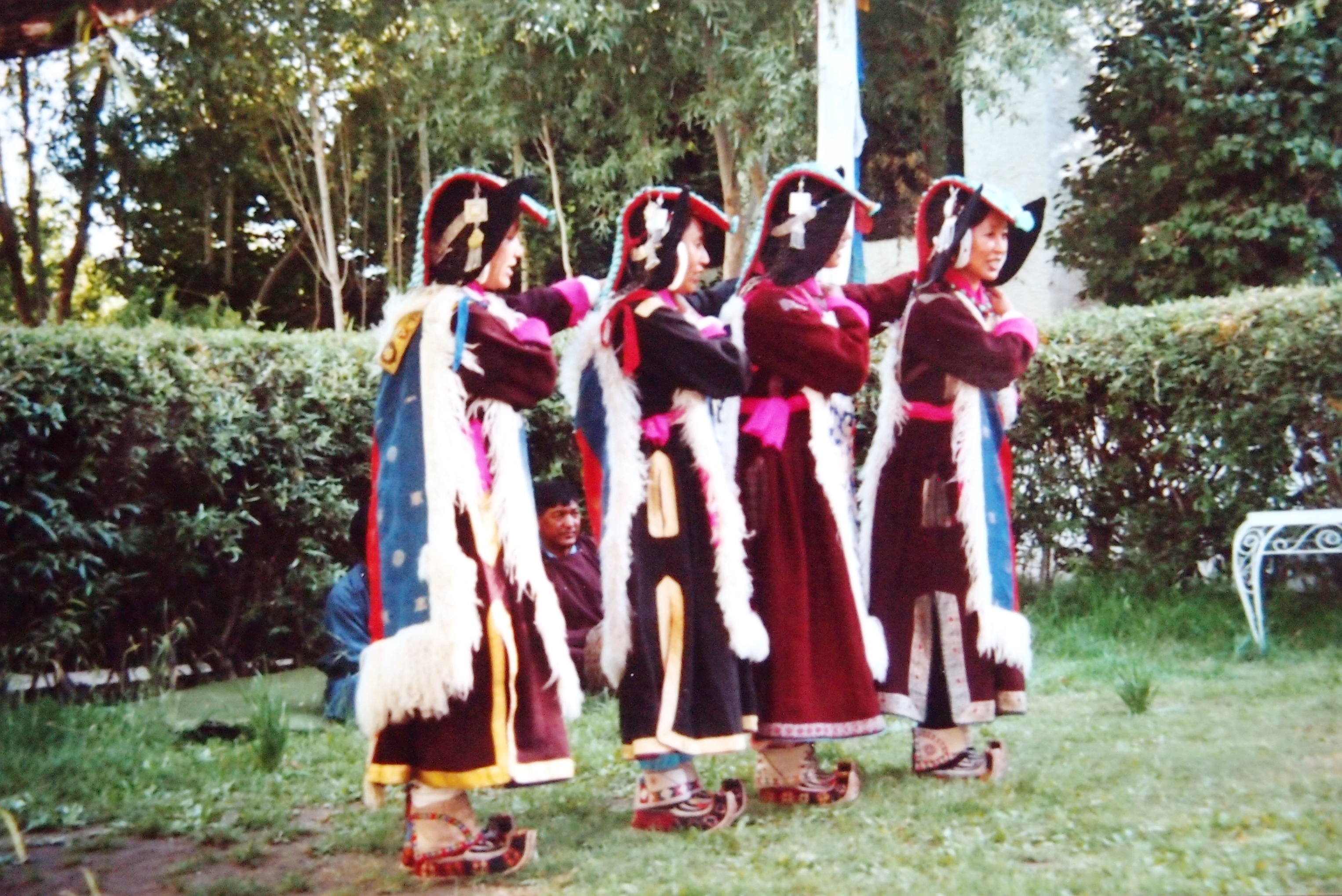
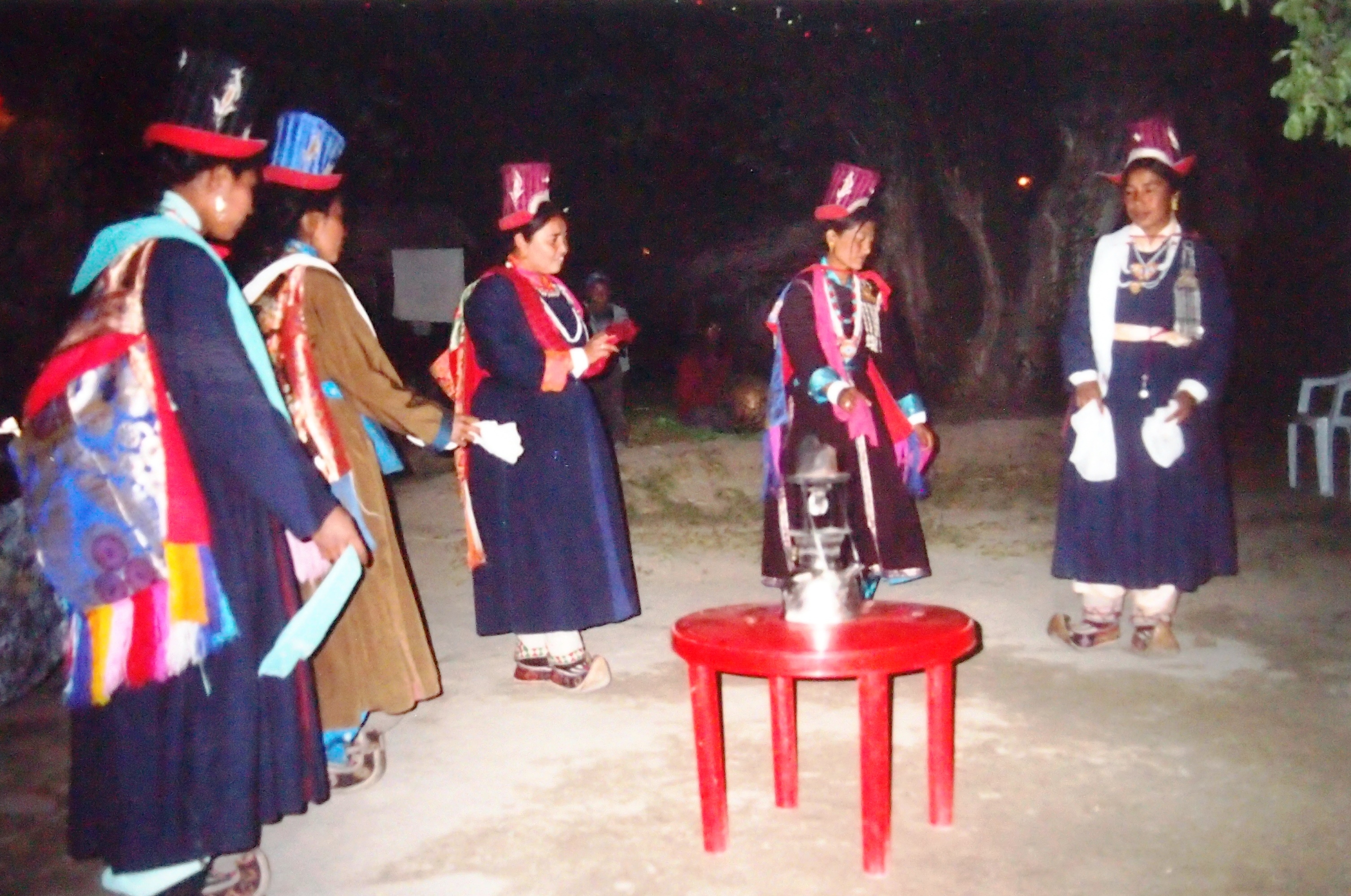
In the late afternoon, we heard music in the garden and went down there so as not to miss anything. It was Tibetan folklore. Two men sat on the grass playing drums while a third played flute, and dancers in national dress entered, singing. The performance consisted of groups of four women and four men, who performed and sang in turn. It was great fun and most impressive.
After the performance, it was time to take a bath. As with the electric power, it was a question of doing things while there was time, because at the hotel there was only hot water between six and eight in the evening.
The group met for supper in the restaurant, and we spent the evening relaxing, retiring before midnight.
Sleep and health problems
Our night sleep was interrupted because there were masses of dogs barking in the town. This happened every night, but on the first night I wasn’t used to it and didn’t get enough sleep.
I also had a problem on the Friday, when I awoke with pain in one eye. My sister fortunately had eye drops with her which I took several times during the day, and by the time evening came the problem was solved.
We had the morning to ourselves. The boys went down to the town to look at the shops and experience street life in this little corner of the world. As long as we took things easy, we experienced no problems in the thin atmosphere. The temperature was really rather pleasant, probably 22°C or so, and the air was very clean.
A trip to Leh
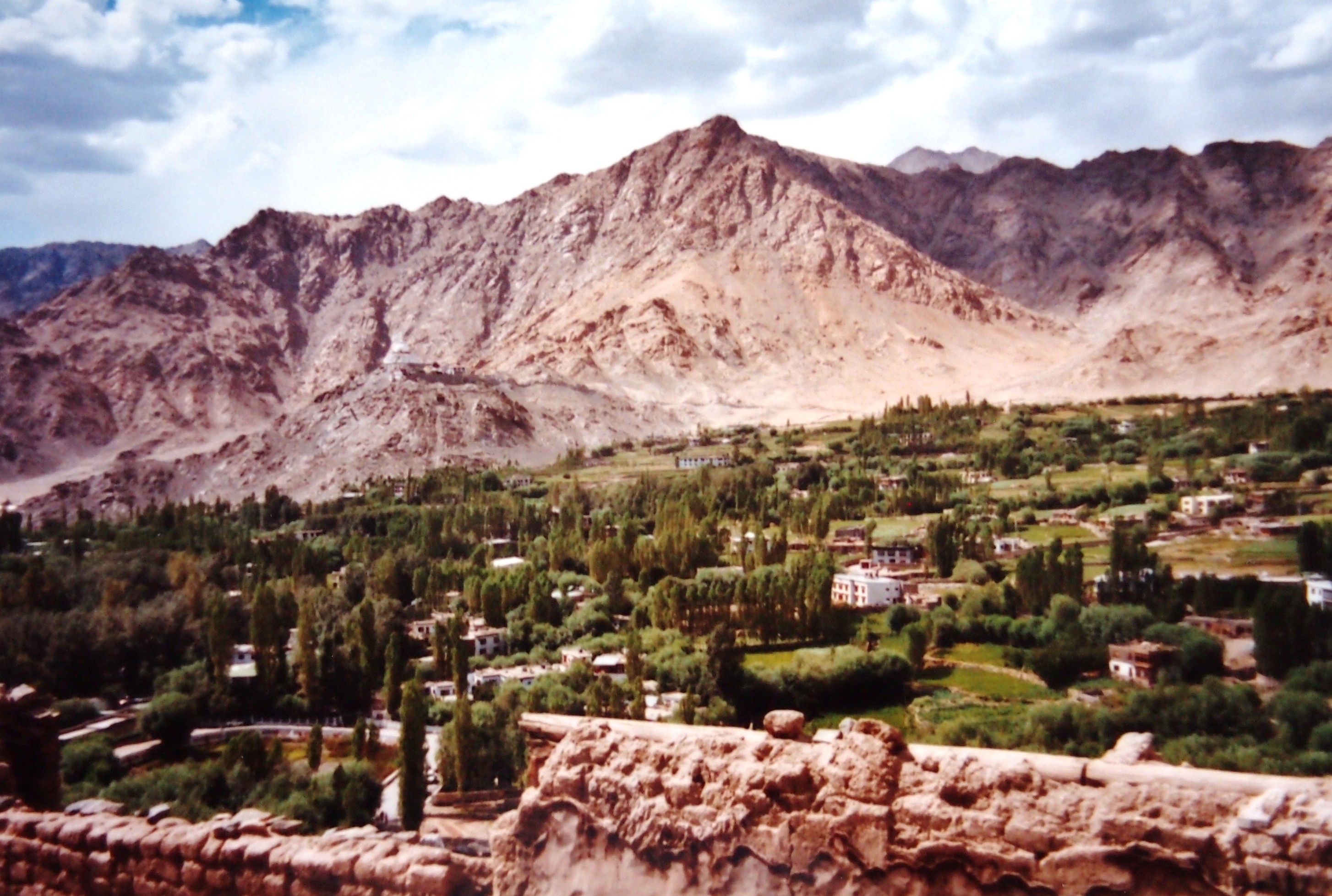
We met with the rest of the group after lunch and set off in 4x4s for the impressive Leh Palace built in the 16th century. The palace was still owned by the royal family in Ladakh but was empty and uninhabited. It was almost like a ghost castle, although there was a fantastic view from the roof of the palace over old Leh, with its green, luxuriant groves and white mountain peaks.
From the palace, we continued on down the streets of Leh to a traditional Tibetan home where we were shown round and served the local “beer”, Chang, and a special local butter tea, Po Cha.
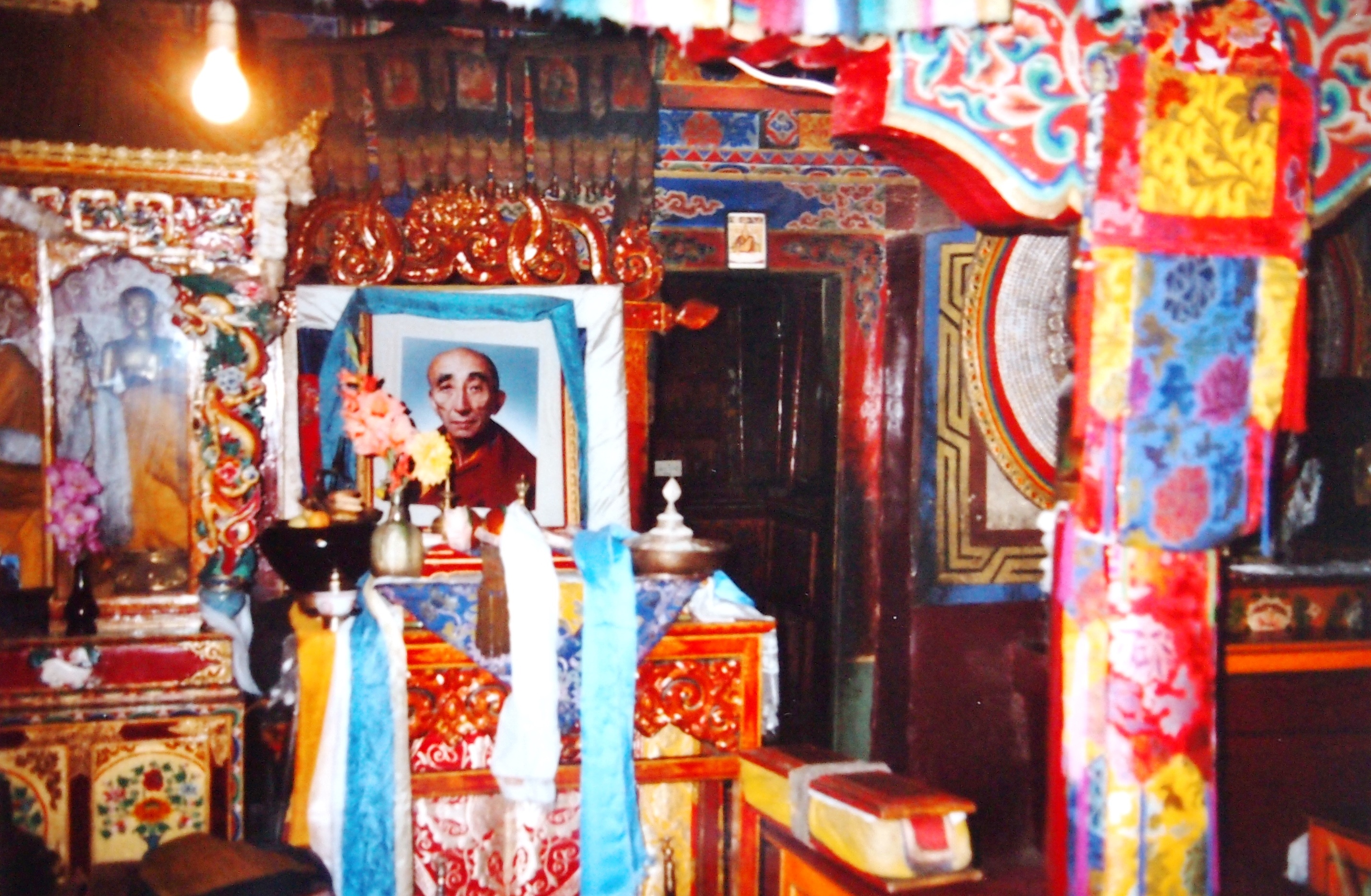
In the late afternoon, we visited the Sankar monastery in Leh, which belongs to the Yellow Hat sect and his Holiness the Dalai Lama. With only 20 monks the monastery is one of the smallest in the valley. We were to have experienced the monastery’s evening pooja (a ritual daily worship with sacrifices such as flowers, incense, candles or fruit). The large temples have many priests and functionaries and ceremonies are performed every day in honour of the Buddha, but the event we were supposed to experience was not held because there were not enough monks to receive us that day.
Rafting trip
On Sunday 10th August, we were woken up early to begin the day’s packed and exciting schedule. After breakfast, we were driven by 4x4s to the River Indus to go on a dramatic rafting trip. We had to wait quite a long time at the bank of the river. The rubber rafts had not yet arrived, and they then had to be inflated, after which we could don lifebelts and helmets. We were then given the necessary safety instruction and finally set off on the exciting, rather nippy trip down the Indus.
It was a cloudy day without any sun, so it was a bit chilly. We rafted down the river, where at times the waves formed metre-high cascades, which meant there was no way to avoid getting soaking wet. Some of us got really cold, although I was not one of them. Steffen and Emil had been given waterproof overalls by the rafting guides and managed just fine.
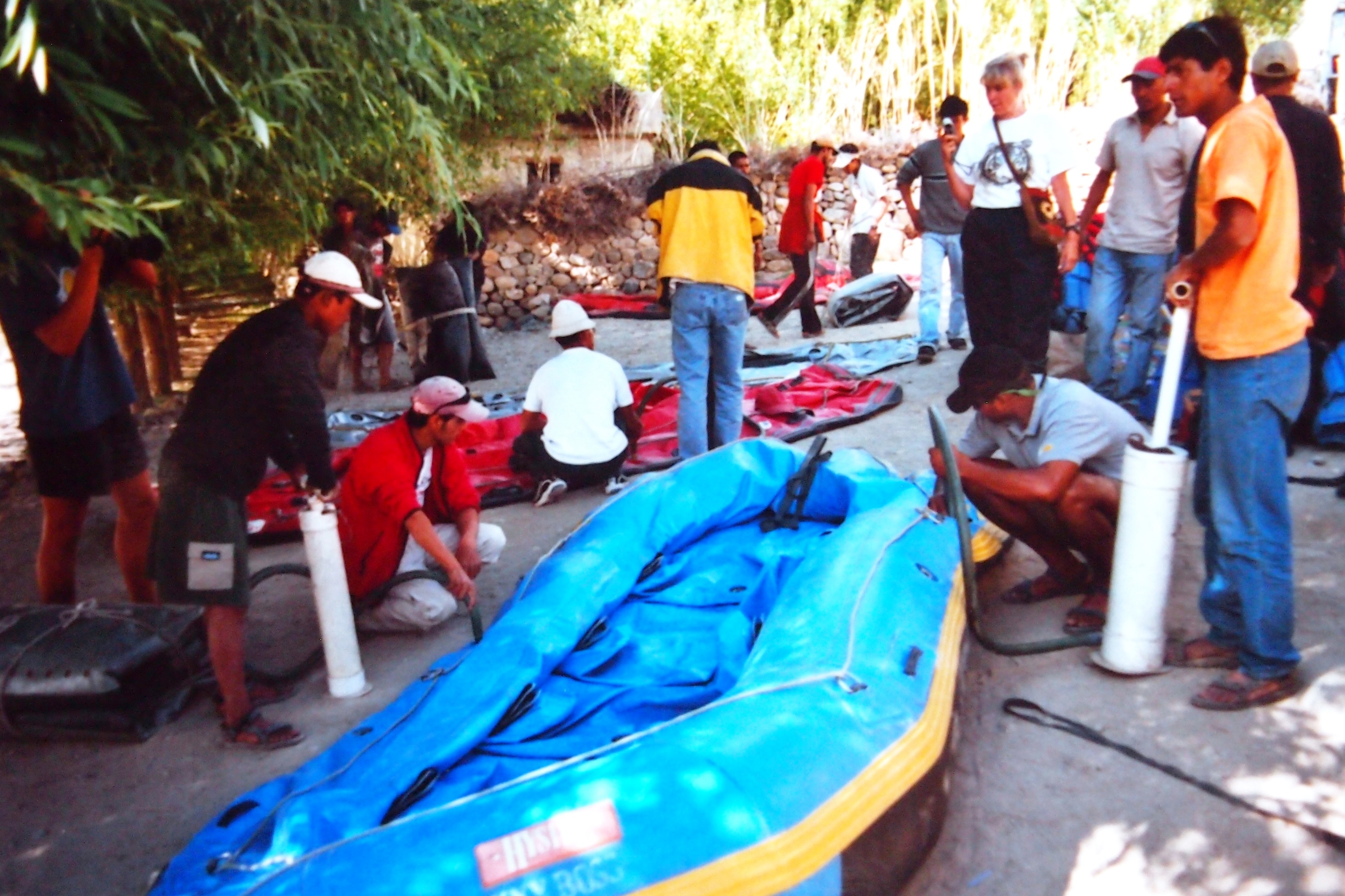
The rafting trip was a tremendous experience. Everything was constantly changing; the pace, the waterline and the scenery. Here there was mountain desert, rapidly followed by green oasis villages. One moment the water was mirror-smooth, the next we were riding giant waves and getting soaked to the skin. We really were at the mercy of Mother Nature.
A broken arm
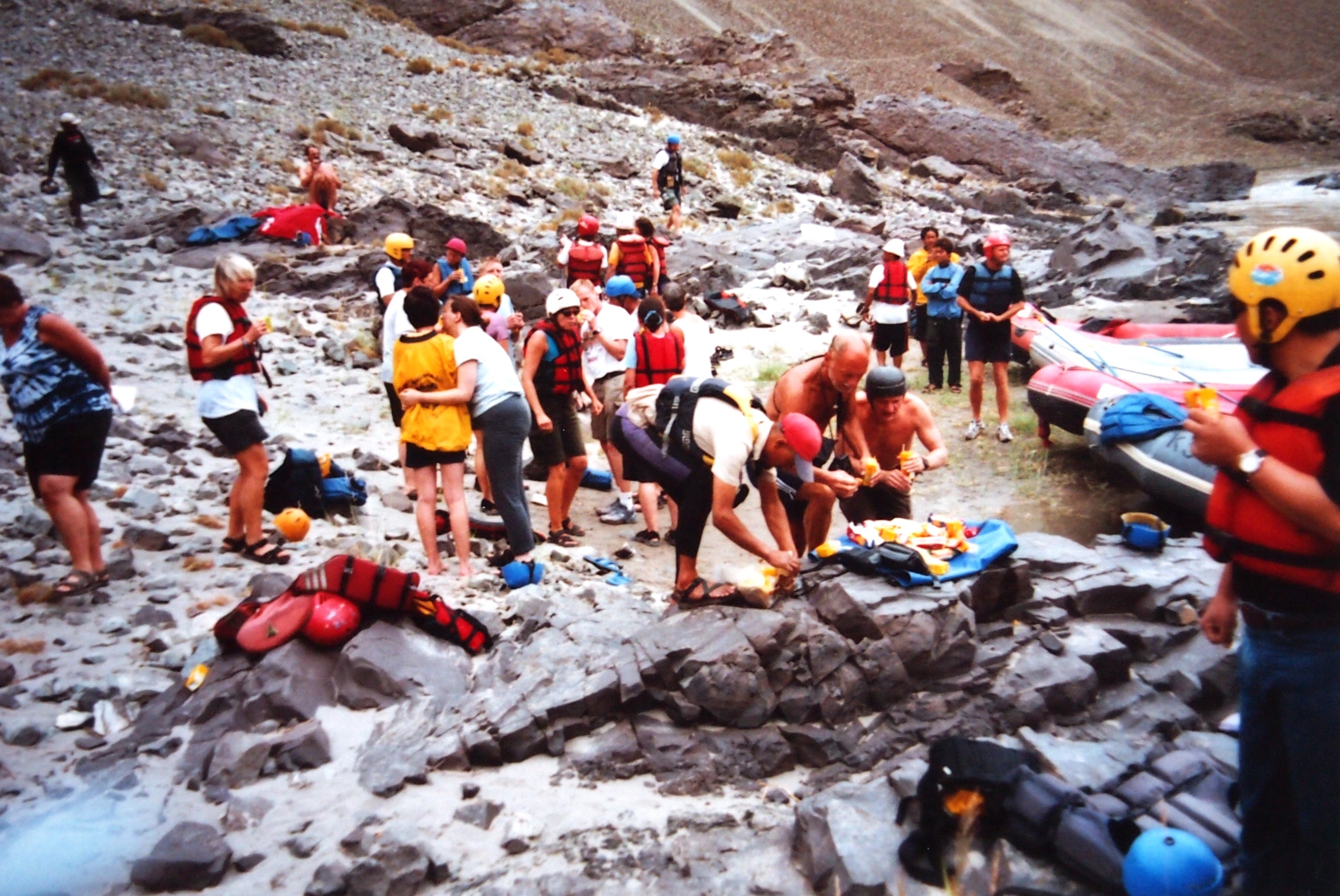
A good half way along the river, we had a break to take a leak and have something to eat. Here, something happened that really should not have. Ketty, a very sweet lady from our group lost her balance and broke her left arm in the fall, which meant she had to go with medic Mogens Rishøj to hospital to get her arm put in plaster. The rest of us continued the trip one rubber raft short.
Impressive scenery and buildings
After three hours on the water, we met our 4x4s at the oasis village of Nimu, where the crystal clear River Indus merged with the muddy waters of the River Zanskar.
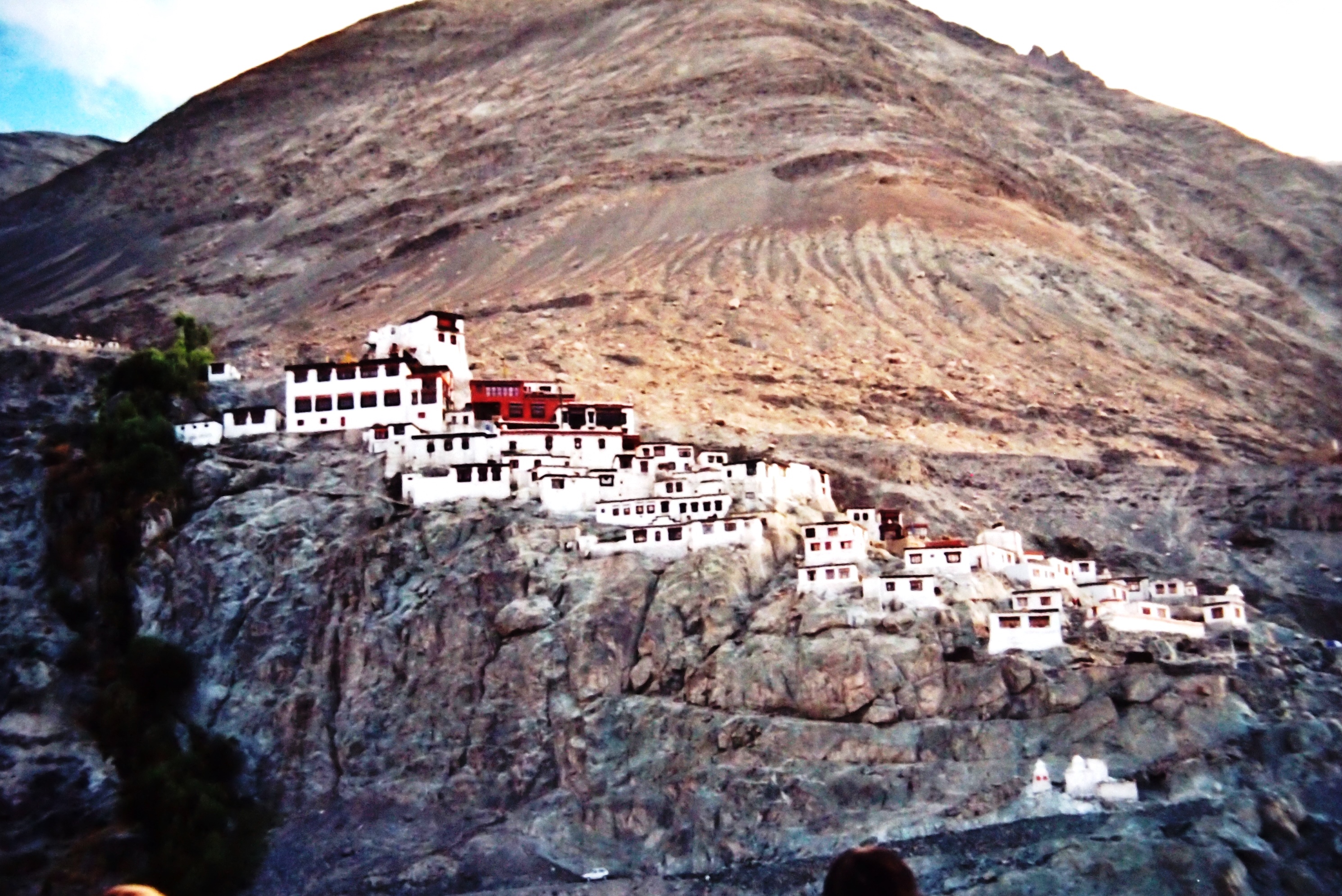
We now continued westward along the main road, through deep valleys, past dramatic mountains and gorges. At the town of Basgo, we took a short break by the rocks with the most fantastic colours; yellow, ochre, terracotta and violet. In this part of the world, all the Buddhist monasteries and palaces were built as fortresses to resist invasions from the surrounding areas.
Further on down the road, we made another stop-off, where we were able to see how people lived in the villages. Many older women still wore the traditional costume, with headdresses full of magnificent turquoises.
After lunch, we turned off the main road towards the lush green tributary valley, where the Alchi monastery is situated. The fact that this monastery lies at the bottom of the valley makes it atypical. It housed some gorgeous thousand-year-old frescoes, and from a historic point of view it was the most interesting monastery in Ladakh.
We didn’t get back to the hotel until early evening. We had supper, and Ketty was there and in good spirits. It had been a clean break, and she had not abandoned the idea of running a marathon on this trip.
Morning visit to the Thikse monastery
On Monday, we were to leave for our outing at five in the morning and stood there waiting for our 4x4s to pick us up, but they didn’t come. We were then invited into the restaurant and given tea until the 4×4’s arrived three quarters of an hour later.
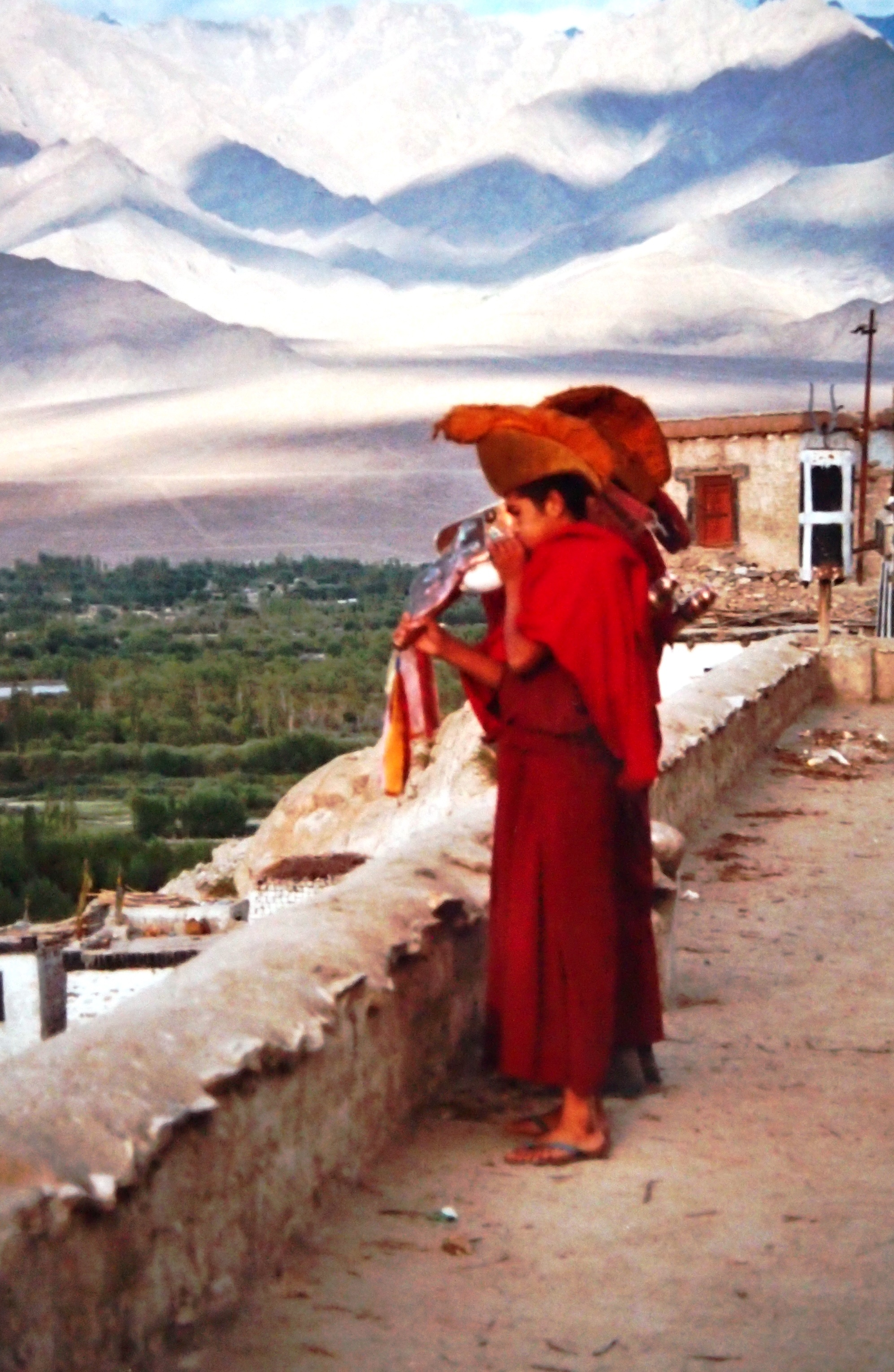
We set off across the extensive plains around the Indus, where, among others, the Thikse and Memis monasteries are located; and visited Thikse, some 20 kilometres east of Leh. Here, we did experience the morning prayer – the so-called “pooja”. About 100 Yellow Hat monks belong to this monastery, and when the sun comes up, giant horns in the monastery roof were blown. The monks then arranged themselves in the small hall of the monastery, where po cha, a butter tea, was served together with tsampa barley or millet during a ceremonial matra or jupa in accordance with the Holy Scriptures. We visited the kitchen, where they made the butter tea and were also offered a taste. After the pooja, we went onto the roof of the upper temple to enjoy the fantastic view of the Indus Valley’s willow and poplar trees.
Across the world’s highest road pass
Back at the hotel, we had breakfast before setting off on a two-day trip. We drove north to the remote Nubra Valley on the ancient Silk Road, the trade route which connected central Tibet with Turkistan. The route went via the Khardung-La pass, 5,602 metres (18,380 feet) above sea level. We got up there through a vast number of hairpin bends and saw the most incredible scenery you can imagine.
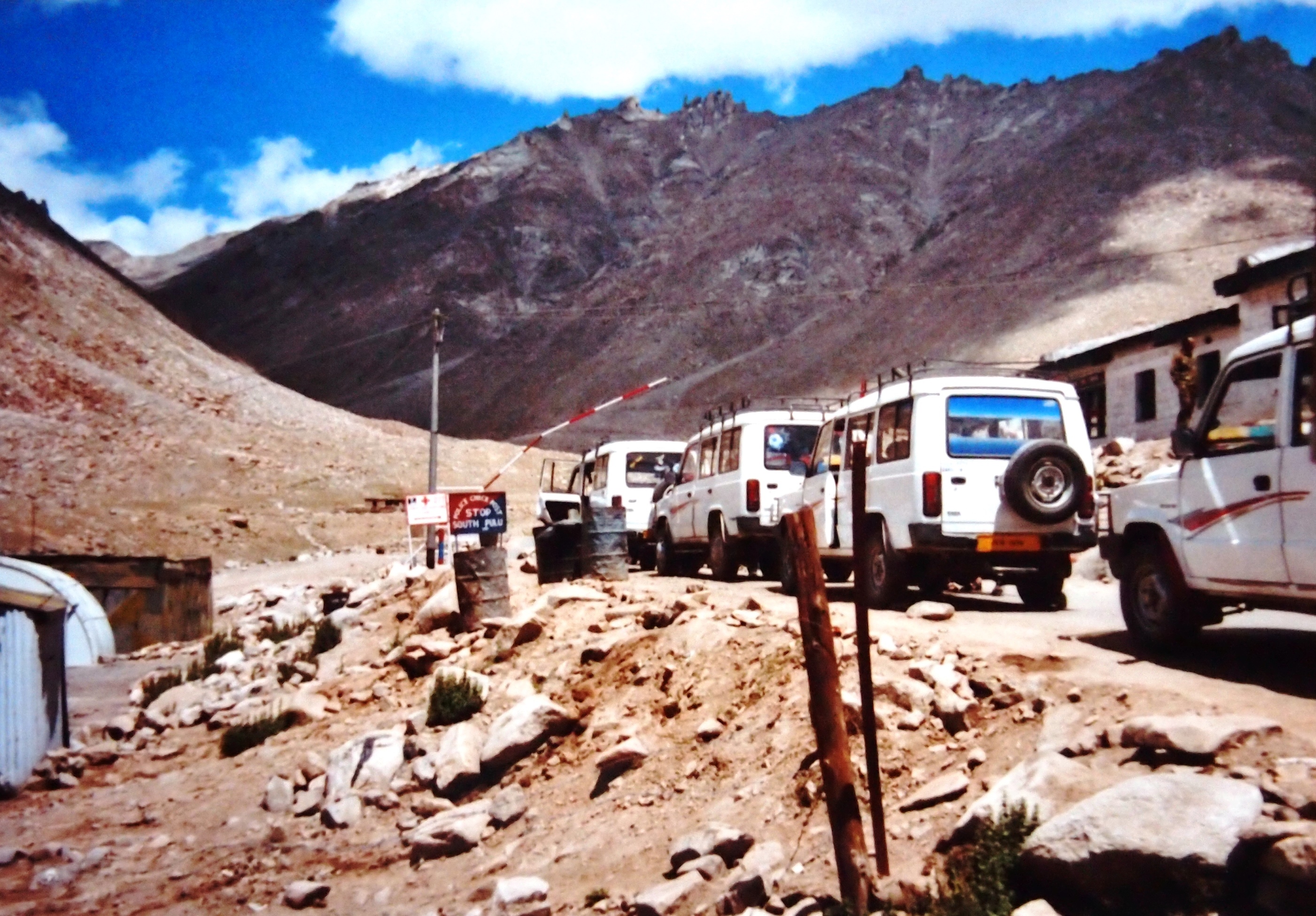
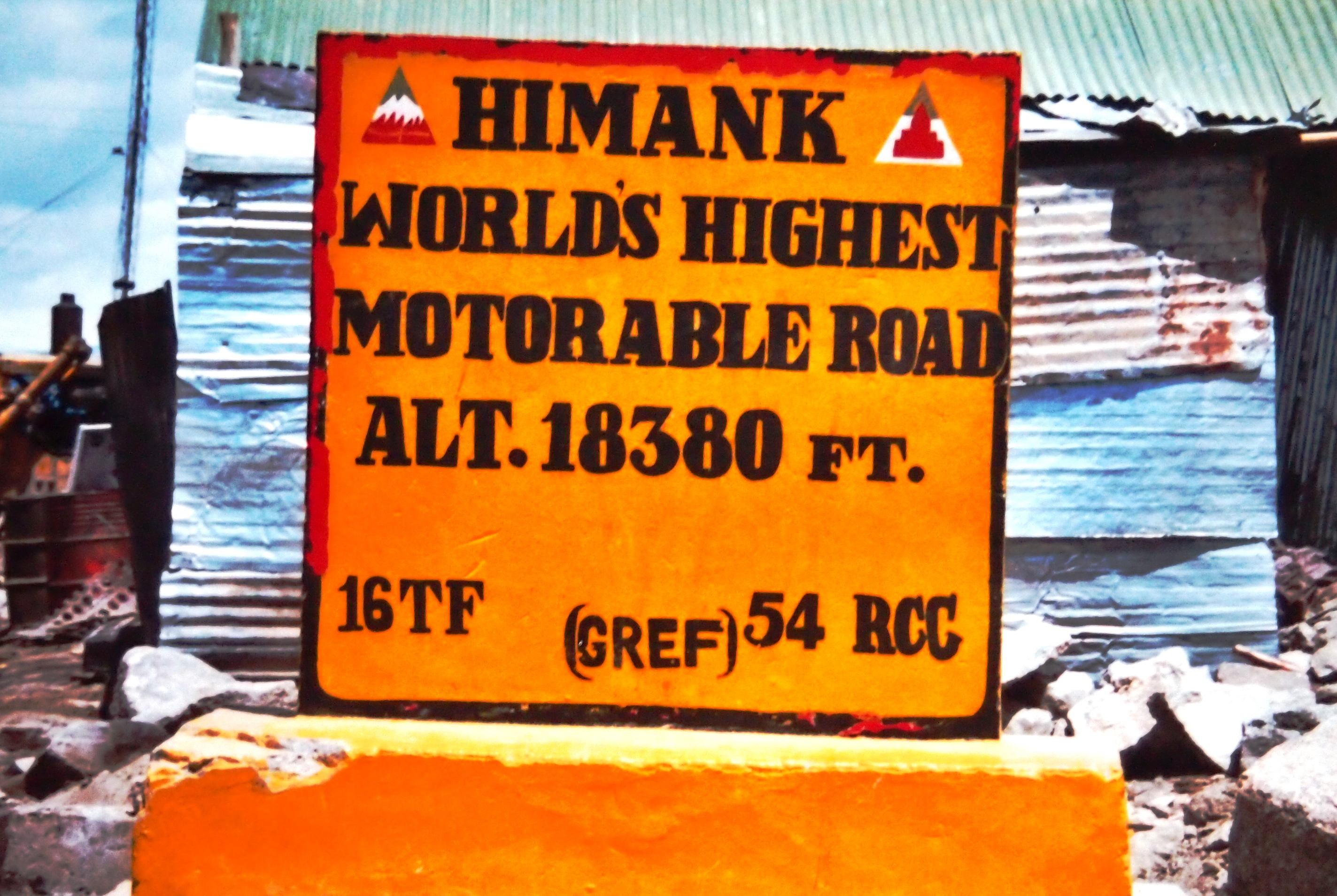
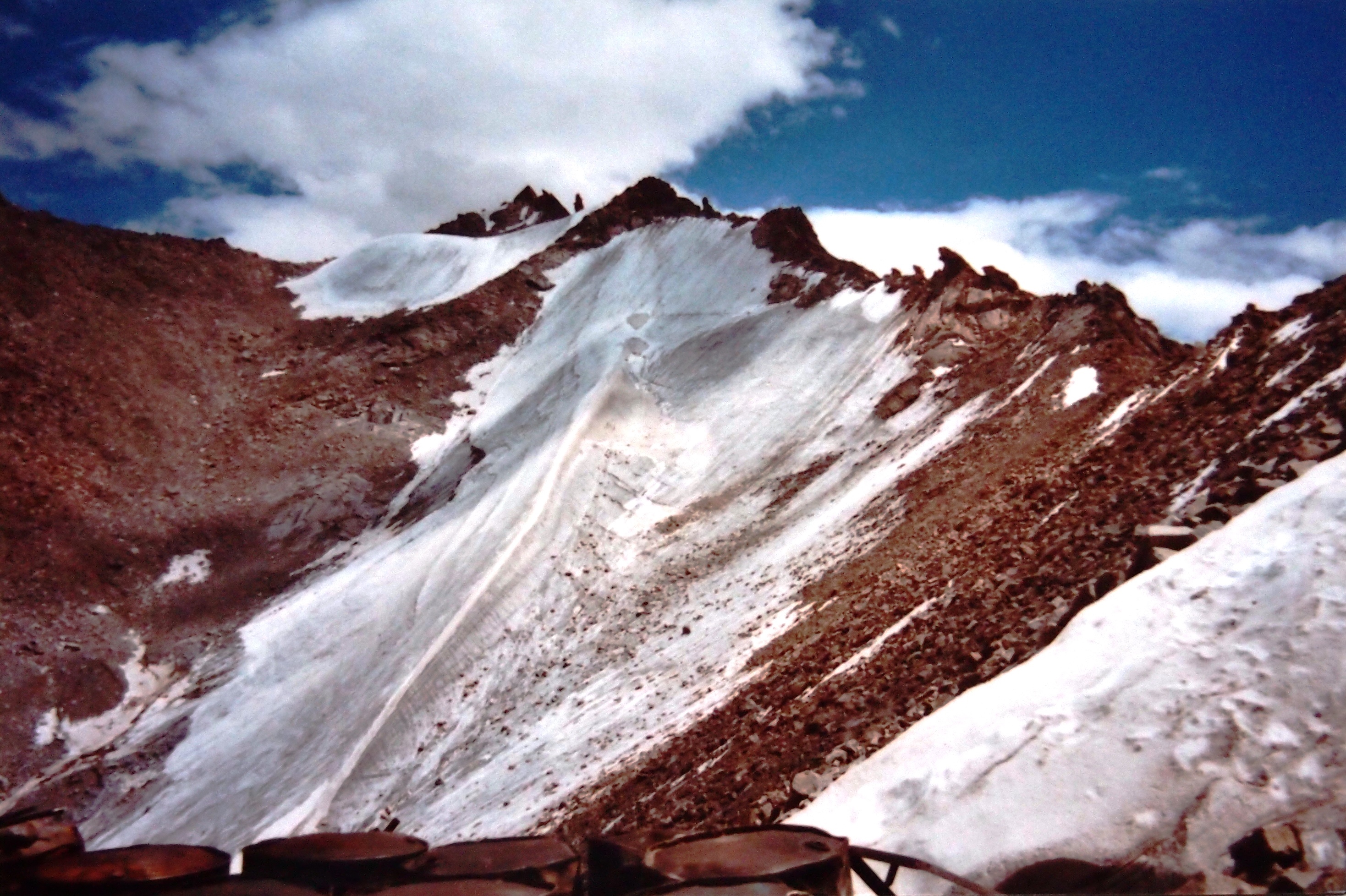
It really was a very special experience to be right here. The road itself and the buildings around it were not a pretty sight, but the view was indescribable. Apart from the poles, this is the place in the world with the most glaciers. Hundreds of prayer flags were hanging from the mountainsides, and we were in no doubt as to where we were.
My sister had a nasty attack of altitude sickness on the trip, and while the rest of us ate lunch she went to get treatment at a military hospital. After lunch, we had a walk with many beautiful sensory impressions on the narrow mountain roads, but unfortunately we had to leave my sister behind. She was in no condition to continue at that point.
Camp on the Tigrid
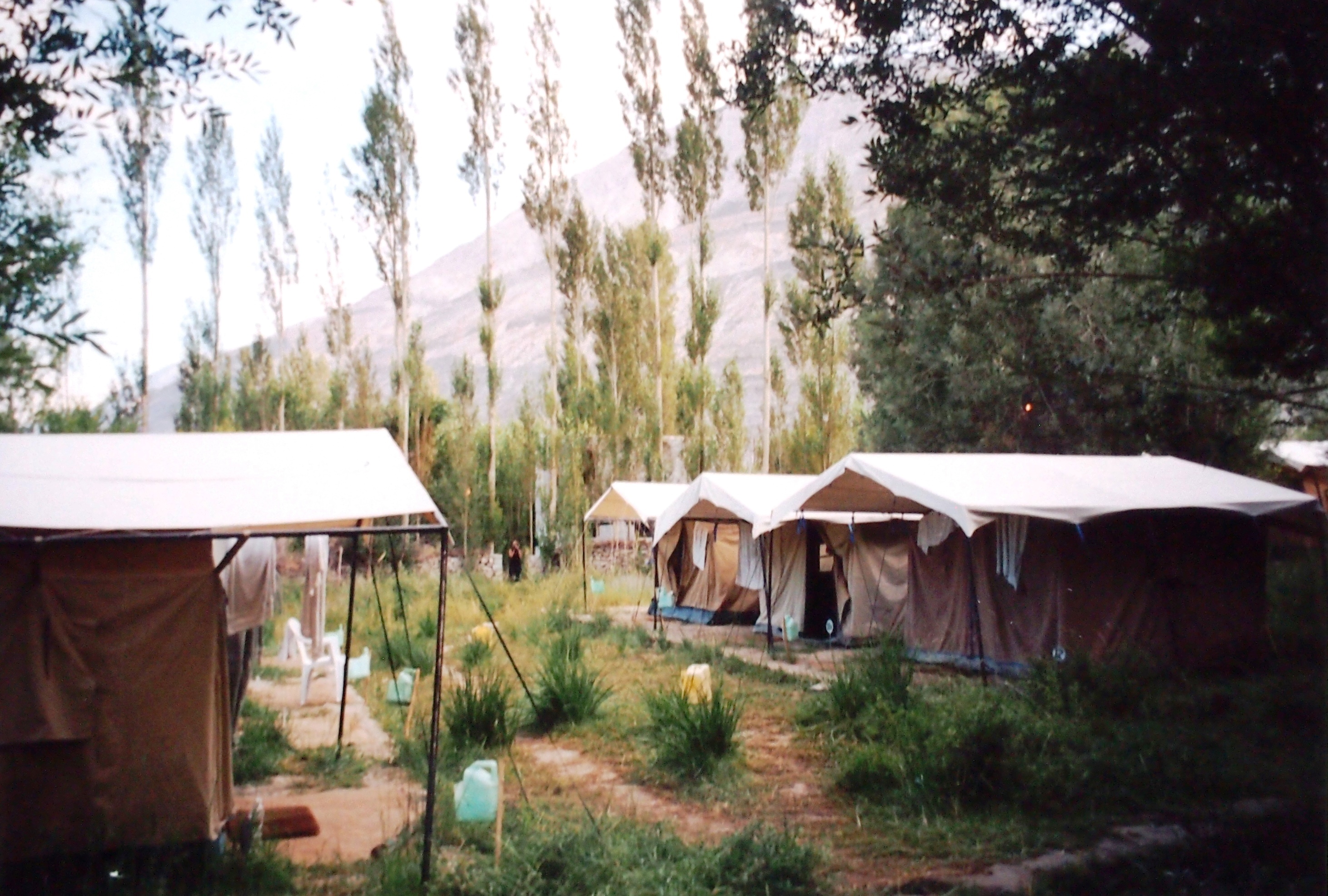
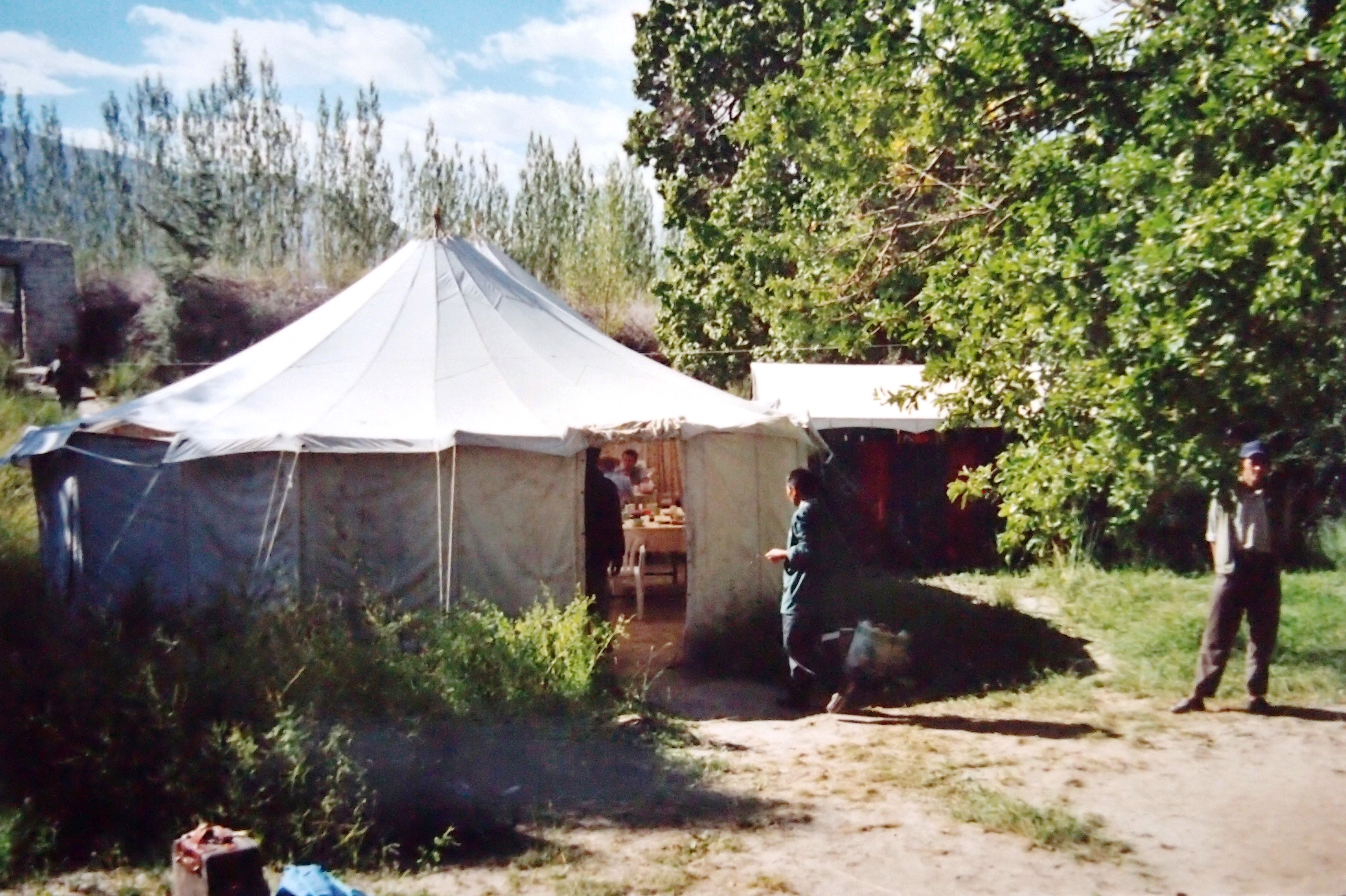
The schedule lasted for most of the day, and we arrived late in the afternoon at our camp at Tigrid. We were offered tea and coffee before being shown to our tents, which were rather comfortable with proper beds. Steffen and I got a two-man tent, whilst Emil was to share one with Elisabeth. However, Emil wanted to sleep with us and ended up sharing a bed with Steffen, whilst Elisabeth got a tent on her own. The camp toilets and showers were secluded, but the wash hand basin and mirror were outside.
Of course the supply of hot water was not unlimited, and they fired up the boiler with firewood when we wanted a shower. This was just what we needed on a hot, dusty day. Newly washed and freshened up we met the other members of the group to enjoy the company and a glass of red wine. My sister had arrived rather later than the rest of us because her hospitalisation had been longer than expected. She and another person with the same problem had to remain lying down for the rest of the day.
A “Helge”
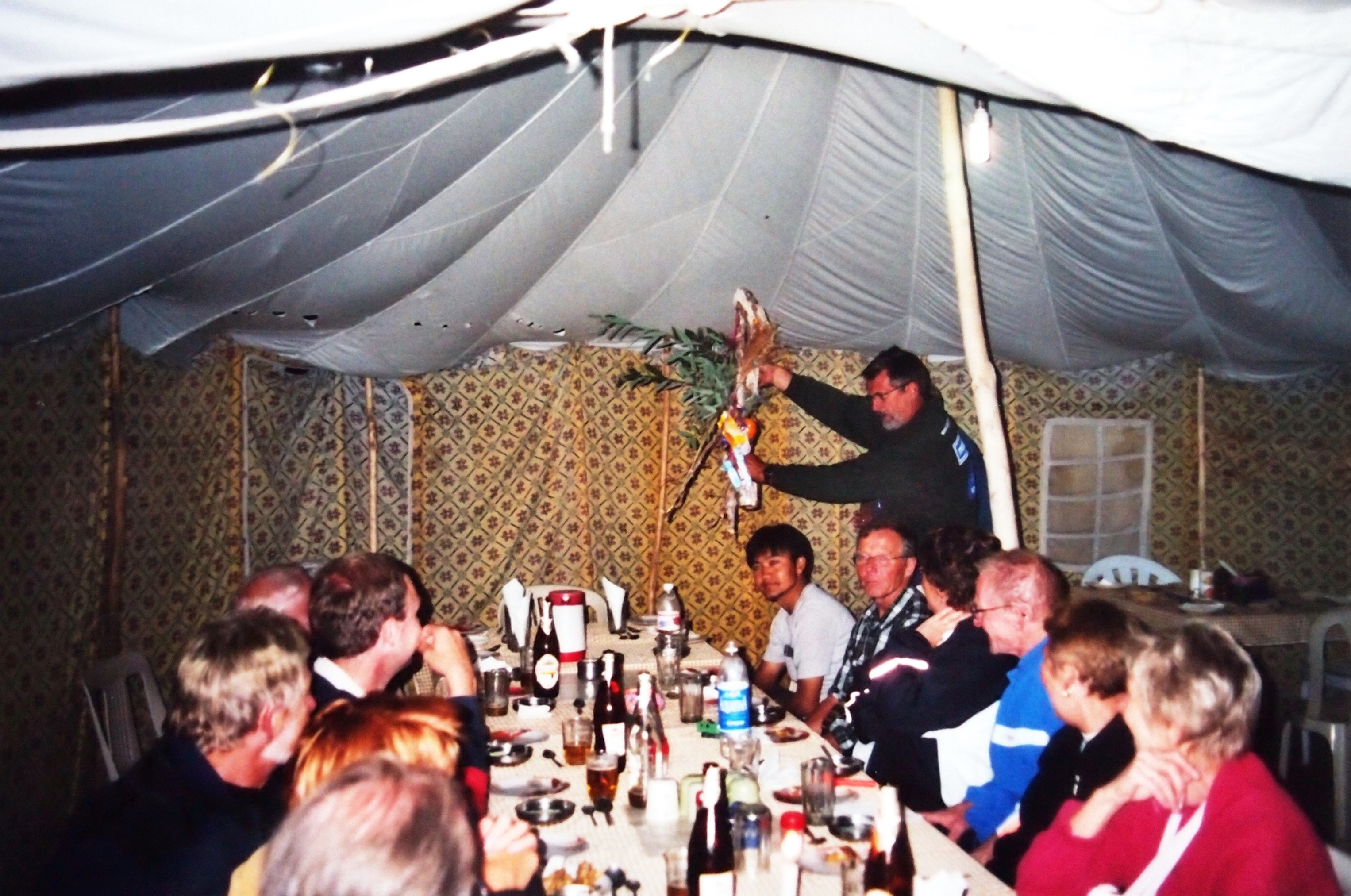
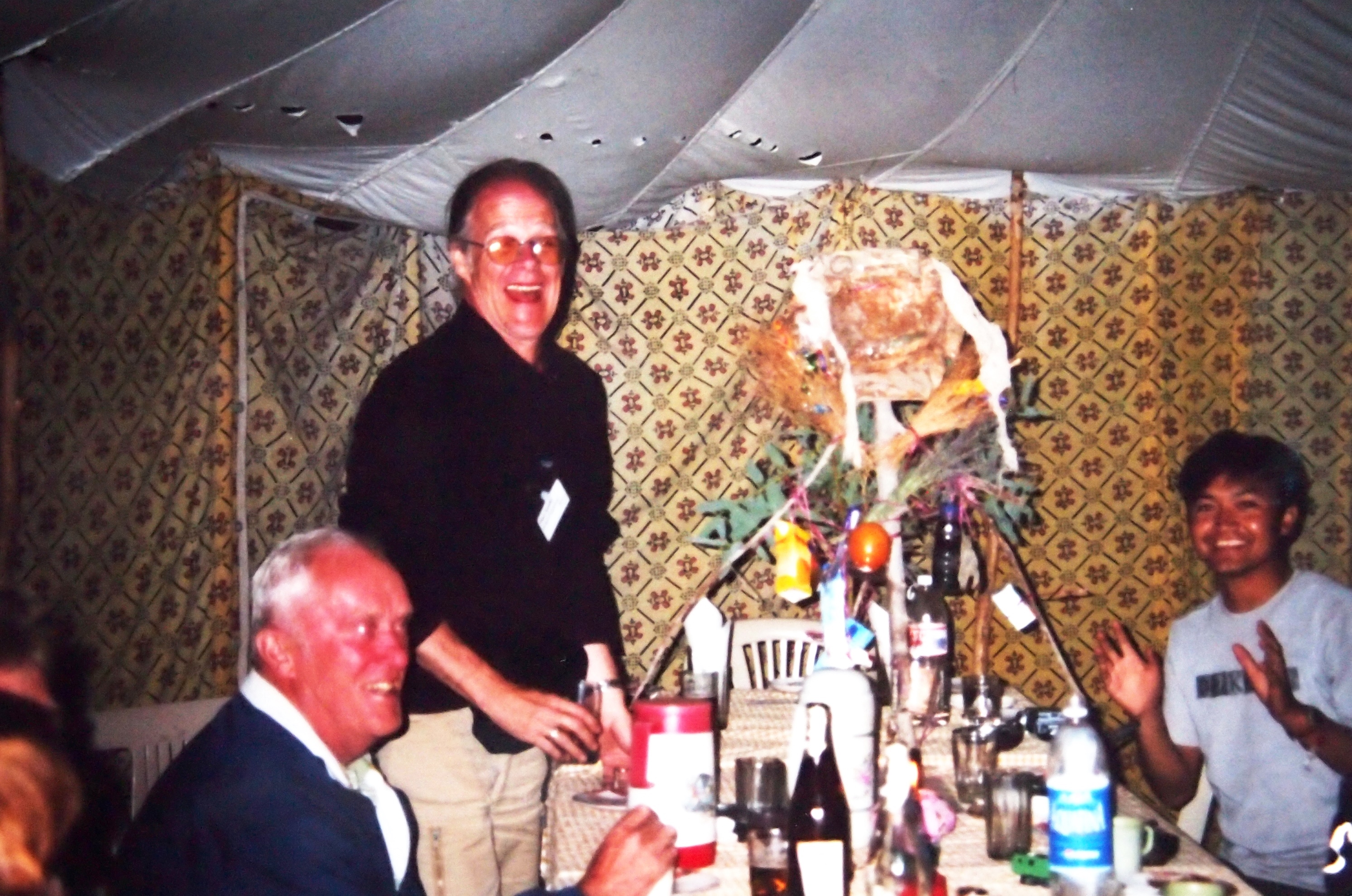
With us on the trip were Anne Grete and Holger Jacobsen, a delightful married couple from Aabenraa in Southern Jutland whom I knew from previous marathon trips. These merry, creative people had the idea of making a birthday present for our guide Helge, who was turning 55. We weren’t going to build a Buddha, because that would have been blasphemy. Instead, we made a “Helge”. “Helge” was basically a figure made from branches covered in items of all sorts. The head was made from an old jerry can. Some of the things tied onto “Helge” we found in the woods and others were donated by participants. There were all sorts of things, from a petrol cap to red wine. During supper, Holger presented “Helge” to Helge. Holger has a wonderful sense of humour and really knows how to make a speech and get people smiling. This was also the case with Helge, who was happy with, and moved by, a rather curious present.
Hot springs
We completely missed our morning call on Tuesday. A man had walked round the camp ringing a small bell to wake us up, but we didn’t hear it. We awoke slightly later of our own accord.
The two altitude sickness sufferers were bright and cheery again and had no further problems. So after breakfast the whole group left for an area where there were hot springs. The water that poured over the rocks was scalding hot, I would imagine it was at least 70°C.
Just after midday we reached a river basin near Diskyid, the main town in Nubra, and continued along the River Shayok to Hunder. Along the way, we passed an area with Sahara-like sand dunes.
An afternoon at schools and monasteries
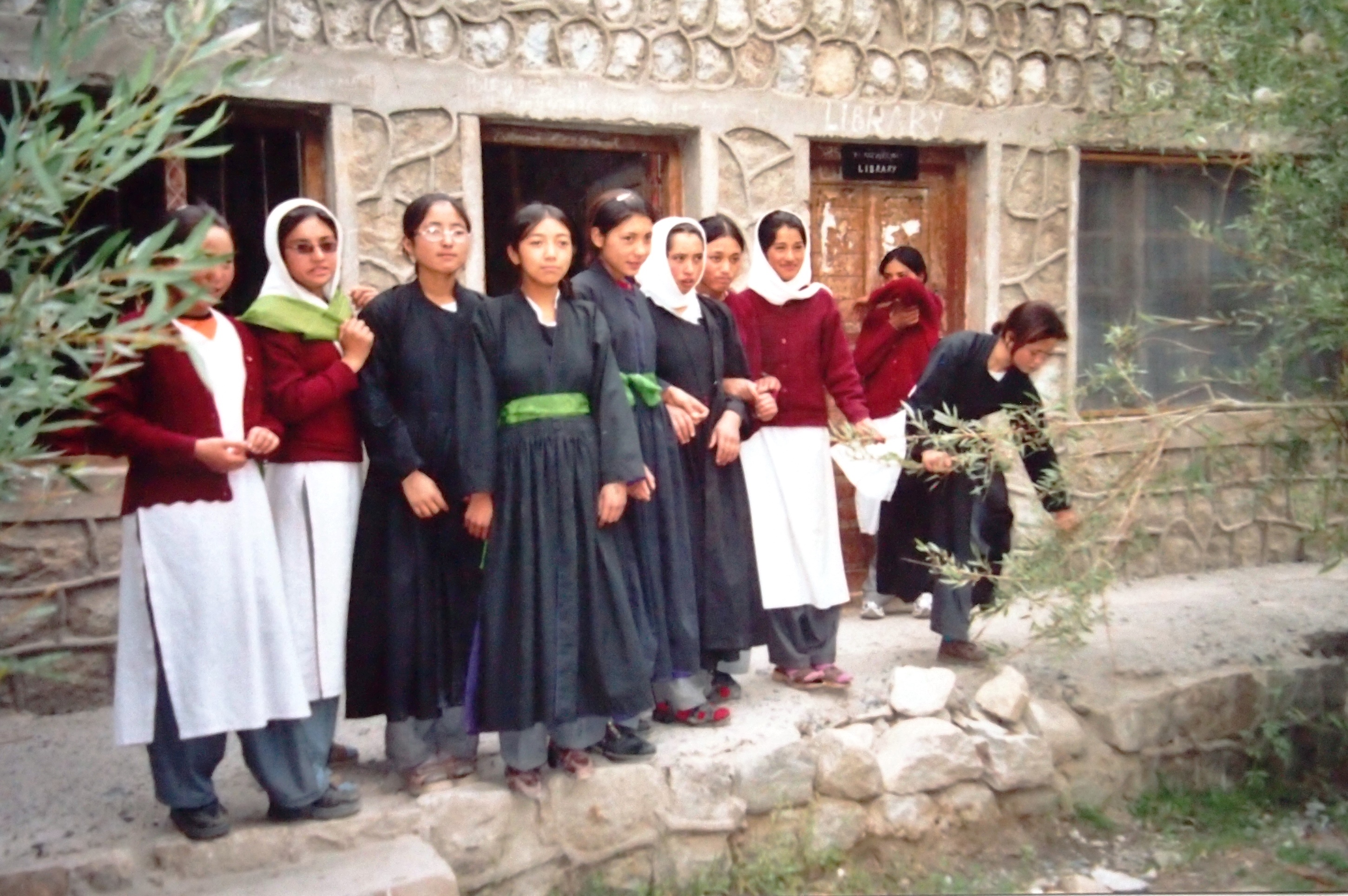
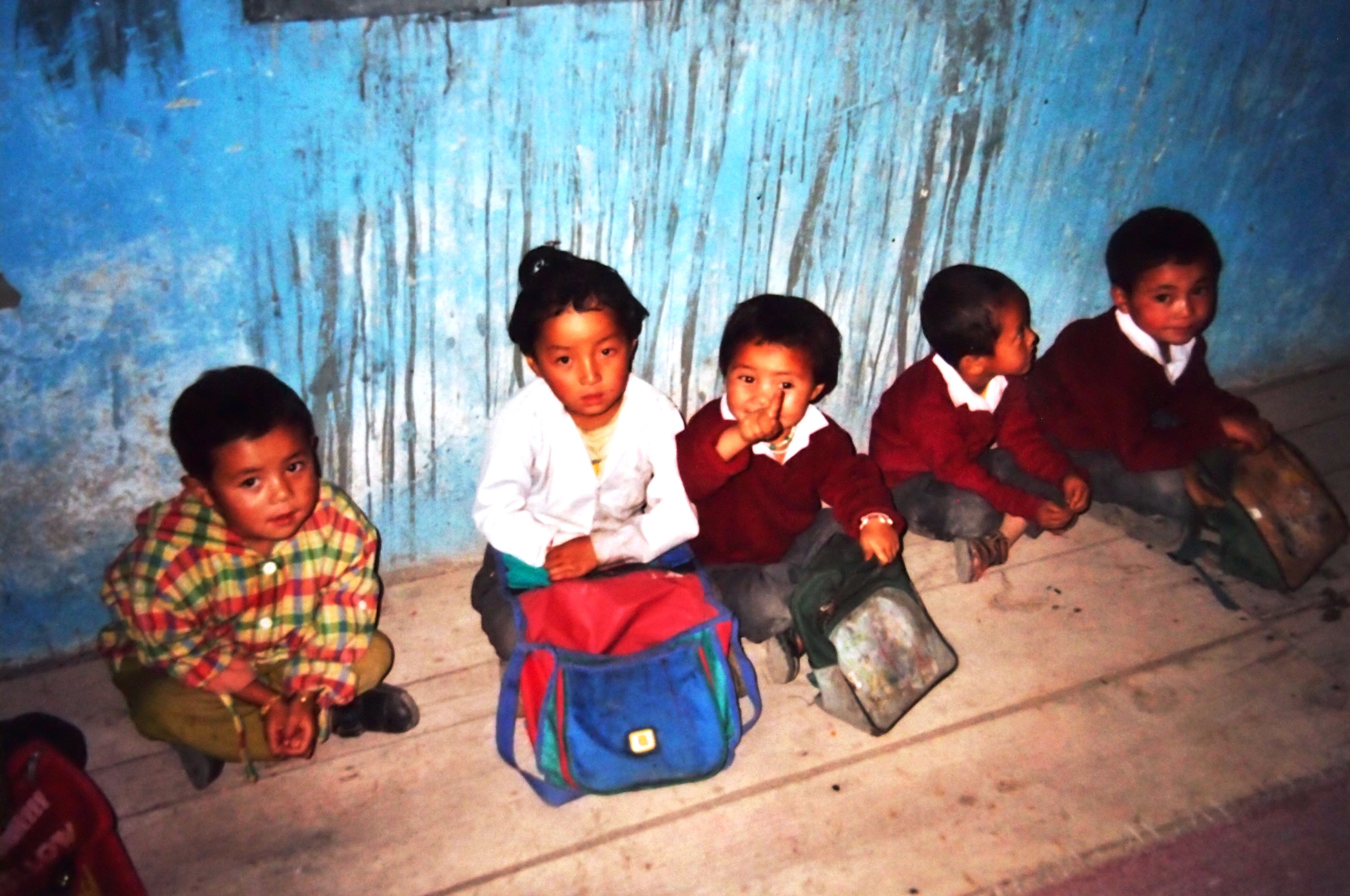
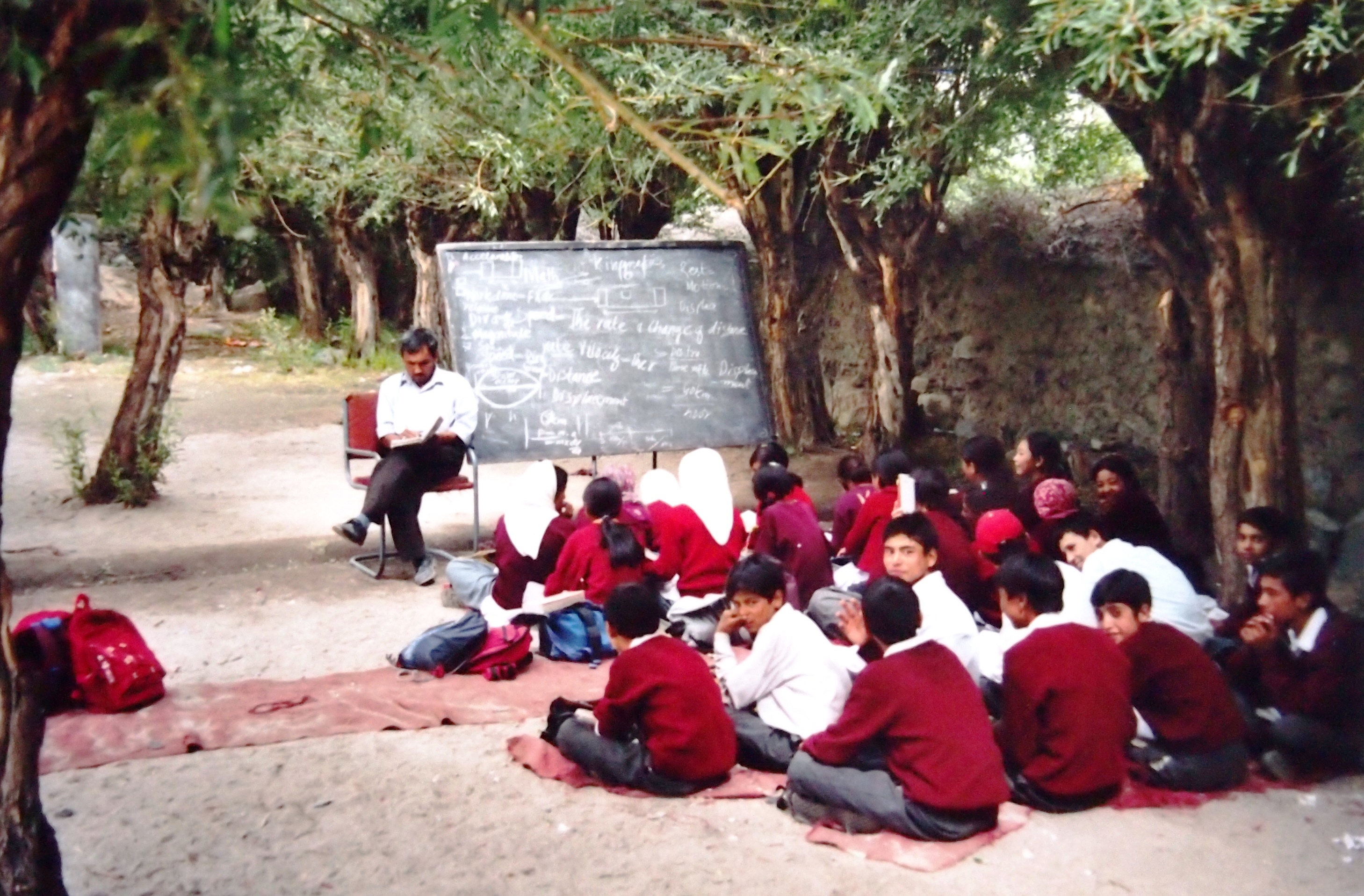
In the early afternoon, we visited a local school with 125 pupils. Conditions here were entirely different to what we were used to in our part of the world. The children had neither tables nor chairs in a classroom. They were taught sitting on the floor or out in the school yard under primitive conditions. Although this was primitive in our eyes, it looked as though the kids were healthy and happy and got the best possible education under the circumstances.
In mid-afternoon, we made a halt in a town where we had half an hour to find something to drink and do a bit of shopping. Later we visited a monastery and then stopped at a building site, where a new monastery was being built.
Folklore on the lawn
Early in the evening we returned to the camp for supper. Later on there was a folklore performance on the lawn and soon after that we went to bed tired.
A non-existent bomb
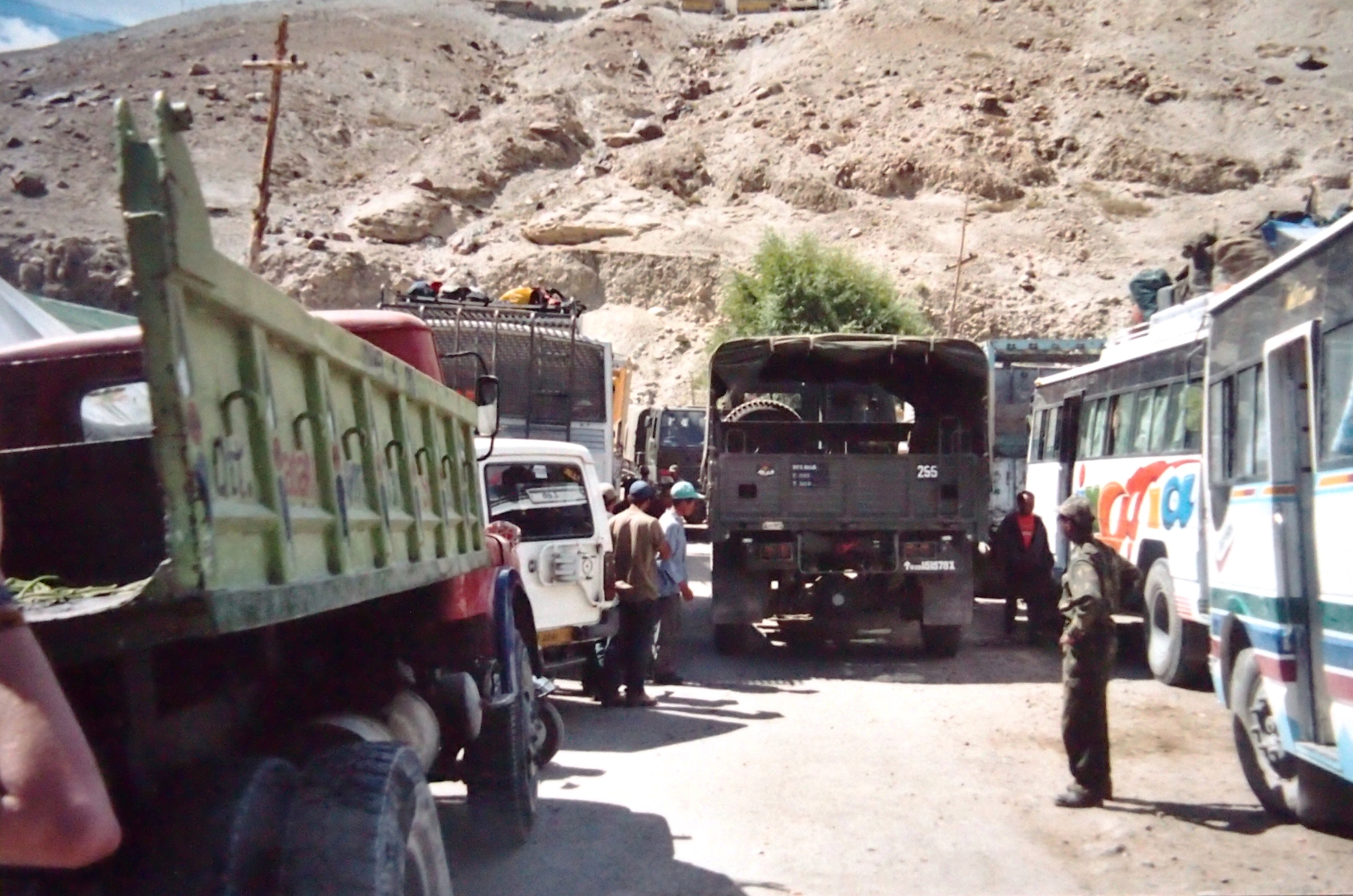
On the Wednesday, we left the camp after breakfast. We set off, but after half an hour’s drive, the road was completely blocked off, and a “sea” of cars had queued up in the summer heat. Nobody could explain what had happened, although rumour had it that there was a box with a bomb in it further down the road. We waited for an hour or so and were then suddenly able to move on. We never did find out what had happened, but they assured us that there had been no bomb.
An altitude-sick driver
After the “bomb threat”, we drove on without hindrance, although the boys and I witnessed our driver of the 4×4 getting altitude sickness as we approached the top. I thought this could only happen to tourists, but it can affect anyone. The driver, Monsut, had to get out for some fresh air, and as we drove on, he was given something to drink and a piece of cloth on his brow. I sat talking to him, although our communication potential was limited. Monsut began to feel better, and we returned safe and sound to Leh.
Sightseeing in Leh
We were back at our hotel in the middle of the afternoon. We were shown to the same room as we had before, after which coffee and toast were served.
The boys and I spent the afternoon in Leh, where we met runners from other groups, a good many of whom we already knew from other trips.
There were many places in town where locals sat embroidering T-shirts, many of which were ordered by tourists, with their own names and the text of the upcoming run. I ordered a T-shirt with the logos of the four marathons I had run to date with Adventure Marathon.
We were back at the hotel by early evening and got ready to eat. Envelopes were distributed during supper containing our start numbers and T-shirts, and we were also brought up-to-date with the latest practical information about the run.
A long hike
There is no such thing as sleeping in and lying by the swimming pool when you’re on a marathon trip. There are activities going on all the time, so there is no excuse for not being in shape for the race itself. That’s the way it was this time, too.
We got up early on Thursday, and at seven we set off for a six-hour hike around the area. On this walk, we met the others involved in the race; both runners, medics, officials and others.
Wedding invitation
Jørn Pedersen was naturally with us on this trip, as so many times before, as was his girlfriend until then, Majbritt. They had met three years earlier at town festivities in Kalundborg. Majbritt had, therefore, not had the pleasure of experiencing The Karen Blixen Marathon, although she had devoutly been on every marathon trip since then. As it turned out, this loving couple was soon to be much more. Like many of the other participants, the boys and I now received an invitation to the wedding reception of Majbritt and Jørn, who were to be married the following day.
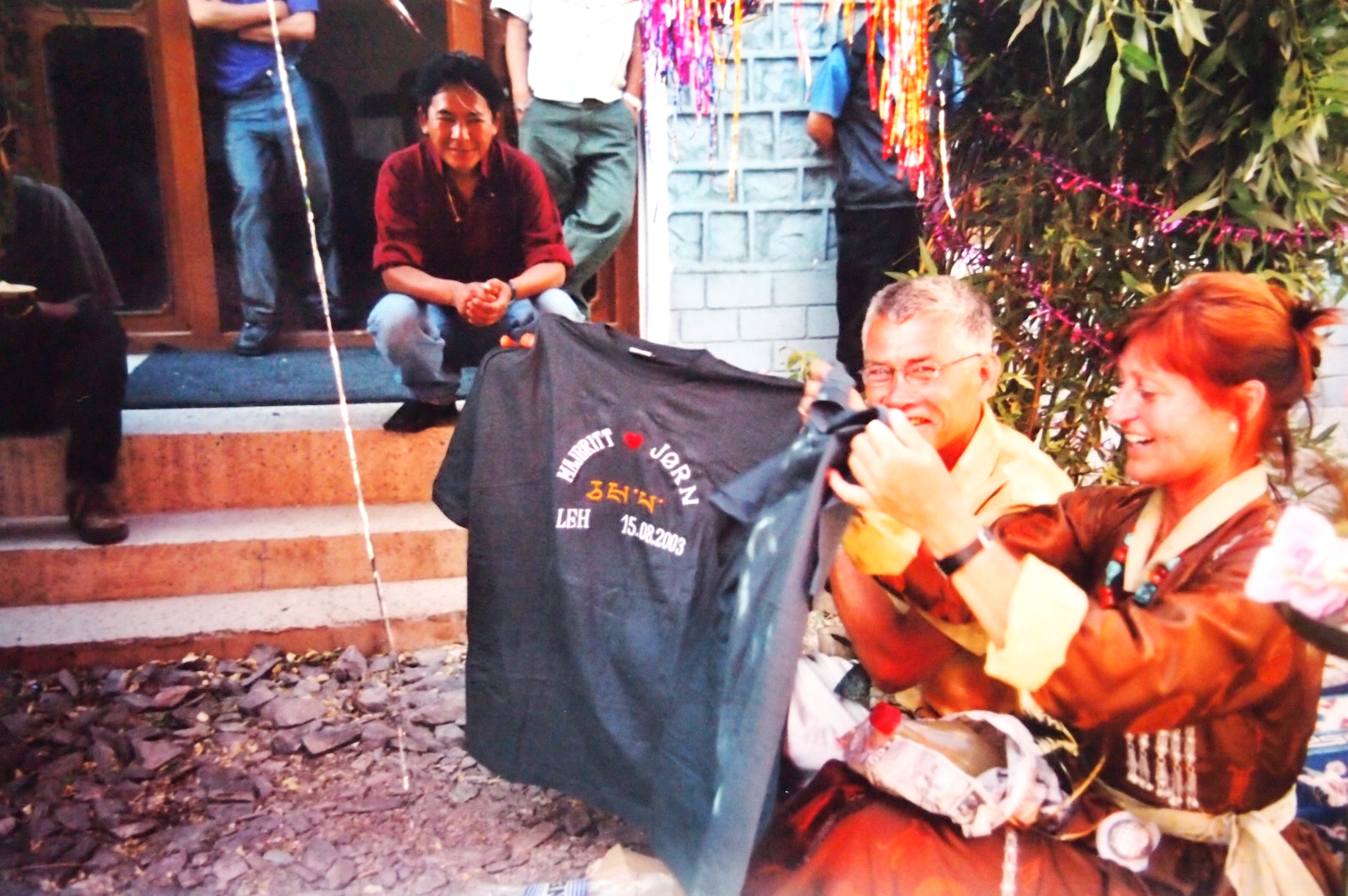
After lunch, we went to town to buy wedding presents. Together with other running acquaintances we ordered some fun romantic T-shirts with their names embroidered on them, along with the date, place and the Tibetan word for love. We also bought the couple a bottle of Chang and a silk scarf for each of them from each of us.
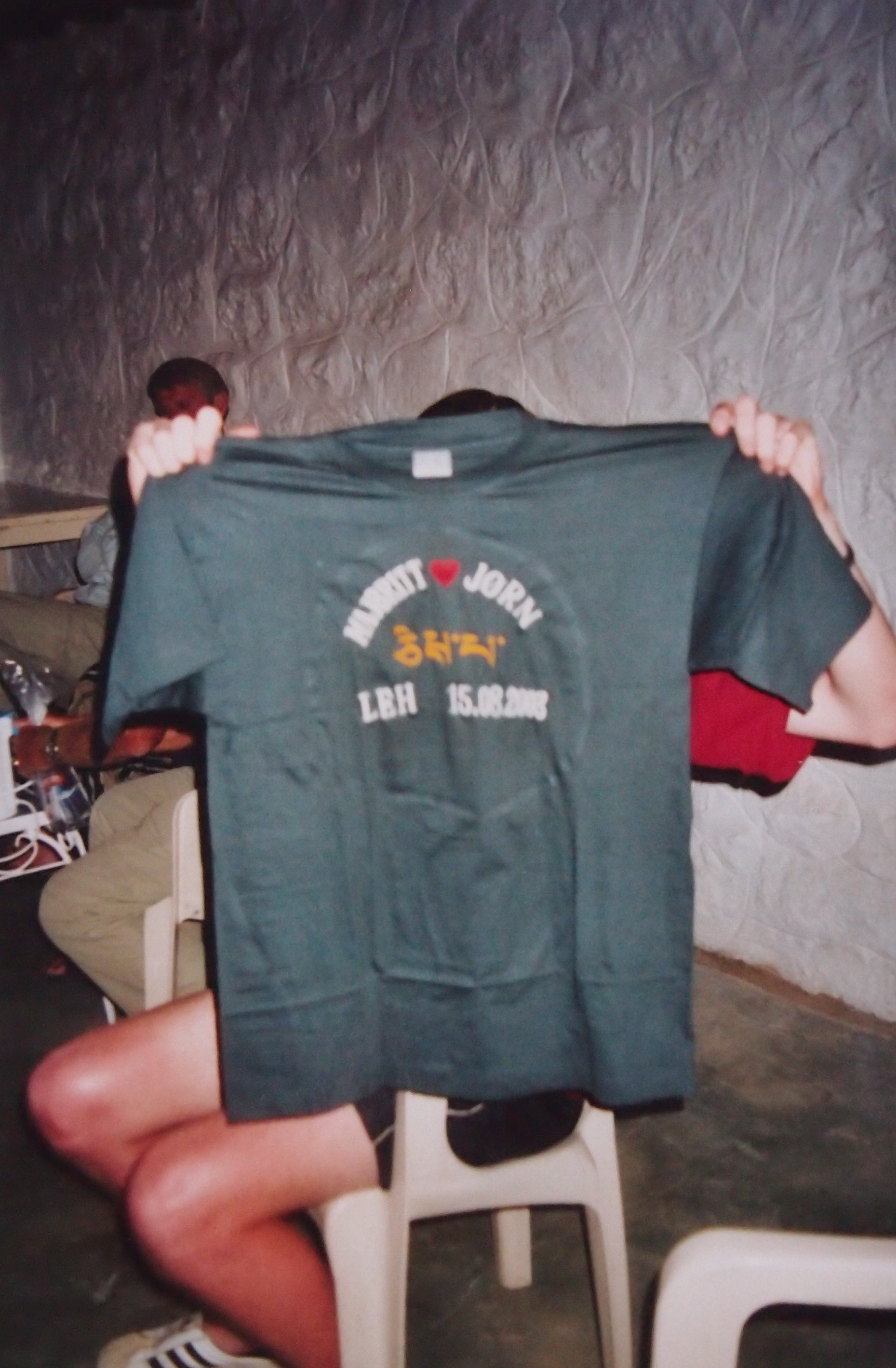
It is customary in Tibet to honour people with silk scarves. We also experienced this two days later at the start of the run. At the same time, some of these scarves had the purpose of putting spells on evil spirits and demons.
Back at the hotel, a local nun visited us during the afternoon and told us what life was like for her in Ladakh.
Morning run
Friday started with a morning run, and we walked to Polo Square in Leh, where all the marathon participants stood ready before seven o’clock for the start of the race.
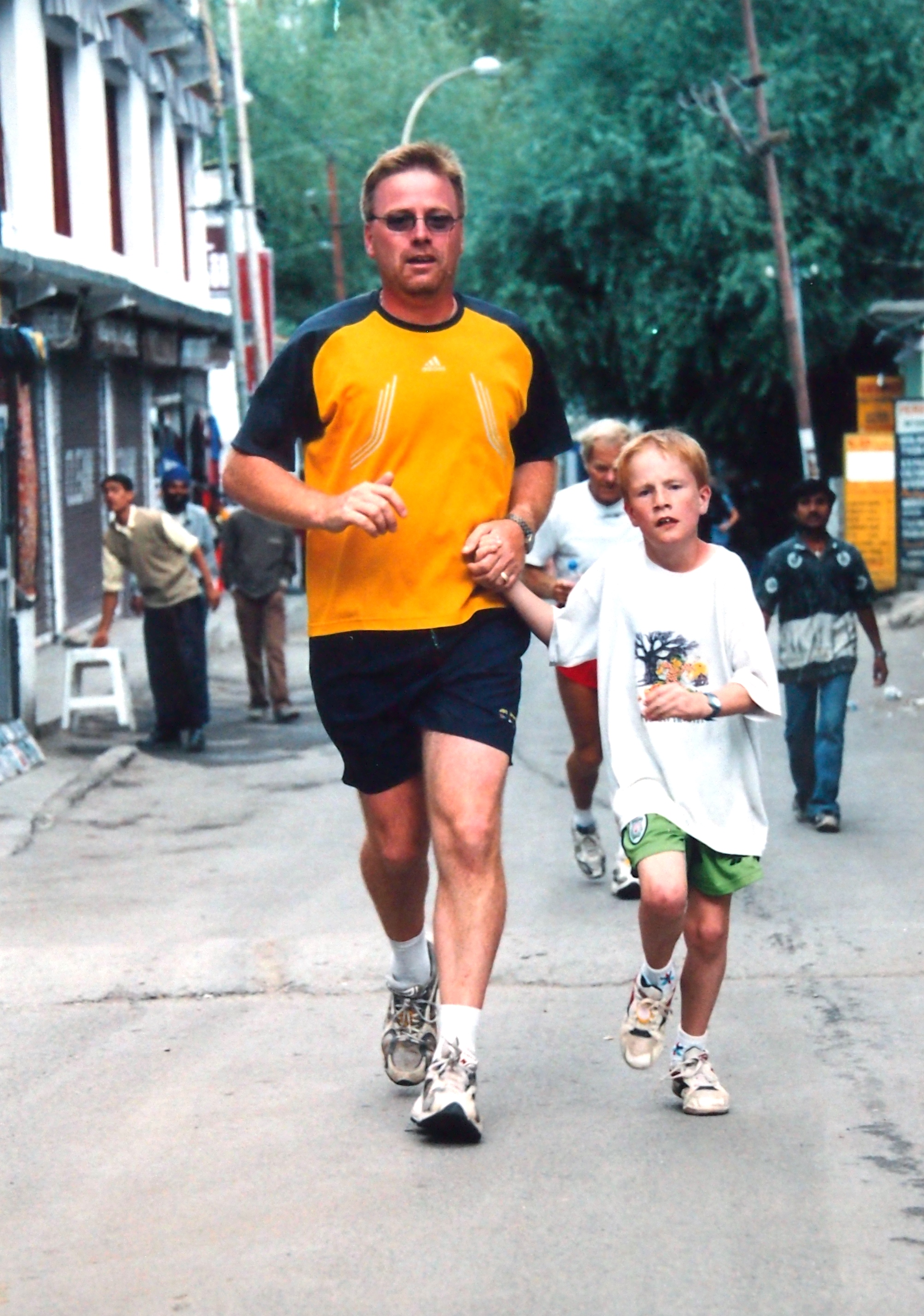
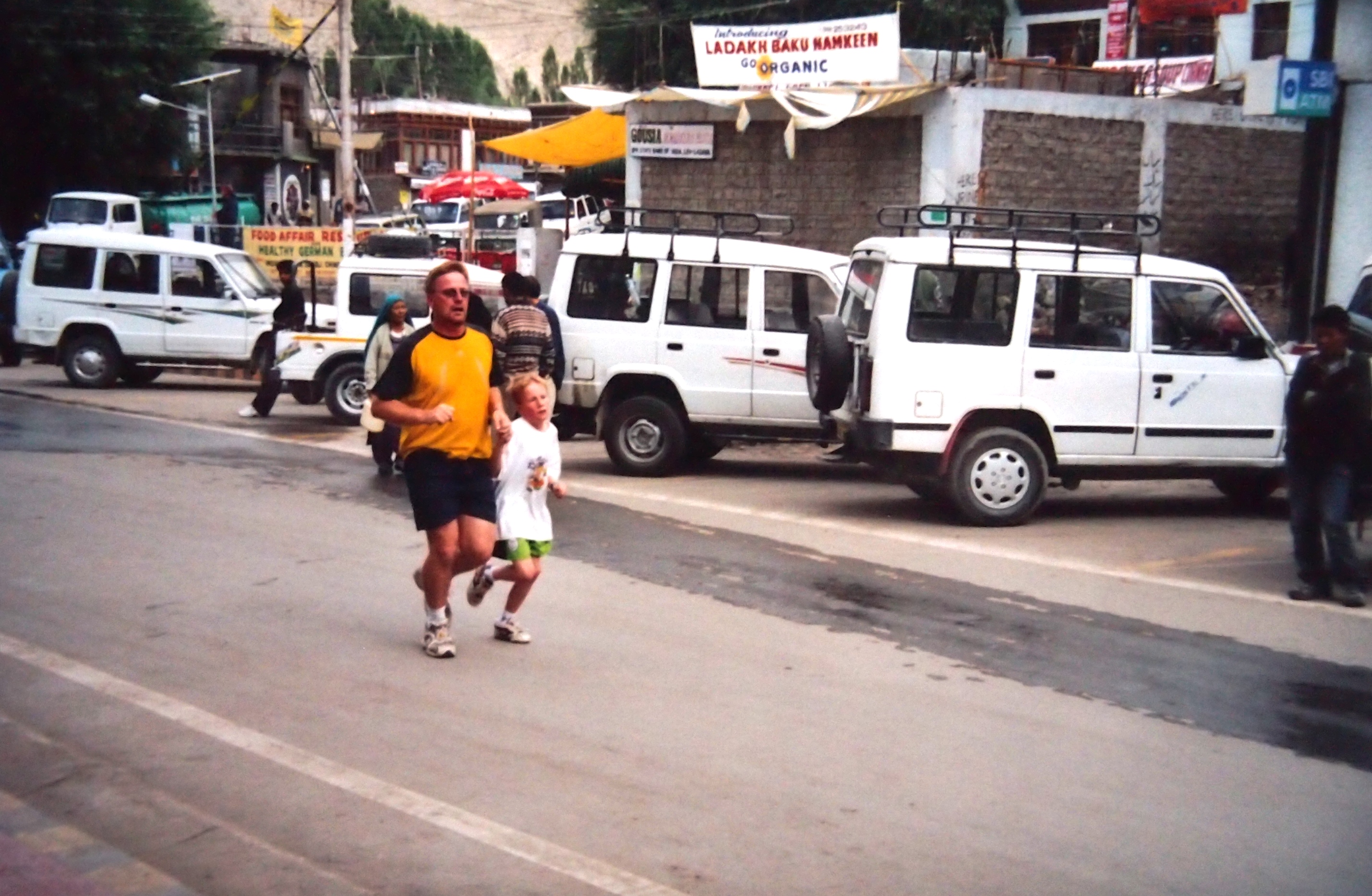
First Thomas Thomsen and the medical team gave us some practical information, and after this, I ran with Emil. But Emil was so fit and young that he soon left behind his father, who had to conserve his energy. We were in no doubt that the air was thinner than we were used to and when, about halfway through the run, it started to go uphill we could really feel it. We slowed down, and many others had to walk. After a while, I caught up with Emil, who by that stage also had to walk from time to time. I took him by the hand, and we accompanied each other on the final stretch. Emil and I ran most of the time and after about half an hour we had finished our morning training. By that time, Steffen had crossed the line some time ago.
Wedding reception
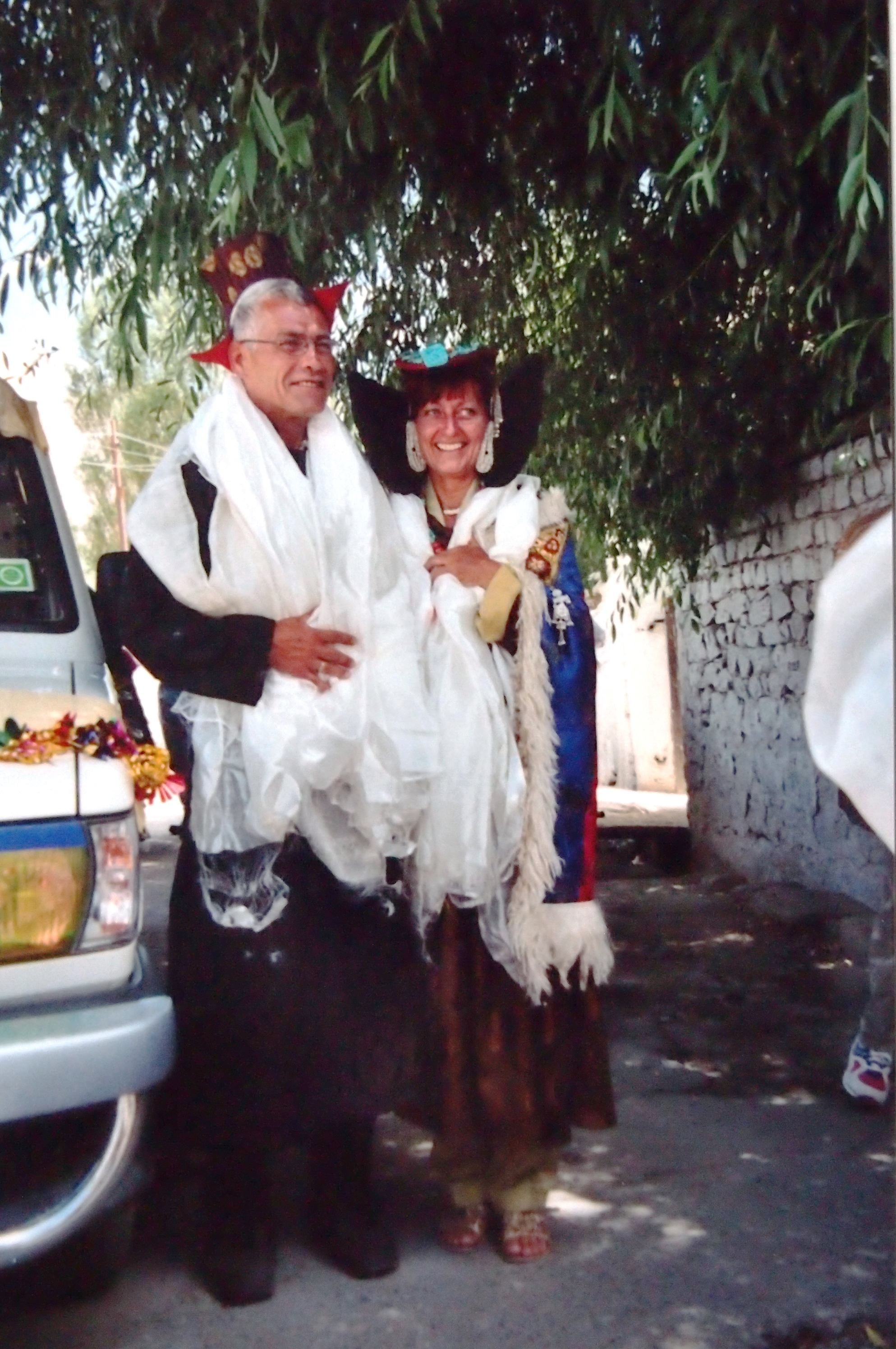
We arrived at the wedding reception at 12 o’clock. Quite a few other people were there too, most of whom we knew from earlier trips. The bridal couple arrived at 12.30 in a delightfully decorated car. They were clad in full formal dress, Buddhist wedding garments, each with an impressive headdress. Both were perspiring as though they were in a sauna. Prior to this, they had been married by four monks in the kitchen of a local private home. In accordance with Buddhist tradition, the bridegroom had had to wait for half an hour for his bride. The original idea had been for them to get married in the middle of the race, but they had opted for a traditional Tibetan wedding instead.
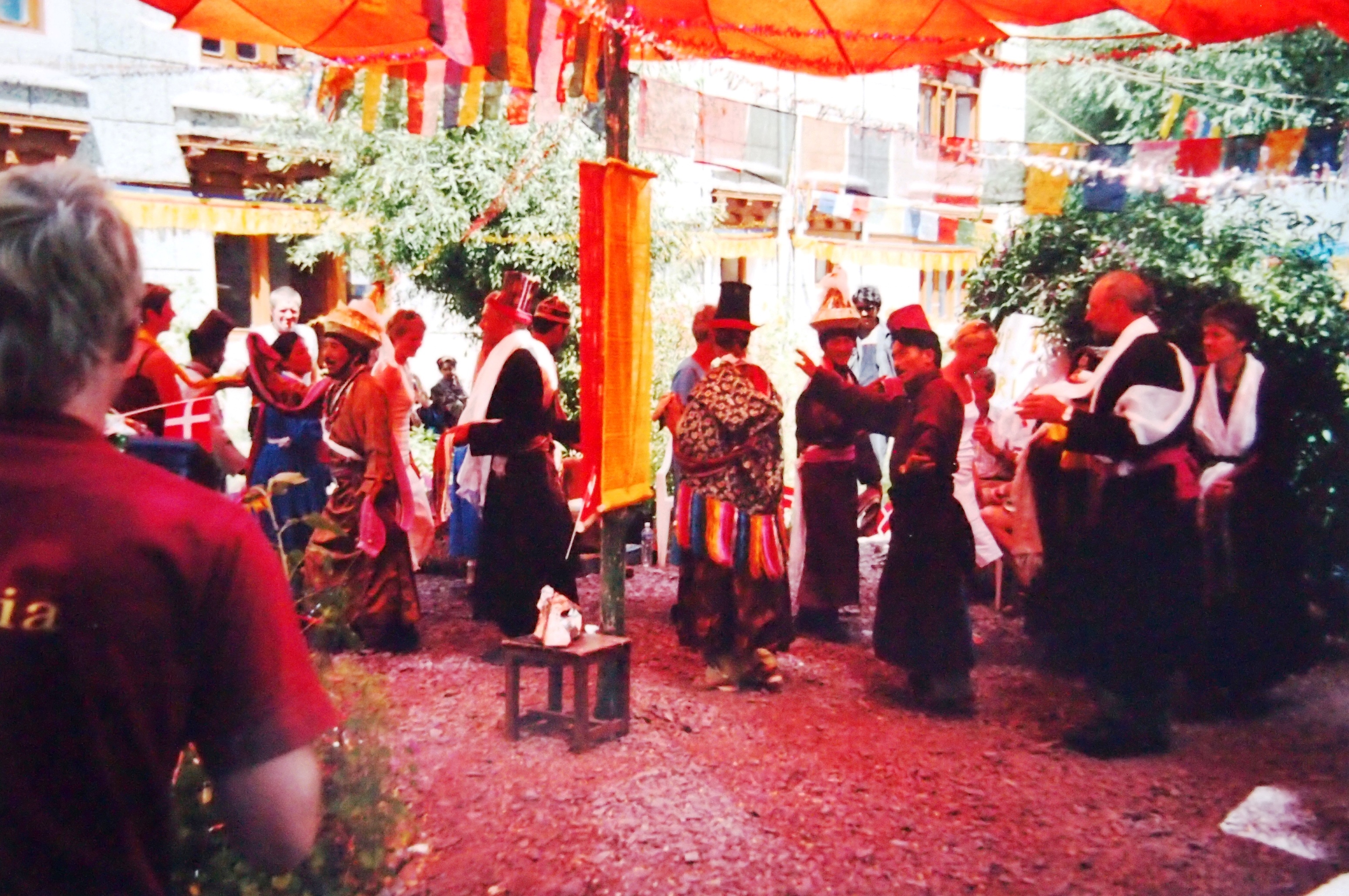
When the bridal couple arrived, all of us hung a silk scarf around their necks. After the photographs had been taken, we were shown to mattresses to sit on in the hotel yard. Here there was a performance by the local folklore group we had seen earlier. Later on there was dancing and a delicious buffet. The guests gradually began to leave the party, but we stayed for a while to see our present unwrapped. We got the impression that it gave them pleasure.
Pasta party
We had the afternoon to ourselves and spent some of the time enjoying the company of several other people from our group. Later on, there was a pasta party at a restaurant near our hotel, but soon after that was over we went home to bed because we had a marathon to run the following day.
Blackout
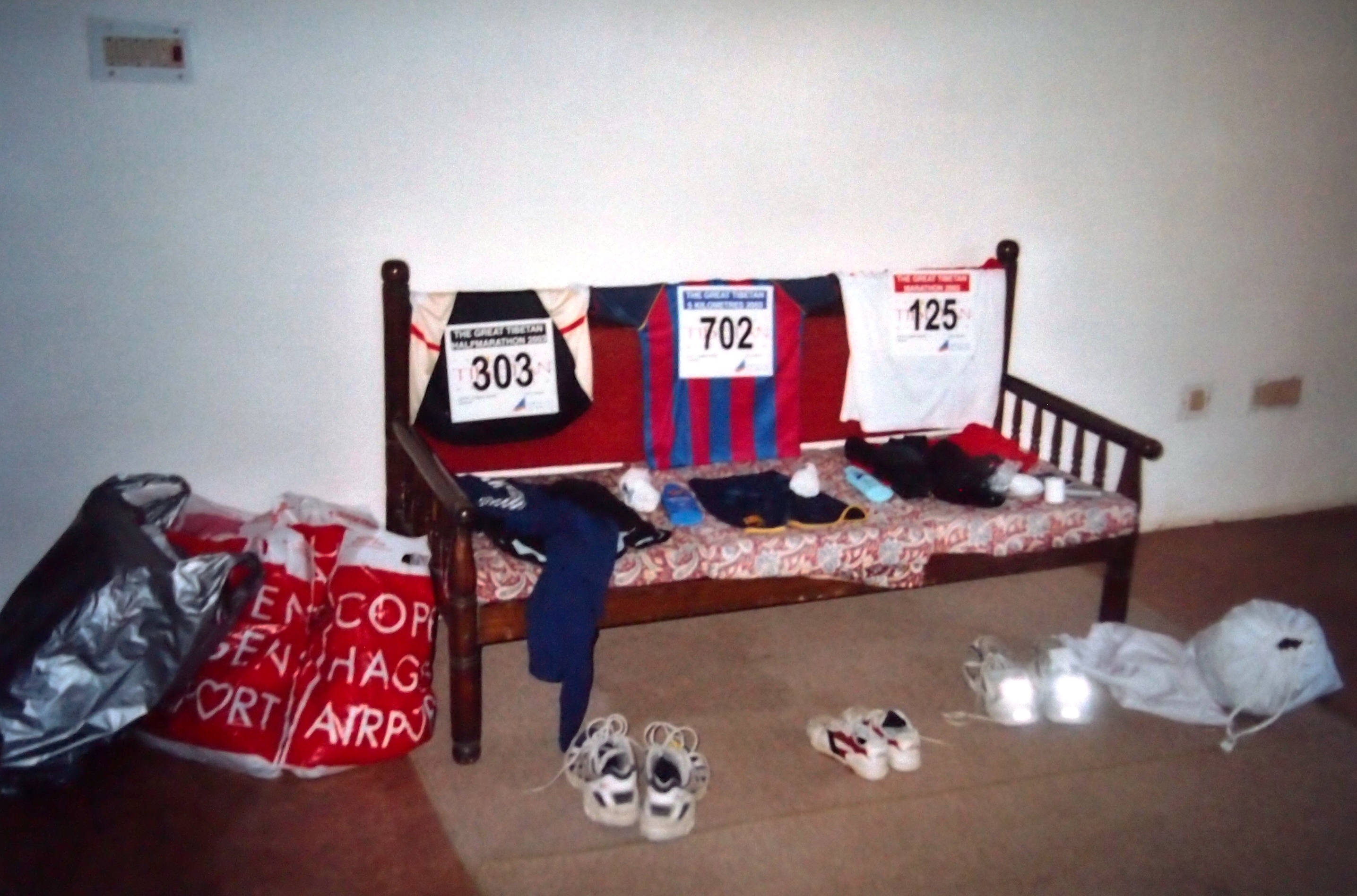
Saturday 16th August was the day of the big run. We were not unaccustomed to getting up early for a marathon, so our waking call at 3.30 a.m. was not a problem. But there were other problems, because there was no electricity anywhere in the hotel. To begin with we had to make do with the light given off by the screen of my mobile phone. It was a good thing, we had already laid out our running gear in logical order and pinned our start numbers to our jerseys. Fortunately, one of the hotel staff brought us two candles, which made things much easier.
We had breakfast and sang a birthday song together for a lady who just turned 37, and we were ready to leave at 4.30. During the drive of just over 45 kilometres, we experienced rain for the first time, but although it was refreshing, it had stopped before we got out of the car.
Prayers and blessings
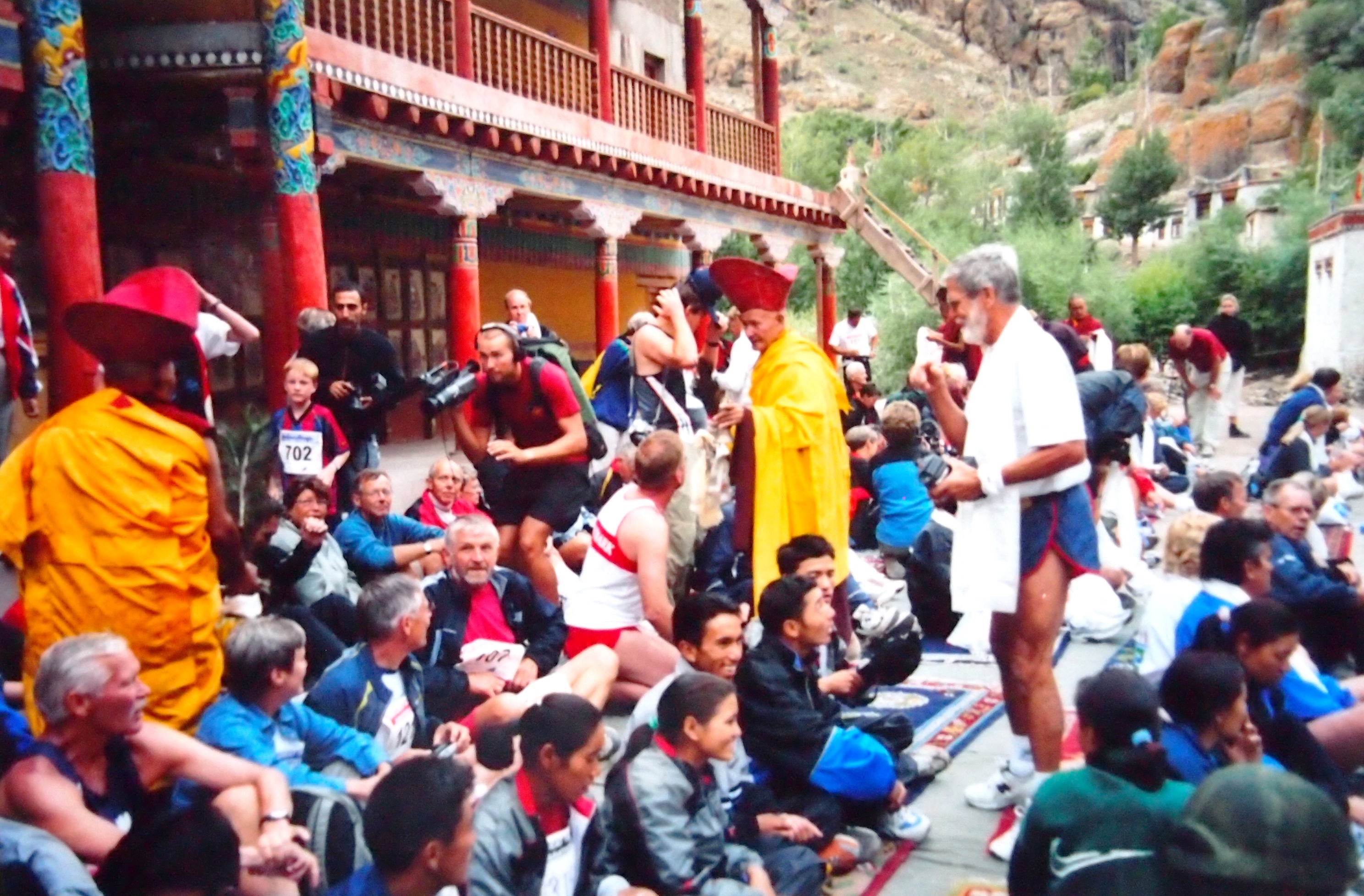
At 5.45 we were standing at 3,800 metres above sea level at the almost 350-year-old Hemis monastery. This is the biggest monastery in the area, as well as the wealthiest, with 500 orange-clad Buddhist monks. The monastery courtyard is famous for its huge religious festival, where masked monks perform ritual dances to the monotonous sound of traditional Tibetan long horns. Morning prayers were being said, and all the runners were blessed by the monastery elders. We were given silk scarves and holy water, and speeches were made.
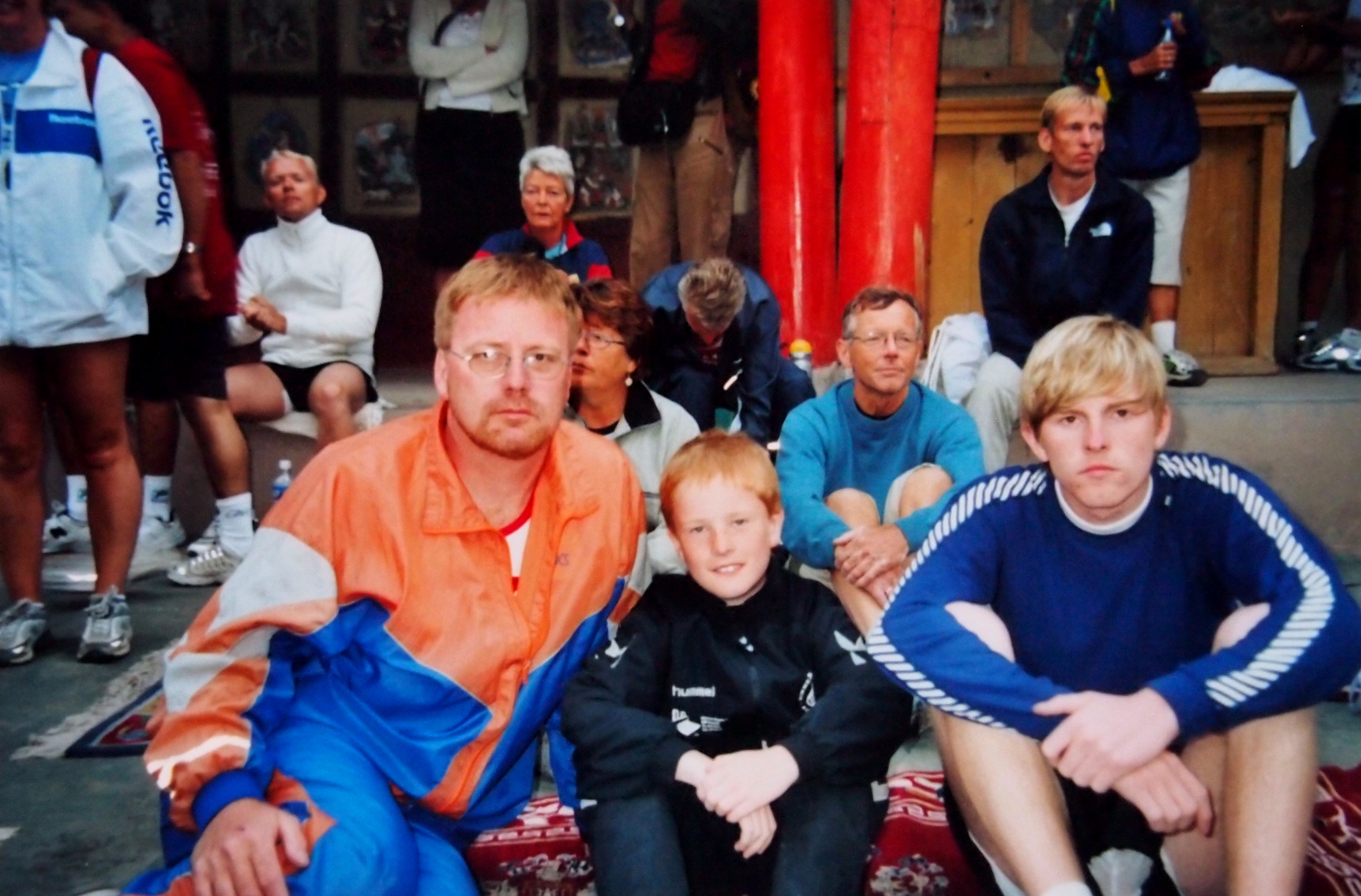
After the ritual was over, the runners of the half-marathon, ten-kilometre and five-kilometre runs were driven to their respective starts. Steffen was to run a half marathon, while Emil was accompanied by a lady who, like him, was to run the five kilometres.
The Great Tibetan Marathon
Of course, there’s no way you start a marathon in the Himalayas with a starting pistol. Instead, we were sent off at seven o’clock with great religious festivity at the prayer flag and to the tones of the long Tibetan horns which could be heard throughout the entire Indus Valley.
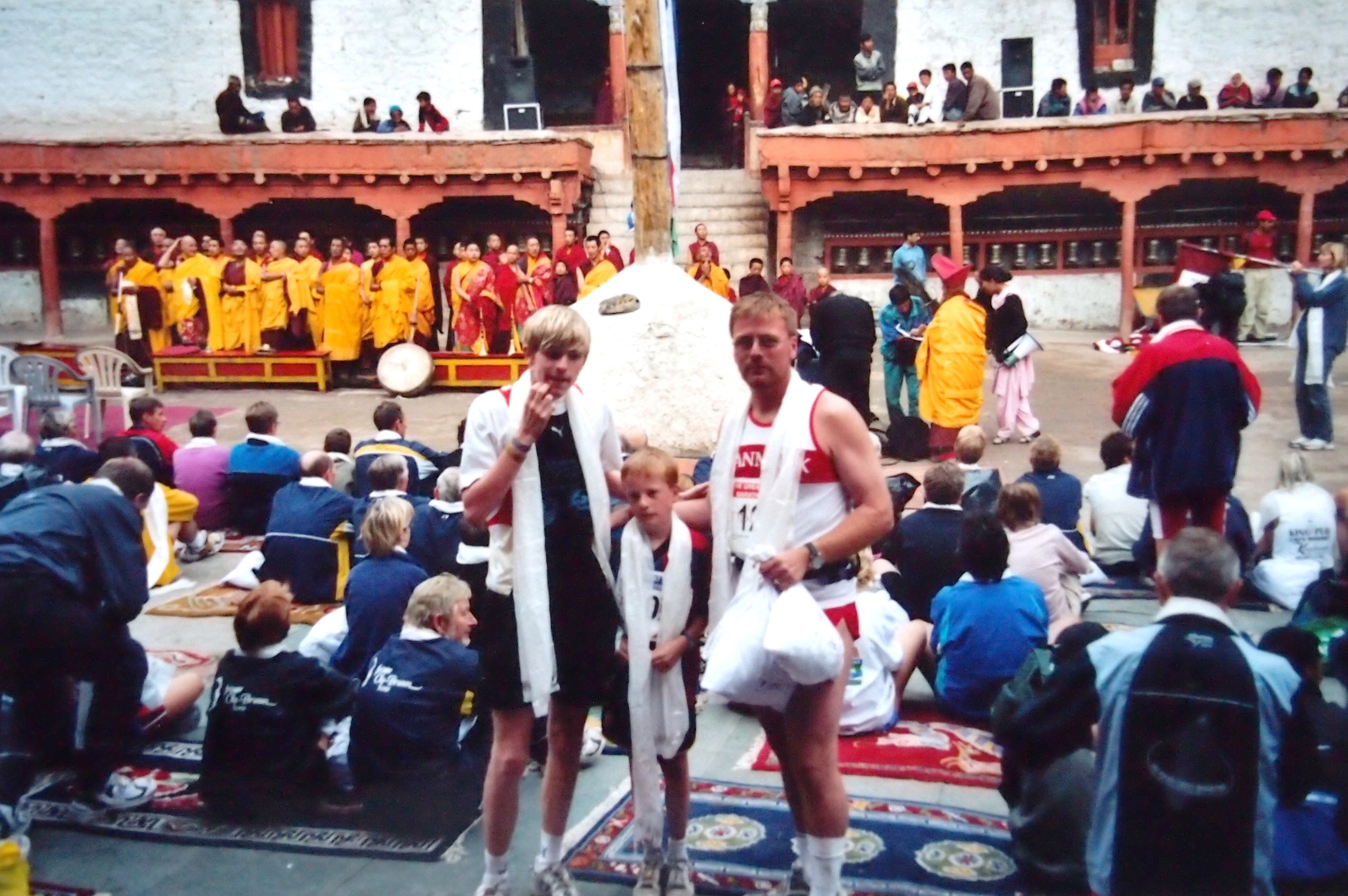
The start was in front of the door of the impressive main building of the monastery, and we left the courtyard through a gateway. There were 12 steps down to this gateway, which had particularly tall doorsteps signifying the building’s importance.
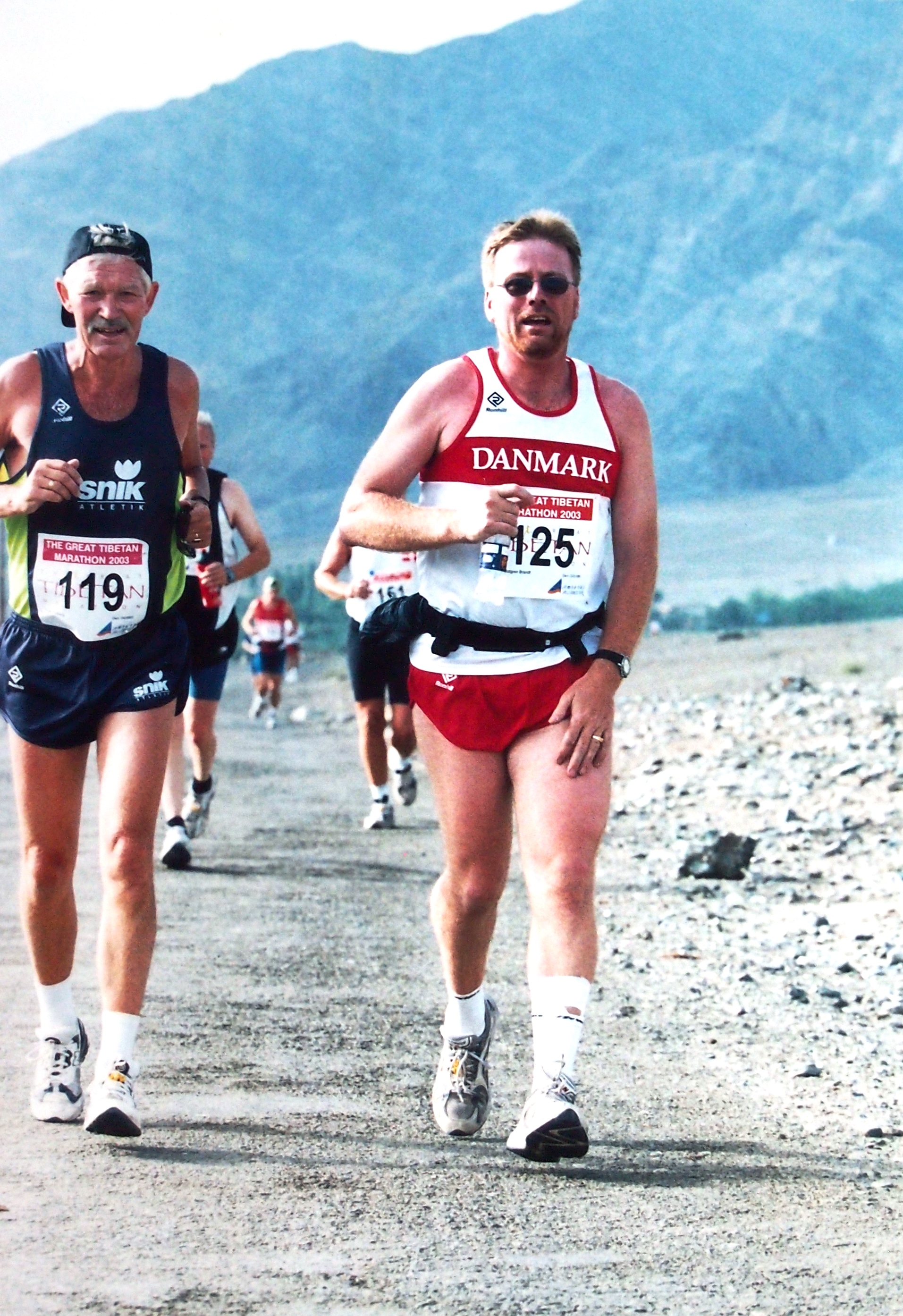
After the gateway, the route continued first down 29 and then 15 steps before we had solid ground under our feet. From here, there was a short stretch to a small car park before we reached the tarmac road and could find the right rhythm.
There were distance signs marking every kilometre along the route, and on this occasion we were counting down. So the signs were also compatible with the other distances, as we gradually reached their running areas. Water and toilet facilities were available every five kilometres. We were in safe hands in every sense.
We ran downhill for the first five kilometres, but we were advised to take it easy, which we did.
To begin with, I accompanied Peter Fredberg, as I had done on so many occasions, and it was nice to have the company. Later in the run, I was accompanied by others, although I ran alone most of the time.
The Indus Valley
The first few kilometres took us down to the bottom of the huge Indus Valley, where we followed the foaming greenish-blue River Indus. From here, we ran through small villages, passing Buddhist monasteries in lonely majesty on steep mountain slopes.
From the road, we could see a Mani wall which stretched from the monastery all the way down to the Indus, making it one of the longest of its kind in Ladakh. Mani walls consist of stone tablets bearing Buddhist inscriptions.
Variation
The ground varied between tarmac, stone and gravel, and boggy fields. In some places, we really did run “off piste” and one stretch of road was in a particularly poor state of repair. It had once been tarmacked, but on parts of the road the surface had been washed away by melt water from the mountains.
As we gradually descended, the area changed character from the barren rocky desert of the mountains with its harsh, desolate scenery to more colourful areas with tall, slender poplars along the roadside providing much-needed shade.
During the run, we passed several monasteries and ran through several villages. Some of these were populated by Tibetans and others by Muslims. As in other places I have run we were given a wonderful reception by the local inhabitants, who were out in large numbers to follow the day’s event and to applaud us.
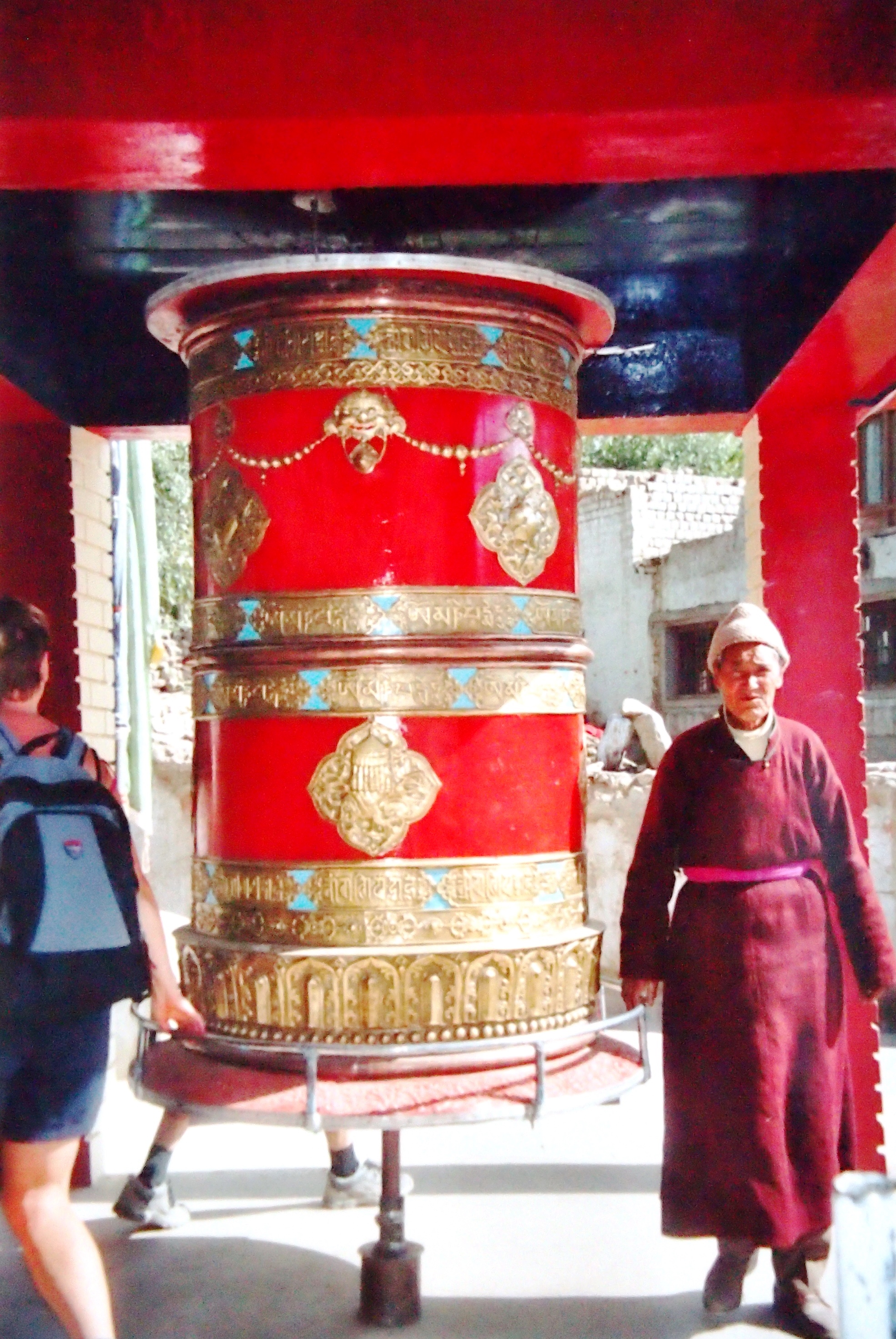
We passed by a huge prayer mill, soon followed by a large mosque, and after 30 kilometres we came to Chusod Yokilometera. This large Buddhist monastery is where descendants of Ladakh’s ancient royal family live. At this point, I began to have difficulty breathing. I don’t know whether it was the thin atmosphere that was to blame, or overheating.
Along the stretch where the ten-kilometre run began, we ran parallel with the river and the road led us through a mostly Tibetan village consisting of large stone houses built in the traditional style. Here we saw stupas, prayer flags and lots of small Mani walls. We could be in no doubt that we were running on the “roof of the world”.
We crossed the River Indus three times along the final stretch to the finish and a delightful cool breeze along the river made it all much easier.
The last five kilometres went very slowly for me. I ran through fields and marshy areas scattered with trees and grazing goats, sheep and cattle.
Celebs
As in previous marathons there were a couple of celebs with us, both from China 1999. Henrik Ørum, who had come to fame in Denmark through his participation in the TV programme the Robinson Expedition, was running his second marathon, while Bettina Aller was an experienced marathon runner. I ran alongside Bettina on this last stretch, where we ran with the same rhythm and had the energy to chat. We were eventually able to hear the traditional Ladakhi music and realised that we were approaching the finish at the Spituk monastery half a dozen or so kilometres outside Leh.
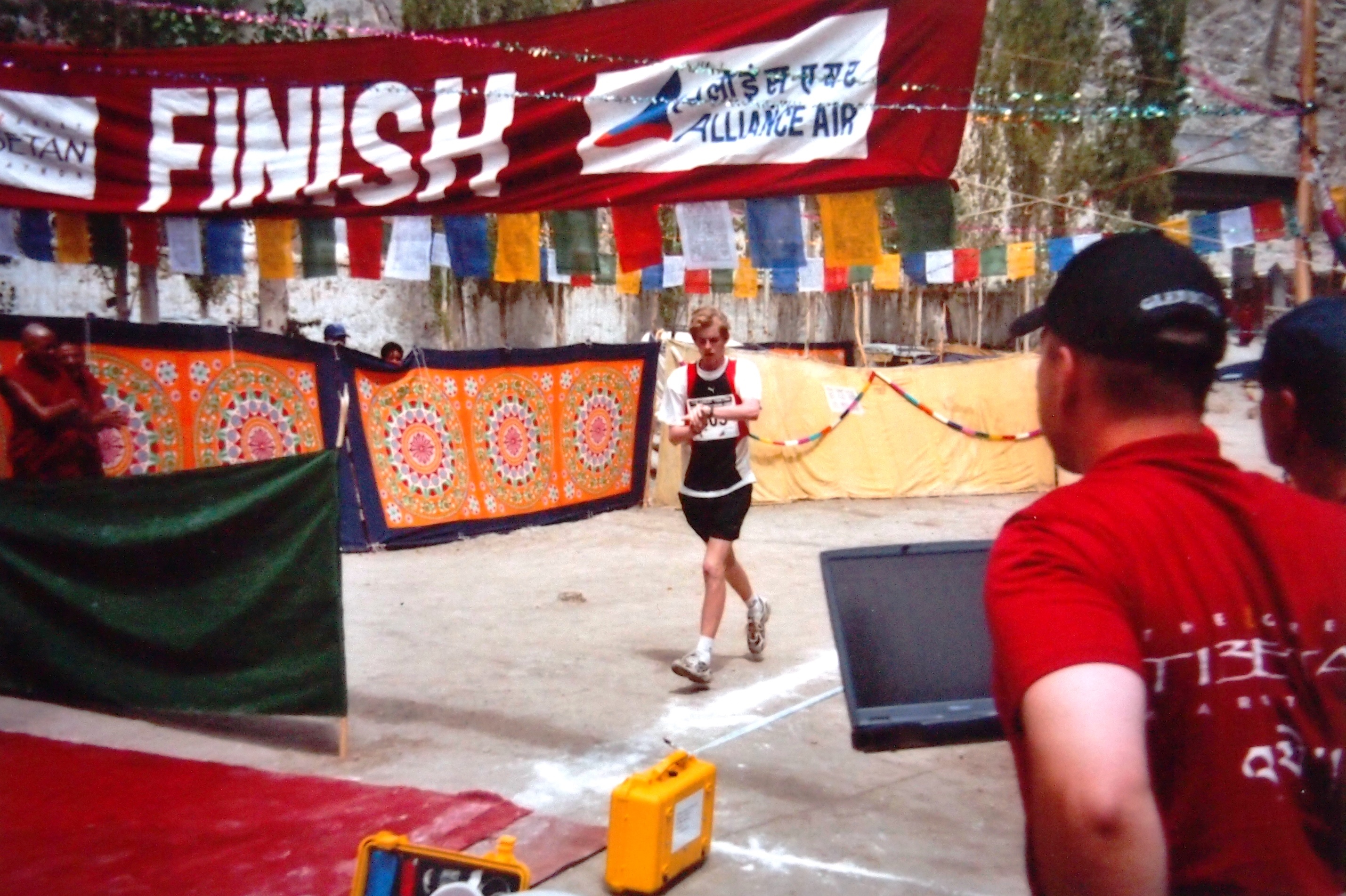
Just before the finish, Bettina’s daughter came running towards her. Like her mother, Bettina’s daughter was wearing a number seven on her chest, and they ran together across the line while I deliberately held back a bit, so they could have their finishing photo together without me cluttering up the picture.
Completed
I crossed the line with a time of 5:49:16, and as well as the clapping, I was also welcomed by the monks’ drums and monotonous prayers. I was able to ascertain that the run had not been tougher than The Great Wall Marathon, even though somebody had claimed it would be. It had been tough, though. We had run from a height of 3,800 to 3,400 metres, and I could feel it. I was both tired and happy but made a brief, uneventful visit to the medical tent for fluid and ventilation.
Steffen had also experienced problems but came in with a good time of 2:37:35. He, too, had paid a visit to the medical tent for treatment. Emil also did well in his five-kilometre run with a time of 0:34:36.
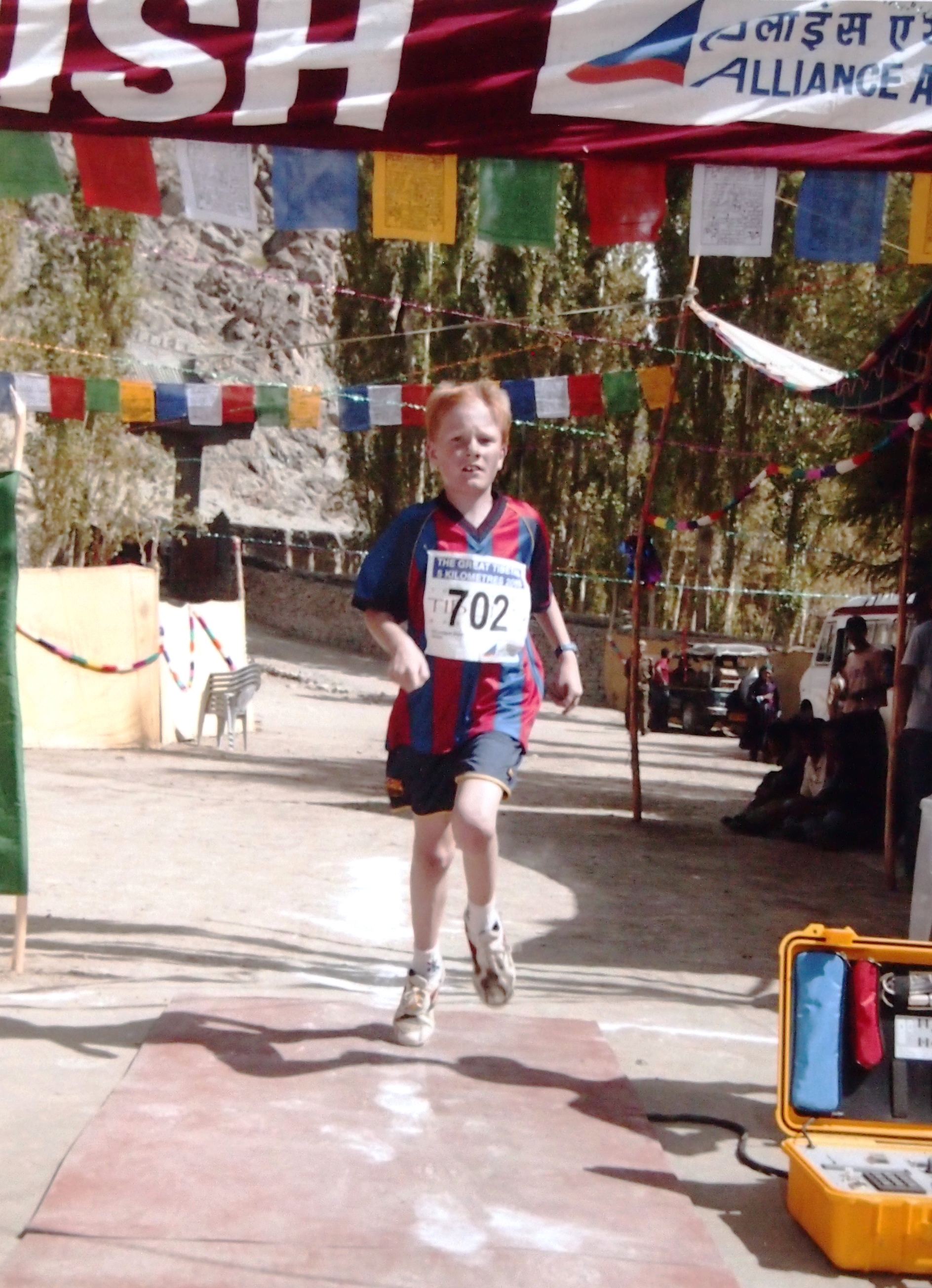
The race had been dominated by Danes, but three Indians crossed the line in the first three places, the winner with a time of 2:59:43. There was sure to have been one person who was glad not to have lost 18 seconds.
A very special gesture
After I had regained my strength and had some food, Elisabeth told me that some young people had been standing at the finish waving a Danish flag and a banner with my name on it. Elisabeth had spoken to them, and they also wanted to meet me.
I walked over to the two young people, who turned out to be a young couple in their mid-20s. They had been in the area for a month or so and had now suddenly met a crowd of Danes. They had spoken, among others, to Peter Fredberg, who had told them about The Great Tibetan Marathon. The woman had run four marathons herself, and being keen on the sport they had decided to follow the run as spectators. They had also e-mailed the folks back home and told them that they would be watching The Great Tibetan Marathon. As fate would have it the woman, Trine Juncher Jensen, was the niece of Jens Juncher Jensen from Lejre. At that time, he was the chairman of Roskilde Swimming Club, of which I was the treasurer. Juncher had written back to Trine and Christian and asked them to send me his greetings. Trine and Christian had, therefore, made a banner with best wishes from Juncher and his family, and had sewn a large Danish flag, and the stood waving these all day as runners crossed the line. When I realised the connection, I was very moved and could feel tears forming in the corners of my eyes. They presented me the banner which I still have in my folder as a memento from that run.
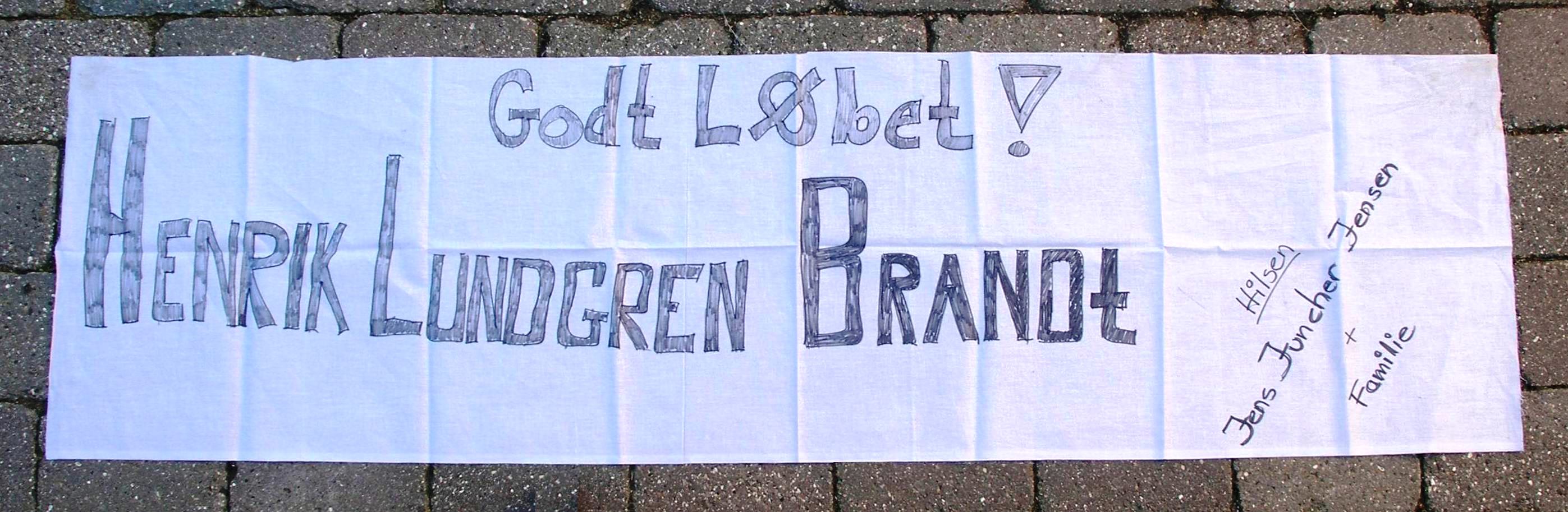
Christoffer from Albatros Travel had caught sight of Trine and Christian and sussed out their connection with the run. He asked if it was okay with me that they were invited to the gala dinner, because then the organising committee would bid them welcome as guests. Of course, I wanted them to join us at the gala dinner, and it was agreed that they would drive with us from our hotel that evening.
Completed with a broken arm
Ketty with a broken arm crossed the line in style, and for the second time I was so moved that I felt the tears welling forth. I really thought it was wonderful that only six days after her accident she had been able to run a marathon with her arm in plaster. I had, however, not been in doubt at any time that she had the will to do so, and I knew that she could complete the race. There was actually another lady who ran the race with her arm in plaster – iron ladies.
The First Minister of Ladakh, Kashmir and Jammu
Thomas came over to me at the finish to tell me that the First Minister of Ladakh, Kashmir and Jammu would be coming to make a speech and present medals to some of the race’s participants. Thomas had decided that the boys and I should be among these runners. He, therefore, asked me to be on standby when the minister arrived.
This assembly very nearly took place without Steffen’s participation. He was resting and was not feeling too good. Our nurse, Nini, had noticed Steffen was not in what she would call a satisfactory state of health and had, therefore, sent him to the medical tent to be examined. Fortunately he turned out to be reasonably well, but it was reassuring that Nini had been so observant and responsible.
A parody
The ministerial visit developed into a pure parody. First we had to wait for him for ages, which to me seemed highly disrespectful. Then it turned out that he was completely unprepared for the event. In his speech he welcomed us Danes as inhabitants of England, Germany and Holland. There had been no runners from any of these countries, and nor did he know what distances we had run.
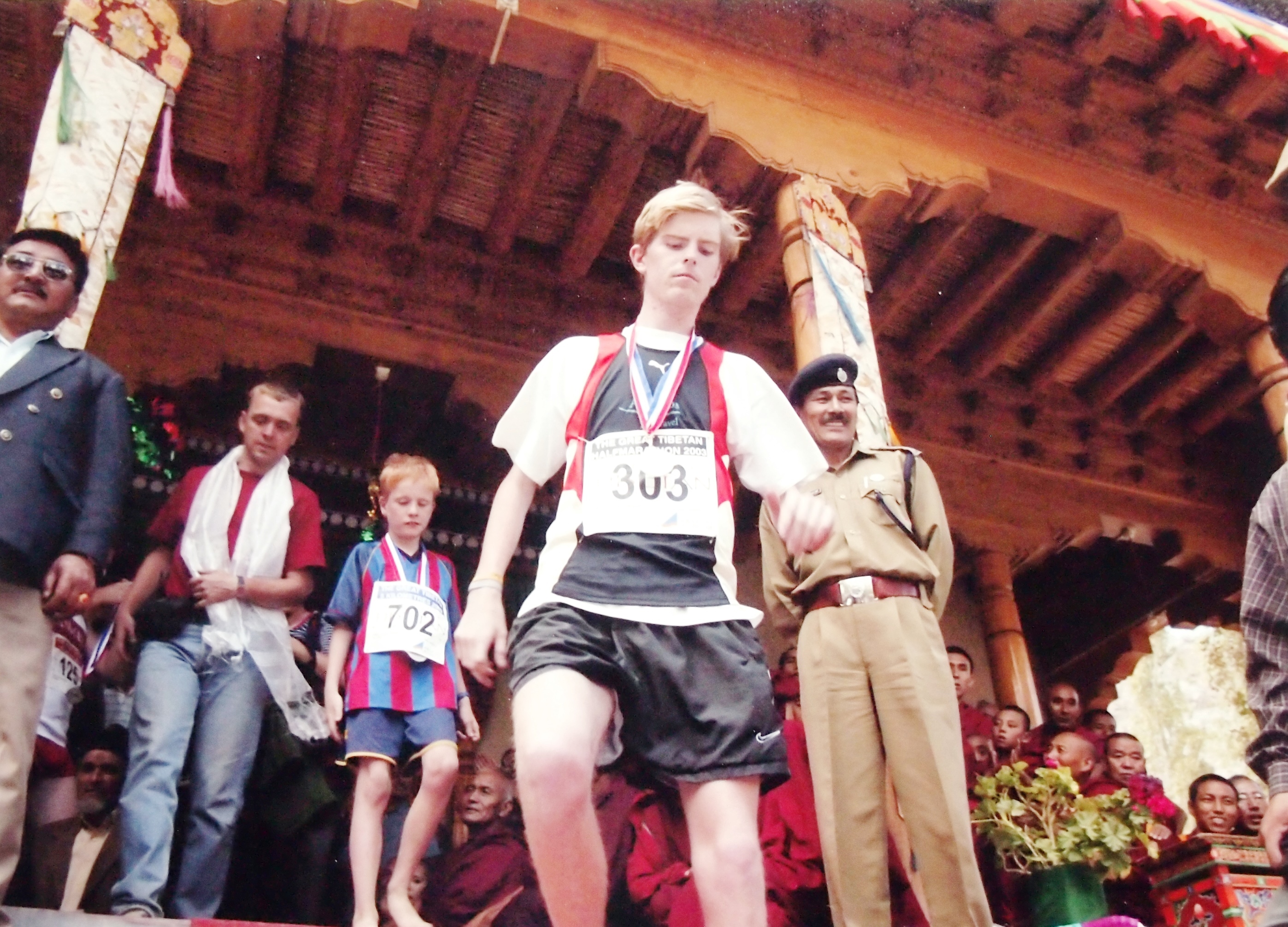
Our brief encounter with the minister was completely superficial on his part. He was not in any way interested in us or our run. His agenda was simply to score some goodwill from his voters. We could well have done without the wait and the perfunctory scene. It was fun to talk about it afterwards but on that day we would rather have been back at our hotel.
Taking stock
The run had been feared for a number of reasons, not least the thin atmosphere. All the precautions that had been taken meant that the marathon had been run without much complication. The doctors concluded that four runners had dehydrated and needed to be put on a drip; seven were treated for grazes after falling, four had vomited and one diabetic had experienced blood sugar problems. All of them had recovered, however.
Rain, extremely rare in this area, had fallen the evening before the race and afforded the runners almost perfect conditions. The air was clean and clear, and the temperature stayed below 22°C in the shade.
Champagne, wine and beer
In the middle of the afternoon, we gathered on the lawn in front of the hotel, where champagne, wine and beer was served, and we had a good time. It was all well-deserved on top of the day’s achievements. Unfortunately, Steffen didn’t feel too well and didn’t take part. He had to stay in his room and rest all afternoon.
Emil and I went for a walk together into the town, and when we returned, I also felt unwell and very hot. I really had to force myself to pack my bags and get ready for the evening gala dinner. Both Steffen and I benefited from some fresh air later on.
Avenue of torches
At 7.30 p.m., the group met in the garden, where we were joined by Trine and Christian. We were then driven to the evening gala party.
It all began very ostentatiously when we arrived at an outdoor area which we entered through an avenue of flaming torches. It was actually a whole sea of torches and incredibly beautiful. We were then shown to mattresses in front of an open area on the lawn.
Festive folklore – while it lasted
Without any formal introduction, the folklore group we had already experienced twice began its performance. Between each number, a spokeswoman told us about the dances. It was all very splendid, but the problem was that it felt as though it would never end. We waited to something else to happen, but they obviously intended to be the main act of the day.
We sat and waited for a welcome speech by our organiser, which would also involve being given the signal to eat. But it didn’t happen simply because they didn’t get the chance. A member of the Albatros staff took the microphone and tried to start the official programme, but the initiative was ignored by the locals who were in control of the technology and organisation of the event.
Anarchy
People gradually began to get impatient, and as they did, they went and fetched beer and water. The food was being set out on tables, and there was no doubt that this was to have been just as grand as the beautiful avenue of torches we had previously walked through. But that’s not the way it was to be. On the contrary.
People from the local area who had nothing to do with the gala dinner for The Great Tibetan Marathon had quietly wandered into the area. They eventually formed the majority and started a gruesome fight over the delicious food. People were simply plundering the dishes before they had been laid out properly. It was really repulsive and uncivilised.
Corrupt minister
It turned out that the First Minister of Ladakh, Kashmir and Jammu and his followers had arrived without invitation or warning at the party. Apparently it was they who had invited the local population. The lengths to which people will go to score votes!
When the folklore group finally took a break, the spokeswoman made a speech. It wasn’t for the runners, though; it was for the Minister. We were completely ignored, and our gala party was usurped. Noisy disco music soon rang out of the loudspeakers, and the locals danced wildly as we looked on, gobsmacked. Our organisers attempted in vain to intervene and start the official programme of speeches and tributes to the runners. But it was no use, the battle had been lost. In the end, we crept off home and had a beer in the restaurant at the hotel before bedtime.
Farewell to Leh
You would think that, after a tough marathon and an attempt to hold a gala dinner, you might be allowed to sleep a little longer on the Sunday. But we were not. We were woken at four. Fortunately the lights were on that morning, so we could pack properly, eat breakfast and leave within an hour.
We flew out of Leh at 7.30 a.m. and were in Delhi an hour later. True to tradition, Elisabeth nearly didn’t make the flight because she had her all-important stick with her, and this had been considered a potential terror weapon.
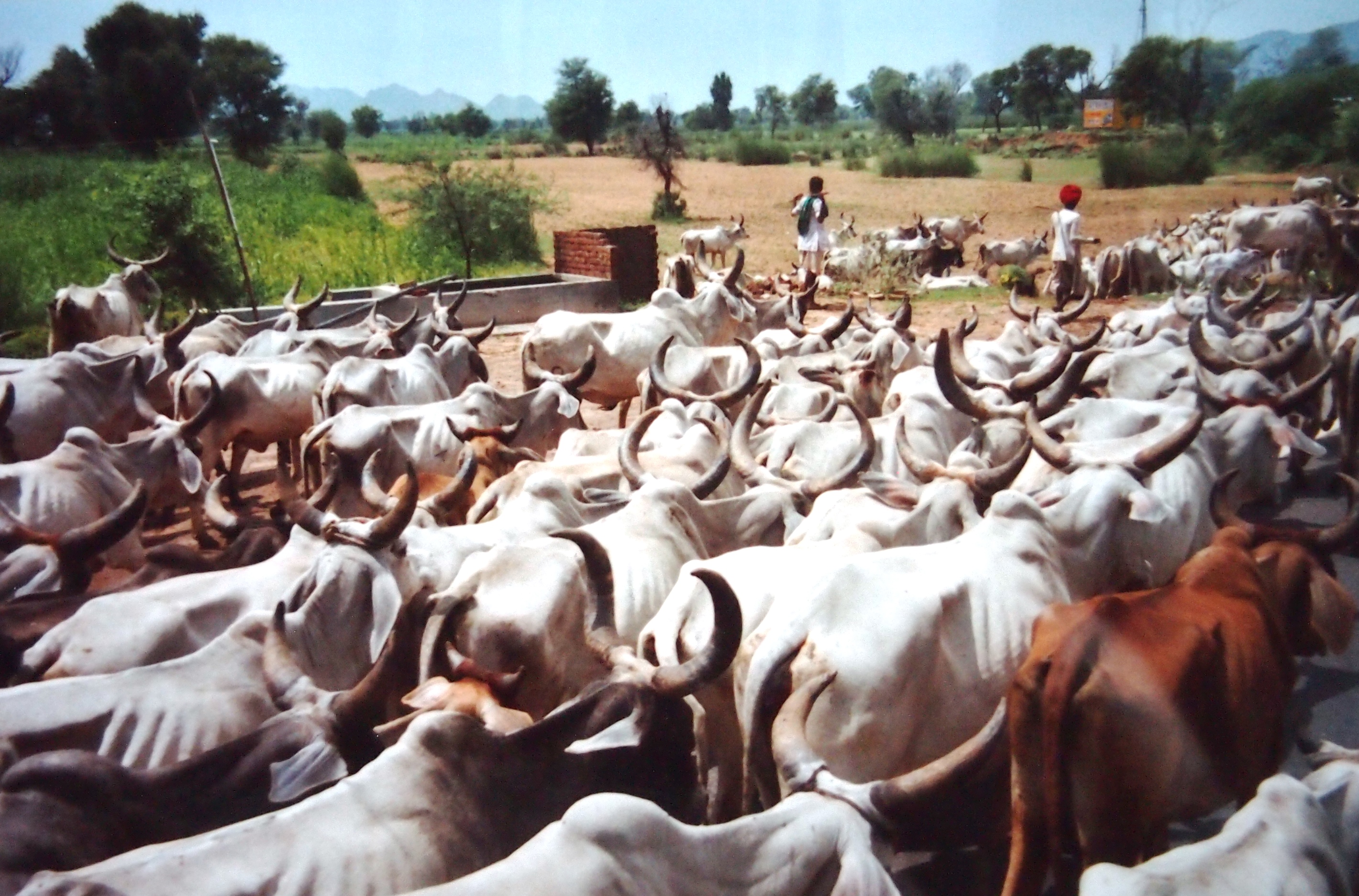
From Delhi, we drove to Jaipur, which was a long trip with stops for lunch and other necessities. Fortunately, several of us managed to get some sleep on the bus journey.
Jaipur
In mid-afternoon, we arrived in Jaipur, also known as the “Pink City”, and set out on a sightseeing tour. Everywhere we went we were more or less assaulted by street sellers pedalling all kinds of things. For instance, we visited the palace in central Jaipur with its unique sampling of royal costumes, carpets and weapons.
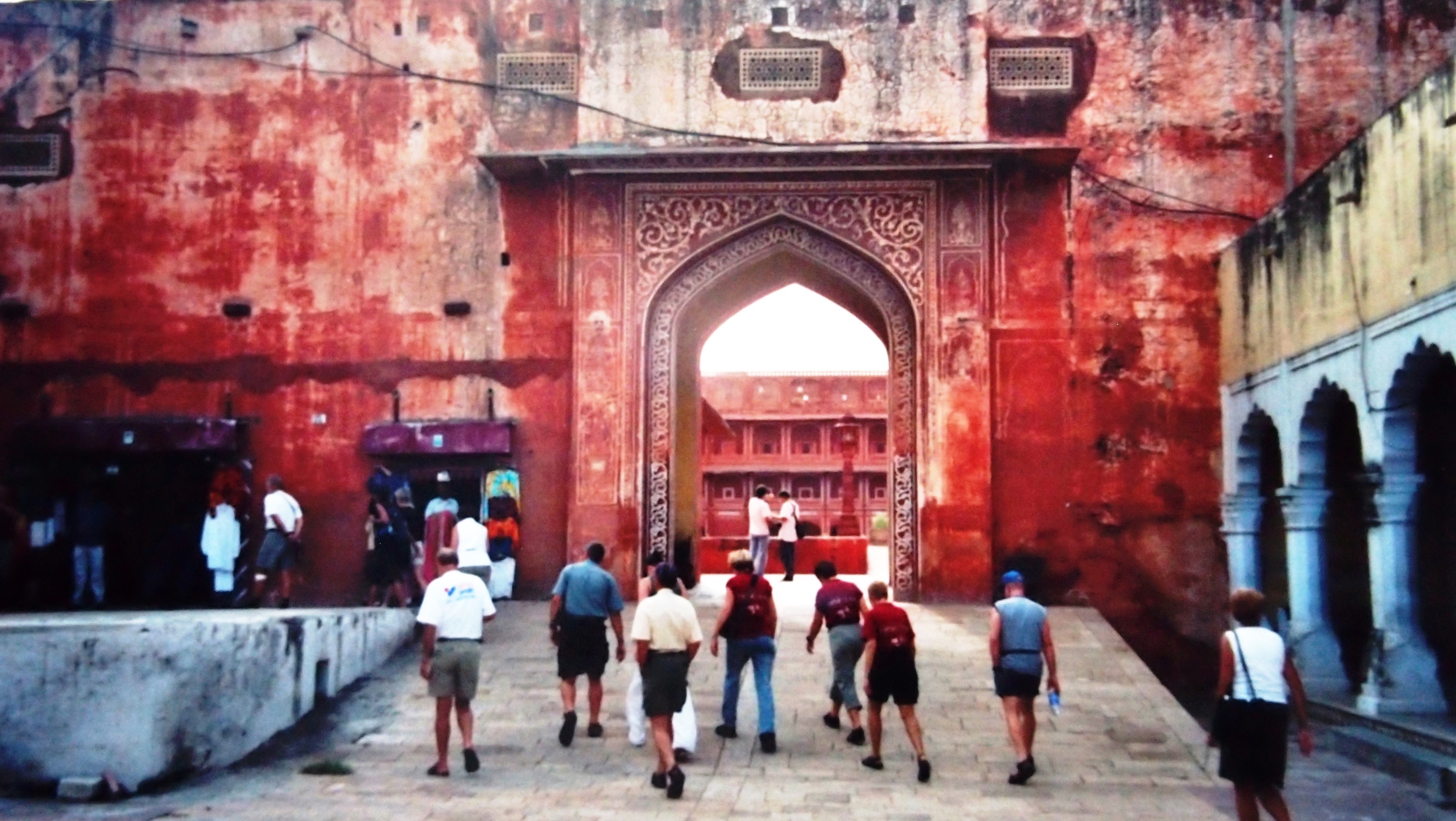
That evening we checked in at the charming Rajputana Palace Sheraton Hotel, which without a doubt overshadowed all the other places we had stayed at on this trip. We had supper there before retiring just before midnight.
Palace of the Winds
Monday, we were allowed to sleep a little longer than usual and after breakfast we continued on our tour.
The first stop was the Palace of Winds, an architectural wonder, with its spectacular pyramid shaped facade and overhanging leaded windows, domes and spire.
Outside the palace, I was about to come to grief because I twisted my right ankle stepping onto the road from the very high pavement. I immediately envisaged a sprain like the one a year ago and yet another period without being able to run. But I was fortunate, and one of the irritating street sellers helped me up and subsequently made a trade out of it. My foot felt sore the next day or so, but fortunately that was all.
The back of an elephant
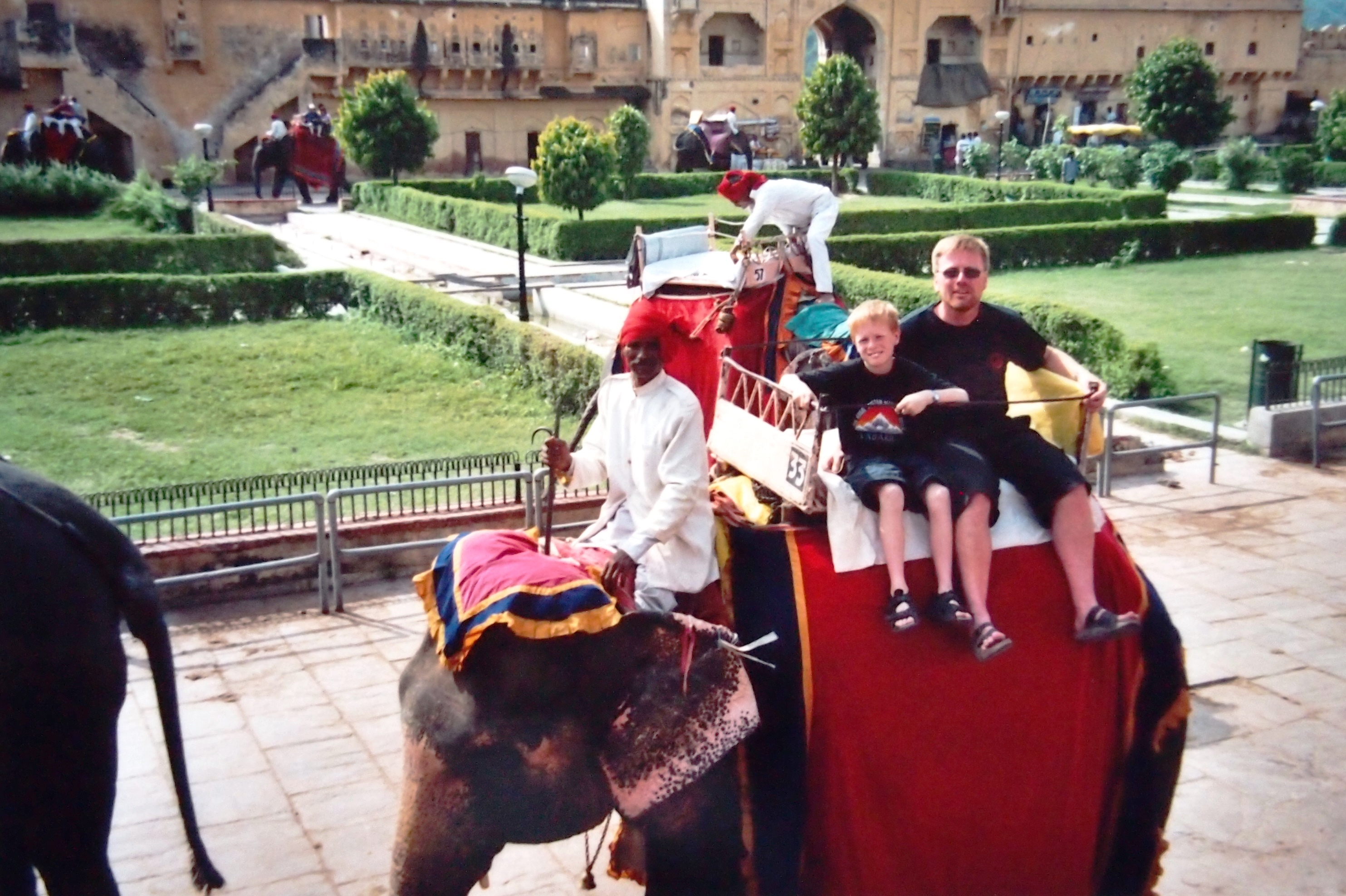
We continued on to the Amber Fort, which is located high on a hill, surrounded by a broad ring of jagged watchtowers and fortifications from which there is an outstanding view of the Moatha Lake. We were taken up to the fort on the back of elephants. Each elephant could carry four people, and it was a fun and unrivalled experience. But the elephant driver was no different from other Indians, and he asked for a tip even before we had stopped. Of course, he wasn’t satisfied with what we gave him, but we had given him the going rate according to our guide.
There was a lot to see at the fort, so we spent quite a long time there and were fortunate enough to be shown a room tourists are otherwise not allowed to see. It was a dark room with small mirrors all over the walls, so when you lit a candle the sight was fantastic.
Rug trade
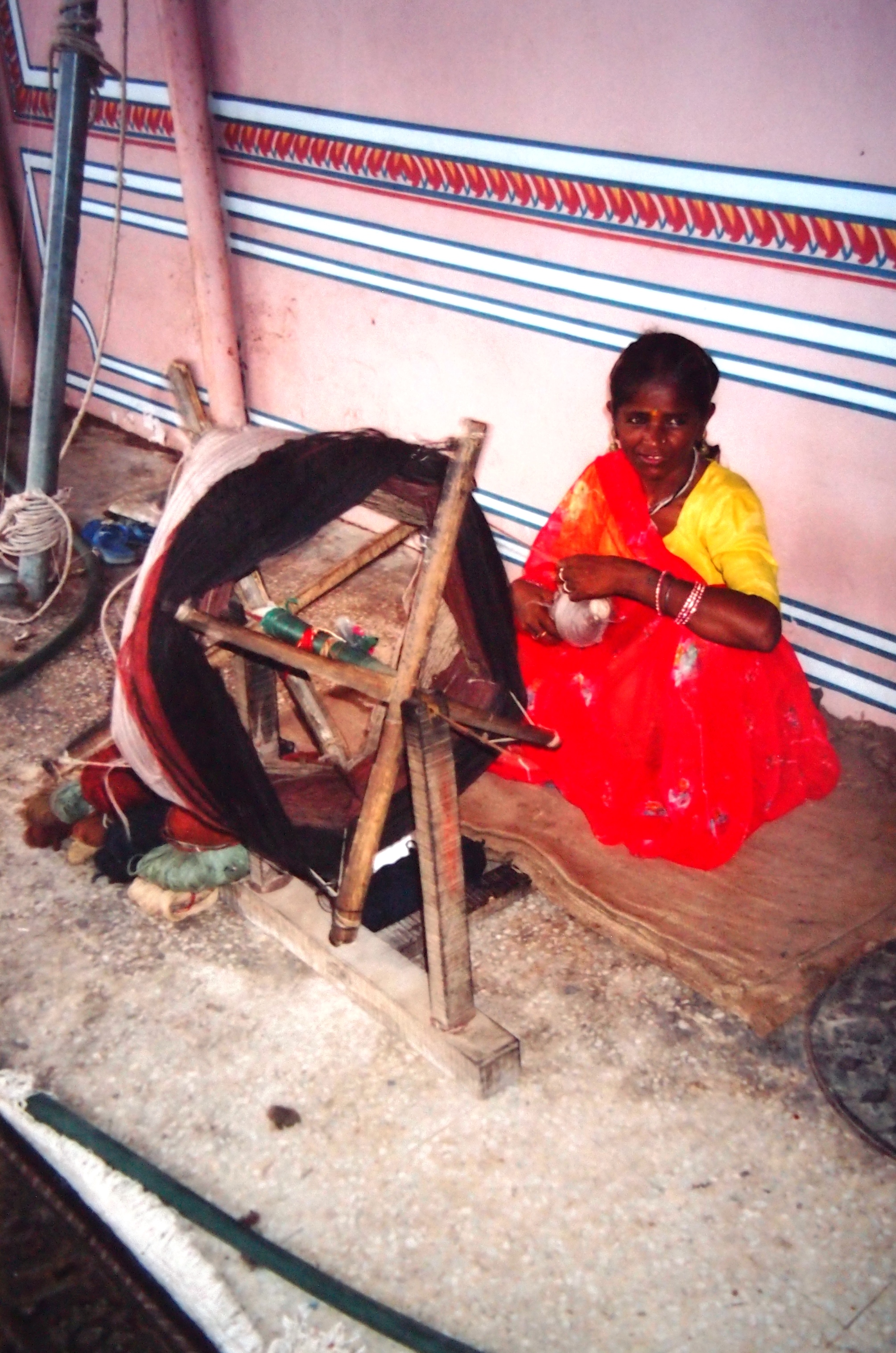
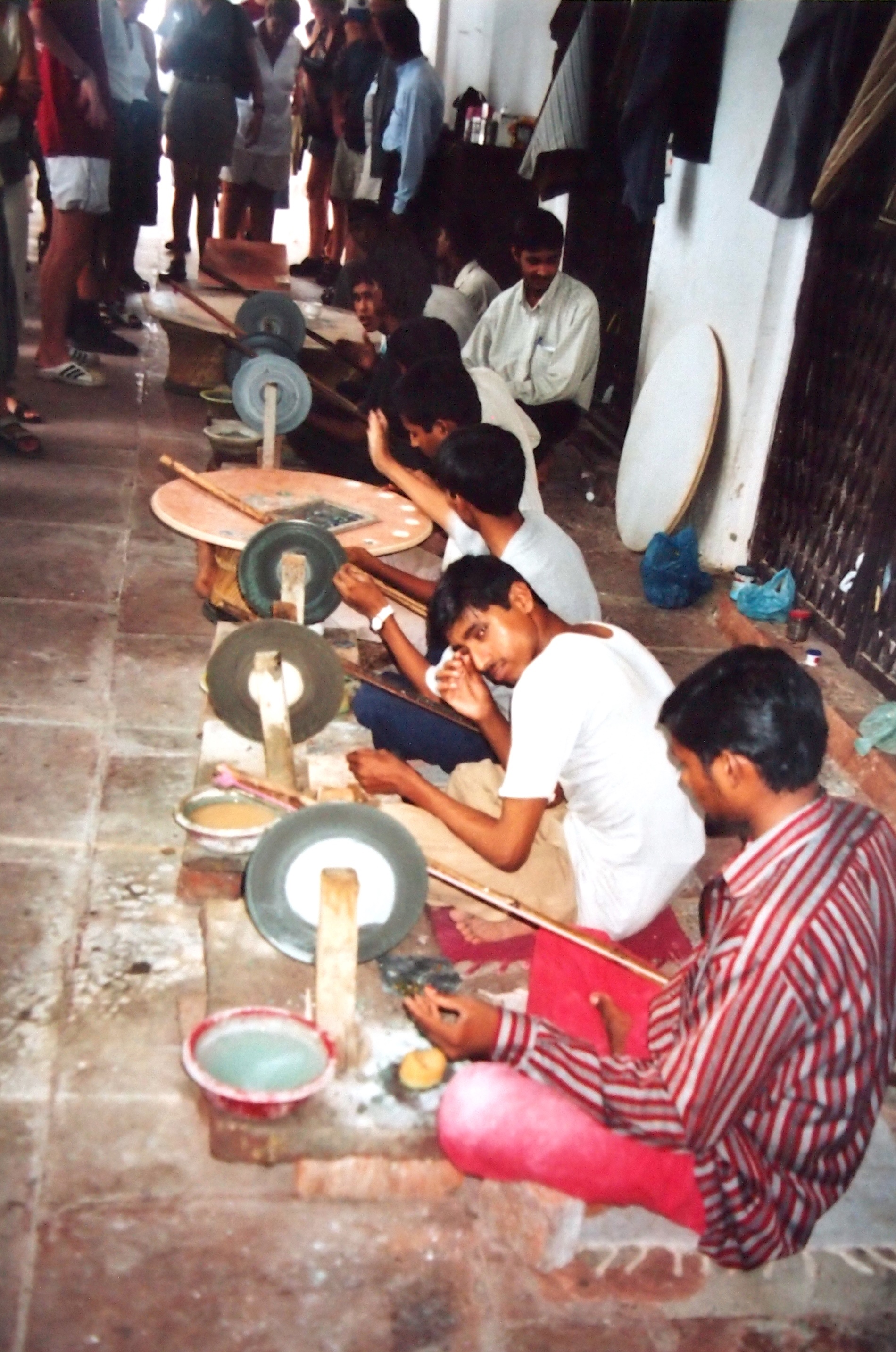
Before lunch, we visited a rug factory, where we saw the incredible work that goes into making an oriental rug. This kind of rug involves months of work, so the price they charge is actually incredibly cheap. Having seen them being made we were offered rum and cola while we were presented with the finished products. Emil was given a small rug while the rest of us were shown rugs worth from hundreds of US dollars up to tens of thousands of dollars. The most expensive rugs were made of silk on silk.
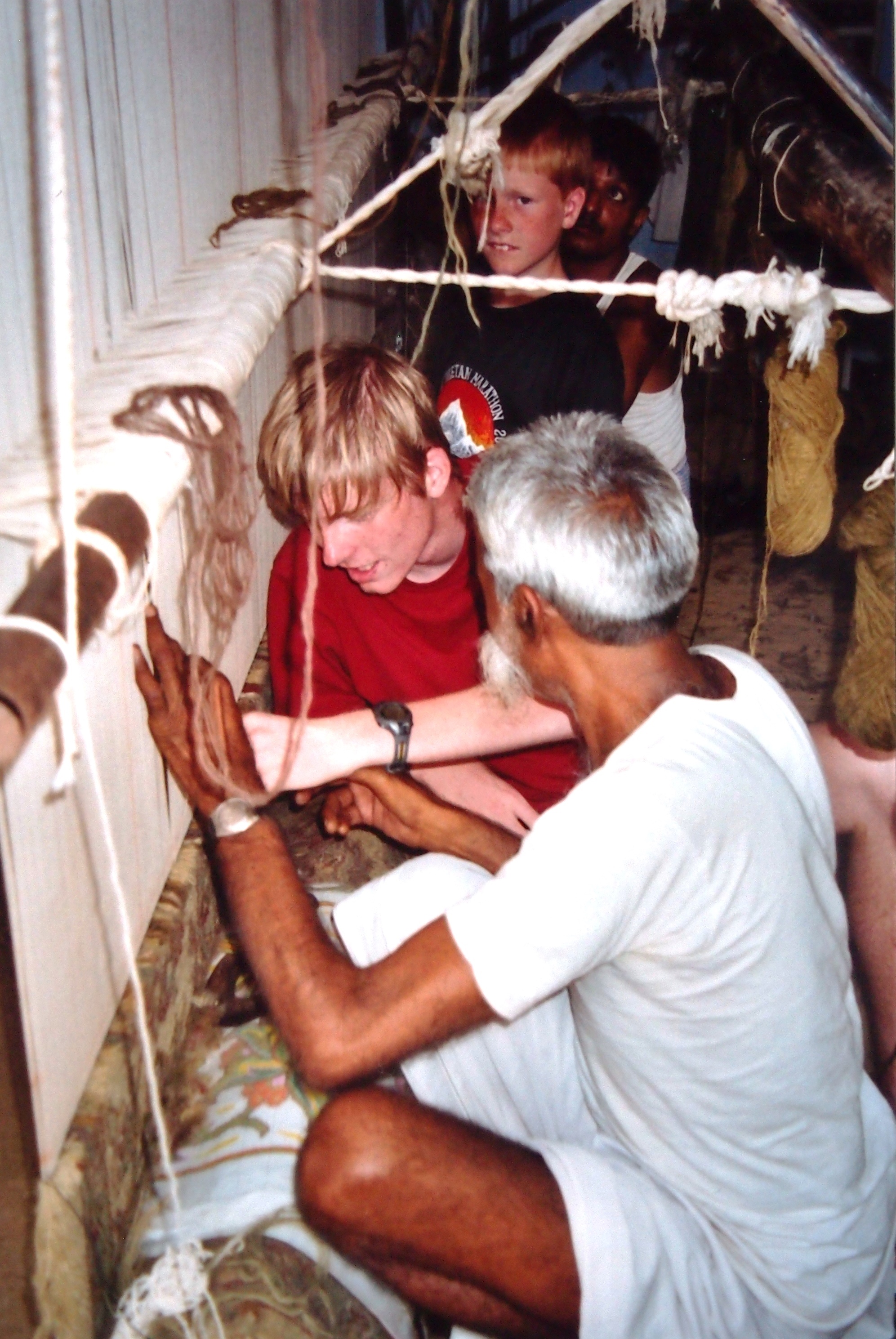
I had not intended to buy a rug but ended up doing so all the same, and because several of us made purchases we were able to obtain a “family discount”.
An exhausting bus ride
We ate lunch at the hotel, which was a bit hard to reach due to traffic chaos caused by a demonstration in the town. Afterwards, we gathered our luggage and were now ready to leave Jaipur.
Our next stop before we left town was at the fantastic Jantar Mantar Observatory, where they had been able to interpret the position and movement of the planets since ancient times.
We then set off on a long and rather exhausting trip to Agra. We drove down bumpy roads full of traffic and through small villages. Thousands of cyclists were riding along the dark roads, and none of them had lights on. I sat there fantasising about the fortune I could make selling bike lamps in a place like this. But that would likely end in disappointment as I would be unlikely to be able to sell very many of them.
As we approached Agra, one of the windows in the bus was smashed, which put paid to the efficiency of the bus’s air conditioning system. It was a good job this happened late in the day. I never found out why the window broke.
Bag-in-the-box wine
We arrived at the Hotel Mughal Sheraton at ten in the evening, and it was of the same standard we had experienced in Jaipur. After being shown to our rooms, we went to eat supper in the restaurant.
Later on, some of us gathered in one of the rooms to empty a bag-in-the-box wine bought at Copenhagen Airport. We went to bed around midnight.
Taj Mahal
During our final night in India, we were allowed to sleep a little later and after breakfast we set off on a morning excursion. Fortunately, the broken window in the bus had been replaced by a sheet of tin.
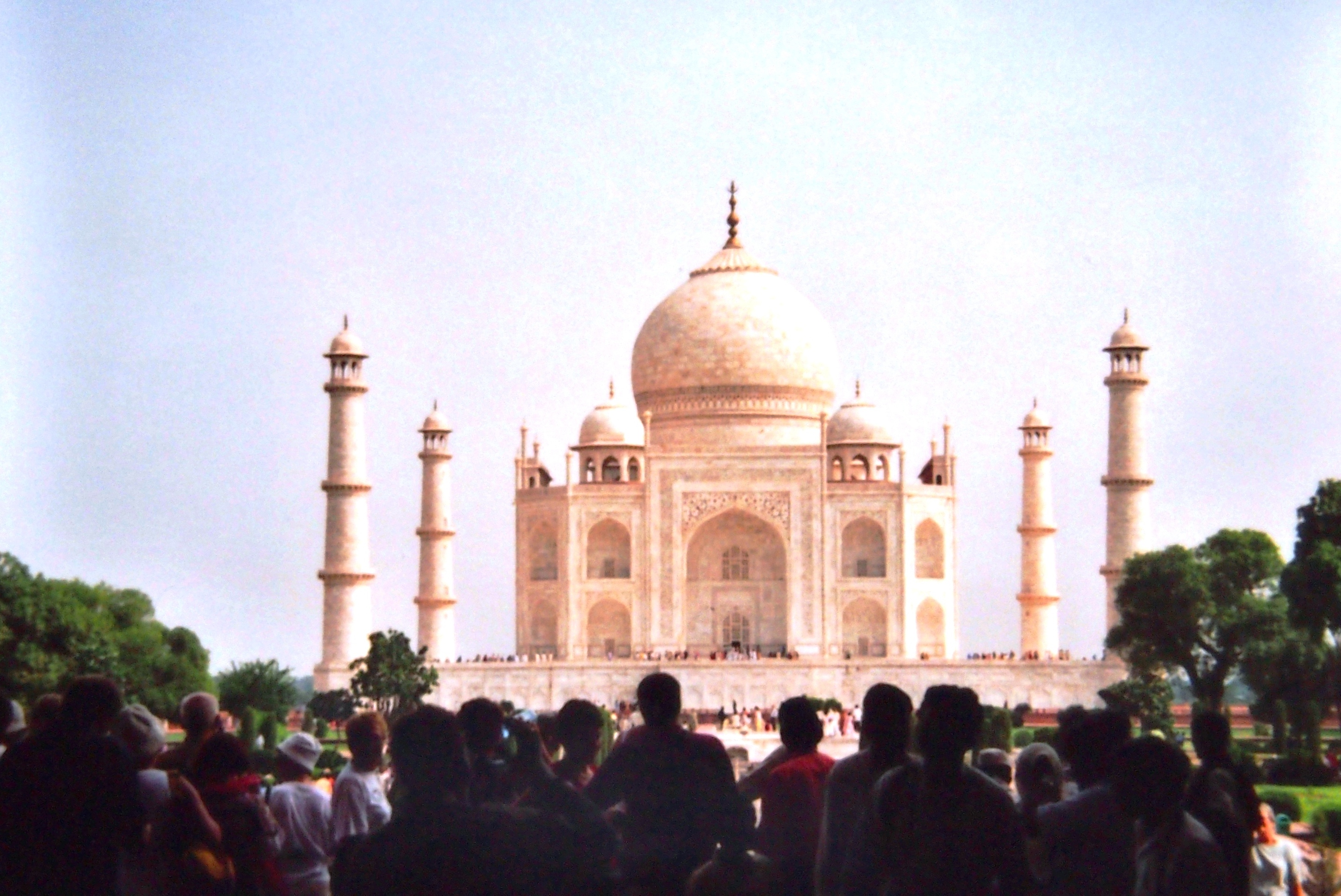
First stop was the area’s absolute prime attraction, the Taj Mahal. A very brief version of the story of the Taj Mahal is the sad love story of the Mughal Emperor, Shah Jahan, who in the mid-17th century lost his beloved favourite wife as she was giving birth to their fourteenth child. Shah Jahan decided that she should be buried in a mausoleum of timeless beauty, and this was to become the Taj Mahal, which is absolutely worth a visit.
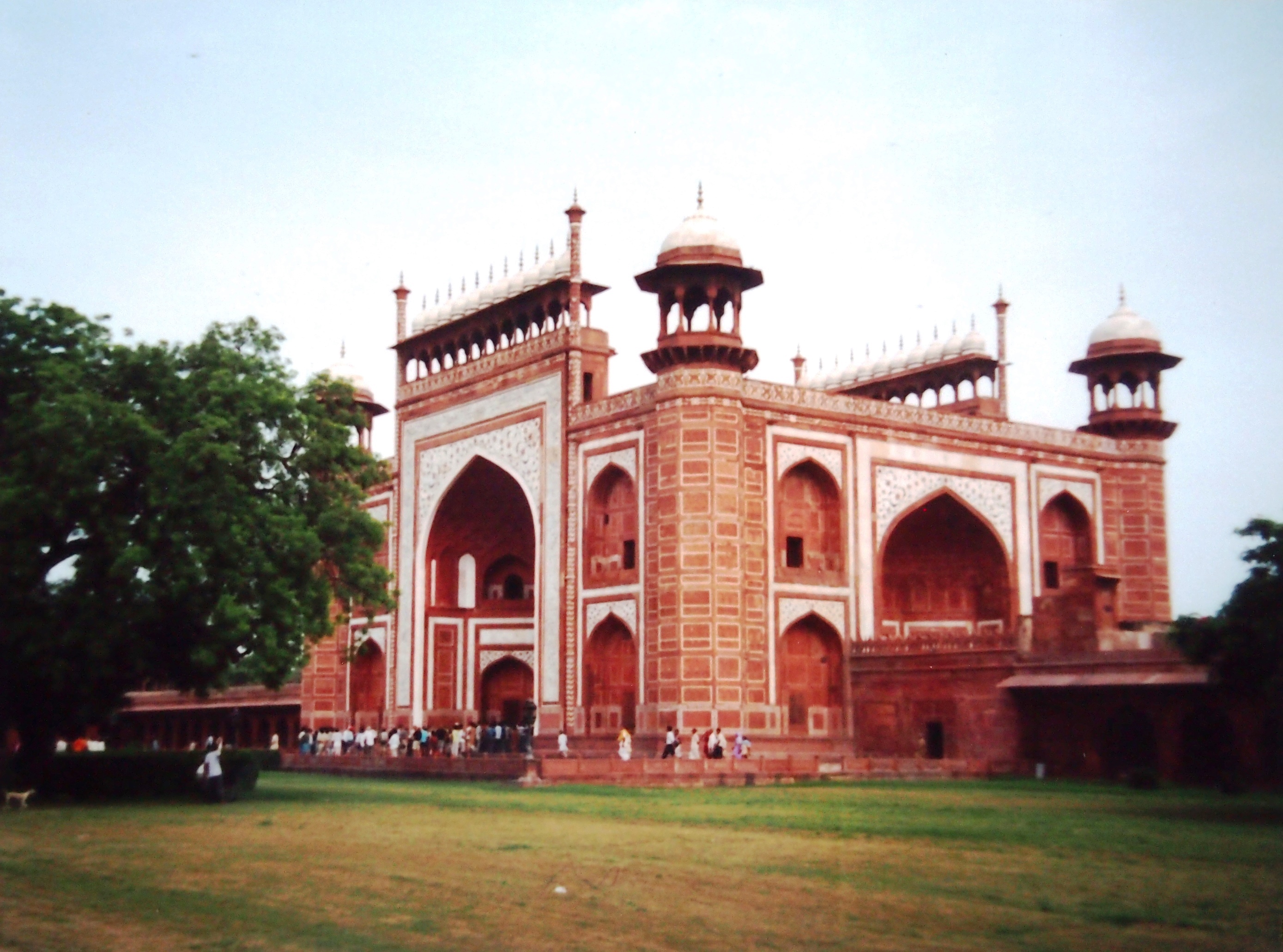
After the Taj Mahal, we visited the Red Fort. The Red Fort in Delhi we had visited earlier was a copy of the one in Agra, so naturally there were many similarities.
From a balcony in delicately carved marble in the Red Fort, there was a view over the River Yamuna to the Taj Mahal. Shah Jahan had enjoyed the same view in his later years, during which he was put under house arrest by his power hungry son Auranbzeb, who had killed his brother and seized power from his father.
Yet another long drive
After lunch at the hotel, our first stop was at a marble factory where we of course were able to buy their products, but also many other things.
Then it was time for another long drive, this time to Delhi. During the evening, we spent some time in Delhi’s wealthy quarter, where we saw buildings and roads that really bore the stamp of lots of money. Although India seems poor, we were told that an astronomical number of dollar millionaires lives there. But with a population of more than a billion, the rich constitute an infinitesimally small proportion.
At 9 p.m., we arrived at the Radisson Hotel, where we were only to eat supper. Here the buffet offered everything one could wish for. It was really delicious.
On the way to the airport, we stopped at a red light, and really got to see the contrast. Someone knocked on the bus, and I looked out of the window. Down below I saw a little girl about six years old with her probably two-year-old naked sister hanging from her arm. She had her free hand stretched towards me to ask for money. Eleven in the evening in the middle of a busy road, and there stood two kids begging for money. That was not pleasant, and it makes you feel awful that there’s nothing you can do about the fact that life is like this in so many parts of the world.
Once in a lifetime run
It was now Wednesday 20th August, and our plane left Delhi at two in the morning local time. After transit in Vienna, we were right on schedule in Copenhagen in the morning. Two wonderful active weeks had come to an end, during which time I had participated in a very special run and together with the boys had enjoyed a fantastic, once-in-a-lifetime experience.
The Great Tibetan Marathon was a one-off for me. The run was not repeated the following year, as had otherwise been advertised, although it was put on again later. It was run for the last time in 2009 but on that occasion no Danes took part, and nor did very many other Europeans, for that matter.
TV coverage
As with many other Adventure Marathon events, the Danish Broadcasting Corporation, DR, was on the spot. Journalists Helle Lyster and Peter Wath followed the fantastic run, and their report resulted in the broadcast “Marathon on the Roof of the World”, which aired several times that December on DR’s channels as part of an “Out in nature” series broadcast.
Buy the book here.
