Author Archives: Henrik Brandt

DSC_3789

Stockholm Marathon 2003

July 29 2015

A journey of love


Karin and I became an item in 2003, and we have since become a happily married couple. Although Karin doesn’t enjoy travel as much as I do, we have been on some trips together, and I have also managed to get her to join me in connection with the marathon. Our first trip together was to Stockholm.


I had heard good things about the Stockholm Marathon from many sources, so the run had been on my wish list for some time. A further incentive was the fact that I still had not visited the Swedish capital.


A beautiful evening


On the afternoon of Friday 13th June, we left Roskilde to drive almost 700 kilometres to the Swedish capital. It was an enjoyable journey, and we took turns driving, giving ourselves plenty of time for breaks along the way.


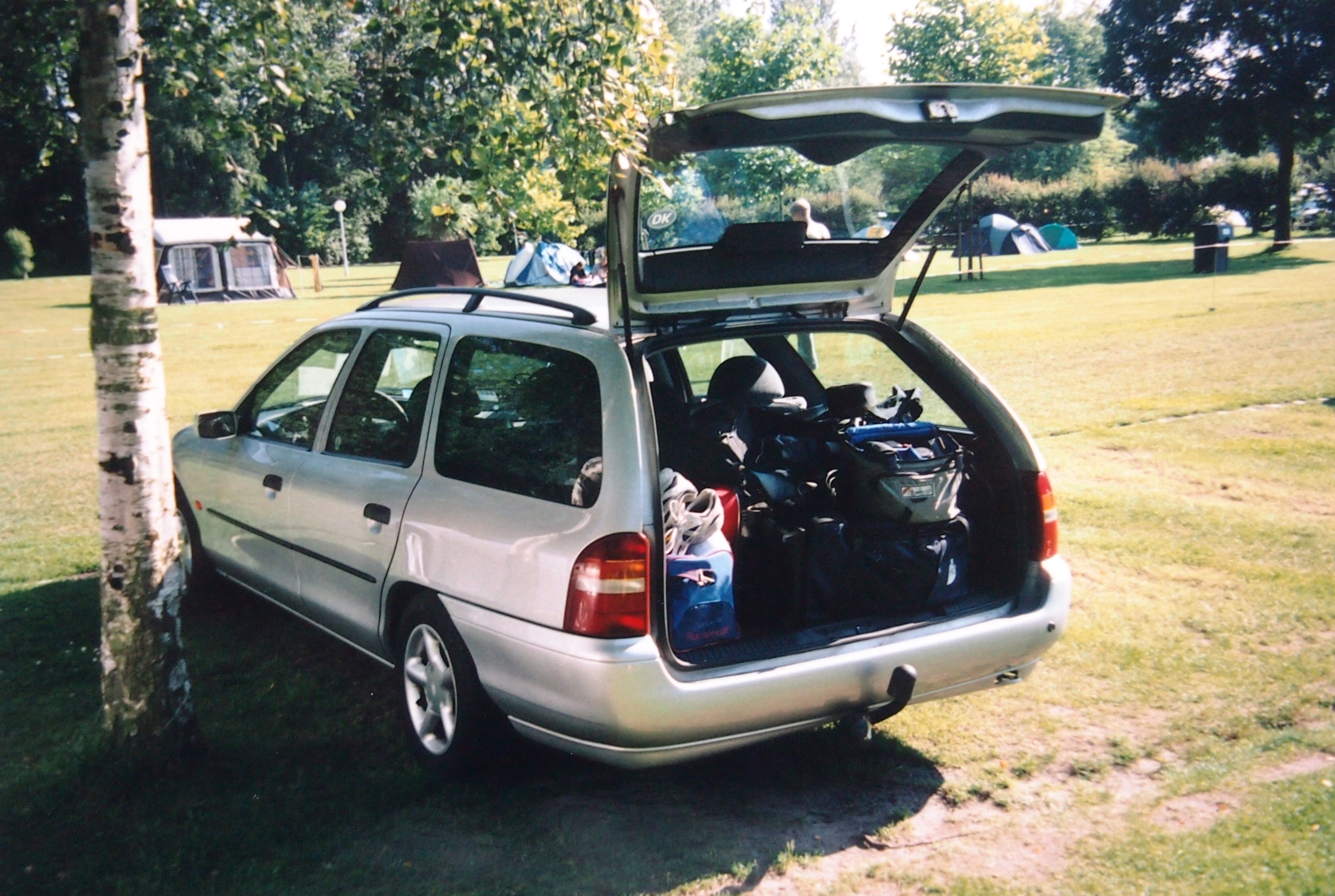
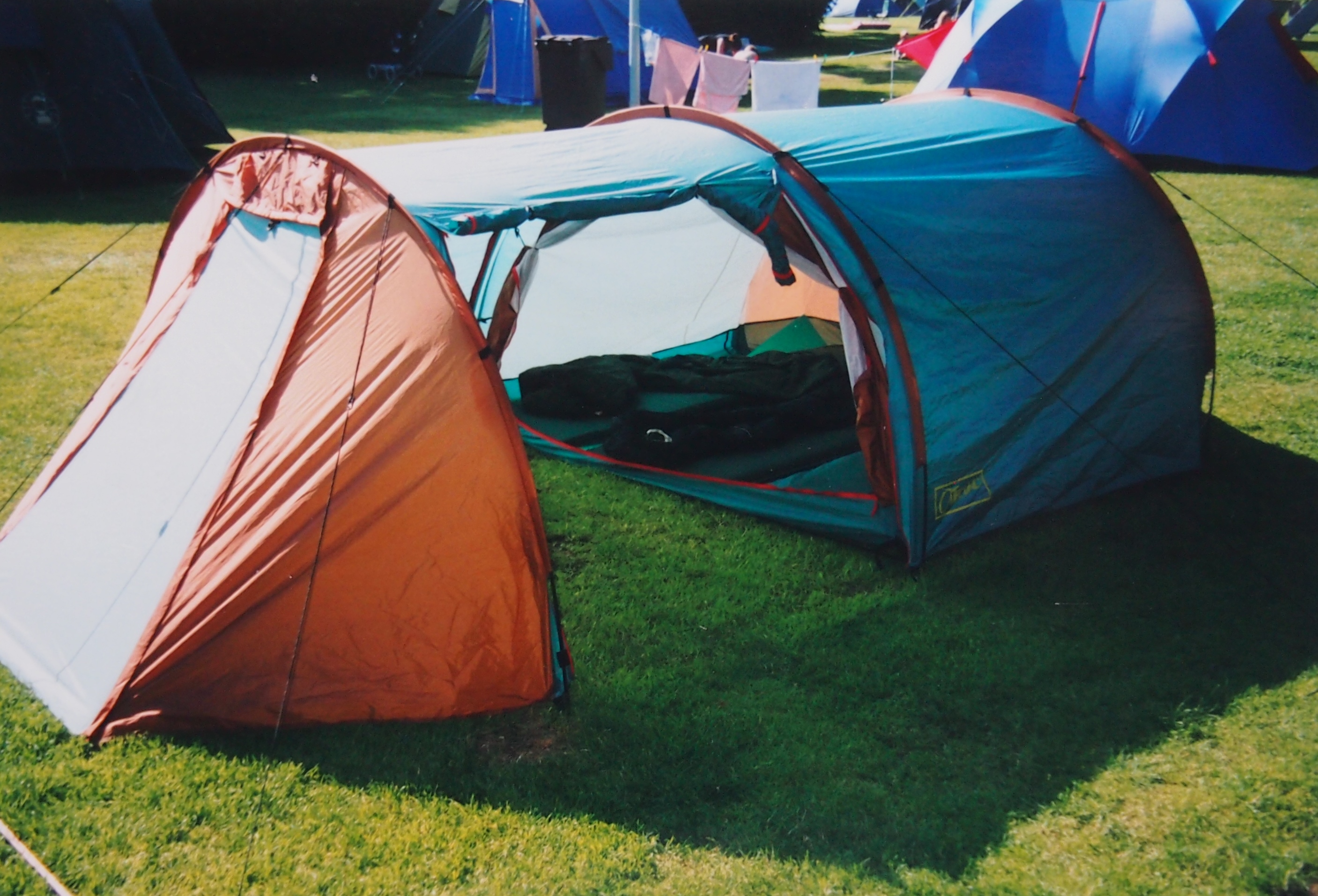
We arrived before evening and drove straight to the School of Sport and Health Sciences, Idrottshögskolan, behind Stockholm Central Station, where start numbers and running bags could be picked up from 8 p.m. Afterwards we drove out to Ängby Camping some ten kilometres west of the city centre where we had booked a pitch from home. At that time, we made good use of our relatively new tent and sleeping bags.


The weather was really nice; it was midsummer after all. We put up the tent and lit the disposable grill we had brought with us. I still have delightful memories from that particular evening of being newly in love, sitting under the open skies in beautiful weather eating barbecue food with a glass of good red wine.


A “Gammel Dansk” to start race day


Saturday was race day, and rather unusually we were not to run in the morning, since the race did not start until 2 p.m. We didn’t have to get up at any specific time, though we did awake fresh and relaxed early in the morning.


DSC_3794


We went to get breakfast rolls and had breakfast in the open. Because I have never been a “righteous” runner, we also enjoyed a Gammel Dansk with our morning coffee. That was probably the only time I ever started race day with the morning bitters.


DSC_1770


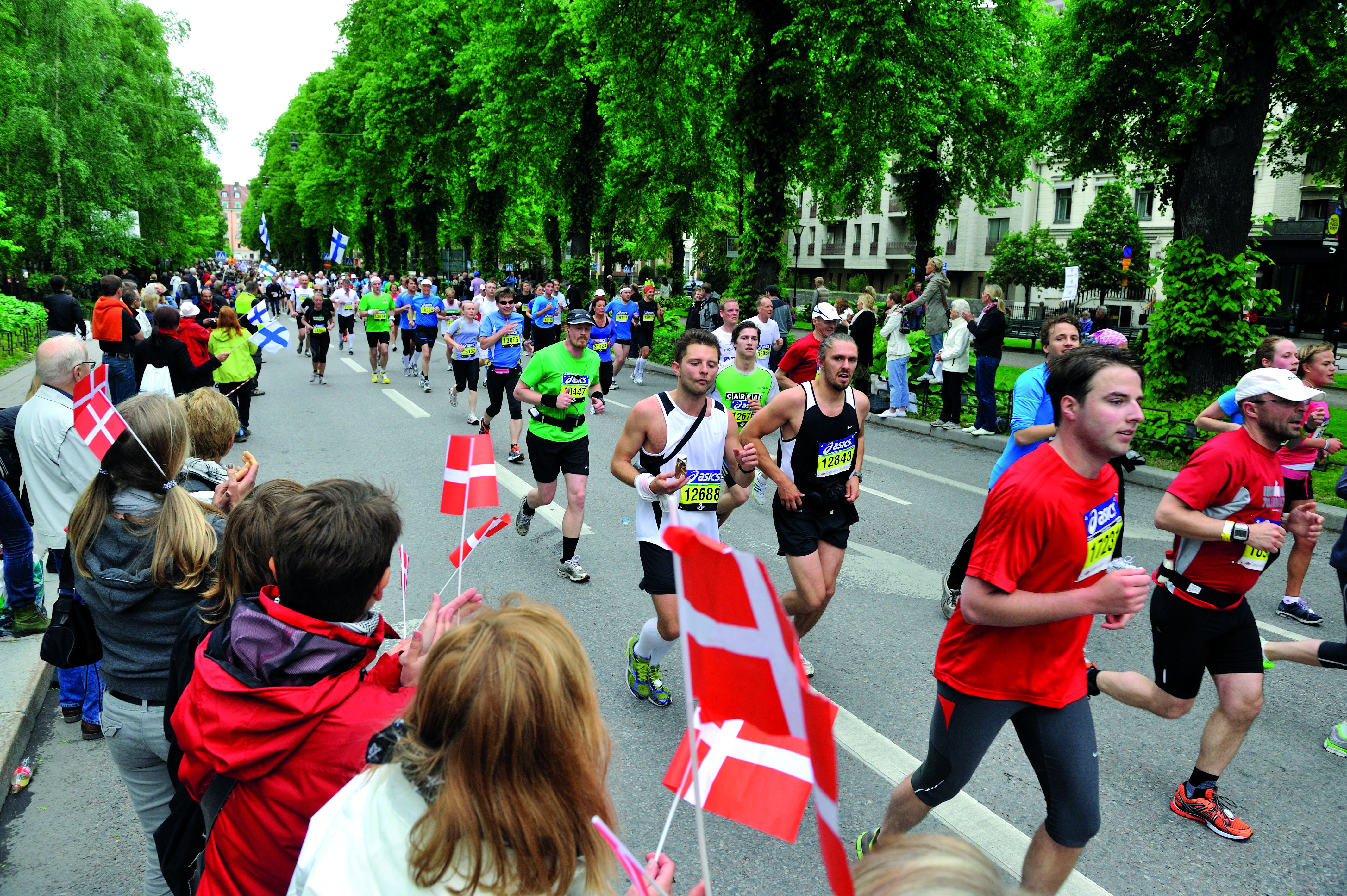
Late morning, we walked to the nearest station and travelled by Stockholms Lokaltrafik to the city centre and the start area. It’s never difficult to find the start of an urban marathon; you just go with the flow.


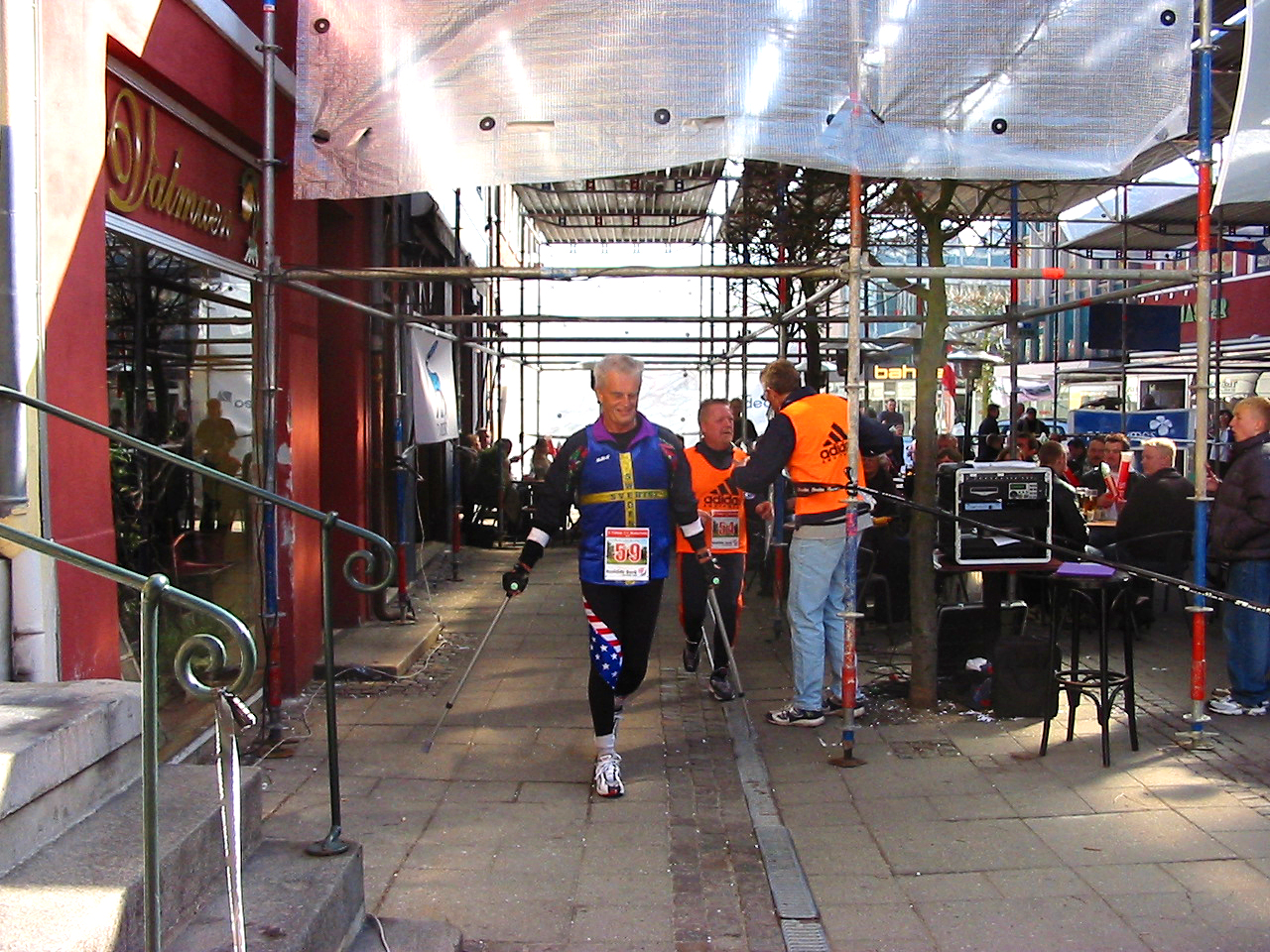
DSC_3789


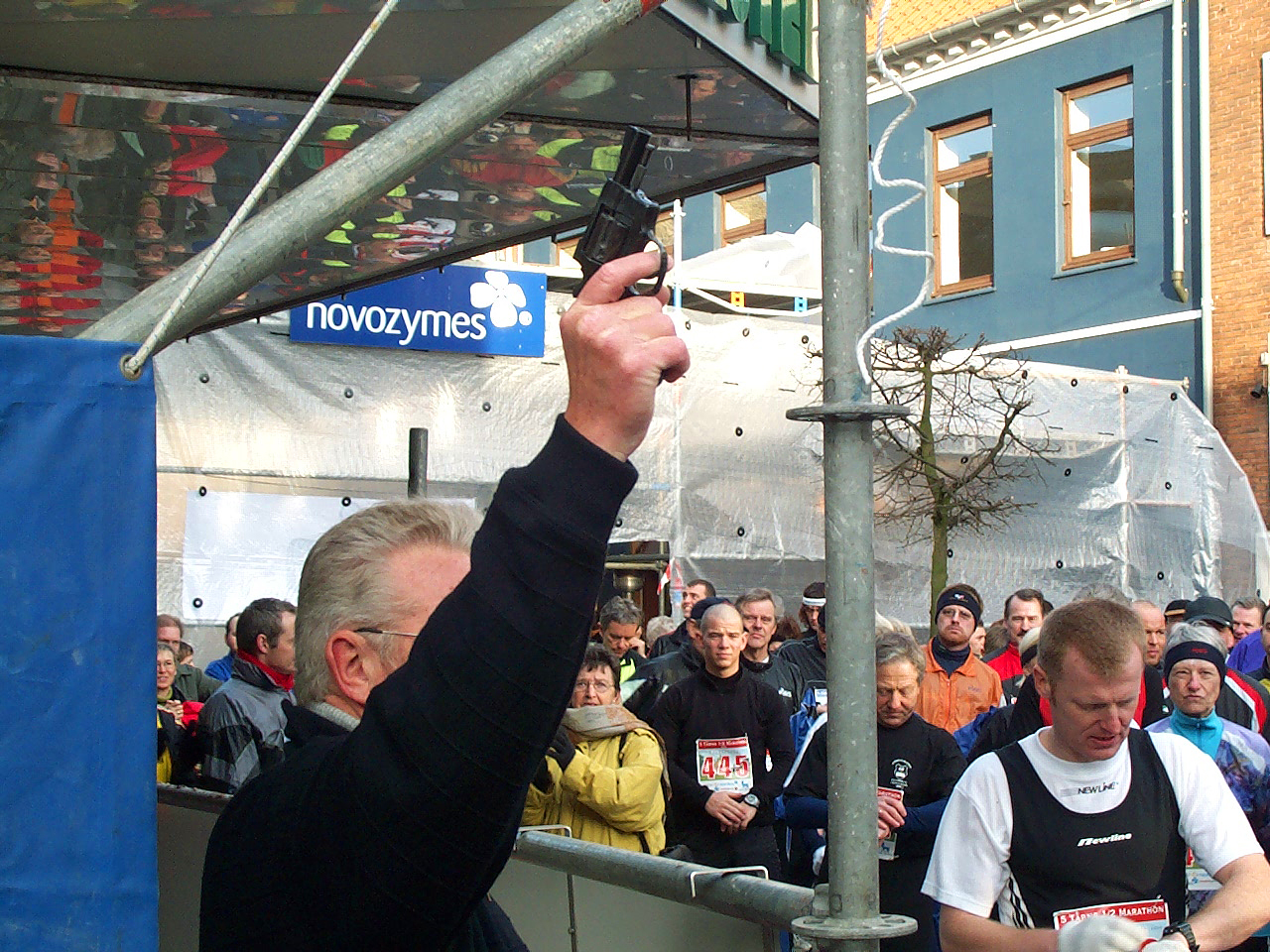
The run began at 2 p.m., and I kissed Karin goodbye. She would spend the next few hours exploring Stockholm. I would be doing so too, although from a rather different angle.


Stockholm Marathon


The Stockholm Marathon started a year before its Copenhagen sister in 1979 with 2,175 runners signed up. It had gradually grown to embrace about 15,000 runners, making it Scandinavia’s biggest marathon.


DSC_1857


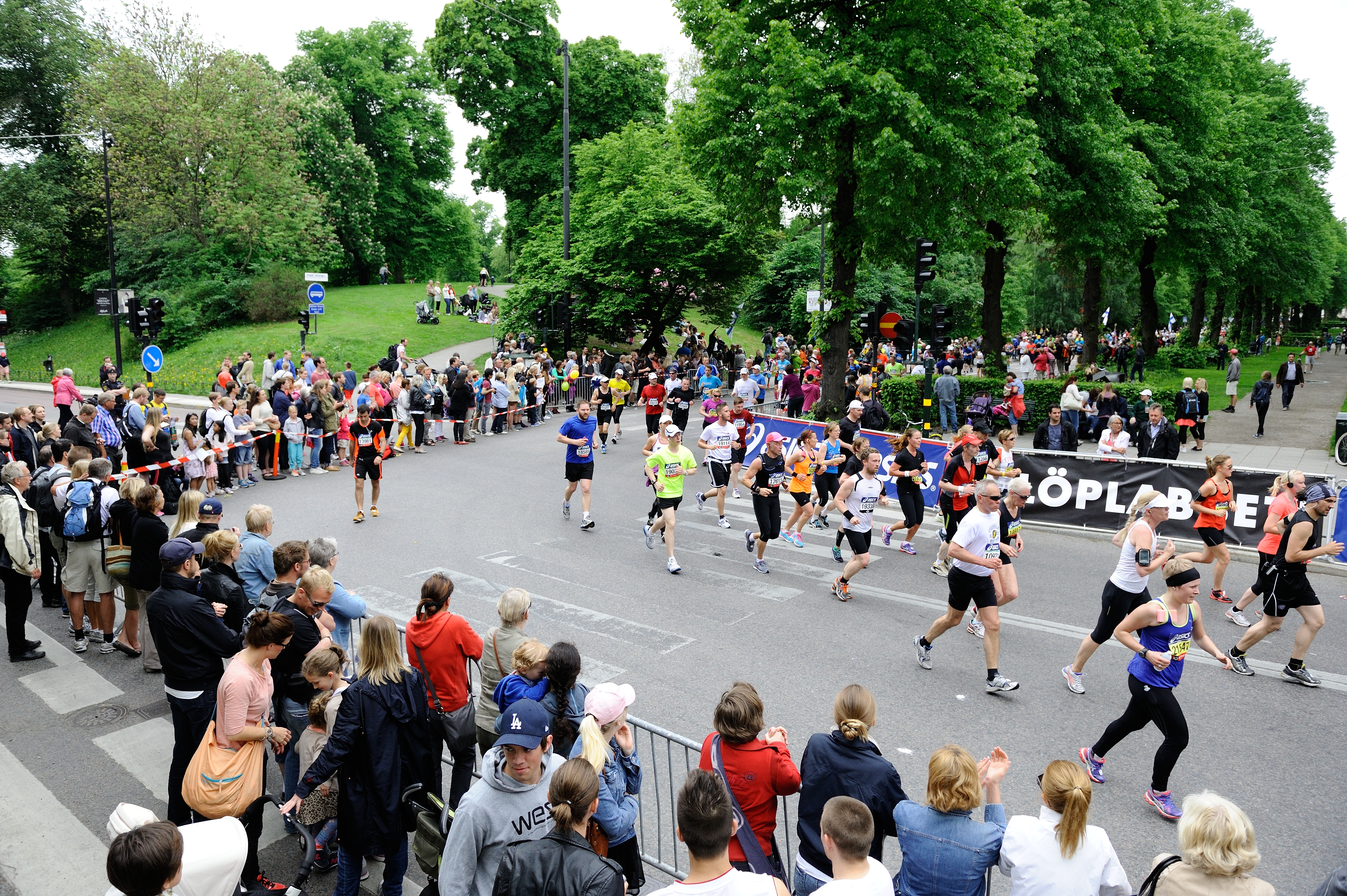
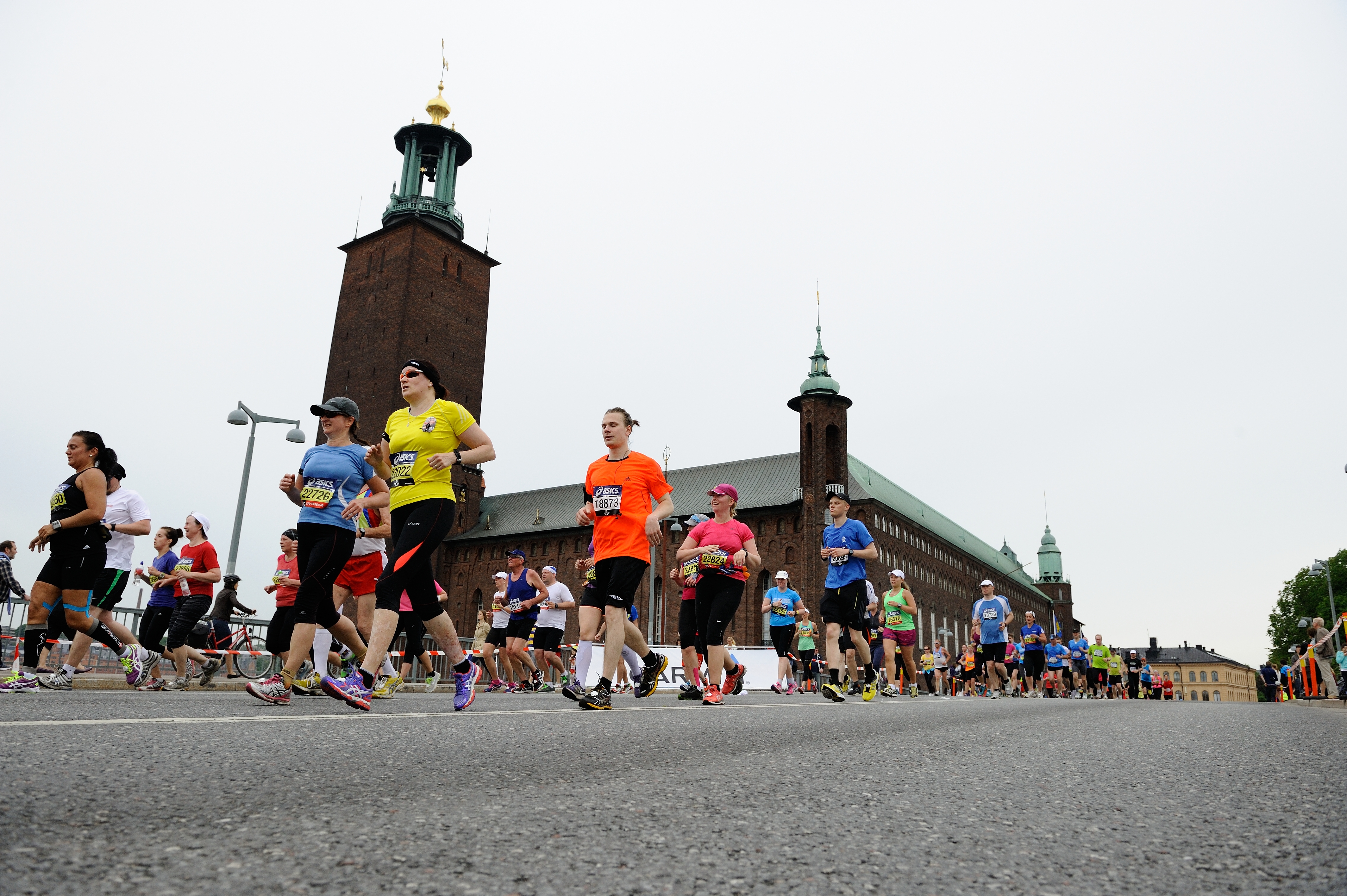
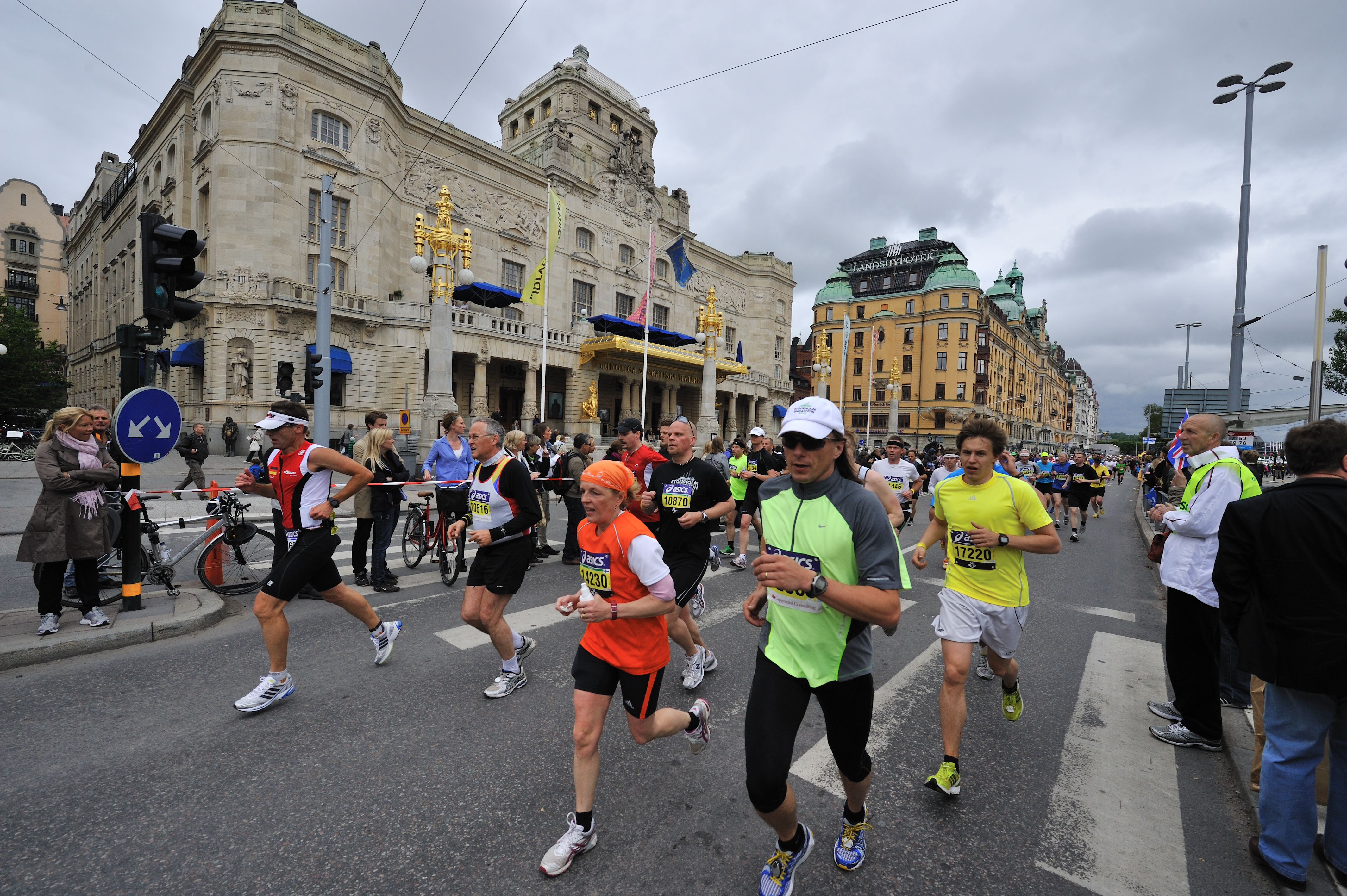
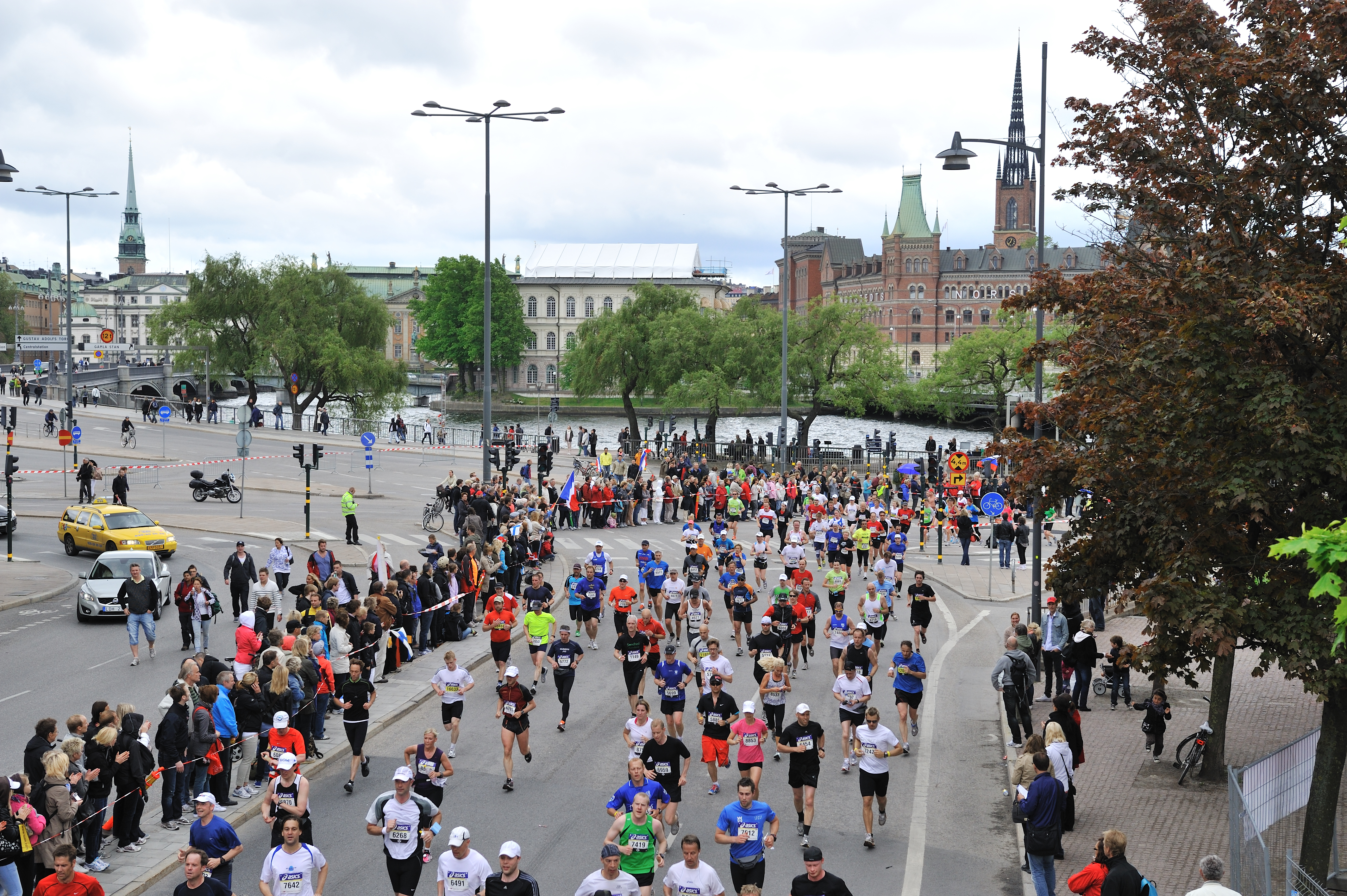
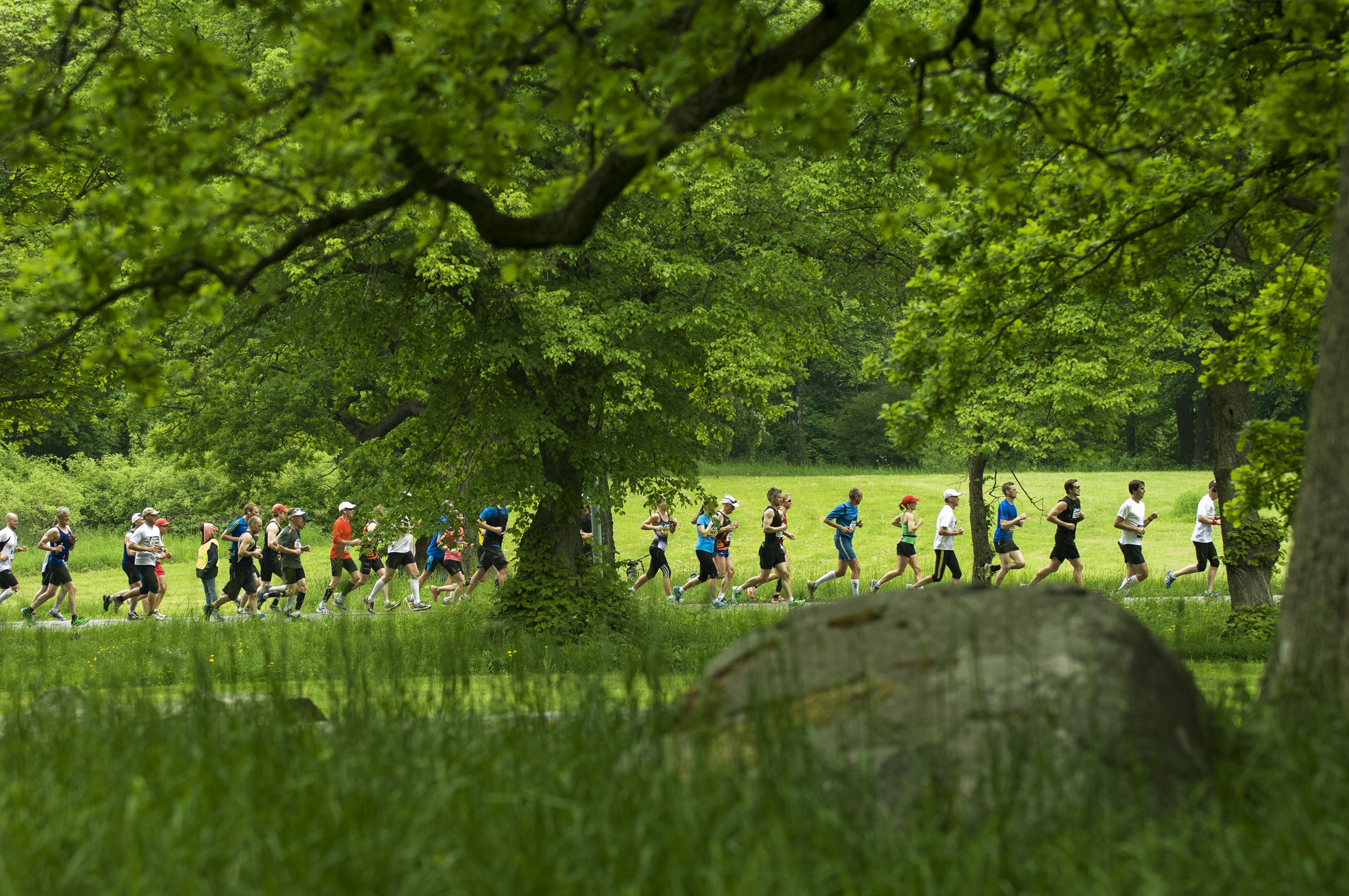
The run is also described as one of the world’s most beautiful marathons, and some of the hilly terrain was a half-marathon route we would run twice. The start was at the Olympic Stadium built in 1912, through leafy Djurgården, along the harbourfront towards the centre of the city, past the Palace and Gamla Stan to a much feared 34-metre ascent onto the West Bridge across the harbour. There was a fantastic view of Stockholm from the middle of the bridge after which there was another steep downward slope towards the start. The route was completely cut off from all the traffic, most of it along wide streets with plenty of room for both runners and spectators.


DSC_2112_CMYK


A fantastic feeling


It was a lovely race, just as I had been told, and good weather and masses of spectators made it an even greater pleasure.


DSC_1985


Having learned from bitter experience four weeks earlier in Copenhagen, I refrained from setting out too fast and ended up with an overall time of 4:29:50. I ran the second round in 2:10:38. Quite unusually, I was faster in the second half of the run this time.


DSC_1815


Mostafa Errebbah, who had won in Copenhagen, was also running here. It is no exaggeration to say that he was steadfast; he ran this race 27 seconds faster than the one he ran a month earlier. However, he was no match for the Kenyan Josphat Chemjor, who won the marathon in 2:18:14.


DSC_6667


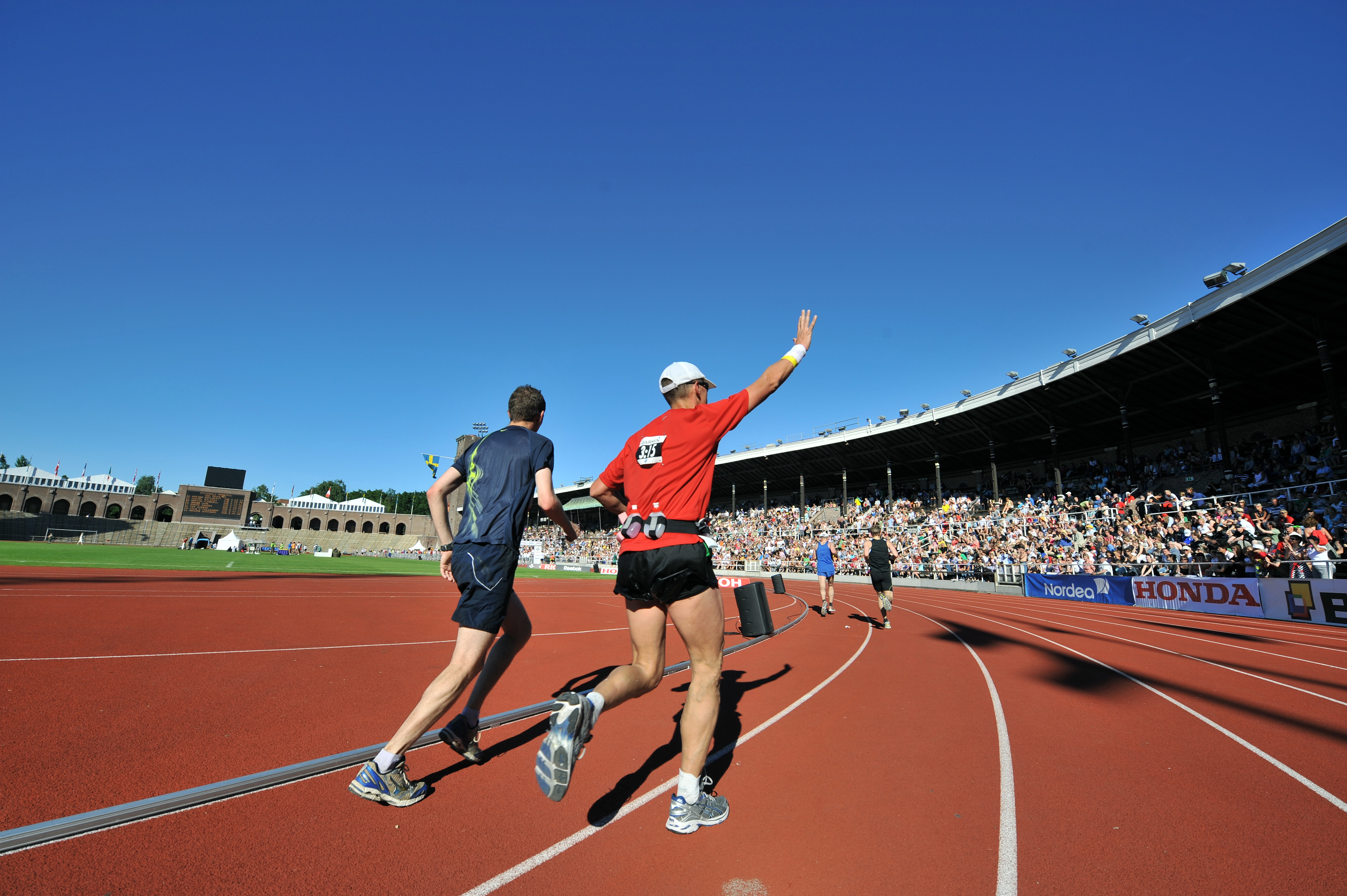
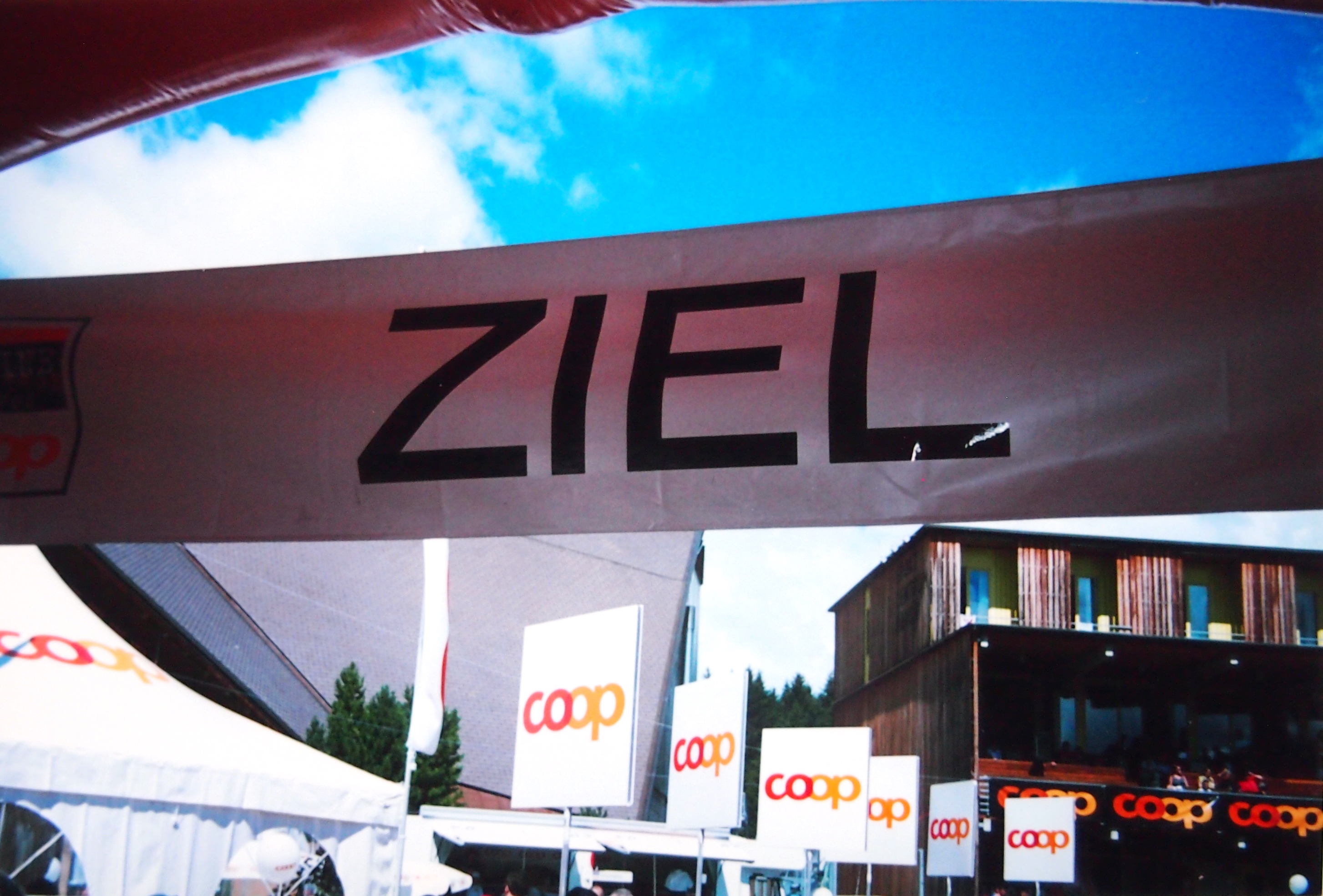
I found crossing the line at the historic stadium really special. The year before, I had seen large stadiums in Europe – Camp Nou in Barcelona had been particularly impressive. Stockholm’s Olympic Stadium was of an entirely different calibre. It was small, dated and outmoded, but on the other hand it had indescribable charm. As I crossed the line, I found myself thinking that the Olympic winner had done the same in 1912. Back then, the South African Ken McArthur won with a time of 2:36:54, but much had happened since then, and McArthur would only have come in 30th in this marathon 91 years later.


A wonderful experience richer


Karin met me at the finish, and that evening we had a delicious meal at a restaurant before getting another good night of sleep in the tent. Karin drove us home on Sunday after breakfast with me in the passenger seat sleeping for most of the trip. Our first journey together had been a grand success.


???????????????????????614-121614-121


Buy the book here.


Engelsk forside

Copenhagen Marathon 2003

July 22 2015

Alternative to a cancellation


During my first years as a runner, people often asked: “You’ll have run the Copenhagen Marathon, then?” The answer was no, and I added that I probably never would. The Copenhagen Marathon and The Great Wall Marathon are very close to each other time-wise, in the second half of May. It was, therefore, not realistic for me to run both races. However, the SARS epidemic which had caused the cancellation of the Chinese race gave me the opportunity to run in my own capital.

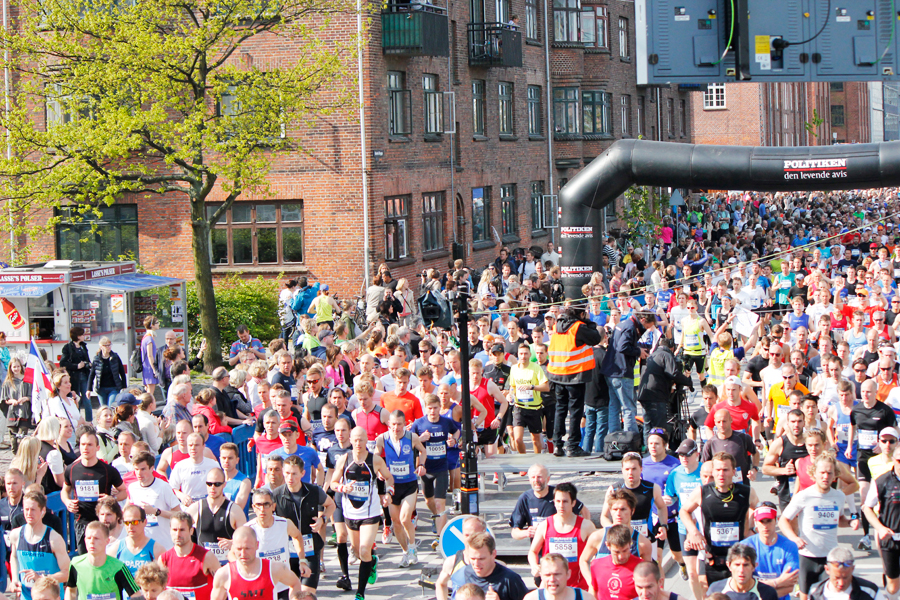
The Copenhagen Marathon first saw the light of day in 1980 and has been organised down the years by the athletics club Sparta in collaboration with the daily newspaper Politiken. The marathon has grown over the years, and in 2003, there were some 5,500 runners.


Pacemakers


That year, the marathon was run on 18th May, and a few days earlier I had picked up my start number, T-shirt and marathon bag at Østerbro skating rink, where there was also a sports exhibition.

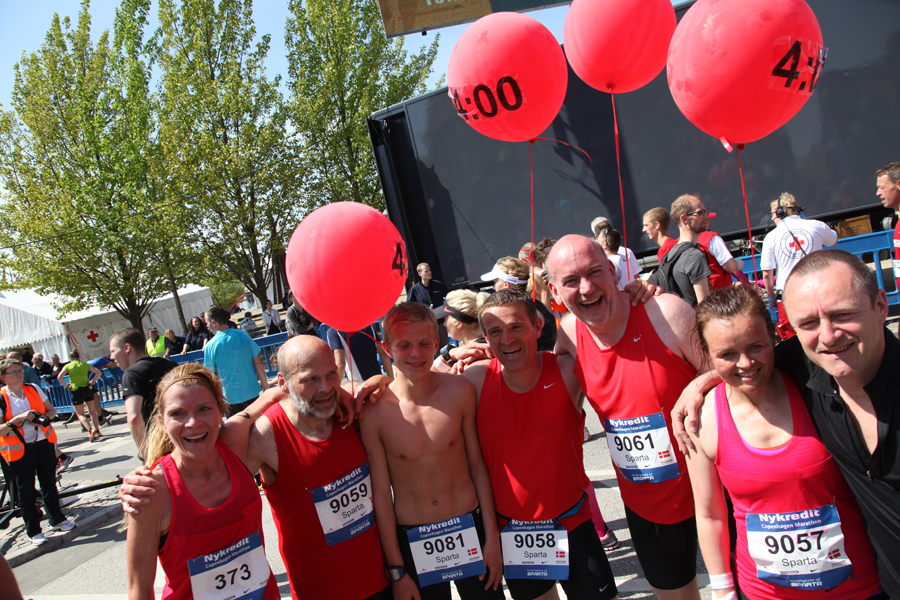
On the day of the run, I took the train to Copenhagen and walked to the start at Vester Voldgade in the city centre where the run was to begin at 9.30. Something new this year was pacemakers who were to ensure a stable pace throughout the run. With my previous experiences with reducing my time, I decided to follow the pacemakers and their orange balloons to achieve a time of four hours. However, I made the mistake of not joining the main group from the start, which meant the race was uphill from the first meter.


7240561756_709e228f15_o


My aspiration to catch up with the orange balloons meant that I increased my pace from the start, and having to overtake a lot of runners to get there was stressful. This would also prove to be a bad technique.

It was not until half way through the run that I managed to catch up with the four-hour group, by which time I was completely shattered and could not keep up with the runners I had fought so hard to catch up with. It felt as though the air in my inner balloon was gradually seeping out as the orange balloons ever so gently disappeared over the horizon.


The route


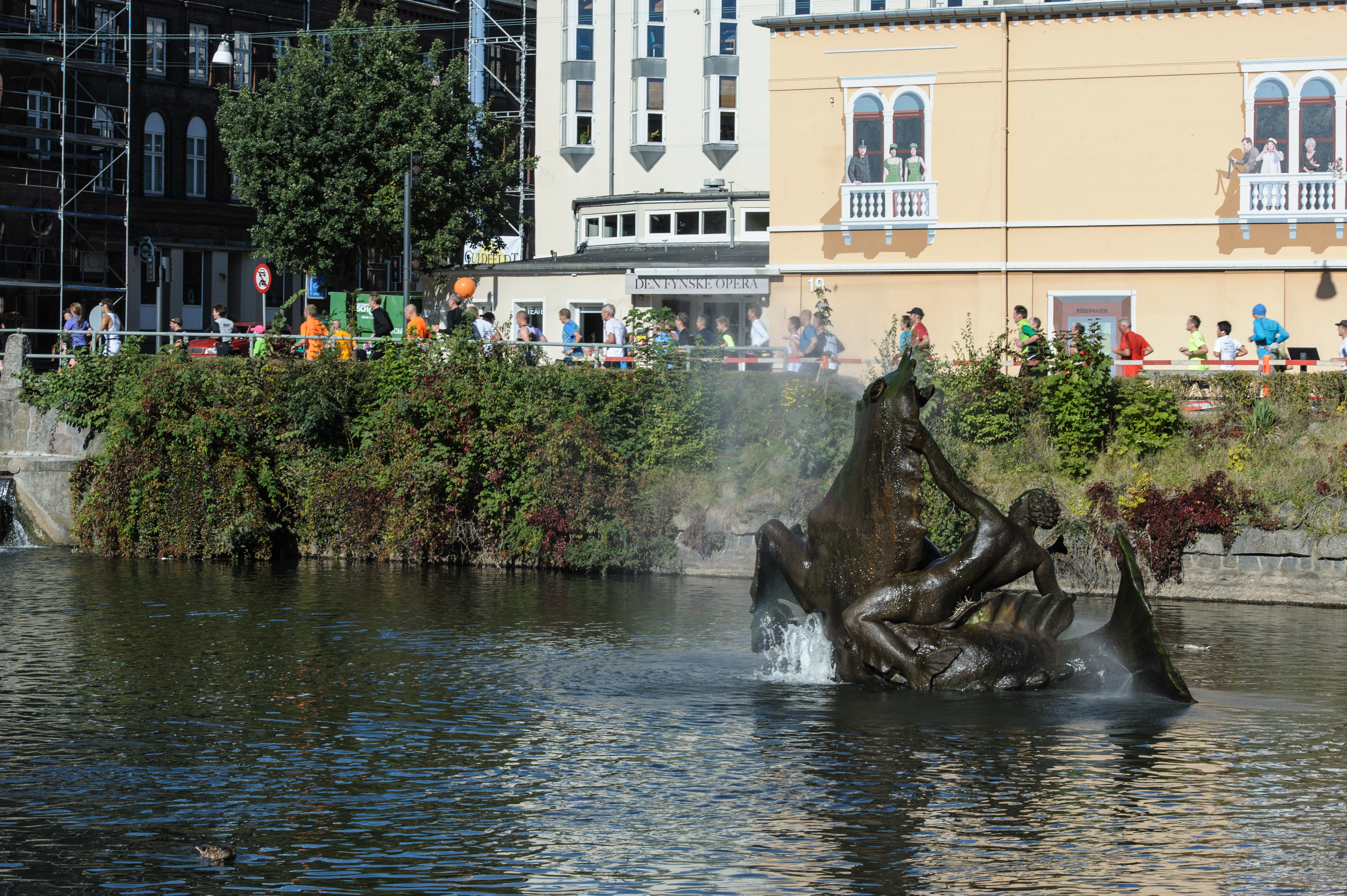
The route went from Vester Voldgade, through Vesterbro and then to the southern harbour district, Sydhavnen, up towards Valby and along Kalvebod Brygge. From here we ran through Nørrebro to Østerbro, to Amaliehaven on the city harbourfront to Nyhavn, and then finally along Christiansbrygge to end up at Vester Voldgade and the finishing line.


7231986970_15fdaf2271_o


Good weather


The weather was on our side all day. As far as I was concerned it could have been slightly cooler, although it could have been much worse. There was plenty to drink along the route, with 11 water stations which also provided energy drinks.

The heat and my pushing myself so hard at the start to catch up with the orange balloons had a negative effect on my performance during the second half of the run. I had to suffer the indignity of being overtaken by the white balloons which marked the runners expected to come in with a time of 4:15. This did, however, motivate me to use all I had in reserve towards the end so as not to be overtaken by the pink balloons for 4:30.

My time was 4:25:48. Although this was well short of my ambition, I was satisfied all the same with having completed my home country’s largest marathon.

The marathon was won by the Italian Mostafa Errebbah in 2:19:57.


Danmarks med prikker


Buy the book here.


Engelsk forside

??????????????????????

The Great Wall Marathon 2003

July 15 2015

The free trip


All my trips to China have been very special, but the special thing about this one was that Søren had promised me the trip for free. I sent off my registration paperwork and received confirmation and an invoice in return. As Thomas had said two years previously during the gala dinner: “Søren is an honourable man – you can count on his word”. And I could. The invoice ended with a row of zeros.


I was to set off on a nine-day trip on 20th May. As in 2001, I had chosen to join a group without guided tours, and as in 2000, we were to run on 24th May. Everything looked good. All the same, there was a factor that lurked in the background.


SARS


In the autumn of 2002, reports came in of a mysterious disease in the Chinese city of Guangdong. The disease could easily be confused with influenza, and its symptoms were fever, coughing, trouble breathing or shortness of breath. Nobody knew where the disease had come from or how it could be cured. From mid-November 2002 to the end of February 2003, there had been 792 cases in Guangdong, and 31 people had died.


The disease became known as SARS, an abbreviation of Severe Acute Respiratory Syndrome. SARS spread to large parts of Asia and was also reported in other parts of the world. Fewer than a thousand people died world-wide, but there was a real fear of an epidemic of disease of which no one knew the extent and for which no cure was known.


GWM – should we/shouldn’t we


Ultimately, people questioned whether The Great Wall Marathon 2003 should go ahead, and I was asked if I dared go. My attitude was clear. If the airline and the organiser were sending people to China, then my participation had to be defensible. I had also taken into consideration the fact that very few people had died from the disease and that everything you ever do involves a risk. So I wasn’t much more afraid of the disease than of so many of life’s other hazards.


Postponed


On 25th April 2003, Albatros Travel sent a letter saying that they had been keeping a close watch on developments and reported SARS infections in China, as well as constantly studying information from the World Health Organisation, WHO. They did not believe that travelling to Beijing and northern China constituted a risk and ascertained that only one person in 20,000 was affected by the disease in Beijing. At the global level, since the SARS mortality rate was one in 650,000, SARS was not considered to be more lethal than an “ordinary” influenza.


On the other hand, the media had, despite the realities, managed to create a general atmosphere of fear as far as travelling to China was concerned. Even though a highly qualified team of medics was attached to the marathon, and although they were sure that The Great Wall Marathon would be run as planned and under fully defensible circumstances, they found it best to postpone The Great Wall Marathon 2003.


New date – 1st November 2003


Instead of the planned run on 24th May, it was immediately announced that the marathon would instead be run on 1st November. They guaranteed that all travel arrangements in connection with the event would remain unchanged without any price increases; even though the departure dates were now well within the high season.


It was entirely up to the individual whether they wanted to participate on the new date or to cancel. Anyone could cancel their trip without it costing them anything at all.


Radio interview


I was not at all surprised by these developments, though I was rather disappointed. With Albatros Travel as an intermediary, I was interviewed on 6th May by the Danish Broadcasting Corporation, DR, on the morning programme. I made my opinion known though I fully accepted the decision.


Totally cancelled


On 27th June, yet another letter was sent by Albatros Travel. They had, unfortunately, ascertained that the vast majority of people who had signed up for the year’s marathon had decided to postpone their participation in the run on the Wall of China until 2004. Even though China had been declared SARS-free, they felt it was necessary to cancel the year’s marathon and to focus on next year’s run at the “right time” in May.


Curious merchandise


In 2004, during the gala dinner of The Great Wall Marathon, I was given a very special present by Albatros’s guide Merete Skov Habermann. Leading up to the cancelled Marathon in 2003 various kinds of merchandise had been made which later went to waste. Merete gave me a “finisher” cloth badge that no one would ever be entitled to wear. She felt that I was the right person to own it. I was moved by the gesture and would never dream of sewing the label on any of my clothing. But it is in my scrapbook for The Great Wall Marathon 2003, because I made one even though the marathon was never run.


??????????????????????


Whatever became of SARS?


The SARS epidemic lasted 100 days, and the disease has apparently now been got rid of because they found a cure. Many people have now entirely forgotten SARS, which was obviously a parenthesis in history.


Some scientists believe the disease stemmed from the civet cat. Others maintain that other species spread the disease, bats being among those mentioned.


Buy the book here.


Engelsk forside

OLYMPUS DIGITAL CAMERA

Malta Marathon 2003

July 8 2015

 A fortuitous necessity


One could say that this trip and this run were added to my list by pure chance. One could also say it had been a necessity if I was not to miss out on a benefit. Whichever way you look at it, the boys and I had a wonderful mini holiday, and I celebrated my 44th birthday in an alternative kind of way that resulted in some lovely memories.


During the Christmas holiday 2002, I was browsing a website when I found an article about the Malta Marathon to be run on 23rd February. I was interested precisely because it fell on my birthday, and I soon had the idea of killing three birds with one stone: a trip to southern climes, a marathon and the opportunity to use up our bonus points I would otherwise have lost.


All three of us had been members of the Star Alliance group of airlines bonus scheme for a number of years and had saved up quite a few points. The problem was that these points had to be used before they were five years old if we were not to lose them all together. Because our oldest points were getting very close to their sell by date, a trip to Malta was a pretty obvious way of using them up. The next task was to find a hotel.


An old acquaintance


The article about the Malta Marathon was written by a man called Tommy, who had included his phone number in case anyone might want some practical information. It was, therefore, only natural for me to call him. It’s a small world, and it turned out that I actually knew Tommy. He’d been in China in 2000 and 2001, not as a runner but as an incarnate photographer. He was also going to Malta as a photographer together with a group of runners. Tommy had been to the Malta Marathon before, so he was familiar with the practicalities.


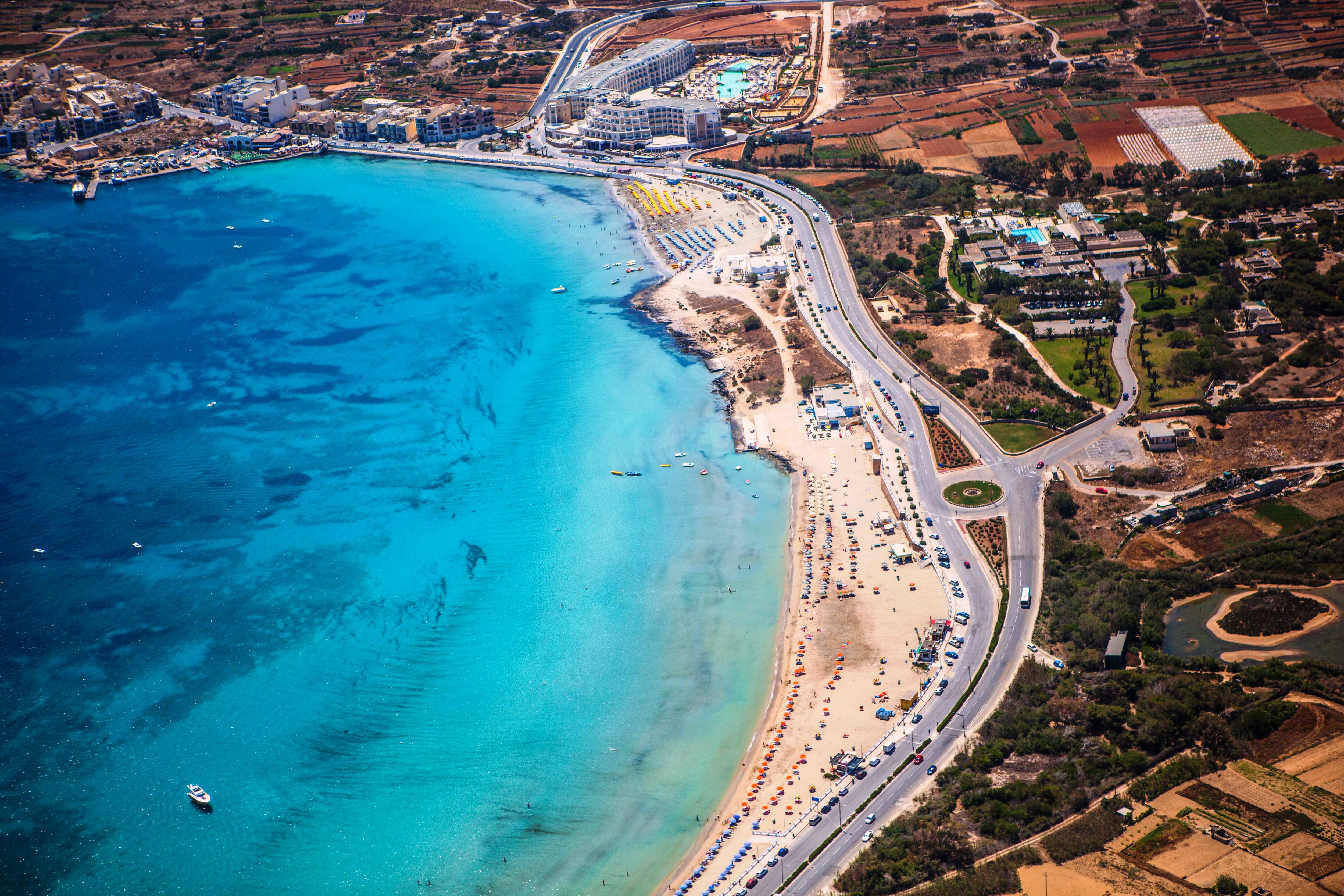
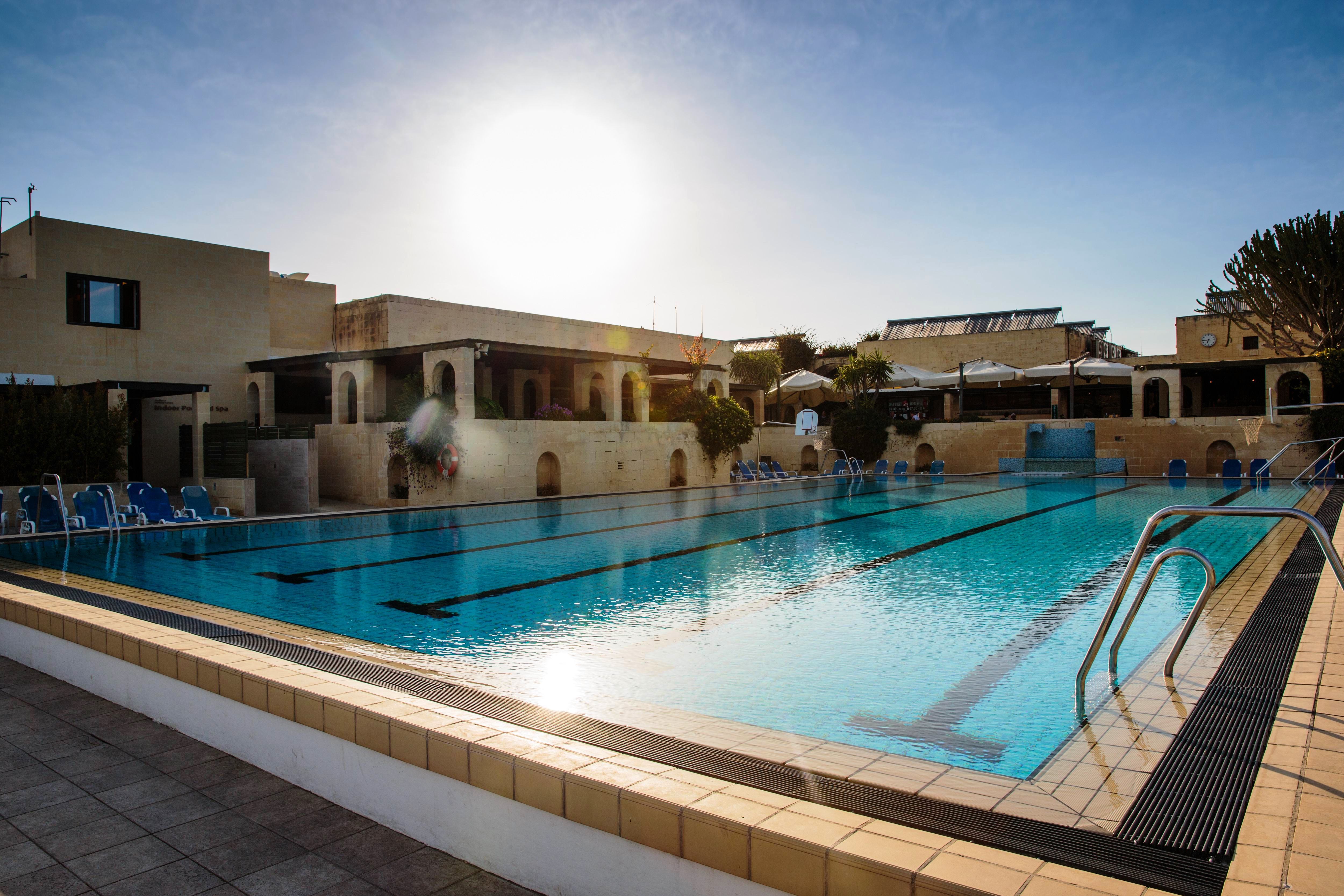
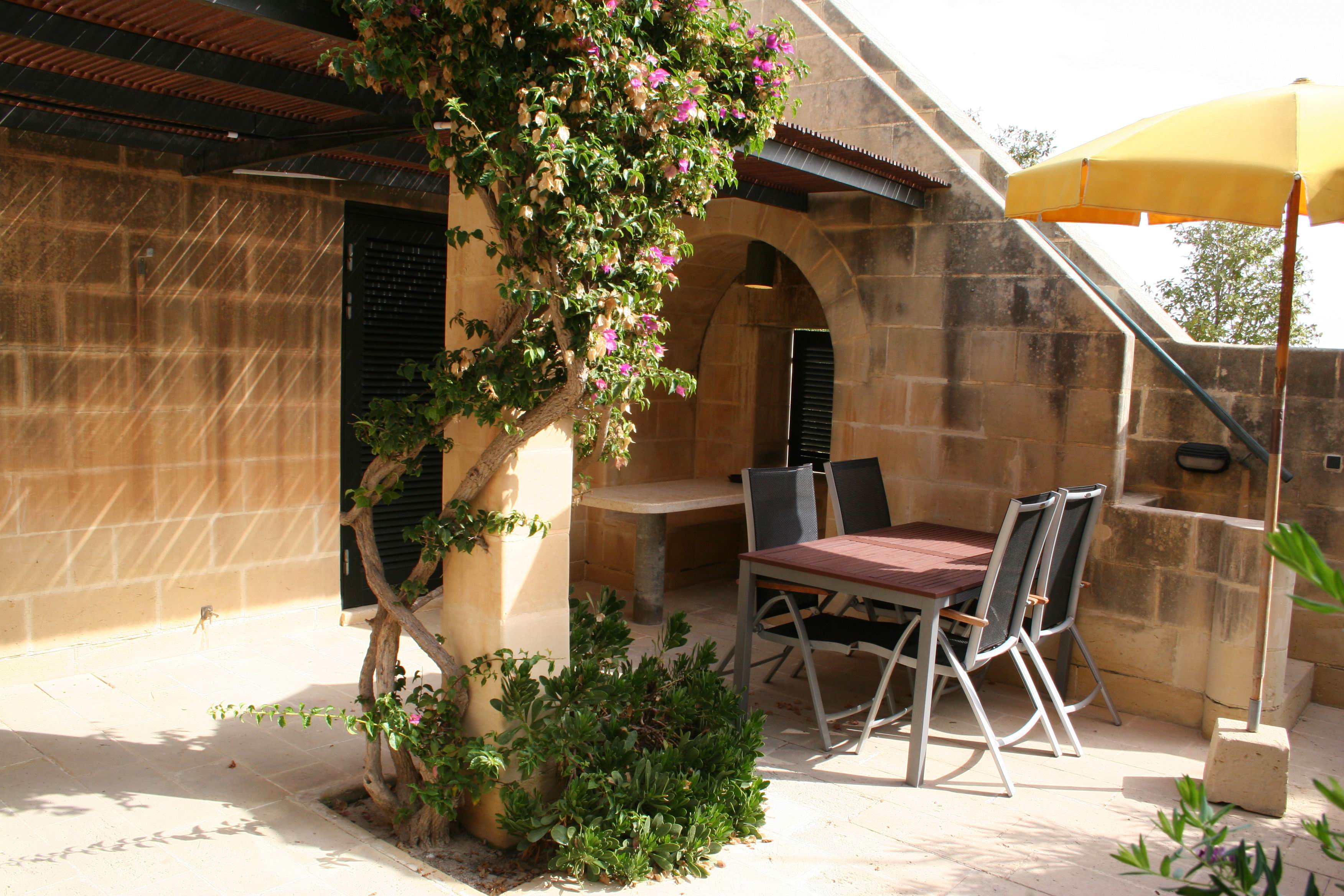
Tommy told me that his group would be staying at the Mellieha Holiday Centre, which was the Danish colony in Malta. A well-known Danish tour operator had sent thousands of tourists to the place over the years.


Tommy said we could come and stay with them. They had two bungalows, each of which had 70 m² of floor space, so there was plenty of room for everyone. If we took sleeping bags along with us, we could stay there without any problem. The deal was that we would buy dinner for the group, so that they could also benefit from our saving and get a little compensation for the comforts lost by accommodating three more people at their little colony.


A detour via Frankfurt


On the evening of Wednesday 19th February, we boarded a plane headed for Frankfurt. It had been quite impossible to find a flight with fairly quick transit to Malta, so we had booked a hotel in Frankfurt just five minutes’ drive from the airport. We were then to leave the next morning for Malta, where we would arrive around midday.


A bit about Malta


Malta is a small archipelago in the Mediterranean just over 90 kilometres south of Sicily. It consists of three inhabited islands: Malta, Gozo and Camino, and the 400,000 population is squeezed into an area about half the size of Denmark’s Baltic island of Bornholm. This makes Malta one of the world’s most densely populated countries. The national language is Maltese, although English also enjoys official status and many Maltese also speak Italian. Malta’s climate is subtropical, and it is surrounded by a coral reef.


_MG_0075


‘Illegal immigrants’


From the capital Valetta, we took a taxi to the holiday centre where we were met by Tommy, his girlfriend, and a runner called Torben. As we drove past the guard house, I had a feeling that we ought not really be here. The owners of the place made a living renting out bungalows and not by over-filling them with tourists who had brought their own sleeping bag. I felt as though we were crawling along the Wall panelling rather like illegal immigrants.


2X6A0138


Popeye Village


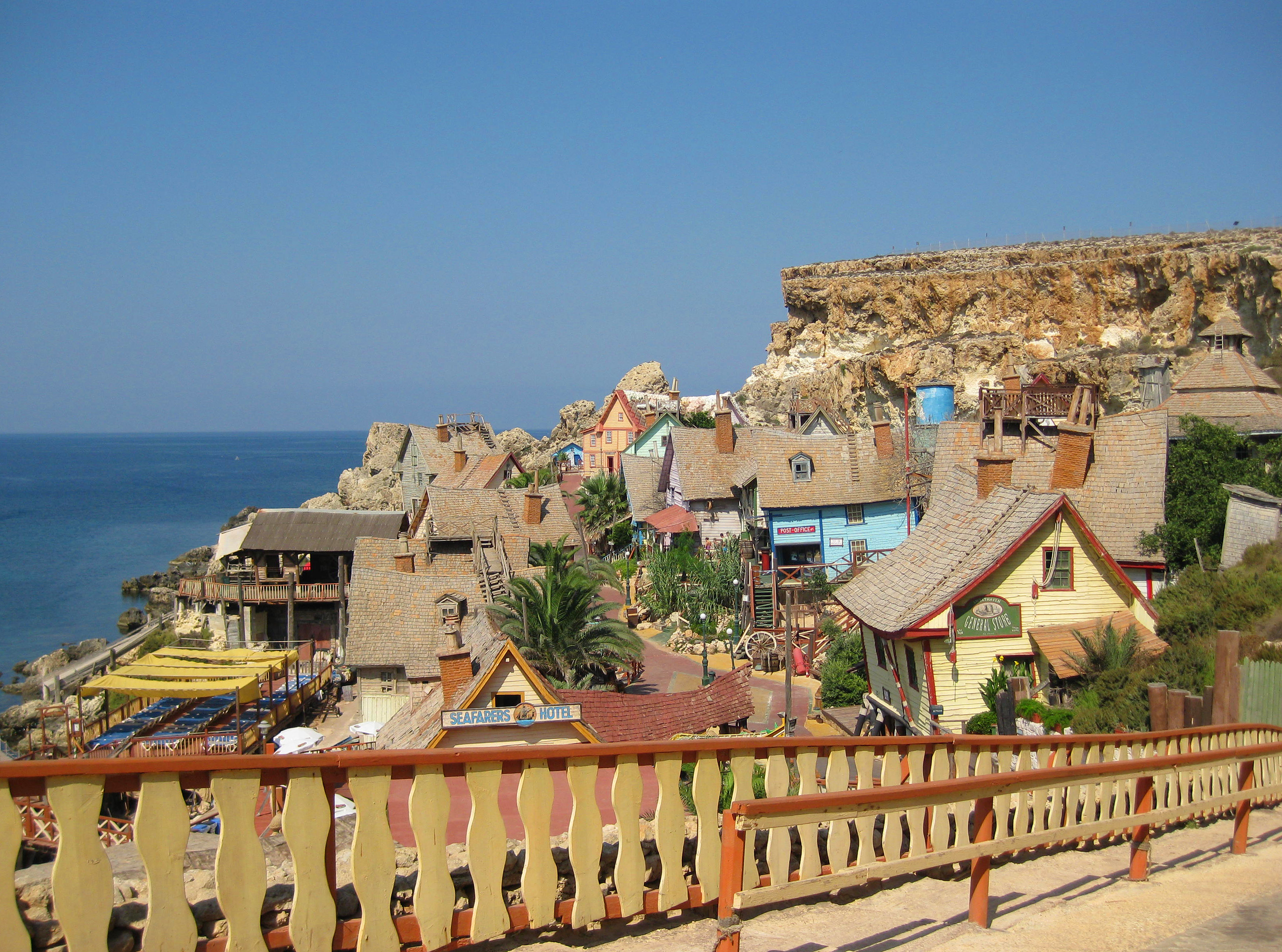
On the Friday, we visited the nearby Popeye Village. The film of the same name was made here in 1980 starring Robin Williams and Shelley Duval, and the village had been built as a set just 15 minutes’ walk from the Mellieha Holiday Centre. The village was to have been pulled down after filming, but they decided to turn it into a tourist attraction instead. So there were colourful, rather odd and wonky buildings, as well as a selection of activities, entertainment, a cafe, toilets and a sandy beach with boat trips. We spent a few hours taking it all in, but though it was fun to see the place we weren’t particularly impressed by it.


Malta 944


One heck of a downpour


Friday evening, we were to pick up our start numbers in the town of Sliema, which was also where the race finished. We could pick our running numbers on Friday between 6 and 7 p.m. or on Saturday afternoon. We chose the former.


Just as we were about to set off, it started raining, later chucking it down with a wind. We stood for a long time waiting for the bus in a leaky shelter. There were nine of us altogether, of whom three were not going to run. They gave up after a while and went back to the house. The bus finally arrived. It was like all other buses in this country with a leaking roof, very noisy and completely without doors. They were funny ancient yellow buses from the 1950s. You would think we were in the Third World or former Eastern Bloc, but we were actually in a West European country on the brink of joining the EU. But here we sat on wet bus seats having difficulty hearing each other speak because of the noise.


It was raining so heavily when we arrived in Sliema that we were unable to cross the road without taking a foot bath. It was simply incredible and quite surreal.


We were to pick up our start numbers at the Hotel Galaxy, but it wasn’t very easy to find. We asked the way several times and got more and more soaking wet. At the same time, it would soon be 7 p.m., and we risked getting there too late after all this trouble. That would have been unbearable, so we ended up taking a taxi.


At the Hotel Galaxy, we got our start numbers. Steffen was originally intending to run this marathon, but decided not to register because he had only just got over influenza. As at all the other marathons, there was also an exhibition, and there were things to buy. Malta is a small country, and so was this place, although not in the negative sense.


Getting to Sliema was no mean feat, and nor was it easy to get back home again. The last bus to Mellieha had already left, so we decided to take a bus via Valetta. But by the time we got there, the last bus to Mellieha had also left. We now had to take a bus to a town called St Paul, where we had something to eat before getting a taxi back to Mellieha, where we arrived around midnight.


Southern Europe in the biting cold


On the Saturday, we went exploring in Mellieha, but there wasn’t much to see. Most of the shops were shut when we got there, with only a few newsstands and touristy places still open, but they weren’t of any interest to us.


In the late afternoon, a group of us played minigolf at the Holiday Centre. When the sun went down, it got bitterly cold. I hadn’t taken the time to study the weather forecast from home. I simply thought that we were off to southern Europe, where it was bound to be warm. But it was very cold, and we didn’t have enough clothes with us.


Malta is usually a sunny island, but we just happened upon an exception, this particular winter having been the coldest in 47 years. On the other hand, people said the island had never been so green.


Birthday in good weather


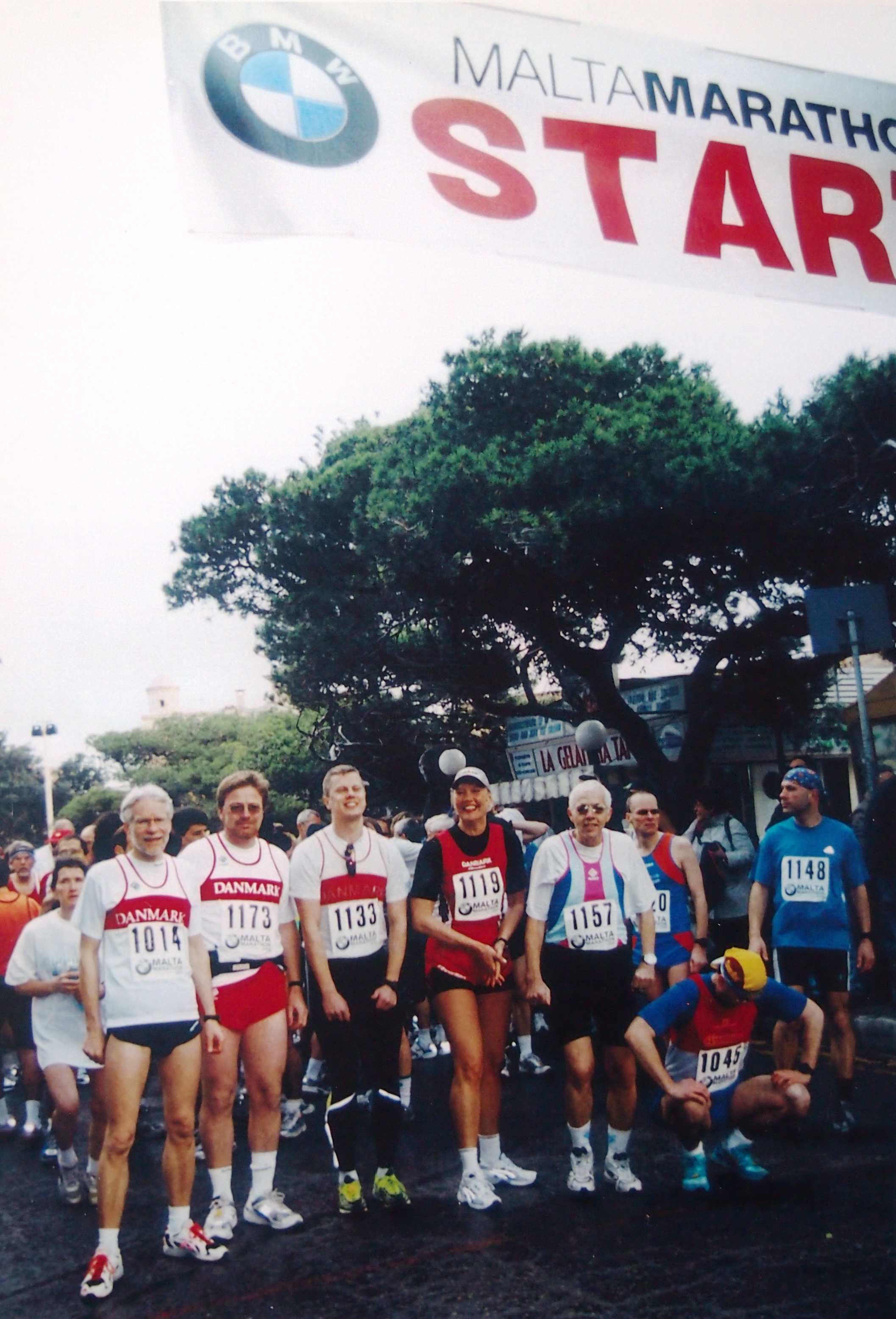
On Sunday 23rd February, we got up early to fit in all the events of the day. During breakfast, the others sang the traditional birthday song, and I got cards and a present. We were in a taxi on the way to the start before seven o’clock.


???????????????????????????????


When we arrived, it was just as cold as the previous evening, although the weather cheered up during the next half-hour, and by the time the race began at eight, the weather was great. The sun had broken through, so we were running on a gorgeous sunny day in beautiful hilly terrain. The others had been saying that it would rain, but I held onto my belief that it would not rain on my birthday, and at one stage the temperature reached 20°C.


I wasn’t so impressed about my first nine kilometres, but after that I found a good rhythm. I ran all of the 18 kilometres in one go without stopping once. At the same time, I was able to ascertain that my kilometre time was quite reasonable. However, by the time I reached the 27 kilometres mark, I was shattered. I had felt it coming during the last kilometre, and I had to stop running and start walking. The rest of the route was a mixed bag. I made agreements with myself, according to which I ran three kilometres, rewarded myself by walking for a short distance after which I ran three more kilometres.


???????????????????????????????


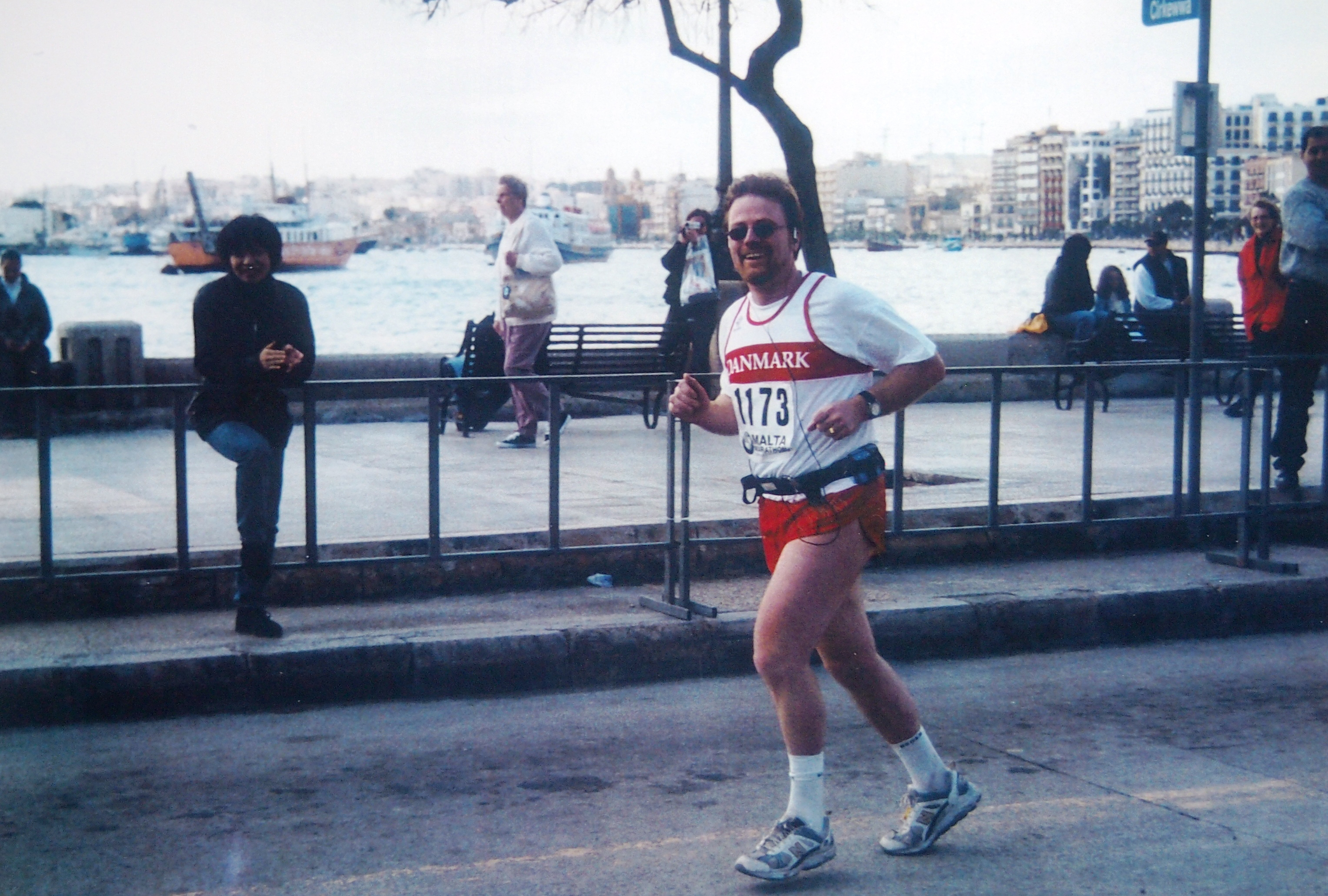
When I reached the home stretch, Steffen, Emil and some of the others were there rooting for me. Steffen and Tommy took pictures of me while Tommy’s girlfriend sang “Happy Birthday”.


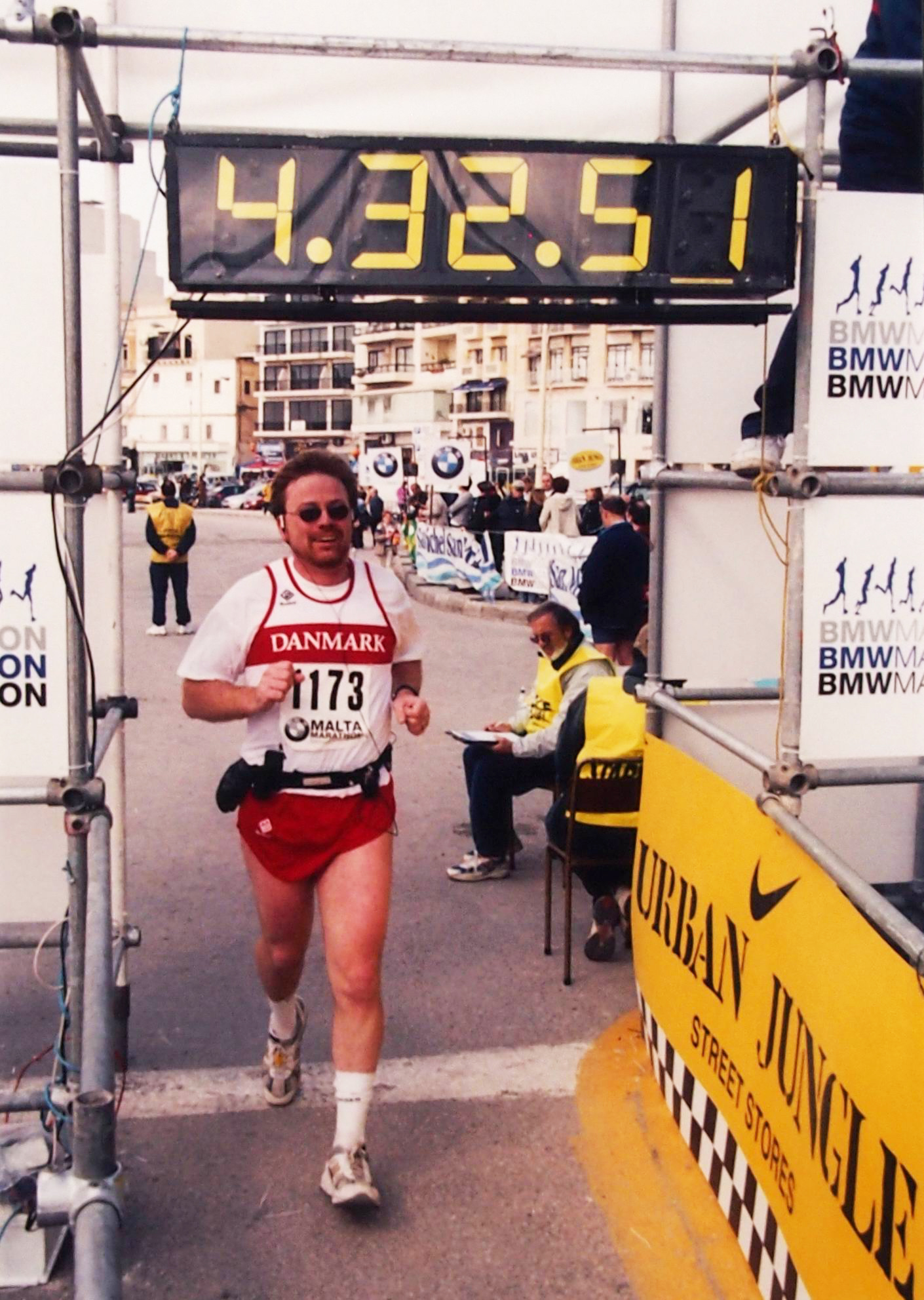
My time was 4:32:40, which was more or less what I had expected, and I was perfectly happy. Emil had run a two-kilometre “Fun Run” and was also very happy with his performance.


OLYMPUS DIGITAL CAMERA


The rest of my birthday was spent at the Mellieha Holiday Centre. First I needed an afternoon nap. Later there was a darts competition, good food with red wine and afterwards we packed our suitcases for the homeward journey.


A rare arrogant runner


On Monday, it was time to go home, and we spent the morning enjoying the good weather with a group of Danes. Among us was a very fit woman whom I didn’t know and whom I had no wish to get to know better. I wouldn’t know if she was professional, but the way she behaved certainly was not. I was a bit in doubt as to whether she was self-satisfied, pleased with her own performance, or simply thought she was good. At one stage, I was talking about something I had experienced during my run and how far I had been at that particular moment in time. The woman looked at me condescendingly and asked if I had walked the whole way. That was extremely unpleasant and patronising.


In my time as a runner, I have met many capable, fit and healthy athletes. Characteristic of them all has been their respect of others’ performances and the fact that they didn’t patronise anyone. This woman was the only exception to that sportsmanlike attitude.


Manipuleret_gaardhave_uden_askebaeger


After this annoying encounter, we soon took a taxi to the airport and flew home to Denmark via Frankfurt. I had completed yet another marathon, the boys and I had enjoyed some wonderful days together, and I had celebrated my birthday in a very special way.


Buy the book here.


Engelsk forside

???????????????????????????????

The Polar Circle Marathon 2002

July 1 2015

A question of repetition


The Polar Circle Marathon 2001 had been a great success. My experience of the run itself and the cruise afterwards in the Disko Bay were also most enjoyable, providing memories for life. Now it was time to consider taking part in the second generation of the marathon. The members of my family who had joined me on the first trip got what they had wanted from it, and so had I, but I was very keen to take part again all the same. I had been on all the previous runs organised by the Danish Athletics Federation, Albatros Travel and the tabloid BT, and of course I was going to go back to Greenland. This time, though, I would only be doing the run and not taking part in the subsequent cruise. This was the first time I would be travelling with these organisers without a companion.


I chose the cheaper trip this time and was to stay at the Hotel Umimmak with showers and toilets on the corridor. I also elected to share a double room with a stranger.


The route was to be the same as in the debut year, although there were other changes. For one thing, it would be possible this time to run a 26-kilometre ultra-half-marathon, for another, the race would also be open to all nationalities because they wanted to make it more international. There was, however, a limit on the number of participants because they estimated a total capacity of around 300.


Arrival in Greenland


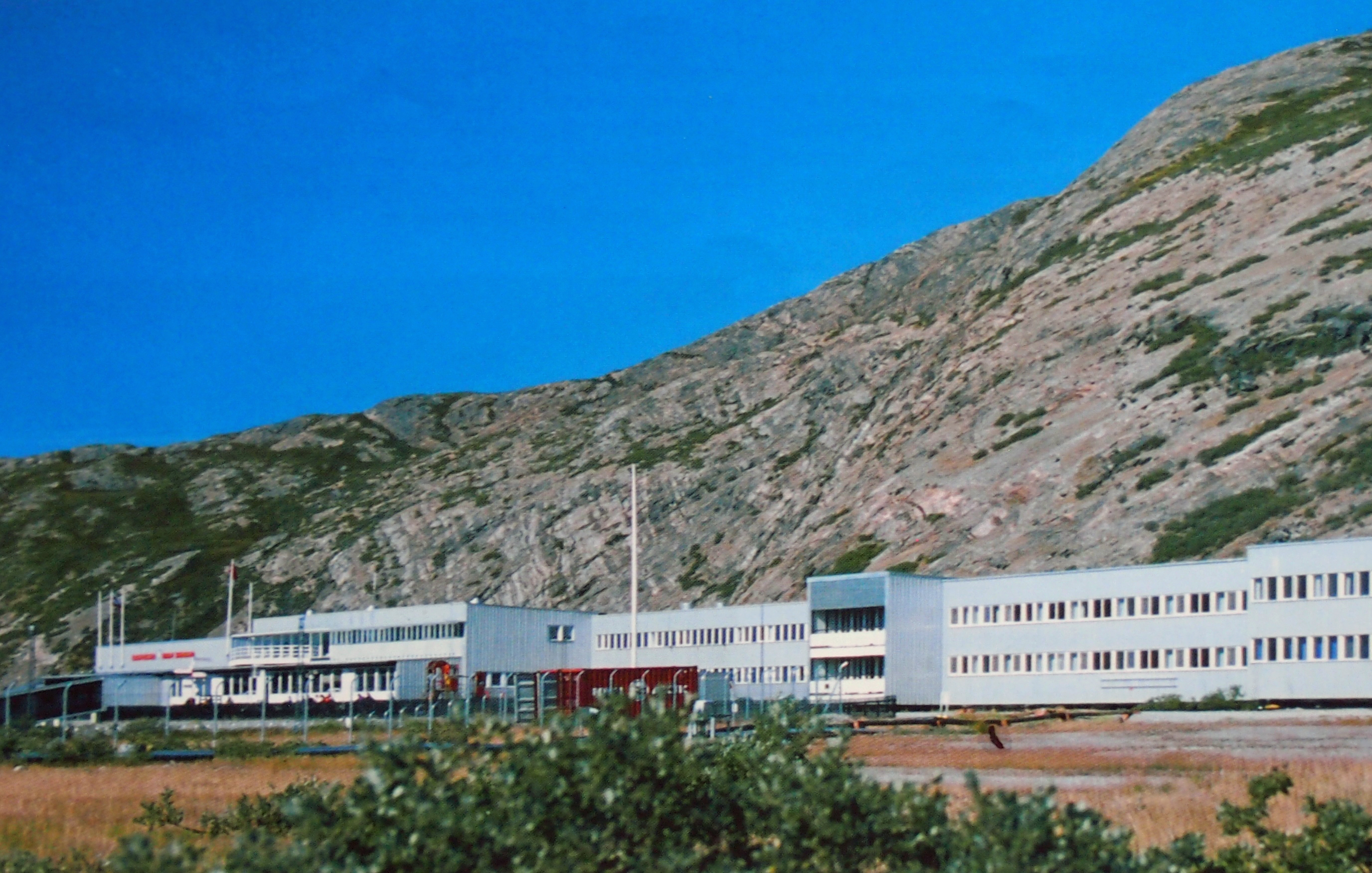
We flew out of Copenhagen on the morning of Friday 6st September, and on the plane I sat next to Morten, who as it turned out was also to be my roommate. We arrived on schedule in Greenland at 11 a.m. local time and were given an envelope containing our start number and various information, as well as a key to our hotel room. We were then driven to the Hotel Umimmak a couple of kilometres from the airport building. The conditions were fine, although not quite the same standard as at the hotel in the airport building the year before. Although we stayed in double rooms without private showers and toilets, Morten and I got along fine, so everything was satisfactory.


???????????????????????????????


We spent the afternoon revisiting the area, which had not changed. Later on, there was a barbecue at the youth hostel, where three large tents had been erected, so that we had shelter from the wind, and the rain, as it turned out. We ate musk ox, reindeer and sausages with various salads, rice and bread and were not late arriving back at the hotel.


A day of peace and quiet


On the Saturday, we went on an inspection tour of the route. It was great to see it again, and just as impressive and exciting to see musk ox, arctic foxes and hares on the horizon.


The route across the ice was a bit different from last year. This was not a decision on the part of the organisers, but because Mother Nature had taken the liberty of moving things about a bit. The previous year, we had been able to run or walk on the “ice road”, but this was no longer possible. This year, we had to be helped up to the “road”, and the organisers had promised to build a bridge of some kind.


There was not much for me to see that was new, so I chose to spend the rest of the day relaxing, getting ready for the run the day after. Supper was the traditional pasta party.


Yet another run in the cold


I woke up at four in the morning on the day of the run and couldn’t get to sleep again. I hadn’t run that much since my injury showed up again during The Swiss Alpine Marathon a month and a half previously, but I felt ready to run all the same. But since I had no intention of tempting fate, I had a robust stirrup of sports tape wrapped around my left foot, and Morten helped to tighten it for me to achieve the optimum effect.


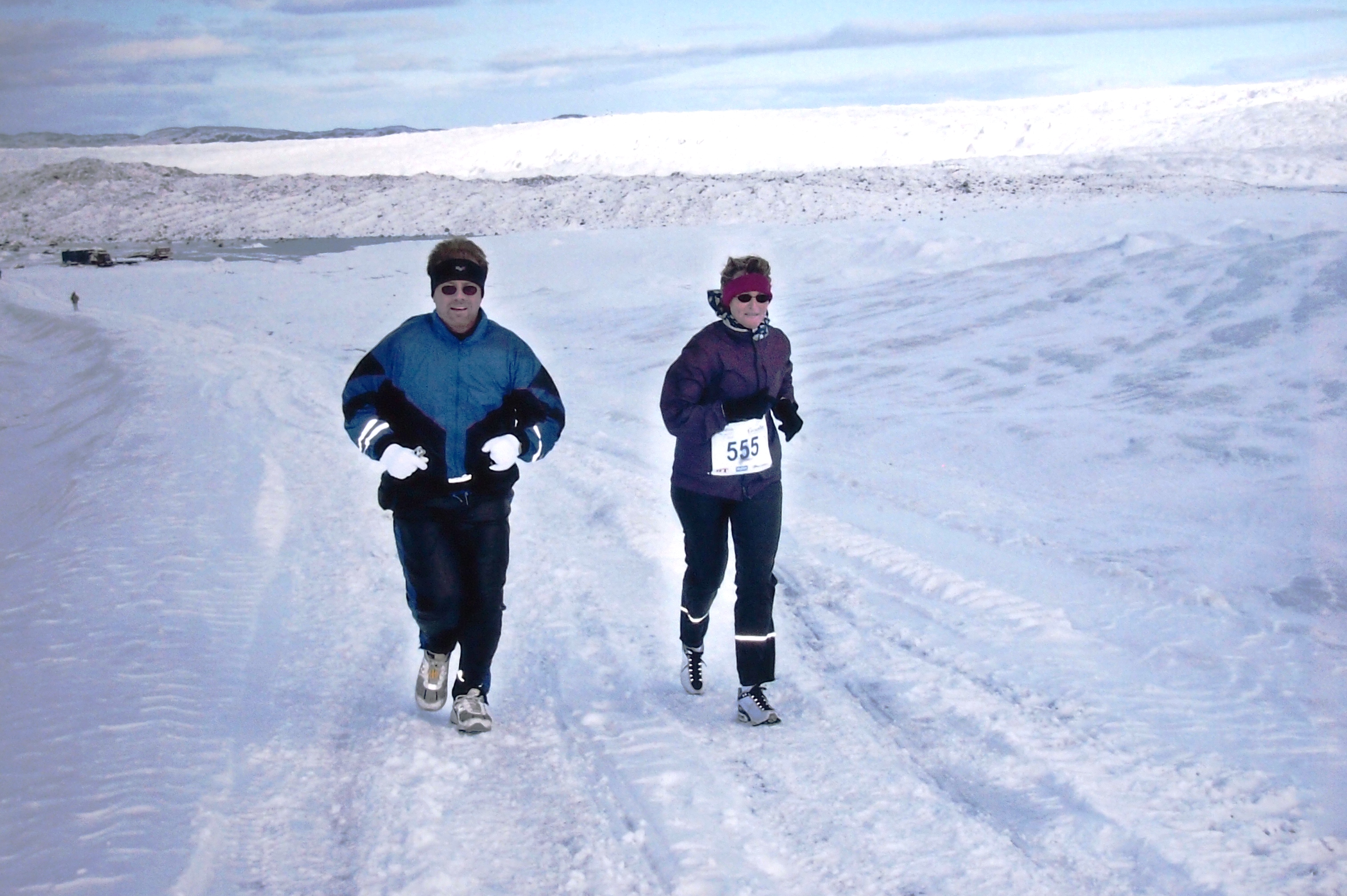
It was bitingly cold at the start, but at the same time incredibly beautiful. It had snowed during the night, so everything was covered with a thin white layer. It all looked very idyllic. But if it was beautiful here, it would be even more beautiful later on when I reached the ice cap. It was the most incredible sight. Everything was white, and it looked like the perfect “Christmas Eve”. As an extra bonus, it was much easier to run in the soft snow than on the slippery ice. I managed to fall over anyway, but at least I landed in soft snow.


Good company


It had always been natural for me to run alone. Of course, I had got chatting with other runners, but we had always ended up going our separate ways to run on alone. Early on in this race, however, I met a girl named Mette. We ran more or less at the same pace and were good company for each other, and this lasted right until the finishing line.


We didn’t run very fast, and I was intensely concentrated on not twisting my ankle again, whilst Mette had problems with her knees and toes. But neither of these was a serious problem, and we supported each other well.


???????????????????????????????


After 34 kilometres, I experienced a crisis. I felt completely drained of all energy and was about to ask Mette to run on and leave me behind. But she could sense my panic, ran on ahead up a hill and called out to me that there was a supply station a bit further on. That gave me back a bit of energy.


At the supply station, I drank four glasses of energy drink and was given a handful of wine gums. Although that did help a bit, my body got cold during the break and the very cold drink didn’t help. I asked Mette if she was cold and she replied in the affirmative. Later, though, she told me that she didn’t feel the cold but had refrained from saying so for psychological reasons. After a while, I was ready again and on a par with Mette.


Lost that beer again


The past year, I had won a beer by beating Søren Rasmussen to the finish. I had not received it yet, though, and had informed Jan about this the previous evening. He had offered me four beers if I could beat Søren this year, as well. If I didn’t, then we would be quits. But when Mette and I came over the hill with 800 metres downhill to the finish, I heard Jan shouting to me over the loudspeakers that I had lost. I wasn’t surprised.


Across the line together


Mette and I crossed the line together shoulder to shoulder, and there were only five runners after us. My time was 6:17:23, which was a good three quarters of an hour slower than the year before. But I had no problem with that, after my injury I was just happy to have been able to run a marathon.


It was Søren’s fault that I lost the beer I had won the year before, and he met me at the finish. I then went into a tent to get myself a hot drink to warm my frozen body and met Morten. He had come in seventh but had been dehydrated and been on a drip in the tent. He was now getting his strength back and told me that Søren had been sitting waiting in the tent for half an hour with the sole purpose of meeting me when I crossed the line. I was touched. It was wonderful to be on the receiving end of such a gesture.


On the evening after the run, there was the traditional gala dinner followed by happy hour at a discotheque.


This had been a short trip with the run as its only purpose and already the next day it was time to return home after a long weekend in the land of Santa Claus.


Buy the book here.


Engelsk forside

???????????????????????????????

Swiss Alpine Marathon 2002

June 24 2015

A combined trip


When I ran the 24-hour run in Viborg in 2001 together with Rolf Bücking, he had spoken warmly of the Swiss Alpine Marathon, which he had previously run. It was the only marathon in the world he would consider going back for, he had said. I had also heard about the run from other sources and was beginning to get interested.


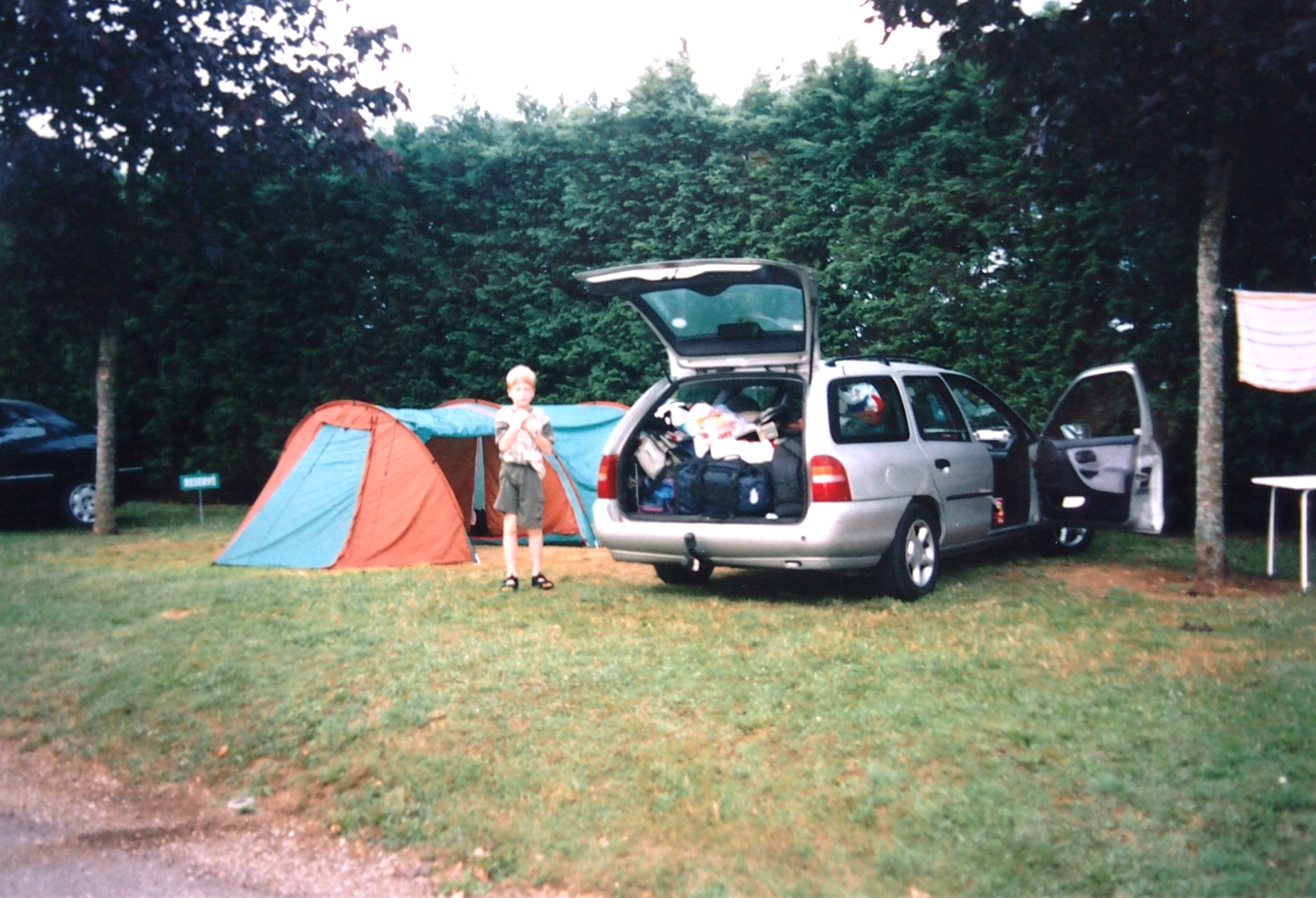
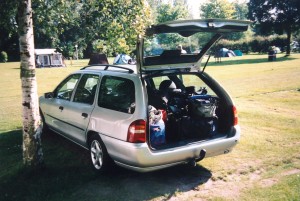
I, therefore, decided to ascend the Alps in 2002 and combine the marathon with the boys’ and my own summer holiday. We had a very nice tent and some good sleeping bags from the weekend in Viborg, so with memories of my childhood in mind, I decided that we should go camping. I asked the boys what they wanted to see, and their wish list involved visits to a number of countries. Steffen was a footballer, and he wanted to see some of the big, famous football stadiums. So we decided that this trip would be a combined one.


Brave New World


Our European tour started on the morning of 15th July 2002. We had no precise plans for the trip, although we had reserved rooms at a hotel in Davos in Switzerland for 26th July. Time would tell how much we would manage to do before that. I had booked a hotel in Davos in order to have a comfortable night before and after the run. Pivotal, however, was the fact that I had discovered that there were no camping facilities anywhere near the town.
 

???????????????????????????????

That spring I had invested in a rather elegant, expensive sat-nav system for the car. This would now be put to the test on its first major trip. At that time, this was very Brave New World. It wasn’t the kind of little device you could put in your pocket, but a large system with a rigidly mounted screen and a cabinet with a slot for DVDs containing country maps. We had maps for each different country and had to change the discs as we went along. The system also had a screen for the back seats so the boys could follow our route although they could also enjoy videos and games.


Arrival in Amsterdam


From Rødby Havn, we sailed to Germany, which we drew through without a hitch. The GPS system messed us about a bit, but we found out how to adjust it, so that it would show us the best available route.


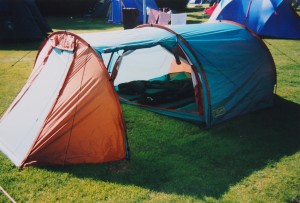
We arrived in Amsterdam late in the afternoon in the most glorious summer weather imaginable and found our way to Gaasper Camping. We put up our tent and spent the rest of the day enjoying the campsite and its excellent facilities.
 

???????????????????????????????


Amsterdam


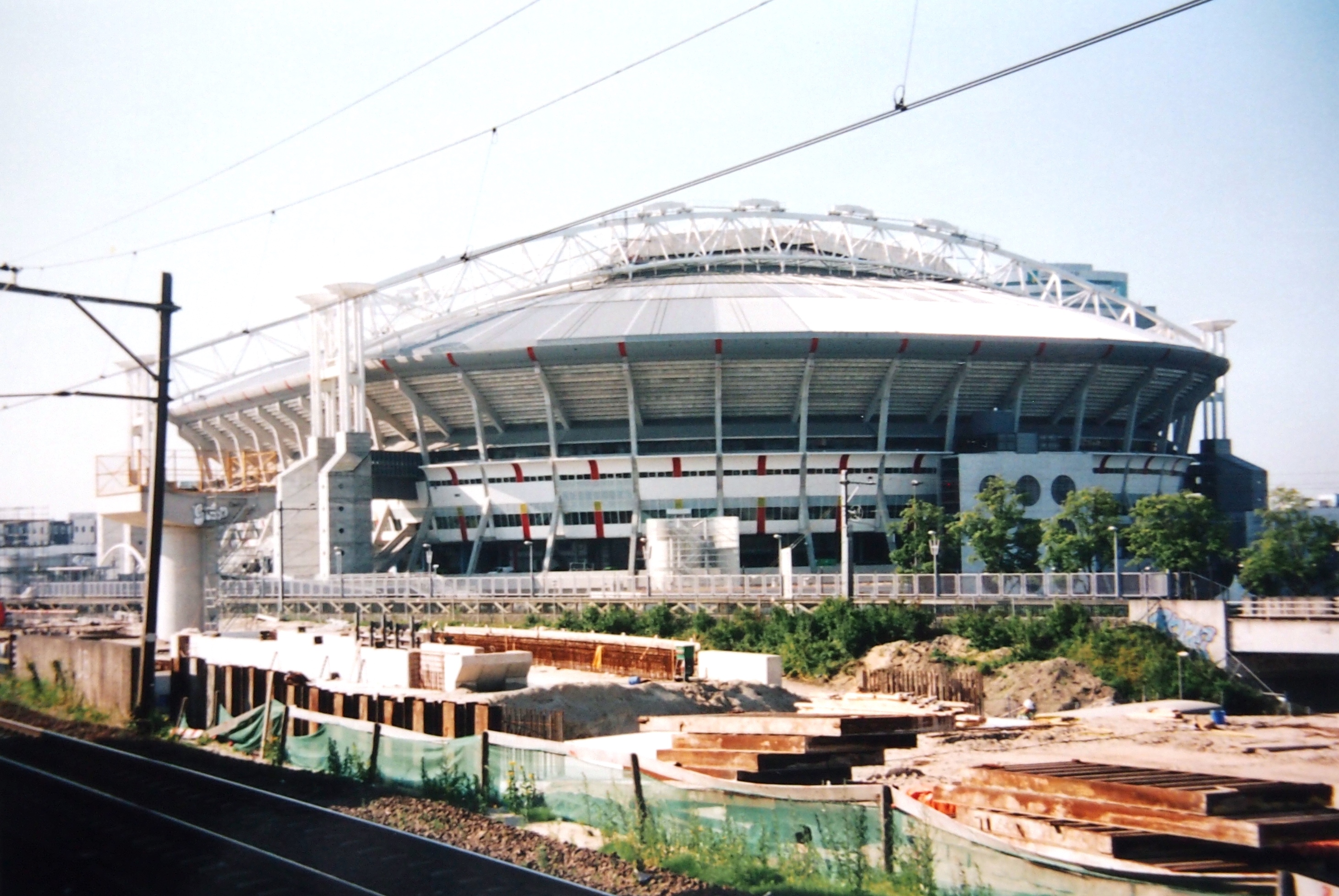
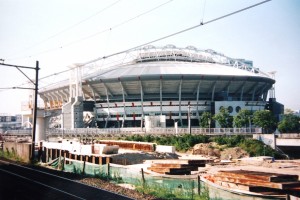
After breakfast on the Tuesday, we walked to the nearest Metro station, from which we could get to the huge Amsterdam Arena, home of the great Ajax Amsterdam, and only had to change trains once.
 

???????????????????????????????

Ajax Amsterdam was founded in 1900 and has been the most winning club in the Netherlands over the years. In the early 1970s, the club experienced a period of greatness, winning the European football Championships three years in a row.


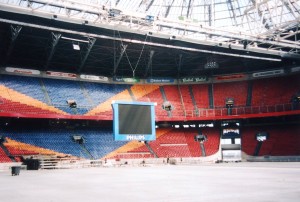
At the stadium, we did a bit of shopping in the souvenir shop and had the opportunity of seeing the first team start its morning training session. We didn’t get to see much of that, though, because we were on a guided tour of the entire arena.
 

???????????????????????????????

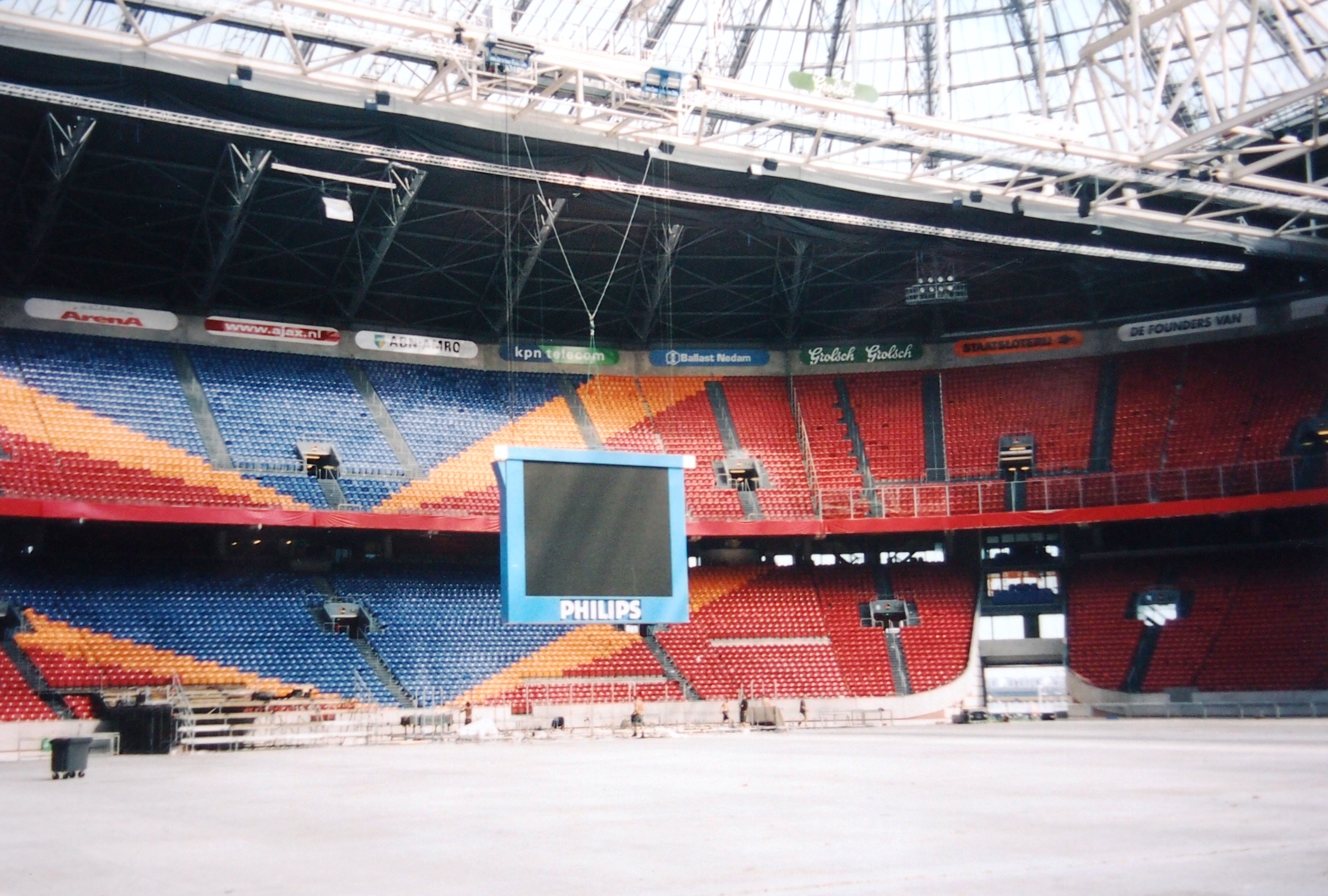
And we saw more or less everything – the control room, press box, press room and even the turf. You couldn’t actually see the turf that day, though, because it had been covered with a temporary layer of concrete to protect it from builders who were at work. At the same time, the place was being cleaned. There had been a big party there on the Saturday night, with 35,000 revellers enjoying music and dance. The pitch is covered for such events, and the roof is rolled closed across the arena. We were told that this had to be done bit by bit over a period of half an hour because so much electricity was needed that the whole area would otherwise be starved of power. This fascinating guided tour lasted almost two hours.


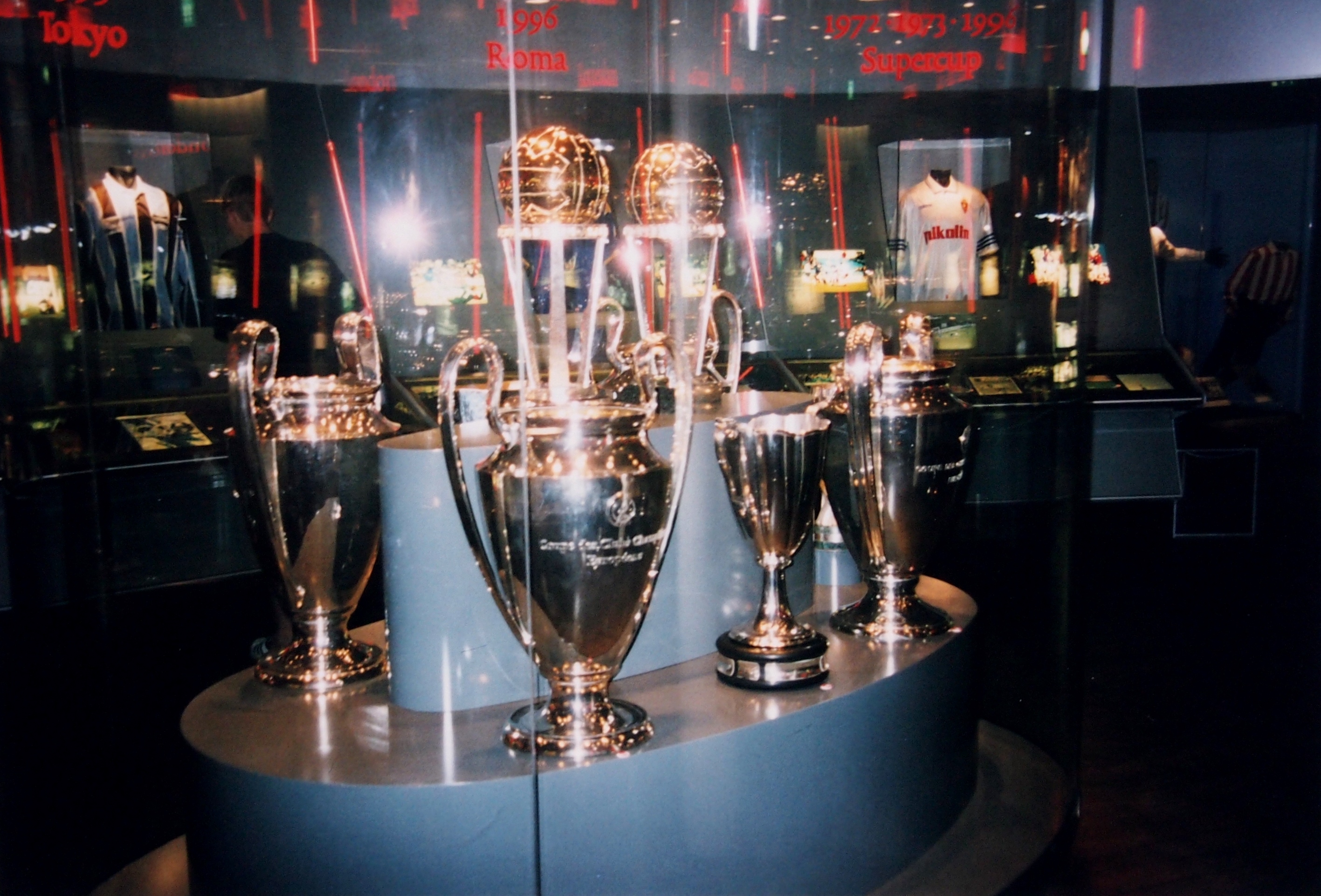
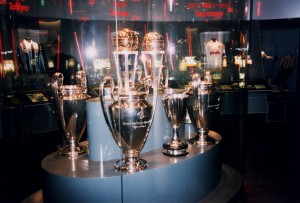
Afterwards, we visited the club museum in the same building. This was also rather interesting. There were photographs, films, jerseys and much more from the club’s entire history. The most impressive thing was a sealed armoured glass case containing important trophies. This included four giant trophies for victories in the European Championship and two for world championship team competitions.
 

???????????????????????????????

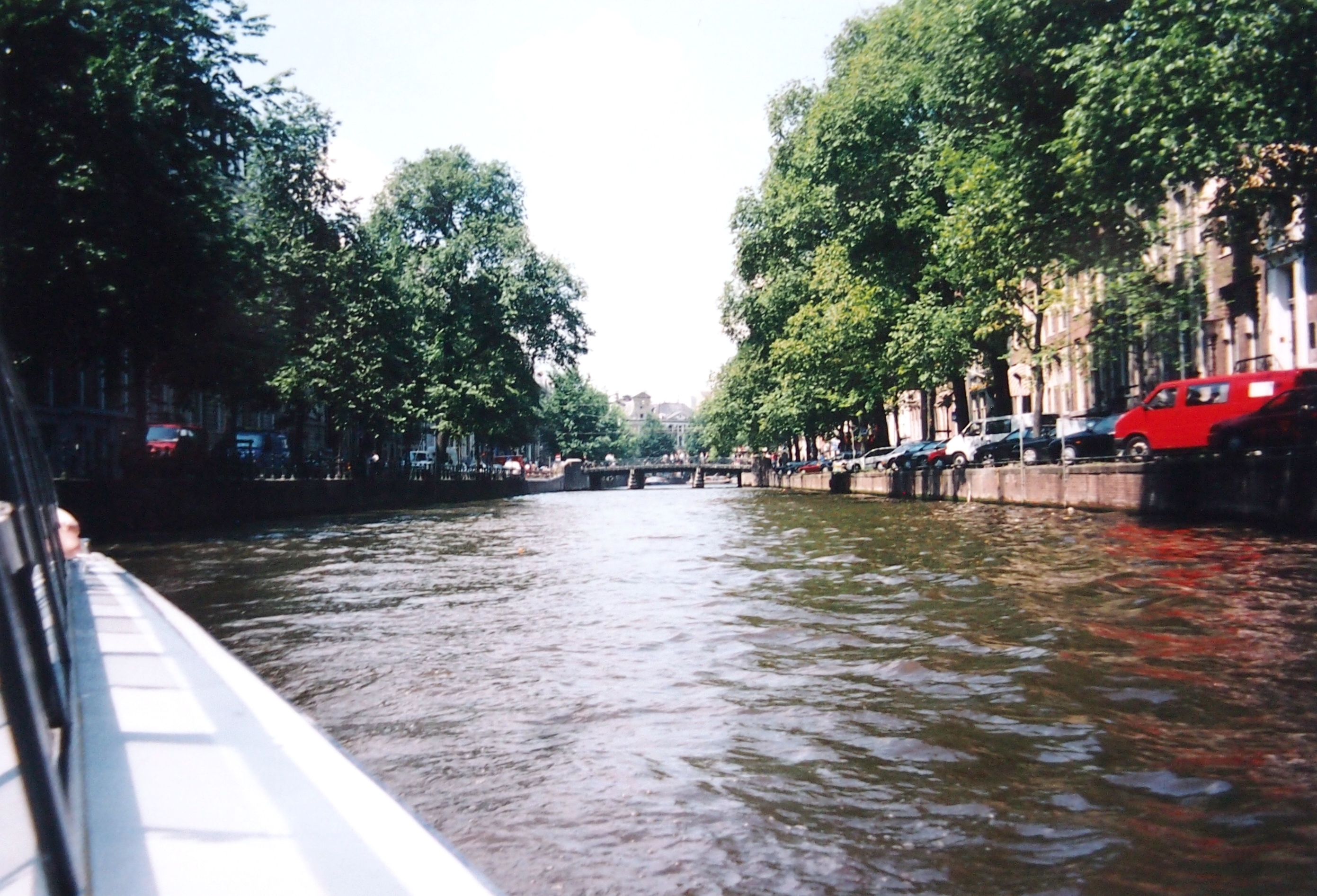
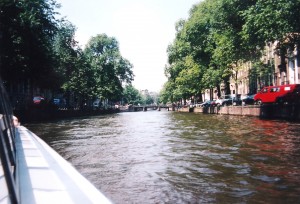
We spent the rest of the day in town, where we, among other things, enjoyed a tour of the city’s impressive canals.
 

???????????????????????????????


Flying visit to Benelux


We spent most of Wednesday on the road, with the odd stop to eat and have a look around. Almost without realising it, we had driven through Belgium and then Luxembourg and arrived in France. Here, we had trouble finding a campsite, but finally succeeded in the town of Santenay. It was a nice site with an excellent restaurant. Yet another day of pleasant experiences had come to an end.
 

???????????????????????????????


Detour via Andorra


Thursday 18th July was much longer than we originally imagined. We had packed our tent and our luggage and had breakfast so as to be ready to leave Santenay at 8.15 a.m., reckoning on arriving in Barcelona in the late afternoon. On the way, however, we decided to fit in yet another country and headed for the little Duchy of Andorra in the Pyrenees between France and Spain. As far as we could see from the map, this visit would not involve much of a detour. We couldn’t have been more mistaken.


We headed for Andorra along winding mountain roads full of bends and in poor visibility. It didn’t help matters that we on several occasions, had to crawl along behind tractors and cars pulling caravans. But it was a beautiful drive and altogether a wonderful experience. We finally arrived in Andorra and entered the cosy coastal town of Pas de la Casa, where we made a stop to take pictures and write postcards.


The road to the town of Andorra, although not as bad, was at least as slow, and things got really bad as we got closer to the town. The traffic had more or less come to a standstill, and we crawled slowly forward. The police stood there directing the traffic, which took turns coming from each its own direction. This took ages, so we decided not to stop in Andorra. It turned out that, from here, it was all 200 kilometres to Barcelona, whereas we had reckoned with a quarter of that distance at most.


Accommodation problems


The next problem was that according to our camping guide, there was no campsite in Barcelona, so we had no destination to head for. By the time we reached Barcelona, it was nine thirty in the evening and, because we didn’t expect to find a campsite open after 10 p.m., we had to get a move on.


Having not immediately found a campsite we drove into the city centre to find a hotel, but that wasn’t easy either. Most of the hotels were fully booked, so it took us quite some time to find one that wasn’t and could set us up for the night. We ended up staying the night at the Hotel Reding, which was expensive. But we had no alternative.


Camp Nou


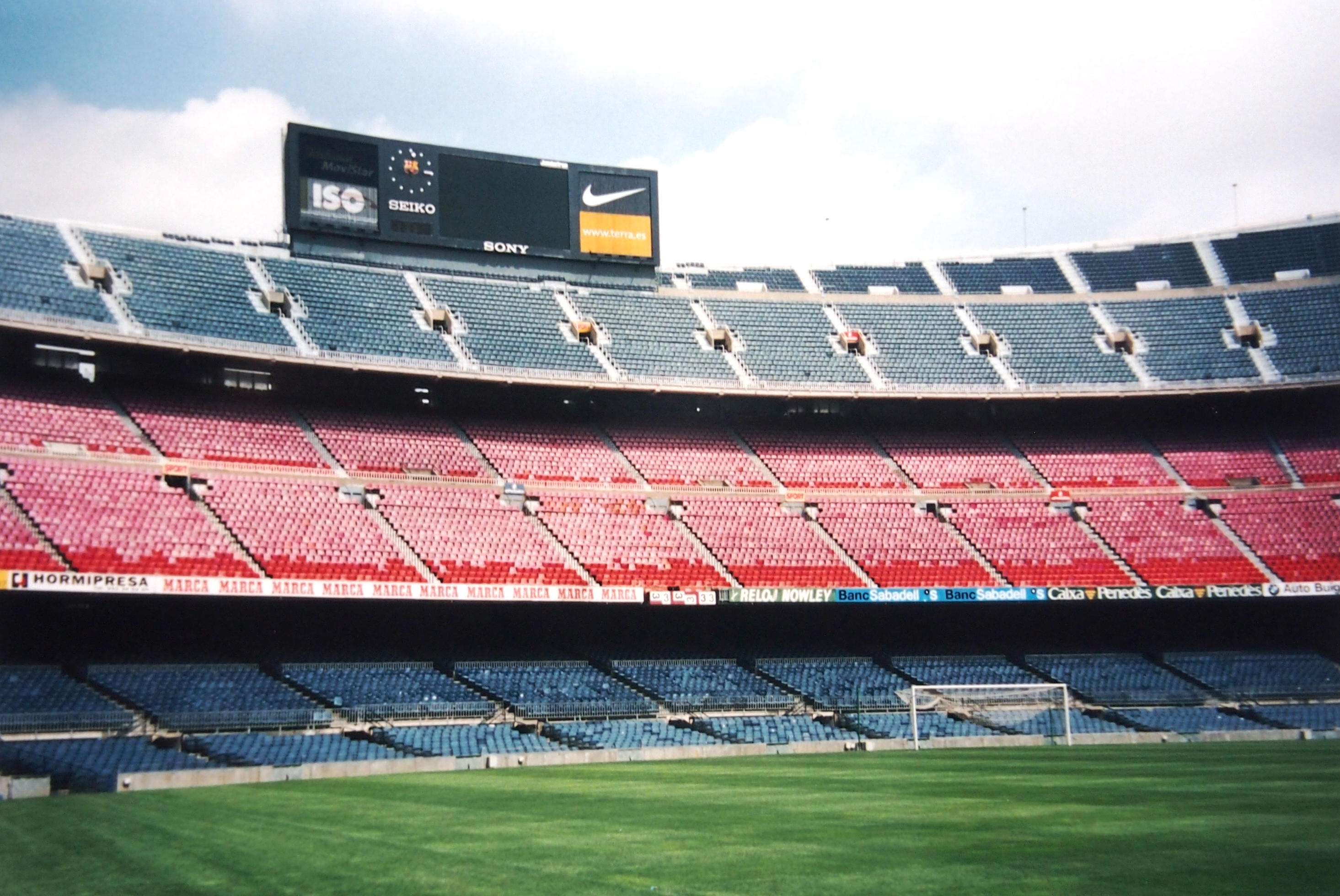
Friday morning, we drove out to FC Barcelona’s home ground, Camp Nou. Along with Real Madrid, FC Barcelona (aka. Barça) is the dominant club in Spain. Established in 1899, the club won its first Spanish Championships in 1928-29. It is almost a sensation when very rarely one of the two major clubs does not win the national championships. Both clubs are also among the leaders on the world stage.
 

???????????????????????????????


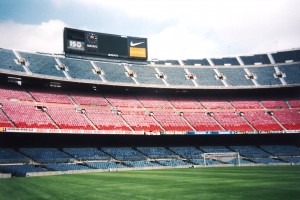
Parken in Copenhagen and the Amsterdam Arena together have fewer seats than Camp Nou, which tells you something about how huge the stadium is. And huge it was, too. Across the street lay another stadium, Mini Estadi, home to Barça’s reserve team. This says something about the giant we were visiting. There were several sports facilities in the proximity of Camp Nou, and it said FC Barcelona on all of them. Although FC Barcelona is best known for its football team, the club has numerous other sports. Their handball and basketball teams also belong to the world elite.
 

???????????????????????????????


There was a long queue of people waiting for the guided tour, which had not been the case in Amsterdam. But it was exciting and fascinating to see the giant stadium, which has enough room for 100,000 spectators.


Like in Amsterdam we were shown round a variety of facilities. Here we were also given the opportunity to see a changing room, though this was not the “holy of holies”. We saw the one reserved for visiting teams.


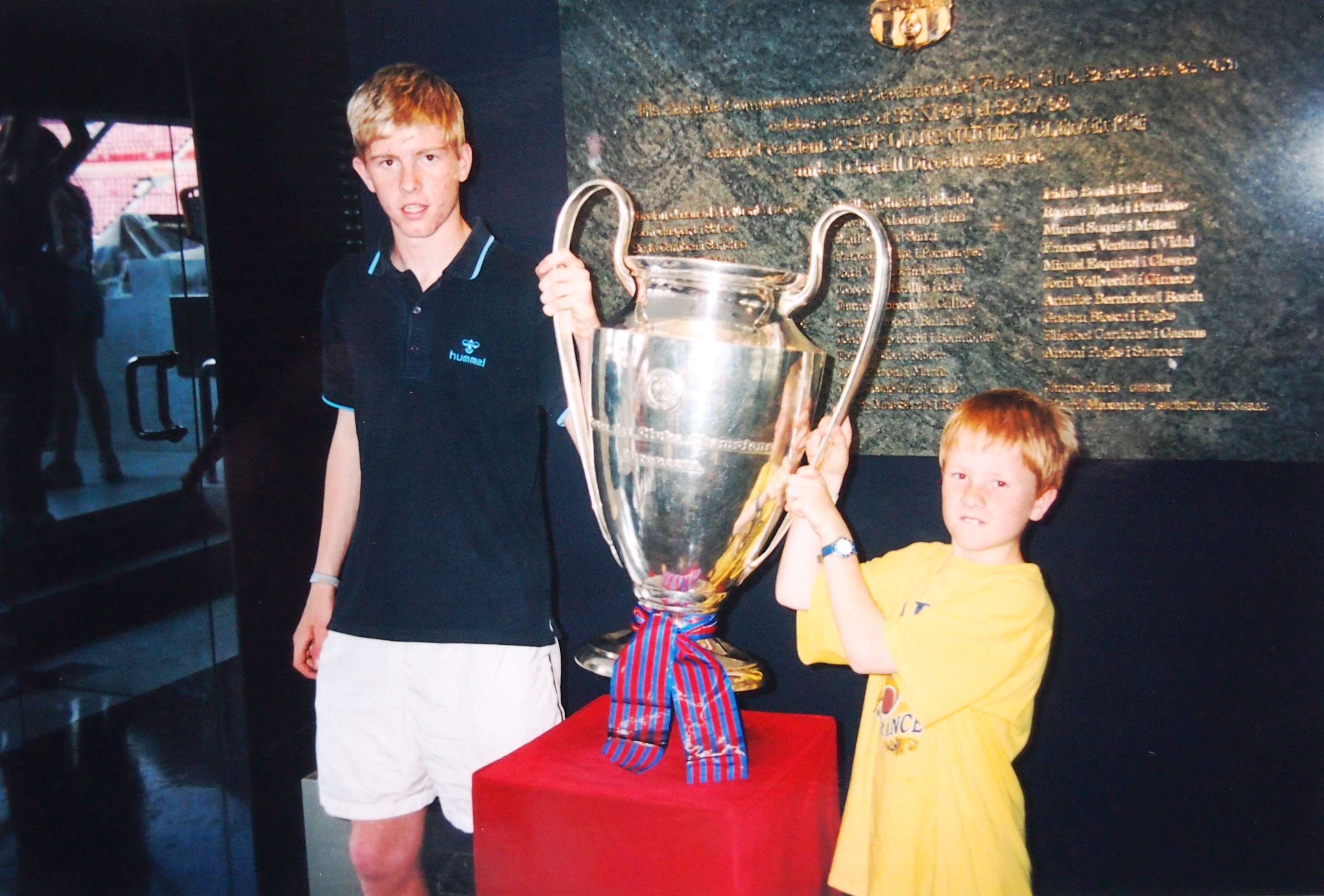
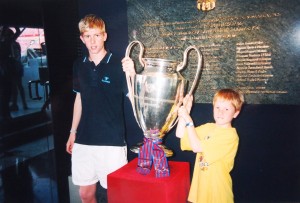
FC Barcelona’s Museum was also much bigger than the one in Amsterdam. It also had sections for other sports, although those dedicated to the football club were enormous. It is impossible to describe how many trophies the club had on show.


Disappointing eating options


As in France, it was also a challenge to find a campsite here, though we did ultimately succeed. We set up a tent and then headed for the city centre to do some sightseeing and shopping and to get something to eat. The latter was something of a disappointment. We simply could not find a cosy restaurant with a good menu. We ended up with spaghetti and pizza, but maybe we were just in the wrong part of town.


We were pretty tired by now after several days packed with activities, so we found the way back to our campsite and got a good long night’s sleep.
 

???????????????????????????????


Yet another disappointment


Our campsite had every thinkable kind of facility, so we decided to spend the Saturday relaxing and making use of them. But in the evening, we wanted to go back to the city and find a really good restaurant. We asked at the campsite reception if they could recommend another part of town with restaurants and shops. They suggested a part of town that sounded as though it might live up to our expectations. But we were once again thoroughly disappointed, wandering round streets where there was not much to look at. We ended up enjoying a nice cold drink at a bar before setting off for the city centre where we had been the previous day.


We ate supper at a Chinese restaurant. Of course, Chinese food tastes best in China, but we didn’t find anything else attractive. We returned to our campsite after a few hours of shopping and stayed there all the following day.


Farewell to the big city


We left Barcelona on Sunday morning. Yet another experience richer there was no doubt about that. We had enjoyed some lovely relaxing days at the campsite, and the Camp Nou Museum had been really impressive. On the other hand, the city itself had not really lived up to my expectations. I missed a long pedestrian precinct, as well as cosy quality restaurants with delicious food. To my mind the city lacked atmosphere. I would like to have found something similar to Copenhagen’s Nyhavn or a Latin Quarter. Perhaps they were there, but we didn’t find them.


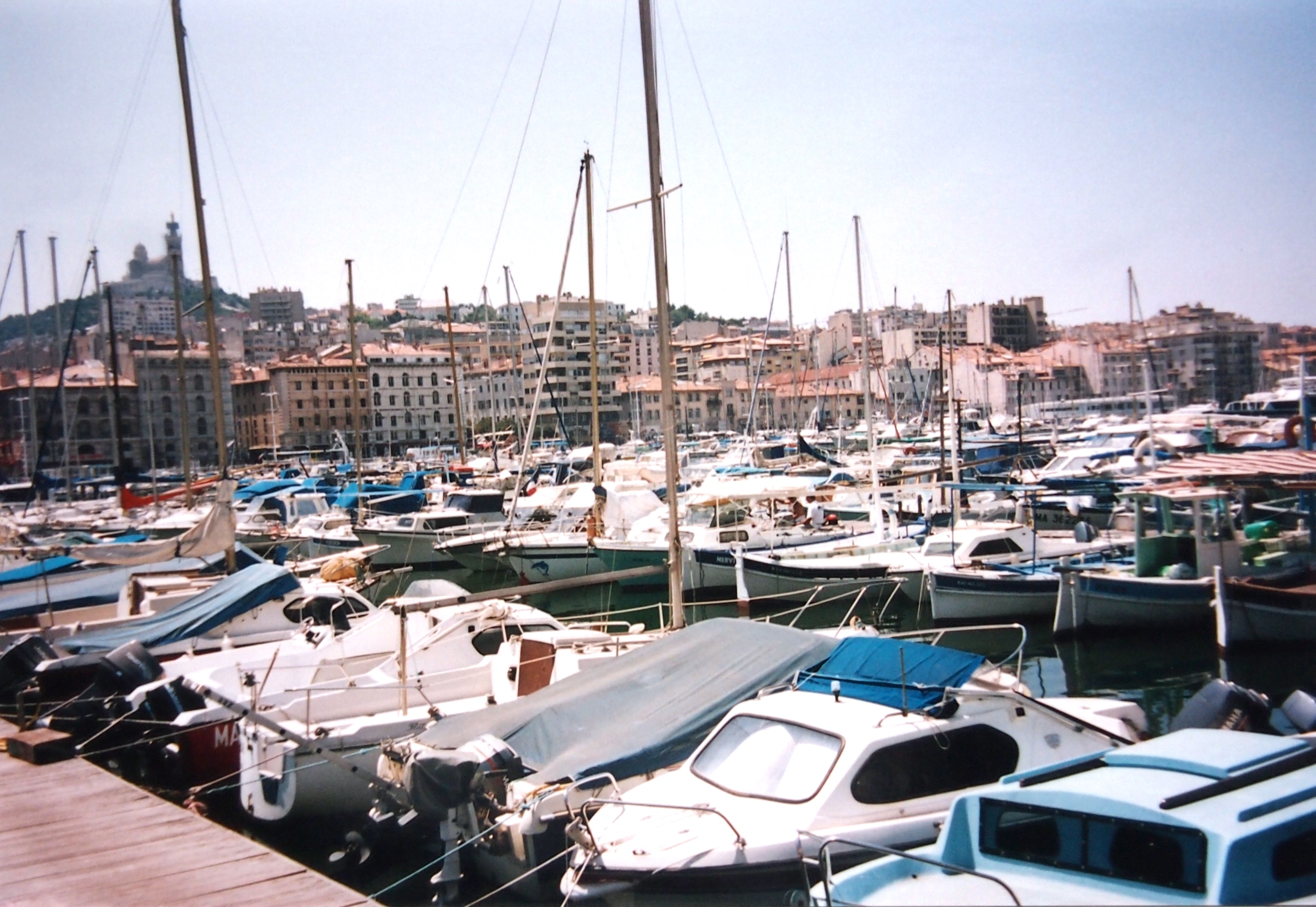
Marseille


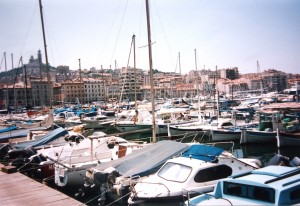
Our journey continued towards Marseille, where we arrived early in the afternoon. We drove straight into the city centre and the harbour and found a tourist office. Here we were given a map of the city showing campsites, although there were none in Marseille itself. One of the nearest sites was about 30 kilometres out of the city in the town of La Ciotat.
 

???????????????????????????????


My first impressions of Marseille were more positive than those of Barcelona. From the car, the place seemed more agreeable, with a nicer atmosphere.
 

???????????????????????????????


We drove out to La Ciotat and found the Les Oliviers campsite. Although of a lower standard than the previous three we had stayed at, Les Oliviers fully lived up to our expectations of a campsite.
 

???????????????????????????????


On the morning of Monday 22nd July, we drove into Marseille and visited the tourist office to get some information about shopping streets and places to eat. Then we walked around the streets looking at the shops before heading for the harbour to get a bite to eat. Here we found the kind of cosy atmosphere we had been missing during the past few days. There were lots of eateries with a view of the water and the boats, and we found a nice place. We spent the afternoon exploring the town before returning to the campsite to spend the evening there.


Proper campers


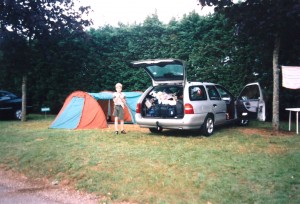
The next day it was time to move on, so we got up early, packed up our gear and set off. We bought breakfast at a filling station and downed it standing by the car. We had seen other people at the campsites arrive with their mobile homes, huge caravans and villa tents. Many “campers” set up their pitches like small summer cottages, with furniture, refrigerators and TVs with dish antennas. But we used a torch to find the way into our three-man tent. We prepared our breakfast on the bonnet of the car and ate it, standing up, and our clothes were in bags in the boot. It might be a bit of a challenge to find things from time to time, but we were having a lovely time. We didn’t miss all the mod cons we were familiar with back home.


A new big country and a new city


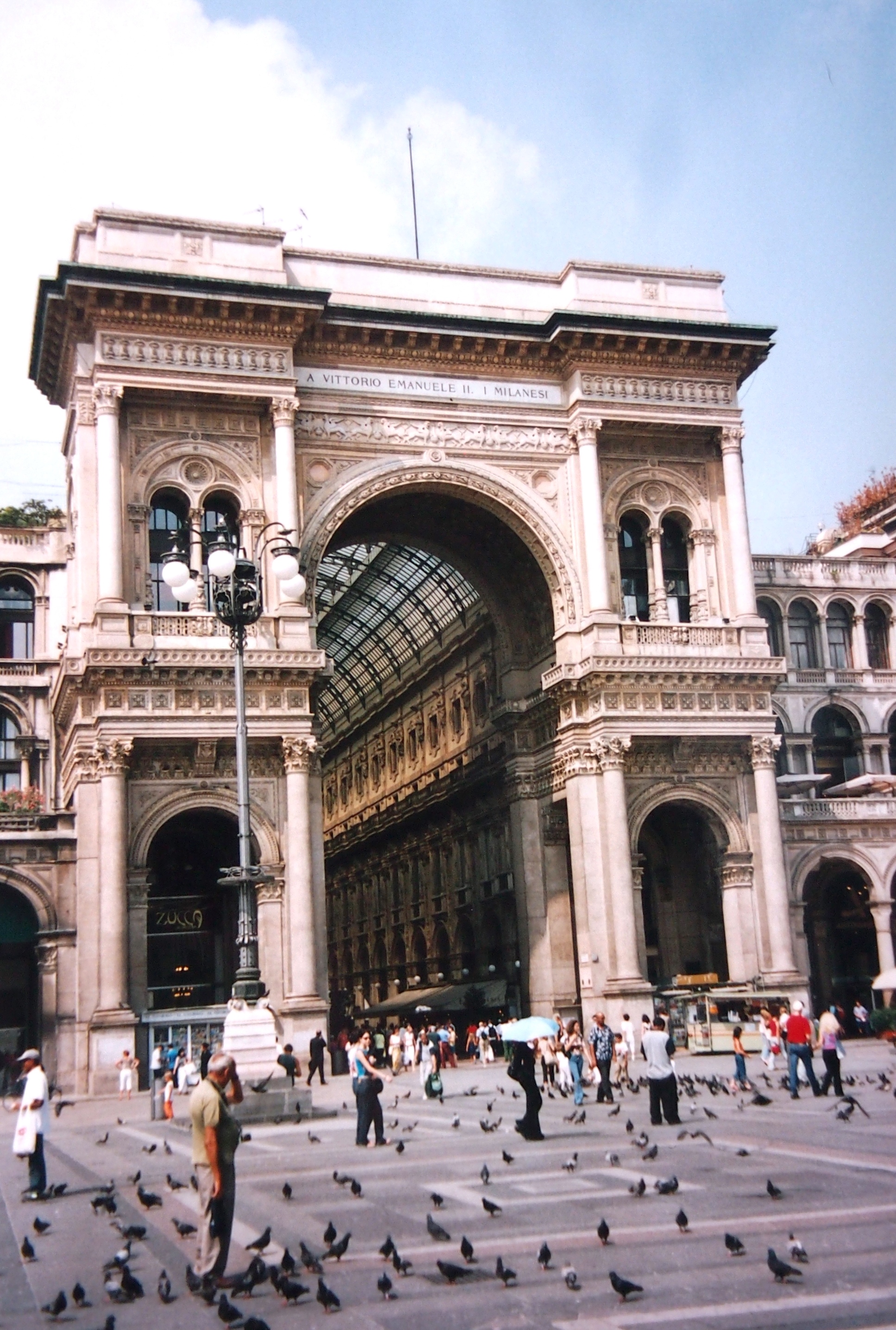
We spent the morning and half the afternoon on the road, eventually arriving in Italy. By mid-afternoon, we were in the centre of Milan, where we found a multi-storey car park near the huge square adjacent to the city cathedral. The cathedral was, unfortunately, under repair at the time, so its splendour was hidden from view. Most of it was behind scaffolding, which rather ruined the pictures I took.
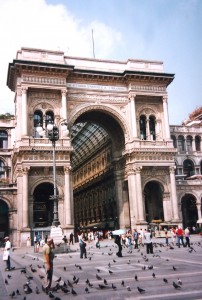
 

???????????????????????????????


From Milan, we drove out to our campsite 11 kilometres from the city centre. It lived up to our expectations like the previous sites, so we were happy enough. Apart from driving out in the evening to eat supper, we pottered about the campsite for the rest of the day.


Stadio San Siro/Stadio Giuseppe Meazze


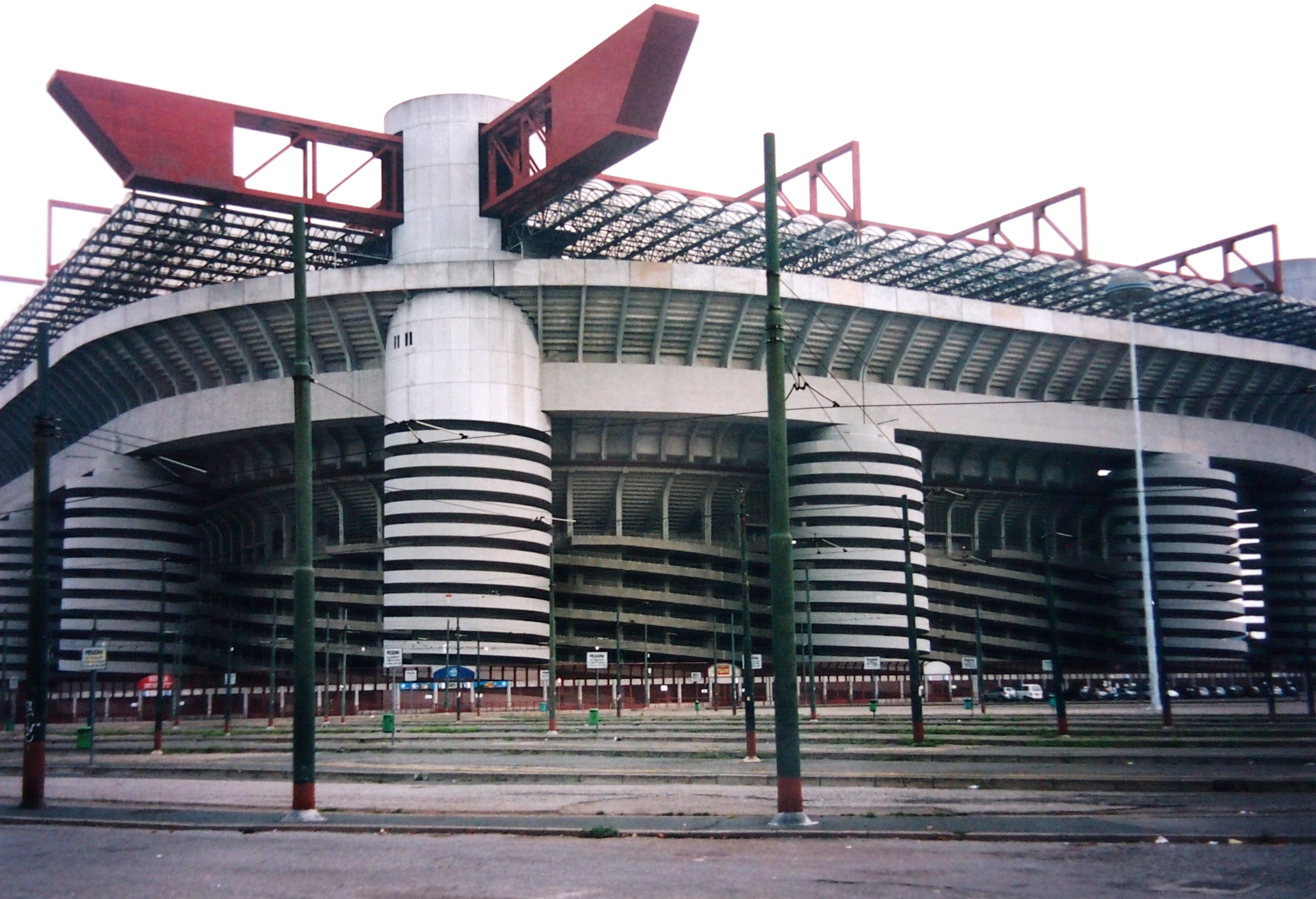
On the Wednesday, we visited the last football stadium on this trip. For some reason or other this stadium has two names, both Stadio San Siro and Stadio Giuseppe Meazze. It was actually in the same area as the campsite, so we didn’t have far to drive.


Milan can boast of having two of the world’s best football clubs: AC Milano and FC Internazionale Milano, commonly known as Inter. Both clubs have their home at the Stadio San Siro, which is also characterised by this. It looked as though the clubs lived in peace and tolerance under one roof. Whether there is cooler air beneath the surface between the rivals is anybody’s guess.


As we had done in Amsterdam and in Barcelona, we took a guided tour and visited the museum. It was great to see the huge stadium that can seat 85,000 spectators, although the guided tour was an incredibly “weak cup of tea” compared to what we had experienced at the other two major clubs. The guided tour was uninspiring, and what we saw was very limited.
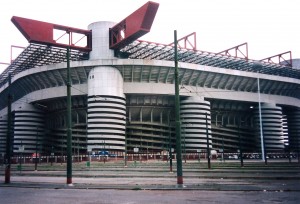
 

???????????????????????????????


The museum was interesting enough, though it paled in comparison to Ajax Amsterdam and particularly Barça. It was difficult to see that this was a museum for two major clubs with a shared harvest, at that time, of all of seven European Championship trophies and five as the best teams in the world.


We spent the rest of the day exploring Milan, mostly on the boys’ premises. I had a run in Davos ahead of me and until then, the boys’ wishes had been at the top of the list, not that I didn’t enjoy as much as they did what they chose for us.


A day of games


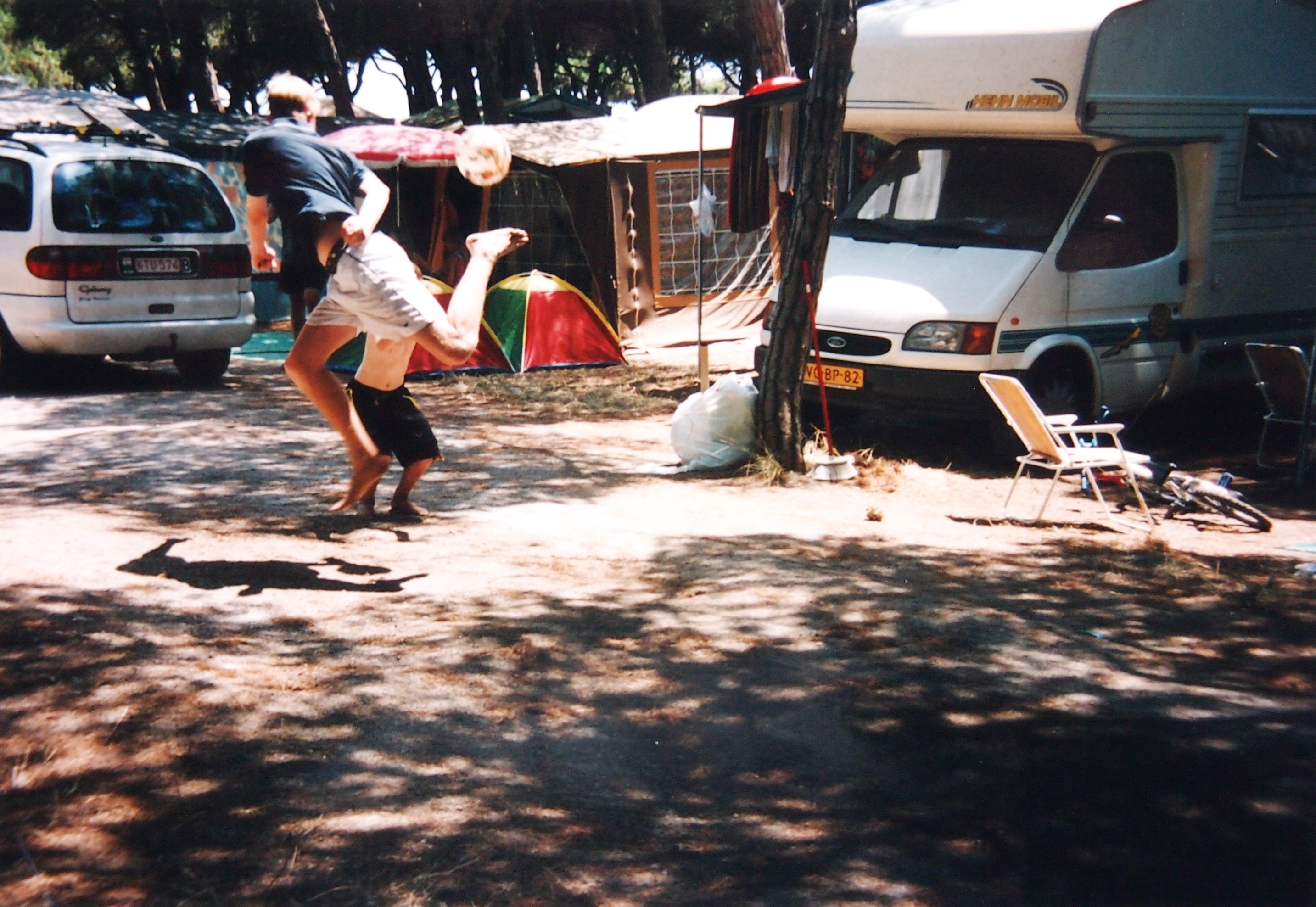
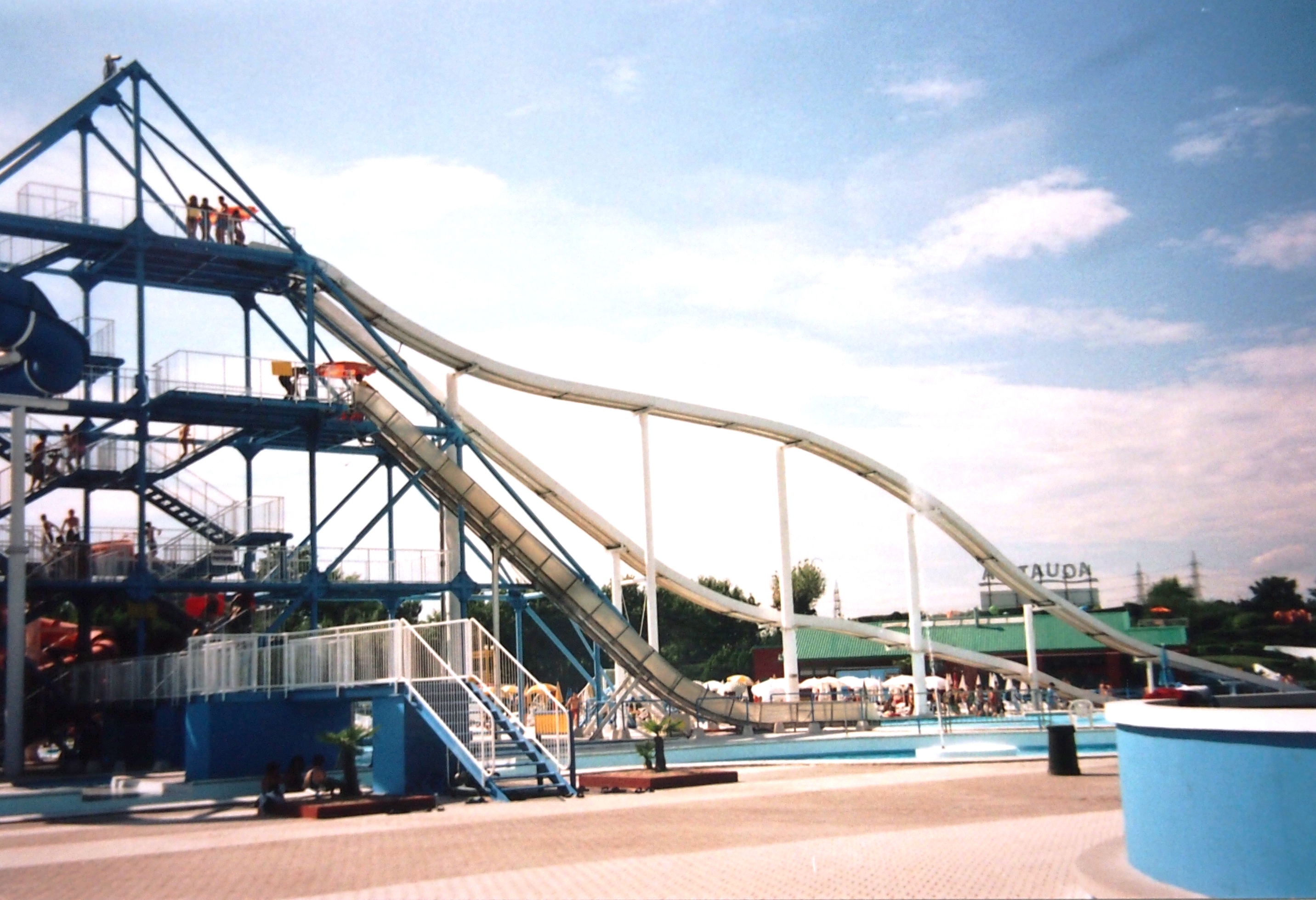
We spent the Thursday at the campsite and in the surrounding area. We visited a Water Land with slides and other fun facilities, and later we played football and chilled out.
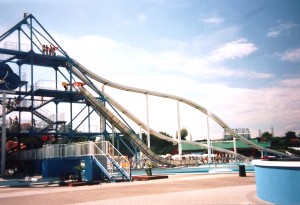
 

???????????????????????????????


Obstacle race to Switzerland


You could say our “European tour” ended on Friday morning. Now it was time to head for the journey’s actual destination: Davos in Switzerland. We packed our tent for the last time on this trip and set off.


The first part of this leg of the journey was rather trying because the traffic on the motorway crawled along at 40 kilometres an hour. But there was more awaiting us, and we had great difficulty getting out of Milan on the way to Switzerland. Whether it was our own fault or questionable accuracy on the part of our new navigation system is difficult to say, but somehow we managed to drive a ring around Milan, ending at the same place all of the four times. Getting back on the right track cost us two hours. At that time, we had driven for two and a half hours and got 22 kilometres closer to Davos, which was deeply frustrating.
 

???????????????????????????????


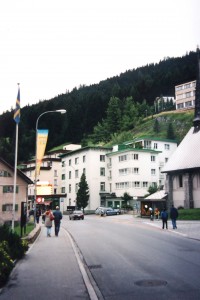
But when we finally found our way there were no problems, and we took the straight track to Switzerland. After we left the motorway and took to the small roads, we could see the beautiful Alps approaching in the distance. As we got closer, we were on proper mountain roads but drove steadily on without a hitch to Davos, arriving in the middle of the afternoon.


A lovely town in cool surroundings


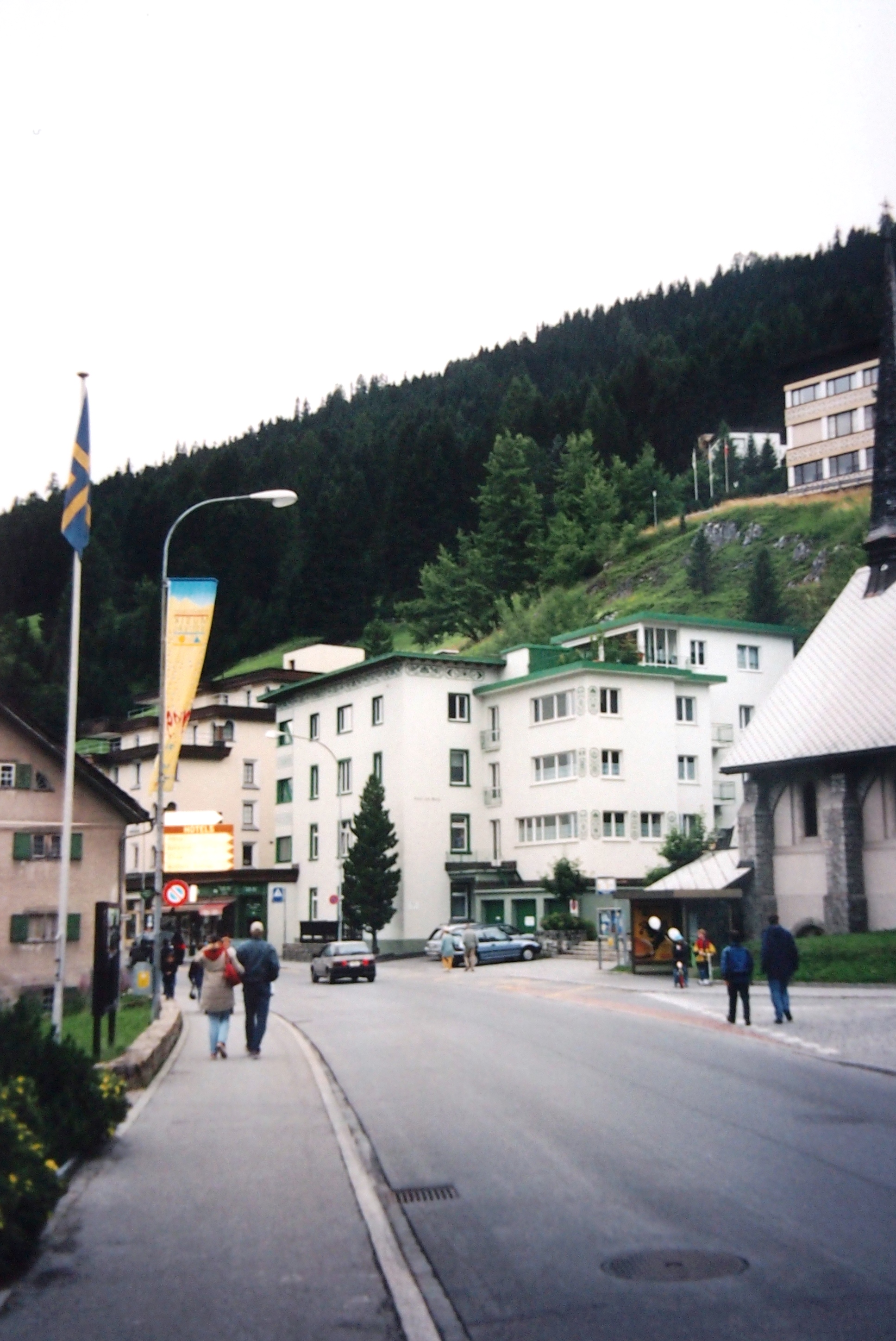
Davos is an immensely beautiful Alpine town which, with its population of 11,000 was a bit bigger than I had imagined. The town is situated in eastern Switzerland in the canton of Graubünden. Davos is 1,560 metres (5,118 feet) above sea level, making it the highest market town in Europe. It is a long, narrow town, which in reality are two small towns that have grown together. Davos is best known as a winter sports centre, although it is also known for the meetings of the World Economic Forum that take place here every winter.
 

???????????????????????????????


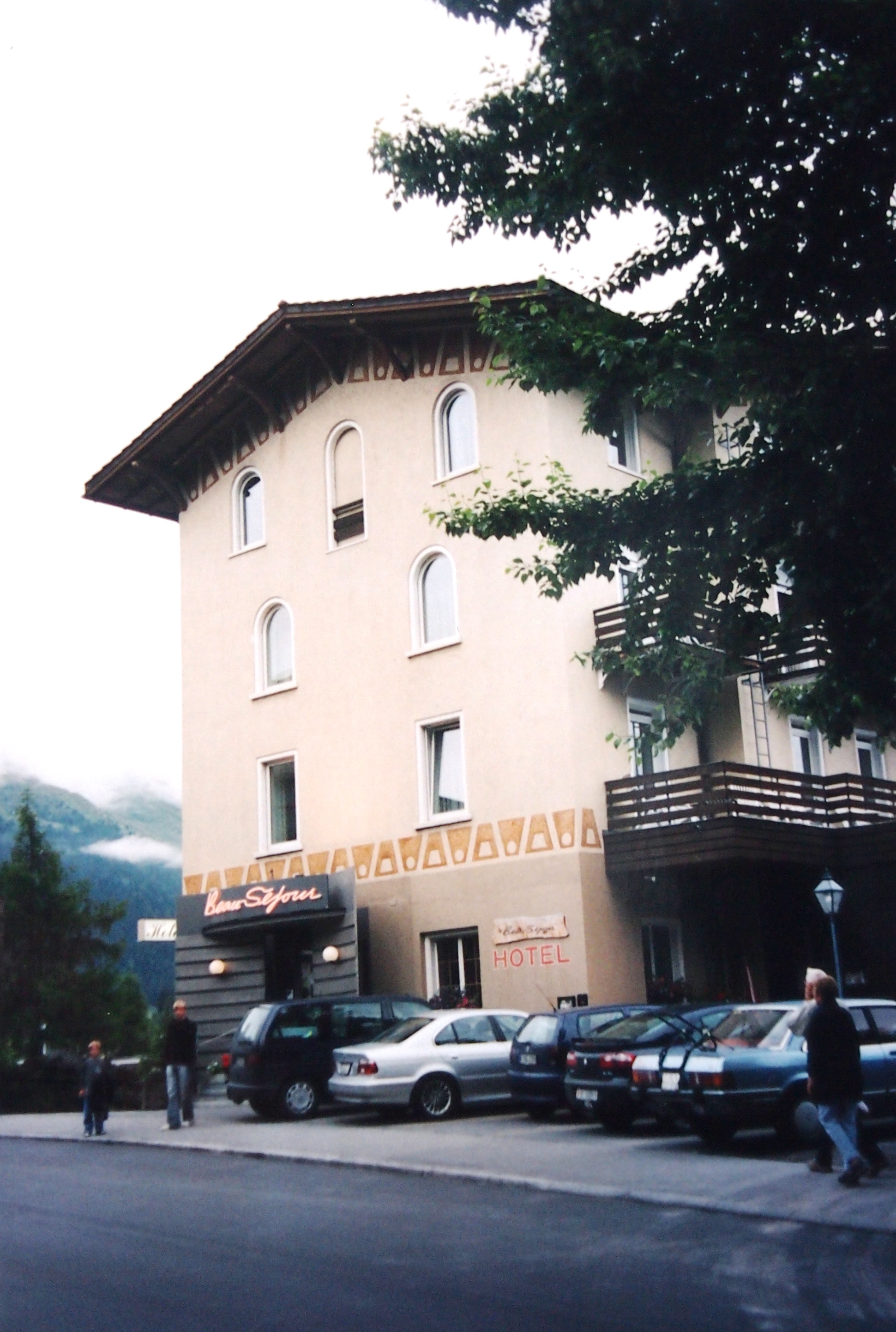
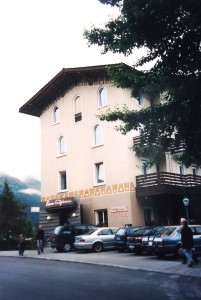
We had no problem finding our hotel in the town centre. It was an extremely positive experience, and I was highly pleased to have decided to stay at a hotel on the last stop of our journey. I was also very pleased that, by chance, I had happened to choose the Hotel Beau Sejour. It was a clean little hotel with pleasant, service minded staff. The room was perfect. Nothing could have been better.


Having settled in at the hotel, it was time to put on long trousers and jackets. We had suddenly left the heat, and now summer clothing was not enough. The temperature was half of what we left in Italy that same morning. It also rained while we were there, and in some places laid small snowdrifts – so the boys and I were able to throw snowballs at each other in July. That was a bit surreal.


Just a few minutes’ walk from our hotel lay the conference centre where I was to pick up my start number for the run, which I did without delay. As always in places like this, it was possible to buy all sorts of running gear, and I didn’t leave, either, without having aired my credit card. We then had a bite to eat before returning to the hotel, where I laid out my running clothes for a great event the next day.


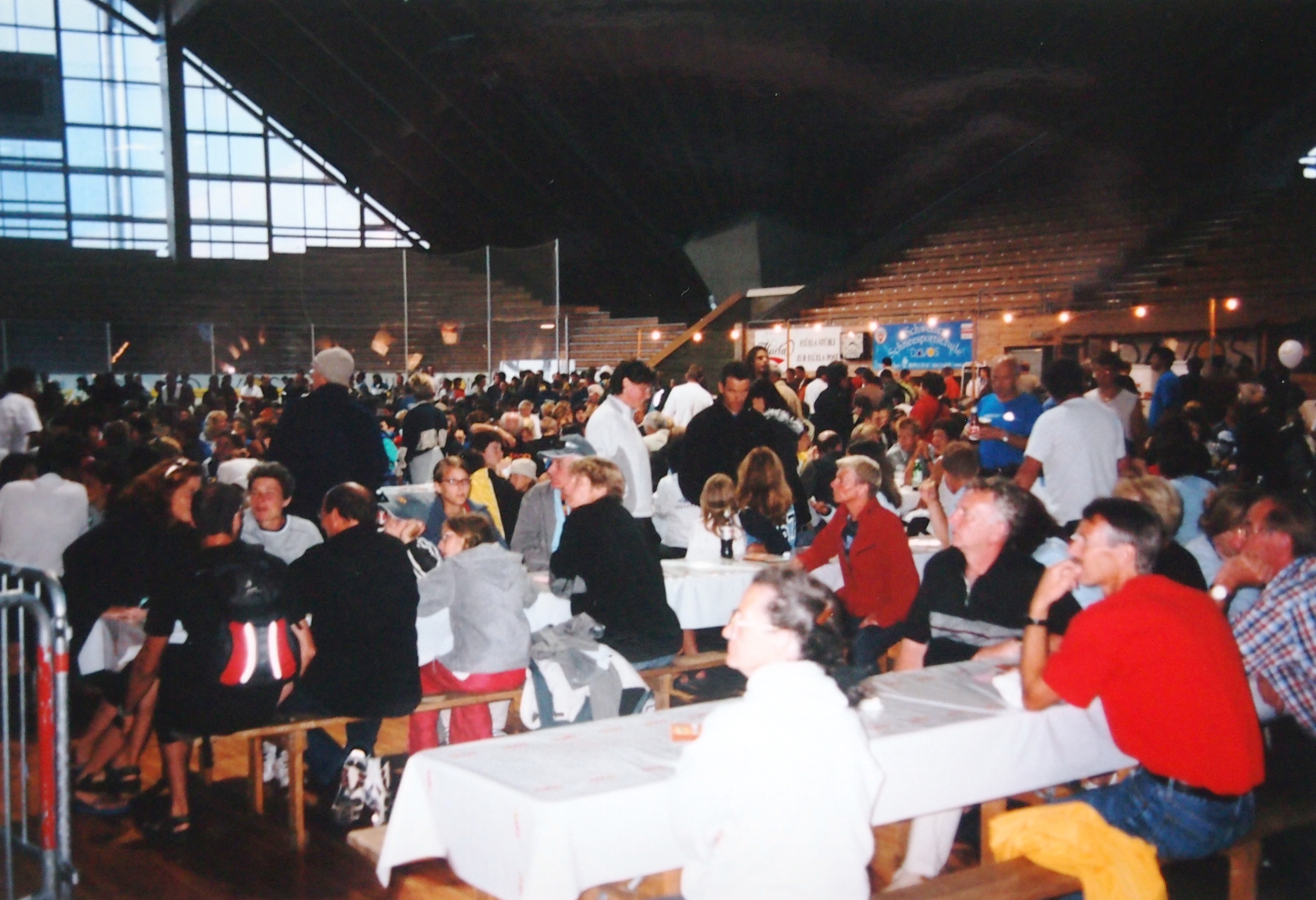
Early in the evening, we went to the town’s ice rink, which was next to the start and finish of the run and not far from our hotel. We ate some pasta here but didn’t stay long. After a short walk around the town, we returned to the hotel, so that I could get a good night’s sleep before the big challenge the following day.


Unbelievably beautiful morning


Saturday 27th July was the day of a very special, but also very challenging, marathon. Not only did I have butterflies in my stomach, I had had difficulty getting to sleep the previous evening as well as waking up early. After breakfast, we proceeded to the start.
 

???????????????????????????????


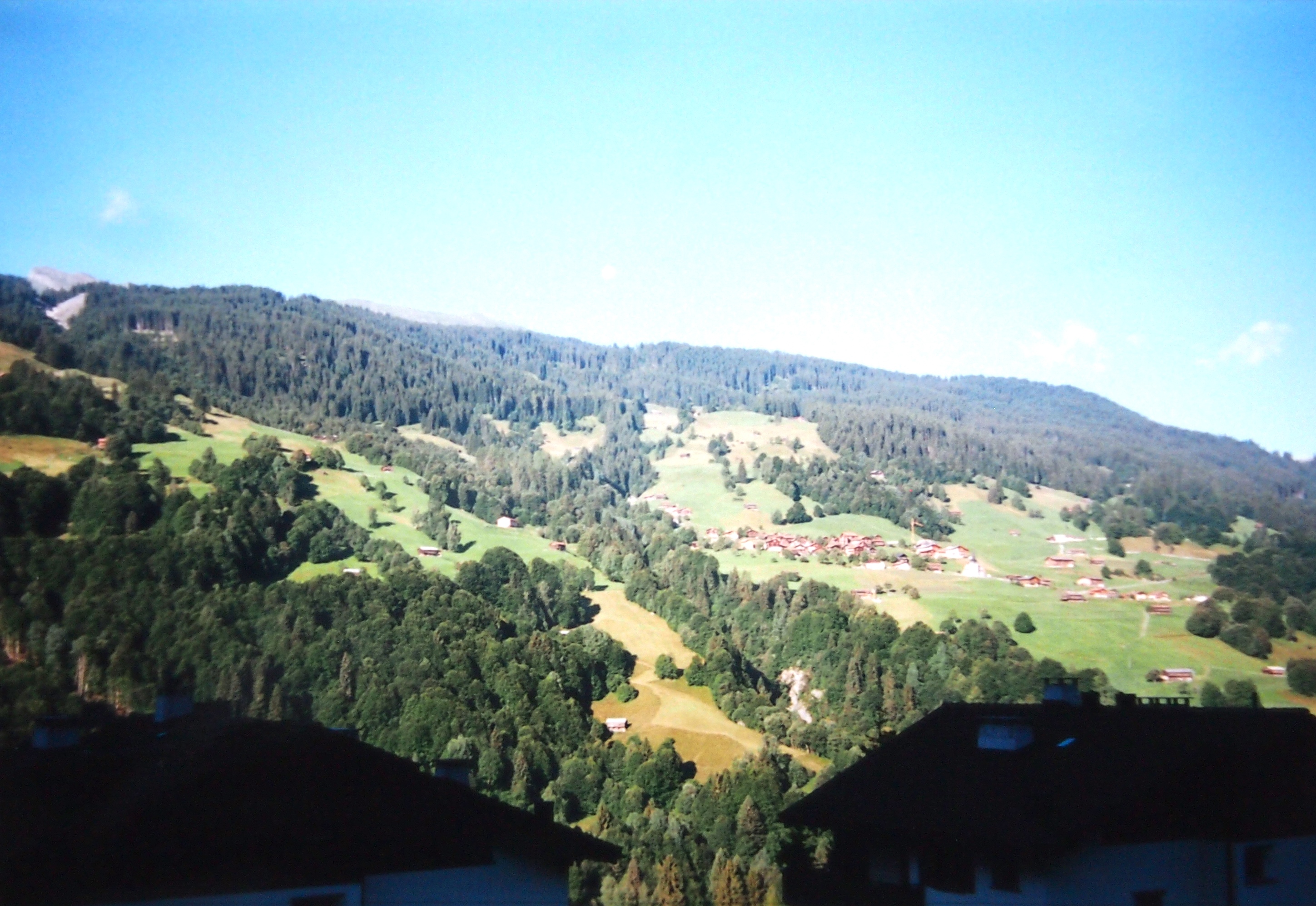
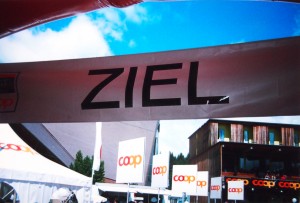
The run started at 8 a.m., and the first section took us through the streets of Davos. The landscape we were running through was ever so beautiful. There were mountains, small cosy Swiss houses, cows with bells around their necks, cable lifts, streams, woods and all sorts of other beautiful things. There were also steep slopes in some places that really “pulled teeth”. In other places, there were steep downhill stretches, where I increased my pace, having discovered that I was using as much energy slowing down as I was running.


At the start of the run, the going felt tough, and there was a long way to the finish at 78 kilometres. But I gradually found my rhythm and was now able to enjoy the run.


Catastrophe


In a wooded area about 18 kilometres into the run, catastrophe struck. At that point, I was running alongside two other runners and in front of us were some people out walking in the woods. As we approached the group, I stepped onto the verge to pass them, and as I did so I twisted my left ankle just as I had done three months previously. The sprain seemed a bit different this time, so I decided to grin and bear it and continued at a slower pace. I hoped it was temporary and would go away. But it didn’t.


I half ran, half walked, looking forward to arriving at a water station with a team of first-aiders. But this didn’t come for another six kilometres. I had hoped that they would have an ice spray and sports tape, but they had neither. Instead, they applied a cooling cream to my swollen ankle and bandaged it.


I continued but soon got used to the idea that I would not be able to run all 78 kilometres. Instead, I counted on running the median distance of 42.195 kilometres. Soon, however, I was unable to run at all. I decided to try and get to the next station, which at the same time was the finish for the shortest distance of 30.5 kilometres.


The final kilometres were no fun at all, and my foot was extremely painful. I managed to cross this line and announced that I was withdrawing. I was informed that they would recognise my having completed the “short” distance. I was thankful for the consolation prize, but still a bit bitter. I had never withdrawn from a run before, but of course there had to be a first time.


I was taken to a first-aid tent where they cooled my foot and applied a new bandage. They considered sending me to the hospital but made do with driving me to the official run medic at the finish. He didn’t think I had broken anything and suggested I might get it X-rayed in Denmark. It would be too complicated, what with all the paperwork and insurance, to get it done in Switzerland.


The doctor despondently shook his head when I told him that I had run 12 kilometres on that foot. He also advised me not to drive home the following day, but I didn’t agree. We had no further hotel reservation, and I had work to do back home.


I was convinced that my spring injury had returned. I should have been wearing sports tape on my foot like I did in China, but had been convinced that the injury was a thing of the past. You certainly learn from your mistakes.


Decision to take revenge


After my visit to the doctor and meeting the boys at the finish, I had a bite to eat, and we watched the other runners crossing the line. After an hour or more we went back to the hotel, where I lay on the bed and did nothing for a whole hour, after which I lay in a hot bath for almost as long.


Having packed our things we drove further down through the town to find something to eat. After that, we went to the finish to watch the last runners crossing the line, and I couldn’t help thinking that I should have been one of them. We saw on a noticeboard that I had officially completed the short distance and that I was number 548 and third last of the men on this distance. But that was of no interest to me.
 

???????????????????????????????


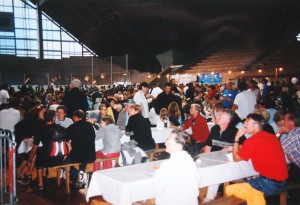
Then we went along to the ice rink to see the presentations. Here, we saw photos from the run on giant screens, and I noticed how incredibly beautiful it was at the top of the route, where the runners went through the snow at the top of the mountain. I must admit that it was a bit painful to see this, knowing that I could have done it myself but had to give up. That evening I said to the boys: “We’ll be back next year”.


I had a restless sleep that last night of the trip and lay awake several times. It wasn’t because my foot hurt it was just the way it was. I found it rather irritating, though, because I had 1,300 kilometres to drive home the next day.


Expensive visit to Austria


We got up early on the Sunday, packed the car and ate breakfast, leaving Davos before eight.


I was a bit anxious about how my left foot would manage the clutch pedal since the doctor had advised me not to drive home. I have to say that I had no problems at all. I also wondered whether I would have enough energy to drive that far, or whether I would start to doze off. That wasn’t a problem, either.


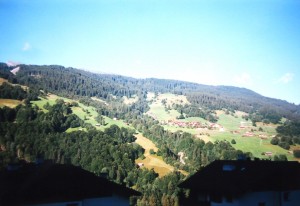
From Switzerland, we paid lightning visits to Lichtenstein and Austria. On the border with Germany, the police were stopping the traffic. I thought there had been an accident, but I would soon know better. I had exceeded the speed limit, which cost me 167 euros. In addition to that it turned out that you had to pay a toll fee to drive in Austria. I knew this was the case in Switzerland but not Austria. That was my own mistake, of course, because it was up to me to acquaint myself with the country’s rules and regulations. This cost me a further 120 euros, so in all I had to cough up 287 euros, which is more than 2,000 Danish kroner. That was an annoying lesson to learn.
 

???????????????????????????????


Apart from filling up with fuel and buying food, we drove more or less non-stop through Germany. We were relatively lucky as far as traffic was concerned and were able to sail from Puttgarden at 9.15 p.m. the same evening. We were back home in Roskilde by midnight.


A pleasurable trip had come to an end. We had driven almost 5,000 kilometres, visited 11 different countries and four big cities. We had been on guided tours of three of Europe’s biggest, most famous football stadiums, and I had had a taste of what it was like to run in the Swiss Alps. The two bothersome experiences came at the end. I would gladly have done without a twisted ankle and two fines..


Buy the book here.
 

Engelsk forside

???????????????????????????????

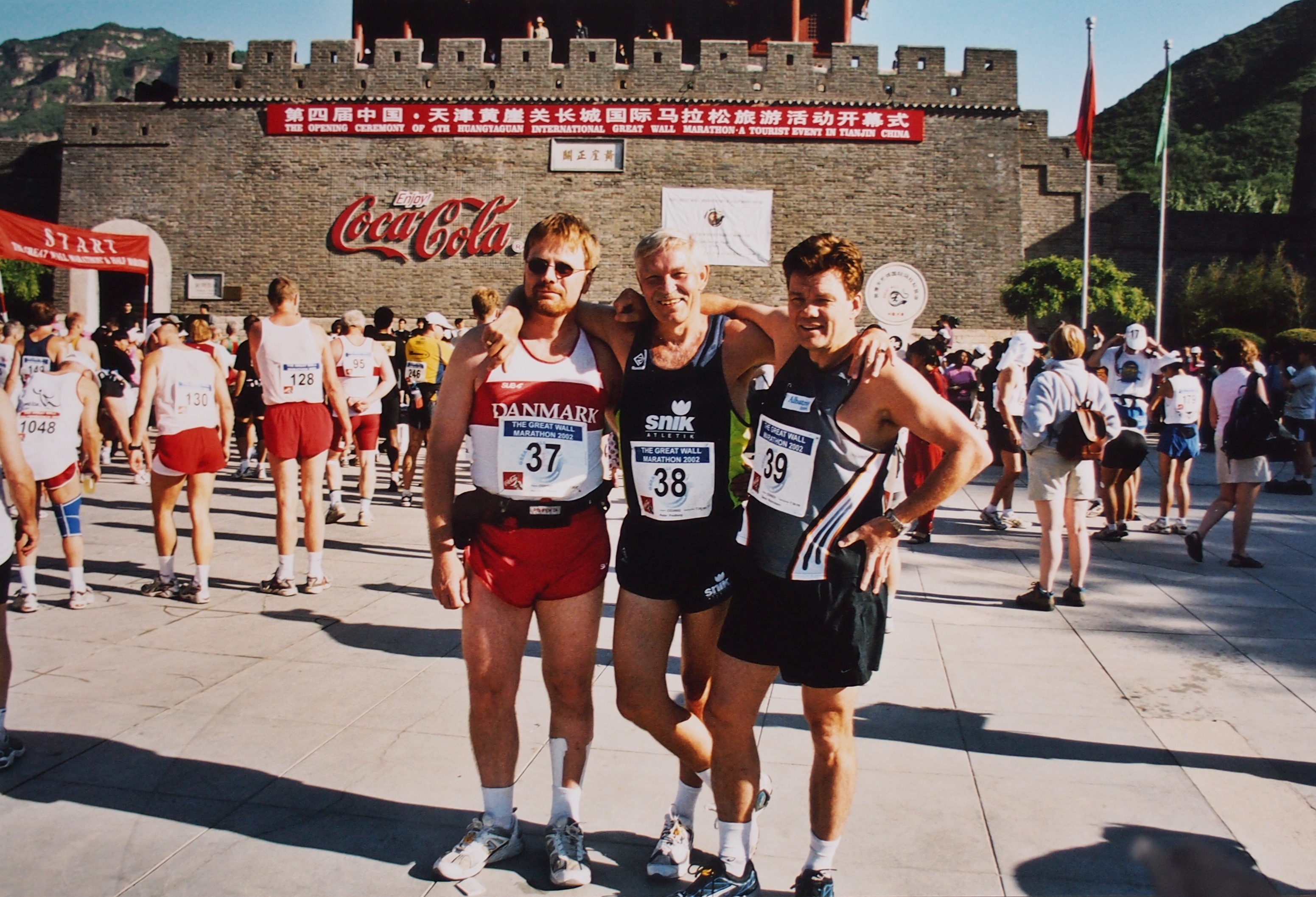
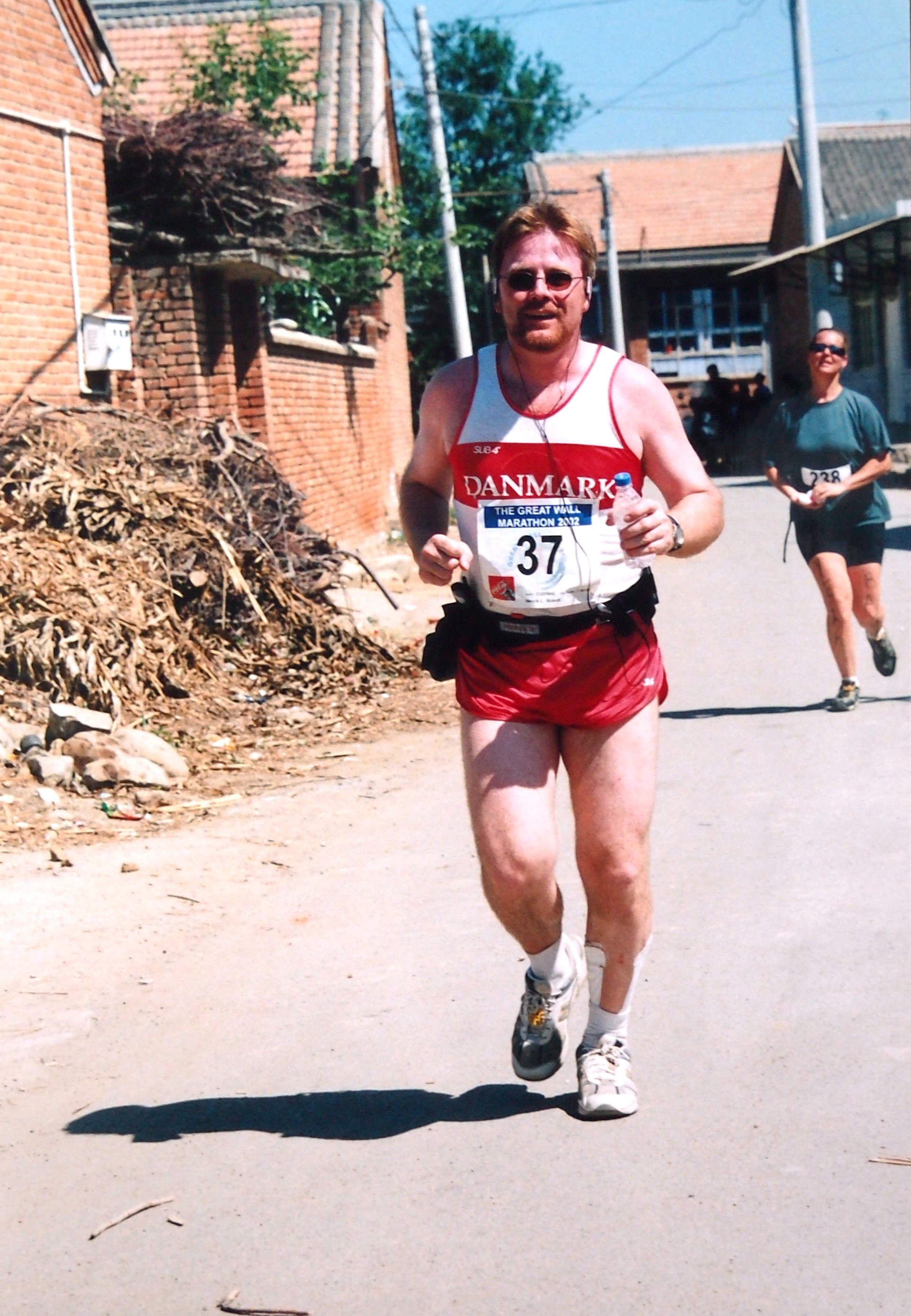
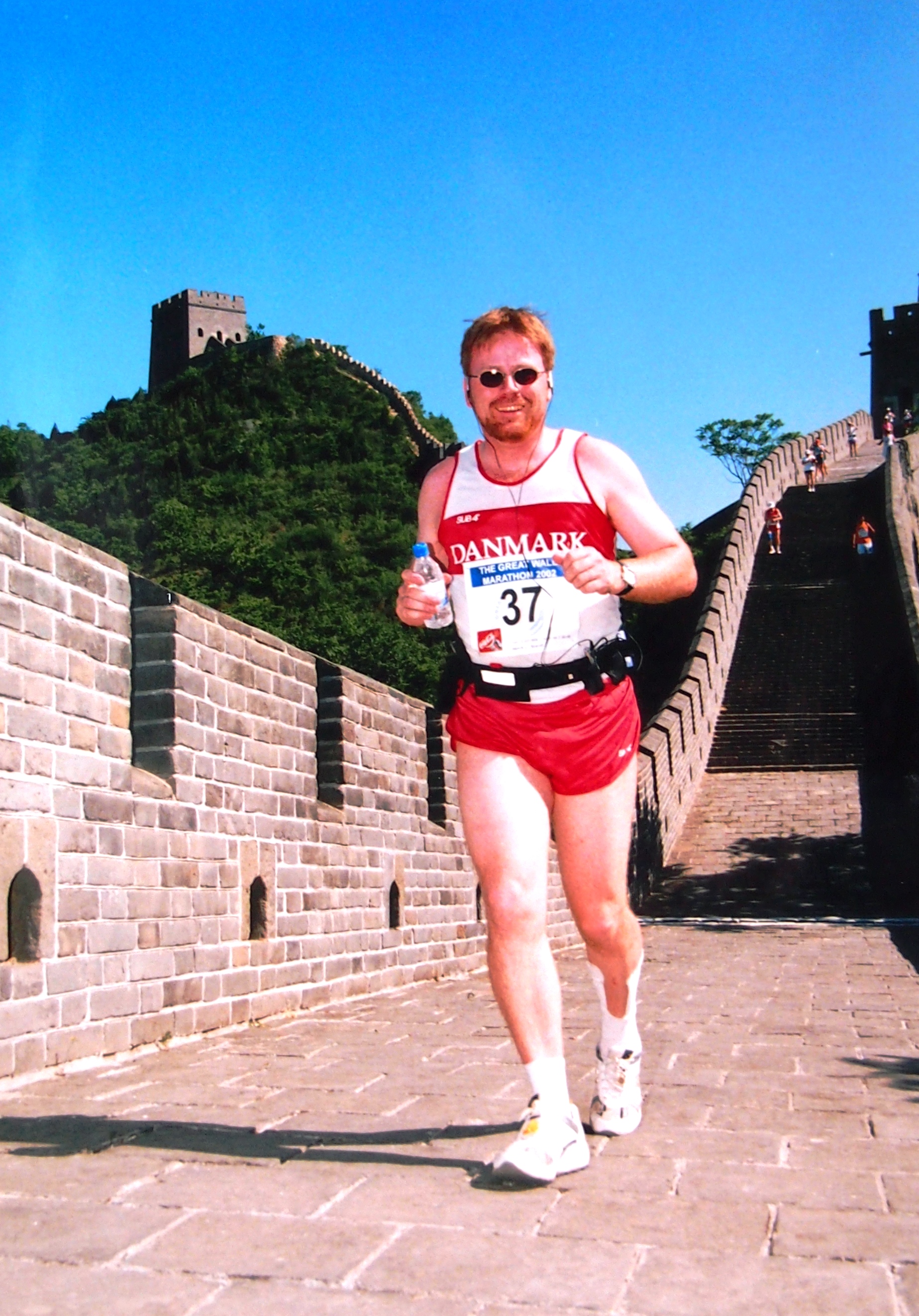
The Great Wall Marathon 2002

June 17 2015


An awful run-up


Just nineteen days after the Paris Marathon, things went wrong again. It was a bank holiday. I had been to a 40th birthday party and was walking home. Whether it was the poor quality of the pavement or the alcohol I had consumed, I don’t know. The fact is, though, that I twisted my ankle rather badly and sprained it. When I got home, I went straight to bed instead of bandaging my foot and applying an ice cold compression. As a result, I had to go to accident and emergency the following day.

After that, I was unable to train and naturally had my doubts about being able to run in China less than a month after the critical fall. But cancellation was out of the question. Søren had promised me the next trip if I ran this next marathon. It was not just the trip I was thinking of, though, because I also wanted to run. I actually felt that I was prepared to hop all the way round on one leg if necessary!

Again, this situation was an example of my sense of justice and stubbornness. Søren had promised me a fifth trip if I participated in 2002; and even though his offer was not conditional on my completing the marathon, it would be unthinkable for me to accept a free trip I hadn’t deserved. Just like at the very first Great Wall Marathon when I had to run to deserve my T-shirt, I was, this time, determined to complete the race in order to deserve my “bonus trip”.


Ghost of 9/11


After the first run with Danish runners only, we were in the minority after 2001. This was to be expected also in the future because the run was under ferocious development. However, the organisers did not expect much demand from the United States market because of the tragic events of 11th September 2001. For this reason, the organisers shelved their limit on participant numbers.


The joy of recognition


On this trip, I was joined by a new girlfriend whom I had met late the previous summer. Our relationship only lasted a bit over a year, so this was our only trip together. Because I would be travelling with someone who’d never previously visited Beijing, it was obvious to do all the guided tours and see all the sights, so we signed up with group 7 which consisted of seven tourists and a guide.

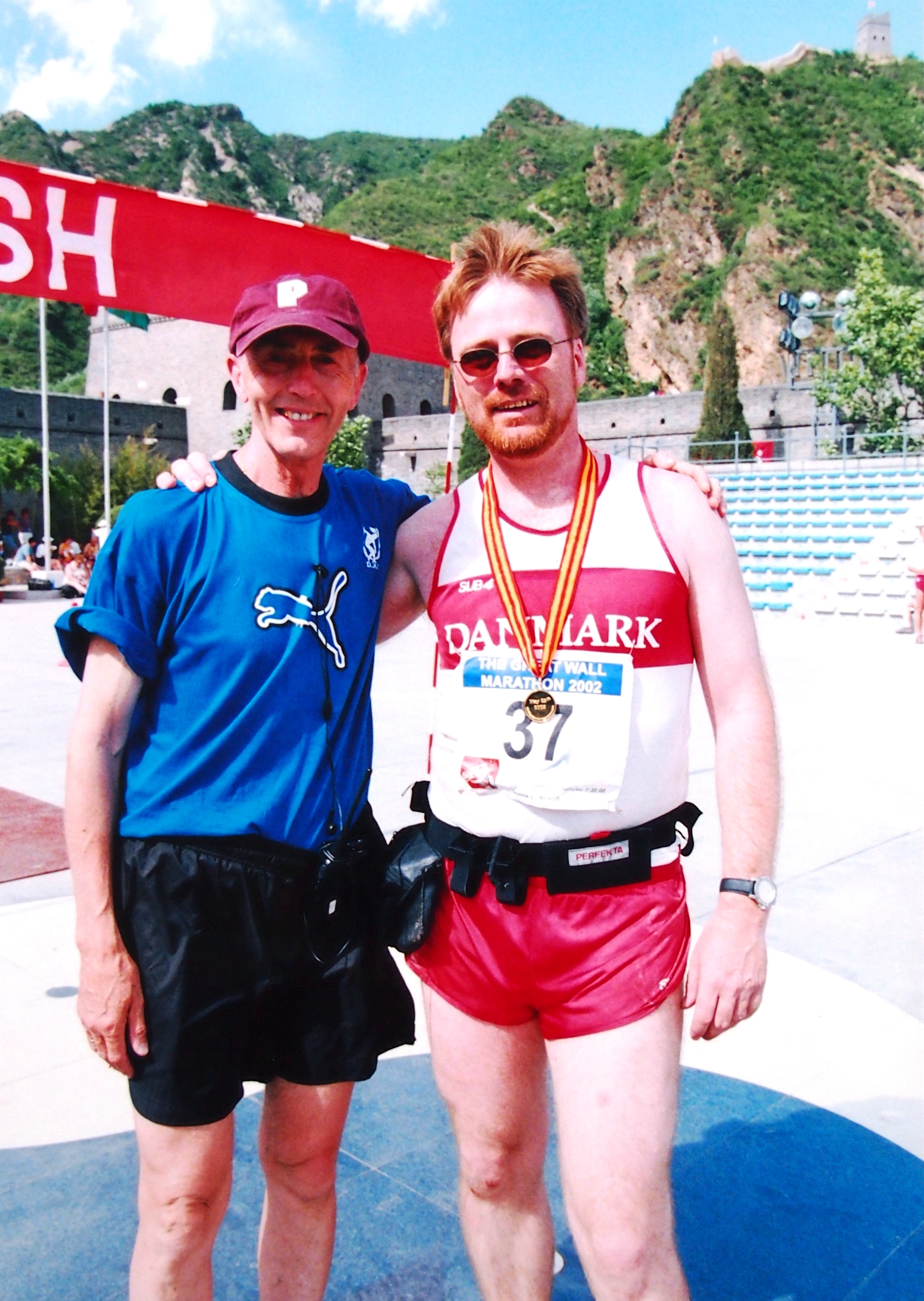
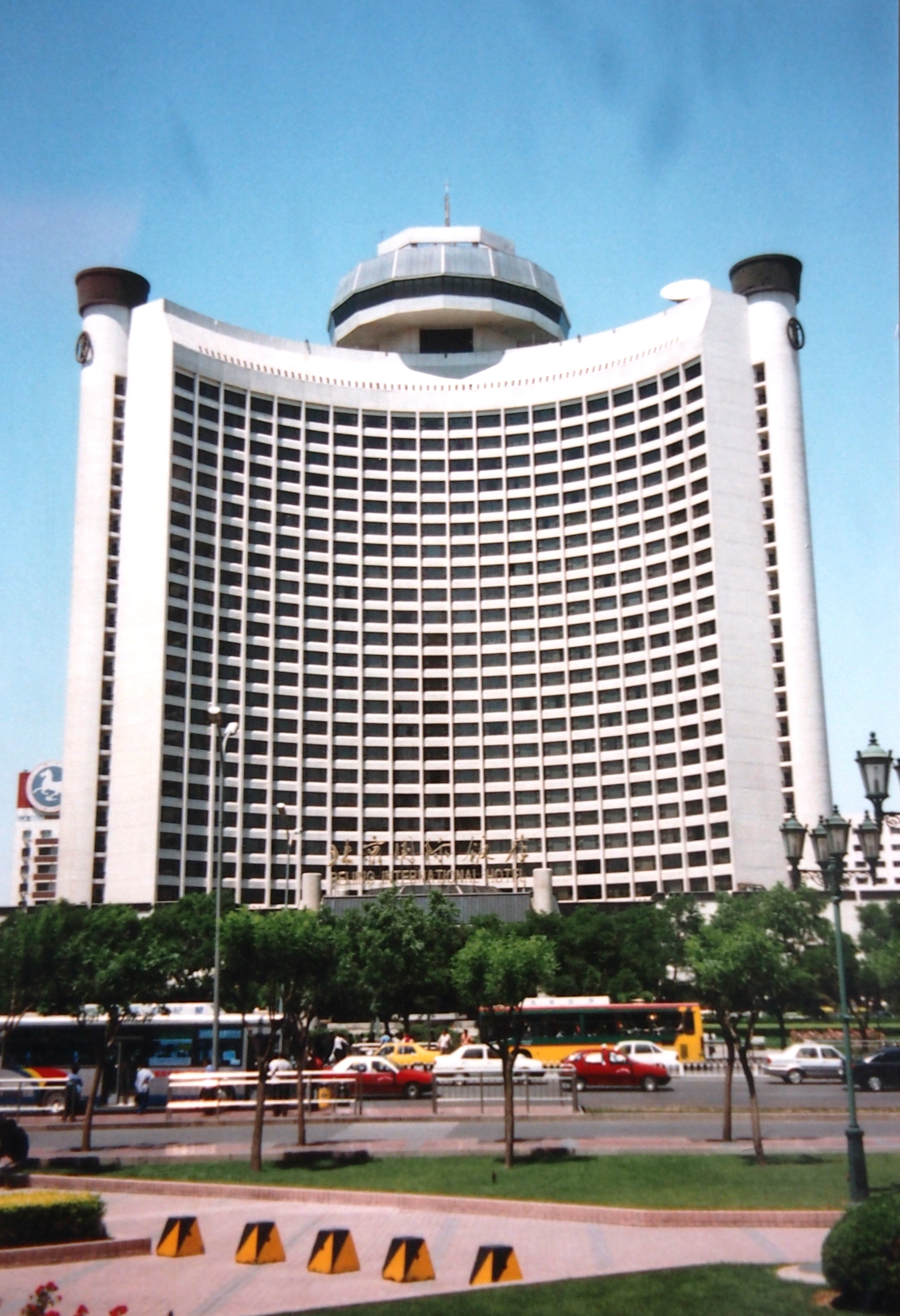
We flew out of Copenhagen Airport on the evening of 19th May and landed during Monday morning in Beijing. The first day was a bit of a repeat of what I’d experienced before, and we arrived in the middle of the afternoon at the Beijing International Hotel, which was on a par in all respects with the hotels on the first two trips. So it was very much one class up compared to the Olympic Hotel of the third year.

During the days that followed, we toured the traditional – I am tempted to say the usual – sights. But there were some changes to the programme, which meant new experiences for me. Among other things, we visited a neighbourhood committee and heard about its duties in society. The neighbourhood committee performs tasks related to local self-government and social problems, checking, for example, that people abide by the one-child-only policy. We also attended a tea ceremony at a special tea house, where they told us all about the preparation and consumption of green tea. A tea ceremony is a purely aesthetic affair, the correct performance of which is seen as part of a woman’s general education. Both visits were extremely interesting and rewarding.


New role as a model


On Thursday 23rd May, we got up early to go on the traditional inspection tour to Yin and Yang Square. As on the first trips we returned to our hotel on the same day, which made for some long bus journeys.


???????????????????????????????

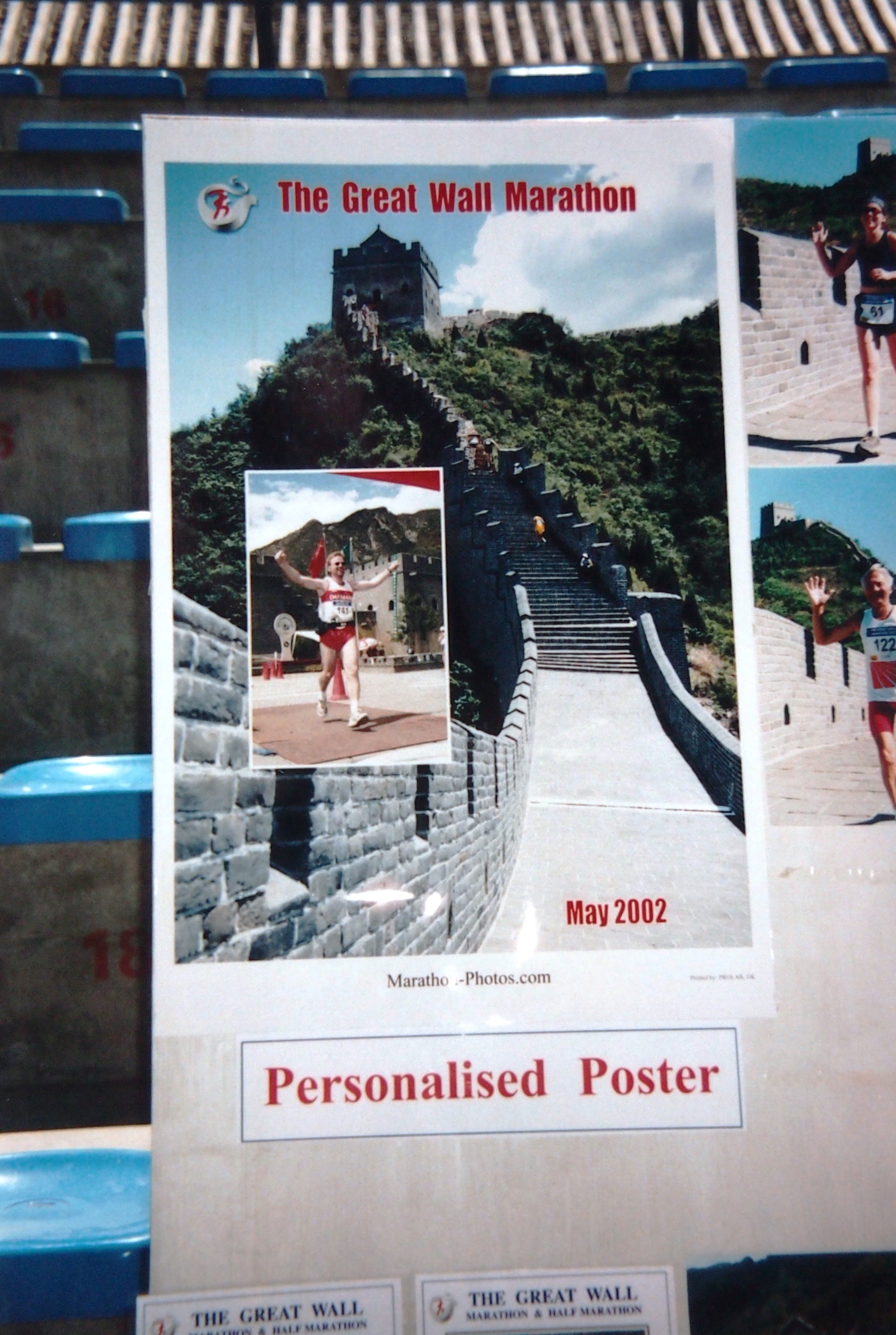
At one corner of Yin and Yang Square was a stall run by the company www.marathon-photos.com, which takes photos and sells them over the Internet. They had set up a large wall of photographs from the previous year as a teaser. In one corner, there was a giant poster with The Great Wall Marathon along the top and their web address along the bottom. In between were a large picture of the Wall and a smaller picture of me crossing the line the previous year. In another corner, they had a similar poster, but this was just a large photo of me. The fun thing about it was that, in the background, you could see a little boy. It was Emil watching his dad cross the line. I asked the man if I could buy the posters from him after the race on Saturday, but that was not possible. They were going to be used in a similar exhibit in New Zealand. But I noted down who had printed the posters, and when I got home I managed to get hold of both of them. They have since been hanging in a glass frame in my office. I love that photo of me crossing the line. I have my arms in the air and am beaming with pleasure. It demonstrates my love of The Great Wall Marathon in every way.

The inspection day was otherwise as before, although we had to hand over tickets this time to get our lunch. This hadn’t happened before, but from then on tickets were the norm at this kind of event.


A dismal prognosis


During the days we spent in Beijing; I paid to have my bad foot massaged, and on the evening before the run I decided to have the hotel masseur give me my last treatment. I had my bad foot massaged, as well as both legs. My foot was still sore, although it was getting better. On the other hand, though, it was still slightly swollen. I tried to communicate with the masseur to hear his opinion of my foot, but as so often before it was impossible to carry on a comprehensible dialogue. I did, however, manage to use sign language to get him to come up to the reception with me, where they would be able to interpret. The masseur’s judgement was inexorable. He didn’t think I would be able to run a marathon the following day.


A race against all odds


The marathon was run on Saturday 25th May, more or less at the same time in the month as the three first marathons. The bus left Beijing at three in the morning, and again we were given breakfast in boxes on the bus.

The hairs on my left leg had been shaved off the previous evening to accommodate the sports tape I would be running with. A nurse from our group had taken on the task of taping up my left foot with the tape I had brought along with me, and she did a very professional job of it. When the bus stopped for the first time to allow people to relieve themselves, and we got off, I could really feel that my foot had been taped up. My immediate impression was that I couldn’t imagine being able to run with this leg. But as it turned out, the tape became more elastic after I used my foot.


???????????????????????????????

As was the case the previous year, the race started at 7.30 a.m. To begin with I had pain in my foot but it didn’t last long, and I soon didn’t notice it anymore. My total lack of training, however, meant that I was not fast in any sense of the word, and I deliberately chose a slow strategy, aiming to take at least seven hours to complete the marathon.


Banana crisis


On this occasion, it was also very hot, and as the day wore on I became utterly exhausted, which I’m sure was due to a combination of factors. In my exhausted state, I fell twice and sustained a few scratches and bruises. On both occasions, I was helped back on my feet by fellow runners. At a time like this, it is very easy to get bowled over, which was soon to be very obvious. At one water station, they were giving out bananas, and I also got one. But 100 metres later, the banana broke in two, and half of it fell onto the dirty stone road. I would not normally have been affected by the loss of half a banana, and if it hadn’t been given to me, I probably wouldn’t have missed it. But this time losing this half banana drove me to the brink of breaking down and crying out of sheer despair.


???????????????????????????????

I soon reached the medical tent where I poured cold water over my head and body. After the blisters I got in 2000, I hadn’t dared do this the past two years, but this time I could feel how the cooling water gave me renewed strength. All I had to do was to make sure that the water didn’t run down into my shoes.


???????????????????????????????


Hell across the Wall


I succeeded in getting back to Yin and Yang Square just after one o’clock in the afternoon, which was very satisfying. This gave me two and half hours to manage the last eight kilometres which ought to be possible, though I was soon to find out that I was up against very powerful forces.

On the first part of the Wall, I had to negotiate the goat track. This was extremely tough going, and I had no option but to sit down on several occasions to rest. This was extremely stressful, as I realised that taking too many breaks would cost time and might ultimately mean that I exceeded the time limit. It didn’t help that I started getting cramp in both legs. I was in a deep crisis, sure that I would have to drop out. An elderly American runner was being helped down the goat track by an official, and I was convinced I was going to be next.

I was overwhelmed by panic and frustration. For me, completing the run was the difference between total victory and total failure. My most important performance of the year was at stake, and I was about to fail for the first time on this marathon. I thought once again of Søren’s offer of a free trip in 2003. I wouldn’t be able to accept it, if I didn’t complete this race. I shouted and screamed swear words over the edge of the Wall, as I tugged at my hair. A woman passer-by reminded me that it was no shame to drop out, but for me, this was simply not an option. I, therefore, tried out alternative gaits in order to keep going, albeit at a slower pace. First I took a few steps backwards, then sideways to the right and sideways to the left.

On the steeply descending gravel path, I suddenly fell face forward into the abyss. My water bottle ended up way off, and I sustained cuts and bruises on several parts of my body. I lay there exhausted until two Chinese stewards helped me back onto my feet.

It was a wonder that I succeeded in crossing the Wall at all. It was now 14.29 p.m., so it had taken me an hour and a half to manage three and a half kilometres.


The age of miracles is not over


After I had crossed the Wall, I began to be a bit more positive about the rest. Now there were only five kilometres left down the mountain we had set out from, and I was now able to run once in a while. It soon became apparent that I wouldn’t have any trouble getting to the finish in time. A couple of kilometres short of the finish, I came alongside an elderly Danish lady who was walking. We started chatting, and I ended up accompanying her along the final stretch. We didn’t start running until the entrance to Yin and Yang Square. We did, after all, have our pride to consider.

Crossing the line was an effervescently delightful feeling, and I was given a great big hug by Thomas, as he hung the medal round my neck. My finishing time was 7:46:18 which meant I was number 181 out of the 186 men who finished the marathon. The time limit was eight hours, so I had been pretty close. But my time and position meant little to me. The main thing was that I completed the marathon.


???????????????????????????????

Surprisingly enough, I felt reasonably fit. I was actually able to walk up the steps of the stands on the square. Even more surprising was that I had run off my ankle sprain altogether. It felt perfectly okay, and the pain never returned.


Some statistics


It was expected that there would be fewer runners than the previous year, and there were, although not that many fewer. The full and half marathon distances were completed by 414 runners from 23 nations, while ten runners were taken out because they would have exceeded the eight-hour limit. The heat also claimed victims, with seven runners dehydrating and requiring drips, though they did quickly recover.

Zi Jixiang won the men’s race again with a time of 3:41:30, which was nine minutes faster than the previous year. He is still the only person to have won this spectacular marathon twice. He hasn’t run since.

The women’s race was won by a Dane, Lisbeth Sejersbøl, with a time of 4:12:42.


Carousel restaurant


We ate supper on race day in the hotel restaurant on the 28th floor with a wonderful view of the city. We found a place where we thought the view was particularly special, and a delicious buffet meal was served. The food was on a table at the centre of the room, and at one stage I got rather confused because our seats seemed to have moved. It turned out that the eating section of the restaurant was slowly rotating to give visitors a 360 degree view of Beijing. Only the buffet in the middle was stationary. I wasn’t particularly hungry, which is not unusual after a run, so I didn’t get much food for my money. The incredible view, on the other hand, was worth every penny.


???????????????????????????????


Gala dinner in full regalia


At the gala dinner on Sunday evening, I allowed myself to be inspired by Ingvor’s words the year before: “If you’re not going to air them at an event like this, when are you going to?” I had brought my earlier medals with me, but was unable to wear all four around my neck without them getting in a tangle. I, therefore, decided to sew the first three of them onto the left breast pocket of my jacket, so now I looked like a copiously decorated general. I wore the new medal round my neck.

As in previous years, the gala dinner was a buffet with speeches, entertainment and the presentation of prizes. This year the after dinner party was held at another location in town, and it has been like this ever since.


That year I didn’t take part in the after party but took a taxi back to the hotel at 10 o’clock. However, I have never since stayed away from this.


I ended this trip happy and contented. Completing The Great Wall Marathon was the biggest target of my year. I nearly missed this time but didn’t.


Buy the book here.
 

Engelsk forside

Paris 1

Paris Marathon 2002

June 10 2015

A coincidental destination


I don’t remember exactly why I chose to run the Paris Marathon in 2002. I think it must have been because it took place in a weekend when I didn’t have the children at home and therefore wanted to get away and spend some time on my own. Marathon running had now become part of my lifestyle, and I was always interested in trying my hand at new runs and new challenges.


Paris 1


Sciatica


There were, however, obstacles to overcome before I could leave on that trip, and I was on the verge of having to cancel. Just less than a month before my departure date, I had a sudden pain in the back of my right thigh. I never found out how it started, but it turned out to be sciatica. Since my doctor didn’t seem to have a solution, I decided to take an alternative route, which to me is only natural. I found a female Chinese acupuncturist in Copenhagen whom I consulted regularly during the weeks prior to the run, but, obviously, I didn’t manage to do any training during that period.


During an Easter lunch less than a week before departure, I was in so much pain that I considered taking advantage of my travel insurance and staying at home. But when Easter was over, I decided to go anyway. I thought at least that I could relax and watch the marathon as a spectator.


In actual fact, I had dispatched a doctor’s declaration that my participation was defensible just before my sciatica showed up. This was required by the French authorities.


Arrival at the city of cities


I went on this trip with the Marathon Travel Club, which, unlike Albatros Travel, only organises trips in connection with marathons.


We were to meet at Copenhagen Airport on Friday 5th April at 7.30 in the morning, with our flight leaving an hour and a half later. On arrival at Charles de Gaulle, we went as a group to the Hotel Etoile Maillot where we were shown to our rooms. I shared a room with a young officer trainee, and he and I set off immediately with a couple of other people we had fallen into conversation with for the Expo, where we were to pick up our start numbers. We took the metro to Porte de Versailles and found the Parc des Expositions, where we located the Expo. Here we were given a bag containing a start number and a few other items. Then we spent a couple of hours looking round the many stands. My roommate had not brought any running shoes with him and intended to buy them here. I was totally taken aback because I had never run a marathon without running in my shoes very gradually first. But this meant nothing to him, he said. He found a suitable pair and did very well.


Late in the afternoon, we were at an information meeting at the Hotel Acacias, and later on I ate out with my new companions, after which we went for a walk along the big city streets.


Sightseeing day


A run had been arranged for us on Saturday morning between our hotel and the start area, so that we could get to know it. It wasn’t far away, so finding it would be no problem the next day.


15577800


We spent the afternoon sightseeing in Paris, finishing up at the Porte de Versailles where we were to attend a pasta party. We saw a lot that afternoon, and we also walked along some of the route we were to run the following day, though it was not possible to view the entire route.


My sciatica wasn’t entirely gone, although I felt much better than I did the week before; and during the sightseeing tour, I decided that I would attempt to run the next day.


Marathon de Paris


On Sunday 7th April, we got up early and had breakfast before meeting at the reception area at 7.45, ready to head for the start as a group. It was bitterly cold, but our guides had been provident indeed and taken along a roll of large plastic sacks. We cut holes in them for our heads and arms to use the sacks as protection against the wind until the race began.


paris 3


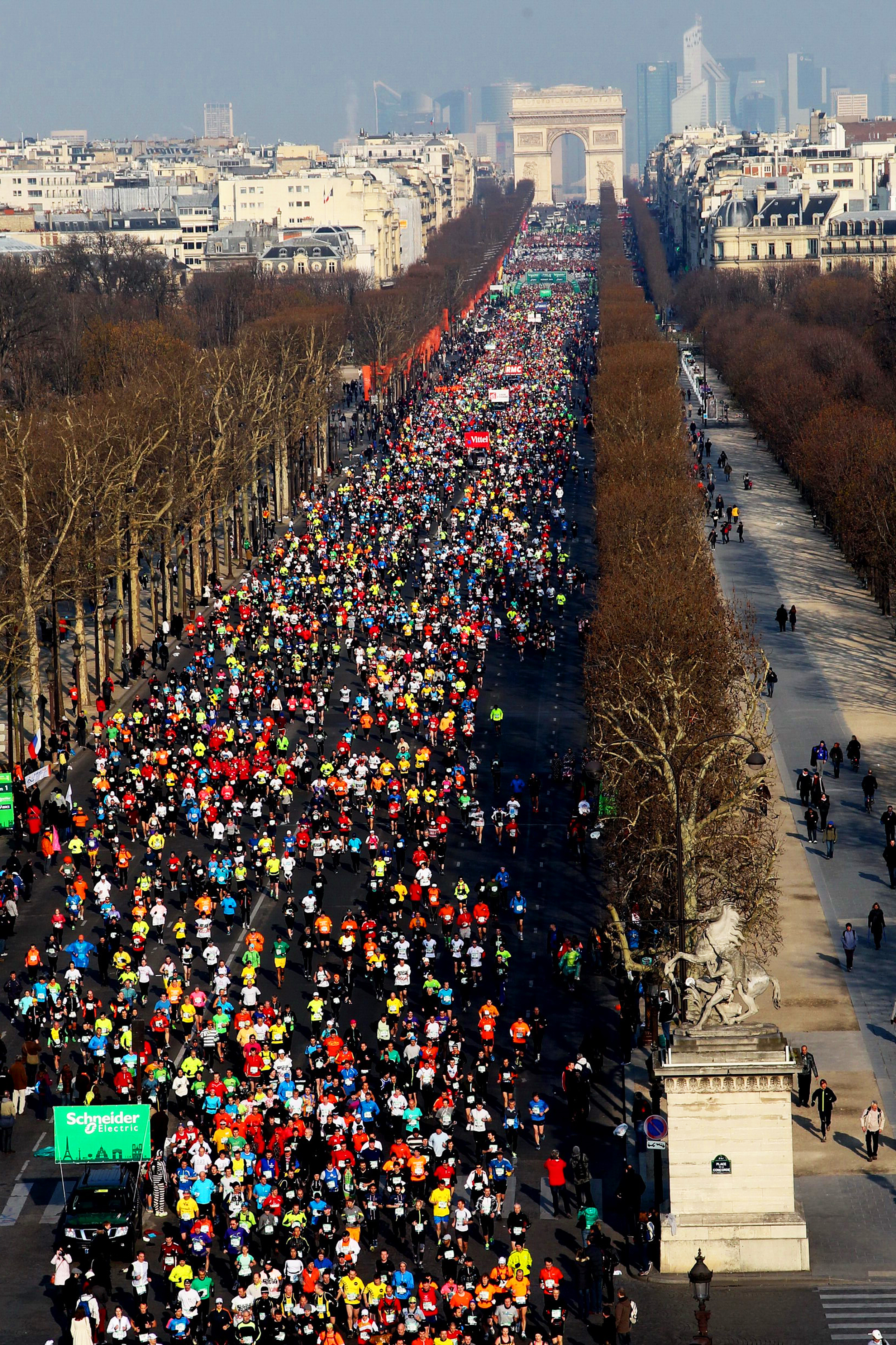
The start was teeming with people, which aroused memories of the big city marathon I had run two and a half years earlier in Berlin. There were more than 30,000 people here. At the start was a Frenchman in shorts and a T-shirt standing quite close to me. It was obvious that the man was freezing cold. His teeth were chattering, and he was slapping himself on the thighs and arms to keep warm. For some reason, I had been given two plastic sacks and had put on both of them. I took one of them off and gave it to my frozen co-runner. We didn’t understand what each other said, but his grateful eyes said it all.


The starting pistol went off at 9 a.m. amid a mass of festive excess and colour. As in Berlin there was entertainment along the route, and creative runners also made their mark. Among others, there was a man dressed as a waiter with a bow tie, running with a tray carrying a bottle of water. I have no idea whether he managed to carry the tray throughout the race.


As always there were plenty of water stations, and at some point I arrived at one that wasn’t quite official. Here they were serving a dark fluid, and I asked with a smile if it might be red wine. “Yes” came the answer, but all the same I thought he was joking. He wasn’t. Well, if you shouldn’t drink red wine during a marathon in France I don’t know when you should.


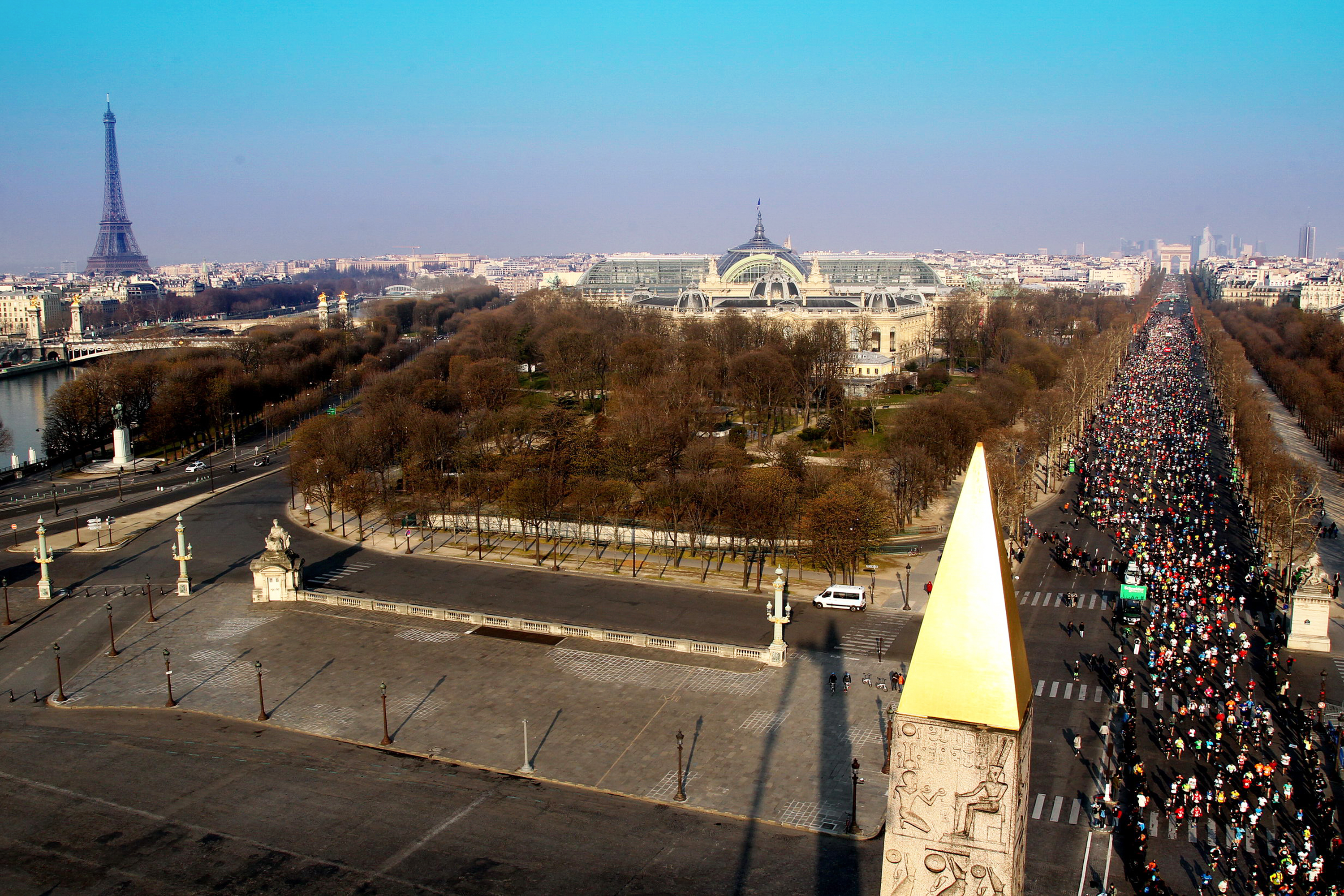
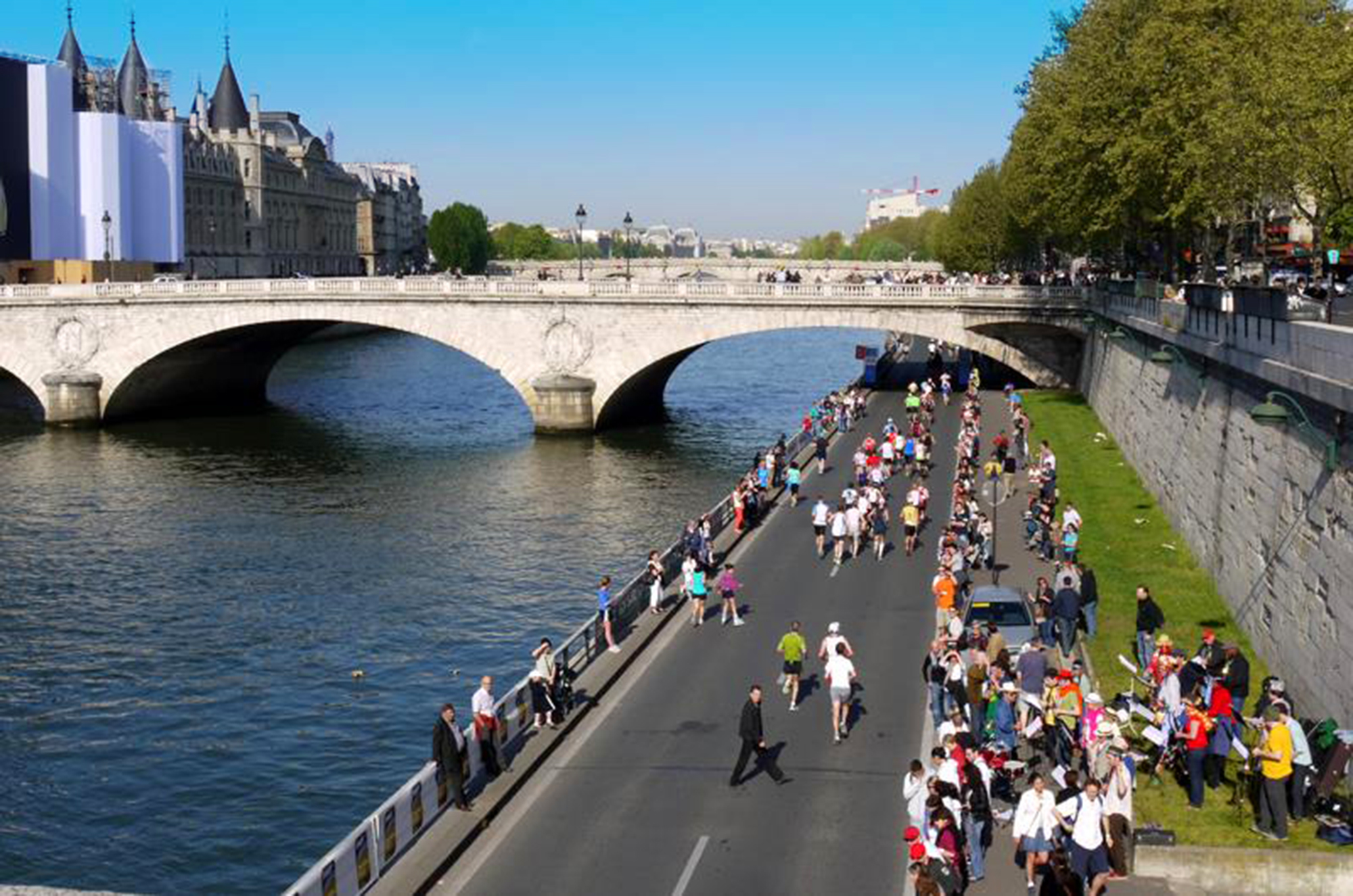
We ran through the whole city along the route, passing all the famous places like the Eiffel Tower and the Arc de Triomphe. At one stage, we ran through some road tunnels, where the traffic had been stopped for several hours. But it still smelled of vehicle fumes. We actually ran through the tunnel where Princess Diana and Dodi Al Fayed were so tragically killed in a car accident less than five years previously. It made you think.


The route from our hotel to the start was short, but the one from the finish was even shorter. We finished the run just before the street where the hotel was. I could no longer feel my sciatica although it must have limited me to some extent because I didn’t reach the finish until after 5:45:01. Even so I was happy, and satisfied with the fact that I’d finished the race against all odds.


15577801


Some say that injuries should be run off. That is probably not quite true. However, I actually felt better after the run and have not had sciatica since.


Victory dinner


The Danes met in the bar towards the end of the afternoon to drink to each other and exchange anecdotes from the day’s marathon. Later, we went out together for a delicious meal. After that I was tired and went back to the hotel to sleep, something I later regretted because the others had enjoyed a visit to the Latin Quarter. I should have ignored my fatigue and joined them.


Departure


We had Monday morning and afternoon to ourselves, and I went off to enjoy the city with some of the others. We met later in the afternoon in the hotel reception ready for departure, and by 21.20 p.m. we had arrived back at Copenhagen Airport.


I was very pleased to have gone on the trip. My sciatica had disappeared; I felt that I had recharged my batteries and was ready once again to take on everyday life.


Buy the book here.
 

Engelsk forside

DCP_3104 A

5 Tårns Marathon 2002–2006 (The Five Towers Marathon)

June 3 2015

Can you imagine visiting pubs 30 times in the course of a marathon? I’ve tried it! More than once.


DCP_3057 A


Jørn Pedersen gets a mention in the chapter about The Karen Blixen Marathon where he had his debut in the marathon distance. But it was definitely not his last run. In the years that followed he participated in an incredible number of marathons and joined the Klub 100 Marathon in as early as February 2008. And it was not just as a runner that he was involved. He was also a tireless association man.


The first 5 Tårns Marathon was run on 3rd February 2002. The man behind the race was Jørn, with Kalundborg Sports Association, Athletics and Fitness as organisers. The same club was responsible for the run the following year and in 2004, it was taken over by 5 Tårns Motion (Five Towers Fitness), although still with Jørn Pedersen as the prime mover.


DCP_3095 A


The run gets its name from the Church of Our Lady in Kalundborg, which has five impressive towers. The church is the town’s symbol and became such also for the marathon, which over the years has become a regular tradition.


I ran in the marathon for the first five years when it was run on a circular course from the town centre, down along the harbour, past the stadium and then back up to the town centre. The course was 4.195 kilometres long and thus had to be run ten times. There was also a half-marathon.


Much was made of the event, and I remember Mayor Tommy Dinesen firing the starting pistol in the first year. Another year there was festive procession with a marching band to create atmosphere and the then minister of culture Brian Mikkelsen turned up to run one year.


DCP_3104 A


The start and finish were both on the town’s pedestrian street, Kordilgade, and during the run we had to run through three pubs, through both the front and back doors. That was rather a different way of running a marathon. At that time, there was no anti-smoking legislation, and we passed through smoke-filled rooms that also smelt heavily of beer. At one pub they were playing billiards and another was showing Eurosport. A lot of jaunty folks were out enjoying a beer passing many a cheeky comment and cheering on the runners. The three pubs where Café Bogart, King’s Pub and Kontoret (The Office), but after a few years, one pub dropped out. We then had to make do with 20 visits to those salubrious locations.


P1005399 A


The five marathons I run lay in the period between 3rd February to 3rd April. So it was during the cold time of year, although I don’t remember it was ever snowing. On the other hand, I was subjected to a lot of rain and blustery wind and on several occasions it was bitingly cold. I remember coming thoroughly soaked across the finishing line one year, where the wind was often harsh as we ran along the harbourfront. This could also be an advantage to us when we had the wind behind us on that section.

I was particularly impressed the first year, when a Swedish runner completed the marathon on two sticks. He managed just fine. But my own performance deteriorated over the years. During that period, I put on quite a lot of weight, which meant that I was not as fit as I had been. One year I came in last and won a bottle of wine for my effort. I won another bottle of wine in a raffle on that same day. So I took something home with me to enjoy after such a hard day.


IMG_1577 A


The last time I ran the 5 Tårns Marathon was in 2006. The run was cancelled for a while, during which time the town centre was refurbished, but it is now being run again. Without pub visits, however, and without my participation.


Buy the book here.
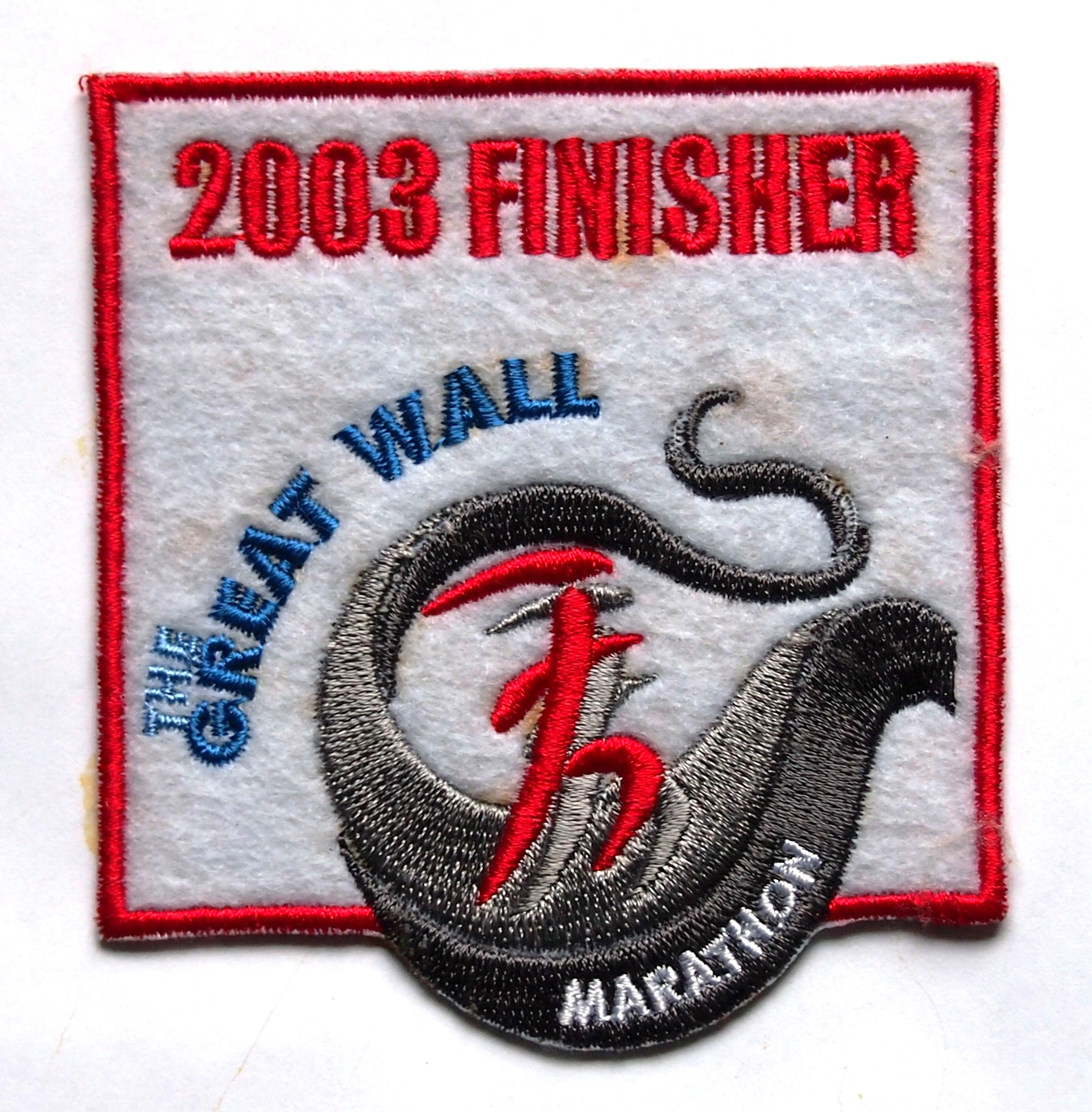
 

Engelsk forside

HC_Andersen_Marat_2011_053

H.C. Andersen Marathon 2001 (The Hans Christian Andersen Marathon 2001)

May 27 2015

The Hans Christian Andersen Marathon is run, naturally enough, in the city of Odense and named after its world-famous writer. It was run for the first time in 2000, which means that I first ran in its second year – and again in 2010. I had signed up for 2003 but had to stay home because I wasn’t well. In 2001, the run also hosted the Danish Championships organised by the Danish Athletics Federation.


hcamarathon2012-142


Although The Hans Christian Andersen Marathon was a young event, the island of Funen has proud traditions in this classic distance. The very first marathon was run on Funen in 1903 on a route which took runners back and forth between Odense and the port of Faaborg, although only five people ran. This was only seven years after the world premiere of the modern marathon at the Olympic Games in Athens in 1896.


We had to leave early that Sunday morning to be ready at the start at 10.00. Steffen had signed up for a mini marathon for children and youngsters. The distance was a tenth of a marathon, i.e. 4.2 kilometres.


Most of the marathon was run in the city of Odense, but it also included part of the periphery. I decided to run hard from the start and was punished for it at the end of the day, when I had little energy left. I made a time of 4:24:44. At the finishing line, Giraffe Beer was being served, a strong brew by the Funen-based company Albani, which sponsored the run.


hcamarathon2012-185


Steffen also put the pressure on early but was able to keep his good pace throughout the run. With a time of 0:16:08 he won the 10 to 13-year-old boys’ class. He was later sent a trophy and was thus the official Danish Champion.


The funny thing is that Steffen has never seriously trained. As a teenager, he played a lot of football, which kept him physically fit, and he was usually the fastest boy in his year at school at the annual sports day.


Buy the book here.
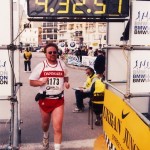
 

Engelsk forside