Author Archives: Henrik Brandt

besøg af Jamie fra Kina 004

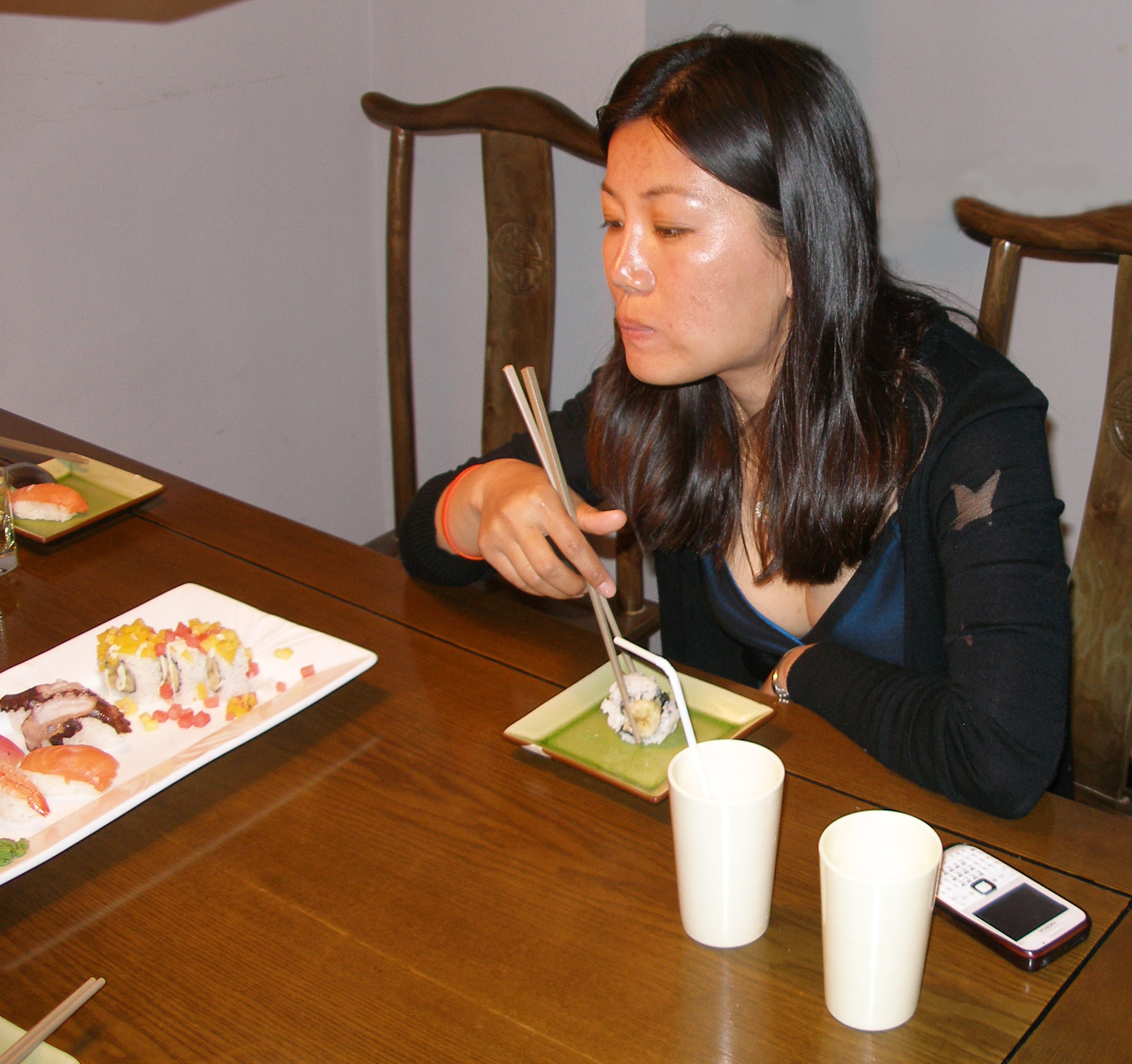
Jamie’s visit to Roskilde

February 24 2016

Student job with DFDS


My agreement with Jamie the day before that year’s Great Wall run turned into more than just empty talk. Jamie arrived in Denmark at the end of May to begin her study job at DFDS on the MS Crown of Scandinavia. The ferry company had paid her fare and gave her board and lodging as well as a little pocket money. There was no talk of employment as such with an actual salary.


The Crown of Scandinavia sails from Copenhagen late in the afternoon, and the crossing lasts until the following morning. On board, there are various restaurants, cinemas, bars, a casino, nightclub and other activities. So the ferry isn’t simply a means of transport but is also used for entertainment and relaxation. The boat anchors in Oslo the following morning and returns to Copenhagen later in the day. This gives passengers the opportunity to spend seven hours in the Norwegian capital.


DFDS has another ship, the Queen of Scandinavia, which sales the same route as the Crown, but always in the opposite direction, so that the two huge ships pass each other in the middle of the night halfway between the two capitals.


Large family


Jamie’s job was to take care of the many Chinese passengers, who chose to take the Copenhagen-Oslo cruise. Born in 1984, Jamie was 25 when she arrived in Scandinavia. She comes from a large Chinese family, and despite the country’s single child policy, she has both a younger sister and a younger brother. In rural areas, various exceptions exist to the general rule, and if the firstborn child is a girl, permission is given for the parents to have another child. Jamie’s parents had been permitted to have three children, the first two of whom were girls.


Education


In 2003, Jamie began a part-time job as a tour guide and completed her training at Beijing International Studies University with a major in tourism economics. Her master’s degree paved the way to DFDS, where she worked as a Management Trainee, after which she was employed for two years by the Italian Costa Cruise company. On her return to China in August 2012, Jamie got a job as a lecturer at Xiamen University. Jamie is now studying for a Ph.D. in tourism economics. She hopes to be able to get a state grant and study in Europe.


Round-trip of Europe


During her almost five-month stay, Jamie had several periods of holiday, which gave her the opportunity to take a closer look at Denmark and Norway, as well as visiting some other countries in Europe. Towards the end of July, she phoned me, and we agreed that she would visit us on Tuesday 27th July.


Roskilde guide


I picked Jamie up at Roskilde station at around 1 p.m. I had anticipated that she would be going back the same day, but as it turned out she was prepared to stay for a few days, which made us very happy.


besøg af Jamie fra Kina 004


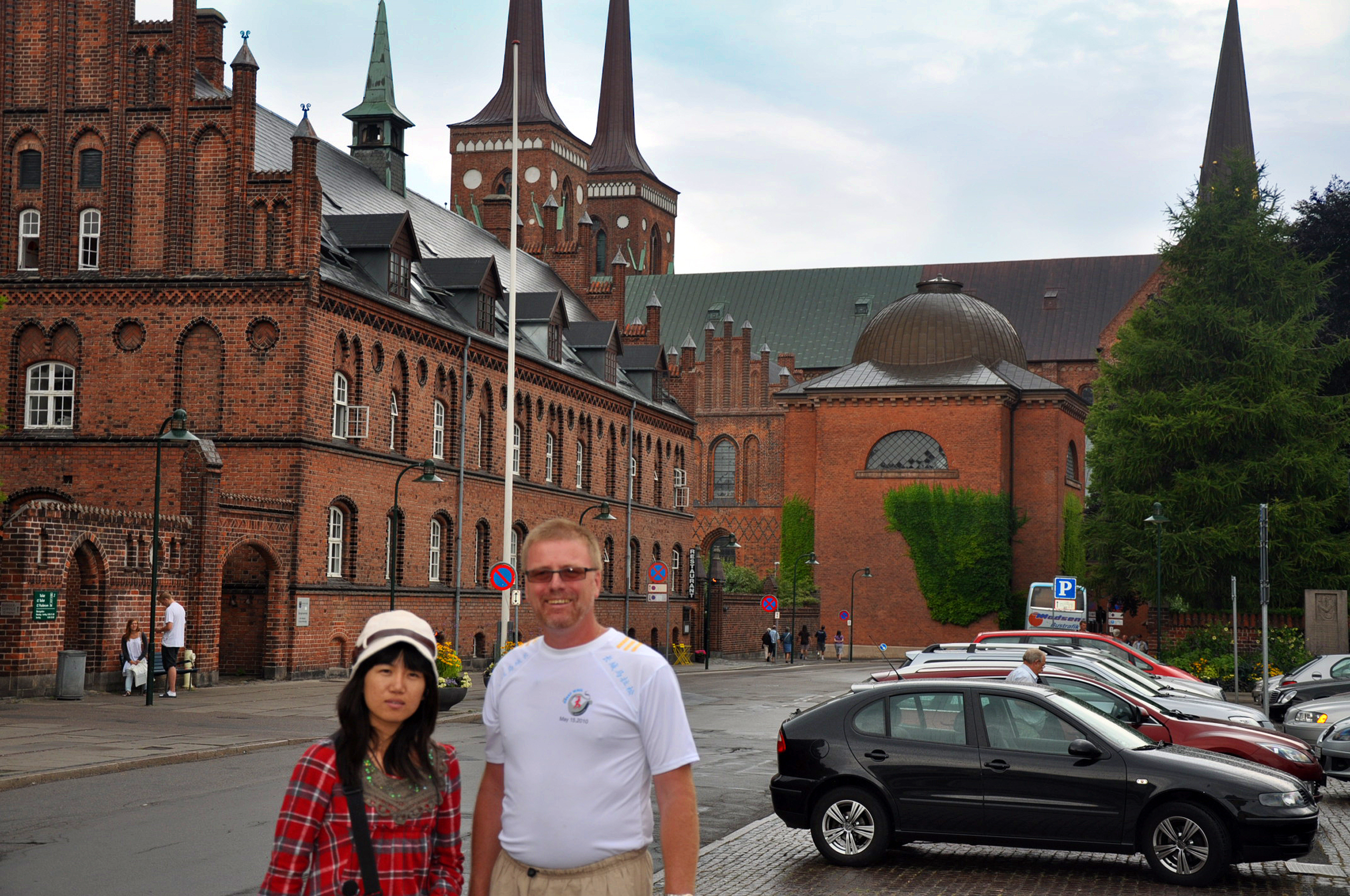
I started by telling her about the station building and Denmark’s first railway between Copenhagen and Roskilde, inaugurated in 1847. After this, we walked around town visiting sites such as museums, the Cathedral, the church ruin, old shops and much more.


Jamie is a competent photographer and took a lot of pictures. She was very keen to learn and interested in hearing about a lot of things such as our religion and our deceased royals in the Cathedral. She also asked me about things, which for Danes were common knowledge. That was fun. Actually, I expect she comes across exactly the same thing when she’s showing tourists round in her home country. At the entrance to the Restaurant Rådhuskælderen (City Hall Cellars), were lighted torches, and Jamie asked me what possible reason there could be for that. I explained to her that they were for decoration and also told her about the Danish expression “hygge” (cosiness, among many other things). She found candles, garden lamps, open fireplaces and barbecues particularly interesting. She was not accustomed to lighted candles. Chinese restaurants often have fluorescent lights in the ceiling, so that you can see what you’re doing. Over the next couple of days, she fully understood the concepts behind “hygge” and “hyggeligt”, and I’m sure the Jamie can still pronounce both words.


Photo models


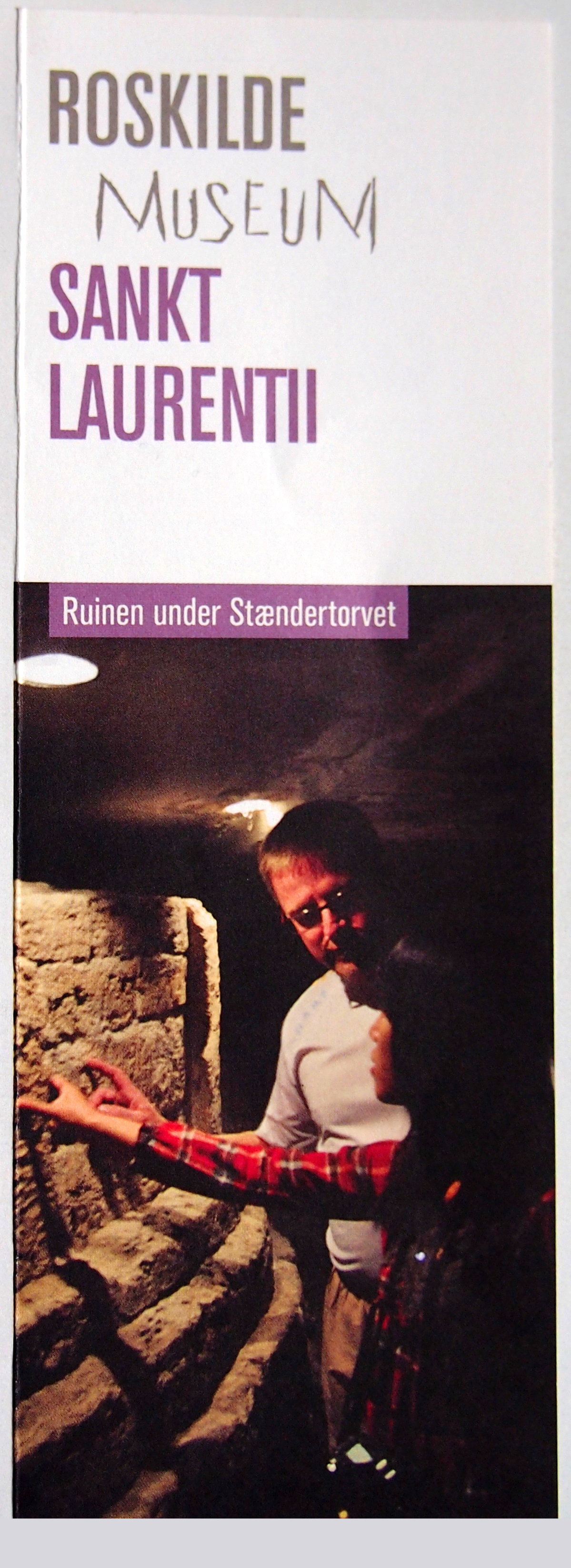
At the tourist office, we got the key to the ruin of the Sankt Laurentii Church, and a visit beneath the square, Stændertorvet, was a tremendous experience for Jamie. A photographer was busy taking pictures for the municipality and wanted a bit of life in what otherwise would have been dead shots, so we became photo models, later appearing on the front page of the museum folder for the ancient church ruins.


???????????????????????????????


We enjoyed soft ice as we continued our tour, which included all the city’s many springs. I also included places important to me, such as my childhood home, my first home as a youth and the family grave.


Inquisitive


Jamie’s was inquisitive throughout the tour, and we had a really good talk. She wanted to know more about our school system and housing, and for her it was odd that some houses had both a basement and a first floor. Subjects like Facebook, freedom of expression and extra-marital sex, gay marriages and human rights came under discussion. All of this is a bit hush-hush in her homeland.


Peaceful town


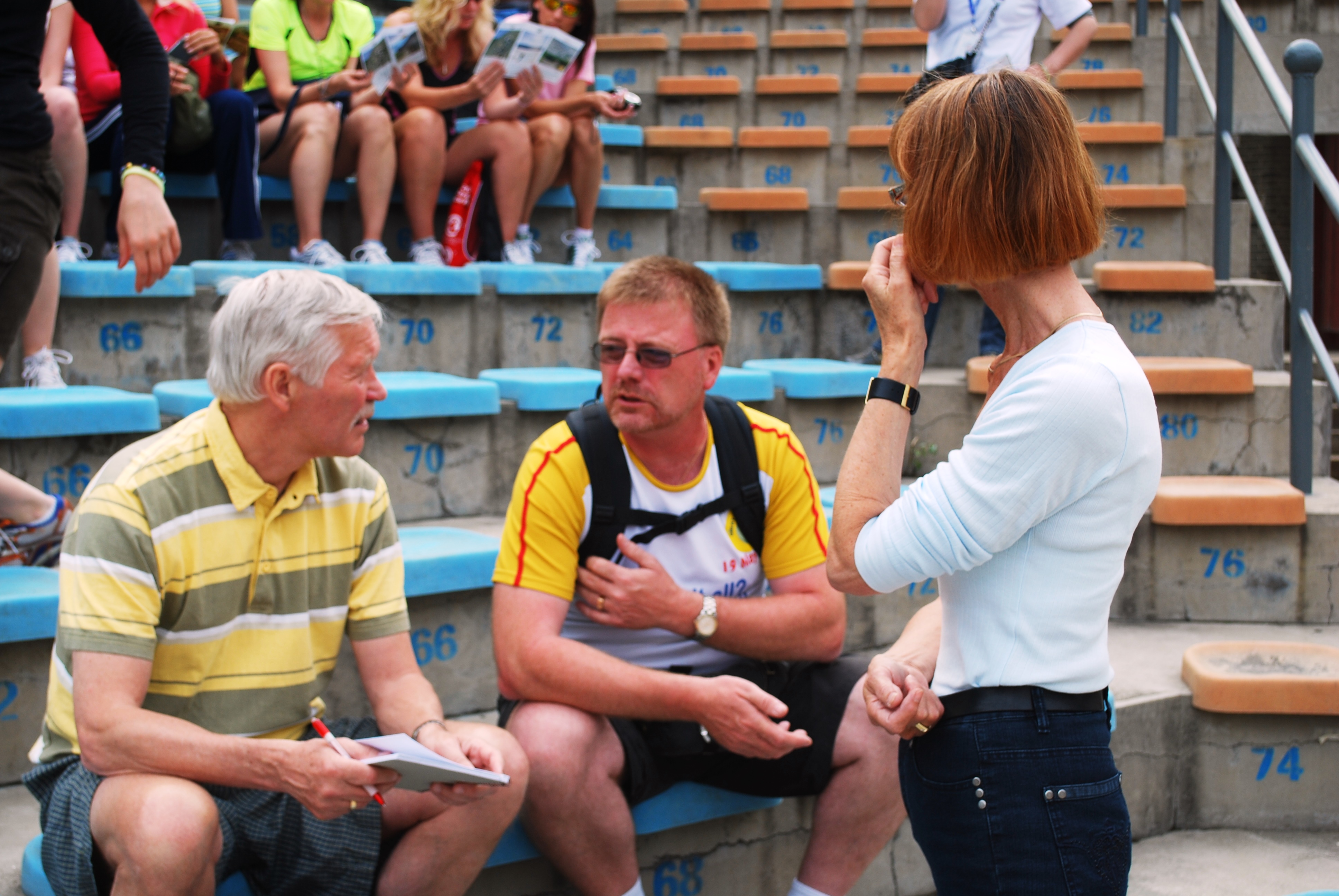
Jamie was fascinated by the model of the city in the town park, Byparken, and the amphitheatre in Folkeparken, and she was enthralled by the silence she experienced in several places. The streets around St. Jørgensberg, Byparken, Folkeparken and Tuttesti were very peaceful, something she was not accustomed to in Beijing.


Back at home, Karin had lit the barbecue and put the food on the garden table. Jamie was very glad and receptive of all the new acquaintances she was making. This applied to people as well as our two dogs.


Concert in Byparken


After supper, we went to Byparken, where Jamie enjoyed another unusual experience. The Danish singer-songwriter Sys Bjerre gave a performance to the great pleasure of Jamie, who took loads of pictures and videoed the performers.


Back home again, Jamie joined me to walk the dogs after which it was time for some “hygge”. Under the awning we lit our patio heater, a variety of candles and oil lamps, and there was also firewood in the Mexican fireplace. We taught Jamie how to play Yatzy, and blow me down if she didn’t beat us.


Flying visit to Odense


We had breakfast in the garden on the Wednesday. Once again, Jamie was amazed by several things. She had never seen a pepper mill or salt mill before, and watercress was entirely new to her. After this, I drove Jamie to the train station because she wanted to visit Hans Christian Andersen’s house in Odense.


When I picked her up again in the afternoon, she had brought with her some brochures about the Hans Christian Andersen Marathon in Odense on 19th September. She had never run further than three kilometres, but now brightly announced that she intended to run the marathon with me in Odense. So we agreed that I would sign both of us up and that she would train in the streets of Copenhagen and Oslo, and in the gym on board the Crown of Scandinavia.


More of Roskilde


In the afternoon, we visited the Viking Ship Museum and Museum Island, and at the ticket office, Jamie presented a Chinese guide card. The ticket lady said that this was only valid when she had a group with her, but that didn’t put Jamie off. “He’s my group,” she said. The woman looked a bit confused but allowed Jamie in free of charge all the same.


After that, we visited Roskilde University, which Jamie had wanted to see, and we also visited the showground, where they were getting ready for a farmers’ market. I told her about the annual agricultural show, about Roskilde Festival and the planned Museum of Rock.


Sagafjord


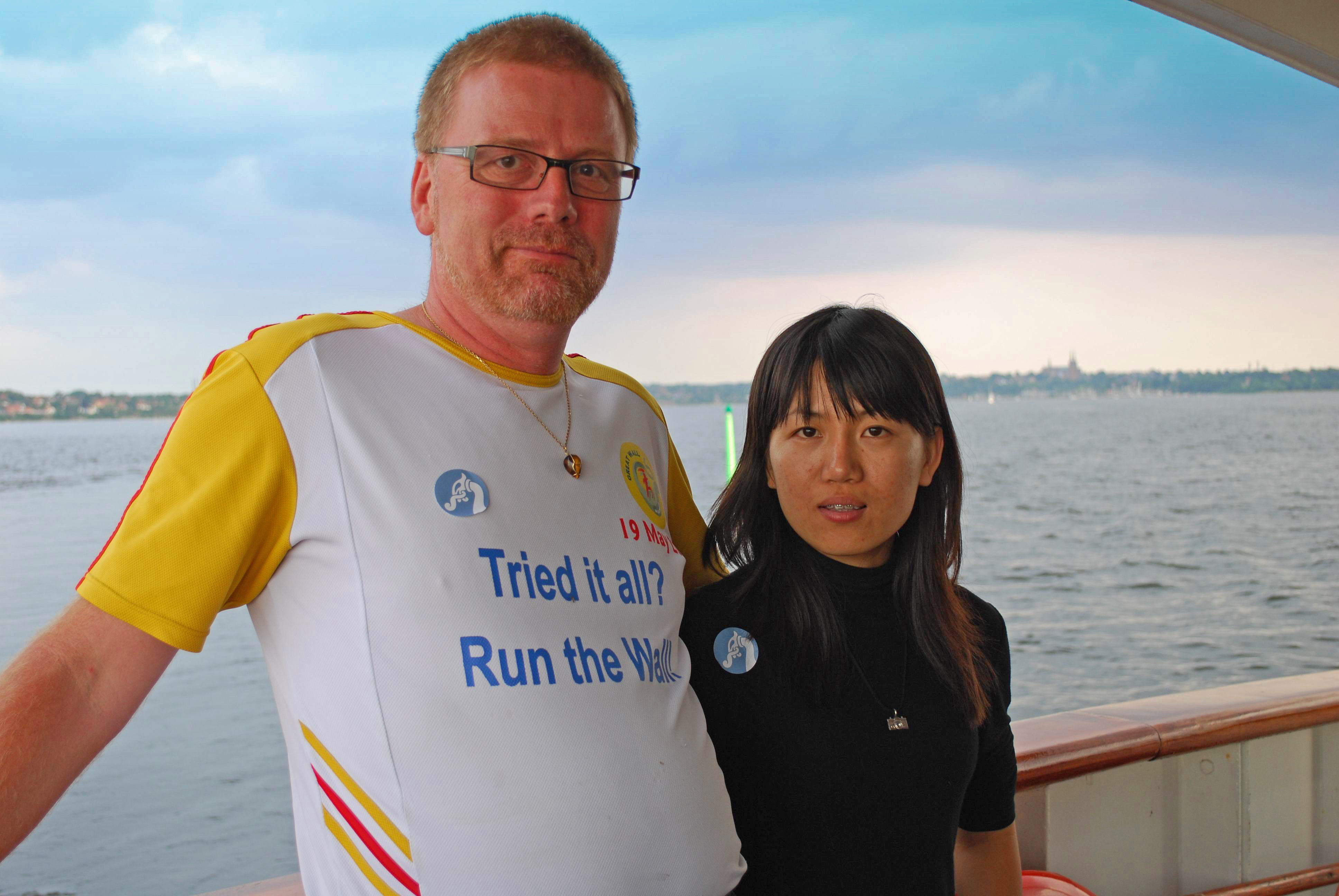
We spent the evening on board the city’s beautiful restaurant ship, the “Sagafjord”, which was yet another great experience for Jamie. The weather was beautiful, and the view over Roskilde Fjord was fantastic. The food was also good, so everything was just fine. We visited the captain, and Jamie earned a well-deserved “Fjord Skipper Certificate”, and we also saw the engine room. Jamie showed off her skills as a photographer time and time again.


tømt kamera juli 2010 379


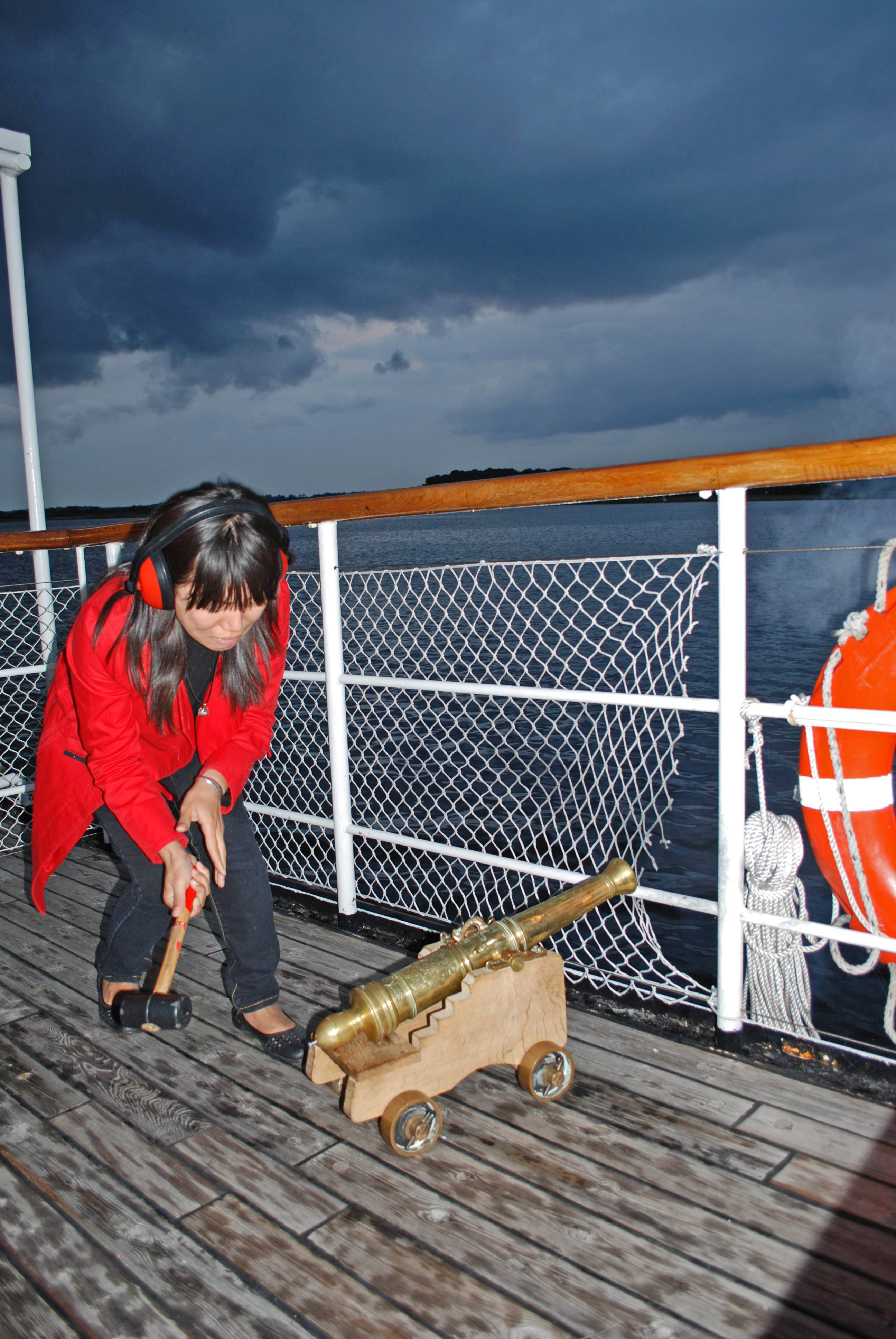
At sunset, the sun was to be “shot down” in accordance with tradition, and Jamie was given the job of firing the cannon – another great thrill for her. Just as the sun was about to sink below the horizon, she was given the order to strike the cannon with a rubber hammer. When it went off with a huge bang, bystanders made all sorts of funny remarks.


tømt kamera juli 2010 396


Newspaper article


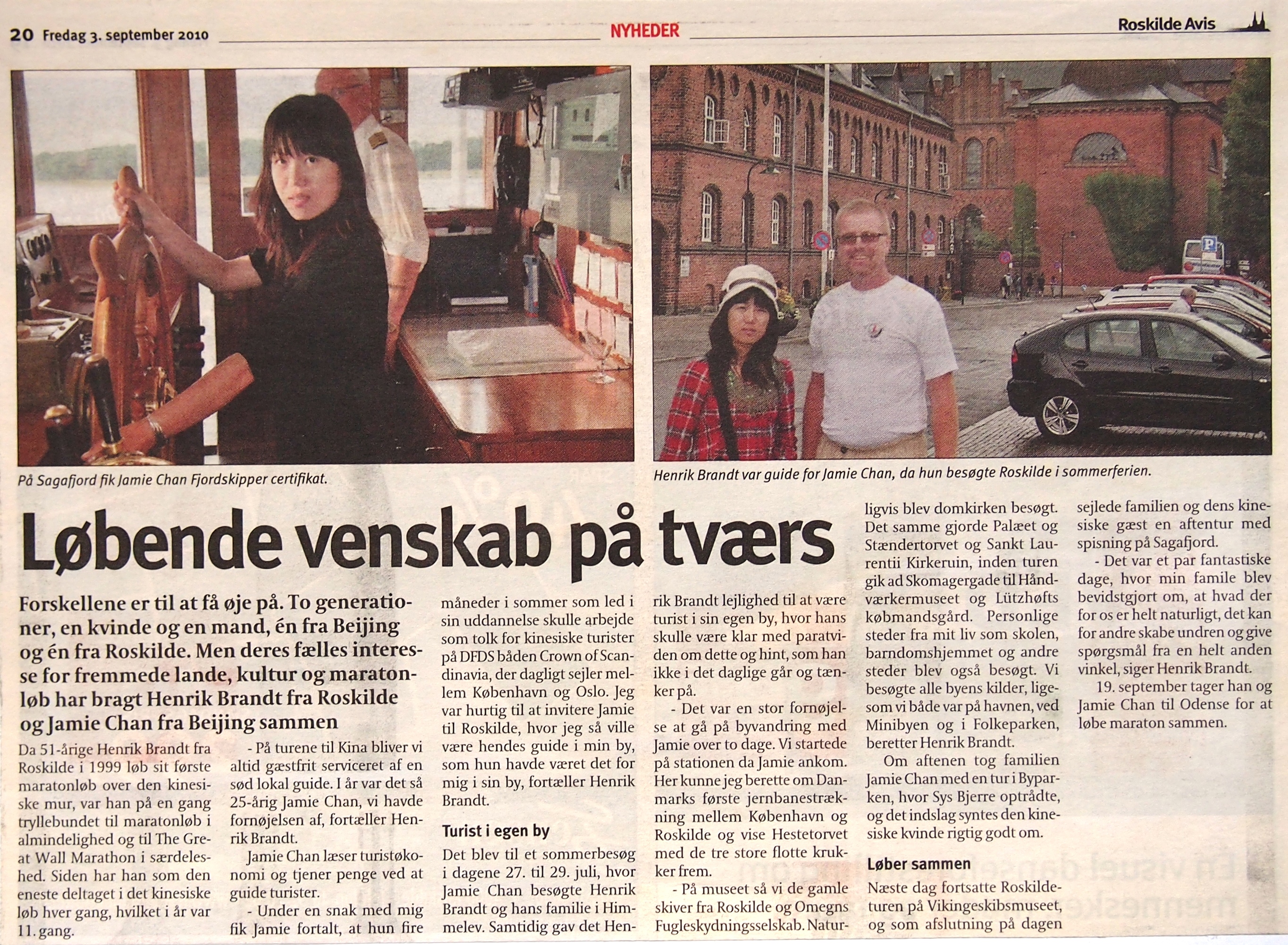
I fell into conversation with an acquaintance on the ship and told him about Jamie’s visit and how I knew her. He thought it would be a good idea for us to get the story in the newspaper. I was a bit reticent about this, but after a few days I wrote an article for the local newspaper, Roskilde Avis, with the titled “Running friendship across borders”.


???????????????????????????????


Return visit


On the Thursday morning, it was time for Jamie to return to the Crown of Scandinavia, and I had to visit a client in Copenhagen. So we drove together to the capital, and I dropped her off at the boat. On her visit, she had invited us on a guided tour of the boat, and a week later we were shown round the Crown of Scandinavia and given a delicious lunch in the staff canteen.


Buy the book here.


Engelsk forside

DSC_0152_1

Storebælt Naturmaraton 2010 (The Great Belt Nature Marathon 2010)

February 17 2016

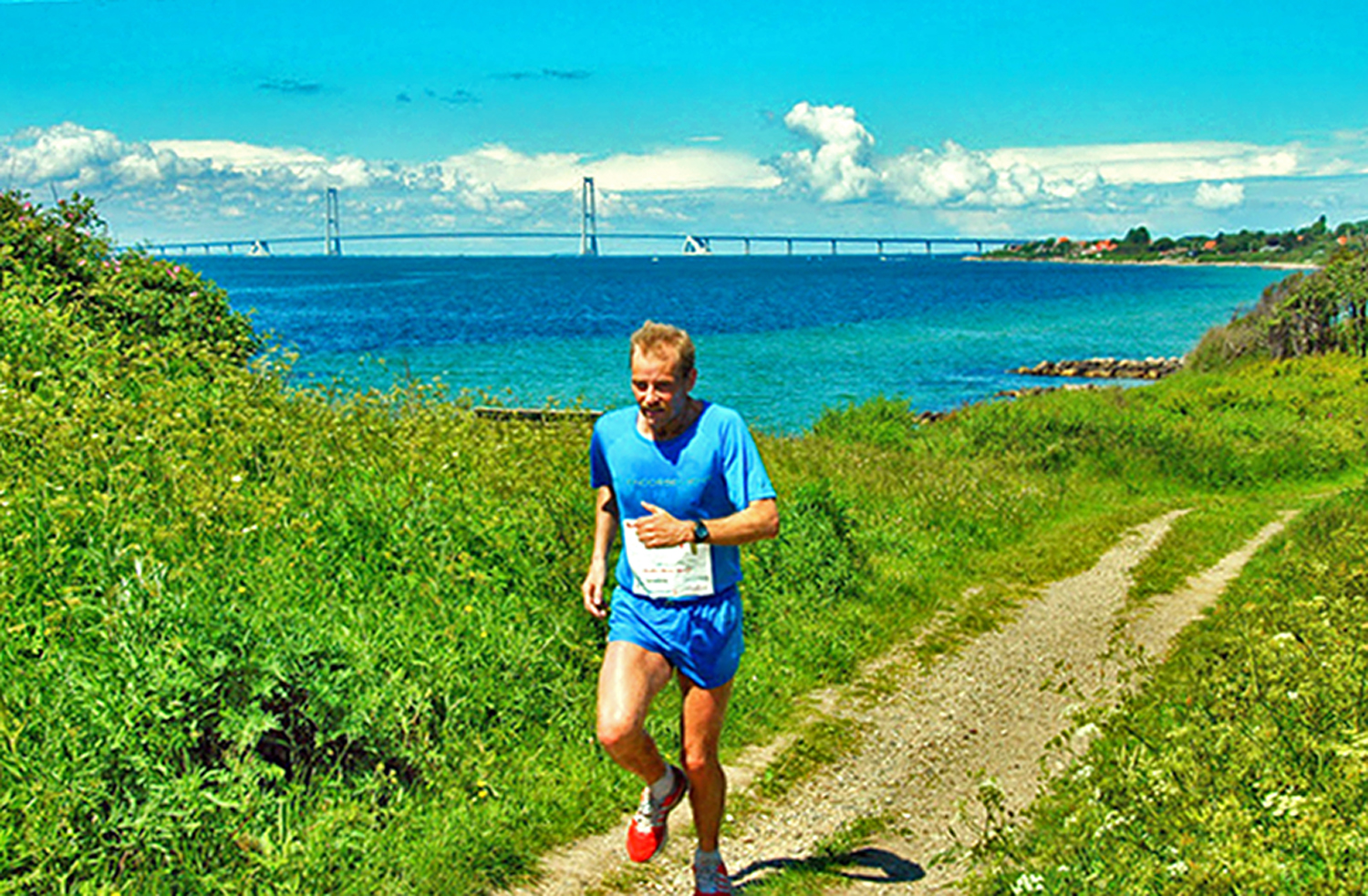
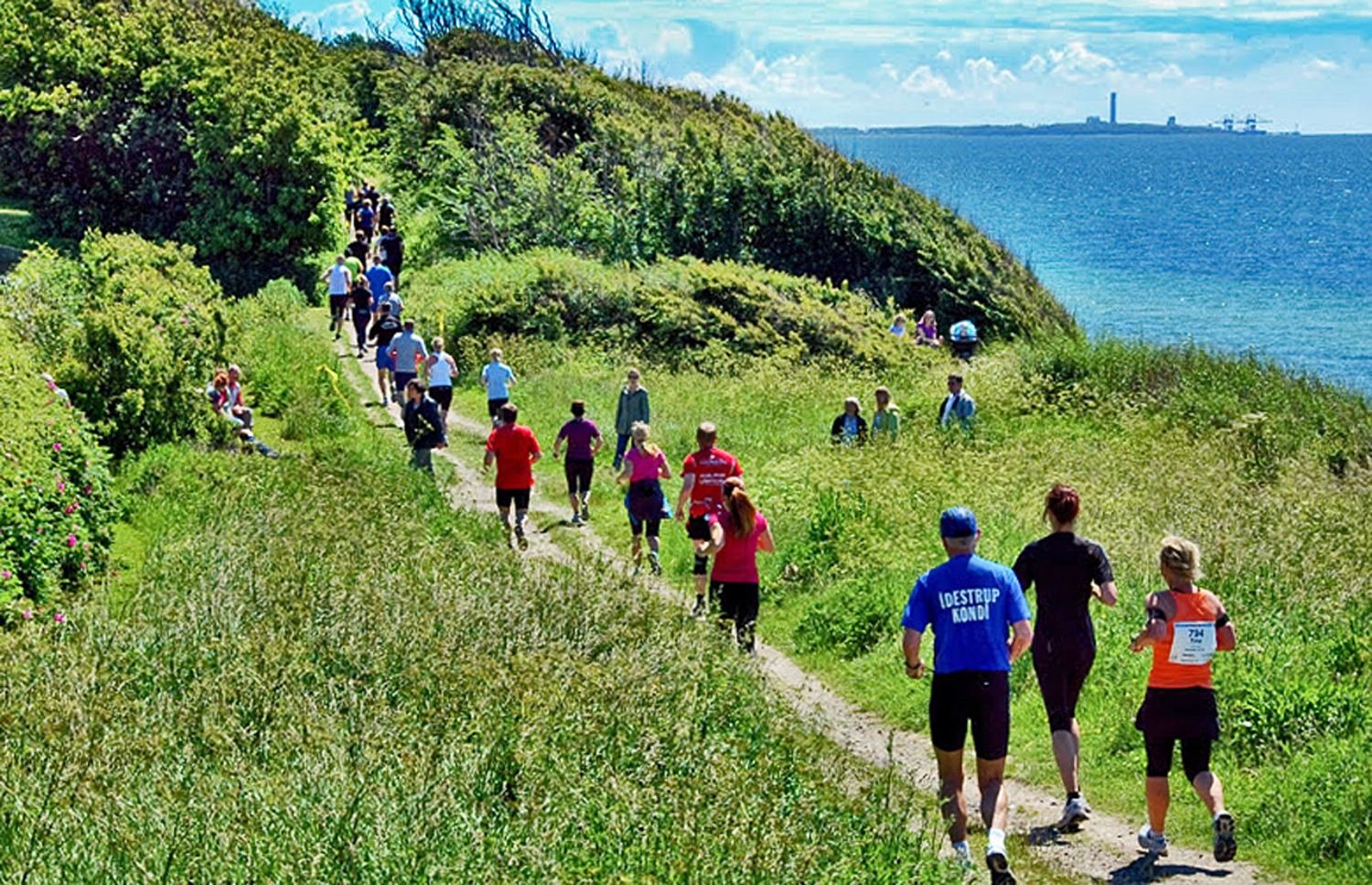
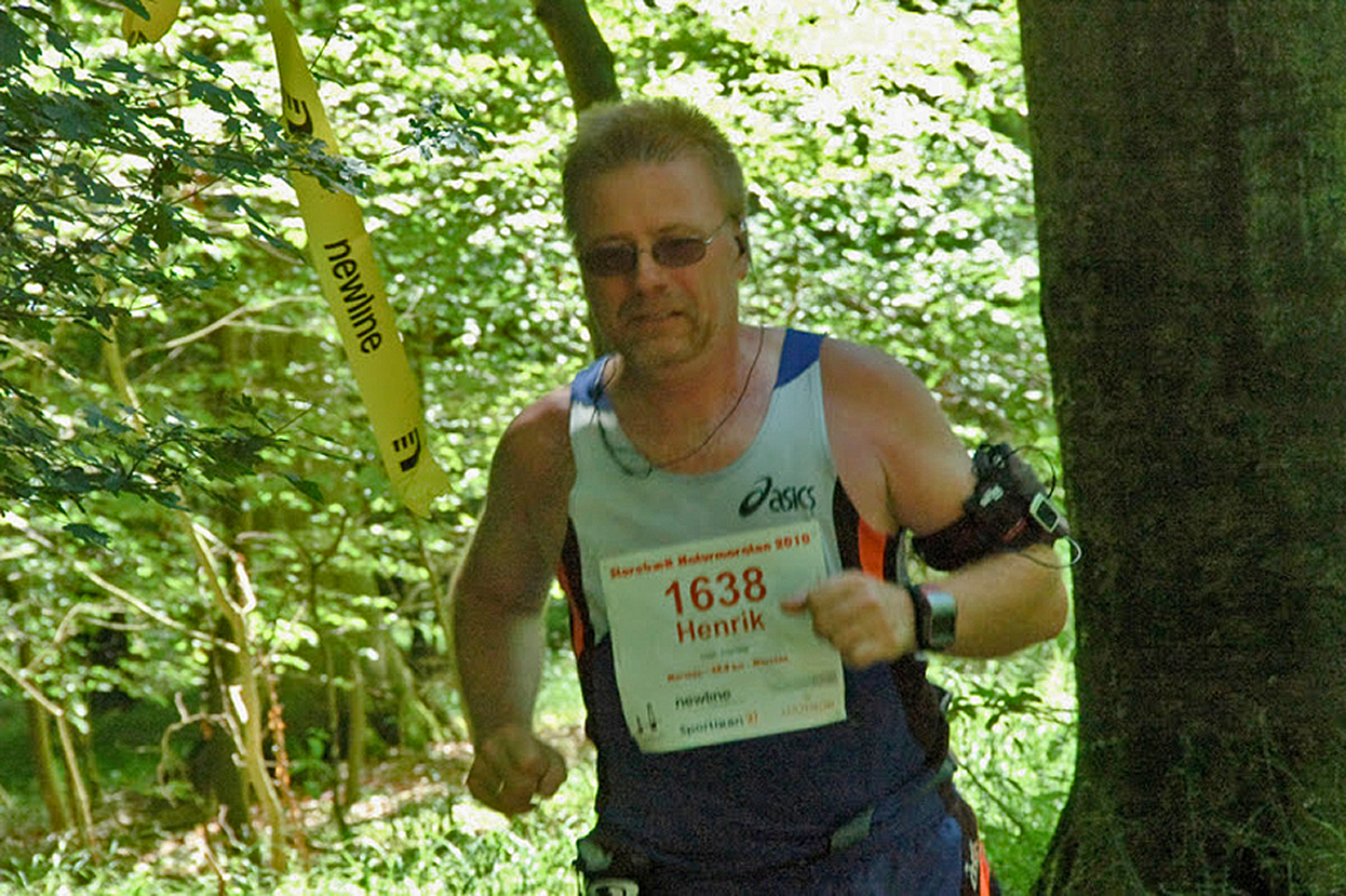
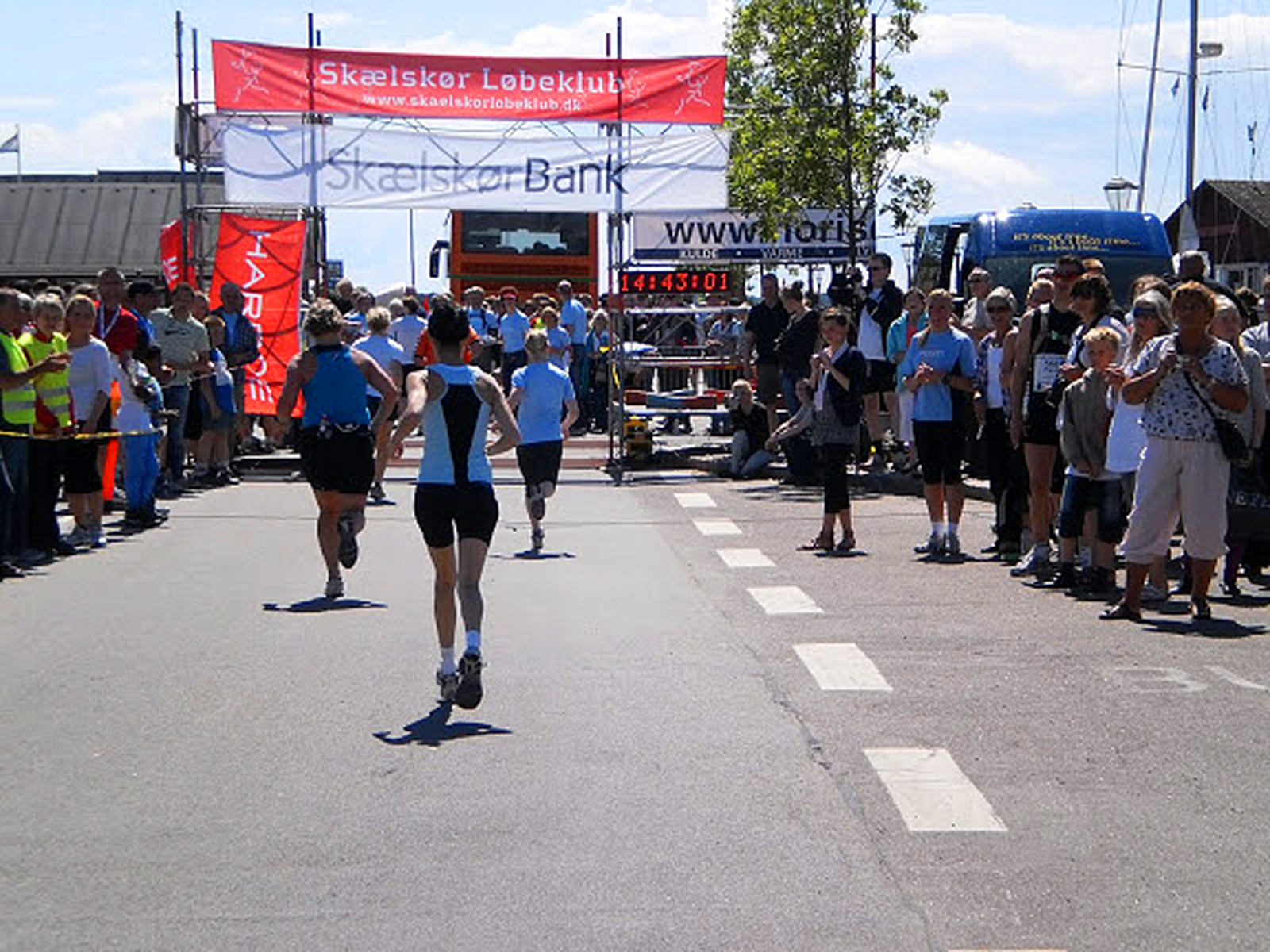
The Great Belt is the strait between Denmark’s two main islands, Zealand and Funen. I completed a wonderful marathon in excellent weather on 20th June 2010 within sight of this splendid stretch of water. The race started in the city of Slagelse, passing through three patches of woodland and along three beaches before finishing in the friendly town of Skælskør.


Run for the first time in 2007, the marathon is organised jointly by three running/athletics clubs: Korsør Atletik og Motion (Korsør Athletics and Exercise Club), Slagelse Motionsklub (Slagelse Exercise Club) and Skælskør Løbeklub (Skælskør Running Club).


I ran with one of my neighbours, who was running his first ever marathon. It was Midsummer, one of the most delightful times of the year with light all day long.


We started on the square in the middle of Slagelse and ran on asphalt out of town to the village of Slots Bjergby where, at a height of 82 metres above sea level, there was a fabulous view of The Great Belt Bridge. From this point, the route took us along a meandering main road with fields on both sides until we reached right down to the Great Belt. We then continued along the water’s edge and for a while on asphalt. The route then turned inland, still with fields on both sides. We ran through the villages of Frølunde and Svenstrup before turning down a lane and then onto a path in the direction of Korsør.


DSC_0030


After this, the route went through more rolling countryside with small hills, and after a while we arrived in Korsør, which was almost half way and turned into Korsør town park. On the way over a hill, we passed the 21.1-kilometre mark, where the half-marathon runners had started a while before we got there.


From this place, we continued along the gravel paths of Korsør town park, passing the Halsskov Bridge across the entrance to Korsør harbour. We then ran through the town to Ceres Strand (Ceres Beach). We ran close to the water’s edge along gravel paths and then along Troldstien (Trolls’ Path) to Korsør Woods. We had a constant panoramic view of the Great Belt.


DSC_0028_1


We ran for a kilometre and a half through the woods with beech trees, burial mounds and ancient oaks. We then continued down past the water up onto an asphalt road, passing Klarskovgaard Conference Centre and further through Klarskov along woodland roads and gravel paths before hitting the main road once again. The route meandered through fields and avenues with small hills, with an occasional fantastic view of the Great Belt and Skælskør in the distance. At the Espe Estate, we were given strawberries from the local fields.


DSC_0152_1


The route now took us into Egerup Woods and along gravel paths for the next couple of kilometres, after which we again turned towards the water, running for a while with pastures and meadows on one side and Kobæk Strand (Kobæk Beach) on the other. In one place, the path was sanded over, but we were running almost at the water’s edge at this stage. The next place we arrived at was Kobæk, running for a little while on asphalt and then back onto gravel. Soon after that, we had a view of the beautiful inlet, Skælskør Fjord, before running along a gravel path across the final challenge, Møllebakken (Mill Hill), with an ascent of some 20 metres. After this, it was downhill all the way to Skælskør harbour and the finish.


DSC_0203_


At some stage during the final part of the run, my neighbour got so tired that he couldn’t keep up with me, and at one of the water stations I asked them to give him an encouraging greeting from me. When my neighbour turned up and was given his greeting, he took it as a provocation, which gave him renewed energy. He started running again and passed me as I was walking, subsequently to receive me at the finishing line.


PICT0017


Buy the book here.


Engelsk forside

b

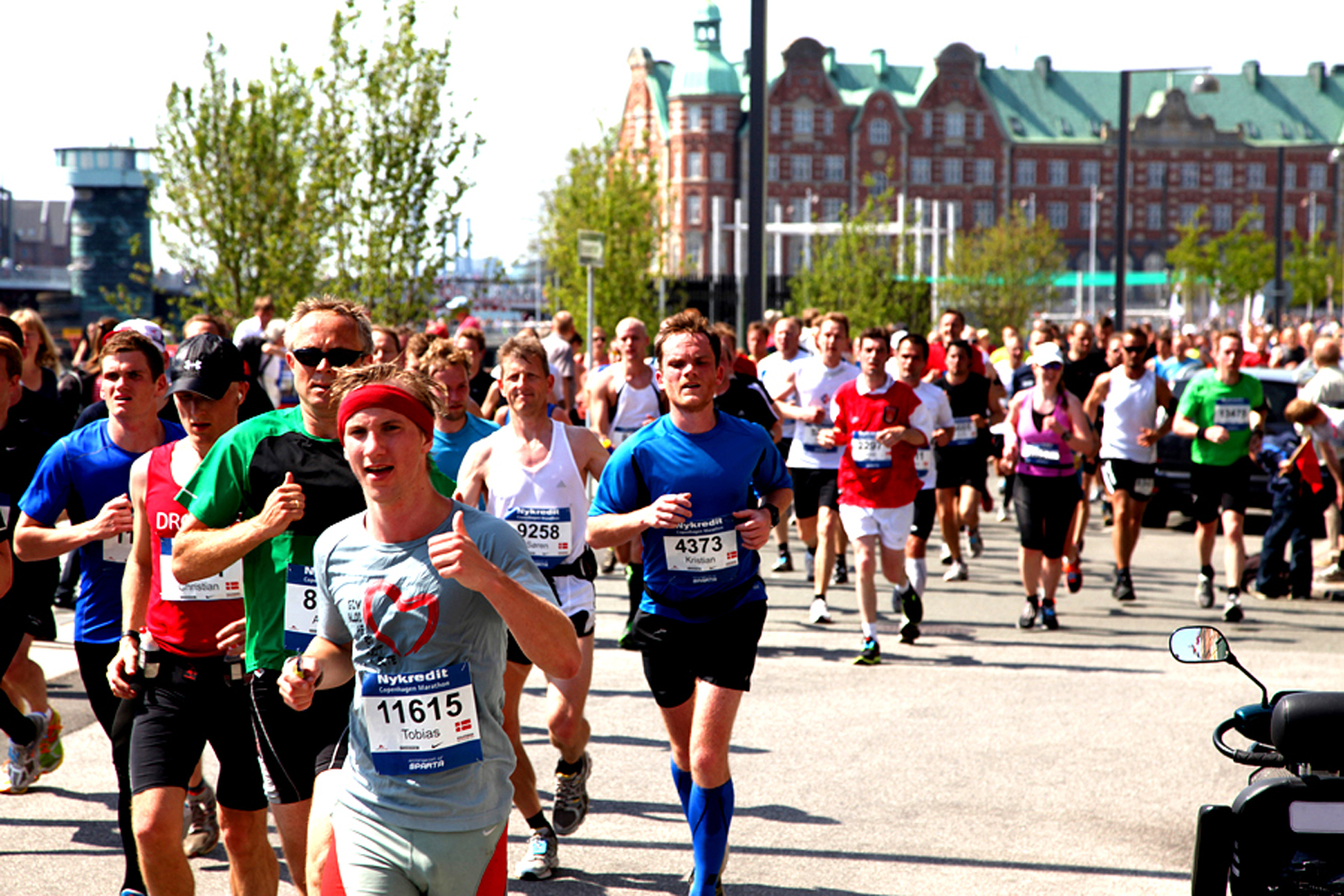
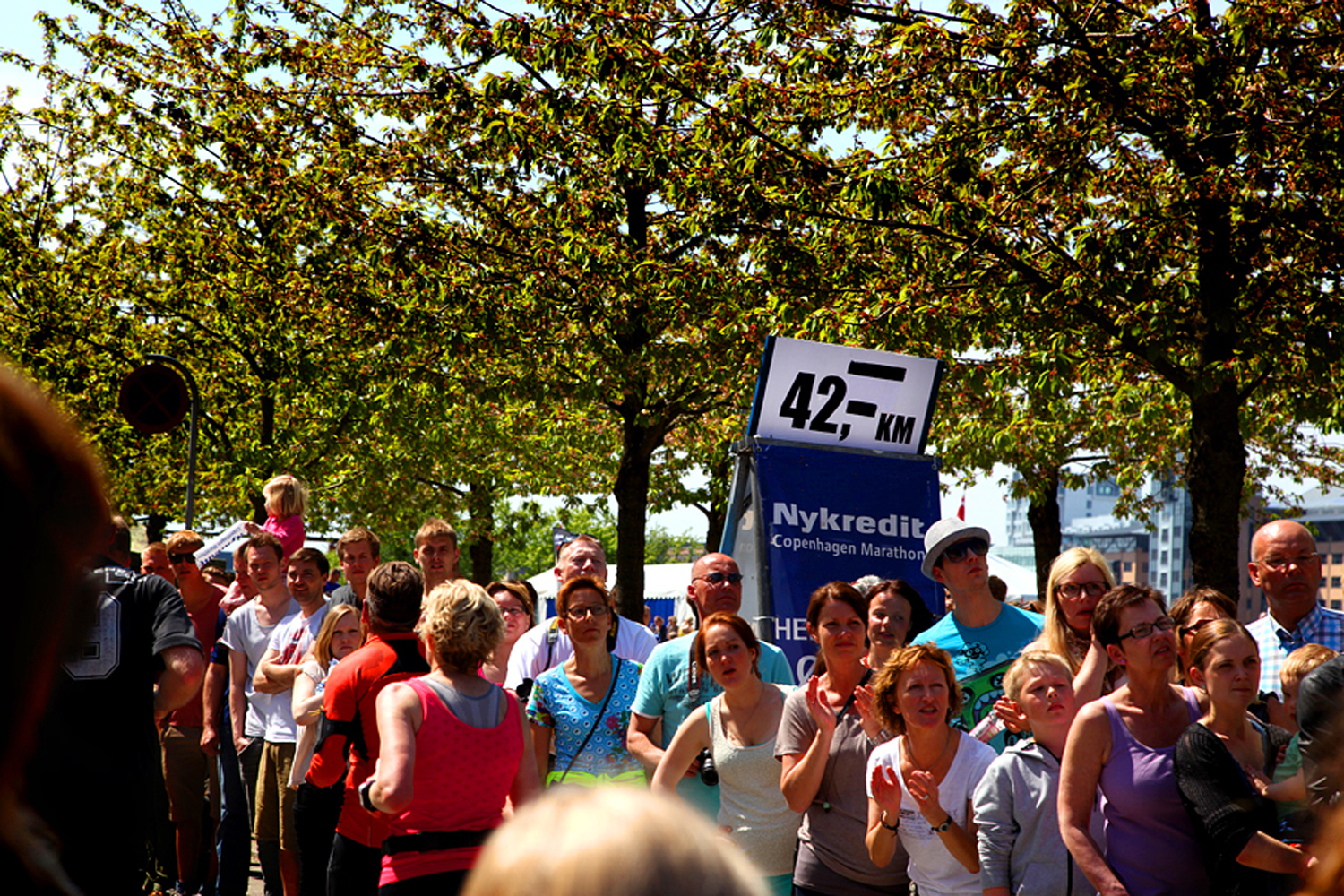
Copenhagen Marathon 2010

February 10 2016

I ran the Copenhagen Marathon in 2003 purely because The Great Wall Marathon had been cancelled due to the SARS epidemic. I had not expected to run in my own capital again, simply because the city’s marathon is traditionally run more or less at the same time as my Chinese favourite.


But on 28th January, I came across an offer on a bank website. As the main sponsor of the Copenhagen Marathon, Nykredit was offering free running numbers to its customers. I had my mortgage with Nykredit, so I decided to take up the offer, although I didn’t really expect to run.


The Chinese marathon was on Saturday 15th May, and the Wednesday after, I was back home again visiting a customer in Copenhagen. On my way home, I drove past Østerbro and picked up the running number; I had asked for. I was, however, still very much in doubt about running.


d


We went to a wedding on the evening of Saturday 22nd May, and I told Karin that I would drive home because I would be running a marathon the following day. During the wedding, I sipped at a little wine whenever a toast was proposed, but otherwise refrained from imbibing anything but water and coffee. I got to bed at about four o’clock that night and managed three hours of sleep before getting up again.


c


I drove to Copenhagen, where I was able to park my car with a customer on Vesterbrogade, and then ride the bike I had with me to the new start on Islands Brygge by the Harbour.


a


The route had been changed in relation to the last time I ran in Copenhagen. However, we still passed through most of the Queen’s city, including the districts of Østerbro, Nørrebro and Vesterbro, the parliament building Christiansborg, all the way along the harbour from Kalvebod Brygge and across to Langelinie. The marathon ended in the same area as where it began, on Islands Brygge.


b


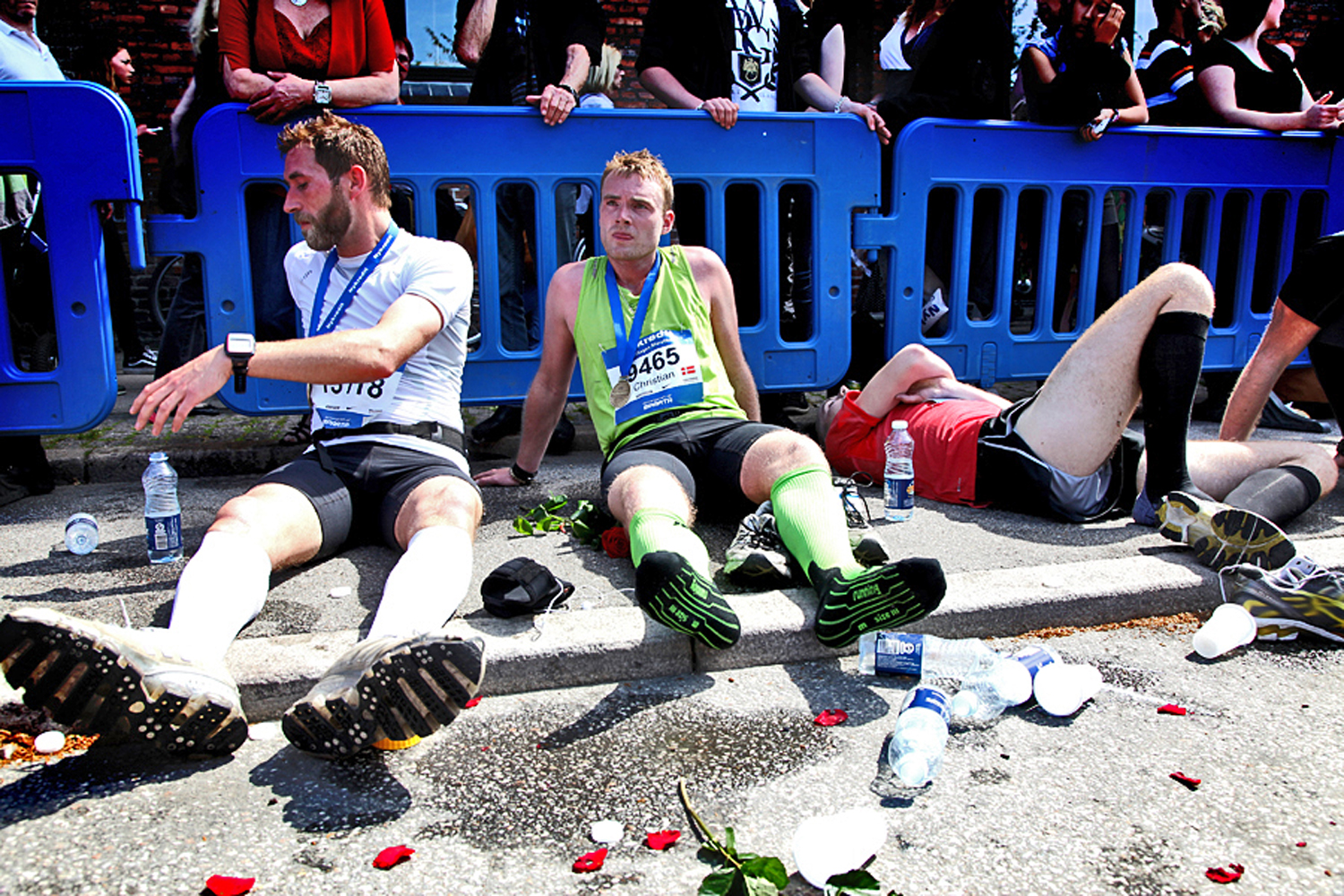
It was difficult to comprehend that just eight days earlier I had crossed the finishing line in China. I was actually in good form and had a good run. Not surprisingly, things started getting tough during the final five kilometres, with my feet and toes aching so much that I had to walk some of the time. At one stage, the going even felt tougher than it had been in China, which was quite improbable. I realised, though, that, with a bit of willpower, I would be able to cross the line with a time of less than five hours. During the final two kilometres this motivation gave me the strength I needed, and I actually ran faster than I normally was able to. I crossed the line with the time 4:59:06, i.e. less than the magic five hours. My time was 101 minutes faster than a week before.


Buy the book here.


Engelsk forside

???????????????????????????????

The Great Wall Marathon 2010

February 3 2016

Albatros contract renewed


After the tenth anniversary run in 2009, things had returned to “normal”. But The Great Wall Marathon is always spectacular and quite unique, and of course so was this year’s run too. We had been anxious to hear whether Albatros Travel would maintain its rights to the marathon because the first contract had only been valid for ten years. Negotiations had, however, given Albatros the same number of years into the future.


Well-prepared, but strained


I had prepared myself for this run like never before. I had been training a lot since the New Year, among other things by signing up for a project through the newspaper, BT, entitled “Run Yourself Fit 2010”. Uploading the distances I had run over a period of ten weeks became a sport. I had joined a group of people who ran a lot, which was an incitement for me not only to keep up with the others, but to outshine them. This was a complete success, and I ended up with the most hours in the group. In actual fact, in the course of a week I ran an average of more than a half-marathon every day. This rather backfired on me because I ended up with a strain injury to my shin. I had to visit a physiotherapist and make do with training on my bike because I couldn’t run. I recovered, however.


As a run-up to the marathon, I completed the Helvede i Nord (Hell in the North) and the Hedeland Bjergmarathon (Heathland Mountain Marathon); both tough half-marathons with lots of hills and alternating terrain. I had always been the lone runner, but during the last month and a half before the marathon, I ran on Tuesdays and Thursday with Run for Your Life.


Extended journey


That year I signed up for travel package 1 with a return date of 17th May, but I didn’t want to have to begin my homeward journey on the morning after the gala party. I was also aware of the fact that the group’s schedule would make it difficult for me to manage all I wanted to do in Beijing, so I contacted Albatros and had them defer the return journey by two days. This meant I had to apply for a new visa, since I had originally been on a group entry document. However, everything fell into place, and I was happy.


I was to stay at the Qianmen Hotel for the third time in a row, which suited me fine.


Ash cloud threatens


But just as everything seemed to be hunky-dory, it looked as though my trip might fall through all the same. A month before my departure, the Icelandic volcano Eyafjallajökull had erupted, and the ash it started out had brought all European air traffic to a standstill for a week. In my own little egotistical world, I was pleased that this had happened sometime before I was to leave, but in the week prior to the run, the volcano erupted once again, and this time more airports were affected. In 2003, there had been problems with SARS, in 2009 with swine influenza and now came the ash cloud. One never can predict what “Our Lord” has in store for us, but this time he showed mercy, allowing me to get to China once again to run the marathon.


Jamie


This year, we didn’t have a Danish guide but were met instead by a sweet Chinese girl by the name of Chen Mei. Her family name was Chen, which in Chinese culture comes first. But in line with tradition, she had also taken an international name, which was easy for tourists to remember. So to us she was Jamie, and her reason for choosing this name was that it was similar to the French expression “J’aime”, which means “to love” in the first person. Mei is Chinese for rose. Jamie became a good acquaintance, who would turn out to be more than just a guide for me.


OLYMPUS DIGITAL CAMERA


Impressive – perfect story


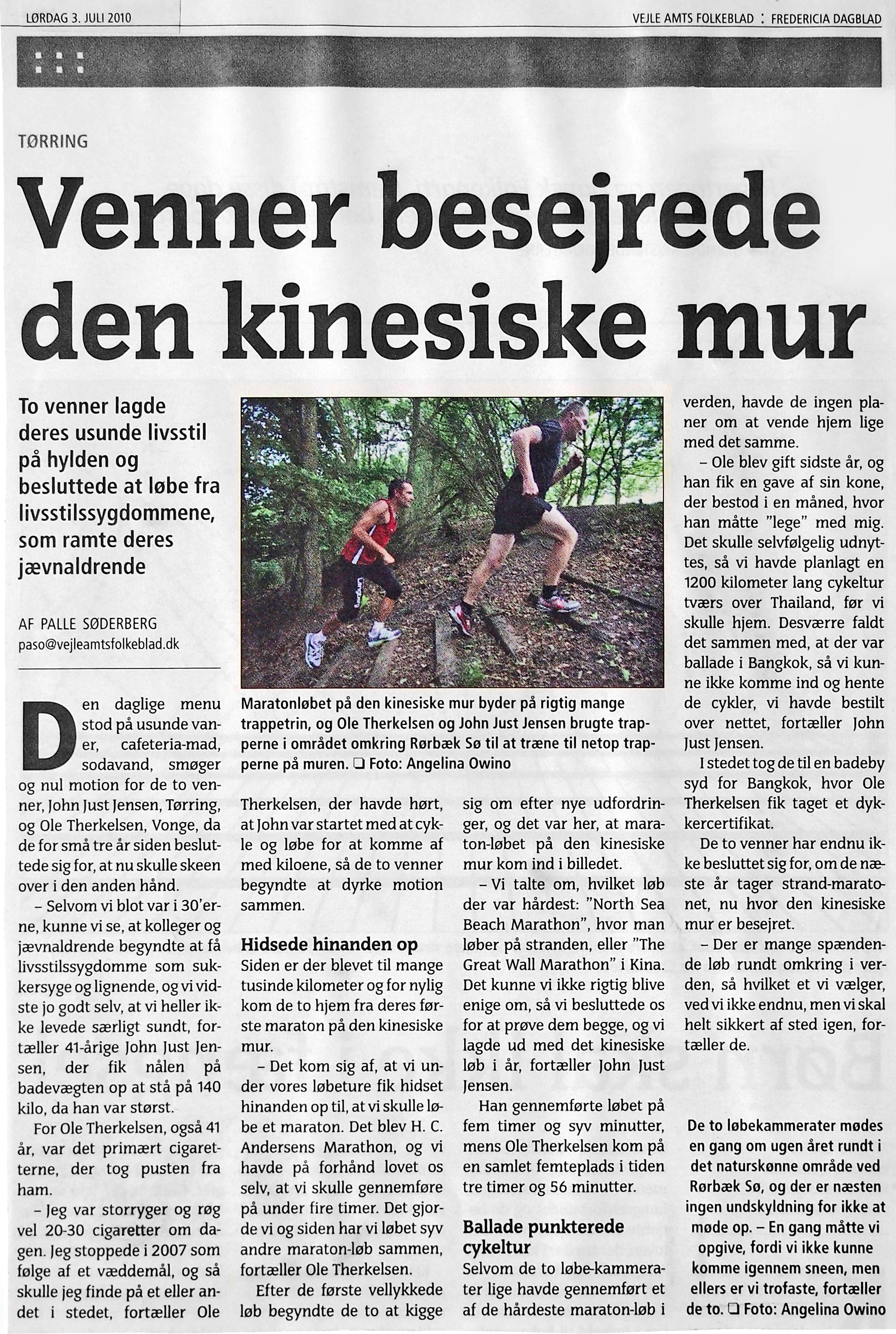
On the bus on the way to the inspection day on the Thursday, I fell into conversation with John and Ole from East Jutland. They had been friends since their youth, and both had just turned forty. John explained how he had entirely turned his life around. He used to be a long-distance lorry driver and lived a sedentary life, smoking a lot of cigarettes, eating unhealthy food and drinking pop. He ended up weighing 140 kilos and was almost totally out of condition. But in 2003, he completely rearranged his life. He started with a bicycle, which he had to push up hills to ride down the other side. But things quickly began to improve, and he became motivated to get into shape. By this time, he had lost 54 kilos. He combined cycling with running and had also run his first marathons.


Ole had also led a most unhealthy life and smoked a lot of cigarettes, but he had done the same as John, and now they were going to run on the Wall. After the marathon and the gala party, the friends were to head for Xian and then Bangkok, where they would buy bikes and cycle the 1,200 kilometres to Phuket before returning home to Denmark.


I was fascinated by their story, so I interviewed them and took photographs of them on the Great Wall. I sent the article to the newspapers in their home area, and it was published by Horsens Folkeblad, while Tørring Folkeblad and Vejle Amts Folkeblad visited the athletes on their return home and wrote a new story.


John and Ole never actually cycled through Thailand. In fact, they weren’t even able to pick up their bikes because of a state of emergency in the country resulting from demonstrations and a popular uprising. The police had bombarded demonstrators with rubber bullets, water cannons and tear gas. Fortunately, John and Ole avoided all this and went on a traditional backpacking tour of the country instead.


???????????????????????????????


Jixian Sports Training Base


That year we were not going to live in Jixian itself, which suited me just fine. Instead, we were accommodated just two kilometres from Yin and Yang Square at the Jixian Sports Training base. It looked very attractive from the outside, with huge facilities and tennis courts, but appearances can be deceptive. There was nothing at the hotel, absolutely nothing. The swimming pool was disgusting; everything was run down, and there was nowhere to buy anything, not even a bottle of water. There was no running water when we arrived, either. It felt as though we had left all signs of civilisation behind us.


Several members of the group were indignant and intended to leave immediately, but to me it didn’t really matter. Having been there many times before, I didn’t miss anything about Jixian itself. Nor did I miss all the touristy things and was able to pass the time without a lot of facilities.


Jamie was subjected to quite an ordeal, what with all the dissatisfied tourists. But one of the Albatros staff arrived and found solutions to some of the problems. The visitors were also given a compensation trip, and everyone ended up satisfied.


The group left on their compensation trip on the Friday, but because I had been on the trip before, I decided to spend the day on my own.


Breakfast was right on par with the hotel standard, if one can use that term in this context. It consisted of boring, cold toast and pretty disgusting ham. I don’t usually take sugar in coffee, but here I had to take three lumps just to make the taste tolerable. The fruit juice and fried egg, on the other hand, were not bad at all.


I had no trouble as such with the hotel, but just for fun I noted down various faults and efficiencies. The Internet only worked periodically, running water came and went during the day, the bath drain leaked, so the water ran out onto the floor, the shower cubicle door was leaky, there was no toilet brush, three of the shelves that evidently had been there were gone, there were teabags, but no electric kettle and there was neither a minibar, safe nor a “Do not disturb” sign. All in all, you could say there was no luxury, but I didn’t miss any of it and could easily spend a day there with what I had brought with me.


A stroll to Yin and Yang Square


In the middle of the afternoon, I went for a walk. It was cloudy and almost cold, which made it the most incredible running weather you can imagine. I naturally hoped it would be the same the following day.


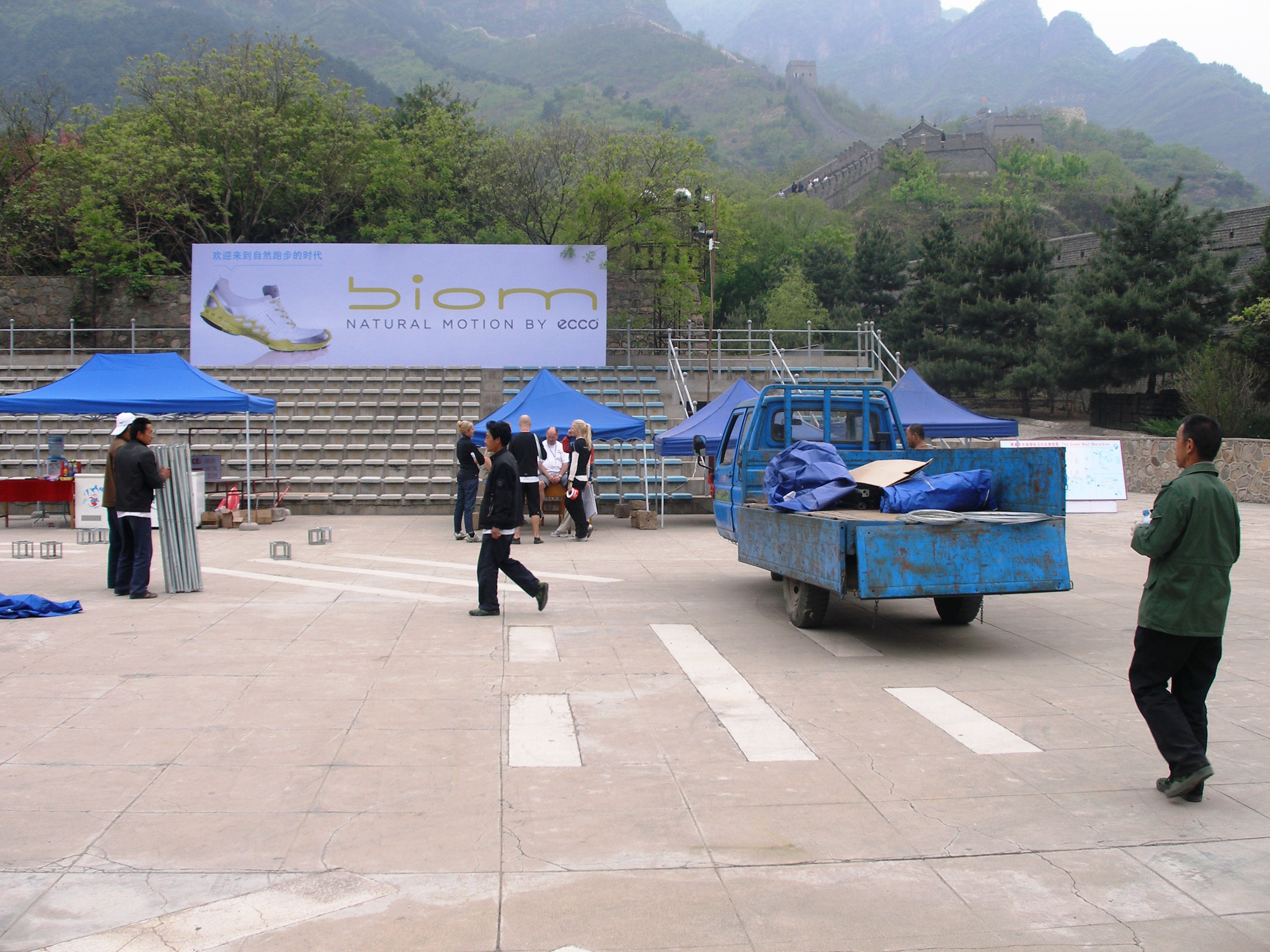
I walked to Yin and Yang Square, where preparations were in full swing for the next day’s marathon. Here I got an insight into the challenges and problems that can arise when everything has to fall into place at an event of this nature.


???????????????????????????????


Jamie to Denmark


On my way back to the hotel, I met Jamie, and we walked there together. She told me that she would be going to Copenhagen at the end of May for five months. As part of her education in tourism economics, she was going to work as a guide for Chinese passengers on the DFDS ferry between Copenhagen and the Norwegian capital Oslo. I gave her my business card and promised to be her guide in Roskilde, if she wanted to see the cathedral, the Viking Ship Museum and the town itself.


The pasta party that evening was held at the familiar Yuyang Hotel, but it was most unimpressive, and I would have preferred not to have spent an hour and a quarter getting there and back by bus. On the other hand, it was necessary to eat a decent meal before the tough marathon the following day.


Lie in on marathon day


As always, we had to get up early on the day of the marathon, but we were allowed to sleep half an hour longer than usual because we were living so close to the start. We arrived at Yin and Yang Square at 6 a.m., and it was not as cold that morning as it had been in other years, a portent of heat later in the day.


Firecrackers


That year, a very special Danish group was on the trip. They wore light green T-shirts bearing the name The Firecrackers (“Lynkineser” in Danish). The group had its origins in a group of 12 people, who took part in The Great Wall Marathon in 2000 and was celebrating their tenth anniversary. This group distinguished itself by having many of the fastest runners. Both the winner in 2000, Martin Steinback, and the man who followed him over the finishing line, Steen Habermann, had come along on this anniversary trip. Martin had announced on live TV back then that he would not participate in this marathon again. Ingvor, the man who encouraged me to run the 100 kilometre run on Bornholm had also come along. Our guide from 2000, Merete Skov, was no longer an employee of Albatros, but on this special occasion, she had come along to play her old role. In the meantime, she had become Mrs Habermann. But the group didn’t purely consist of people who had run before, because there were many Great Wall debutants in the group.


In terms of results, the “Firecrackers” did not make a mark as they had done in 2000, although Steen was glad that he had beaten Martin over the line this time.


A good run


My increased training bore fruit in that year’s marathon and I had been looking very much forward to keeping track of my timing with my new heart rate monitor. I had a good run in every respect, even though there had been a shortage of water when we came off the Wall for the second time. I had fortunately taken the precaution of wearing a fluid belt, which also contained three energy gels. I took the first of these shortly before the Wall and the other two on the Wall. I may well have taken too much in too short a time, because I felt a bit queasy on the last section of the Wall.


I was, however, very satisfied with my finishing time of 6:40:10. This was my next best time ever and 40 minutes faster than the previous year. It was wonderful to cross the line and receive my medal from Lars Fyhr, although it felt rather odd not to have been given it by Thomas, who wasn’t on the trip at all that year.


Kathy in a wheelchair


Kathy Loper was there as per tradition. This time, however, she would not be running because she had sustained an injury and was in a wheelchair. This had not, however, prevented her from travelling with her guests. Kathy gave me a warm welcome as well as a T-shirt.


Qianmen luxury hotel


Breakfast on the Sunday at the Qianmen Hotel was quite fantastic, although it probably wasn’t better than in previous years. But after a couple of days at the Jixian Sports Training Base it was a relief to have good coffee, fresh bread, cold meats and a chef, who would make an omelette to order. I spent the rest of the day shopping in the city, and the gala party and subsequent nightclub visit followed the usual pattern.


Defrauded


Monday’s experience of the day was when I was defrauded, and when it happened I was most annoyed and very irritated. With the benefit of hindsight, I had been taught a lesson and had a fun anecdote to tell, which in itself was worth the money I had lost.


In the evening, I had withdrawn cash from an ATM at the Silk Market and then taken a taxi back to the hotel. Here, the sequence of events later made me wonder why I had not sussed it out. The taxi didn’t drive up outside the Qianmen Hotel but drew up on the pavement opposite instead. I gave the driver a 20 Yuan note. He fiddled about with it and held it up to the light, then shook his head and refused to take it. So I gave him a 100 Yuan note, and he did the same thing a second, third and fourth time. In the end, he was satisfied, and I could get on.


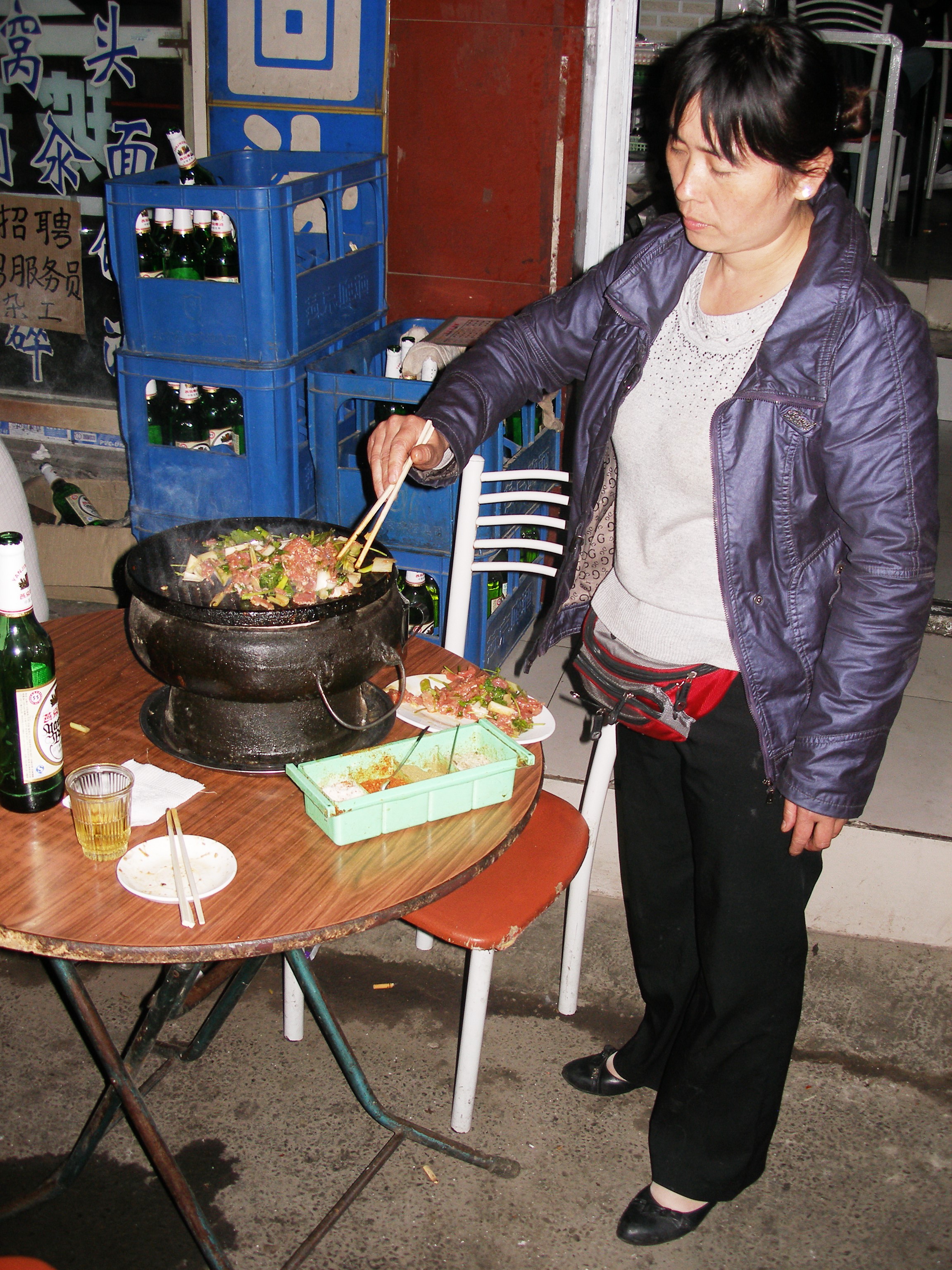
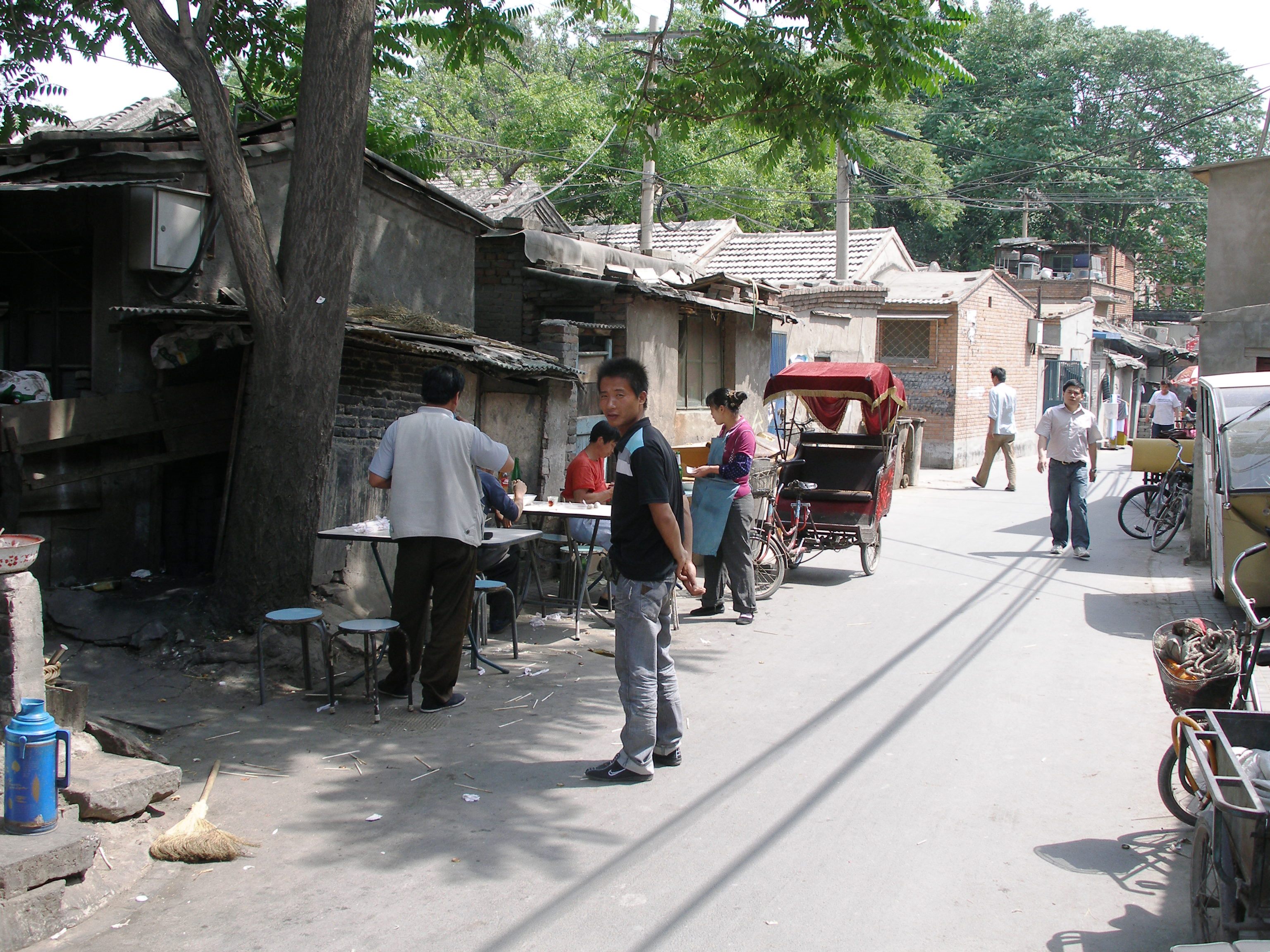
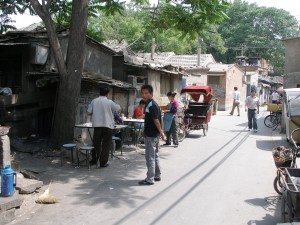
After that, I went over to the hutongs and had a meal at a place where there was a sort of table barbecue that resembled a black pot with burning coals and a top plate on which to grill the meat. I had chicken and beef and beer to go with it, and it was all very delicious. When the time came to pay, I again had problems with the paper money, and it now turned out that three of the 100 Yuan notes were counterfeit.


??????????????????????


I went back to the hotel and went to the business centre. They confirmed that the notes were counterfeit and called the Bank of Beijing. After a conversation with the bank and going through the events of the evening, I discovered that the thieving taxi driver had switched my proper banknotes with counterfeit ones. He had rejected the 20 Yuan note simply to get me to take out larger notes. By parking on the pavement opposite the hotel, he had avoided the Chinese porter, who would have seen through his deceptive trickery. I didn’t get a receipt, and he didn’t ask for a tip. But you have to admit that he had been rather crafty, although I was annoyed with myself for not having sussed out what he was up to. The counterfeit notes are now in my scrapbook of that year’s trip as a curiosity and an example.


A day too many


I had two more days in Beijing than the rest of my group, but the second day turned out to be rather superfluous. I had managed everything I wanted to, so I spent the second day going for walks, reading and watching movies on my laptop. It felt as though I was the last person from the marathon left in China. I could just as well have gone home a day earlier, although it was nice to have a relaxing day without having to stress or rush.


???????????????????????????????


Buy the book here.


Engelsk forside

Folkeparken´s motionsløb Juli 09. 083

Løb for Livets Marathon 2010 (The Run for Your Life Marathon 2010)

January 27 2016

Home turf


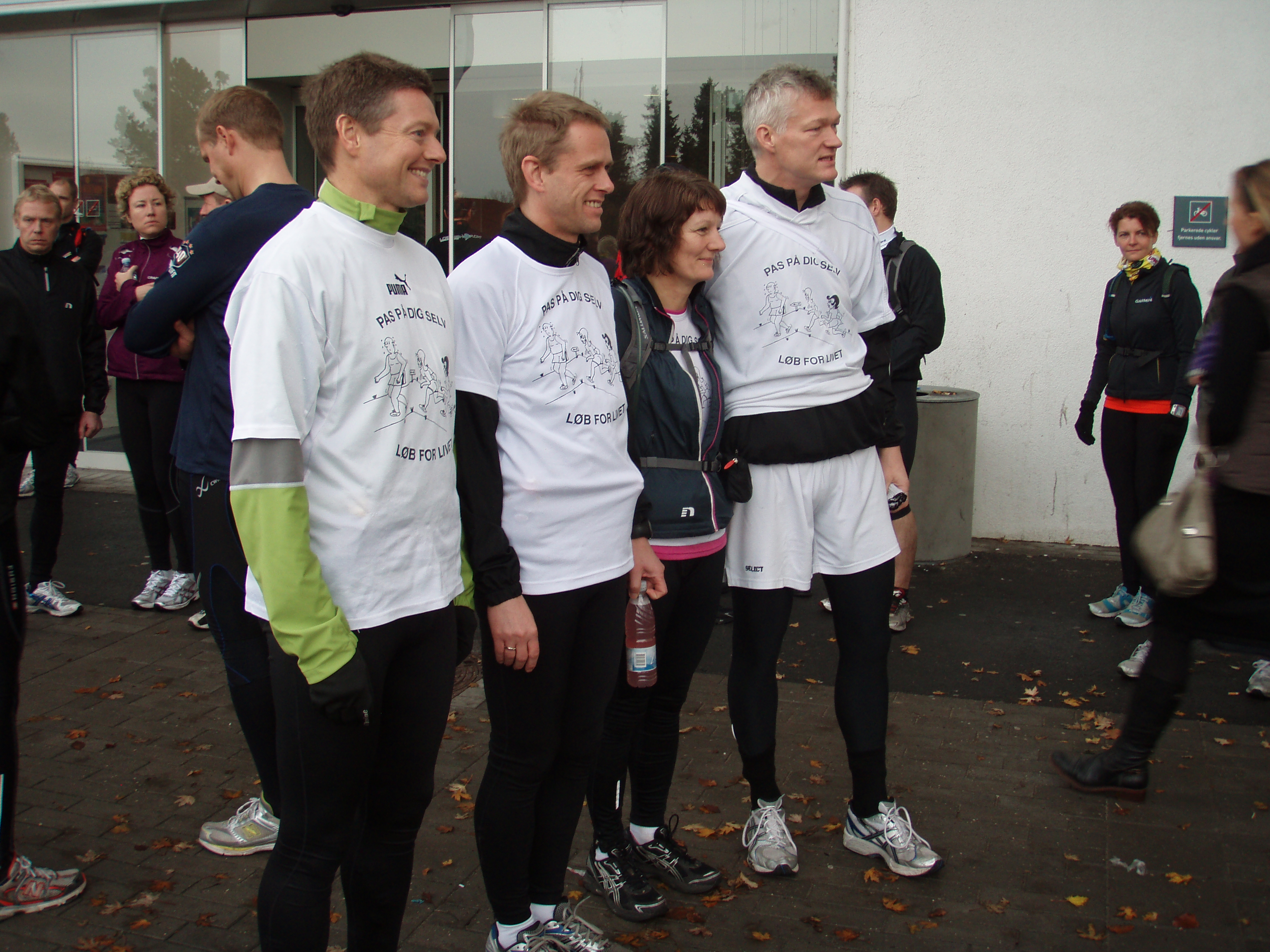
During the Rudersdal Marathon, a man by the name of Jan Marott Behrens from a club called Run for Your Life had told me about a project. He and three other people had to run 12 marathons in 12 months. He had heard of runners, who had done 100 marathons in a year, although their own goal as fitness runners was no mean target. They had decided that one of the 12 runs should be done at home and intended to organise a Run for Your Life Marathon, which would be Roskilde’s first, last and only of its kind. True enough, it was the town’s first marathon, but whether it will be the last and the only is anybody’s guess.


Tireless Jan


Run for Your Life was established by Jan, who has been its chairman throughout its existence. Jan is a tireless person who does a tremendous job for fitness running in Roskilde. He has actually won several prizes on that account.


Folkeparken´s motionsløb Juli 09. 084


The town’s fun run


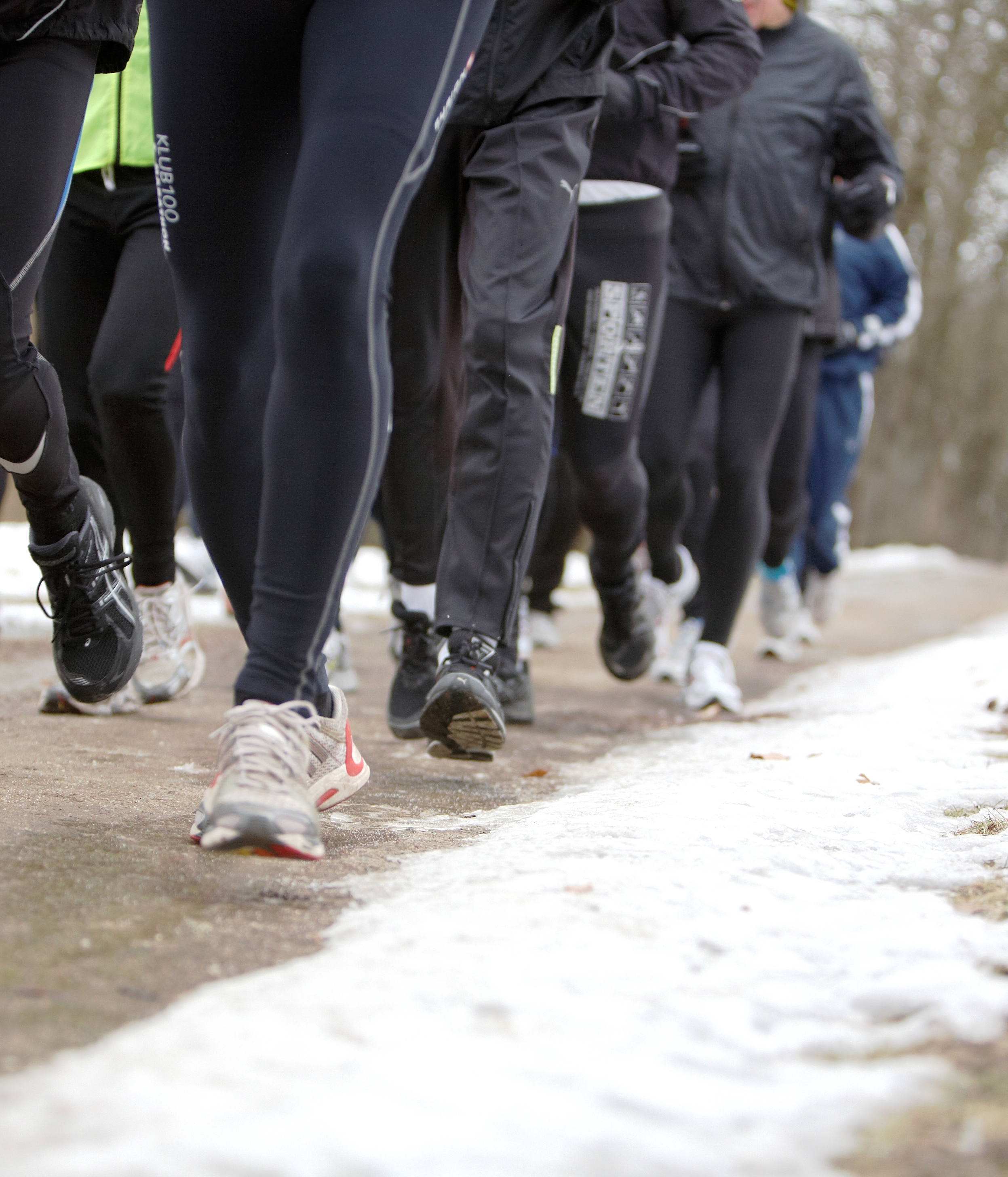
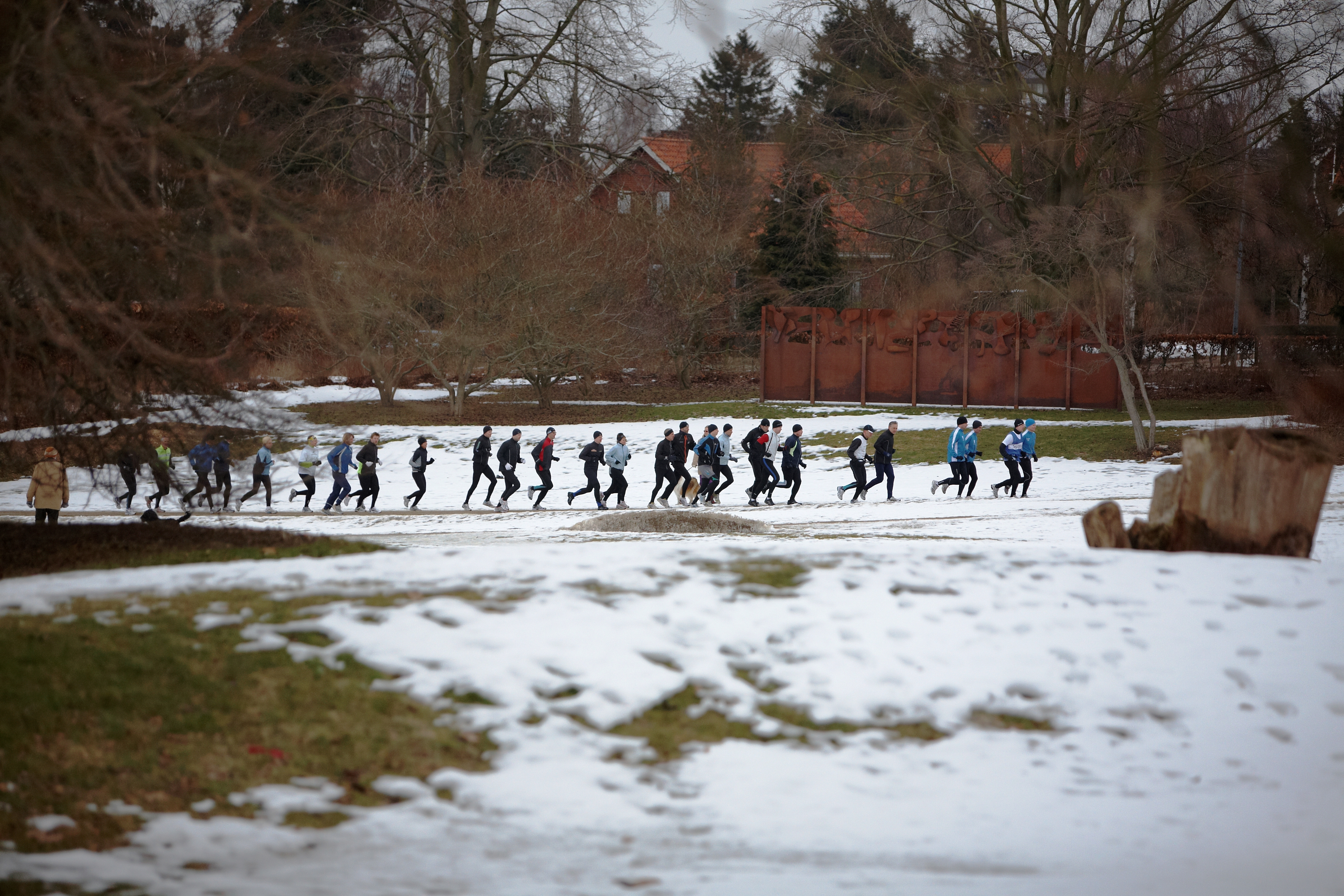
Run for Your Life held its first fun run on the second Sunday of January 1997 in Roskilde’s Folkepark. They have held one every month ever since and as such have organised more than 200 runs. These are always held on the second Sunday of the month at 10 a.m. One exception to this is in August, when it is run on the third Sunday to make room for another regular event the week before.


Folkeparken´s motionsløb Juli 09. 042


It costs 10 Danish kroner to participate in the run. This means that anybody can take part, and families can share something without it costing too much. The course in the Park is 1.6 kilometres long, and it is up to the individual to decide whether they want to run one or up to five laps, in other words up to eight kilometres. After the run, there is water or cordial to drink and a prize draw. With such a low starting fee, there is obviously no money in the race. The prizes in the draw are provided by sponsors, and Jan always gets it to break even.


Festive events


At various times of the year, they organise something special. Early in the year is the Shrovetide race, when people run in fancy dress. In the April Fool’s Day race, they make fun of the runners, and it goes without saying that there is always a Christmas Hat Race in December. This is very festive, and up to 500 runners turn out in red hats with white bobbles on.


Folkeparken´s motionsløb Juli 09. 073


Not many people ran in the first fun runs, but they have grown over the years. It is not unusual for several hundred Roskilde people to turn out. You will often see three generations of runners having fun together.


Training


The club trains on Tuesdays and Thursdays. Runners meet at Jan’s carport and run along set routes. Everybody is welcome, and you don’t have to be a member. The club has no subscription, so no money is involved. There are bottles of water and cordial for everyone after training, and every once in a while Jan will offer chocolates that one of the sponsors have given him.


Battle song


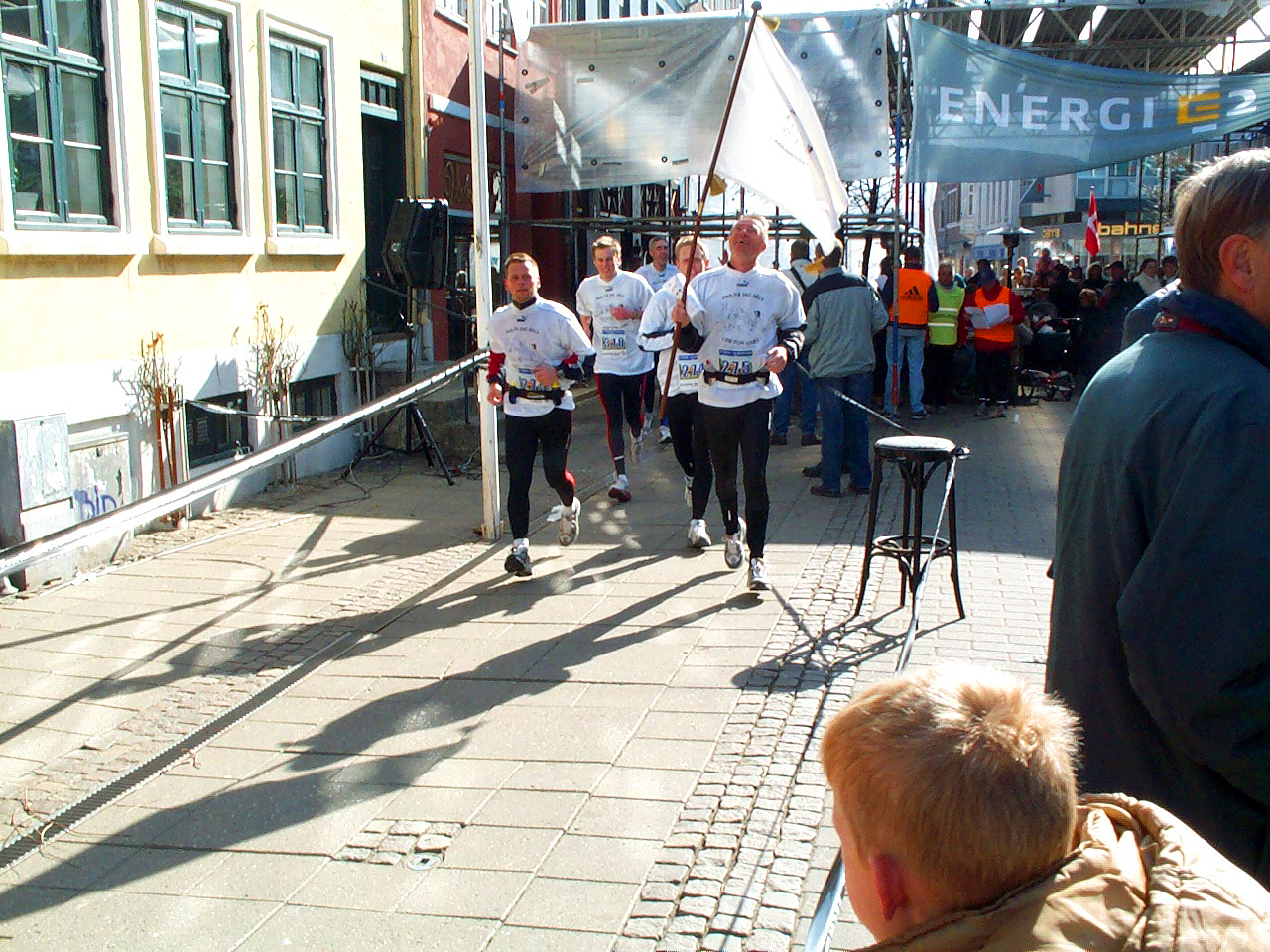
I first became acquainted with Run for Your Life at the Five Towers Marathon in 2002. I recognised Jan and the other runners, having seen them around town back home. It was highly amusing to see and hear these happy people running the half marathon. They ran in identical white jerseys with the club logo on, and Jan ran with a flag in his hand, as they sang their Battle song to the tune of “Side By Side”, which goes like this:


We are the club, who likes to run for our lives

We want to help each other all the time

We stand together in a pack

We run really well

Side – by – Side

Løb for livet


Intimate run with no expenses


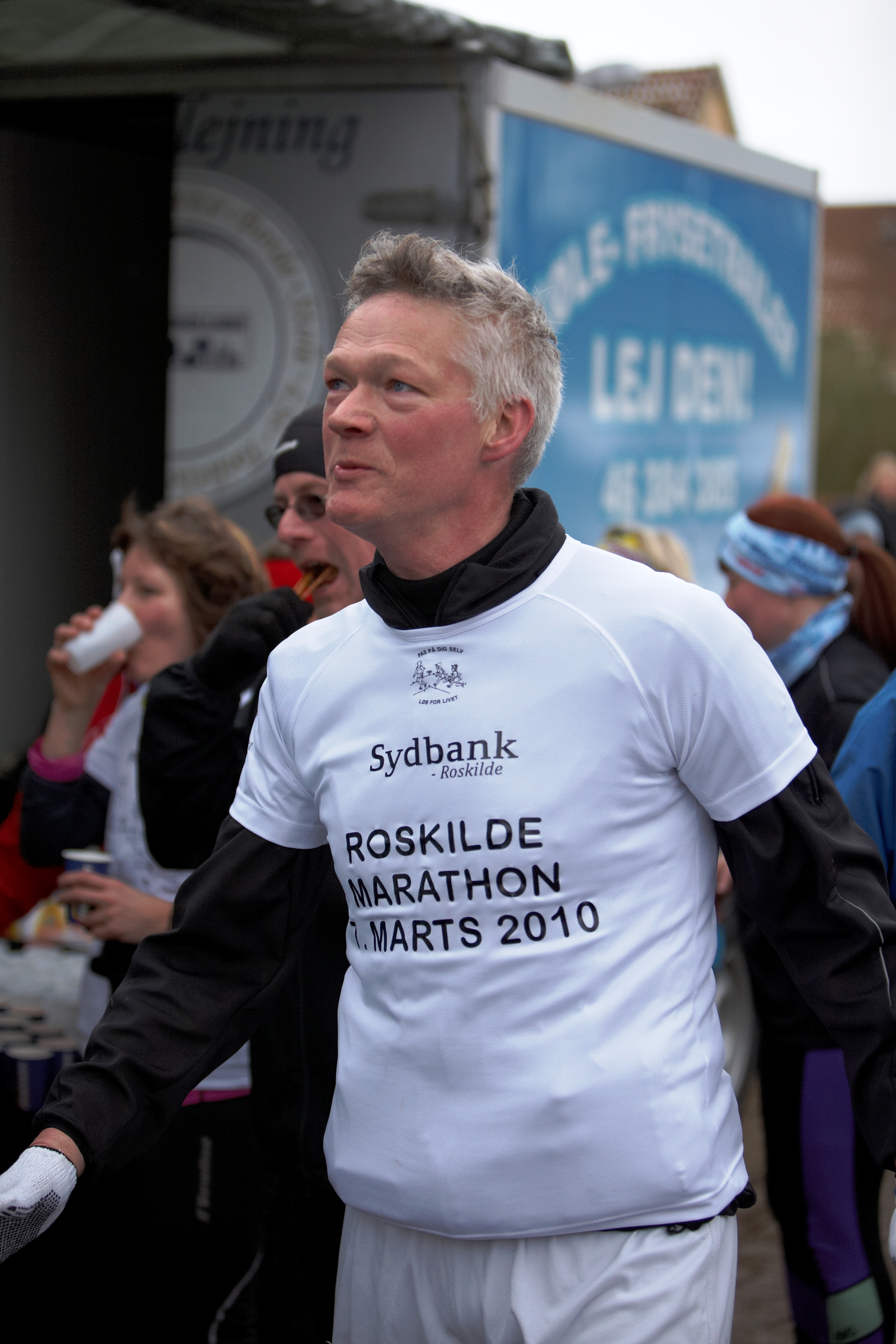
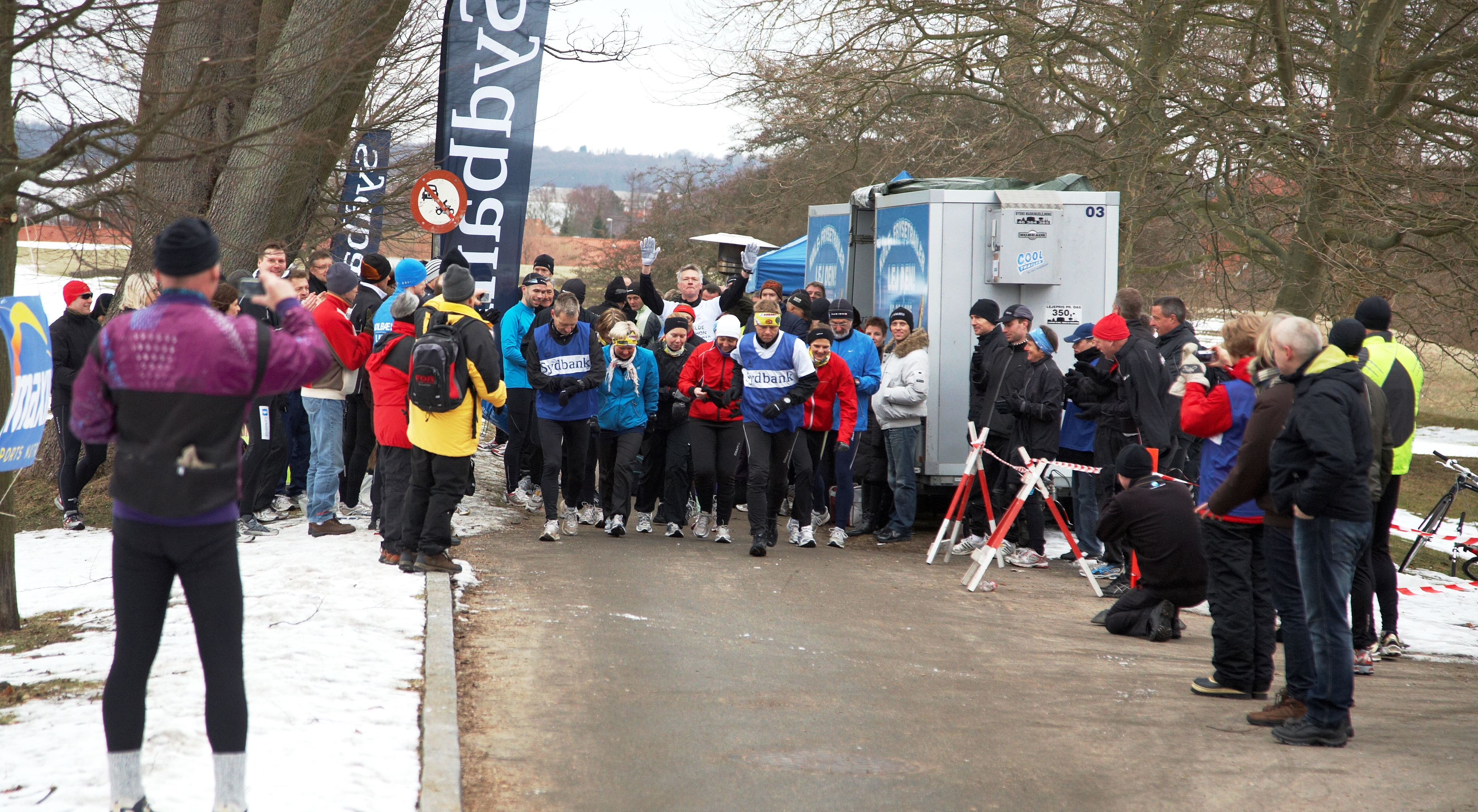
Of course, I was going to run a marathon in my hometown and signed up immediately. The run was to be an intimate affair without very many runners. The number of participants was limited to 100, so you had to be quick off the mark to get a running number. As was typical of Jan, no money would change hands and participation would be free of charge. However, the event did involve a certain amount of expenditure and Jan got a bank, Sydbank, to sponsor each participant with 100 kroner. To avoid people signing up and then not turning up a 100-kroner fee was charged. Participants could then pick up their hundred kroner at the Sydbank tent near the start. Of course, Jan had also secured sponsorship in the form of fruit and cordials.


Folkeparken´s motionsløb Juli 09. 083


Route through Folkeparken


The Run for Your Life Marathon was run on Sunday 7th March 2010. The motto of the run was: “The Folkeparken run – just a bit longer.” The start, from Louisevej near the entrance to the park, was the same as the monthly fun run.


Folkeparken´s motionsløb Juli 09. 024


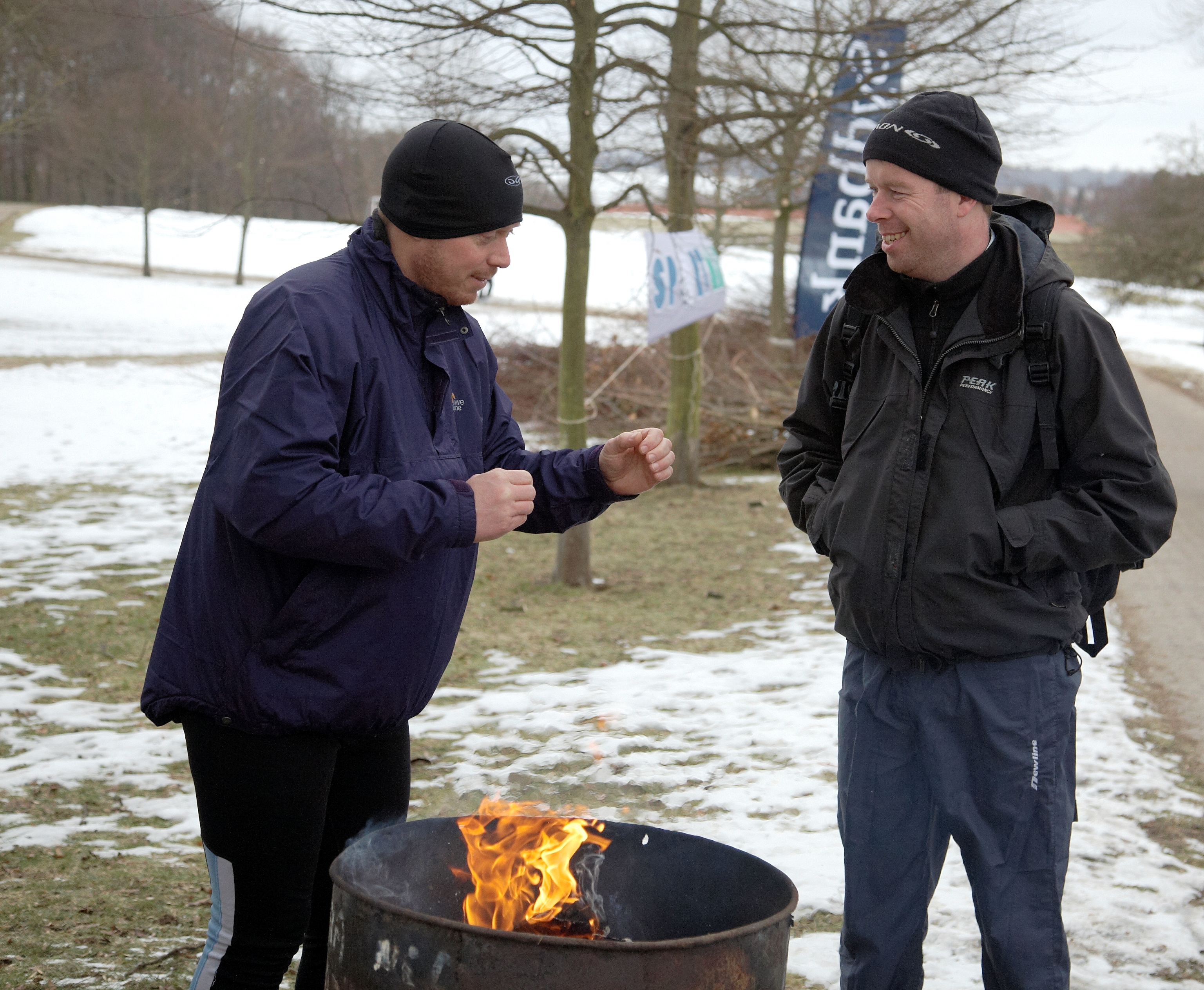
The course went through Folkeparken, out onto Kong Valdemarsvej, up Frederiksborgvej and along Dronning Margrethes Vej, taking us back to Louisevej. This course was to be run ten times. On the day, there was quite a lot of snow and frost, and running through Folkeparken was thus considered dangerous. Since they didn’t want this festive occasion to result in injury, the course was re-routed at the last moment. The part which went through Folkeparken was shortened, and we had to run 13 laps instead of ten.


Folkeparken´s motionsløb Juli 09. 111


Frederiksborgvej hill


The run was a social marathon with speed groups with finishing times of 4:00, 4:30, and 5:00 and I decided to join the last group. Things went very well for me for a long time. Of course running down Kong Valdemarsvej was a piece of cake, but Frederiksborgvej demanded a bit of energy. The latter section went fine to begin with, but became more strenuous later on. Unfortunately, I had to walk up the hill on the last couple of laps. The group split up a bit in the end, and my own official time was five hours, although I think it took me a bit longer than that.


Folkeparken´s motionsløb Juli 09. 014


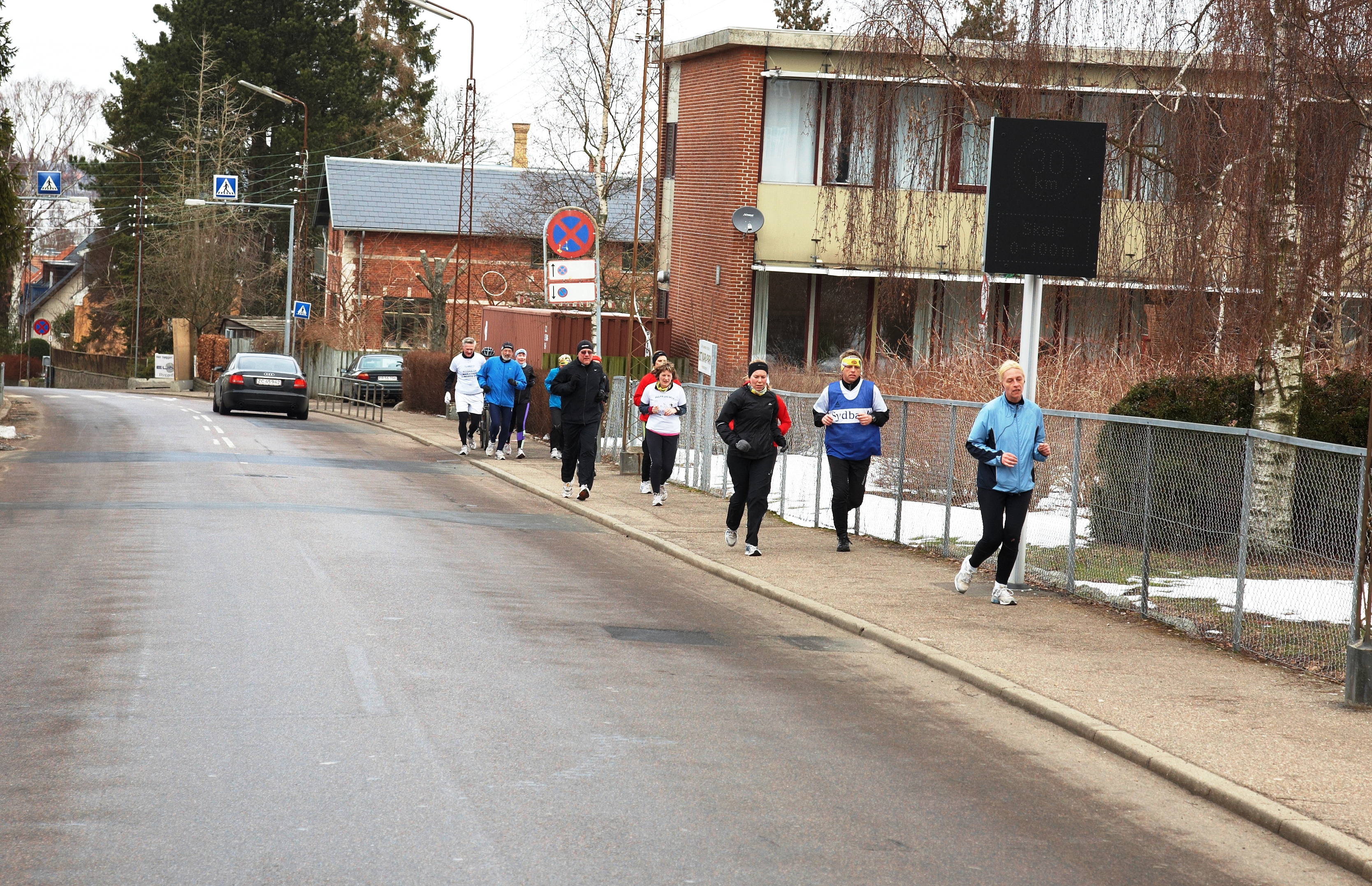
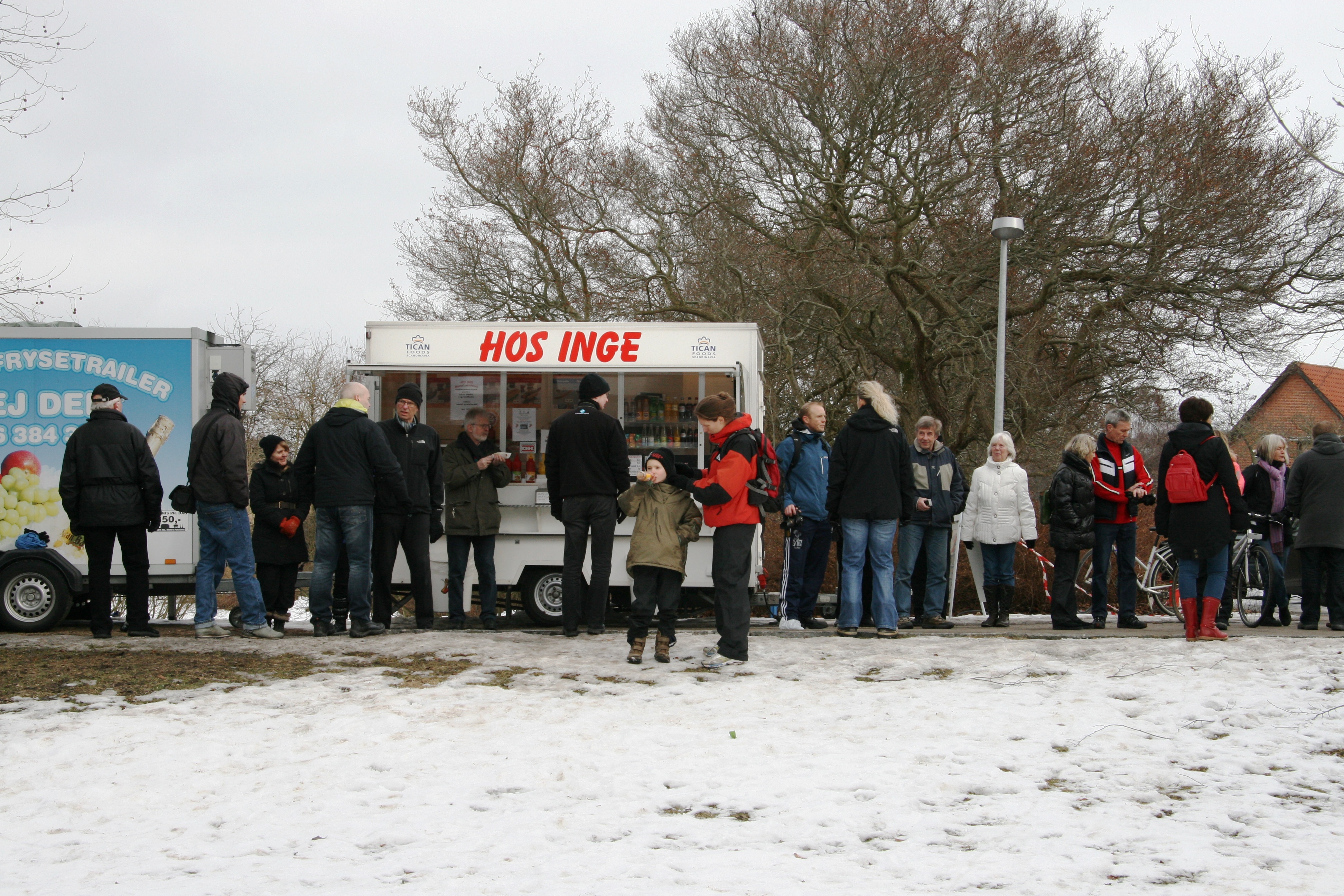
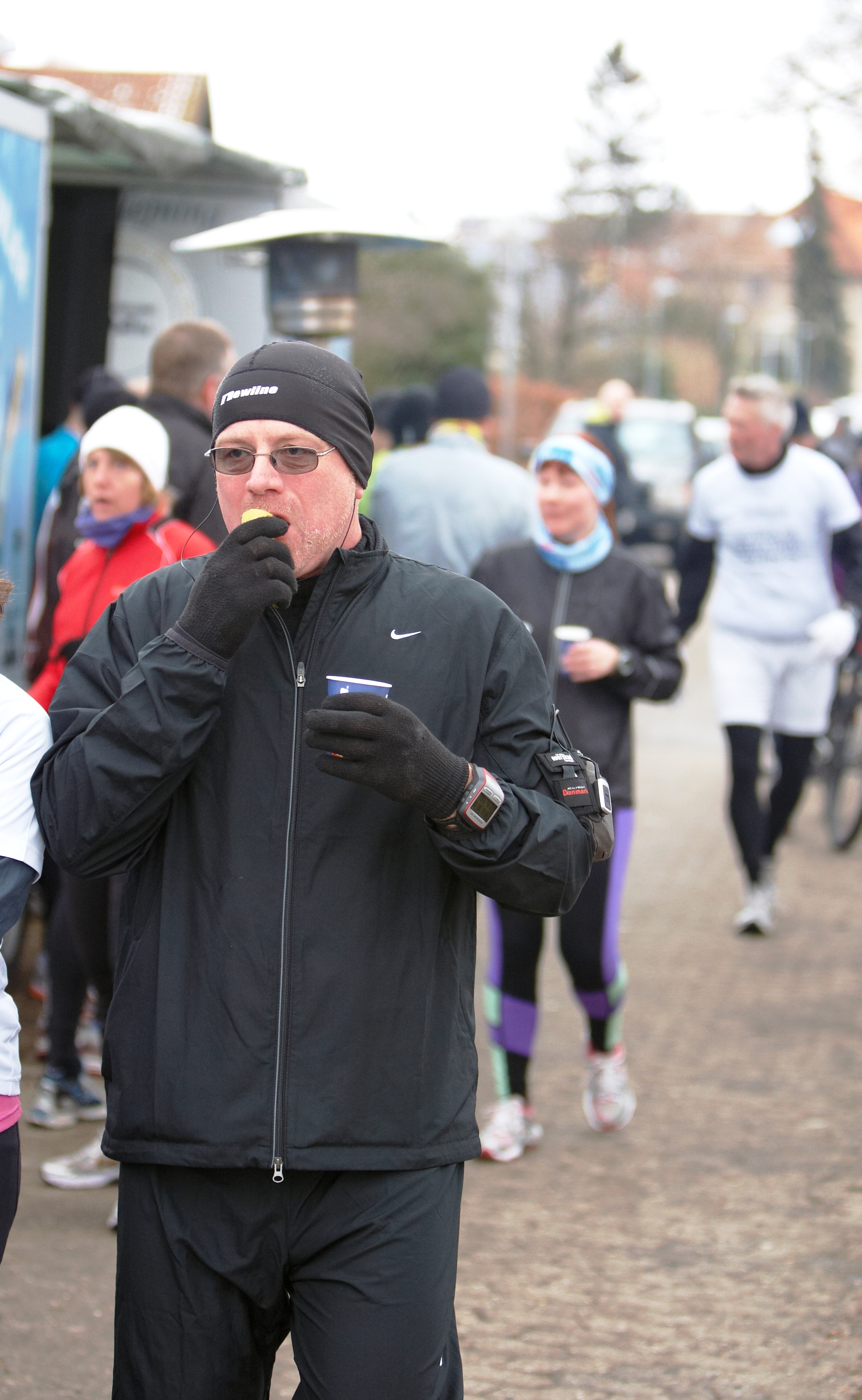
Not all the 100 people who had signed up turned out. About 70 people completed the run, while eight dropped out. The run was well executed, as was always the case when Jan Marott Behrens organised anything. Jan ran one of his 12 marathons at this event, so for once he was not the one standing there at the Folkeparken finishing line. Others were there to make sure that the runners got plenty to eat and drink during the run, including water, cordials and chocolate cake. Inge’s hot dog stand was in the finishing area throughout the day, so that spectators and runners crossing the line could get something to eat.


Folkeparken´s motionsløb Juli 09. 085


Buy the book here.


Engelsk forside

Folkeparken´s motionsløb Juli 09. 023

What a heart rate monitor can do for you

January 20 2016

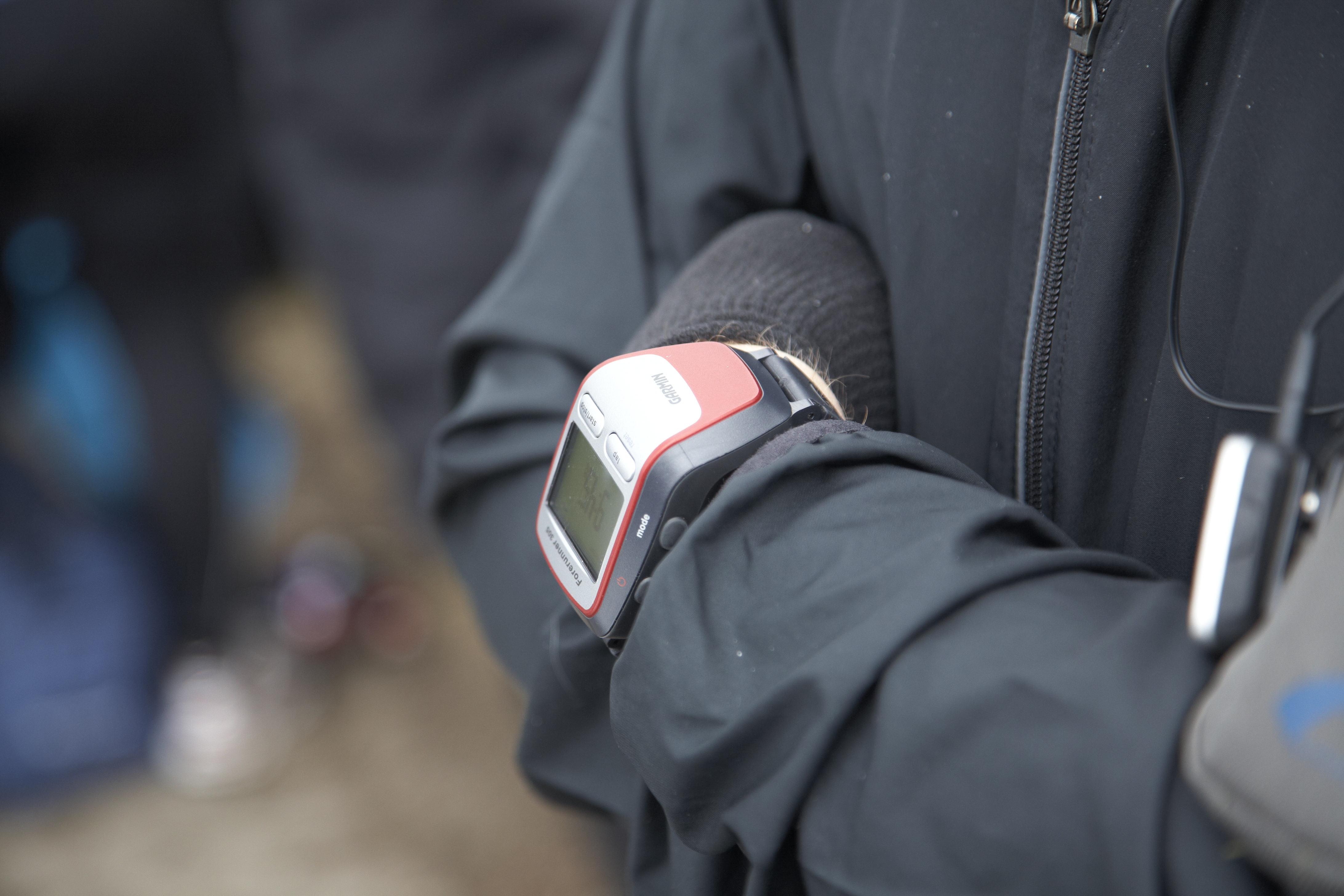
In 2009, Karin gave me a Christmas present I hadn’t expected. It was a Garmin Forerunner 305 heart rate monitor with GPS. I had heard runners equipped with something that beat constantly and found it rather annoying. Now I was standing there with one myself thinking: “What am I going to use this for?” But I had to try it out, and it turned out to be a fantastic invention.

It turned out that I could simply switch off the beeping noises, and my new monitor could be set up to display masses of data. Of course, I selected those that worked best for me. They were the distance covered, time since start, the current pace, average pace, the current pulse, calories burned and current time.


The heartbeat monitor could also be adjusted to running, cycling and other sports. Different rates relevant to each sport could be set according to requirements and wishes. The monitor can probably do a lot more than I have discovered, but since I started using it I have greatly benefited from the functions I use.


For ten years, I had been running alone and generally been satisfied with my performances, however, good or bad they were. It was not unusual for me to run for a while and then “spoil” myself by walking until I felt ready to run again. On a 10-kilometre run, it was not unusual for me to walk two times. But the Garmin didn’t allow that. I now came to compete with my own previous results, and it became a sport to do better than the last time. I completely stopped walking; at least I walked much less. I began to regard myself as rather a weakling and a bit of a sissy if I already started walking after just a few kilometres, and as it turned out, it actually wasn’t more difficult to run all the time than to keep taking walking breaks. This is not a truth that applies in every single situation or on long distances, but on my ordinary training runs, it turned out to be the case. It didn’t take long before I saw considerable improvements in my performances.


Folkeparken´s motionsløb Juli 09. 023


I created a profile on the Garmin website and since then I have uploaded all my training sessions and my runs. It gives me a lot of possibilities. Among other things, I can see details about the race and the route that I have run.


The only negative thing about the monitor was that the battery turned out to be rather poor. After 18 months, it was only able to provide enough power for six hours, which was not satisfactory. But I had the monitor replaced under the guarantee. When the same thing happened after a year or so, I had it exchanged again, and the latest battery still seems to be working properly.


Buy the book here.


Engelsk forside

???????????????????????????????

Rudersdal Marathon 2009

January 13 2016

Denmark again


For the first time in 3 1/2 years, I was again to run a marathon in Denmark. It was also more than three years ago that I had last run the distance in Europe. On Saturday 14th November 2009, I took part in Rudersdal Marathon.


???????????????????????????????


Permanent course


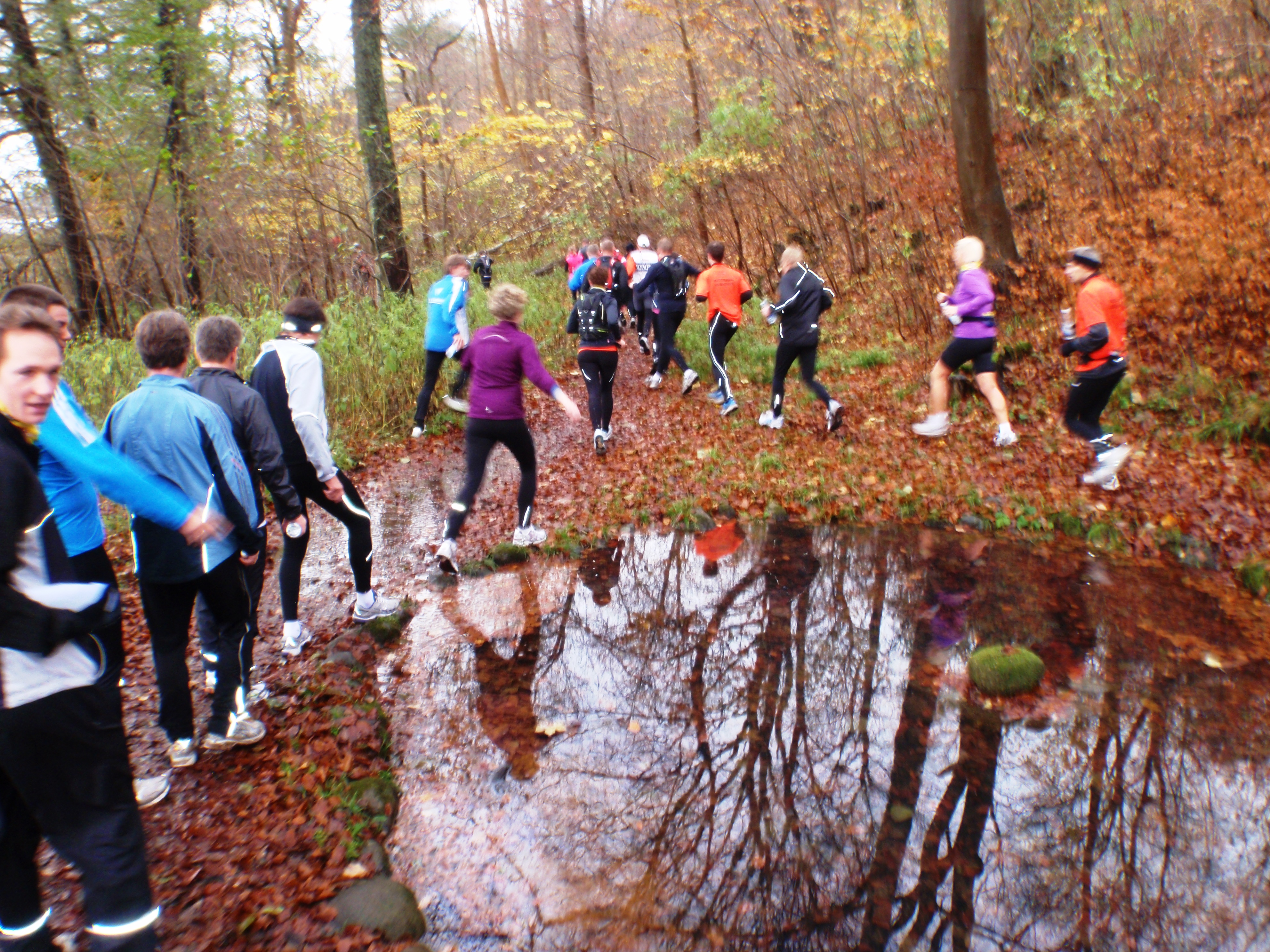
Rudersdal Marathon is a beautiful run held once or twice a year from Birkerød Sports Centre. It is run along the Rudersdal Route, which is something as unique as a permanent marathon course, 42.195 kilometres long, and certified by the Danish Athletics Association. The marathon signs were erected by the Danish Nature Agency. The course is not cordoned off, and there are no helpers to show you the way. You follow the signs and your group and, of course, obey the Highway Code.


???????????????????????????????


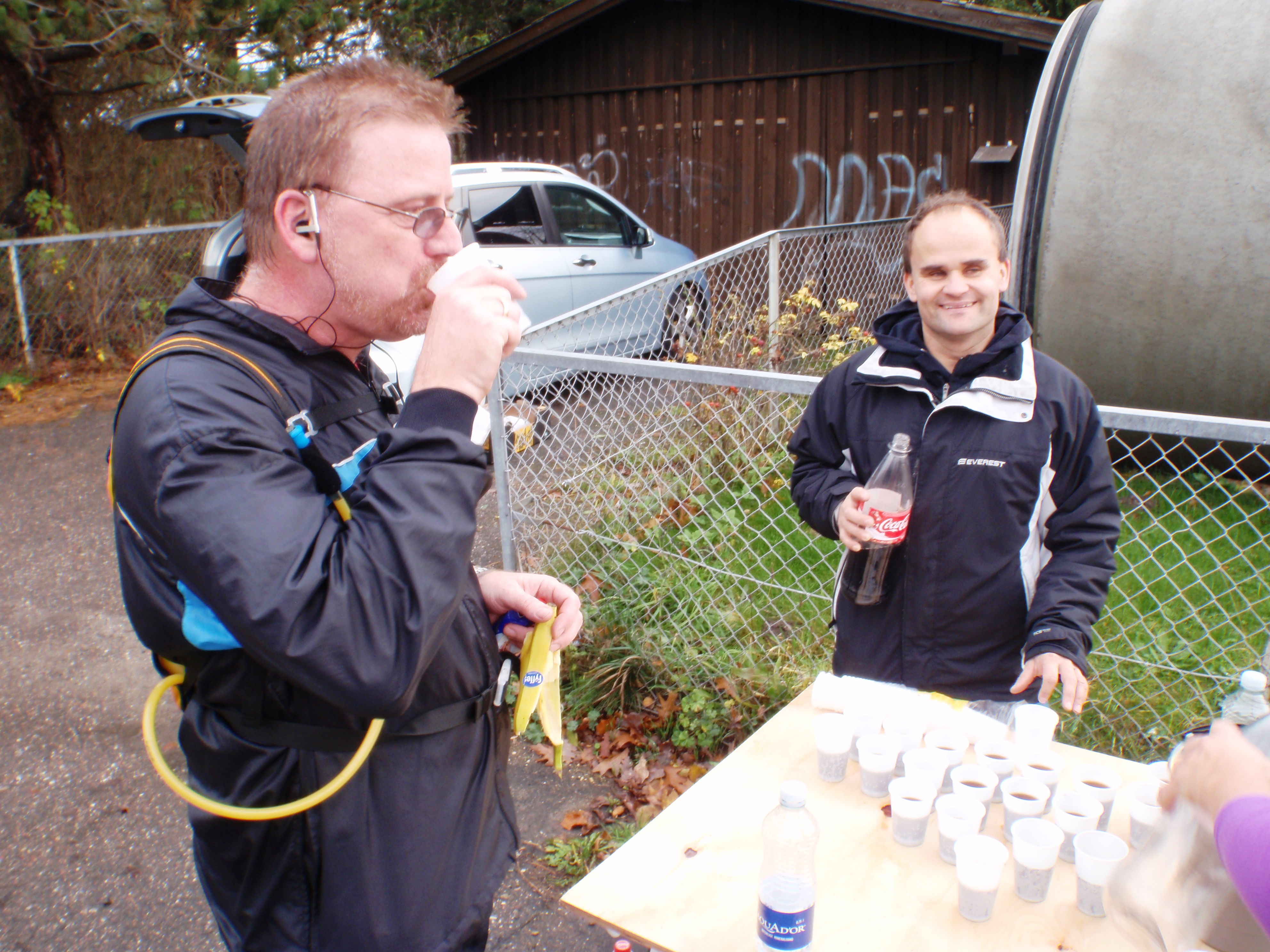
You have to take your own water with you, and it is only possible to fill your bottle at the start and at two points along the route.


Social Marathon


Rudersdal Marathon is a social marathon. The marathon is run in groups and everyone in the group is logged at the same time. There are groups with expected finishing times of 4:00, 4:30 and 5:00. I had signed up with the slowest group.


Forgotten information


I took part one beautiful autumn day in these beautiful surroundings and varied countryside. Despite the fact that this was as social marathon, the group started to break up after a while. At the introductory briefing, they had forgotten to present the pace-keepers, so it was difficult to see whom you were to follow. They had also forgotten to tell us about the route markings, which ended up giving me problems.


???????????????????????????????


12 marathons in 12 months


At one stage, I was running with some people from my hometown, whom I had recognised. They ran with a club, the name of which translates as Run for Your Life. The club’s chairman, Jan, was also running, and we had a good chat. Jan told me that several of them had set themselves the goal of running 12 marathons in 12 months and that this was the first of the series. After a while, we separated.


OLYMPUS DIGITAL CAMERA


Got lost


At one stage, I found myself running alone, because somehow or other I got lost. Now I could no longer see signposts for the Rudersdal Route, but for the Heart Path instead. So I was in a bit of a tight spot. I tried to ask the way, but to no avail. Fortunately, I remembered that the start/finish was on Bistrupvej. I asked the way there and ended up running along a main road. I was not the only one, who had got lost, and I met another just as confused runner. We ran together up Birkerød King’s Road. It wasn’t as idyllic as what we were missing out on, but we had no choice. My running mate was wearing a GPS watch and was able to tell me that we had run 44.9 kilometres. We hadn’t followed the proper route all the way but had no problem accepting our medals.


???????????????????????????????


Buy the book here.


Engelsk forside

Petra 09.09 047

Petra Marathon 2009

January 6 2016

A new marathon at long last


Having presented new, very special runs like beads on a string in the years 1999 to 2005, four years went by before Adventure Marathon “gave birth” to something new: Petra Marathon in Jordan.


Ancient city


Petra was the capital of the Nabataeans from the fourth century BCE and 500 years on. After a short period of Roman rule, the city lay forgotten in the Jordan Desert for more than 100 years. Petra has been on the UNESCO World Heritage List for many years, and in 2008, it was proclaimed one of the seven new wonders of the world. The new Marathon was to be run between the ancient temples and tombs hewn into Jordan’s reddish-pink sandstone rocks.


OLYMPUS DIGITAL CAMERA


Honeymoon without my bride


I had already signed up for this run in February, although, at that time, I didn’t know that it would be a honeymoon without my bride. On the other hand, I had two other women with me: Elisabeth and her friend Dorthe. It was Dorthe, who had put Elisabeth on the plane from Læsø on that August day in 2009. Emil also came along on the trip, for the first time without his brother. Steffen had used up his travel quota for the time being, having studied in Miami in the US and Perth, Australia. Now he was back in Denmark doing his national service with the Emergency Management Agency.


Ancient map in mosaic


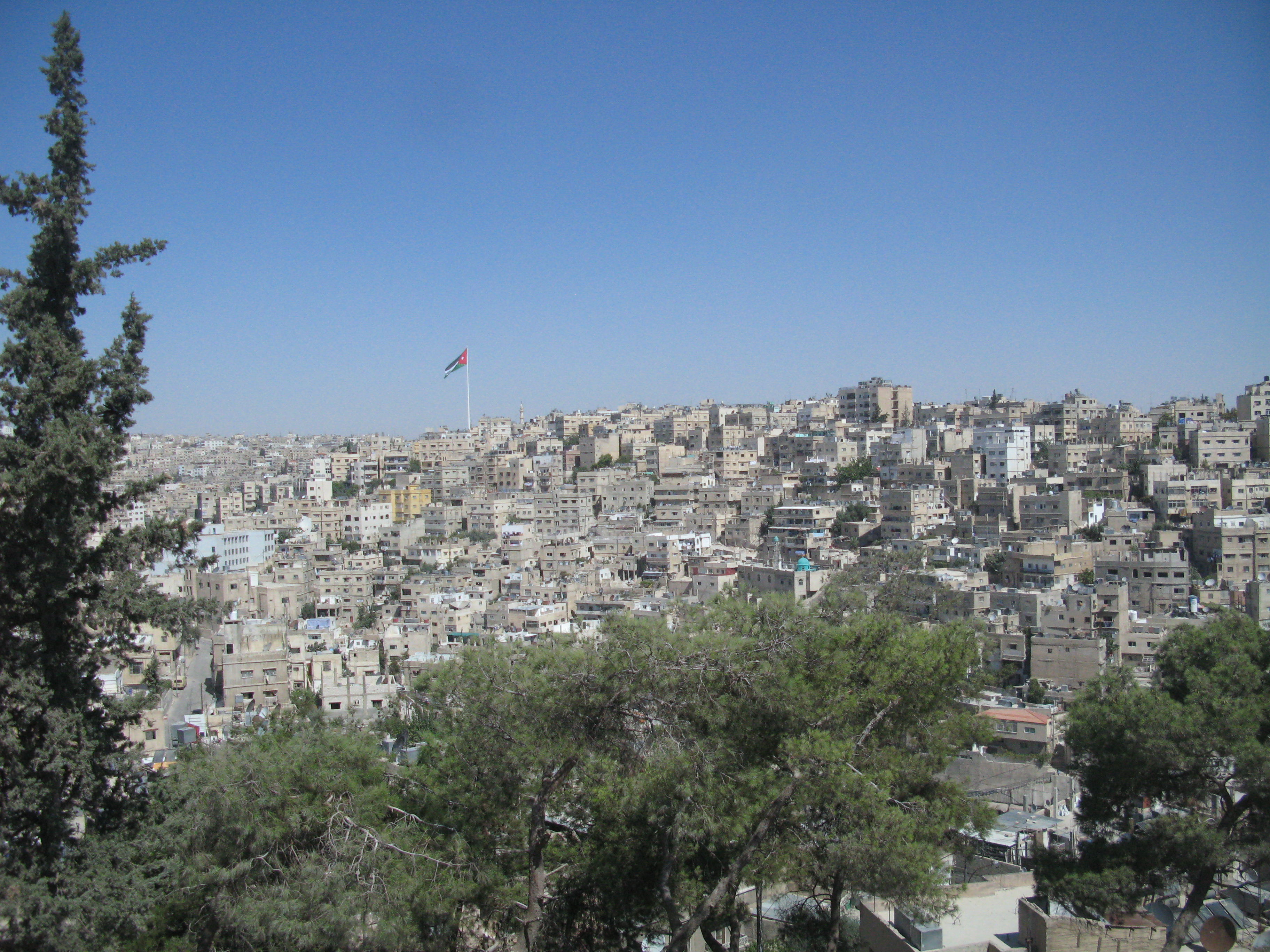
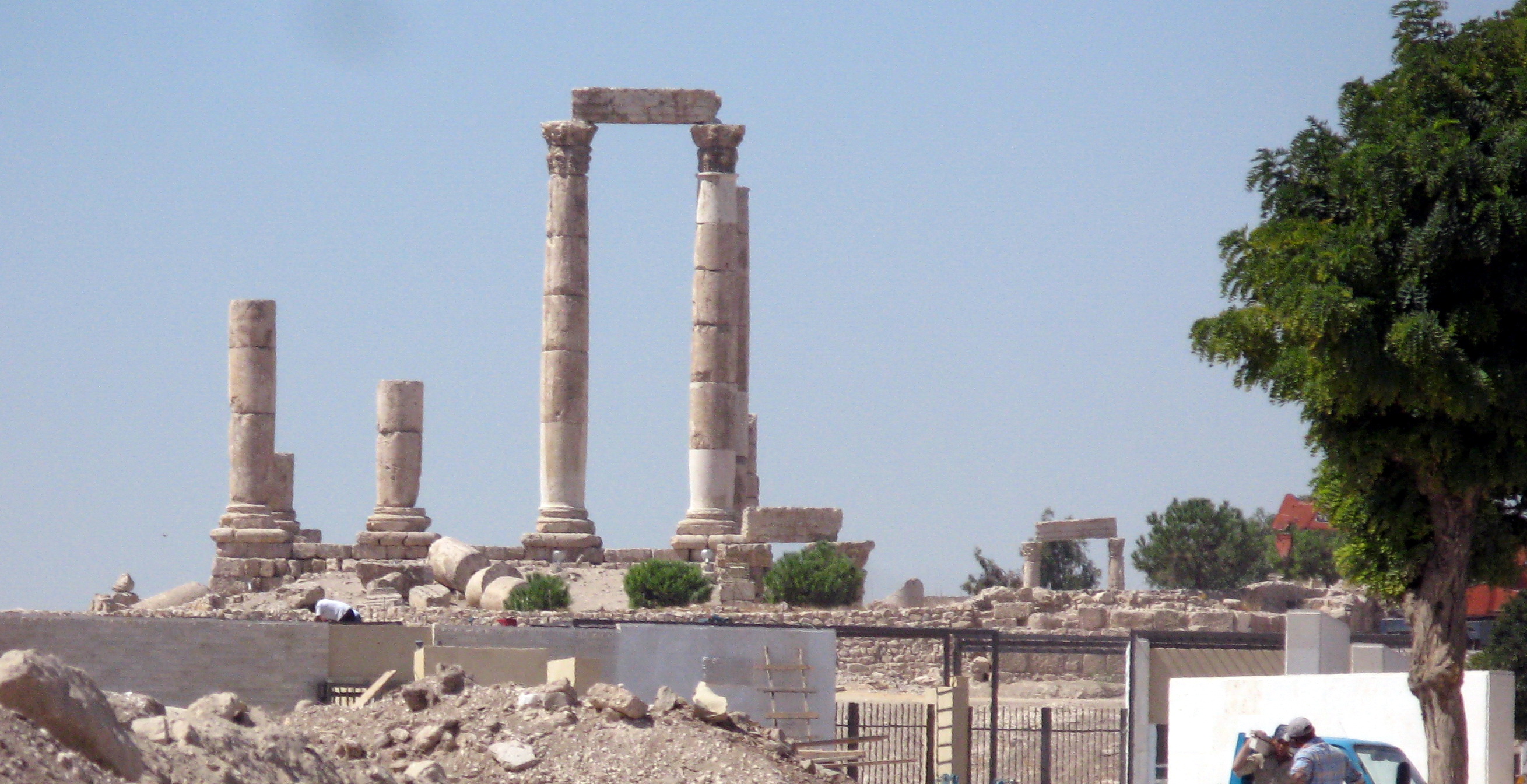
Our day of departure from Copenhagen was Wednesday 23rd September, and after transit stopover in Istanbul in Turkey, we arrived at the Regency Palace Hotel in Amman at three in the morning local time.


Petra 09.09 004


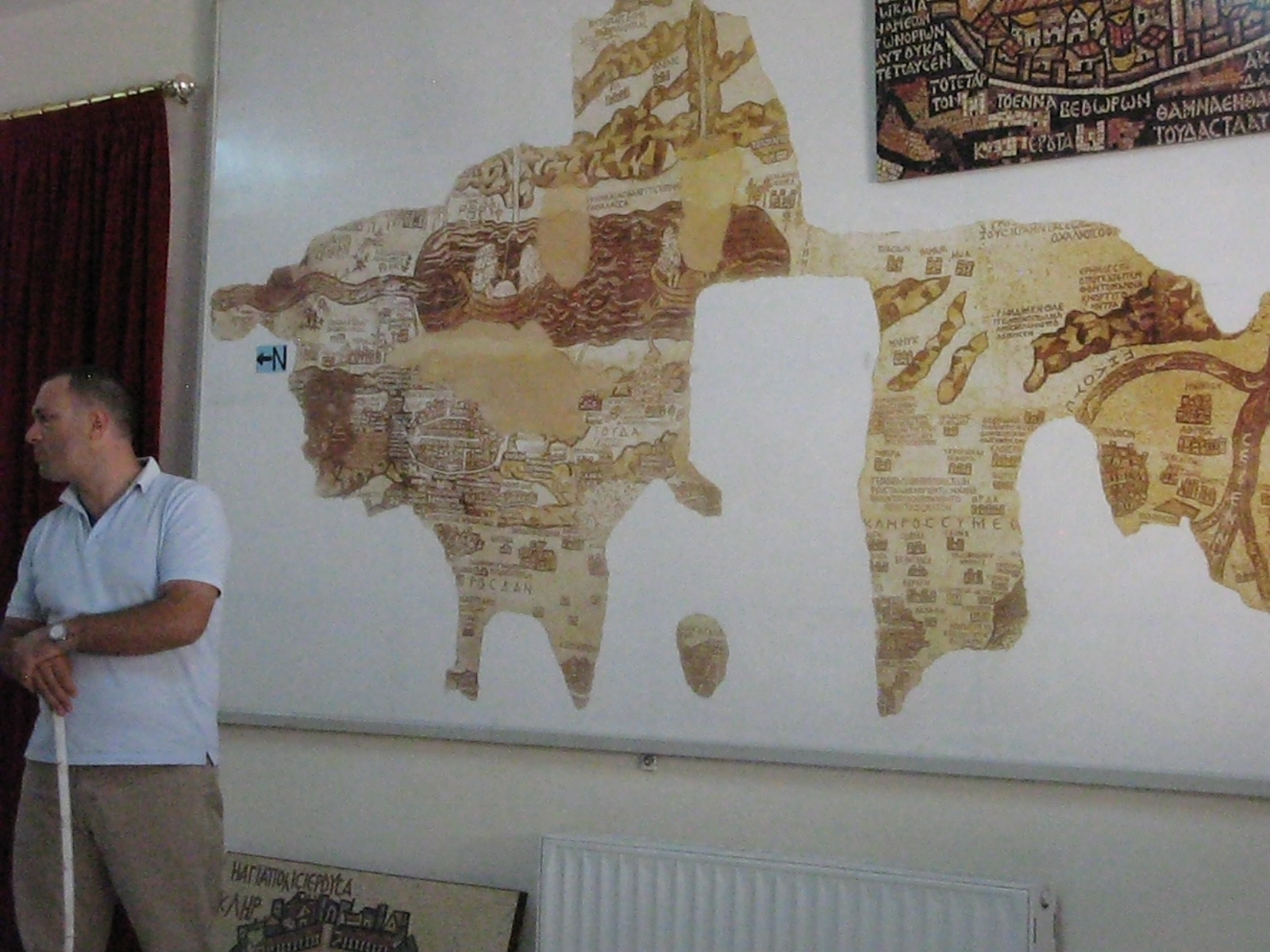
On the Thursday, we went on a short tour of the capital before moving on to the next stop along the way, the Christian city of Madaba, famous for its sixth century mosaic, a detailed ancient map of the entire Holy Land. The map once measured 5 times 25 metres. On what is left, one can see Jerusalem with the Church of the Holy Sepulchre; and above it, near the edge of the mosaic, the River Jordan and the Dead Sea.


Petra 09.09 024


After another three hours’ drive along the magnificent historic King’s Road, we arrived at Wadi Mousa early in the evening. Wadi Mousa is the closest town to the ancient city, where the run was to start from. Here we were booked into the excellent Petra Marriot Hotel.


Petra 09.09 009


Inspection tour in Petra


On the Friday morning, all the runners met at the Hotel Mövenpick, where there was a briefing and subsequent inspection tour in Petra. Here, Thomas said he was a bit worried about me. He told me that the route was extremely tough and that we would have to cover it within seven hours and reach the 30-kilometre mark within five hours. His appeal was based on my running in South Africa, where I had had to drop out. I assure Thomas that this time I was mentally prepared and that I in no way anticipated a repeat of 2005.


Petra 09.09 047


Respect for one of the wonders of the world


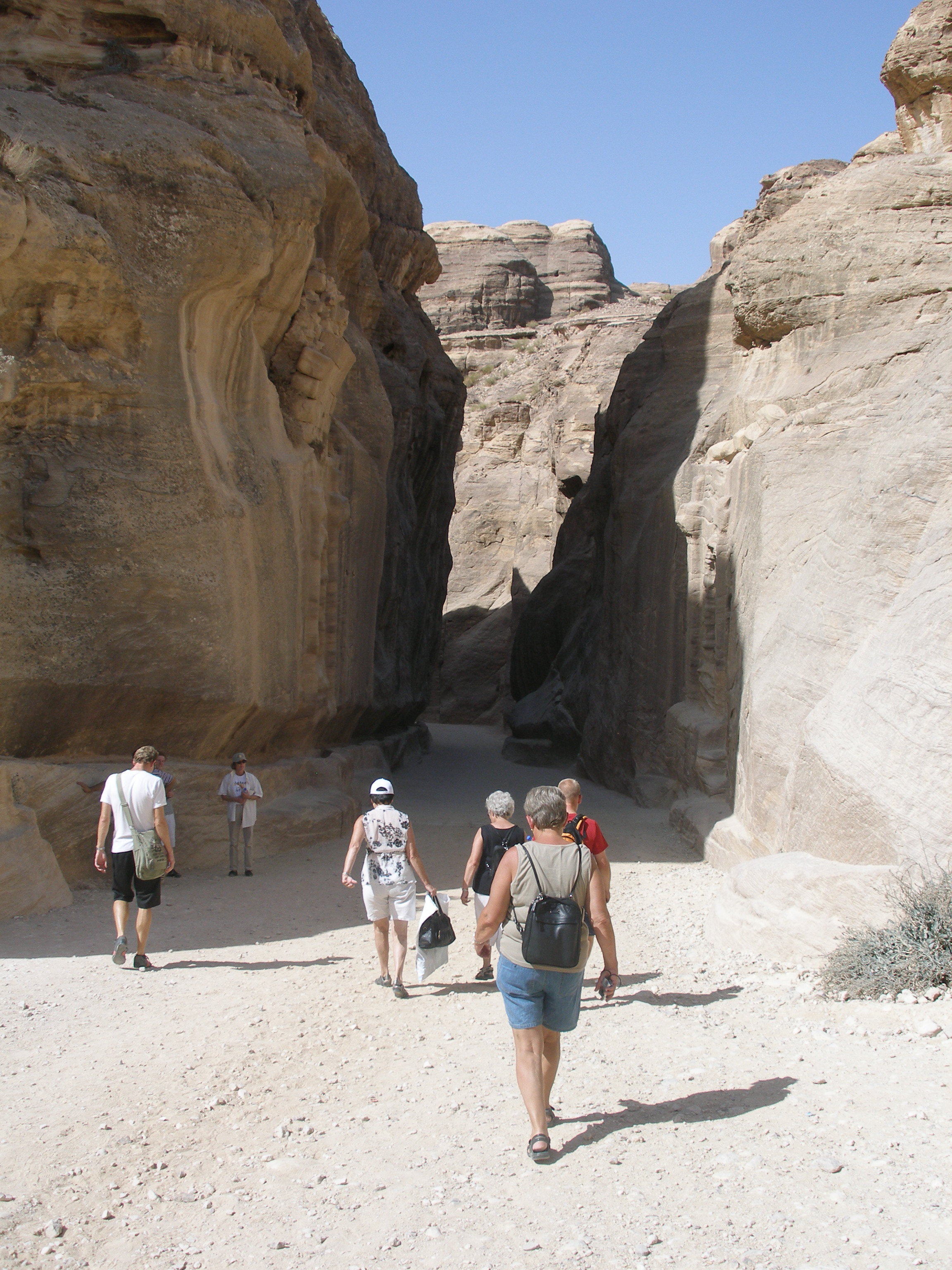
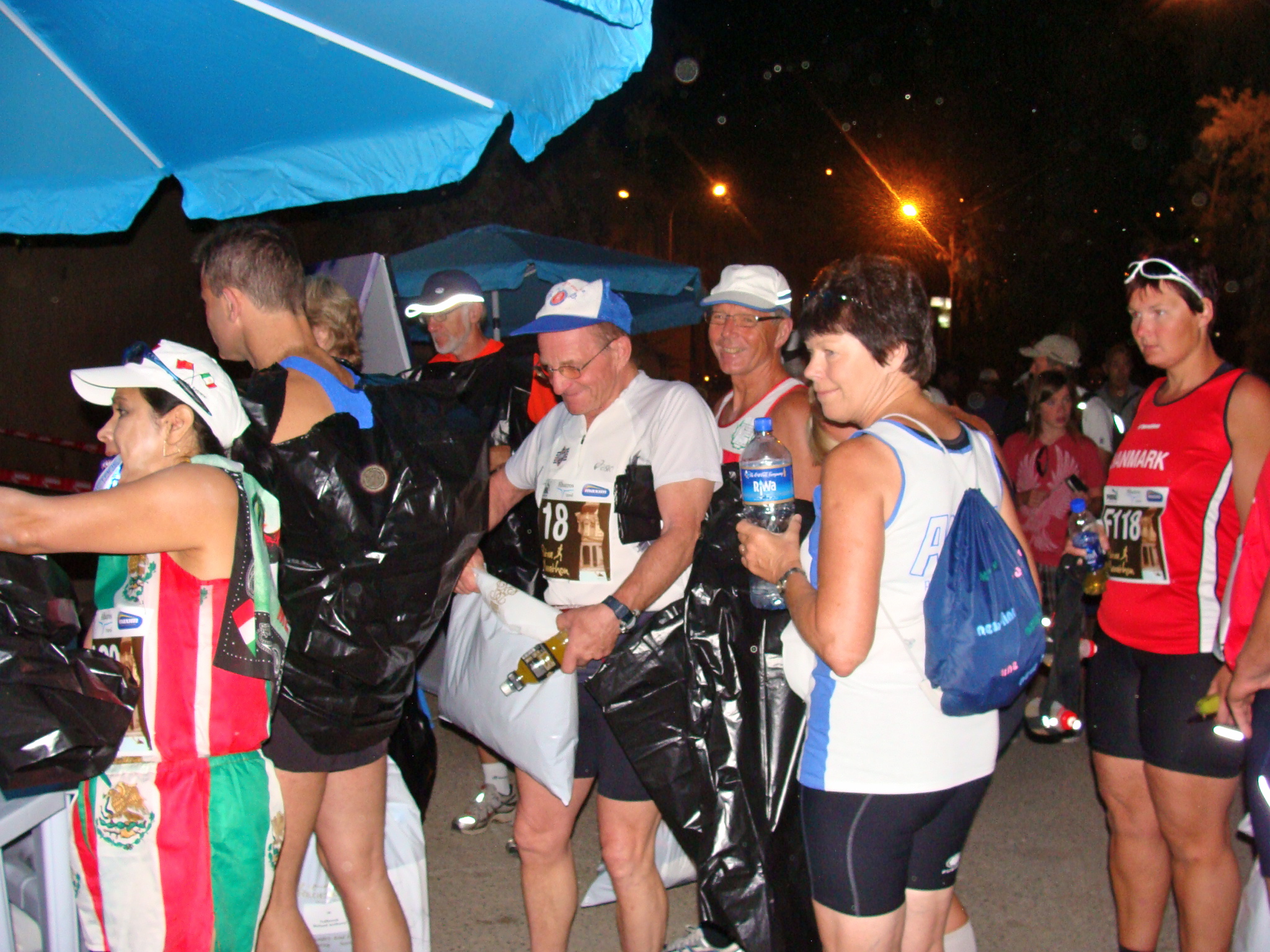
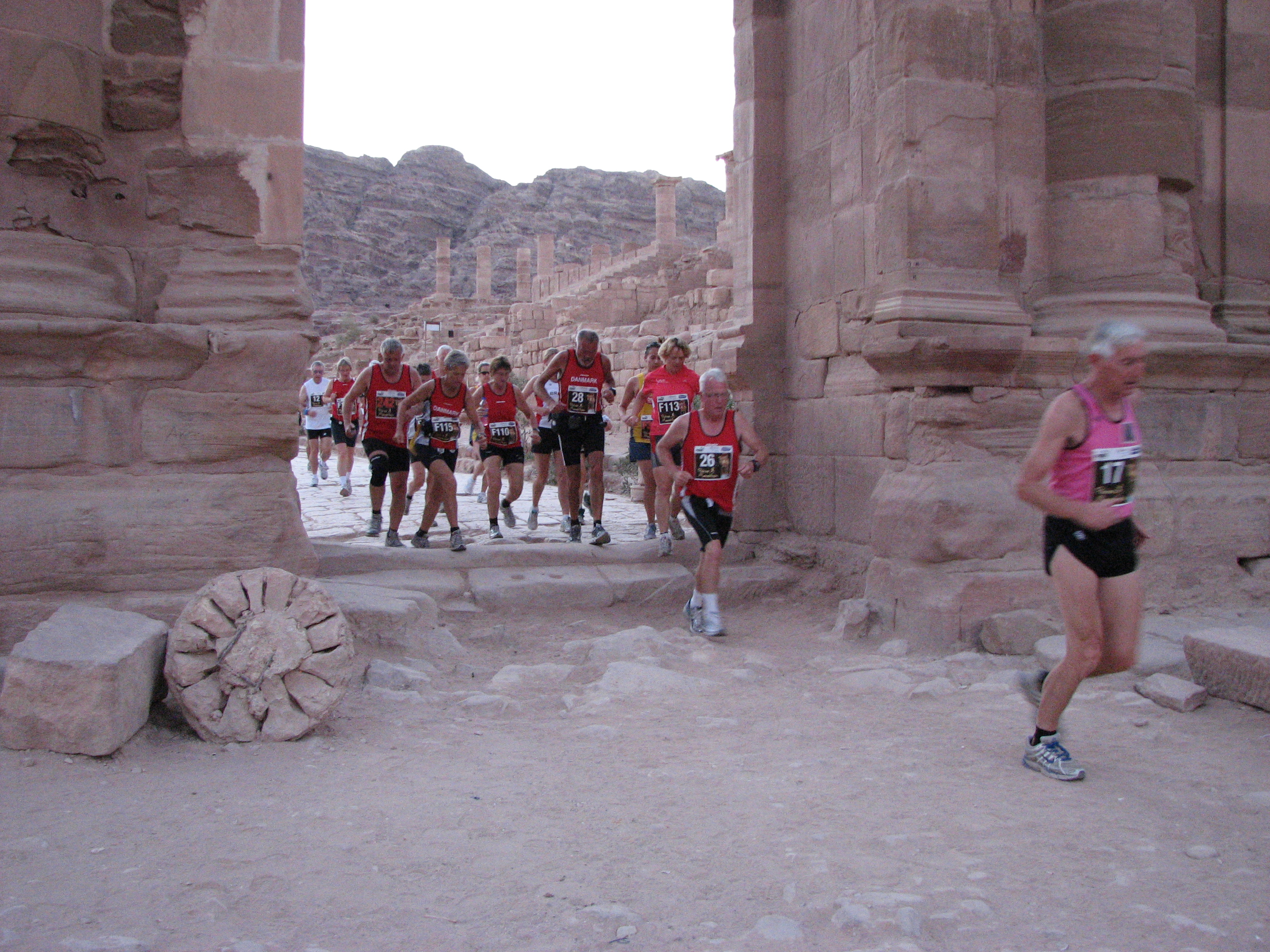
On the day of the marathon, Saturday 26th September, we were already up by 3.30 a.m. Initially, we were all supposed to meet up at the start, but because of a crack in the rock face inside the Siq, the gorge into Petra; and due to a general concern for the preservation and protection of this archaeologically important area, the Petra National Trust, UNESCO and the Jordan Ministry of Tourism had pleaded with the organisers not to run through the Siq, but move the start into Petra itself. When all had turned out and handed in their baggage, we walked together through the Siq to the new start. The change naturally meant that the Marathon would be extended by 1200 metre somewhere else along the route. We were to have started at six, but because it was still dark we did not get off until 17 minutes later.


OLYMPUS DIGITAL CAMERA


Spectacular surroundings


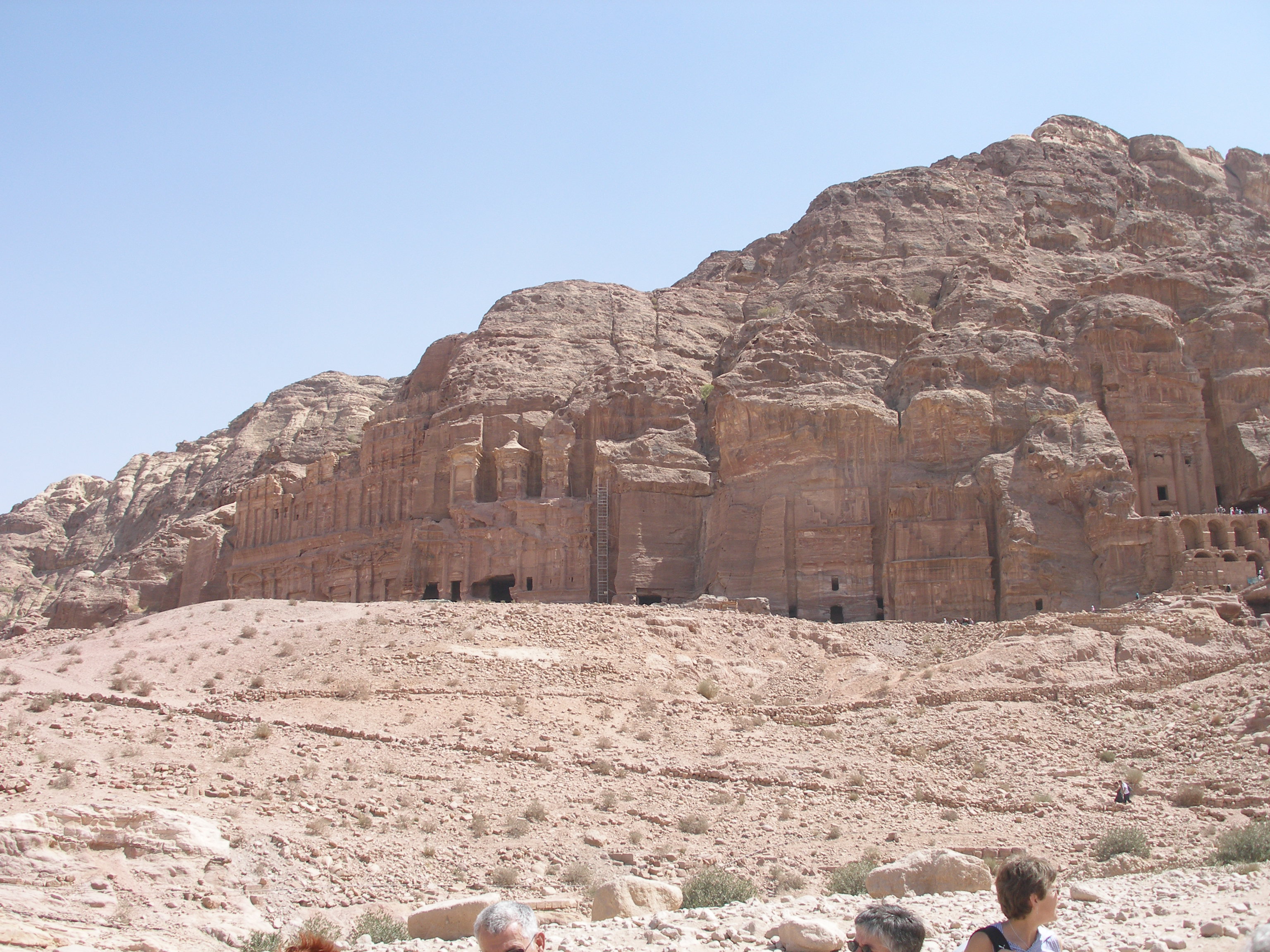
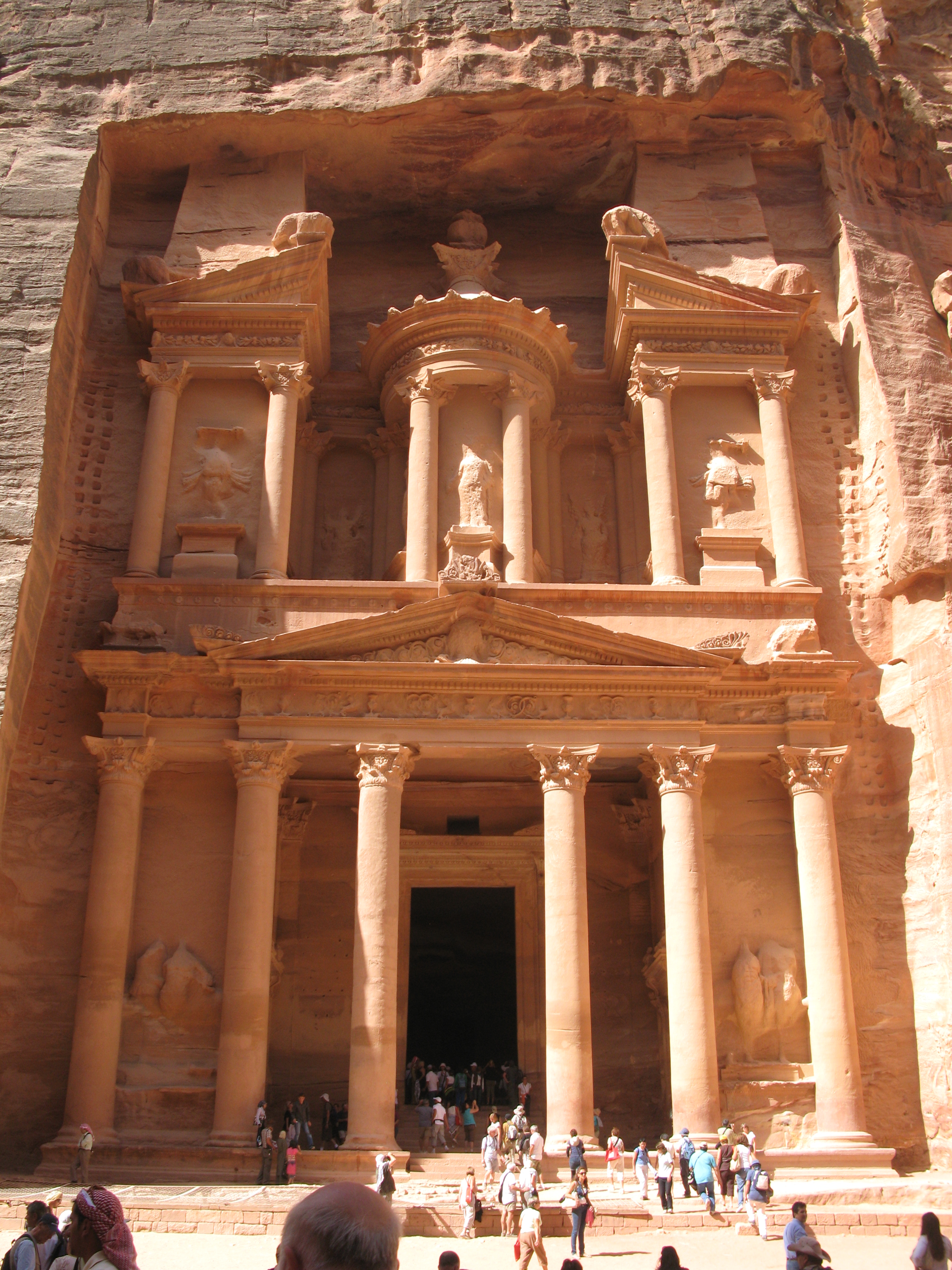
Shortly after the start, we arrived at one of Petra’s most famous buildings, Al-Kazhneh, the Treasury. It was a very impressive place with a highly detailed 40 metre high facade. It is known from the film “Indiana Jones and the Last Crusade”. After this, we reached a whole town of chamber tombs and caves hewn out of the reddish pink sandstone rock.


Petra 09.09 073


After running down the entire Roman market street with its row of circular columns, the route turned out of Petra and up the road behind the ruins. Running in these historical surroundings was a very special experience.


DSC00405


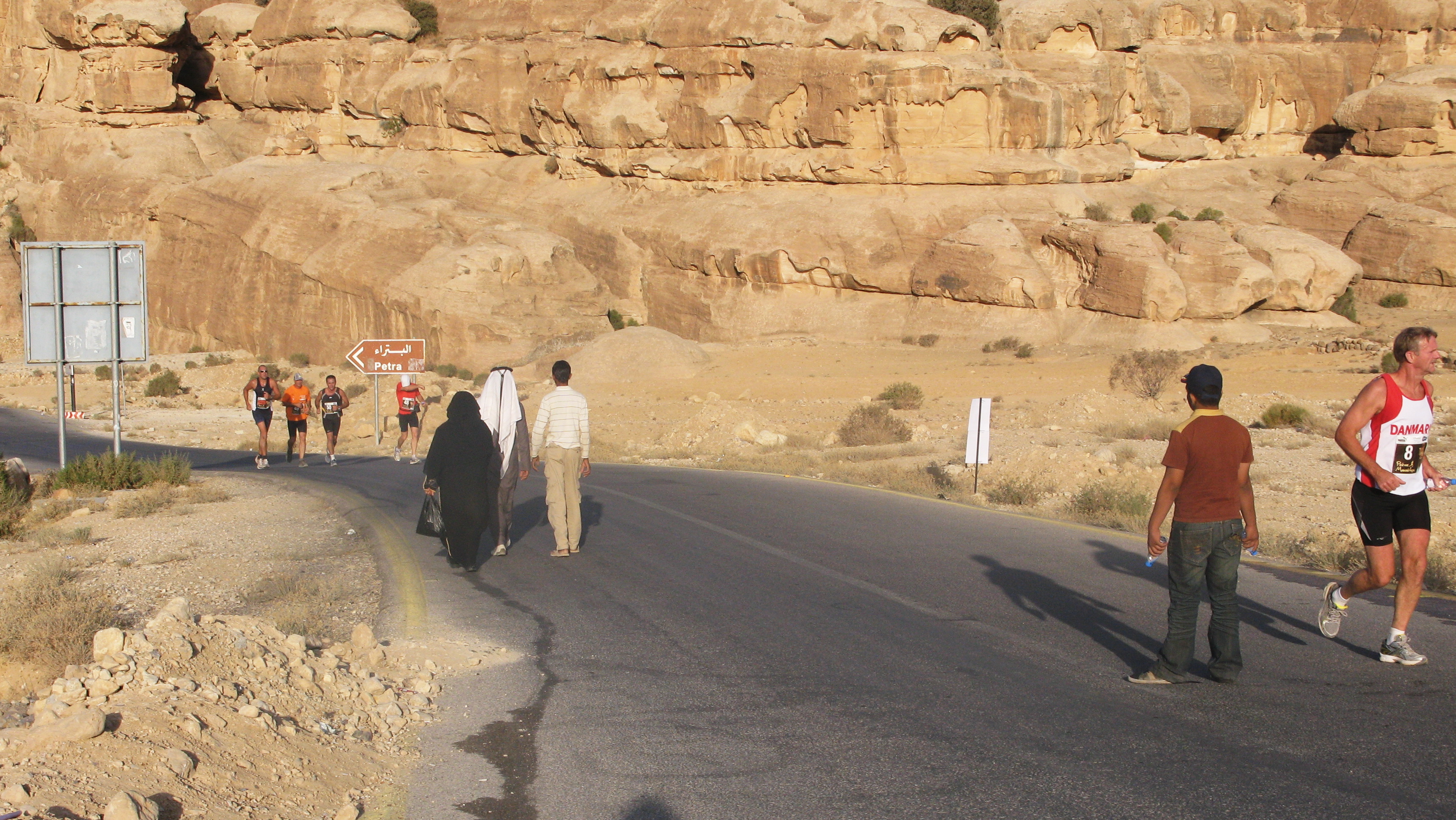
On the main road, we ran between rocks of all different nuances of red and yellow with the most incredible shapes. Part of the route took us along parched riverbeds in uneven terrain.


IMG_2954


It was very sandy underfoot to begin, with, but this was no longer a problem. I kept up a good average of eight kilometres an hour all the way to 28 kilometres.


Steady run


After around 12 kilometres, we came to flat asphalt, along which there were patches of shade between the rocks. I actually ran quite fast along this stretch, overtaking a few people along the way. After that, we ran up and down hill for some time. I came across some of the people, who were in front of me because there was a turning point, and they were on their way back.


After 22 kilometres, I also arrived at the turning point and was given a rubber band around my wrist to prove that I had been there. Now I was also on my way back and had to run uphill for quite some time. I was forced to walk some of the way at this point, although I did maintain a reasonably constant pace for a while. However, when I reached the end of the flat asphalt road, I had no energy left to run fast. Now I alternated between jogging and walking. I reached the 30-kilometre point after just four hours, which meant I was making good time.


Petra 09.09 086


The big challenge


After 31 kilometres came the big challenge. We now had to run uphill for the next three kilometres, and things got very difficult at one stage, although I was not in deep crisis. I got up the worst part, but the route continued uphill along gravel roads.


Safety first


After 37 kilometres, I finally reached the top and now the route went downhill. But it took us down uneven, stony paths, and I didn’t dare run for fear of injuring myself in my attempt to cross the line within six hours.


DSC00434


After 40 kilometres we were back on asphalt, but in many places the way down was very steep, so I wasn’t able to run here, either.


Petra 09.09 112


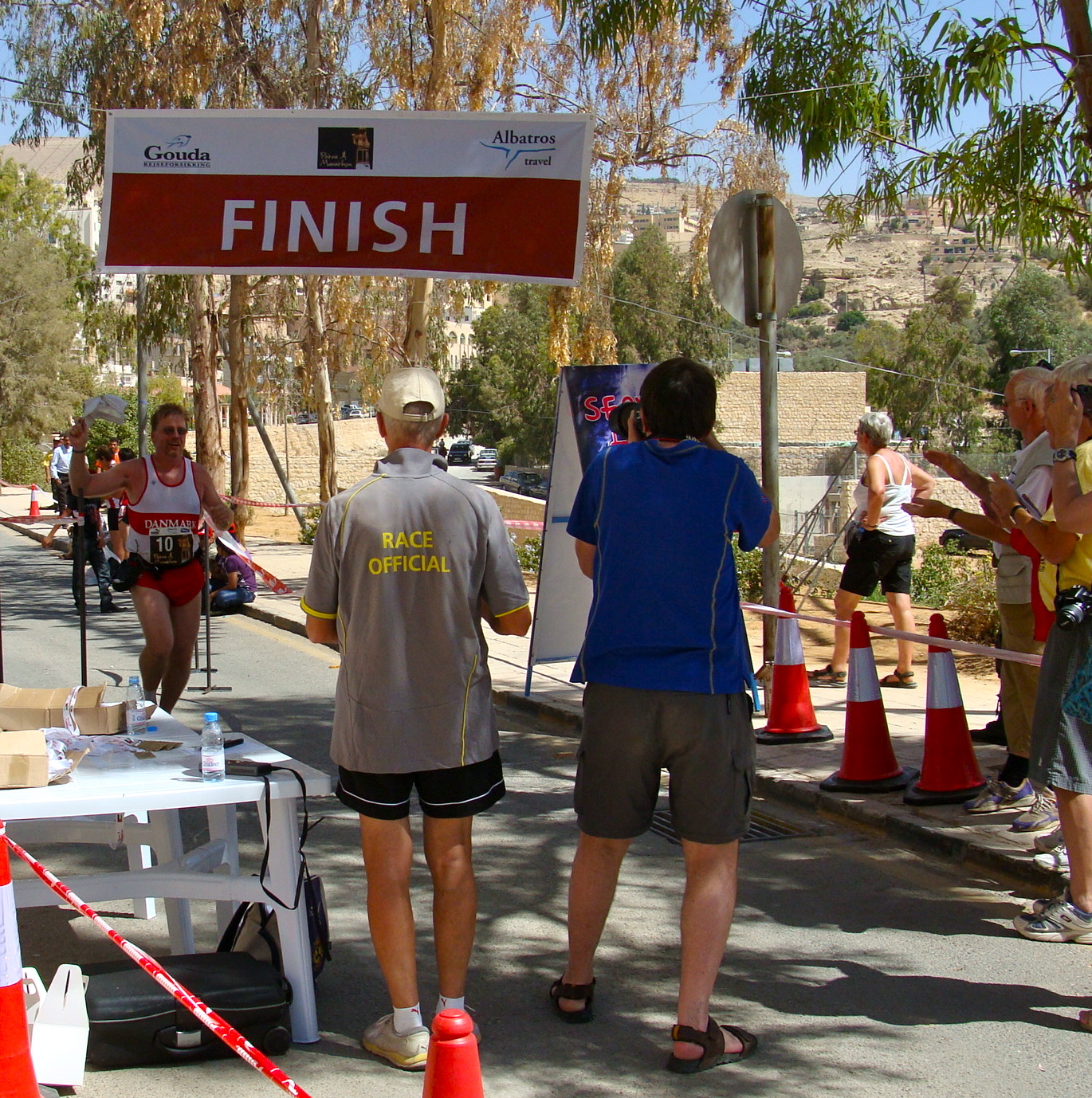
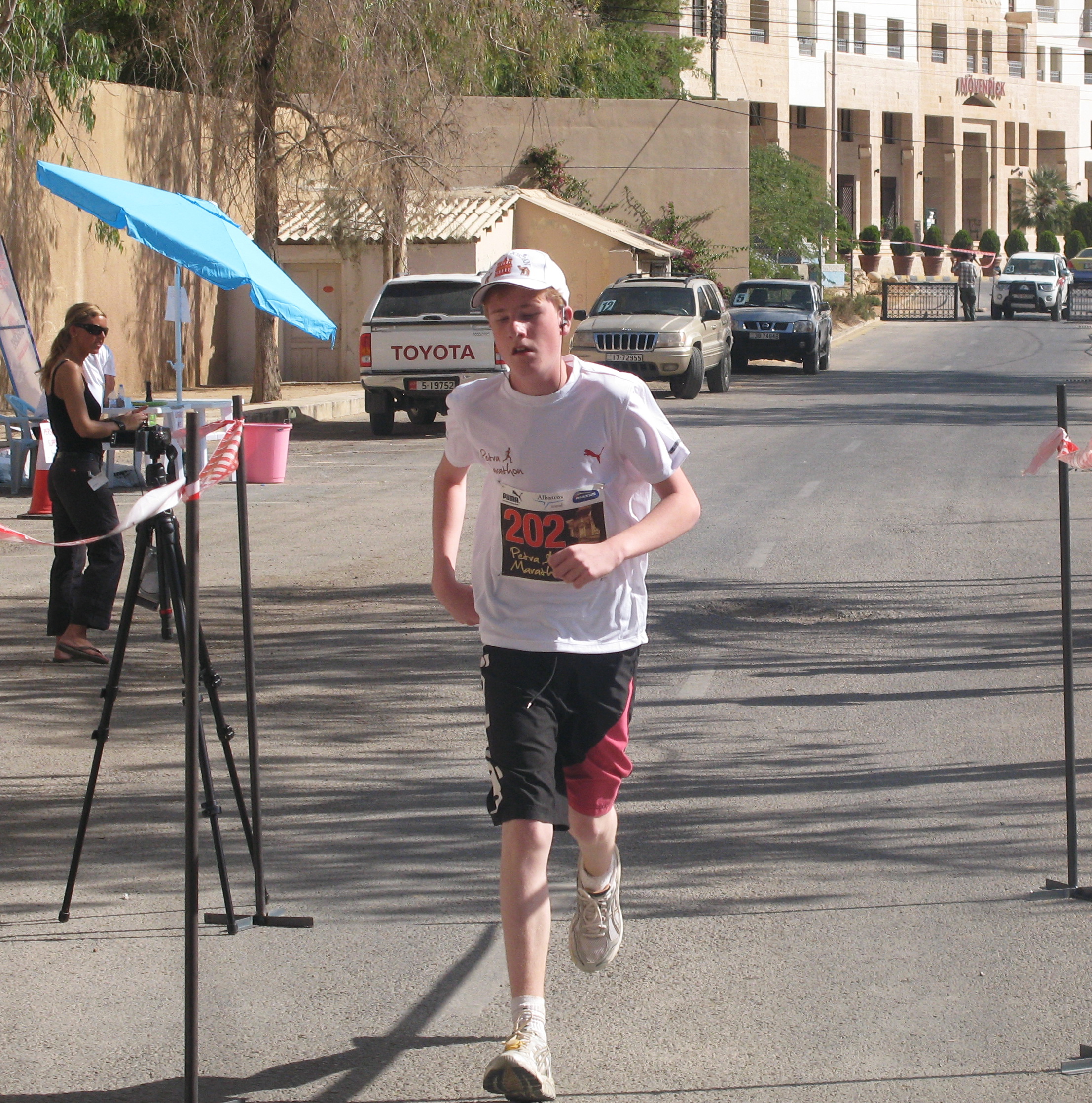
I ran across the finishing line with a time of 6:14:51, and Elisabeth was waiting there for me. Emil finished his 23-kilometre run with an excellent time of 3:21:26. He had gone back to the hotel with Dorthe.


A restless night


I had little appetite that evening. I couldn’t eat very much and went to bed early. It was a weird night. At one instant I was freezing cold, and the next I was sweating. I was pulling the duvet off and on all the time. I was delirious and woke with a start every time Emil moved or made the slightest noise. Emil found this quite funny. Although I was fully aware of what was happening, I couldn’t do anything about it.


Gala party in the open


We had Sunday to ourselves, so we took a taxi into town and browsed the bazaar for a couple of hours. We spent the afternoon at the hotel pool relaxing, bathing and enjoying the sun.


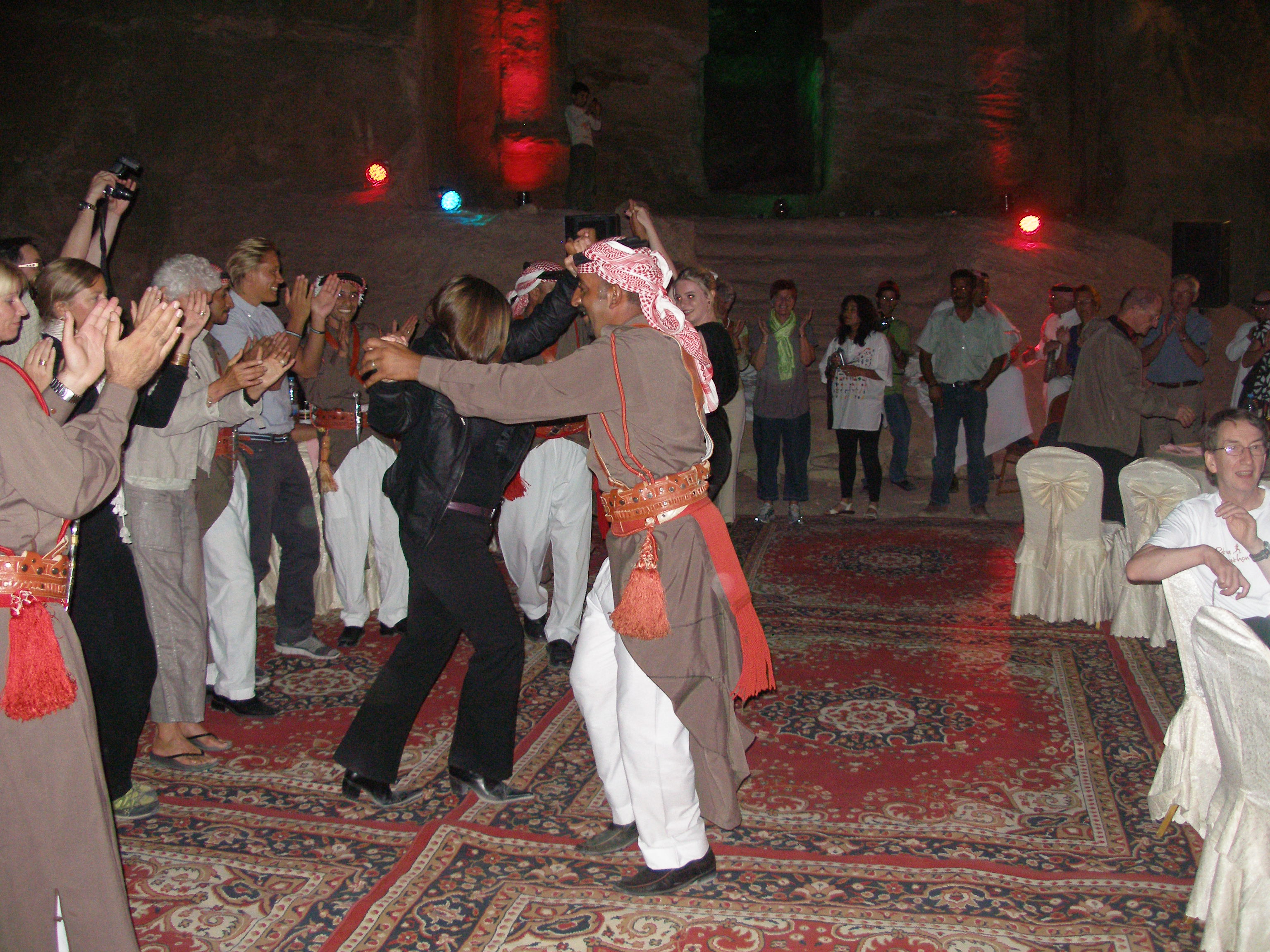
That evening, the gala party was held outdoors in Little Petra. To the sound of pompous music through the loudspeakers, we walked along the red carpet on the sand to an area with a burial chamber. There were torches along the edge of the red carpet to help us find the way, and it was a sight to behold. After a welcome drink, we sat down at roundtables. We were bid welcome, after which we went to the buffet. During the evening, we were entertained by a local male dance troupe and the marathon participants launched into a circular dance.


OLYMPUS DIGITAL CAMERA


Not tougher than the Wall


The winners were announced during the dinner. Several people had said that this run would be tougher than The Great Wall Marathon. I repudiate that. My time was an hour and a quarter shorter than in China. The winning time in Petra was 3:15:03, which was almost 26 minutes faster than on the Wall that same year.


The Dead Sea


Monday we went on a long bus trip. We left our hotel in the morning, and at around midday we reached the town of Karak with its several thousand-year old castle, one of the largest castles in the region.


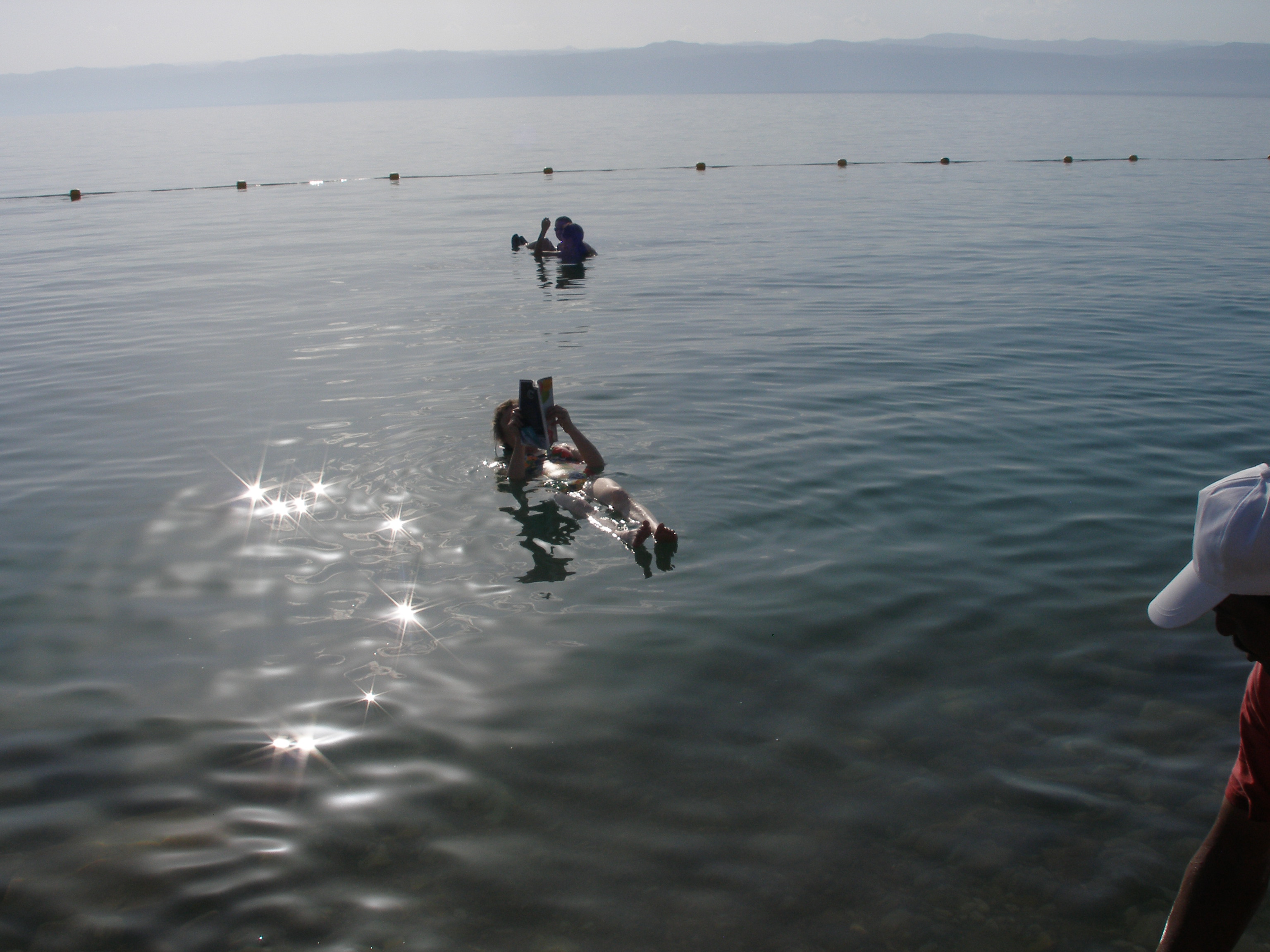
We reached Wadi Rum and the Hotel Mövenpick in the middle of the afternoon, after which we were driven down to the coast in small, fun Club Cars to bathe in the Dead Sea, the lowest-lying lake in the world and at 400 metres below sea level, the lowest point on the globe. This was a strange experience. We lay on our backs and were almost unable to force our feet to the bottom. It was as though we were floating round in oil. The water has a salt content of around 30 percent, so there were neither living plants nor animals. We were advised not to wear jewellery, for which reason I took off my wedding ring for the first time ever. We were also warned against getting the water in eyes and mouth.


OLYMPUS DIGITAL CAMERA


After supper with good wine and some relaxing hours at the hotel, we were to leave at midnight for Amman and the airport.


In the middle of the night, we flew once again via Istanbul to Copenhagen, where we arrived Tuesday morning. An exciting trip was at an end and a good race had been run.


Repeat forbidden


It turned out that the Petra Marathon would not become a permanent fixture. The marathon was not run the following year, although it came back in 2011. After this, it was no longer permitted to run in the town of Petra. UNESCO and the local authorities decided that organising marathons in an ancient city was not defensible, considering the historic significance of the place. This is, of course, fully understandable, but without these fantastic surroundings the run made no sense.


Buy the book here.


Engelsk forside

Bryllup

Surprise wedding between two marathons

December 30 2015

Mid-way between two trips to fantastic marathons in Asia, a happy occurrence came about on the home front. Karin and I were both born in 1959, she in November and I in February. So we were both born in the dark period of the year. The same goes for all our shared children. We had spoken many times of holding a joint summer party, but this had been quite illogical in relation to the family birthdays. In 2009, however, we decided to throw a joint 50th birthday to be held mid-way between our respective special occasions – in the summer, that is.


Just a few days after our return from China we began to plan this party and it turned out that we had both played with the same idea – of getting married in addition to the two birthdays. But the wedding was to be a secret, and our unsuspecting guests would be invited to a birthday party.


But first we had to find a date, and one special thing was of paramount importance. Namely that Elisabeth would be able to take part. She had already made it clear that she would never accept our being married without her presence. Because she was still living abroad at that time, we would have to find a date when she would be in Denmark. We included her in our birthday plans, but there wasn’t a single weekend during the summer months that suited all three of us. So we had to accept her apologies, although this was only pretence. Elisabeth was to spend early August with good friends on the Kattegat island of Læsø, so we took her friends into our confidence regarding the highly secret plan, and schemed together.


What we really wanted was to be wed in our garden, but this was not going to be easy. The established church would not marry anyone outside the House of God, and our local mayor had something else on that day. Fortunately, both we and the mayor could alter our plans slightly so that it all came together.


Saturday 8th August 2009 was the most delightful summer day you can imagine. Over the previous few days, we had erected two large tents and set up a barbeque. That morning, Elisabeth sat obliviously eating breakfast with her friends on Læsø, when her plans for the day suddenly underwent radical changes. To her great surprise and confusion, she was suddenly put on a flight to Roskilde, where a driver picked her up. She arrived last among the guests at our party shortly after 2.30 p.m.


Bryllup


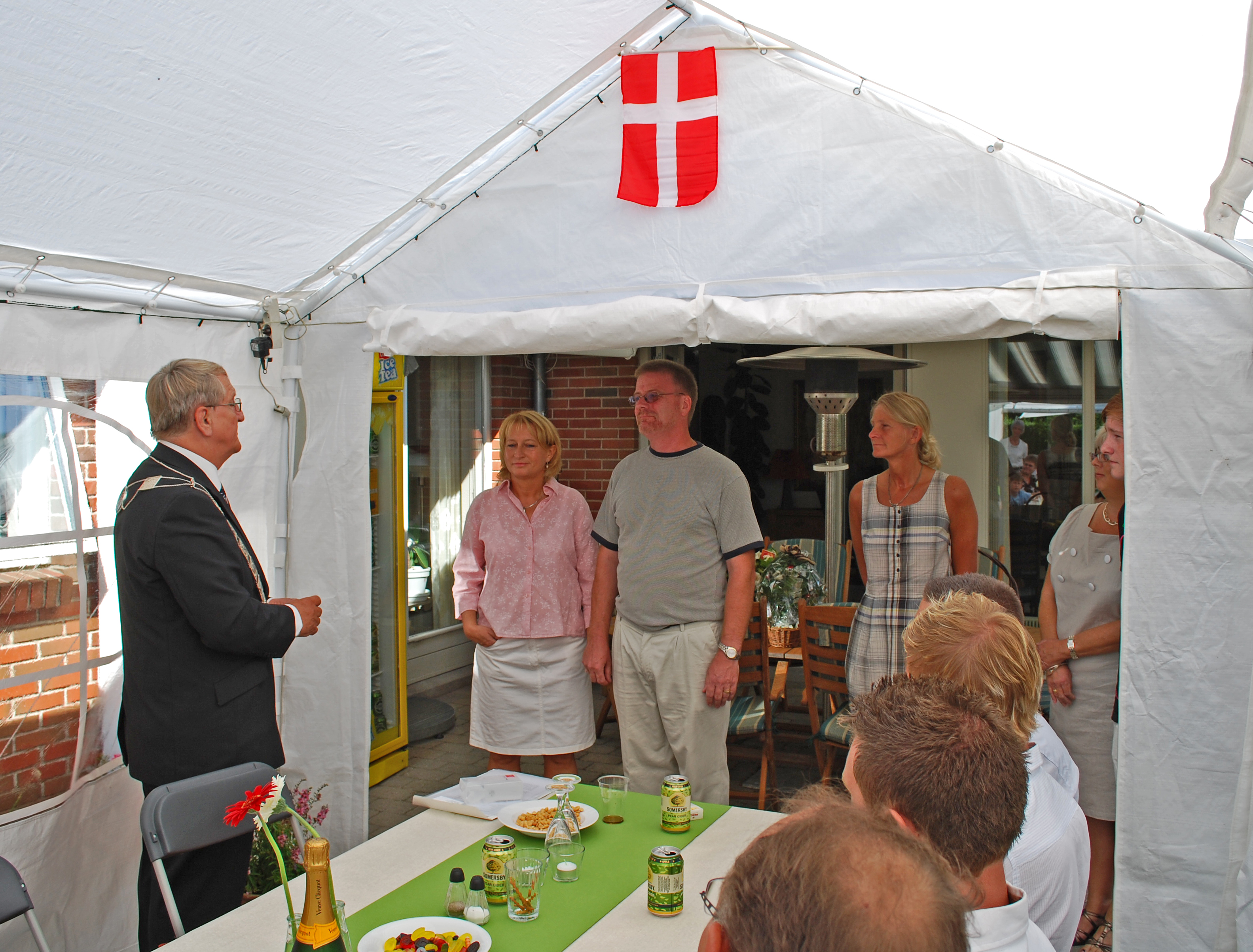
Just before 3 p.m., we gathered all the guests in the open tent and opened champagne as a welcome drink, and at precisely 3 p.m., Mayor Poul Lindor Nielsen arrived to marry us on our own patio. Some people were completely taken aback, whereas some had already smelled a rat, but everybody had a wonderful afternoon and evening, which for Karin and me was unforgettable.


Buy the book here.


Engelsk forside

???????????????????????????????

The Great Wall Marathon 2009

December 23 2015

Devoted company with problems


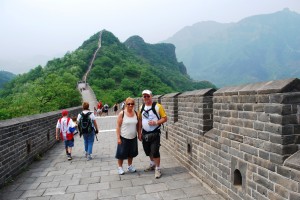
The Great Wall Marathon 2009 was a very special event. It was the tenth anniversary of the marathon and my tenth run up and across the Wall. Karin had never experienced this very special race before, so it was a great pleasure when she decided to join me on this anniversary year.
 

Kina 2009 119


We already signed up on 24th November 2008 for travel package number three, which included the period 10th – 22nd May. In addition to the traditional trip to Beijing, our group would also be visiting Shanghai after the marathon. Unfortunately, however, Albatros Travel called us in March to say that our group trip had to be cancelled because we would have been the only participants. We found this extremely annoying, and it almost led to my having to travel alone on the short, seven-day trip, most of which would be spent travelling, attending the inspection tour and taking part in the run, which Karin did not find particularly interesting. Fortunately, we managed to reach an agreement with Albatros Travel and signed up with group two from 11th – 18th May and then extended our trip until 23rd May to include our originally planned visit to Shanghai, which we would be making on our own and without a Danish guide.


Article in Jyllands-Posten


Ahead of the 10th anniversary run I was contacted by a reporter from the Jyllands-Posten newspaper, who wanted to do a piece about me and the marathons I had run around the world. I was interviewed over the phone and given the opportunity to read a draft of the article before it was published under the title “On the Great Wall by pure chance”.


Swine flu


Shortly before the 2009 run, swine flu broke out in Mexico, spreading throughout most of the world and causing hundreds of deaths. Although extra security measures had been implemented at Beijing Airport because of the disease, we got through relatively quickly.


Fond reunions


There were several fond reunions that year. Jakob was to be our guide again, and we were to stay at the Qianmen Hotel. It couldn’t get much better than that.
 

???????????????????????????????


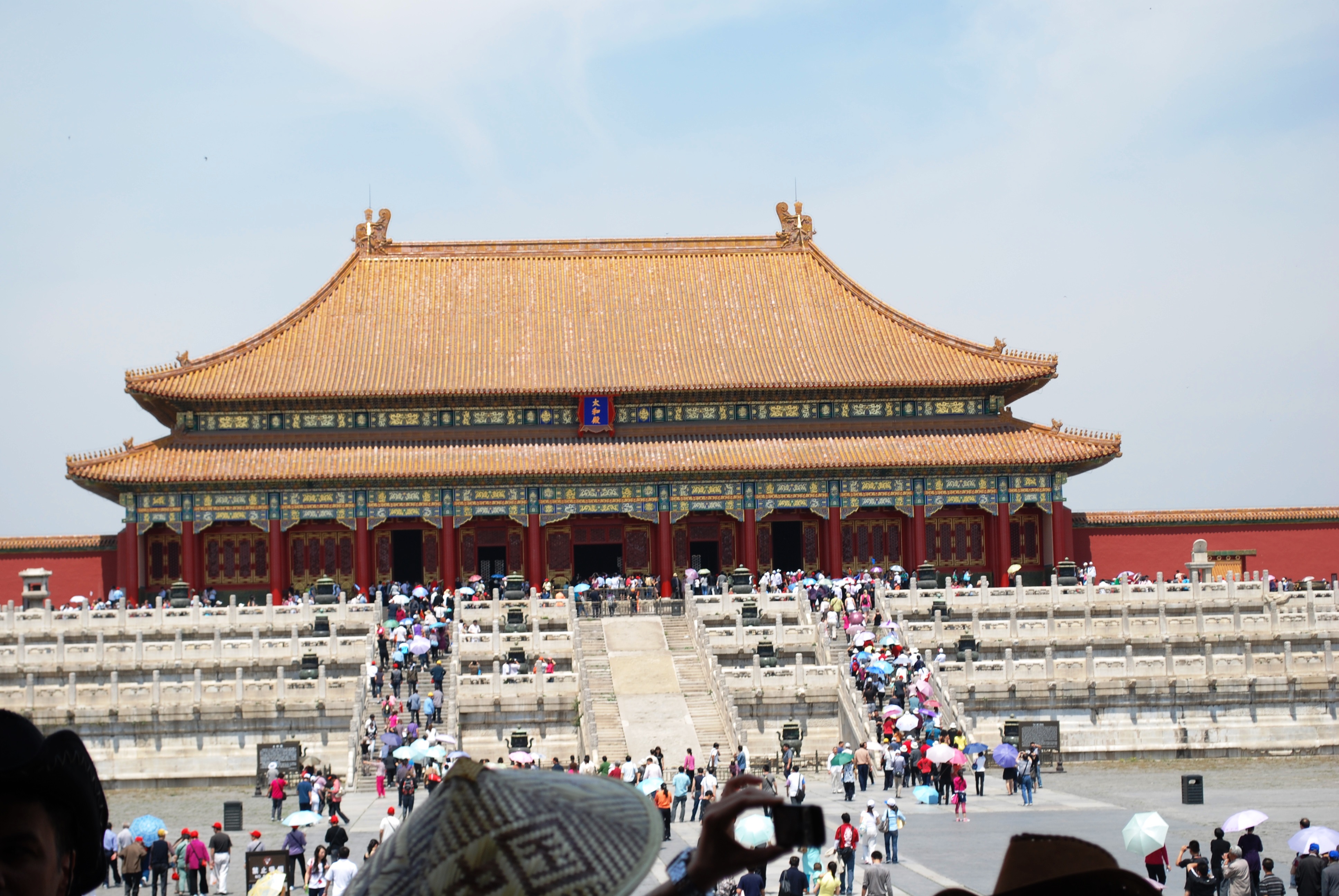
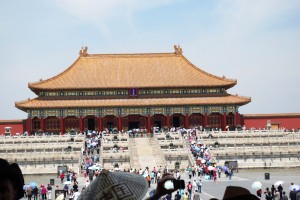
Because Karin was in China for the first time, we decided to go on the guided tour, which I had otherwise skipped for several years. On the way to the hotel from the airport, we visited the Temple of Heaven.


A very special running number


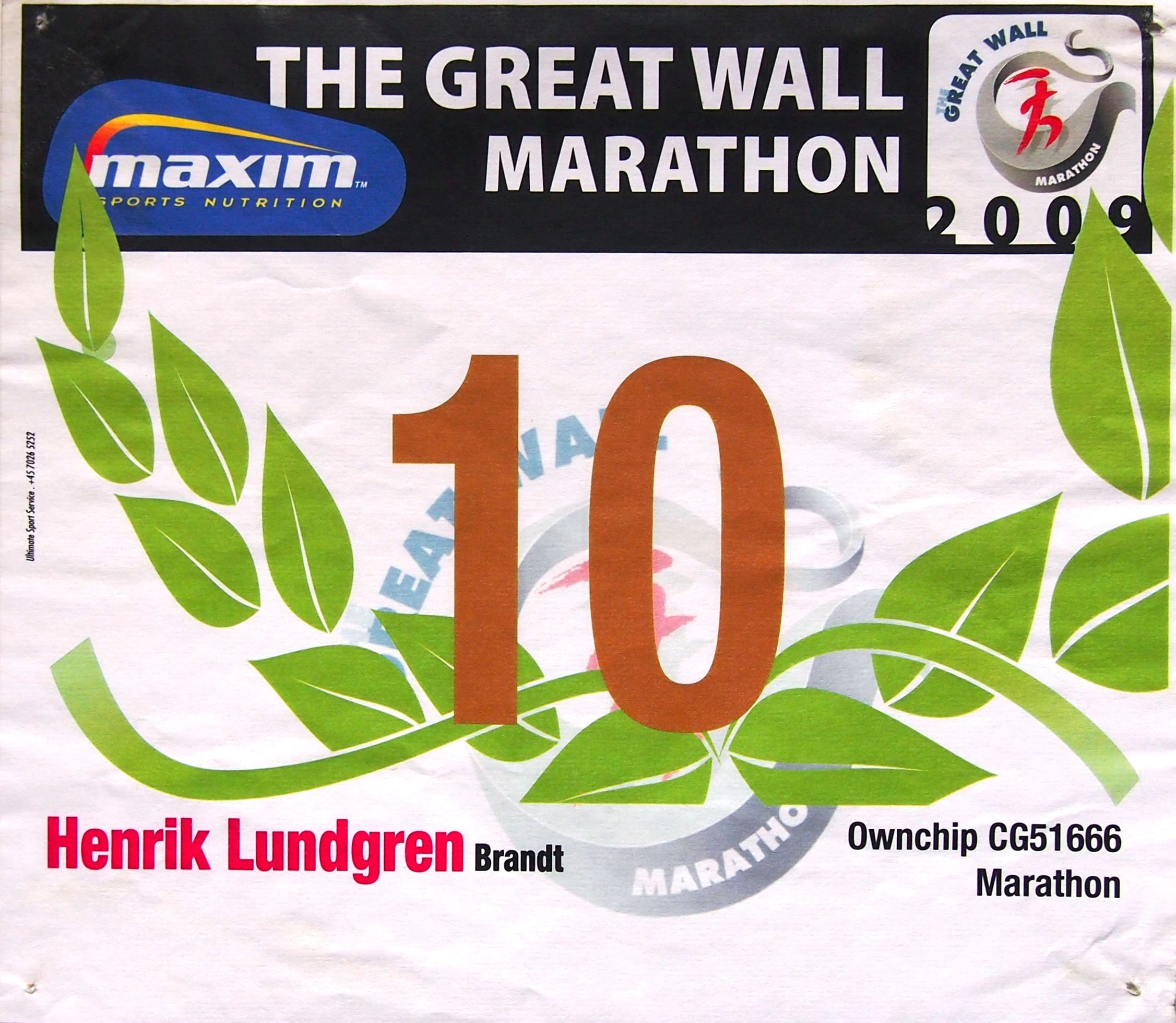
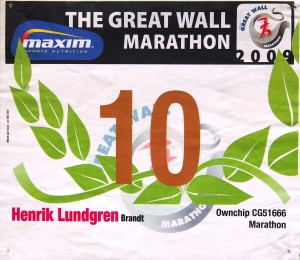
When we received our running bags that evening, I got a big surprise. I had been given running number 10. What was more, my number was printed, not in black, but in gold, embellished with green leaves – a very fine gesture indeed.
 

???????????????????????????????


Tourist trip


Wednesday’s programme took us round the major sights in the capital. As an infant teacher, Karin had been looking forward to visiting a kindergarten, but this part of the tour had, unfortunately, been cancelled because the authorities were afraid of potential infection in connection with the swine flu epidemic.
 

Kina 2009 034


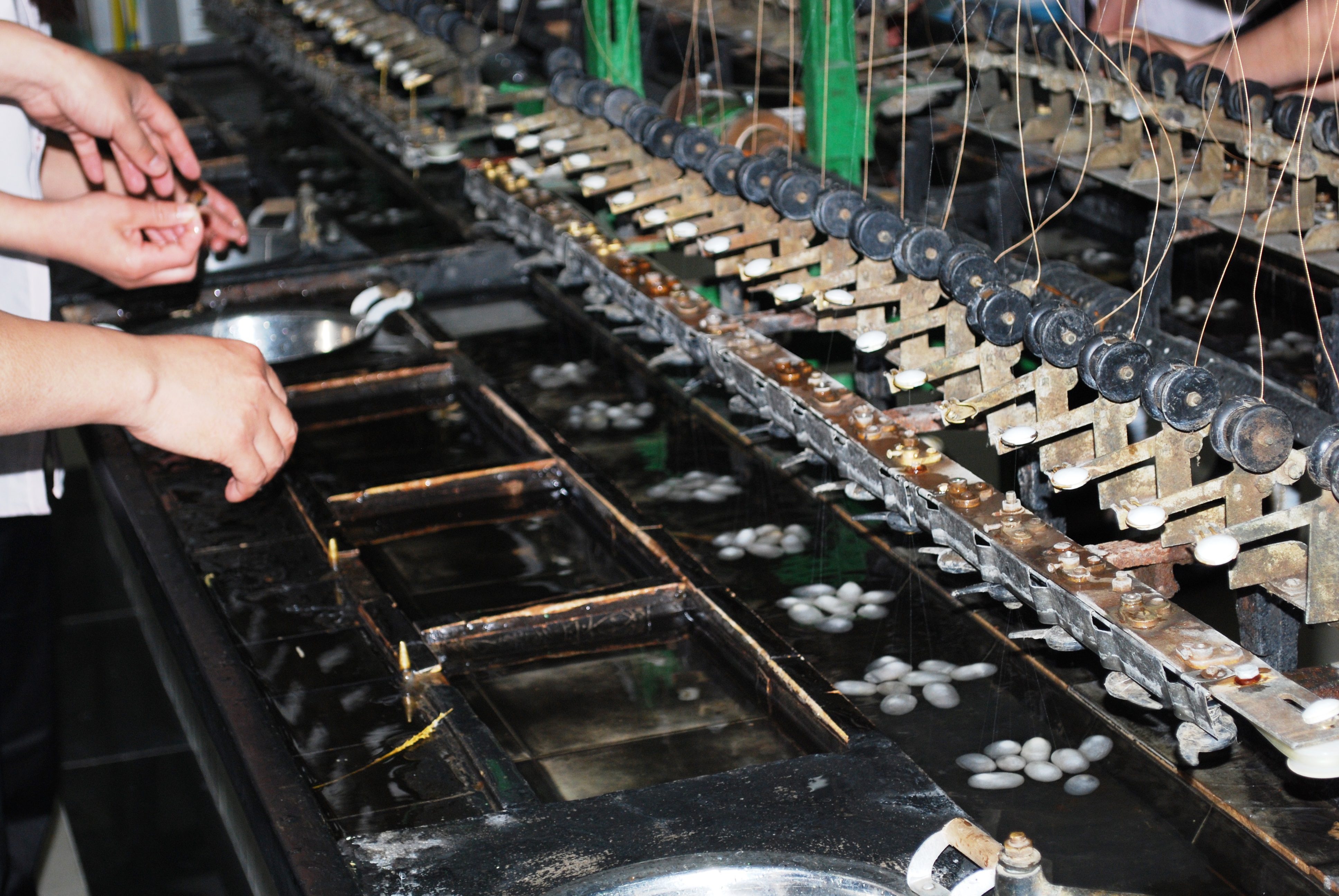
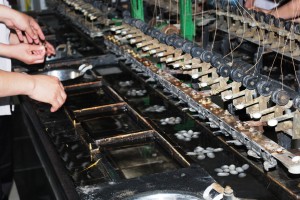
I experienced something entirely new that day, when we visited a silk factory. It was fascinating to see how silk was made, but it was an expensive visit because we ended up buying silk duvets and pillows with matching covers.
 

Kina 2009 069


Badly informed


When we arrived back at the hotel, there was a message for us saying that we would be without water and electricity between one and five in the morning. This was untimely, to say the least, because it was during this period that we would be getting up to go on the inspection tour of the course. We were subsequently told that it might never happen, and fortunately it didn’t.


Back to earth


The inspection tour was thoroughly traditional. We were given packed breakfasts, which we decided to eat on the bus. This would enable us to get to the hotel in Jixian more quickly and avoid a long check-in queue.


We were to stay once again at the Yuyang Hotel for a couple of days. After a few years of unchanged poor quality, things had suddenly changed for the better in 2008, but this year the standard had fallen just as drastically. Unlike the previous year, there was no computer, fridge or safe deposit box in the room. I’m only guessing, but perhaps they had sold it all again once the Olympics were over.


Psychological test


Our local guide was Jennifer, a Buddhist preoccupied with all things spiritual. She suggested we meet in the reception, where she would submit me to a psychological test. Partly because I was curious, and partly because I never felt any reason to reject alternative views of the world, I accepted the proposal. Jennifer had the test on her mobile and put questions to me about various choices on a fictitious adventure. She was able to tell me something characteristic about me on the basis of my answers. It was very interesting.


A bit of a joke


The hotel exhibited extreme caution because of the swine influenza. Every time we were to eat, two doctors sat outside the dining room to check our temperatures – but they didn’t check our passports or cross us off on a hotel guest list. It all seemed rather like a play to the gallery.


105 kilos on the Wall


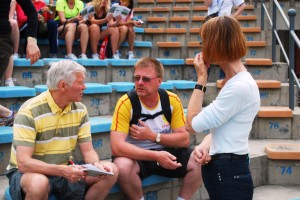
Peter Fredberg looked me up on inspection day. He wanted to do an interview with me and take a picture for the tabloid BT. The result was an article which, with reference to my weight, was entitled “105 kilos on the Wall”. “Well, let’s just hope it holds,” was Karin’s comment when she saw the headline.
 

Kina 2009 079


Back to normal


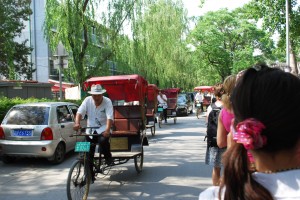
Friday before the race we joined the rest of the group on a walk that was more or less the same as the year before. Traditional pasta was served up in the evening, but the quality was nowhere near that of 2008.
 

Kina 2009 045


Traditional morning


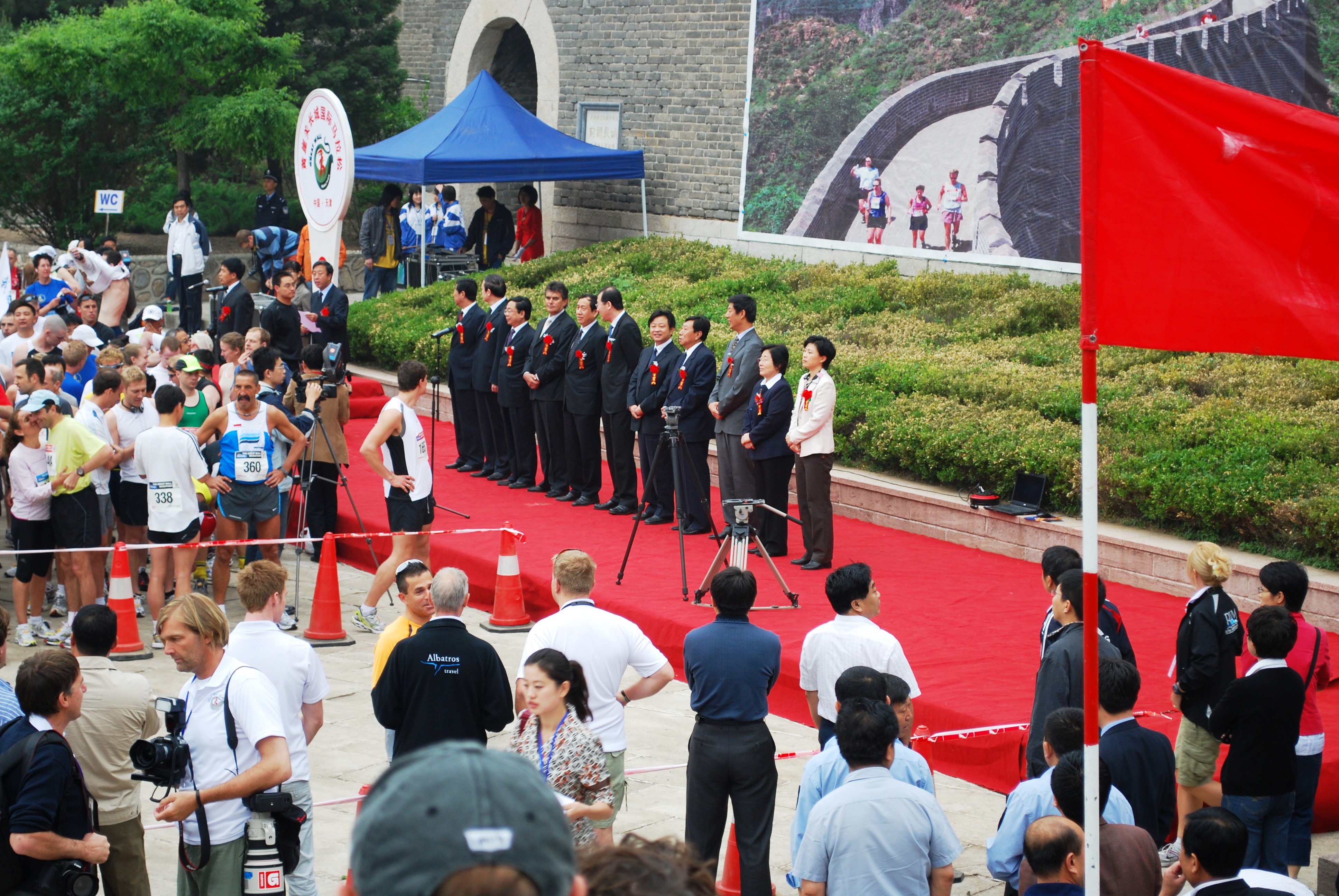
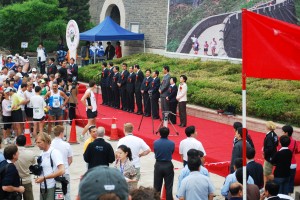
Saturday 16th May was the day of the tenth Great Wall Marathon. The morning, with its warming up and speeches went according to the “old” – and for me now “familiar” tradition. The starting pistol for the marathon went off at 7.30, while Karin was driven up to the Wall for her start at 8.20. She had signed up for the five-kilometre run.
 

Kina 2009 196


Karin on the short run


Karin had signed up for the short run, partly to be involved and partly to pass the time. She had a camera with her and spent a lot of time on the course before running the final stretch and crossing the finishing line. She did, however, regret after the event not having signed up for the 10-kilometre run because she had to wait for me to cross the line all the same.


Humane weather


The weather was forgiving all day long. It was slightly cloudy, so there was not too much sun, nor was there much wind. However, a bottleneck came about along the Wall because too many runners had been dispatched in one go. I reckon I was delayed by about a quarter of an hour because of this wait. Fortunately, the other runners did show understanding and give way to the marathon runners, and we were allowed to get ahead of the others on several occasions. Otherwise, I completed the run more or less without any problems.


Goose pimples


I reached Yin and Yang Square just before one o’clock in the afternoon to cross the Wall for the second time. My goal of finishing this marathon for the tenth time was now within reach. The thought gave me goose pimples, and I felt very emotional. Dave made a wonderful presentation of me over the loudspeakers as I entered the square. Karin was there with some energy bars for me to give me the strength I needed for the rest of the run.


Surprisingly easy


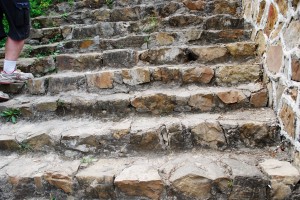
Crossing the Wall for the second time was surprisingly “easy”. Perhaps that’s not quite the right word to use, but I was not in crisis at any stage and was happy all the way round. By the time I had crossed the Wall the time was 2.15, and I was feeling very emotional.
 

Kina 2009 128


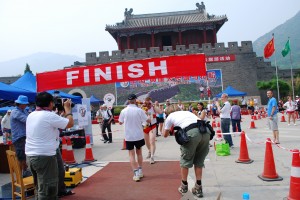
I had plenty of time to get down the mountain, moving quite fast several periods, although I took it easier once in a while and walked. As I came off the mountain and approached the finishing line, I had a feeling this would be a very moving moment. I was right – for several reasons.
 

Kina 2009 220


A touching reception


Out on the road at the entrance to the square stood a group of white-clad officials cheering me on. Among them were the Danish medical team and representatives of the Danish Athletics Association.
 

Kina 2009 225


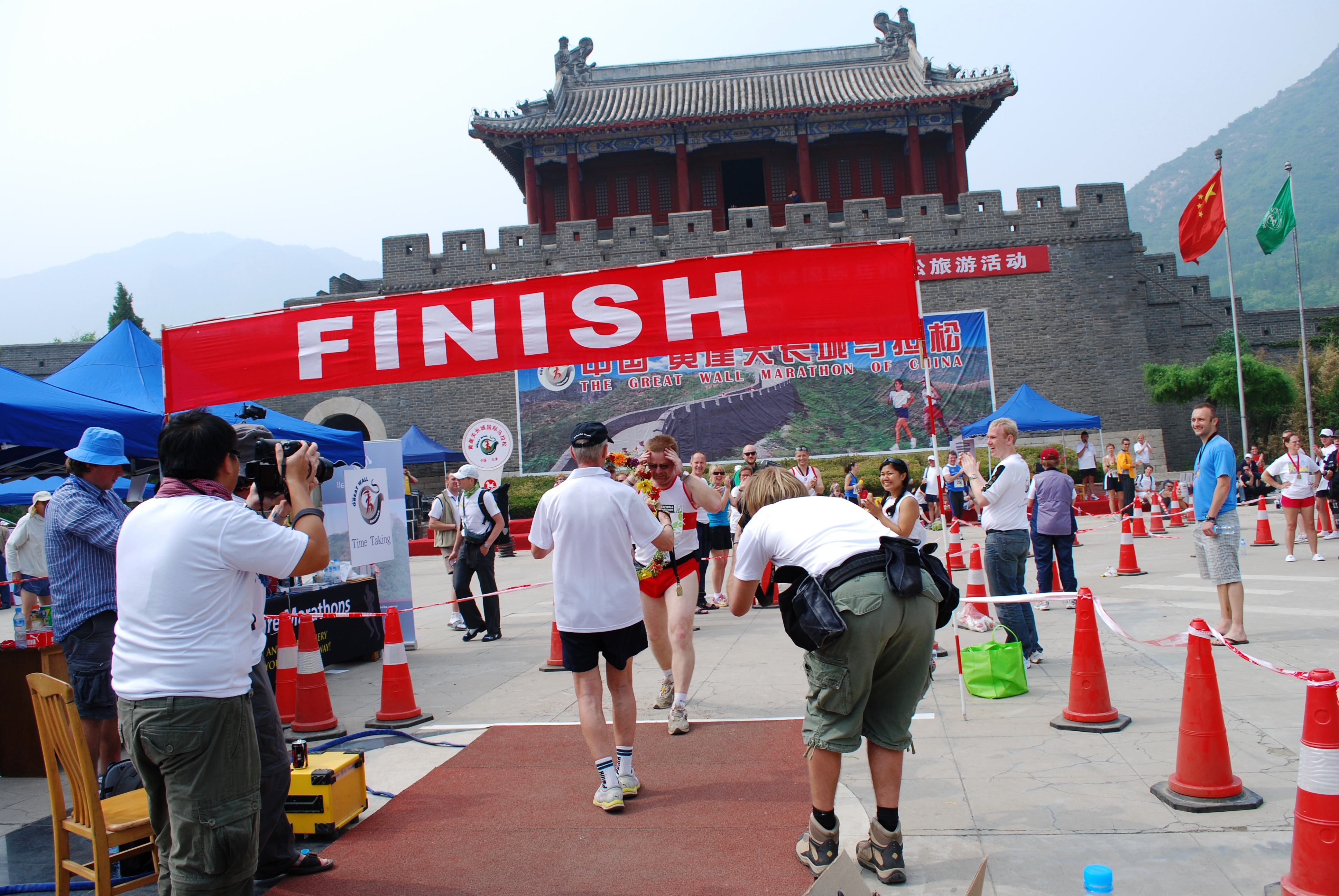
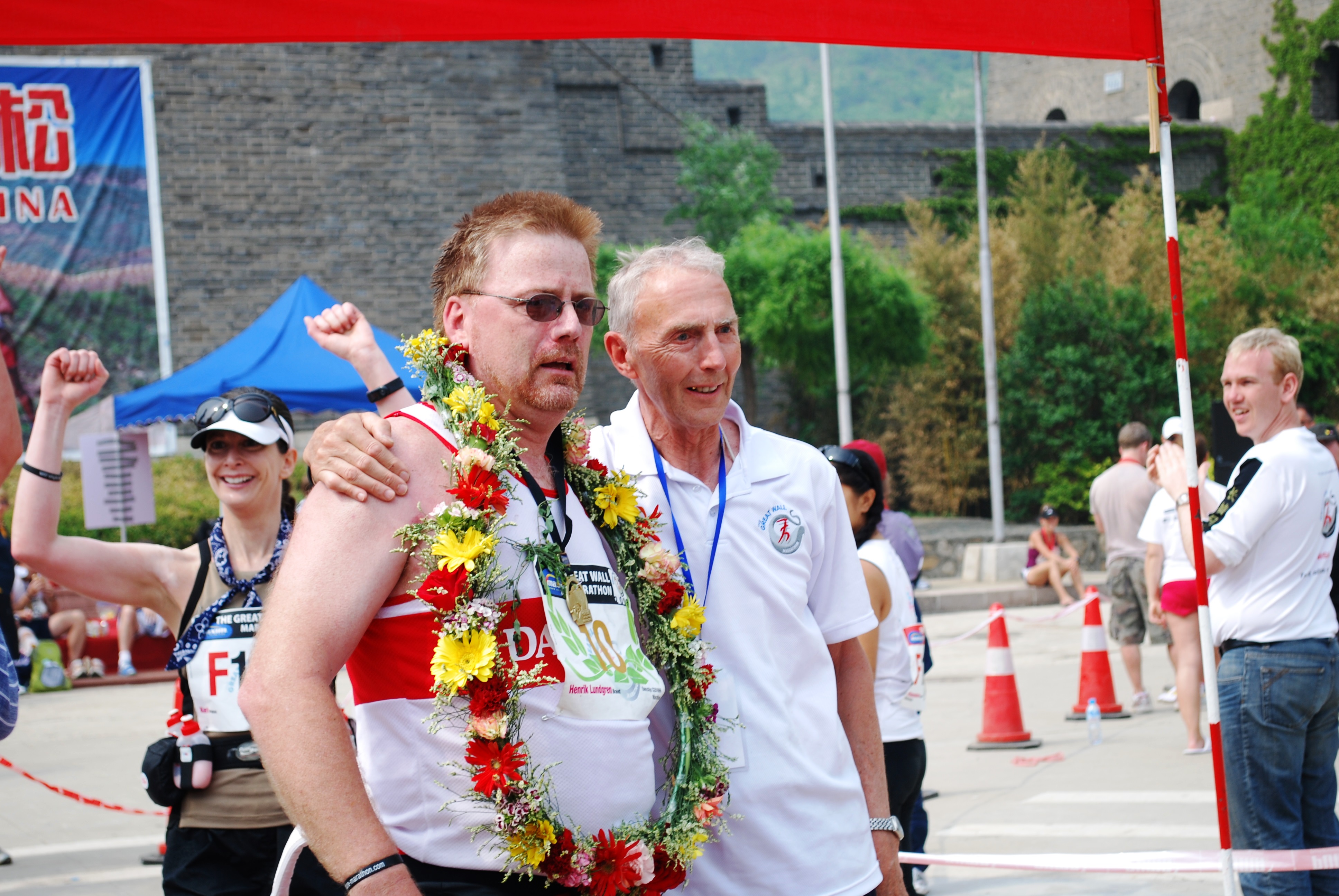
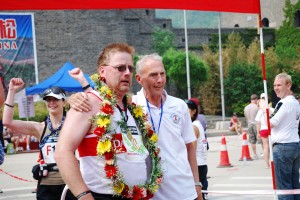
As I entered Yin and Yang Square, Fran presented me in style over the loudspeakers by Fran. Thomas was standing there, not only with my medal, but also a garland. Today this is hanging next to the one I had been given two years earlier. I have to admit that I was actually sobbing as I was photographed among a gaggle of photographers and onlookers. This continued until I left the square. A lot of people wanted photos of me, and a lot of them wanted to be photographed standing next to me. I even got asked for autographs. While Thomas was giving me a big hug, the whole square cheered me, encouraged by Fran.
 

Kina 2009 233


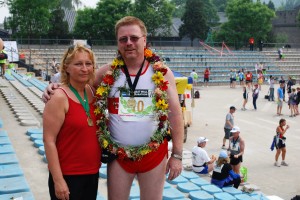
Best of all was when Karin came to greet me. Several years had passed before she came with me to China and then she just happened to be there at this highly emotional moment.


Unofficial world adventure marathon champion


My time was 7:20:47. Although not impressive, it was my best in three years. The marathon’s 2008 winner was not given the opportunity to defend his standing. Being from Mexico he had been banned from entering China because of the swine influenza scare. That year’s winning time was the slowest since 2002. First over the line was Justin Walker from the United States with a time of 3:40:54. He was also pronounced unofficial world champion of the adventure marathon, the run having just been given this status.


Totally crazy taxi driver


We had a wild experience on the evening after the run. We went to the Silk Market to give my fleece jersey to a tailor, so that he could sew my new number on the back. A totally crazy taxi driver drove us the way back to the hotel. We had no idea what he was talking about, but there was no doubting the vulgarity of what he said. He laughed and shouted about Bill Clinton, Monica Lewinsky and Adolf Hitler. We were quite sure that he had drunk or smoked something that was no good for him.


A lost bet


Just for fun, I had made a bet with a woman in a group called Lene, who had claimed that she could beat Karin in the five-kilometre distance. I knew she would, because Karin didn’t intend to run, just to walk and enjoy the view. So, completely by the book I lost the 20 Yuan bet as well as a glass of Fernet Branca and a Danish chocolate tortoise. During the hour before the gala party came the auspicious moment when I was to pay off my debt and it was not just Lene, but also her husband and Karin who enjoyed a drink and some chocolates.


VIP table


The gala party exceeded my expectations in every possible respect. I had expected my anniversary to be celebrated, but it came as a complete surprise to me to find that I was supposed to be that evening’s key figure. After a welcome drink, we entered a large hall and our group was to sit at table number four, which turned out to be a VIP table right next to the stage. At tables one, two and three sat people from the Danish Athletics Association, Albatros Travel, members of the press, medics and other officials. We had the privilege of having the best view of everything and what was more; the VIP tables were the first to go up to the buffet and get food. We thus avoided the long queue.


Standing ovation


When Dave took to the stage to welcome us all, he immediately presented me, and asked me to stand up. When I sat down, I was asked to get up again. I thought to myself: “That was probably all,” but I was mistaken.


Nosh and entertainment


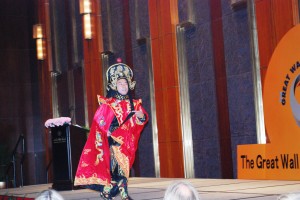
The usual dancing dragons charged around the hall and pranced about the stage before we were given the signal to eat. The food was delicious, with hot and cold dishes and salads.
 

Kina 2009 267


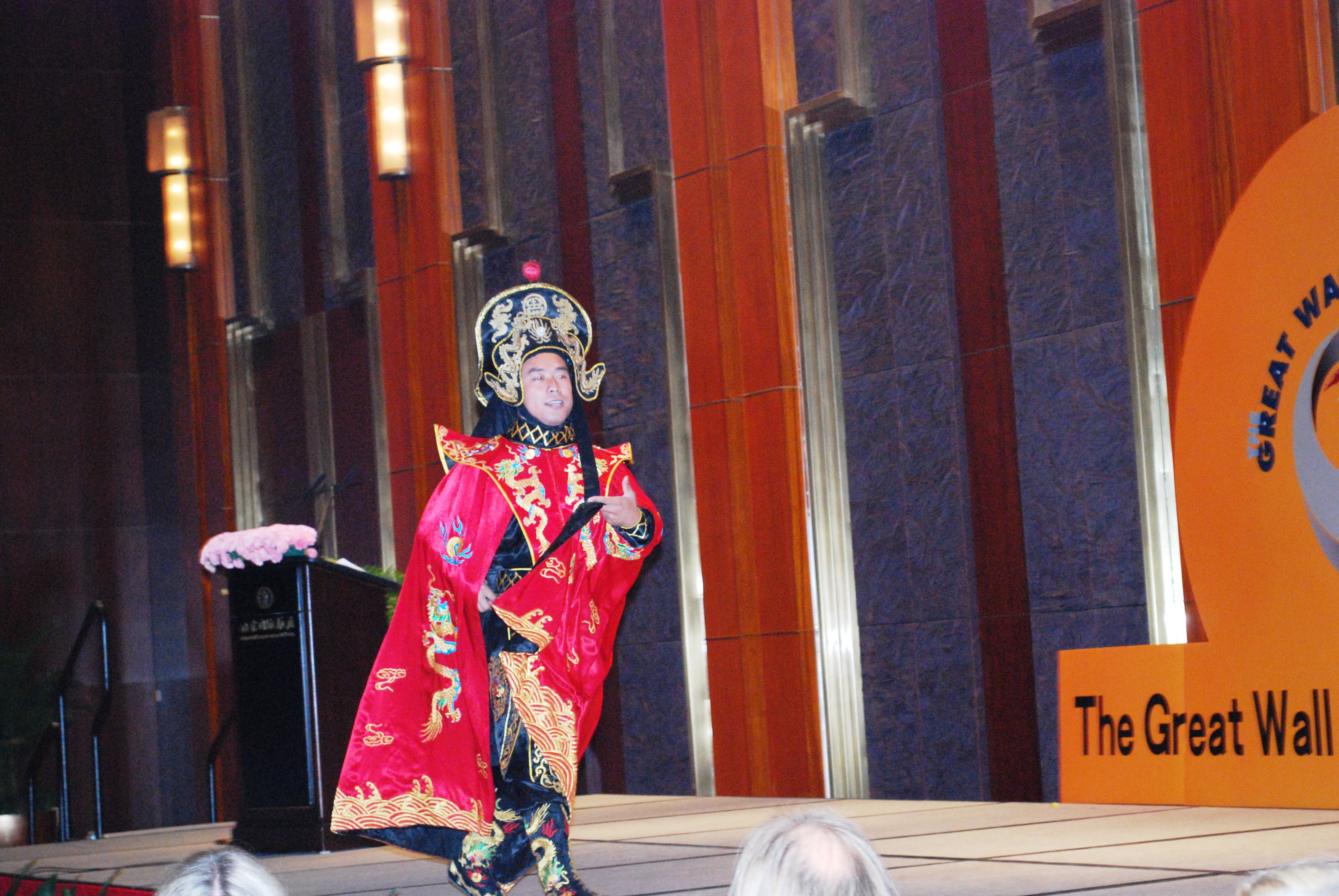
After we had eaten, a solitary man came on stage, changing masks several times during his performance. I have seen this kind of performance on previous occasions, but he did put on a good show.


Tenth anniversary celebration


After the entertainment, it was time for individual celebrations.
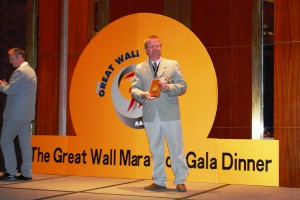
 

Kina 2009 269


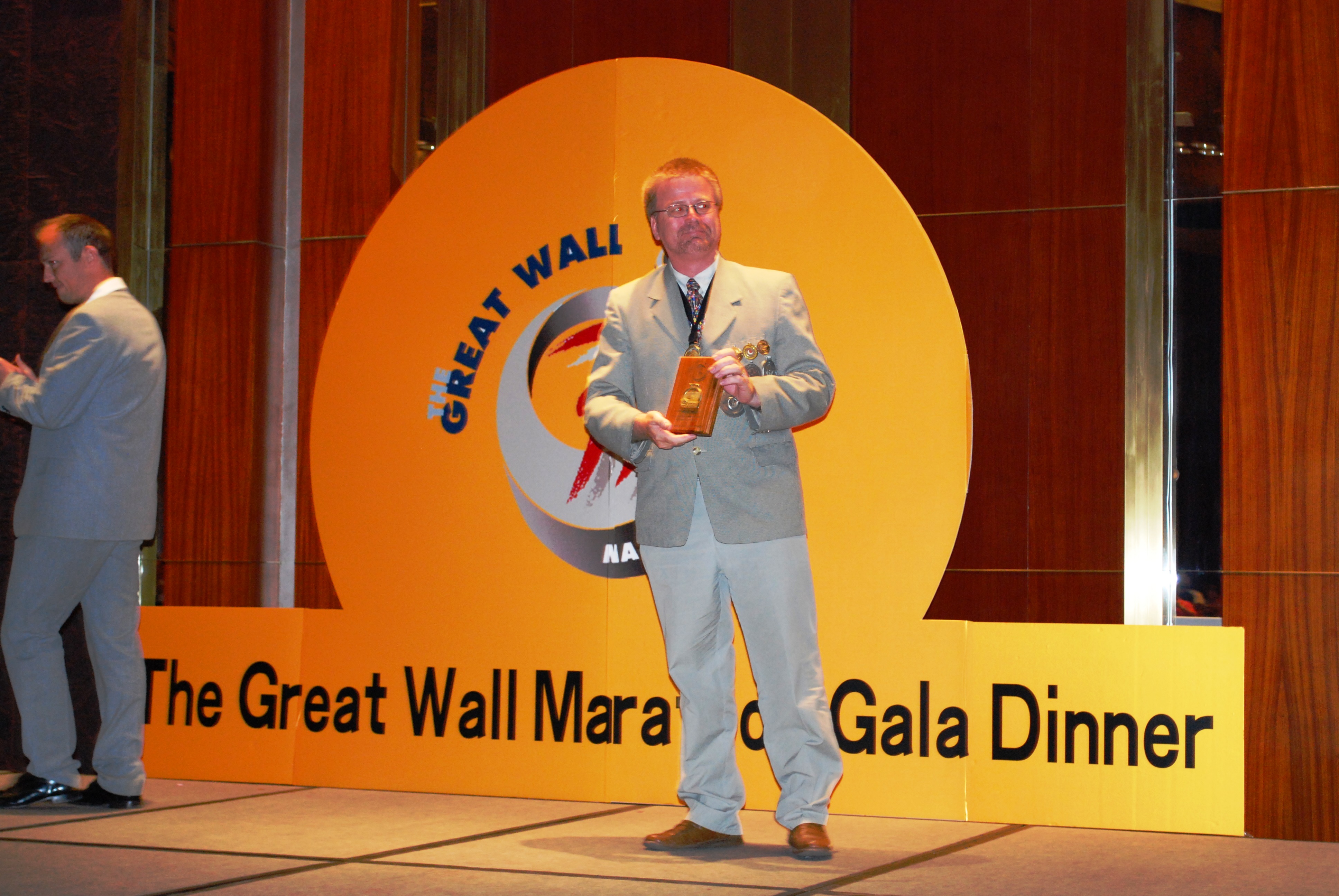
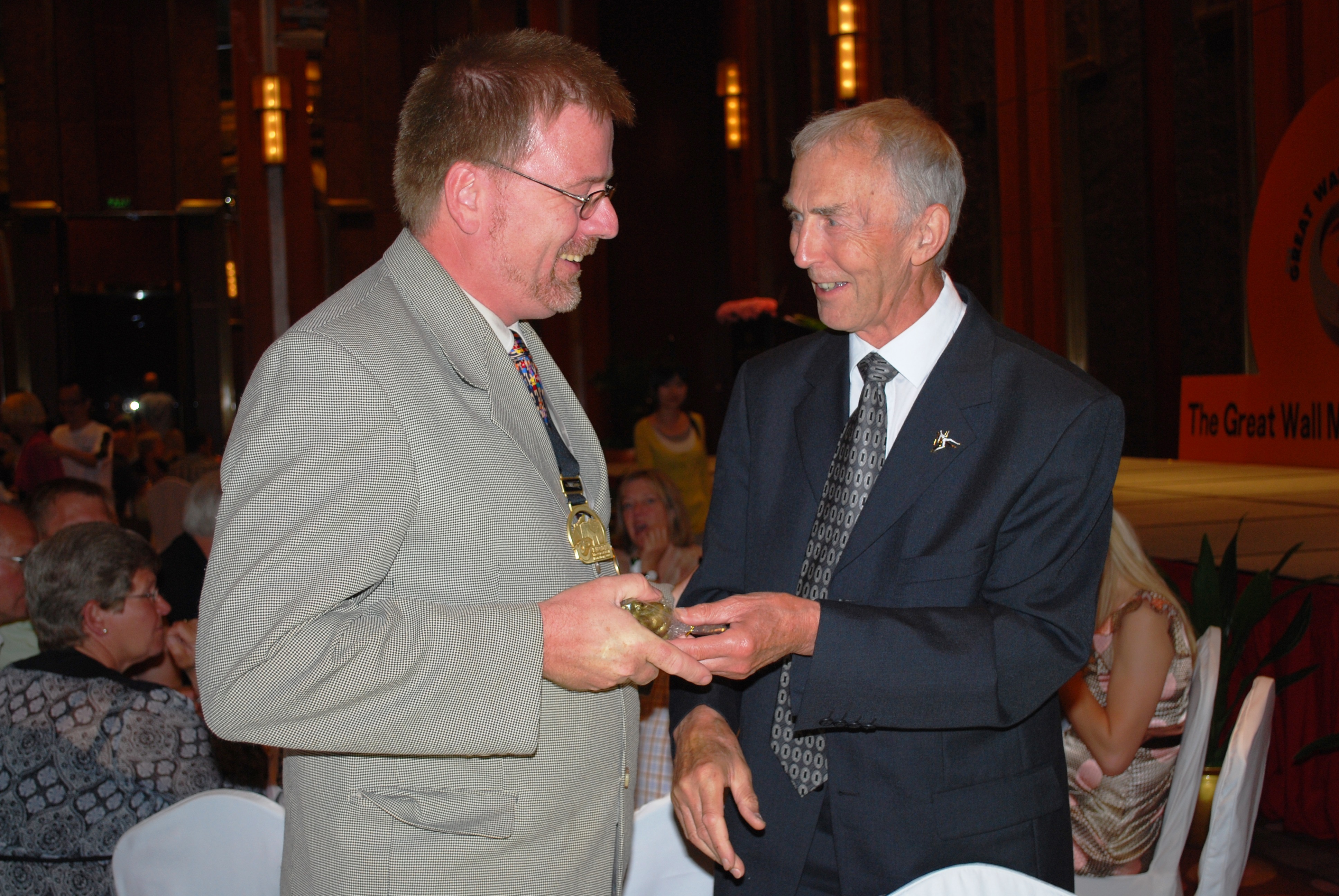
I was the first person to be called upon to the stage. My legs were shaking as I climbed the steps and saw Rune Nordtoft from Albatros Travel going up from the other side. He had something in his hand which had to be for me. It was a wooden plaque on to which this year’s medal had been mounted.


The Great Wall Marathon logo had been engraved above the middle and below it was the following text:
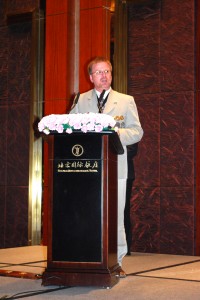
 

Kina 2009 272


MR. HENRIK BRANDT

10 YEARS ANNIVERSARY

OF PARTICIPATION

IN

The Great Wall Marathon


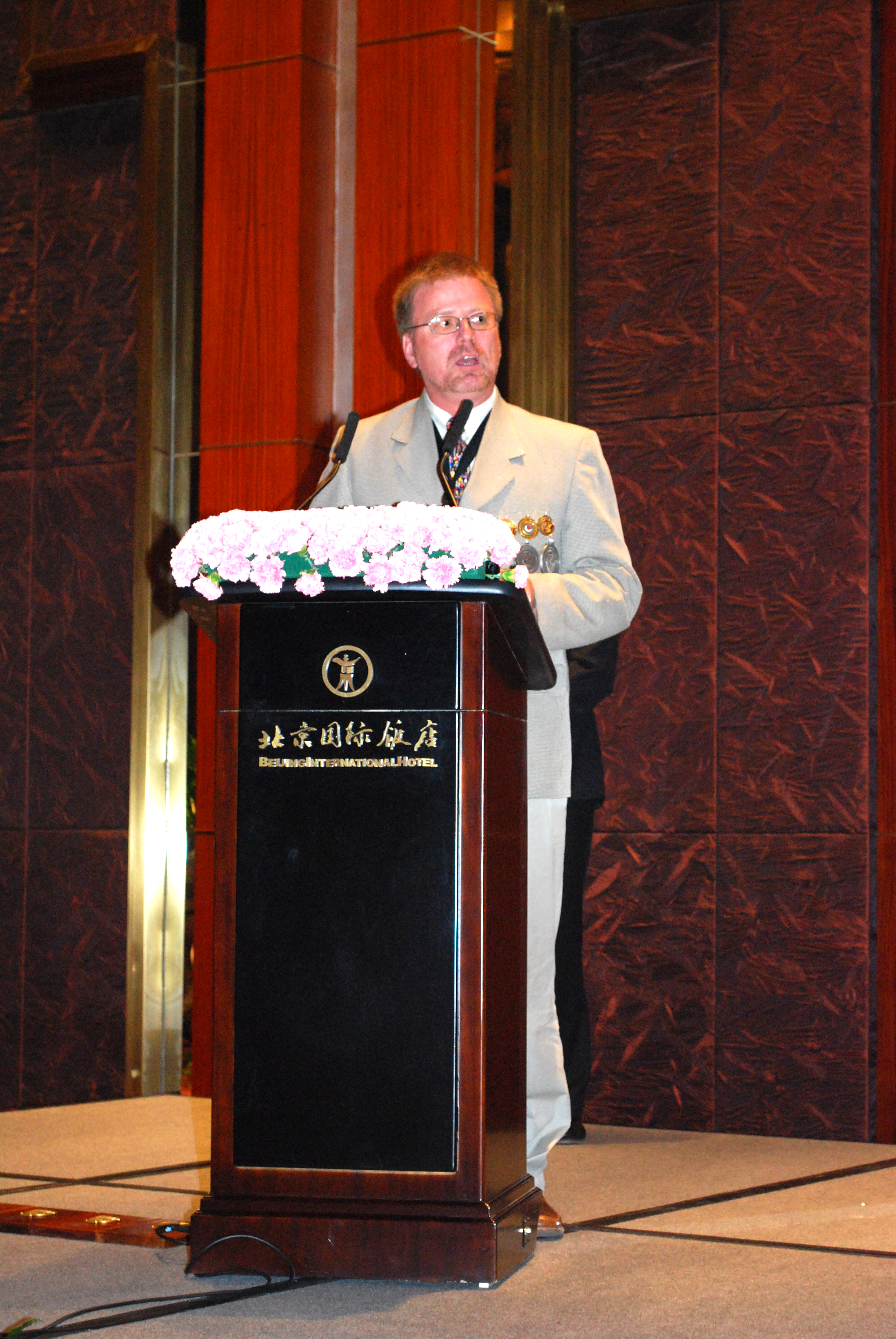
Dave discreetly signalled to me, asking me if I would go to the rostrum and say a few words. I hesitated for a moment, but then I thought: “Why not”. I stepped up to the microphone and said something like this:


“I want to thank you all for this applause, and also, I want to thank all of you, who gave me a warm welcome on the Yin and Yang Square when I got to the finishing line yesterday. I am not a real runner. I ran my very first marathon in 1999 at the Great Wall by coincidence. I thought that this would be the one and only time. But since then, I have run a lot of marathons around the world.


However, it is here that I have my heart, and I have come back every year. I will also come back next year. Thank you.”


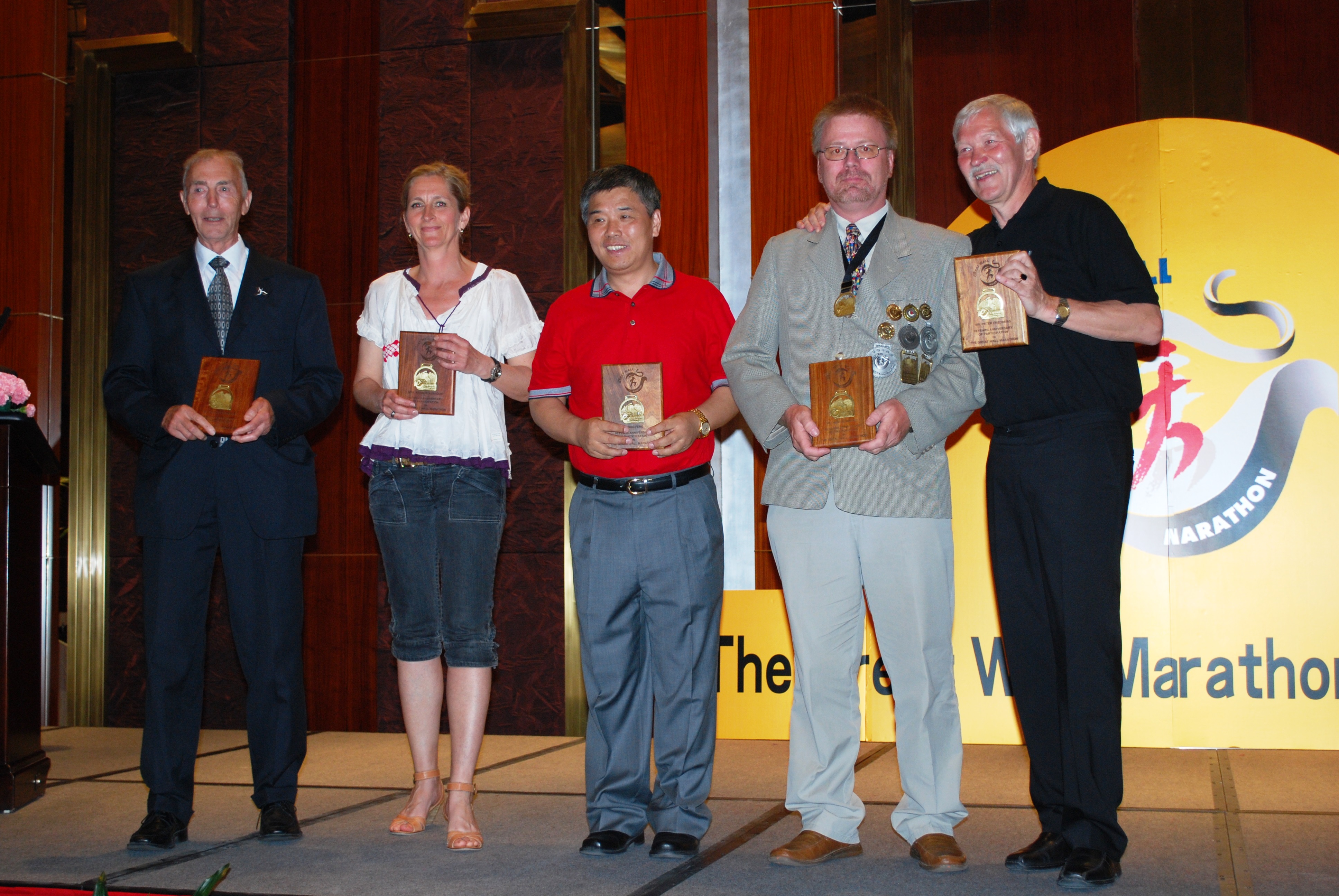
After that, anniversary plaques were also presented to four people from the organisation who had been involved every year since the start. They were Peter Fredberg, Thomas Thomsen, Dr Karin Stausholm and the Chinese agent Guo Feng. Then all five of us were called back up onto the stage for a group photo.
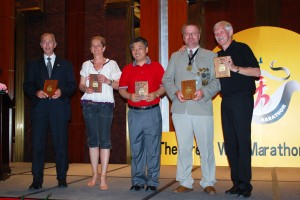
 

Kina 2009 273


After this, other people were celebrated for their special performances, the prizes having been presented at the finishing line probably because not all the participants would be at the gala party.


A present from Thomas


At one stage, Thomas Thomsen came over to our table to say cheers and have a chat. He had something in common with the whole group. First he told us about two identical prizes which the Danish Athletics Association had standing in his office a few years back. Both were third prizes for a branch of athletics. One year, both the Danish woman and the Danish man had won the bronze in the same discipline. The prizes were figures of hares, which had started to rust. Thomas told us that when he was in China in 1998 in connection with the planning of The Great Wall Marathon, he had taken the two hares with him since it was customary to bring along gifts for the hosts. Our Chinese host was pleased as Punch and said in his thank-you speech that Thomas always had his finger on the pulse and had naturally brought the two hares with him because it was the Year of the Hare. Thomas had been oblivious to this fact, so it was pure chance he had them with him. He took a sweet little hare made of brass out of his pocket and gave it to me, telling me about the animal’s many qualities. It is caring, considerate, mysterious, friendly and lazy. “And Henrik is lazy,” said Thomas. “Because you have to admit that he gives himself plenty of time when running the marathon.” Finally, he said that when I came back in 2010 it would once again be the Year of the Hare because, by then, 12 years would have passed. That was a lovely present.
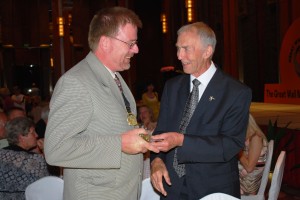
 

Kina 2009 280


Blue Bar


The evening was concluded with an after-dinner party at the Blue Bar, which we were driven to by bus. We enjoyed a few pleasant hours before returning home tired and happy to bed after an eventful evening.


A day for ourselves


The group travelled home on the Monday but without us. Having waved goodbye to the others we had the day for ourselves to relax and do some shopping. We had supper in one of the nearby hutongs, where I had eaten a princely meal with my group the previous year. This time I rather missed Jakob and his local knowledge and the food was nowhere as good. We paid 30 Yuan for two beers and some unexciting fatty grilled food on skewers. This rather diminished the pleasure of introducing Karin to something special.
 

???????????????????????????????


A morning walk in the park


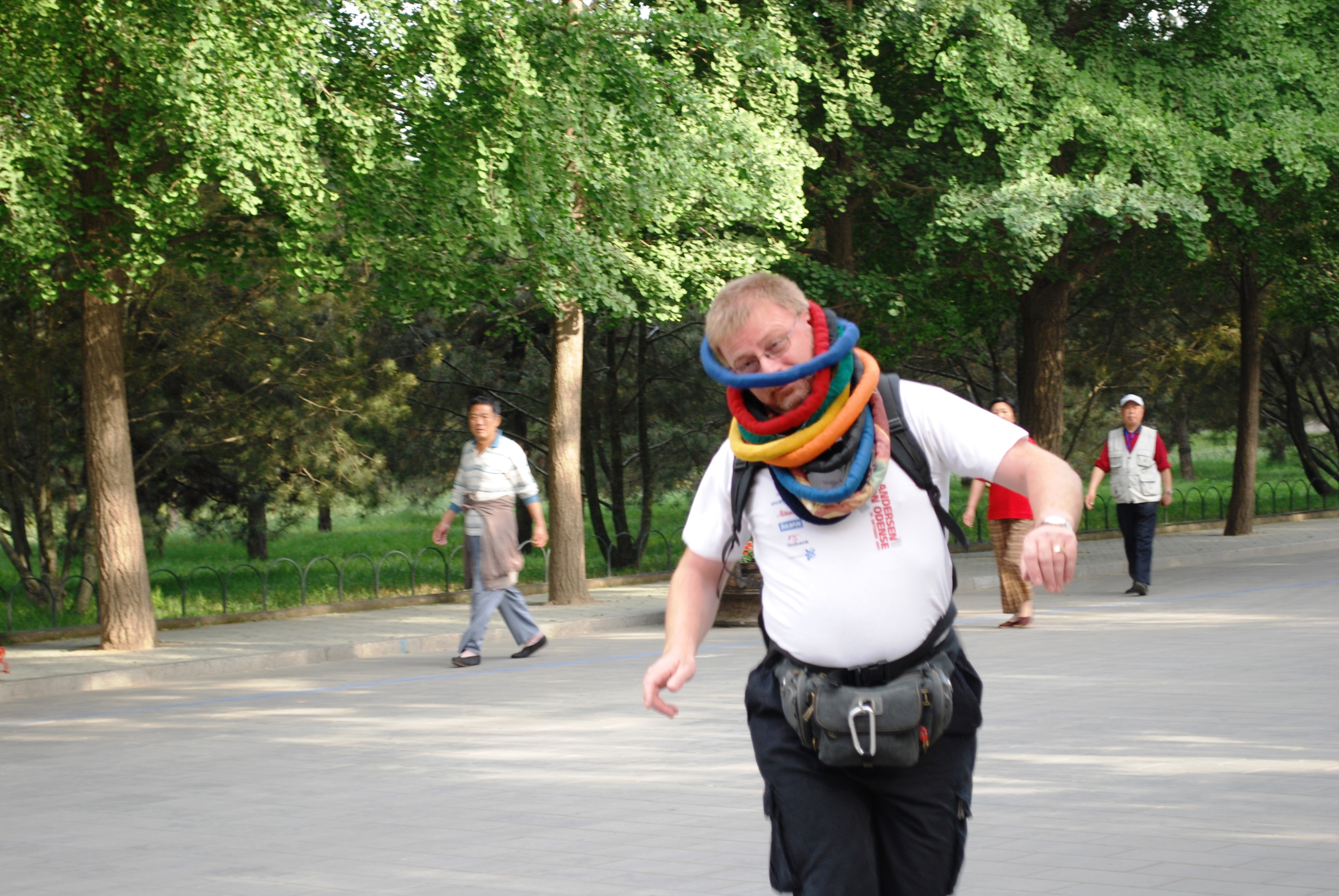
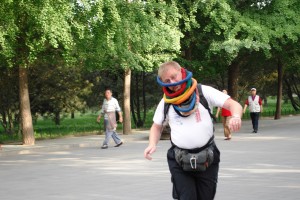
We rose early Tuesday morning. Karin wanted to go to one of the city parks and experience the same bustle as I did on my first visit to China with people dancing and practising tai-chi. In the park, I was waylaid by an elderly man, who wanted to play with me. He had some rings that were apparently made of rope covered in fabric in all sorts of bright colours. I was to be the target, the man throwing his rings over my head. I leaped about a bit to give him the chance to get a bull’s eye and after a while I had all his rings around my neck. Karin took pictures and videoed it all, and later we found someone to take a picture of the man, Karin and me together.
 

Kina 2009 284


Before we parted, he gave me a piece of paper with Chinese characters on it which I presumed was his address. Our guide Jennifer was subsequently able to confirm that it was an address in Beijing. When we got home, I printed all the photos and posted them to him in an envelope to which I attached a photocopy of the address he had given me.


Departure by night train


After an enjoyable day in Beijing, Jennifer accompanied us to the train station. She helped us deal with some paperwork, then wished us a safe journey and bid us farewell. We were early, so we passed the time playing yatzy on the top of a suitcase, which rather amused the locals.


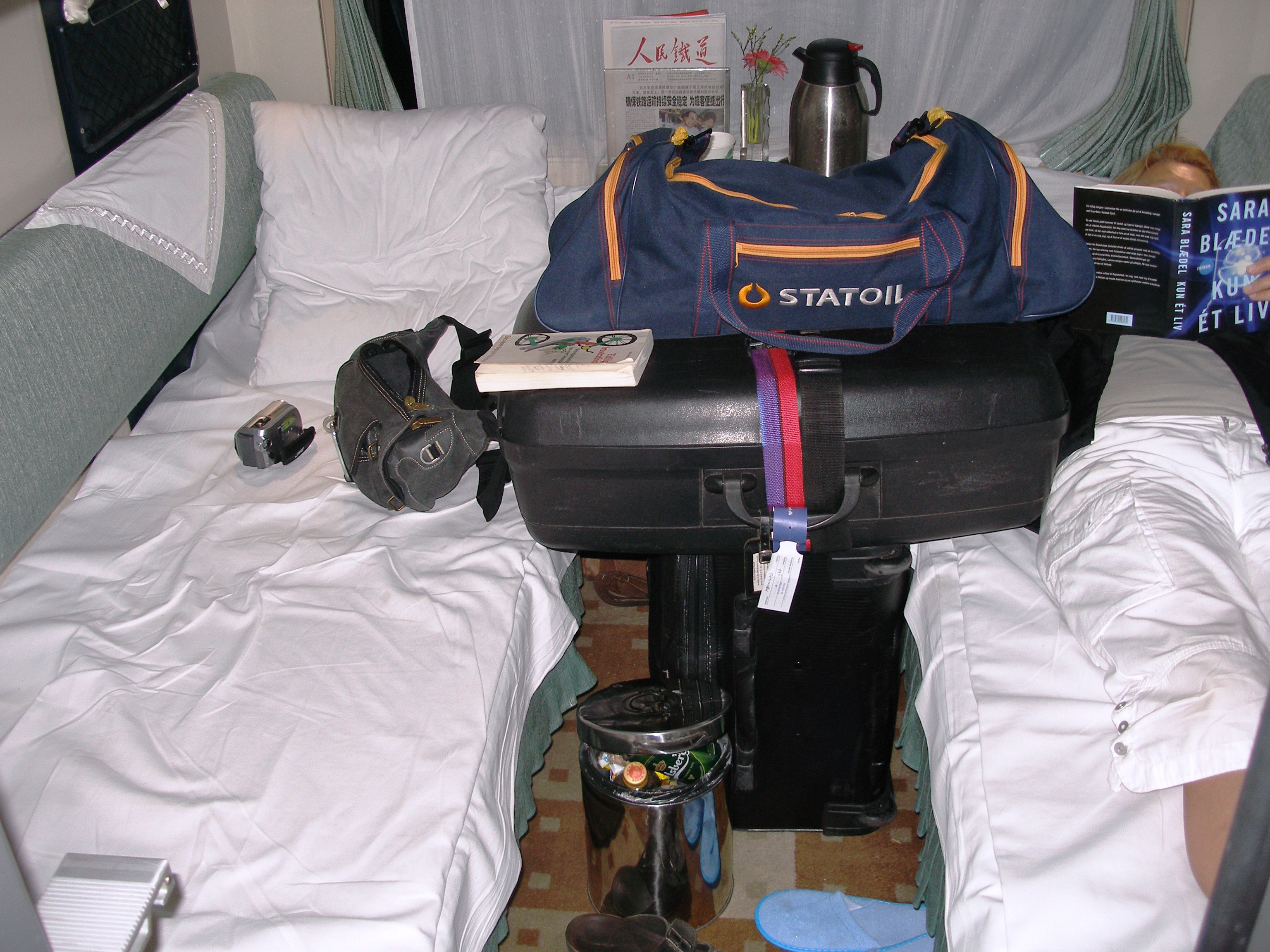
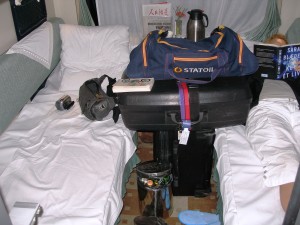
At around 7.30 p.m., we went down to the train and found our excellent compartment, which we were to share with an elderly Chinese couple. We fortunately had the bottom bunks. There wasn’t much room in the compartment, but we managed to organise our luggage so we could fit in. We played another game of yatzy but soon lay down to sleep.
 

???????????????????????????????


Excess baggage on the train


On 20th May at 7.30 a.m., we arrived in Shanghai. The local guide Alan was waiting for us on the platform, but before we left the station, our baggage had to be weighed, and we had to pay an excess fee. Have you heard anything like it? On a train! Alan paid the 26 Yuan charge, and we made for a waiting car which drove us to the Broadway Mansions Hotel. We got an excellent room, although there was a power problem.
 

2010 001


Harbour tour


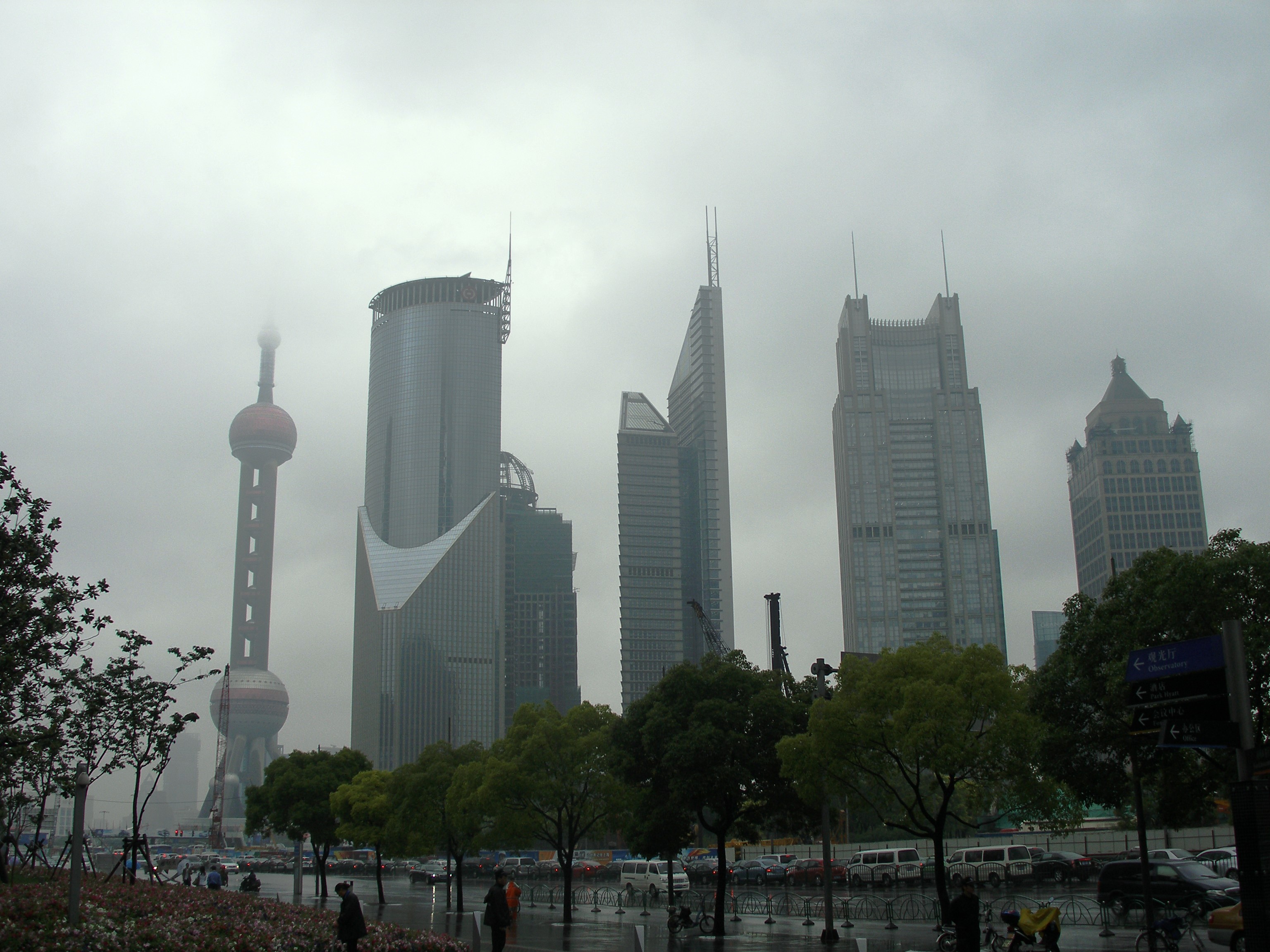
The day’s schedule was soon to begin, and we went down to meet Alan in reception. First on the programme was a harbour tour on the Huang River. Shanghai’s harbour is not only the biggest in China, but also one of the biggest in the world. This could have been a great outing, but because it was raining and foggy, it wasn’t much fun.


Aggressive seller affronted


We then drove to a place where they were selling jade, other precious stones and other art objects. A very chatty, English-speaking seller showed us around. It was all very beautiful, but not our cup of tea and we wouldn’t have minded missing the experience. The seller was highly intrusive, but we didn’t want to buy anything, and when we reached the exit he turned his back on us and walked off, obviously affronted. The visit wasn’t on our schedule, so we presumed our guide had added it to the tour and probably would have been given a cut of any sale.


Noisy eating and belching


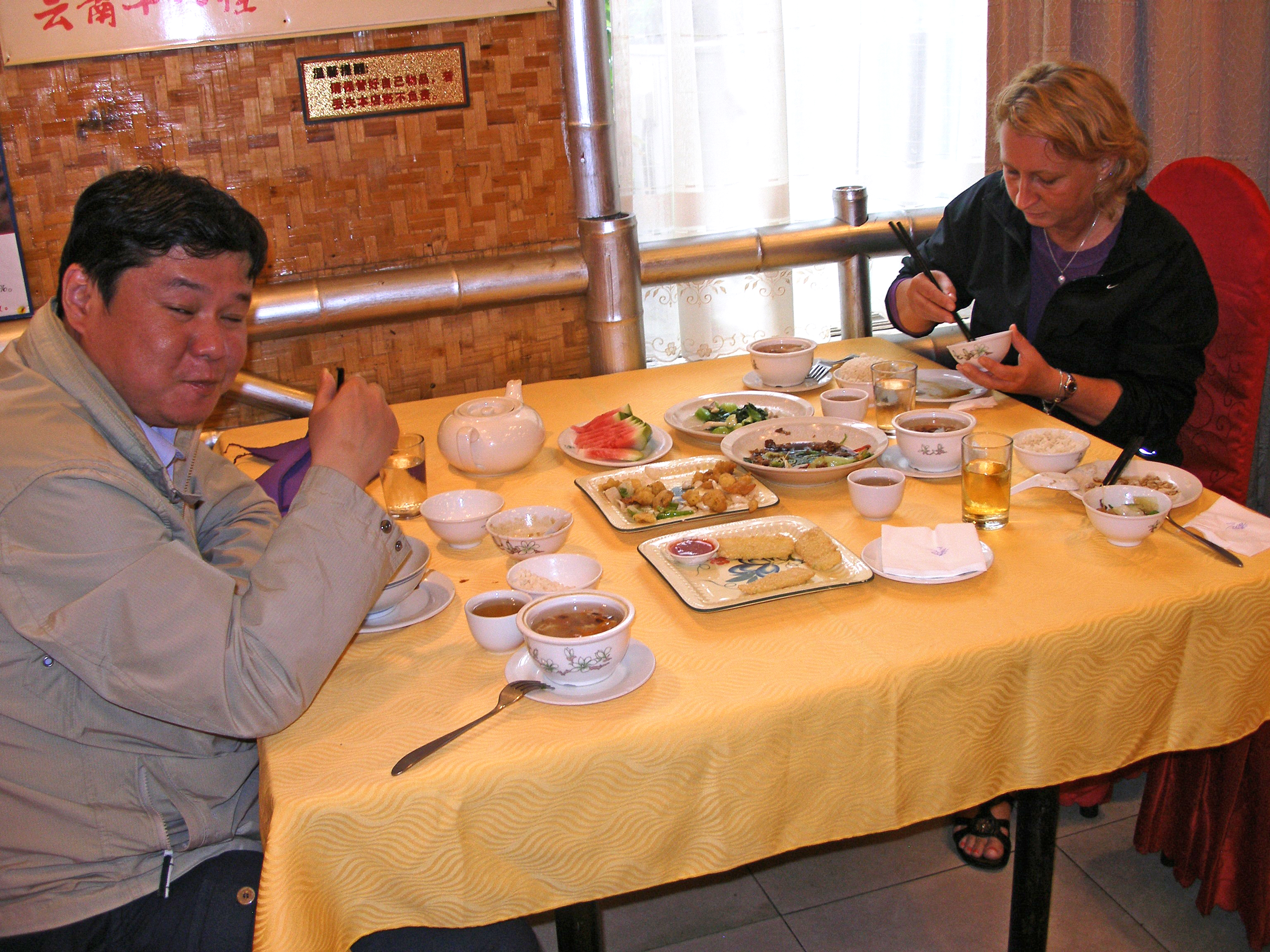
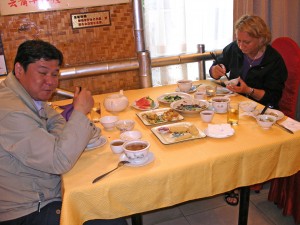
Over the years, I have not been accustomed to eating in the company of the local guides, who traditionally sat elsewhere. But now we enjoyed an excellent lunch at a restaurant in the company of Alan. It was really cosy and gave us plenty of opportunity to converse with him.
 

???????????????????????????????


We were acquainted with Chinese culture and traditions and were thus not prudish in any way. On the contrary, it was quite an experience to hear Alan eating noisily and belching during the meal, which is perfectly natural in China, unlike in our own culture.


Shanghai World Financial Centre


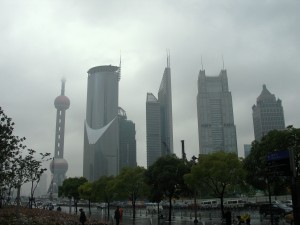
The next visit was to the world’s tallest building at the time, the Shanghai World Financial Centre. The lift took us at a speed of 11 metres per second to the 94th floor, where we took an escalator to the 97th floor. But we were thoroughly disappointed. It was raining, and it was as though the clouds were stuck to the windows. As a result, all we could see were white windows, although we could claim to have been there. Had we paid more, we could have gone higher up and walked around on a glass floor with a direct view all the way down. Instead, we went back down again and visited the local market in the old quarter. We wandered around for a couple of hours and had a good look. It was very different from Beijing, where people shouted at us to attract our attention. Here, we were able to walk about in peace, just like in Copenhagen.
 

???????????????????????????????


Power problems


During the afternoon, we had some time to relax at the hotel. We still had no electricity, and I had to call and remind them three times. Each time they said they would come immediately and fix it. An electrician finally came and solved the problem, so we were finally able to dry our wet sandals.


Acrobatics and draught beer


We met up again with Alan in the evening and were driven to the city’s world-famous acrobatics show, which lasted an hour and a half. Some of the show was very good, but most of it wasn’t much of an experience. I was, however, very impressed by five motorcyclists, who rode round the inside of a globe shape made of metal netting. My childhood wall of death had been a piece of cake compared to this. Photography was not permitted, but I videoed on the sly, and the result was good.


Alan and the driver were waiting for us after the performance. We were driven to a restaurant quarter, where we were dropped off. We decided to go to a German restaurant and eat Wiener Schnitzels with draught beer. Later in the evening, we were driven back to our hotel after a whole day of rain in Shanghai. Unfortunately, we concluded that everything we had experienced during the day had been slightly disappointing in relation to our expectations, although we were happy and generally thought we had a good day.
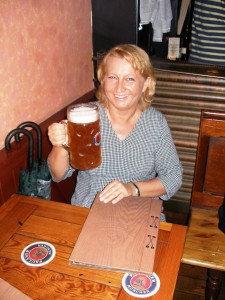
 

???????????????????????????????


Maglev


On Thursday 21st May we set out for a ride with the Maglev train. This magnetically elevated train is the fastest train in the world and runs between Shanghai station and the airport. Its maximum speed is 430 km/h, and we took the train in both directions. Unfortunately, it “only” reached 301 km/h. Although we could feel that it was moving very fast, it didn’t make us feel uncomfortable, which demonstrated the train’s comfort and safety rather well. We were sitting in soft seats in the luxury compartment watching the landscape rapidly disappear.
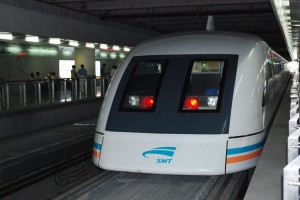
 

Kina 2009 353


Yuyuan Garden


We spent the pre-noon period on our own in the city. We went to the Market Square and then visited Yuyuan Garden; a.k.a the Garden of Contentment, a peaceful place in the middle of an otherwise hectically busy city. The Yuyuan Garden was built in the Ming Dynasty and is a place where the population can seek peace and consolation. We spent the afternoon relaxing in our hotel room.
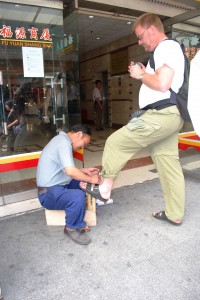
 

Kina 2009 373


Splendid meal


We enjoyed our final evening meal in the French Quarter of the biggest city in China and the second biggest in the world. Here we enjoyed a delicious dinner, although at a price we had not previously experienced on the trip. Both the meat and the wine did, however, justify the bill. After dinner, we took a taxi home. The driver took the long way around and charged us too much, but that was all part of the experience.


Smelly hotel room


We spent our last morning in Shanghai in the area around the hotel. Around noon, we were driven to the airport, where Alan gave us a good send-off on a domestic flight to Beijing.


We arrived in Beijing in the early evening, where we were met by Jennifer, who took us to the Qianmen Hotel. Unfortunately, we got a room that smelled of sewage. We asked for another, and they promised to look into it. After a walk around town, we returned to a room that still stank of sewage. We had a struggle with reception and in the end I had to lay down the law before we got another room.


Chinese wedding


We had a little extra experience at the hotel. We had noticed that the restaurant was being made ready for a wedding feast, with a triumphal arch of pink balloons. What we had not expected, though, was that we would soon be standing in the middle of the party. We had taken the elevator down to reception, and just as we were leaving the lift, the bride and groom did the same from the neighbouring lift. We got out side-by-side with the newly married couple and were showered with brightly coloured confetti by the festive guests, who were standing there ready to receive the young couple.
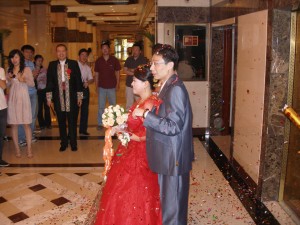
 

OLYMPUS DIGITAL CAMERA


Hectic morning


Our departure on the morning of 23rd May was hectic, because a misunderstanding had arisen between Jennifer and her agency and she didn’t turn up as agreed. We had to pick up a few necessities at a nearby supermarket but got into time trouble because of a long queue. Quite unusually and most out of line, Karin jumped the queue, which caused anger among the other shoppers. We tried to get a lift to the airport with some other people, but there was no room in the minibus. Jennifer finally turned up and hired a taxi to take us to the airport.


Challenges at the airport


The next challenge was excess baggage at the airport, which had never previously been a problem. I thought that my credit card gave me the right to excess baggage, but this was not the case. We got a slight discount but also had to pay some money. There were also problems in the hand luggage x-ray machine, but in the end we got through fine.


The Great Wall Marathon is always a fantastic experience, but in 2009 it had been extra special. Our trip to Shanghai was memorable, and it had been wonderful to have Karin’s company. The end of the marathon and the gala party afterwards are two things I will never forget. It was an incredible experience to be celebrated in such a way.


Buy the book here.
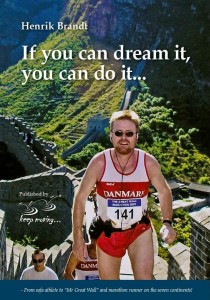
 

Engelsk forside