


A new marathon at long last
Having presented new, very special runs like beads on a string in the years 1999 to 2005, four years went by before Adventure Marathon “gave birth” to something new: Petra Marathon in Jordan.
Ancient city
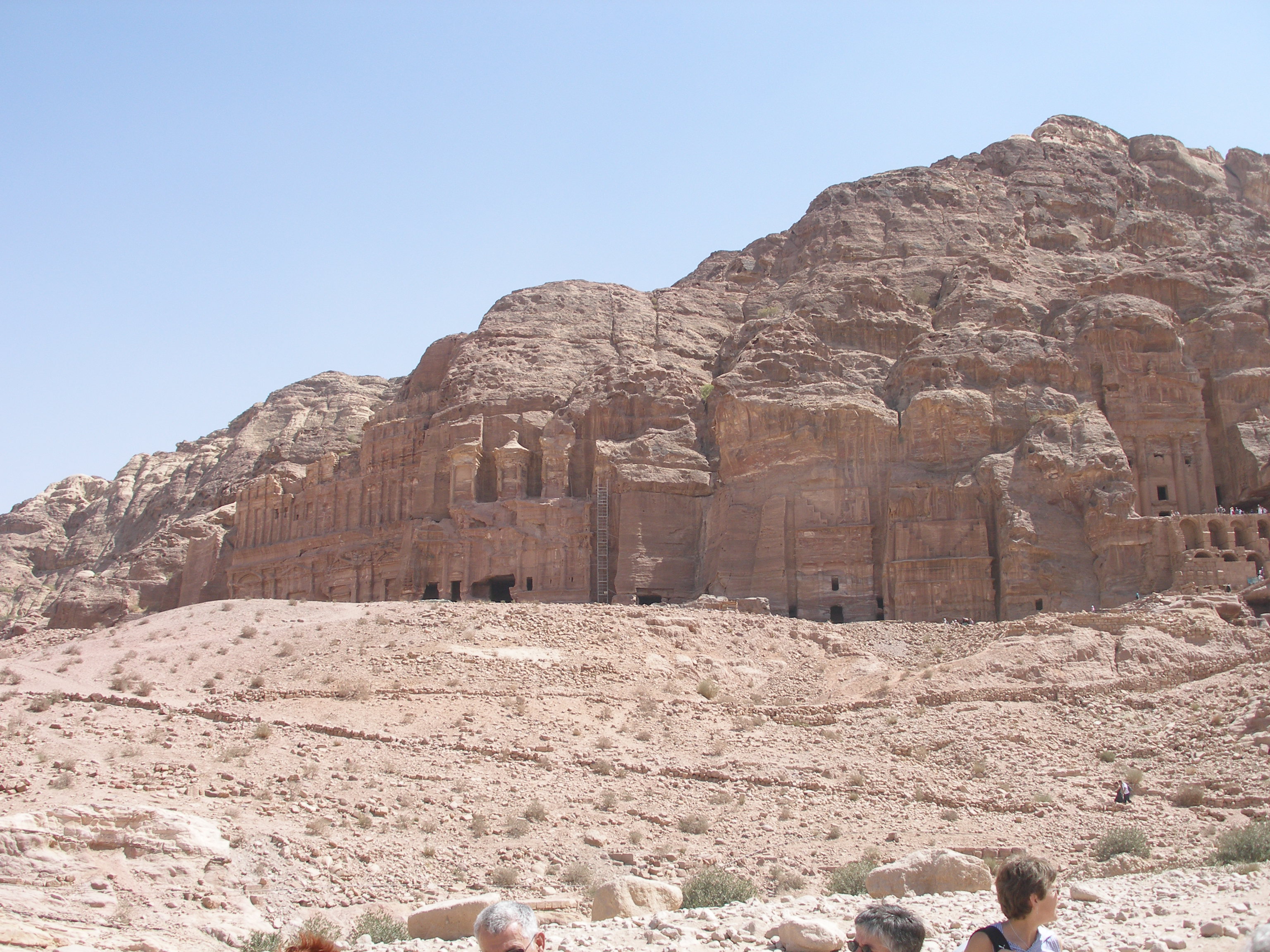
Petra was the capital of the Nabataeans from the fourth century BCE and 500 years on. After a short period of Roman rule, the city lay forgotten in the Jordan Desert for more than 100 years. Petra has been on the UNESCO World Heritage List for many years, and in 2008, it was proclaimed one of the seven new wonders of the world. The new Marathon was to be run between the ancient temples and tombs hewn into Jordan’s reddish-pink sandstone rocks.
Honeymoon without my bride
I had already signed up for this run in February, although, at that time, I didn’t know that it would be a honeymoon without my bride. On the other hand, I had two other women with me: Elisabeth and her friend Dorthe. It was Dorthe, who had put Elisabeth on the plane from Læsø on that August day in 2009. Emil also came along on the trip, for the first time without his brother. Steffen had used up his travel quota for the time being, having studied in Miami in the US and Perth, Australia. Now he was back in Denmark doing his national service with the Emergency Management Agency.
Ancient map in mosaic
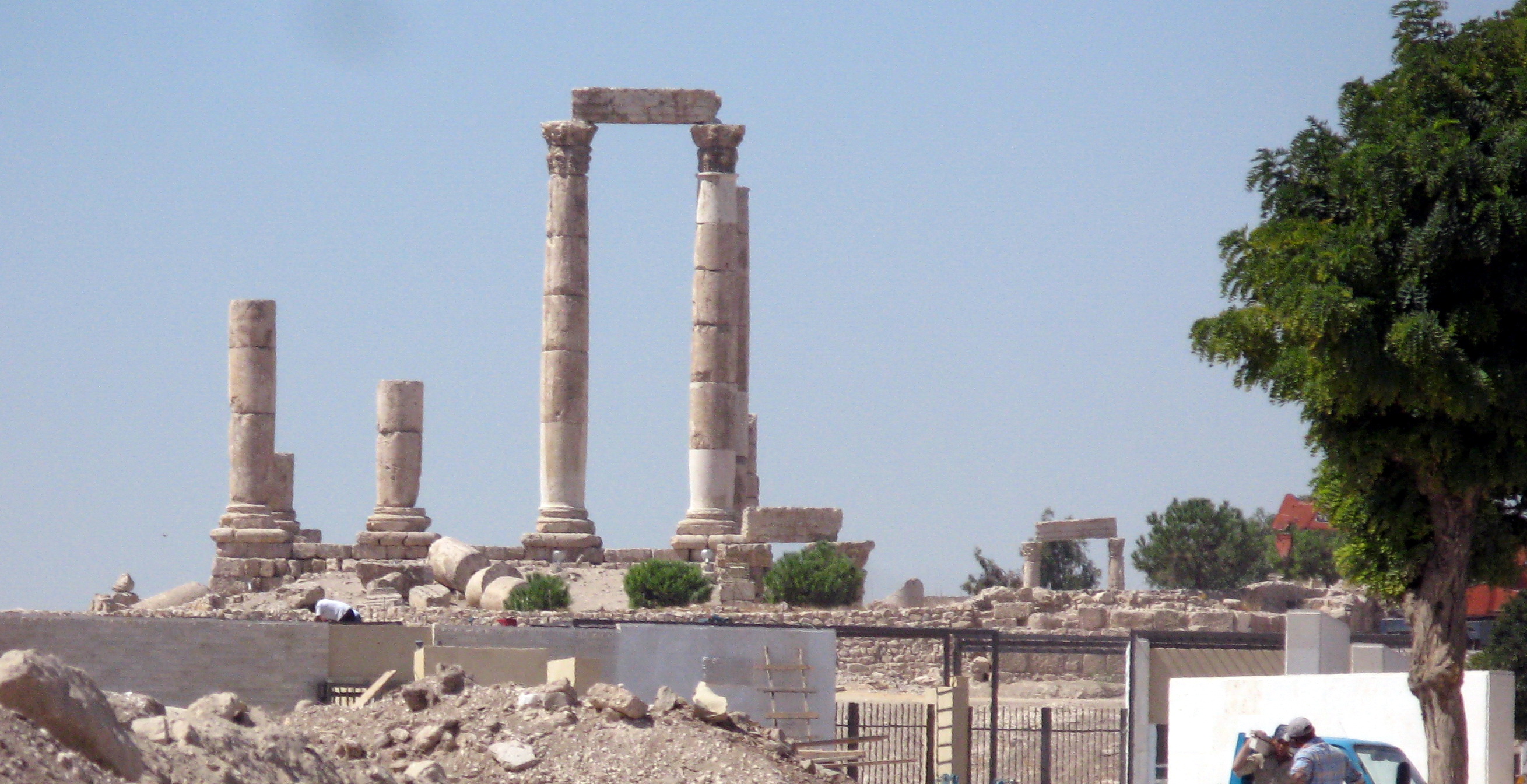
Our day of departure from Copenhagen was Wednesday 23rd September, and after transit stopover in Istanbul in Turkey, we arrived at the Regency Palace Hotel in Amman at three in the morning local time.
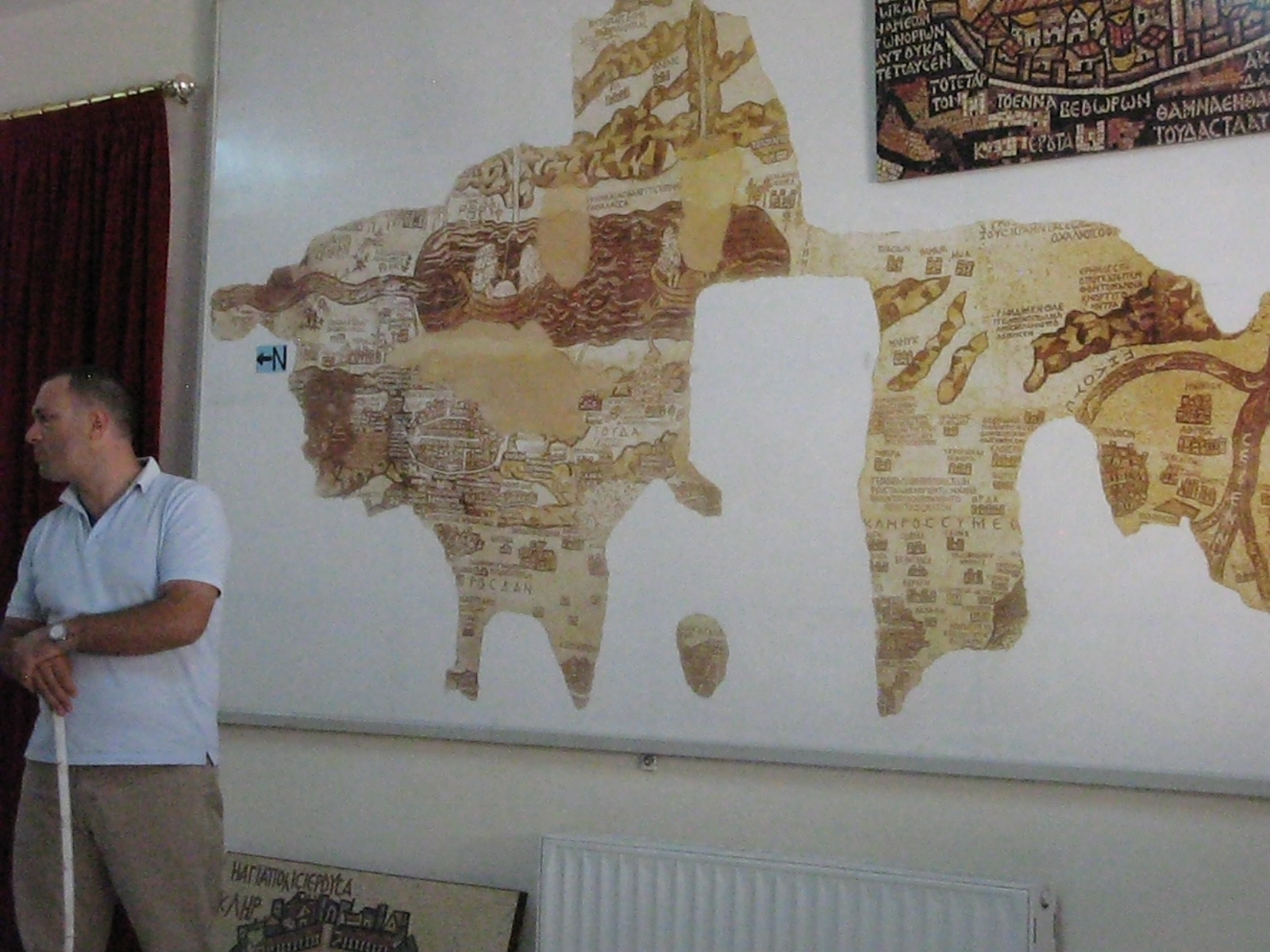
On the Thursday, we went on a short tour of the capital before moving on to the next stop along the way, the Christian city of Madaba, famous for its sixth century mosaic, a detailed ancient map of the entire Holy Land. The map once measured 5 times 25 metres. On what is left, one can see Jerusalem with the Church of the Holy Sepulchre; and above it, near the edge of the mosaic, the River Jordan and the Dead Sea.
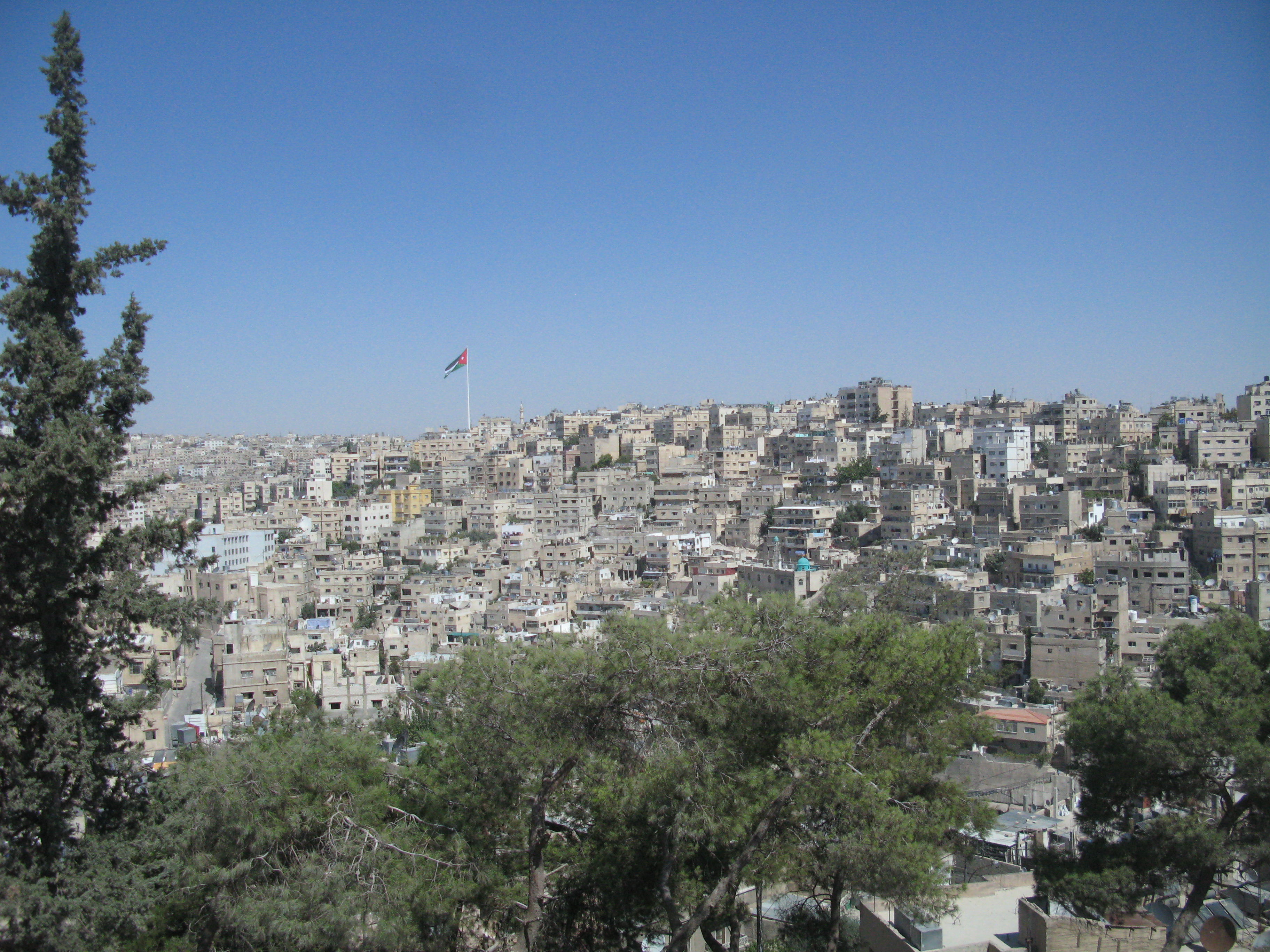
After another three hours’ drive along the magnificent historic King’s Road, we arrived at Wadi Mousa early in the evening. Wadi Mousa is the closest town to the ancient city, where the run was to start from. Here we were booked into the excellent Petra Marriot Hotel.
Inspection tour in Petra
On the Friday morning, all the runners met at the Hotel Mövenpick, where there was a briefing and subsequent inspection tour in Petra. Here, Thomas said he was a bit worried about me. He told me that the route was extremely tough and that we would have to cover it within seven hours and reach the 30-kilometre mark within five hours. His appeal was based on my running in South Africa, where I had had to drop out. I assure Thomas that this time I was mentally prepared and that I in no way anticipated a repeat of 2005.
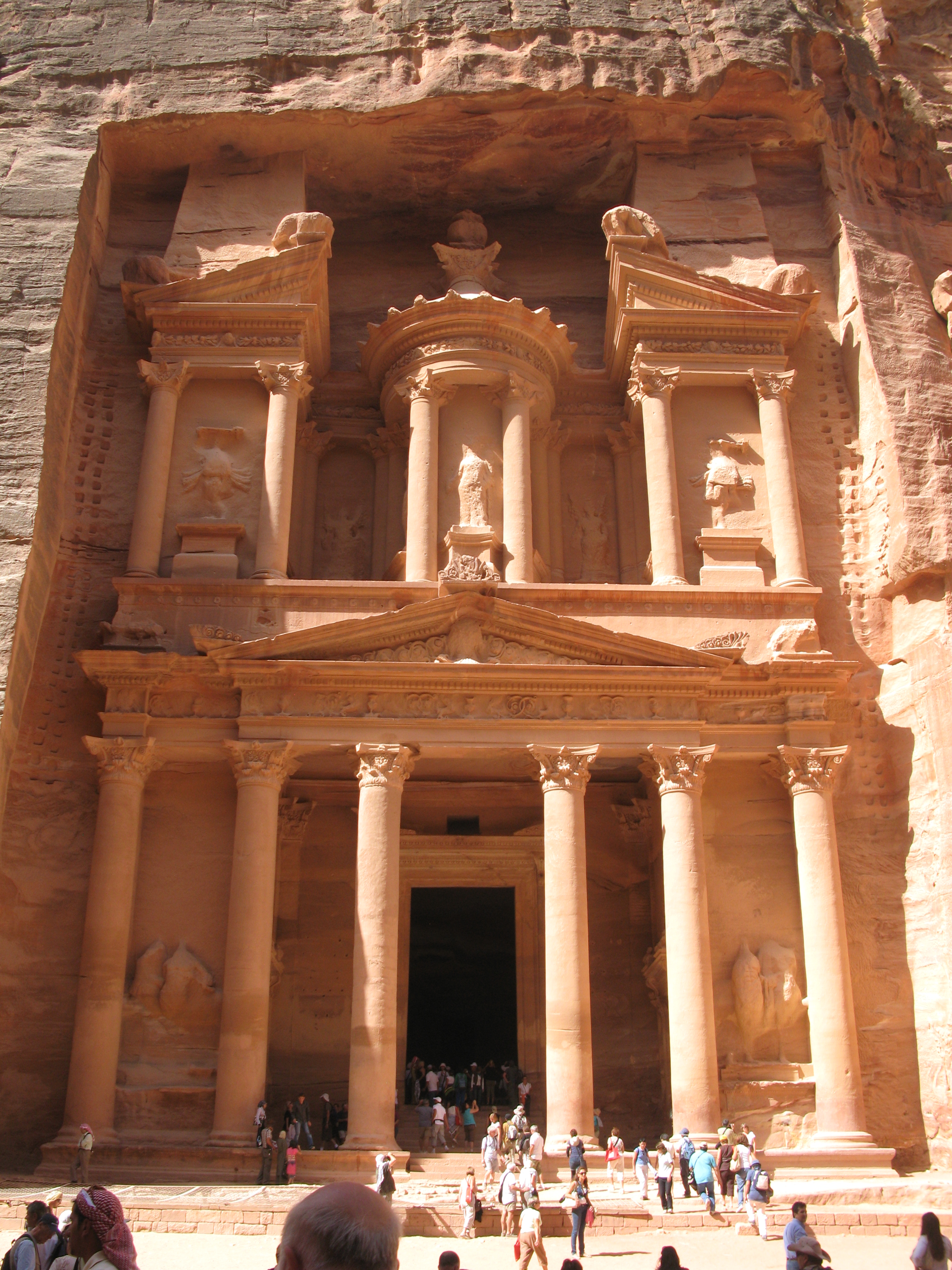
Respect for one of the wonders of the world
On the day of the marathon, Saturday 26th September, we were already up by 3.30 a.m. Initially, we were all supposed to meet up at the start, but because of a crack in the rock face inside the Siq, the gorge into Petra; and due to a general concern for the preservation and protection of this archaeologically important area, the Petra National Trust, UNESCO and the Jordan Ministry of Tourism had pleaded with the organisers not to run through the Siq, but move the start into Petra itself. When all had turned out and handed in their baggage, we walked together through the Siq to the new start. The change naturally meant that the Marathon would be extended by 1200 metre somewhere else along the route. We were to have started at six, but because it was still dark we did not get off until 17 minutes later.
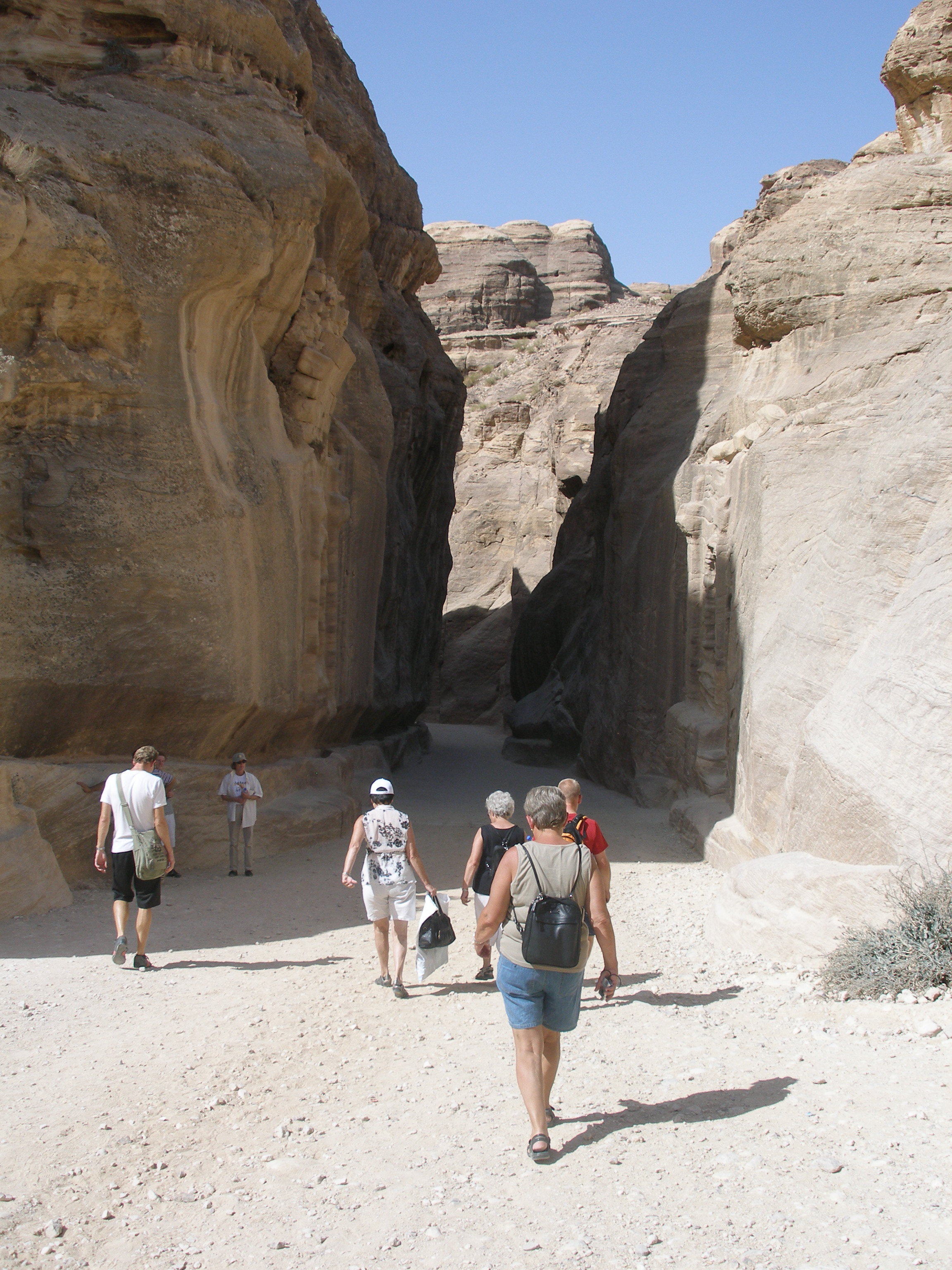
Spectacular surroundings
Shortly after the start, we arrived at one of Petra’s most famous buildings, Al-Kazhneh, the Treasury. It was a very impressive place with a highly detailed 40 metre high facade. It is known from the film “Indiana Jones and the Last Crusade”. After this, we reached a whole town of chamber tombs and caves hewn out of the reddish pink sandstone rock.
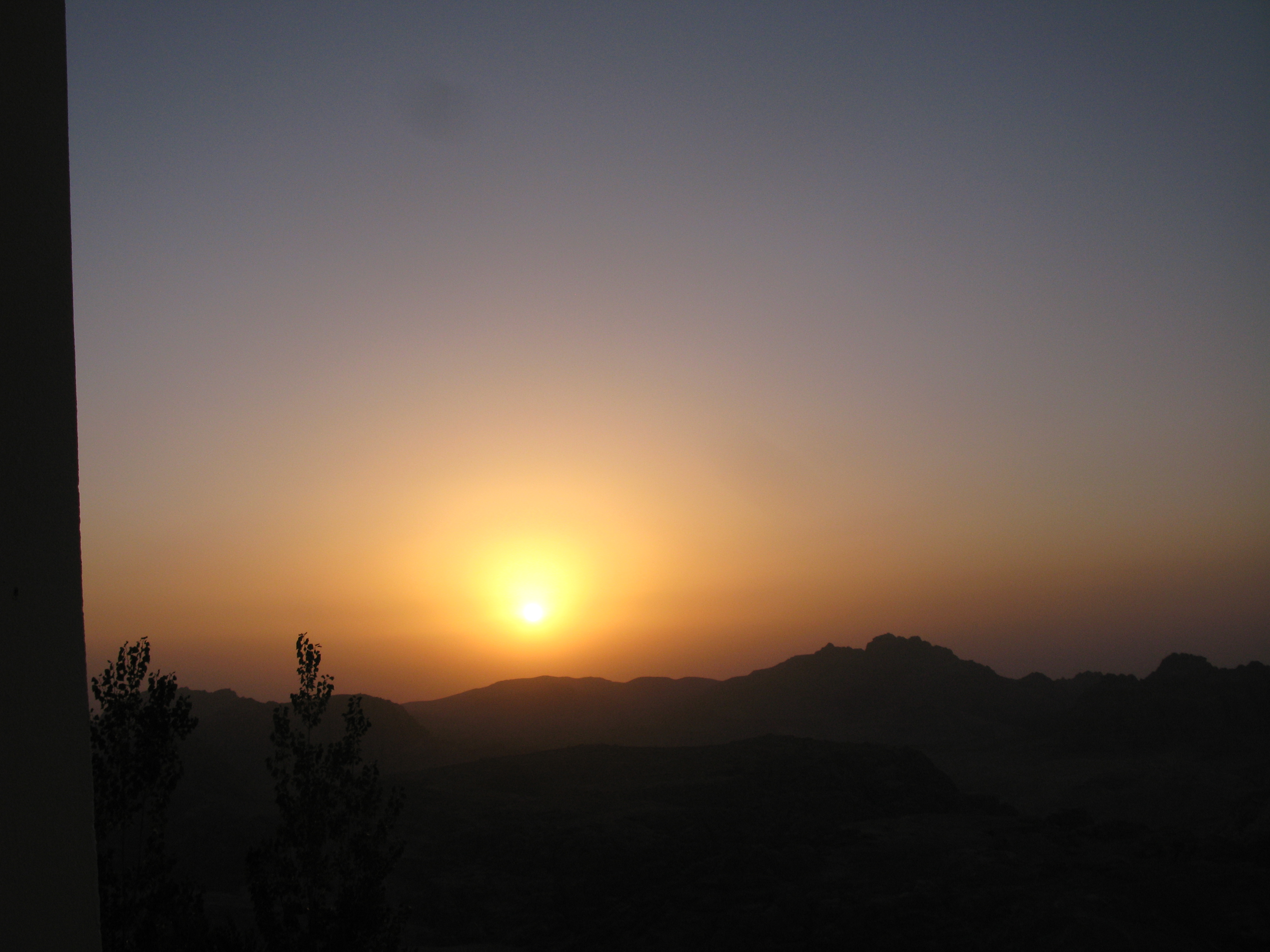
After running down the entire Roman market street with its row of circular columns, the route turned out of Petra and up the road behind the ruins. Running in these historical surroundings was a very special experience.
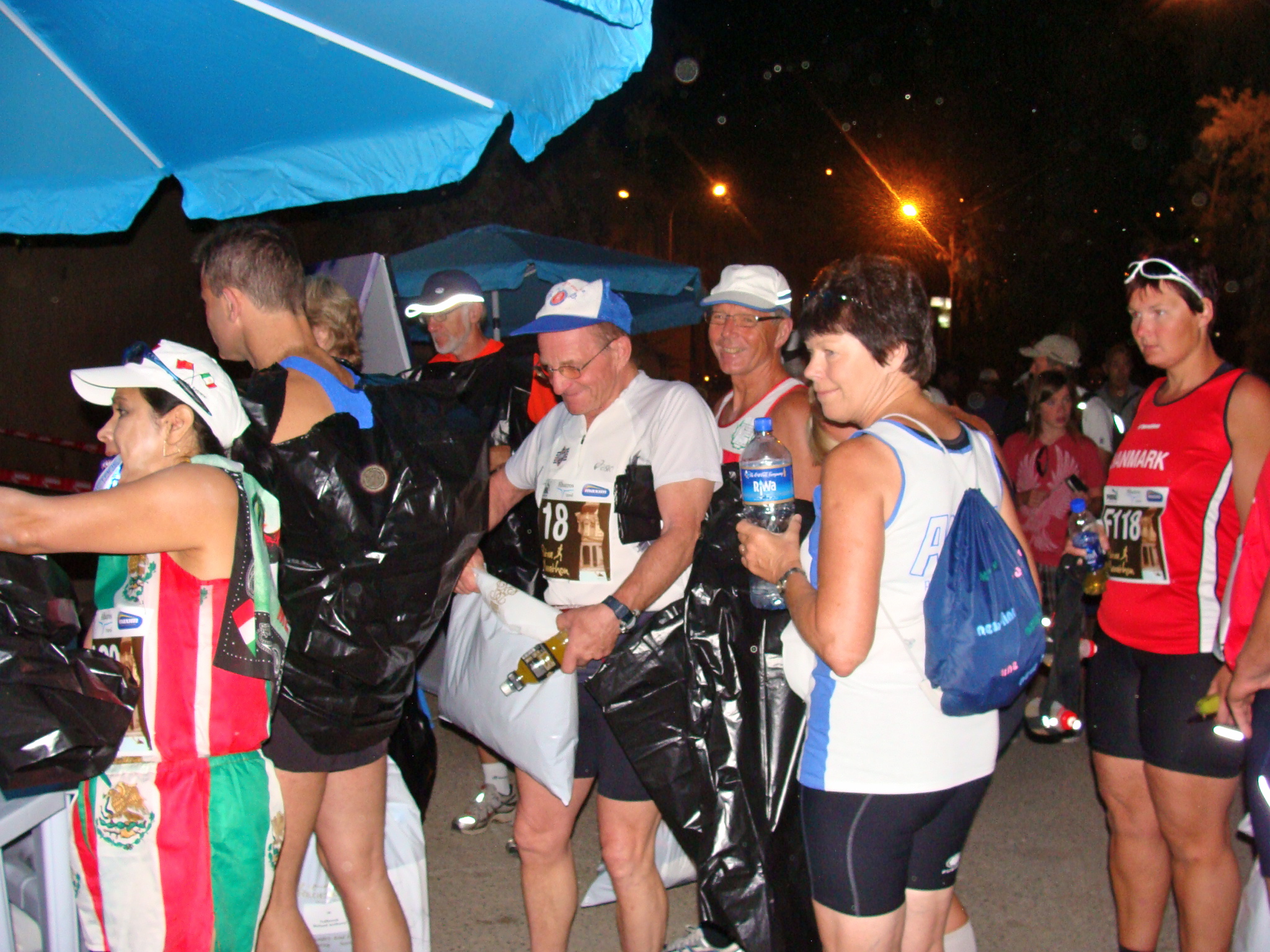
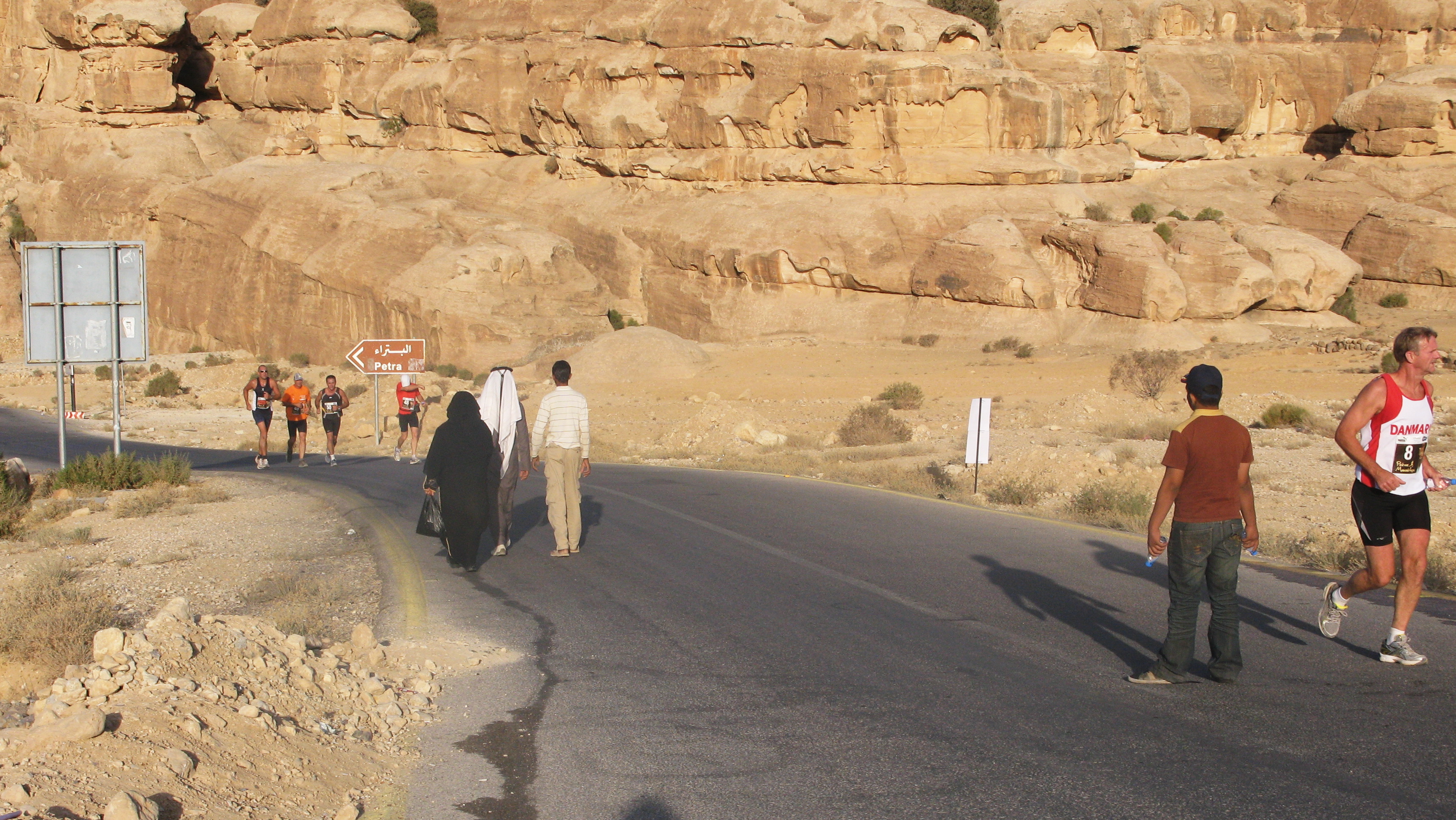
On the main road, we ran between rocks of all different nuances of red and yellow with the most incredible shapes. Part of the route took us along parched riverbeds in uneven terrain.
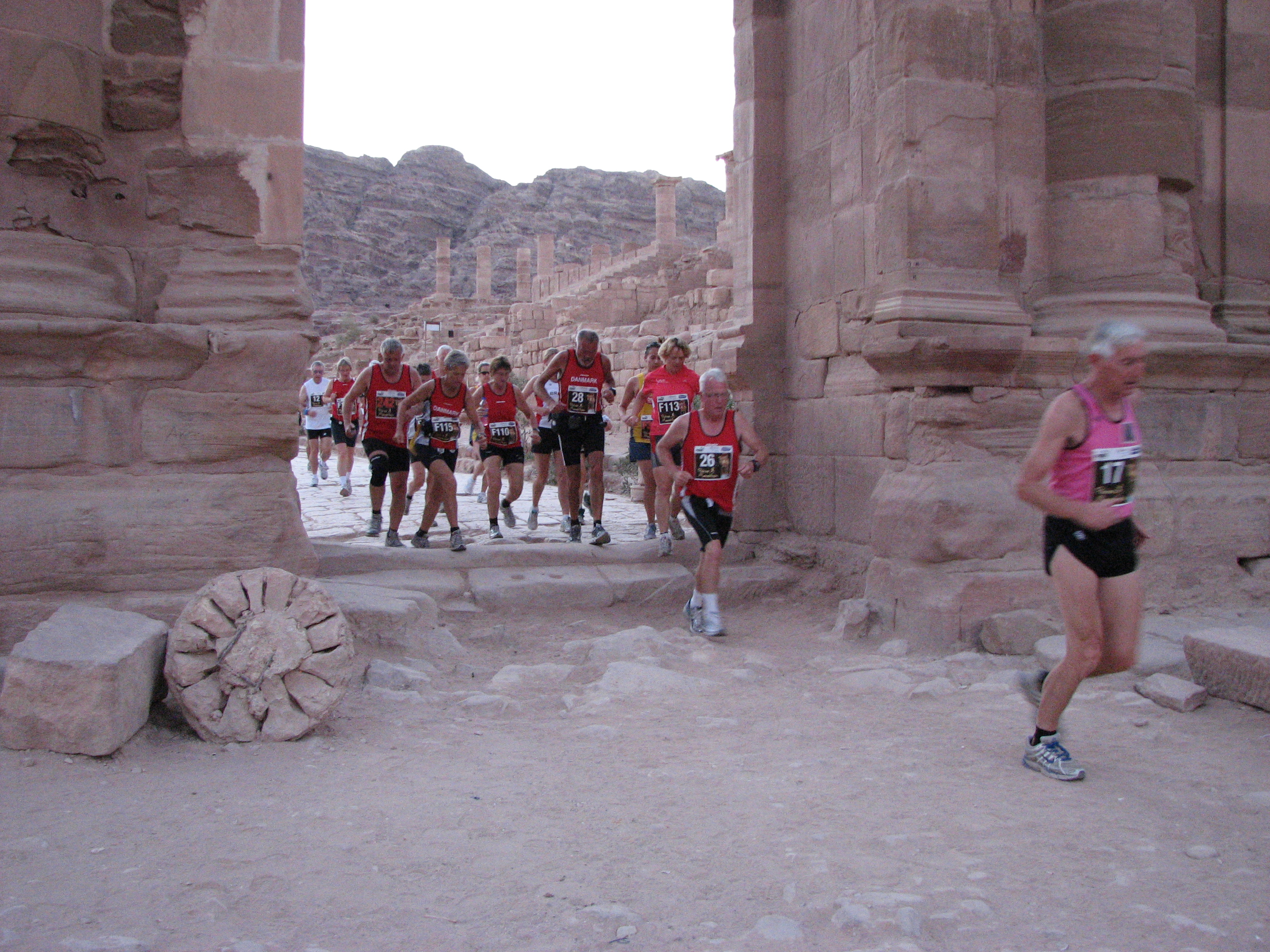
It was very sandy underfoot to begin, with, but this was no longer a problem. I kept up a good average of eight kilometres an hour all the way to 28 kilometres.
Steady run
After around 12 kilometres, we came to flat asphalt, along which there were patches of shade between the rocks. I actually ran quite fast along this stretch, overtaking a few people along the way. After that, we ran up and down hill for some time. I came across some of the people, who were in front of me because there was a turning point, and they were on their way back.
After 22 kilometres, I also arrived at the turning point and was given a rubber band around my wrist to prove that I had been there. Now I was also on my way back and had to run uphill for quite some time. I was forced to walk some of the way at this point, although I did maintain a reasonably constant pace for a while. However, when I reached the end of the flat asphalt road, I had no energy left to run fast. Now I alternated between jogging and walking. I reached the 30-kilometre point after just four hours, which meant I was making good time.
The big challenge
After 31 kilometres came the big challenge. We now had to run uphill for the next three kilometres, and things got very difficult at one stage, although I was not in deep crisis. I got up the worst part, but the route continued uphill along gravel roads.
Safety first
After 37 kilometres, I finally reached the top and now the route went downhill. But it took us down uneven, stony paths, and I didn’t dare run for fear of injuring myself in my attempt to cross the line within six hours.
After 40 kilometres we were back on asphalt, but in many places the way down was very steep, so I wasn’t able to run here, either.
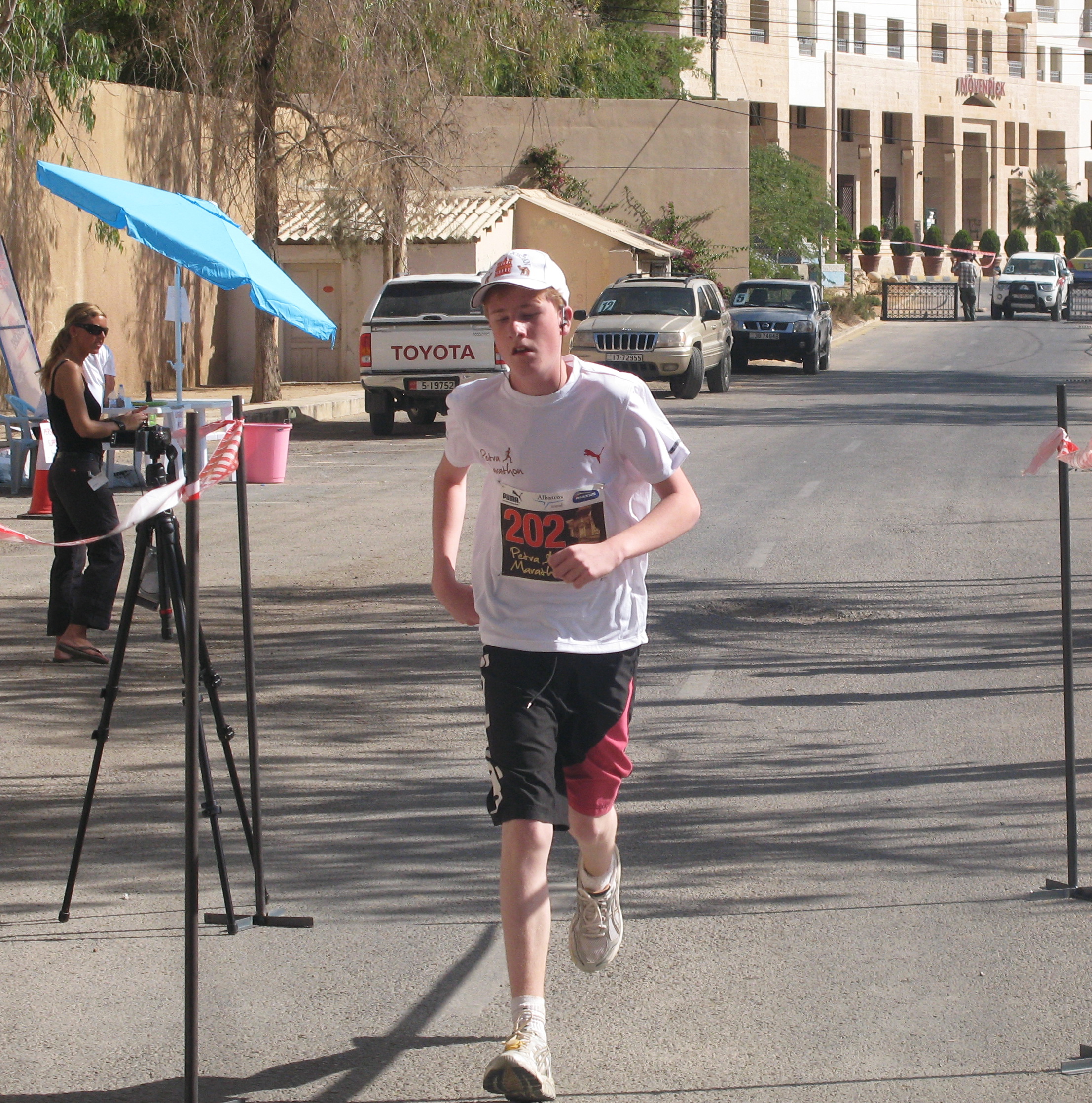
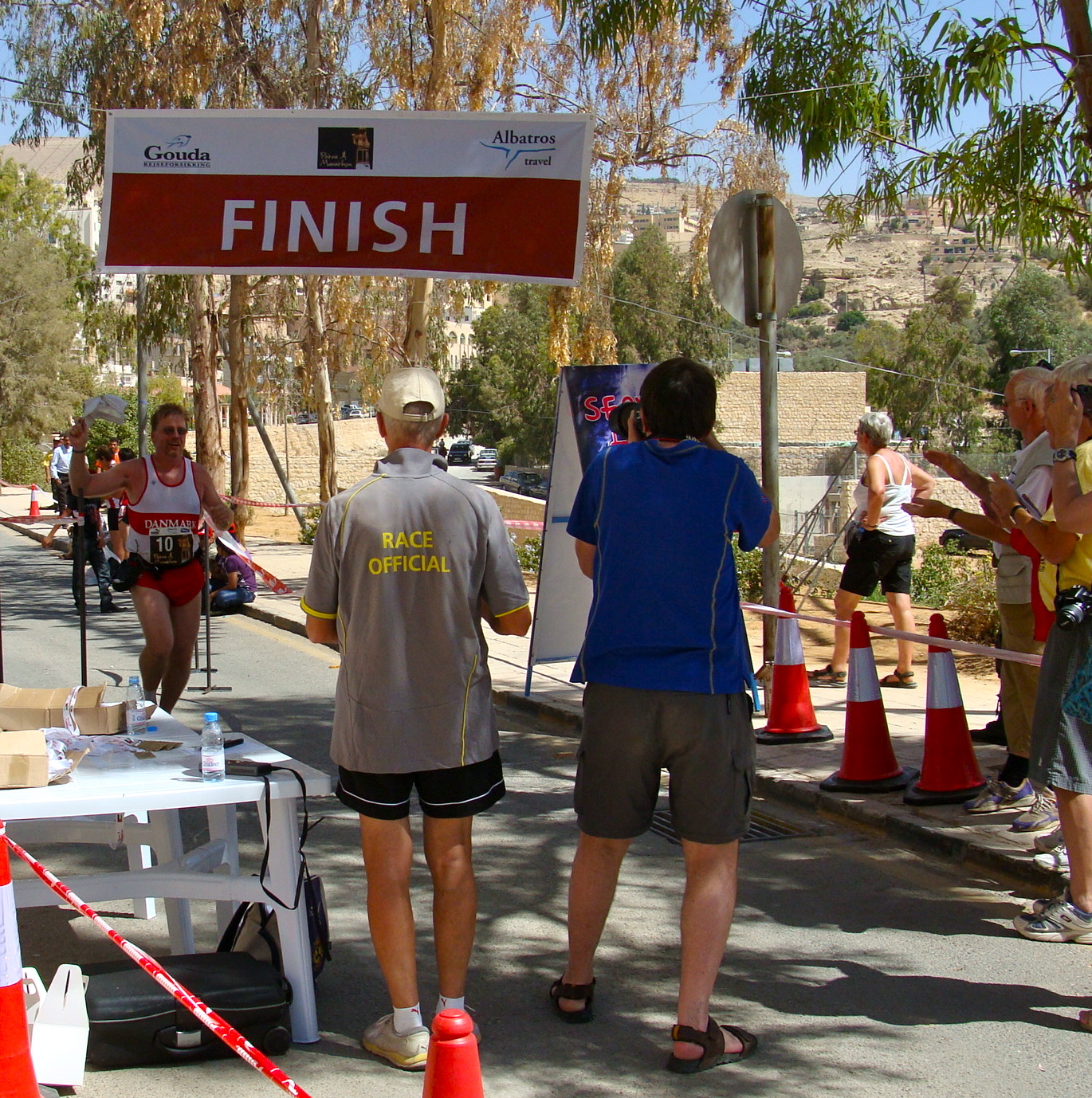
I ran across the finishing line with a time of 6:14:51, and Elisabeth was waiting there for me. Emil finished his 23-kilometre run with an excellent time of 3:21:26. He had gone back to the hotel with Dorthe.
A restless night
I had little appetite that evening. I couldn’t eat very much and went to bed early. It was a weird night. At one instant I was freezing cold, and the next I was sweating. I was pulling the duvet off and on all the time. I was delirious and woke with a start every time Emil moved or made the slightest noise. Emil found this quite funny. Although I was fully aware of what was happening, I couldn’t do anything about it.
Gala party in the open
We had Sunday to ourselves, so we took a taxi into town and browsed the bazaar for a couple of hours. We spent the afternoon at the hotel pool relaxing, bathing and enjoying the sun.
That evening, the gala party was held outdoors in Little Petra. To the sound of pompous music through the loudspeakers, we walked along the red carpet on the sand to an area with a burial chamber. There were torches along the edge of the red carpet to help us find the way, and it was a sight to behold. After a welcome drink, we sat down at roundtables. We were bid welcome, after which we went to the buffet. During the evening, we were entertained by a local male dance troupe and the marathon participants launched into a circular dance.
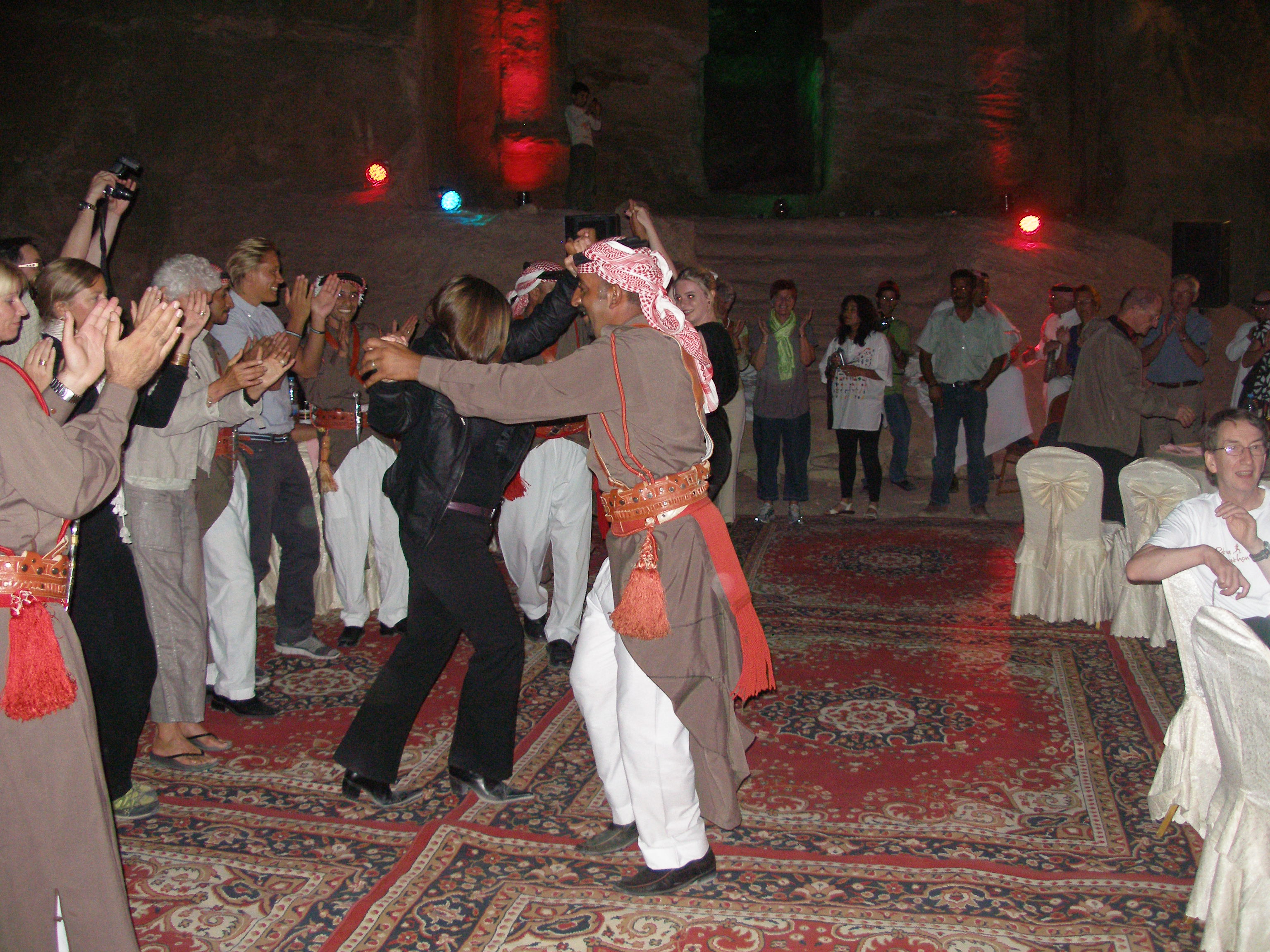
Not tougher than the Wall
The winners were announced during the dinner. Several people had said that this run would be tougher than The Great Wall Marathon. I repudiate that. My time was an hour and a quarter shorter than in China. The winning time in Petra was 3:15:03, which was almost 26 minutes faster than on the Wall that same year.
The Dead Sea
Monday we went on a long bus trip. We left our hotel in the morning, and at around midday we reached the town of Karak with its several thousand-year old castle, one of the largest castles in the region.
We reached Wadi Rum and the Hotel Mövenpick in the middle of the afternoon, after which we were driven down to the coast in small, fun Club Cars to bathe in the Dead Sea, the lowest-lying lake in the world and at 400 metres below sea level, the lowest point on the globe. This was a strange experience. We lay on our backs and were almost unable to force our feet to the bottom. It was as though we were floating round in oil. The water has a salt content of around 30 percent, so there were neither living plants nor animals. We were advised not to wear jewellery, for which reason I took off my wedding ring for the first time ever. We were also warned against getting the water in eyes and mouth.
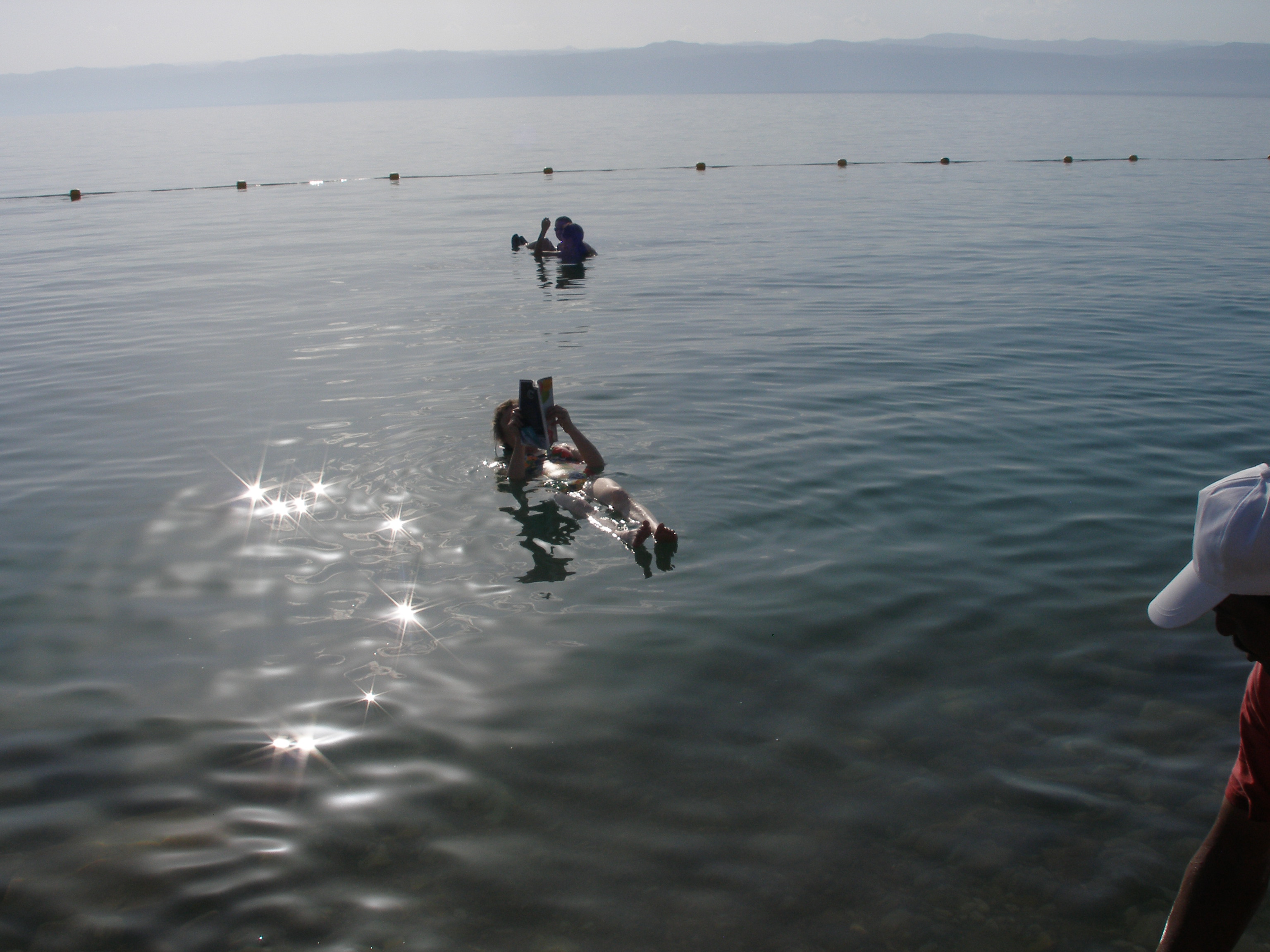
After supper with good wine and some relaxing hours at the hotel, we were to leave at midnight for Amman and the airport.
In the middle of the night, we flew once again via Istanbul to Copenhagen, where we arrived Tuesday morning. An exciting trip was at an end and a good race had been run.
Repeat forbidden
It turned out that the Petra Marathon would not become a permanent fixture. The marathon was not run the following year, although it came back in 2011. After this, it was no longer permitted to run in the town of Petra. UNESCO and the local authorities decided that organising marathons in an ancient city was not defensible, considering the historic significance of the place. This is, of course, fully understandable, but without these fantastic surroundings the run made no sense.
Buy the book here.
