


The dynamic trio’s third initiative
Having already sent us on three trips to the heat in China and one to the African Savannah, the organisers behind Adventure Marathon obviously thought it was time to cool us down a bit. Not long after we got home from The Karen Blixen Marathon in 2000, I received a letter from Albatros with news of their next initiative. The letter started with “Welcome home from Kenya!”, and then continued with information about the run in Greenland. There had been advance publicity for it in the tabloid BT, and considerable interest was being shown in the race.
The marathon was to be run in Kangerlussuaq north of Greenland’s Polar Circle. The unique and difficult route would take us to the enormous glacier tongues that mark the limits of Greenland’s inland ice. It would also take us right up on top of the 150,000 year old ice, but also over moraine plains and tundra, past melt water lakes and waterfalls through the fascinating Arctic desert, where musk ox and reindeer graze on the sparse vegetation.
I wasn’t in doubt for a moment that I was going to run in this marathon, and it was just as certain that the boys would be coming along with me. More members of my family also wanted to join us on this fantastic journey, so in the end we were a group of seven.
First day in Greenland
We met up at Copenhagen Airport on our day of departure, 5th September, at eight in the morning and were already in Greenland by 11.15. This was not, of course, due to a very fast plane but to the natural time difference between Denmark and Greenland.
Our hotel was in the airport building itself, which couldn’t have been easier. Already half an hour after our arrival, there was an information meeting about the locality and in particular, the marathon. After this, we went on a sightseeing tour of the area by bus and saw a musk ox and a couple of reindeer. There were no further shared activities planned for that day and after supper we went to bed quite early. I would later regret not having overcome my tiredness to attend a concert in town. The Danish band Dodo and the Dodos had played, and many people were thrilled with the experience.
Kangerlussuaq
Kangerlussuaq is the Greenlandic name for the 180 kilometre long Søndre Strømfjord and means quite simply the big fjord. Because of the very stable weather conditions, the Americans had chosen the place to build an airbase during the Second World War. The airfield had been very important for many years because it was the main port of entry to Greenland. After the American military had pulled out of the area in 1992, the civil authorities took over. All the town residents were linked in some way to the airport’s operations, and the area still had the character of an airbase although you didn’t have to go very many hundred metres from the town to sense the immense nature of Greenland.
Climbing a mountain
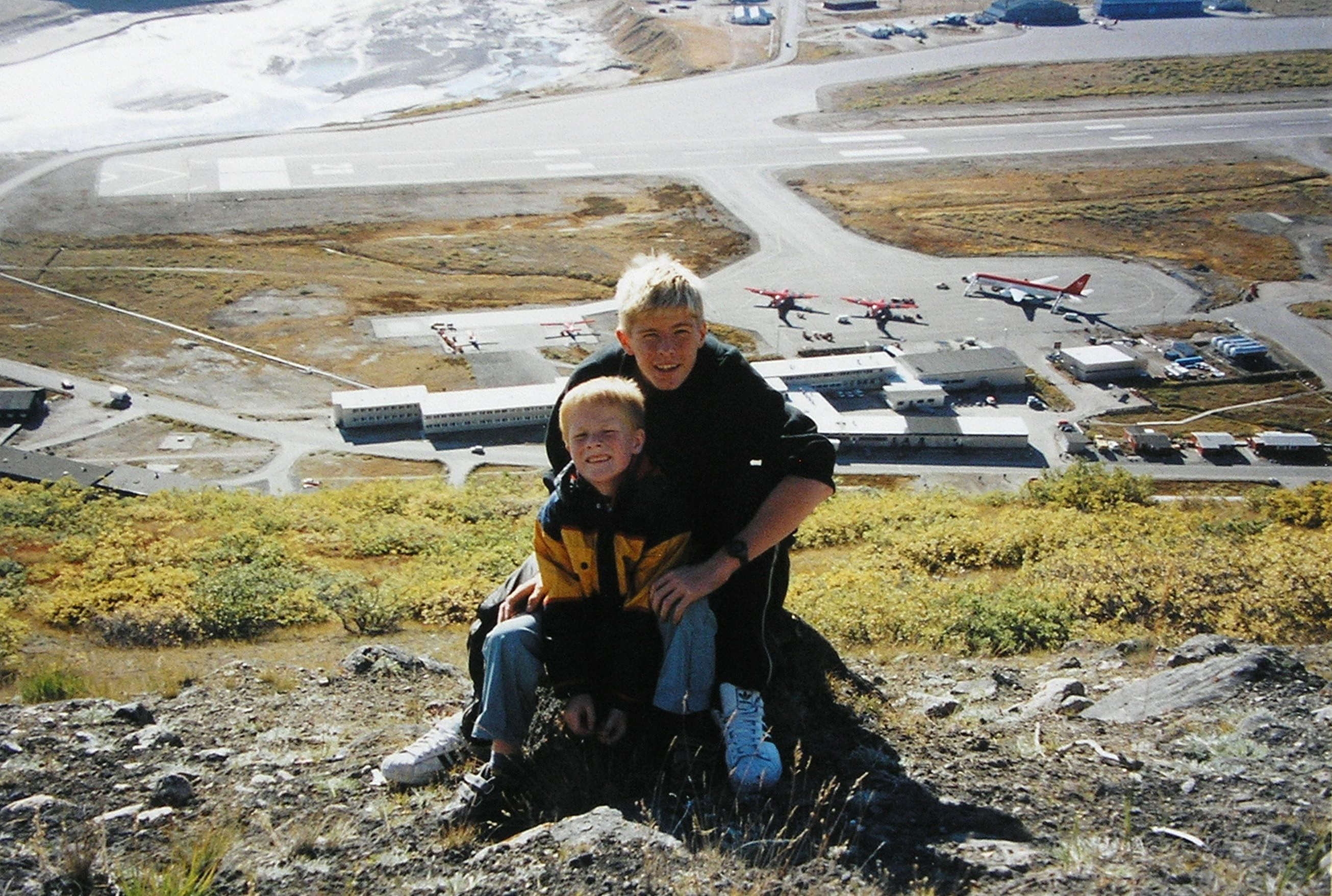
The boys and I spent most of the Thursday climbing up a mountain. There was a mountain not far away from the hotel, and we decided to climb to the top of it. Of course, this was not proper mountaineering, although there were some very steep slopes which were almost painful to climb. Our calf muscles became very tight from time to time. The mountain was actually much higher than we had realised, and every time we thought we had reached the top, we had only reached another ledge, which was followed by another climb. In fact, it was impossible to see the summit of the mountain from below, and we never did get all the way up. However, we were so high up at one point that we had a superb view of the entire area. We could see buildings, the airport, mountains and lakes and in the far distance was the inland ice. We decided not to continue on up, simply because we couldn’t see how high the mountain was. Because of the many loose stones on the steep paths, we had to be just as careful on the way down as on the way up. We were later told that we had climbed up the world’s second oldest crag, which is several billions of years old.
Majestic visit
When we arrived back at the hotel, it turned out that prominent visitors had arrived in our absence. HM the Queen of Denmark, no less, was staying on our corridor at the hotel. The Queen’s visit had been by pure chance. She was to participate in festivities in connection with the Greenland Commando’s Golden Jubilee, but her journey had been interrupted by bad weather and fog. Three planes had arrived in Kangerlussuaq from Copenhagen at intervals of just a few minutes. In the Queen’s entourage where Prime Minister Poul Nyrup Rasmussen, the head of the armed forces Christian Hvidt and Stuart Bernstein, the newly appointed United States’ ambassador to Denmark. The Queen spent the afternoon observing musk ox on an excursion in the area. I didn’t manage to see the celebrities until they were on their way to their destination the following day.
Excursions
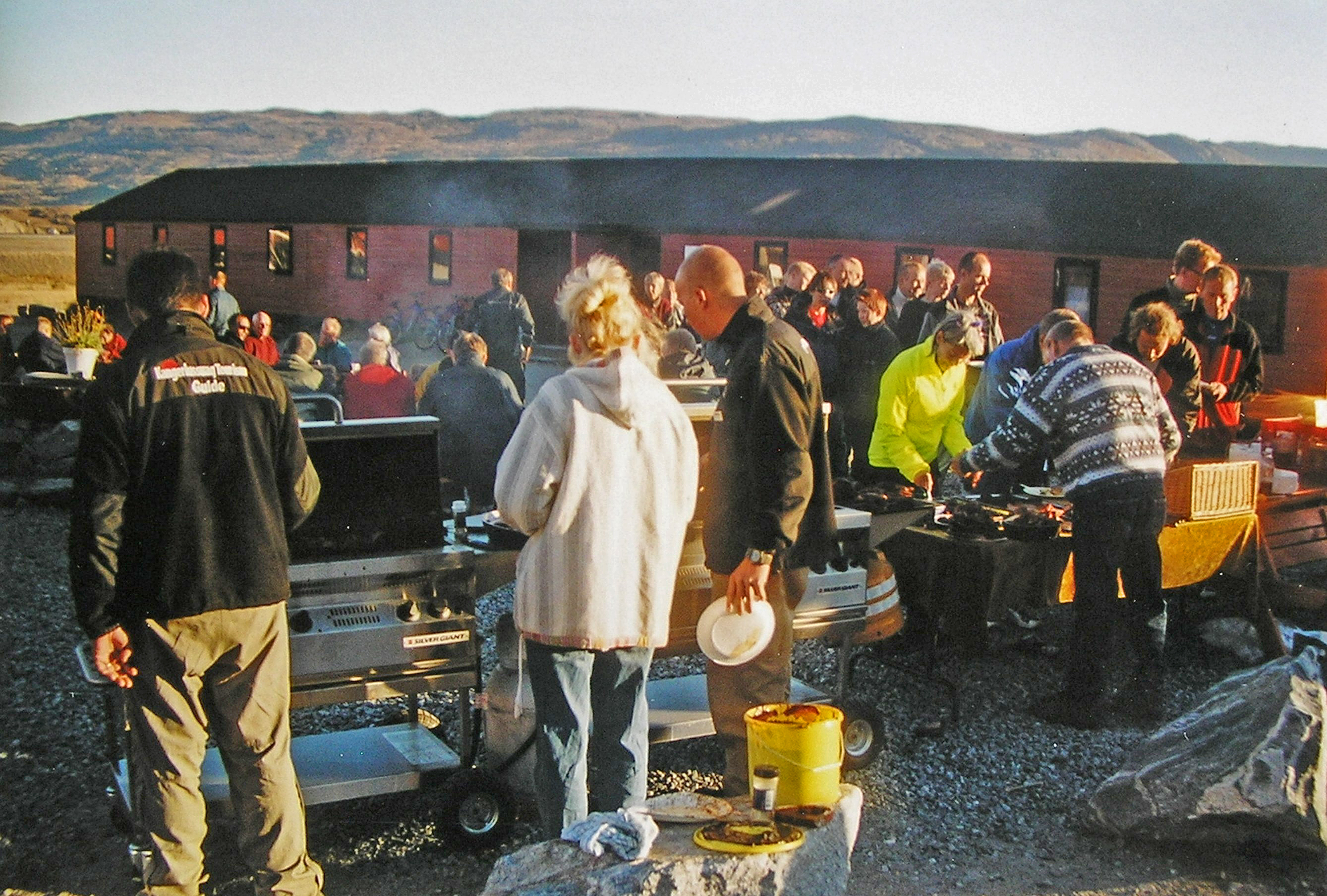
Immediately after breakfast on Friday morning, we set off on an excursion with our 4x4s to get out and see some wildlife and magnificent countryside. We had had musk ox for dinner the previous evening, along with barbecued reindeer and seal meat outside on the veranda at the youth hostel. Now we saw musk ox alive and kicking. The beauty of the inland ice made a deep impression. It is almost impossible to believe that something can be so magnificent. We stopped at a place where there was a perfect view of the ice, and we saw a huge block of ice detach itself from the glacier and crash thundering down.
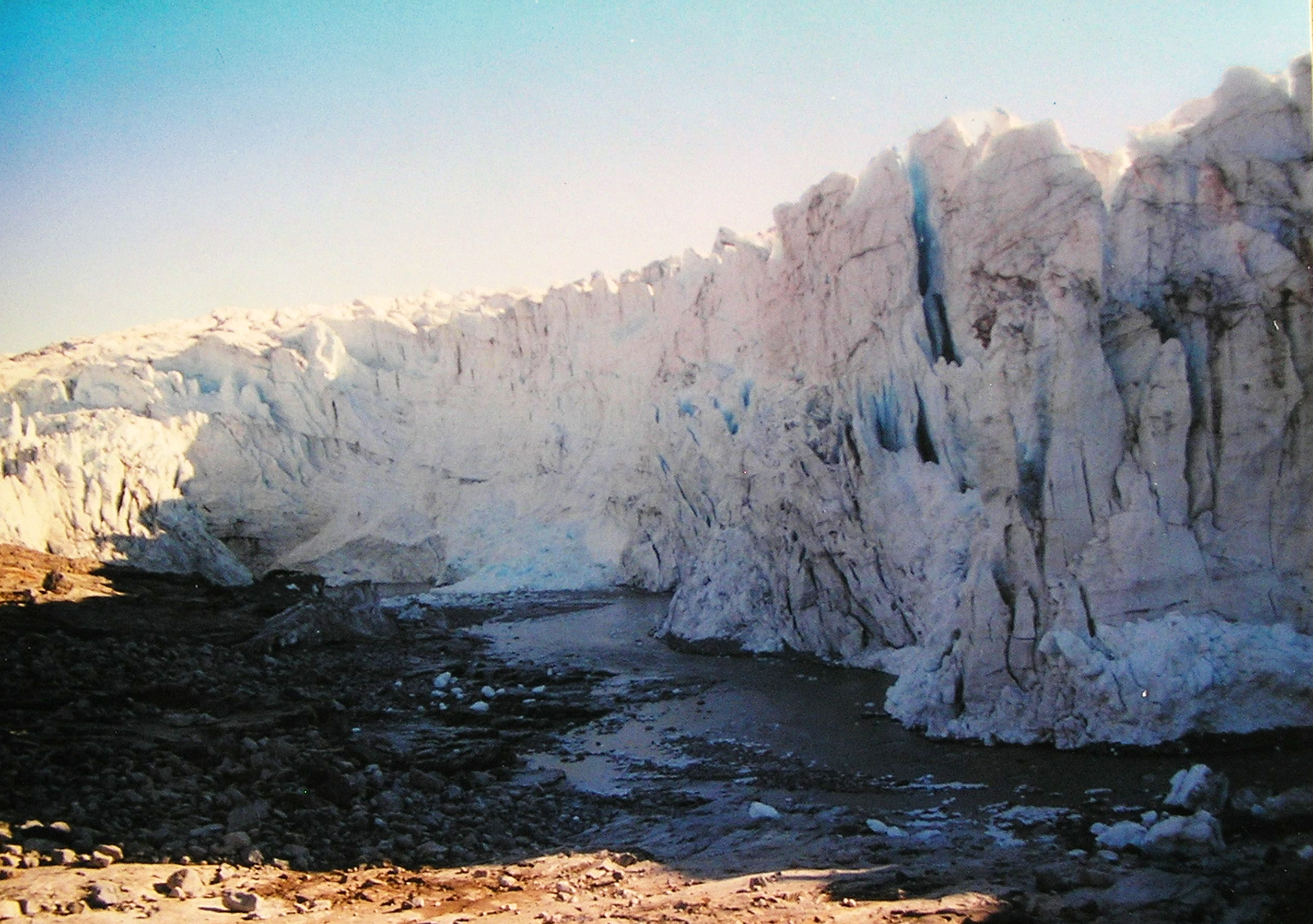
Saturday was also reserved for exploration. In the morning, we went out to view the route and went right to the top of the inland ice where we were to run the following day. It was bitterly cold, although indescribably beautiful. There were ice and snow everywhere and on the horizon we saw the most fantastic landscape you can imagine.
VW test track
A bit further out onto the inland ice was a test track, built by Volkswagen, with a diameter of 50 kilometres for them to test cars of the future under extreme climatic conditions. The track had been established a few years earlier in agreement with the Greenland Home Rule Government, and for Kangerlussuaq’s 600 inhabitants this polar test track meant sound growth. The men at the test track obviously needed hotel beds, food, health and emergency services, guards and advanced infrastructure for the research results to be exchanged with VW’s headquarters in Wolfsburg in Germany. Besides VW, the track was also used to test vehicles made by Audi, Seat, Skoda, Rolls-Royce and Lamborghini.
But the area was high security, and unauthorised persons were allowed nowhere near it. There were stories of tourists in the area having photo and video equipment confiscated because they were suspected of engagement in industrial espionage. Now, however, the VW Group had condescended to allow a marathon to be run in the vicinity.
On horseback
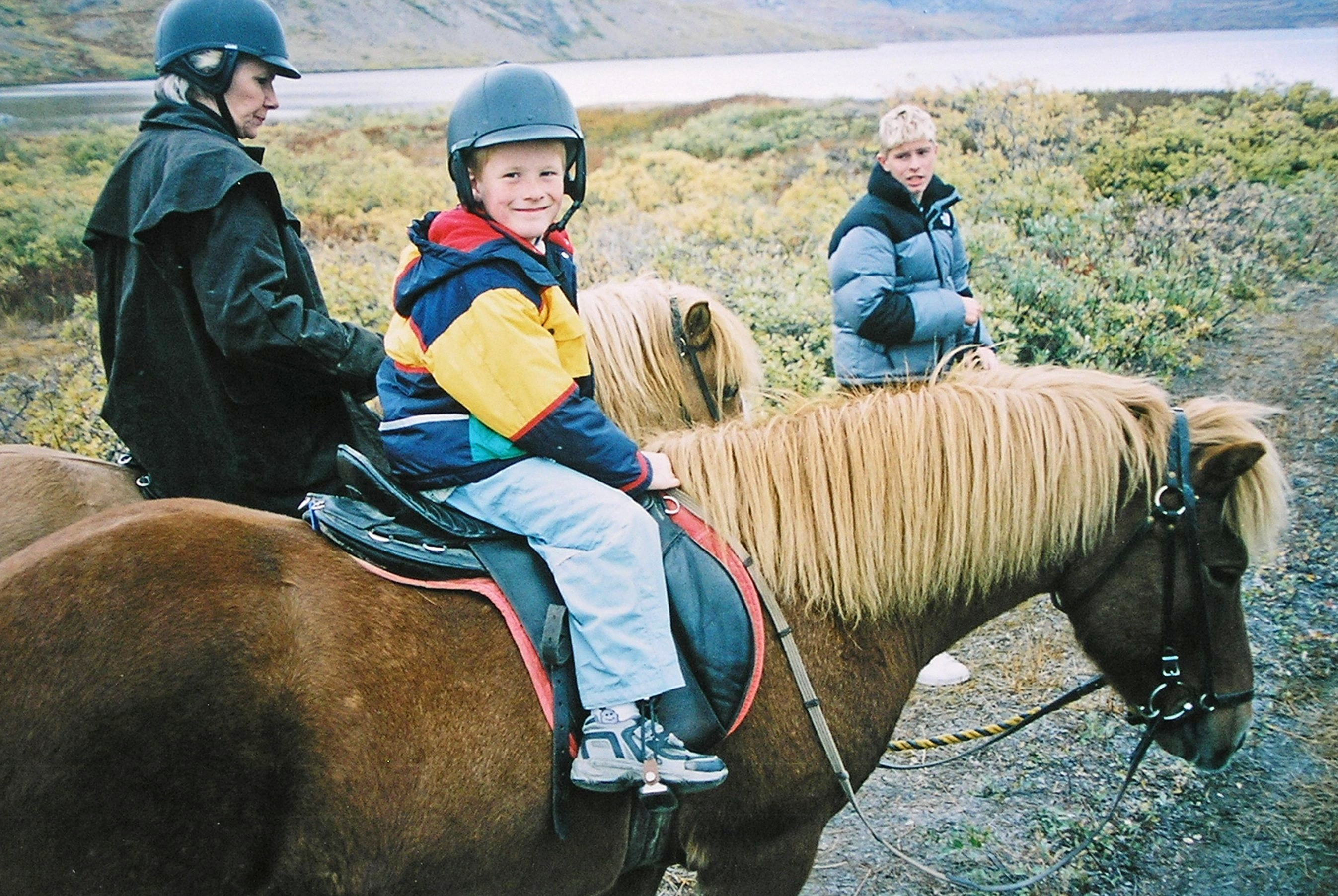
After lunch my stepmother Elisabeth, the boys and I went riding in the area around the airport. Elisabeth has ridden all her life and is highly competent, but the same could not be said of the rest of us. We rode Icelandic ponies on a two hour excursion with a guide. Although the countryside was absolutely fabulous, we were a bit disappointed. We had been told that we might see musk ox and reindeer, as well as a lot of birds of prey, but we saw nothing. But nature cannot be programmed so that it fits in with the plans of the tourist agencies and we enjoyed the ride despite the absent wildlife.
Sudden impulse
After the obligatory pasta party the evening before the run, we were sitting in the hotel cafeteria drinking coffee and tea. Steffen suddenly surprised us with the announcement that he wanted to run the marathon the following day. He had previously run half-marathons in Kenya as well as China. But here there was only the full distance, so it was a case of either or. Steffen believed that within the seven hours permitted; he would be able to run half the way and then walk the rest. I won’t pretend that I’m an expert when it comes to whether or not it is responsible to allow a 13-year-old boy to run a marathon, so we consulted Thomas from the Athletics Federation and the medic, Mogens, both of whom was sitting in the cafeteria. Thomas had no hesitations about allowing Steffen to start, although he asked him to take it easy and perhaps walk the first 17 kilometres until he had been on the inland ice and returned to the start. Then he would be able to run the last 25 kilometres to the finish. It was a good job Steffen had running shoes with him and that I had an extra snowsuit.
The coolest marathon on earth
On Sunday 9th September, the day of the first Polar Circle Marathon arrived, and we were to get up early because the bus was leaving for the start at 7.15 a.m.
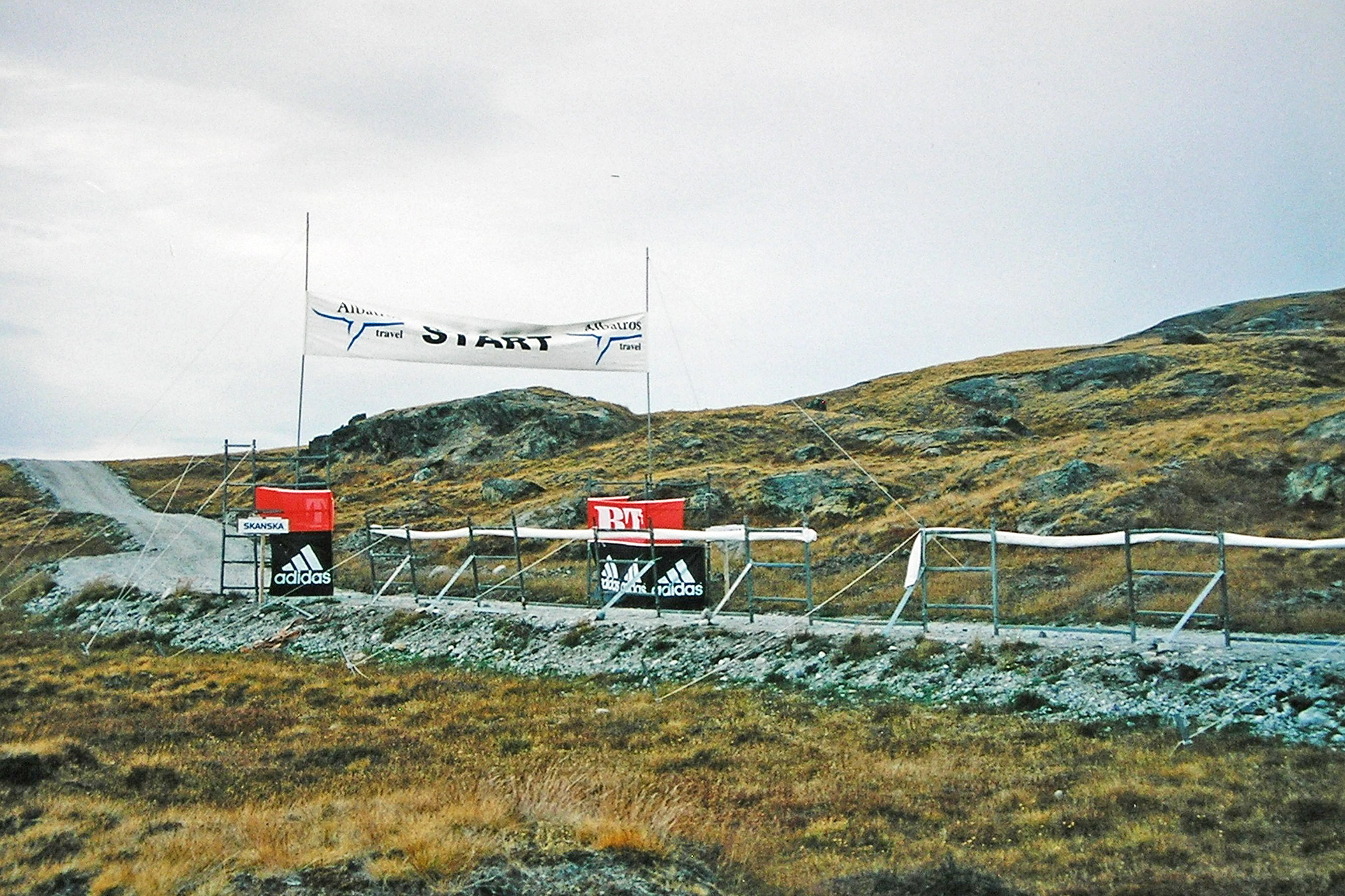
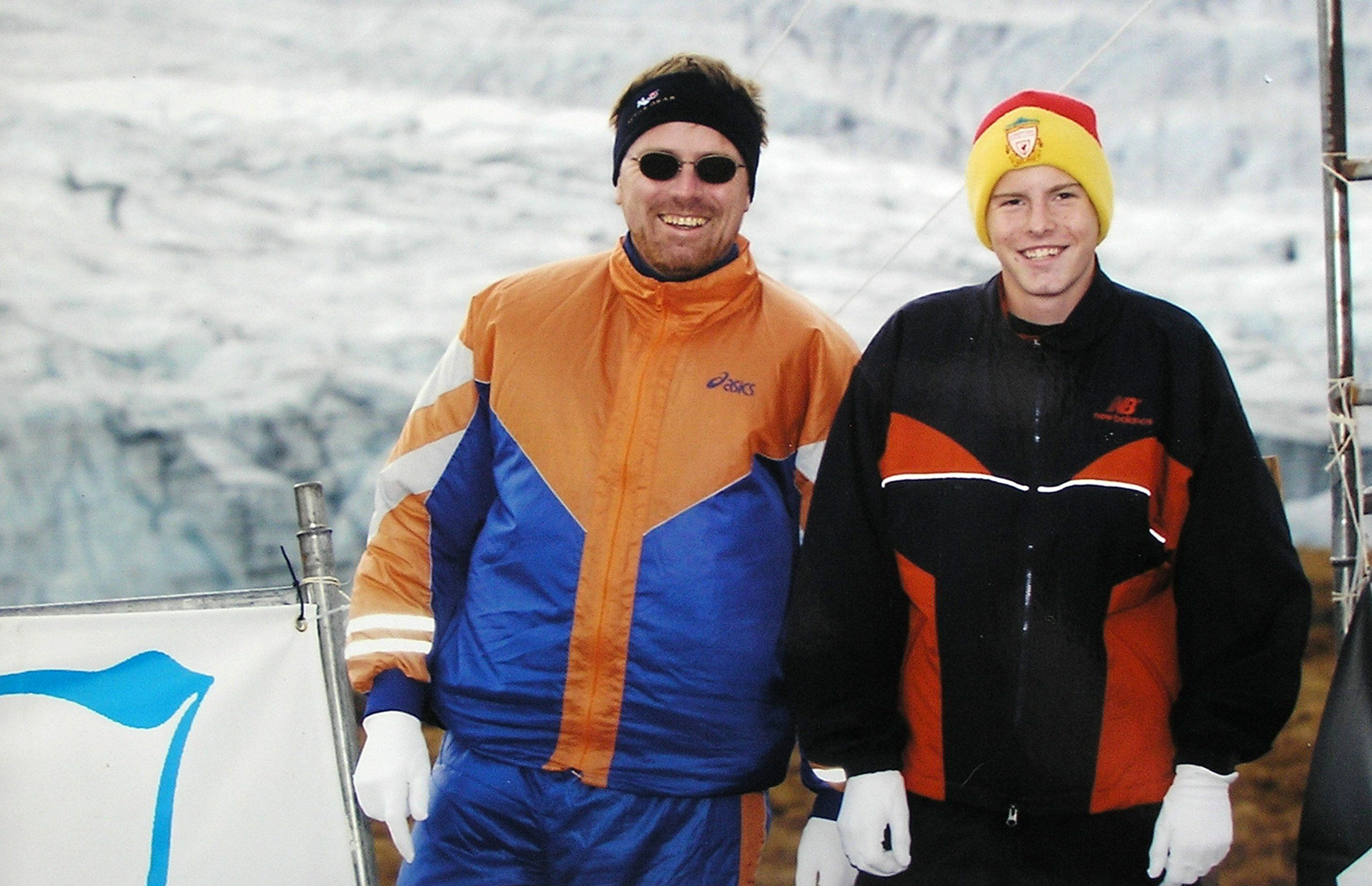
It had been raining, but dry weather was forecast for the day of the marathon. On the other hand, it was windy and rather cold. Both Steffen and I were, therefore, dressed up nice and warm. We had some large bags and elastic bands in our pockets so we could hand in clothes at the water stations as we gradually warmed up and got away from the inland ice. But we never did hand over any clothing. I didn’t dare, which was rather fortunate as it turned out. I felt very warm at one stage but made do with tying my running jacket around my waist. It came to my rescue a bit later when it got cold, and I needed all the clothing I had.
The route
The marathon route stretched 35 kilometres from Kangerlussuaq to the inland ice, of which about seven kilometres would be run in both directions. The start was some way from the edge of the inland ice, and the finish was on the runway in Kangerlussuaq.
The first 25 kilometres took place in a dramatic, extremely hilly moraine landscape, shaped by glaciers and meltwater tunnels. The landscape was incredibly beautiful, and we were to run many kilometres past enormous ice rims, waterfalls and glaciers. Along the route, we had the opportunity to see reindeer and perhaps musk ox and the odd Arctic fox. The outermost part of the route was an ice road, which was maintained by a piste grooming machine and led us up onto the ice itself where the turning point for the world’s first marathon on the inland ice was located.
The final part of the route led through an Arctic desert, Sand Drift Valley, past Sugar Loaf and along the river back to Kangerlussuaq. The terrain was hilly all the way although mainly at the start. Most of the route was along well-maintained rocky gravel roads which were more or less level and stable, without too many large stones.
The run
Steffen was not good at sticking to the tactics suggested to him by Thomas. He was a good way ahead of me in no time, and I didn’t see him again until he was on his way down from the inland ice and I was on my way up.
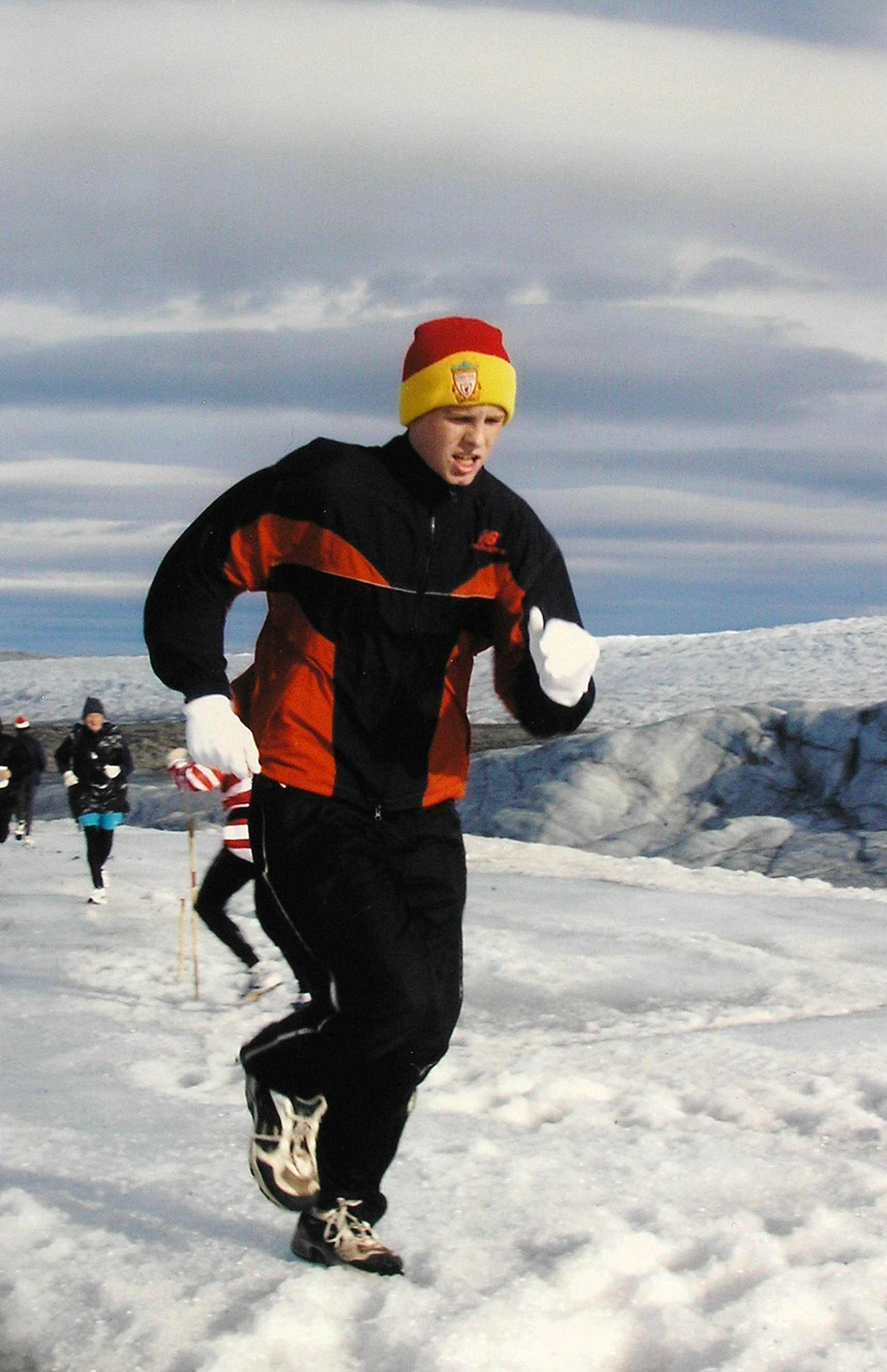
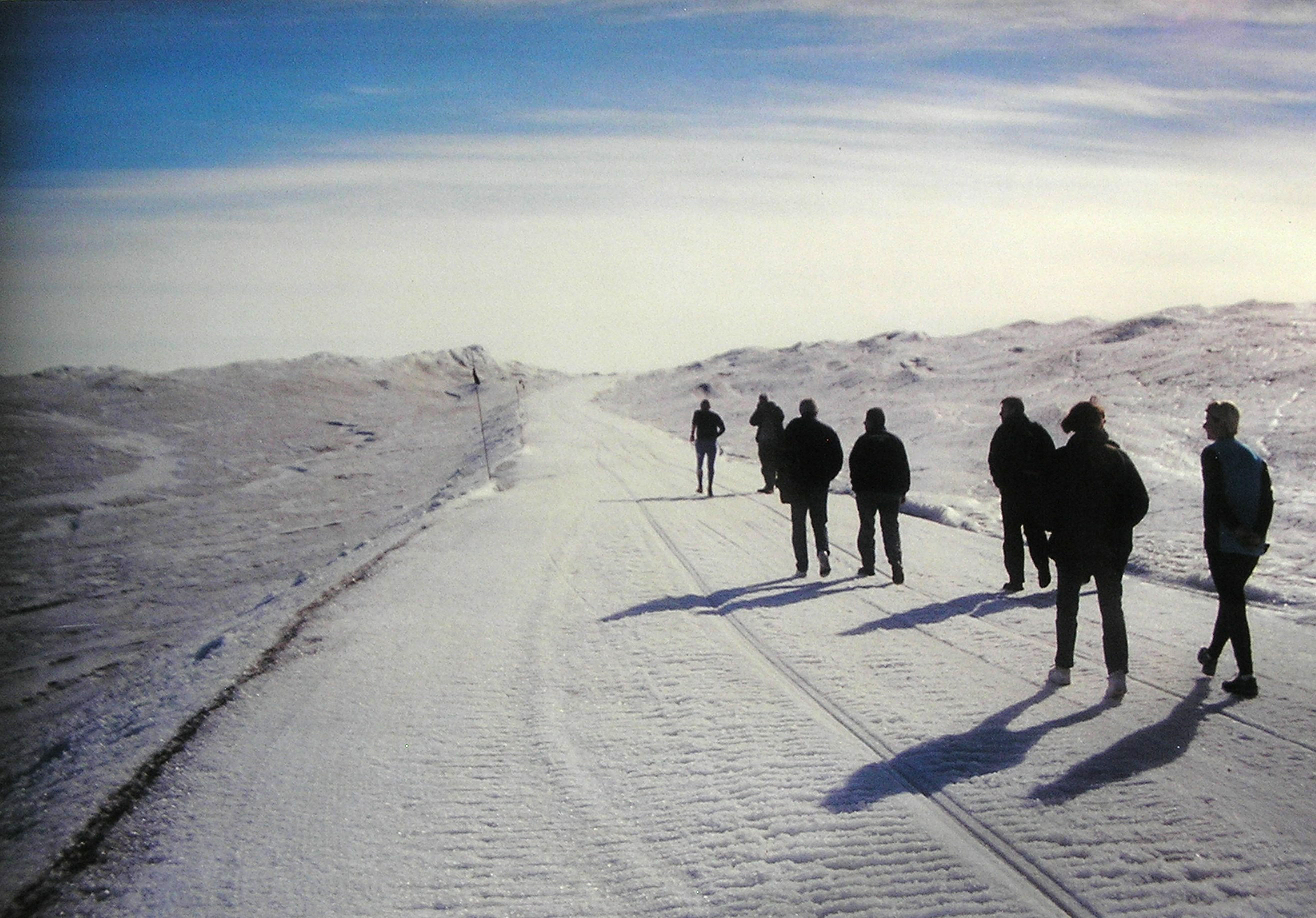
It was an incredible experience running on the inland ice. I had the sun in my eyes on the way up that made it difficult to see, and on my way down, I had to watch out not to slip on the ice. The actual run on the ice was less than two kilometres, but it was a tremendous experience I will never forget. It was cold up there on the ice; although the wind wasn’t so bad, so it wasn’t bitingly cold.
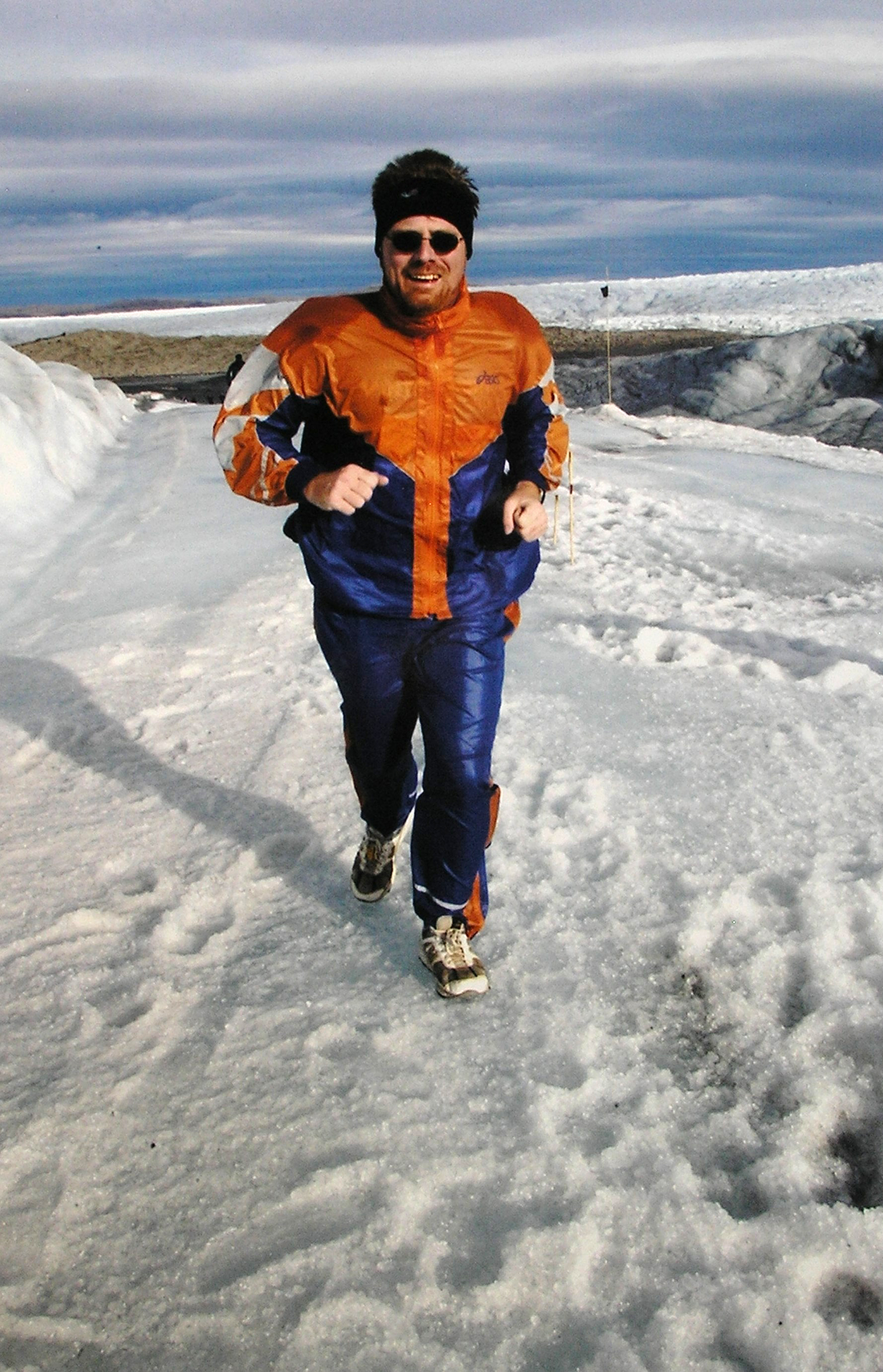
Although the rest of the marathon was also very special, as well as incredibly beautiful, the going was tough. We had many hills to go up and down, and although it was a tremendous experience, it was also demanding. I had to walk periodically several times.
After about 16 kilometres, I reached Steffen, who was now pretty worn out and sore in several places. He thought that if, by the time he had rounded the half-marathon at 21.0975 kilometres, he didn’t have the energy to complete the race, he would drop out. I accompanied him for a few kilometres but then I had to leave him to run my own race. I had a bit of a bad conscience doing so, but I was convinced that he would stop halfway, and I knew that the highly competent officials in the 4x4s would take care of him if he did decide to drop out.
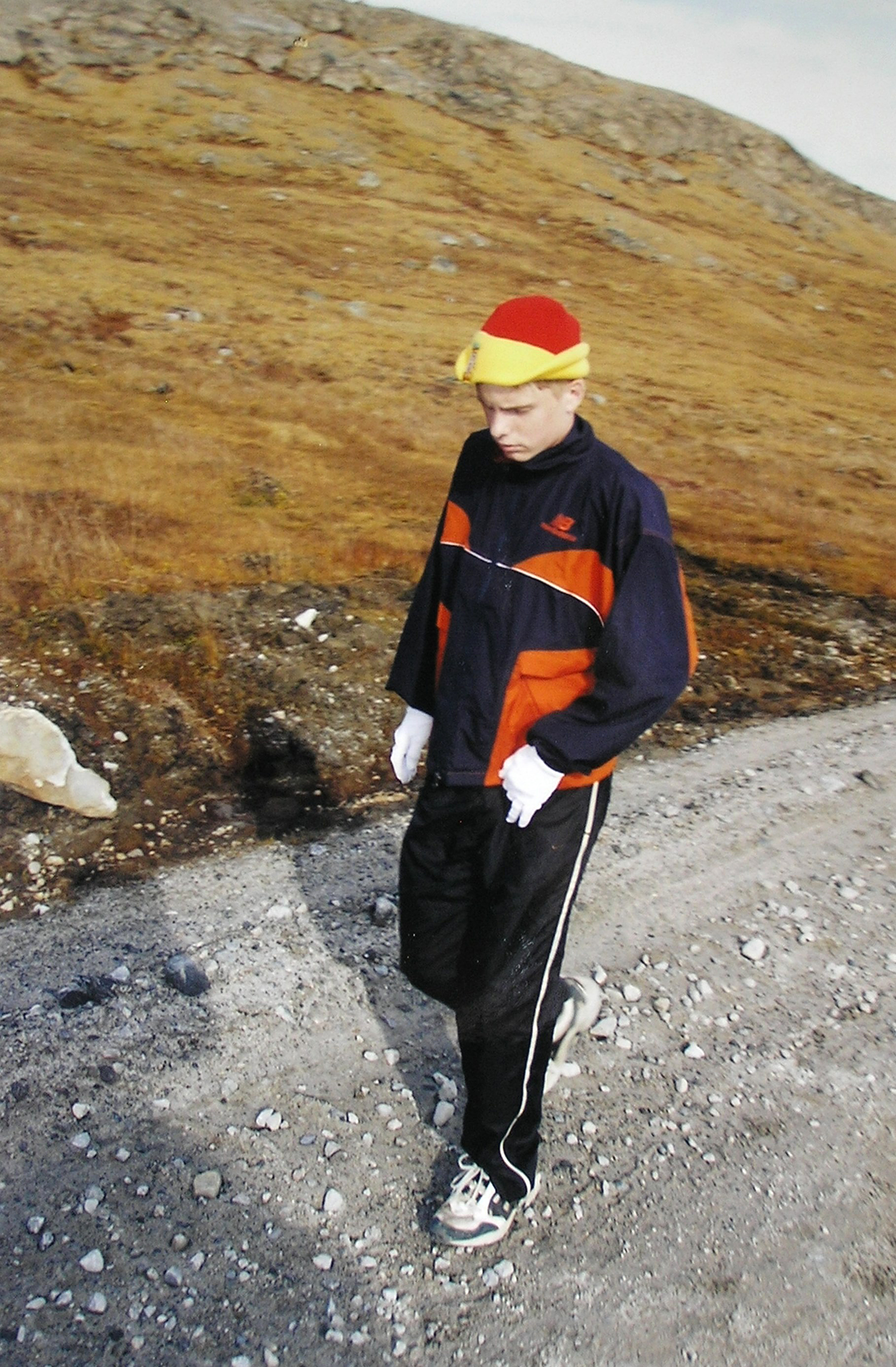
So I carried on with my own race along a long dirt road which twisted and turned. The only exception had been the bit on the inland ice which was a done deal early in the run.
I started the marathon with all my clothes on, and still had them on when I finished. It did get too hot once in a while, so I took my clothes off and on again, and when I was coldest, I arrived at a water station where I got hot bouillon to drink. That was the best drink I had that day.
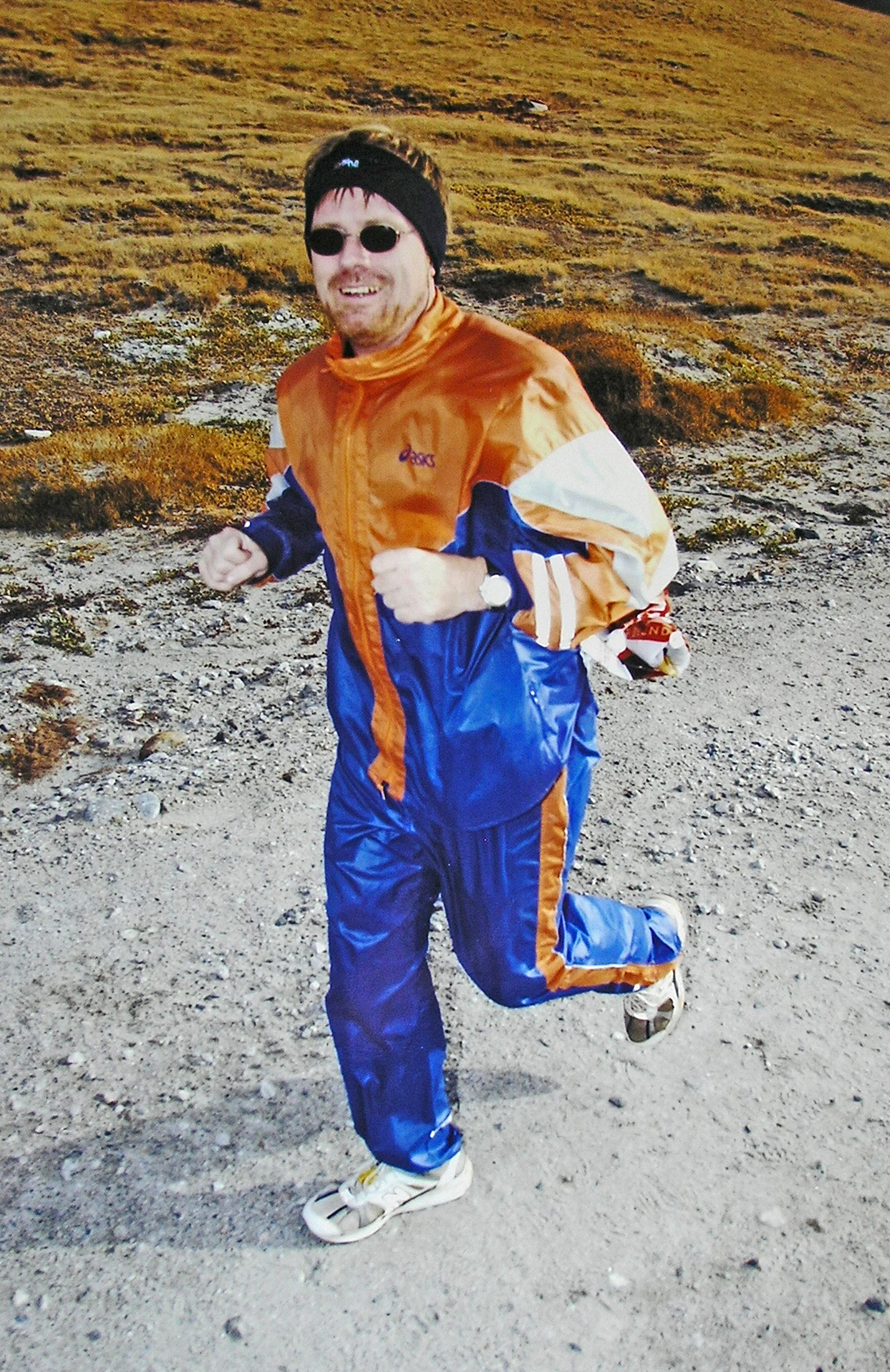
After 37 kilometres, I was passed by a 4×4 with Steffen in the back. He smiled and waved to me, and I was happy and relieved that he had dropped out, and was in good spirits.
The final ascent came at 40 kilometres, and it was extreme as well as long, almost a kilometre. Here I decided to walk at a fast pace and was actually amazed how much energy I still had left in me.
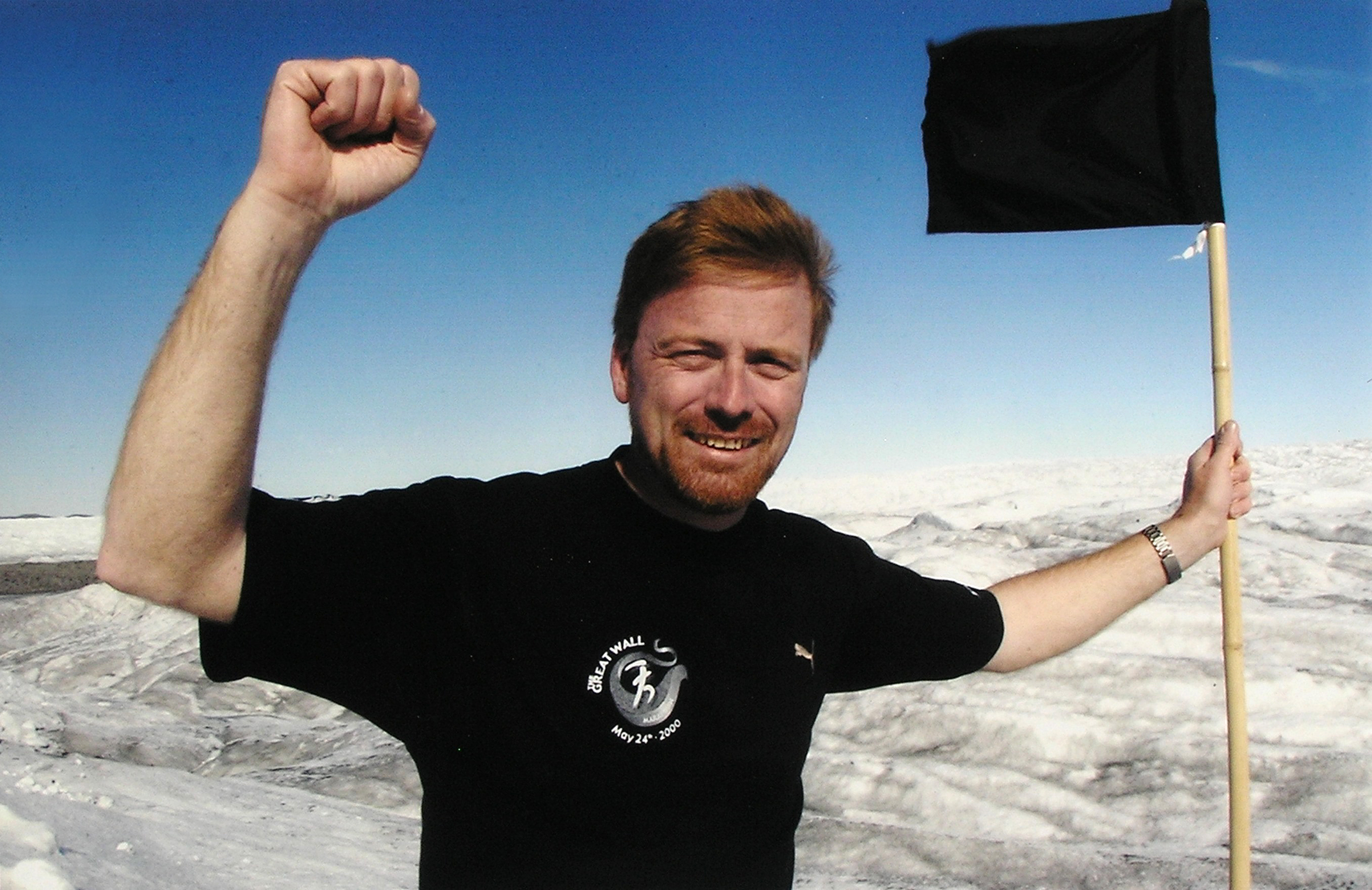
The next kilometre and a half went downhill and continued onto a flat area just outside our hotel. Here I suddenly got my strength back and sprinted across the line. As I approached the finish, I saw in front of me a halting, injured and exhausted runner using his absolutely final energy to struggle over the line. I couldn’t see who it was but then I heard over the loudspeakers that it was Søren Rasmussen. As I came alongside him, I took his hand to accompany him for the last few metres but Søren said that I should just continue. At that very moment, I heard Jan Christensen’s voice in the loudspeaker shouting “No Henrik, eat him. I’ll buy you a beer if you can beat him”. I was gripped by the atmosphere. Euphoria got the better of my sense of social responsibility, and I let Søren be and sprinted over the line. My time was 5:30:41.
At the finishing line stood Emil holding a large, disgusting-smelling set of antlers. He wanted to take it home with him, and it was wrapped very thoroughly in plastic bags sealed with gaffer tape. The antlers hang to this day above our carport.
Gala dinner
The run was dominated by three of Denmark’s fastest marathon runners, but for obvious reasons I never saw them on the route. The trio came in with Torben Møller Nielsen first, followed by Claus Bjarnø and Peter Ellehauge. The winning time was 3:16:38. When we got back to our room, we saw the three fast Copenhageners running off steam. I couldn’t believe it. I had just run a marathon, and now I knew I needed a rest to get my strength back. These elite runners were ready to run again just a few hours after they had crossed the line.
Our days in Kangerlussuaq were brought to an end with a gala dinner at the “Polar Bear”. A delicious buffet was served, but I wasn’t particularly hungry and only had a bit to eat.
There were prizes for the fastest women as well as men. In addition, there were cheers for those who had earned them. Steffen had suffered a minor groin injury and received a BT watch for having made it to the half distance. We didn’t stay for very long at the party because we had to be up very early the next day.
On board the M/S Sarpik Ittuk
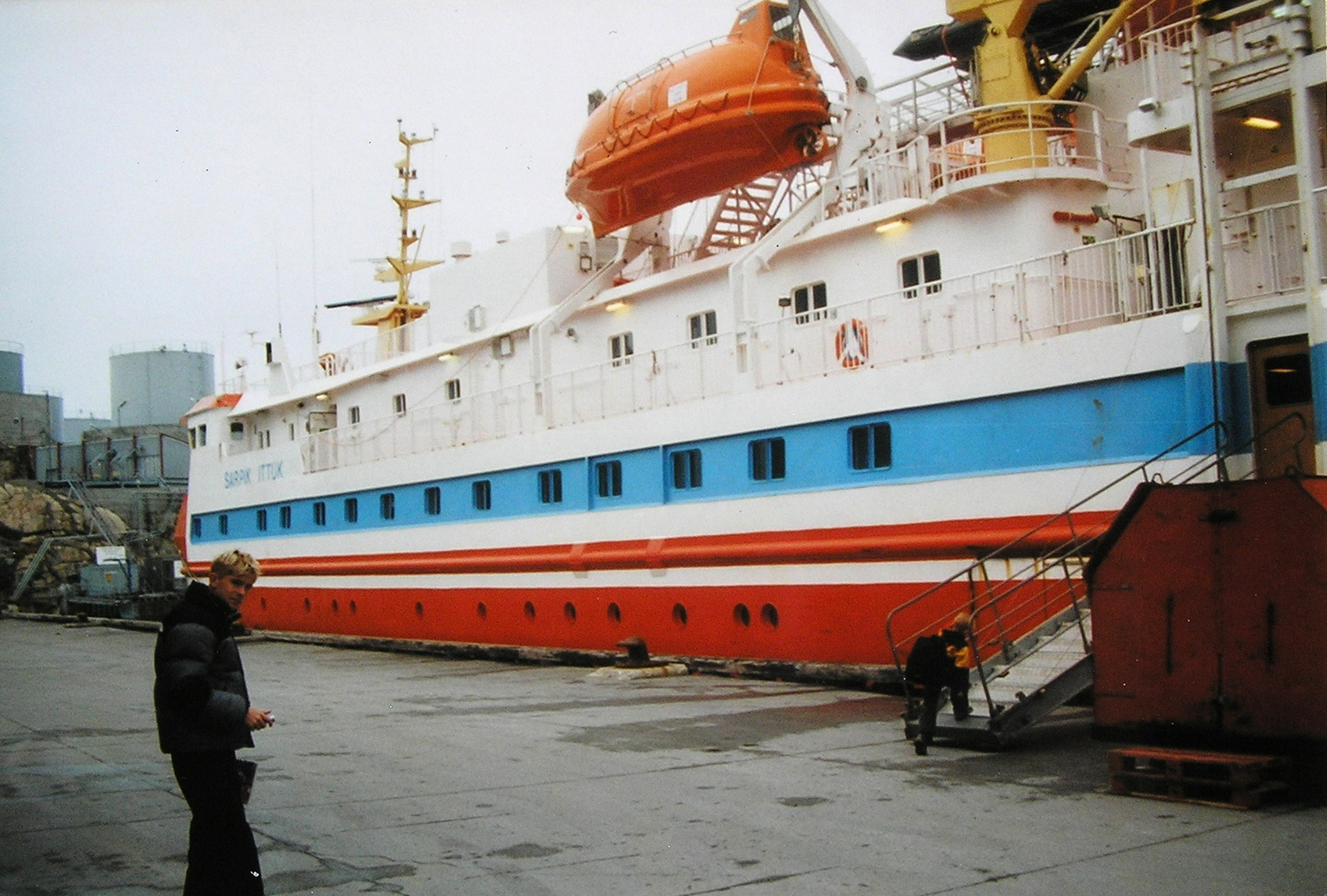
Monday morning, we boarded the M/S Sarpik Ittuk in Kangerlussuaq harbour. We had a great, rather cushy cabin on board this lovely ship. We passed the polar circle already the same morning, and the view was quite indescribable.
Ilulissat
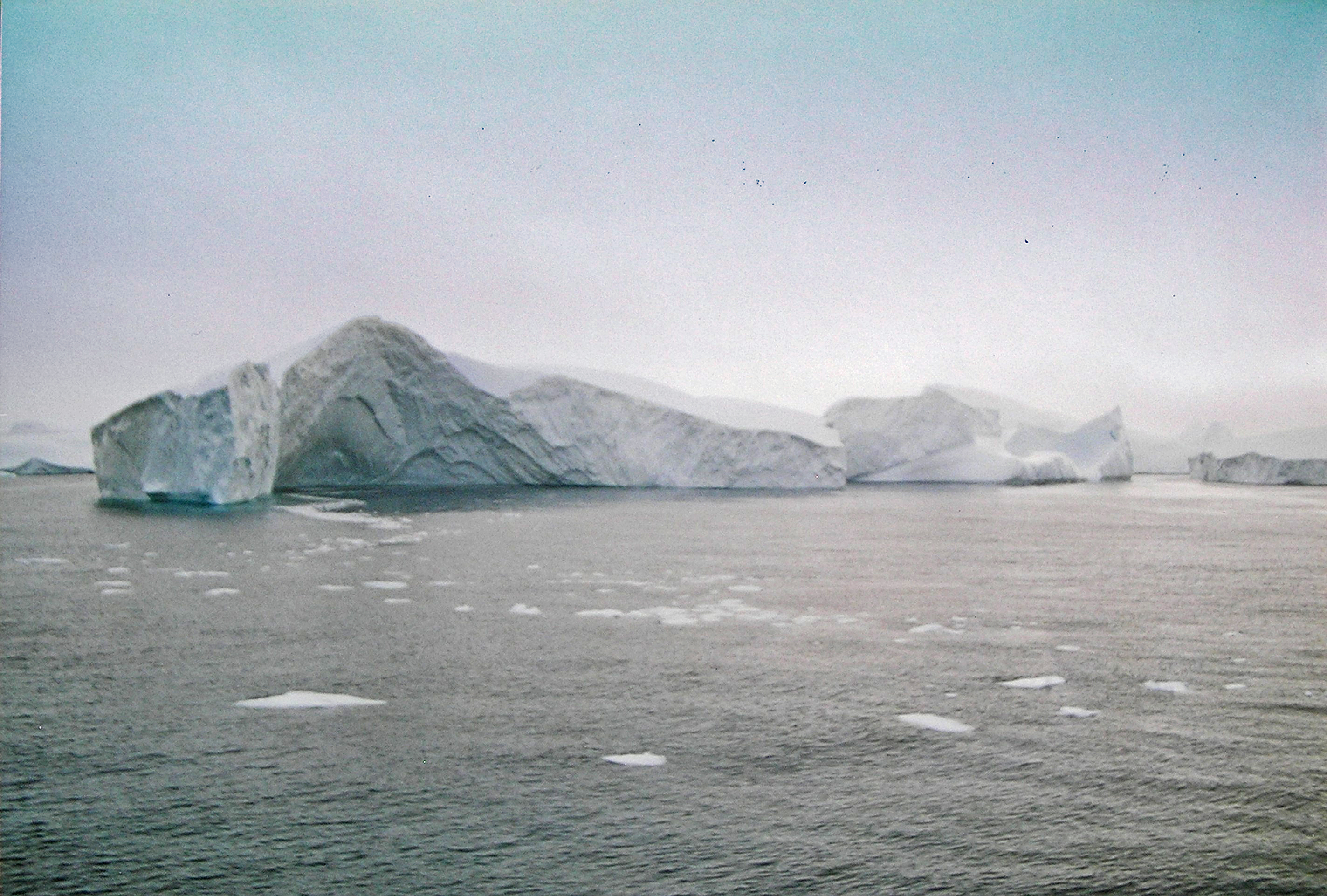
On Tuesday, we arrived at Isfjorden, and if we’d seen icebergs the day before, we saw a heck of a lot more of them that day. One magnificent iceberg passed us by after the other, right in front of our noses. We sailed right up close to them, and there was one fabulous sight after another on the horizon. We were now approaching Ilulissat, the nickname of which is the “town of the icebergs”. The place is best known – and rightly so – for its unrivalled ice fjord, a good half hour’s walk south of the town.
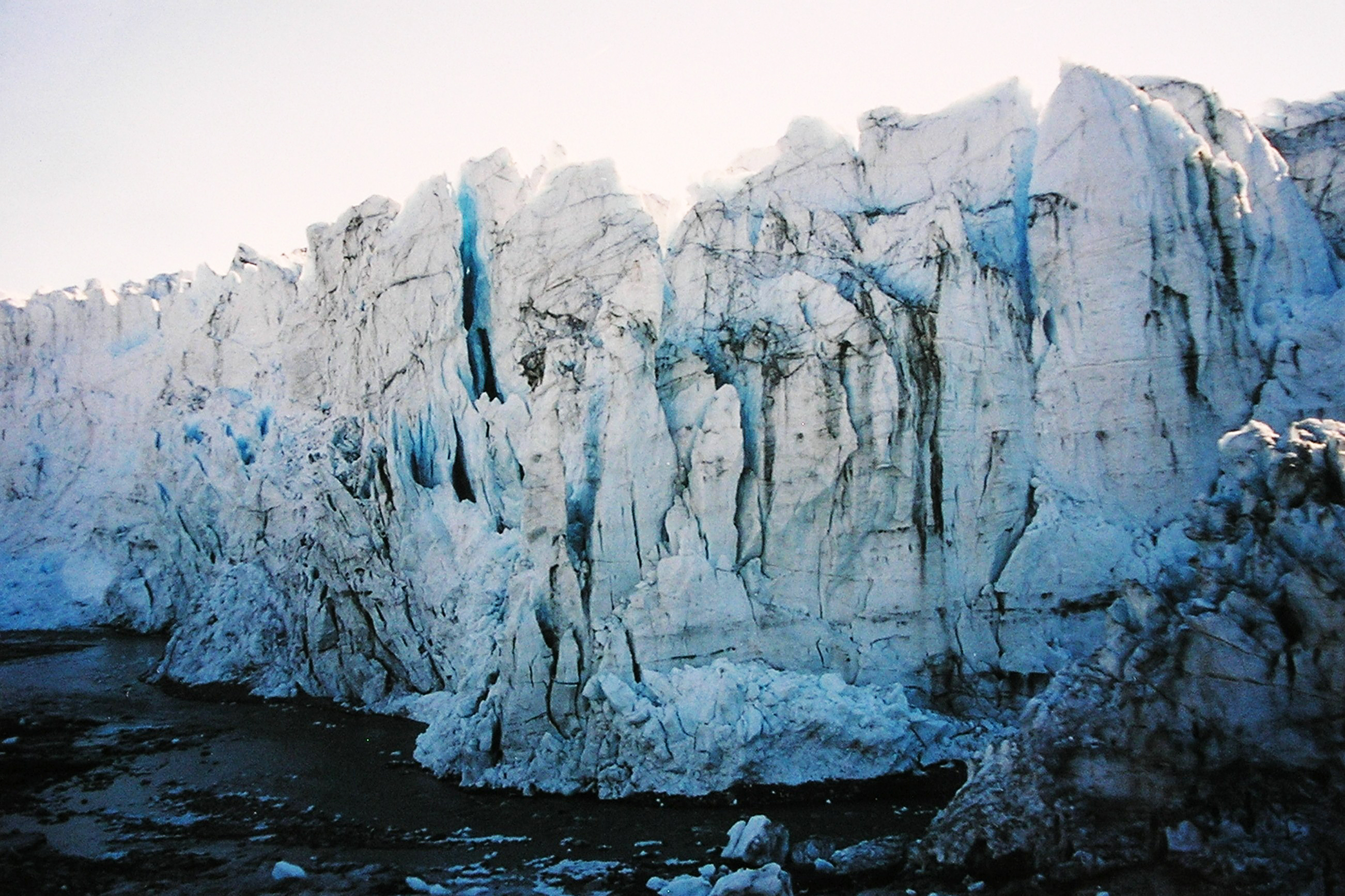
A good 32 kilometres further inland is the enormous Sermeq Kulalleq glacier which, with a width of five kilometres and a thickness of 1100 m, is the world’s largest of its kind outside Antarctica. The Ilulissat glacier produces more than ten per cent of all the icebergs in Greenland, the equivalent of 20 tonnes every day.
The most shocking news
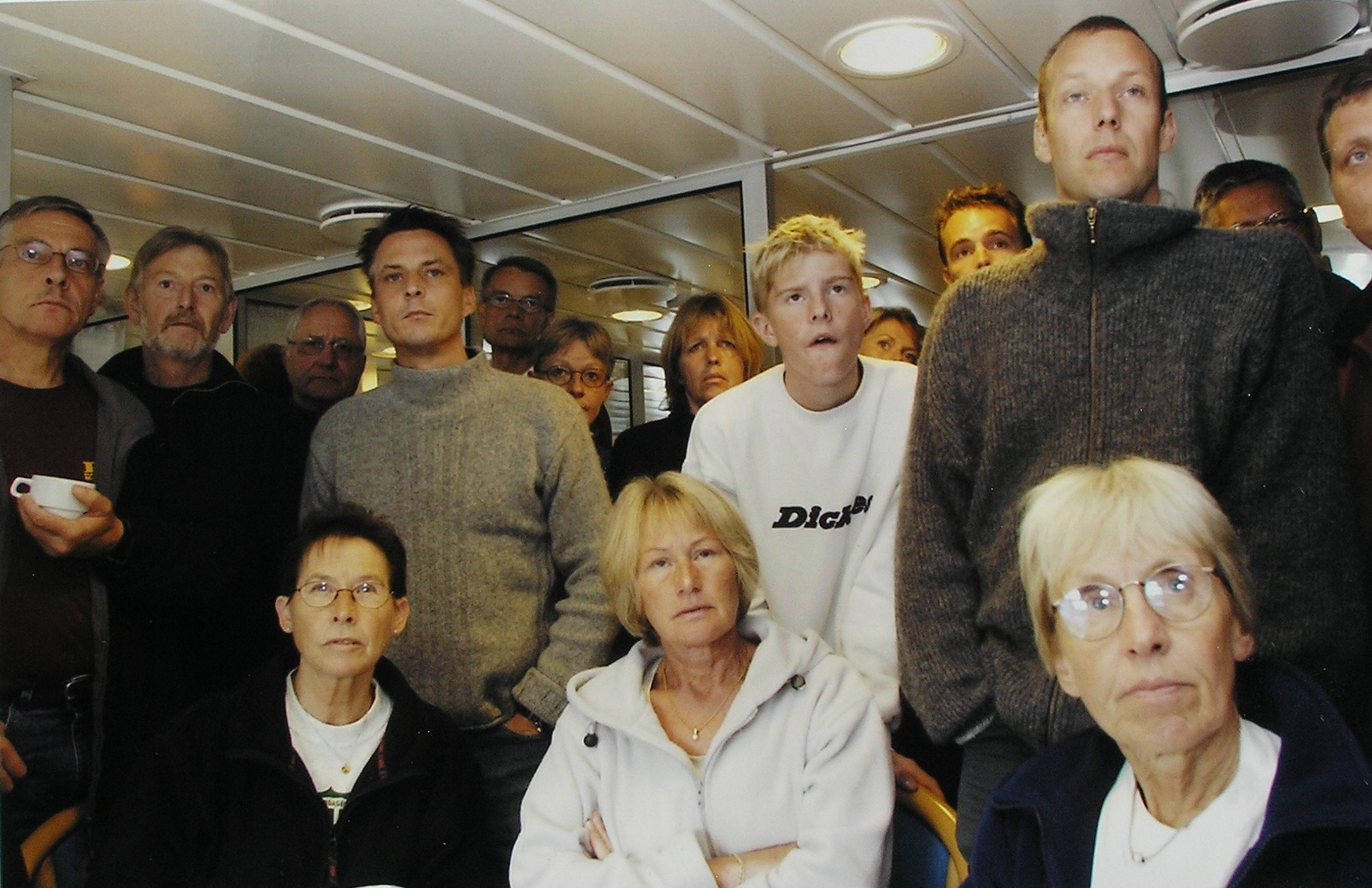
Just as we were about to set to in Ilulissat it was time for lunch on board and as we queued up for food came the shock. Passengers’ phones began to “glow” and the text messages poured in. There was an eerie silence and everyone was petrified. The first reports were not quite clear. The first I heard was that half of New York was in flames, but eventually, we got the whole story. An indescribable, inconceivable tragedy had just hit the United States, where terrorists had hijacked four passenger aircrafts and flattened the World Trade Center in New York. The Pentagon was also hit. The ship’s TV was turned on, and everyone was deeply moved by the situation. I completely lost my appetite. There is no need to mention the date, 11th September, as it is chiselled into the memories of most of the world’s population.
Knud Rasmussen’s birthplace
After lunch was over, and the shock had settled, we disembarked. We visited Knud Rasmussen’s birthplace and went for a walk in the town. We visited “Kællinge Kløften” (which can be roughly translated as Hags’ Canyon), an area of outstanding natural beauty with rock formations, and in the town we enjoyed the sight of charming Greenlandic houses which we had seen in photographs. There were huskies everywhere, so there was no doubt that we were in Greenland.
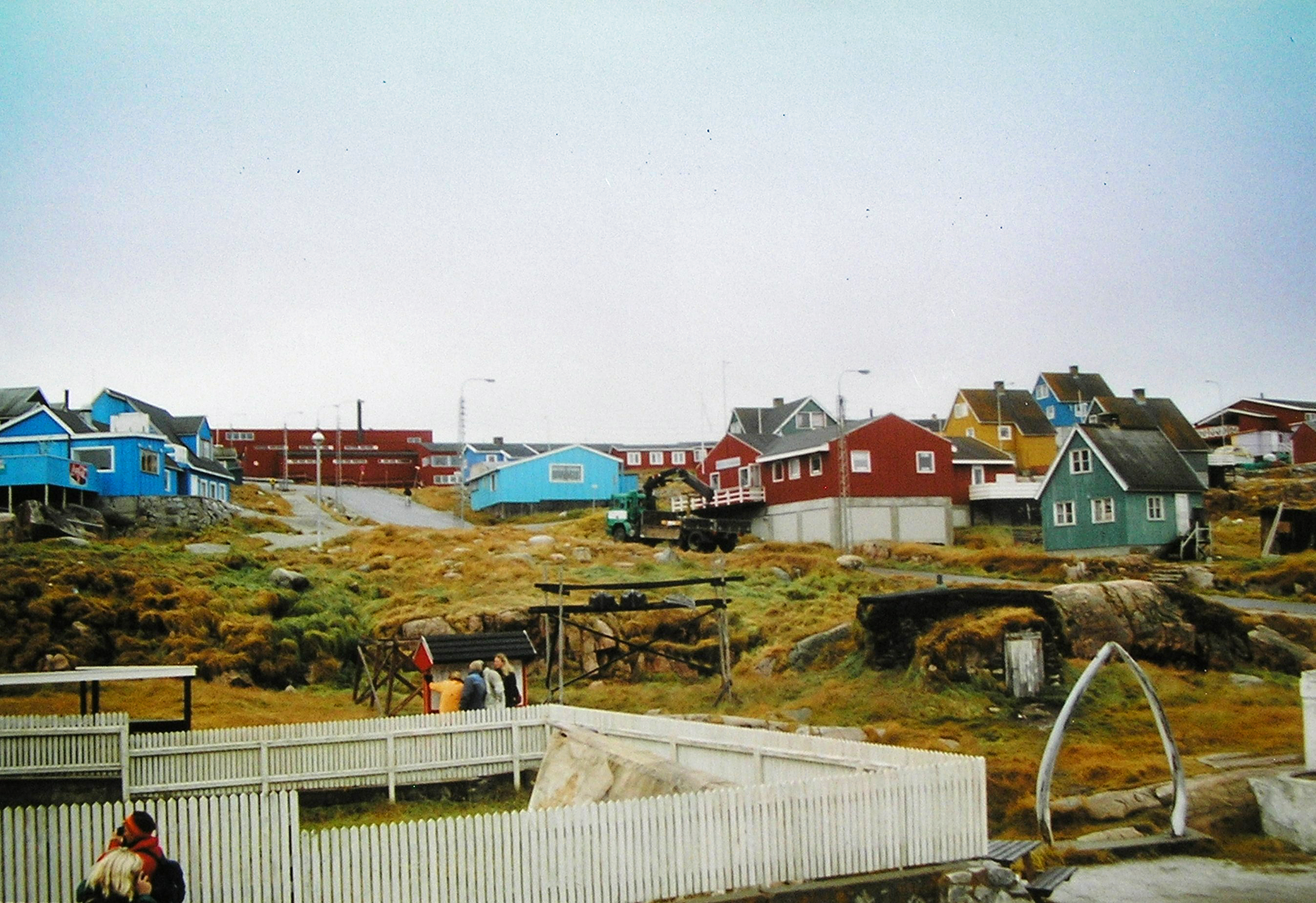
Eqip Sermia
On Wednesday, we arrived at Eqip Sermia, one of Greenland’s most splendid glacier tongues. The majestic cracks in the glacier, the deep blue rivers of melt water – a landscape so enthralling, colossal and beautiful that it is difficult to find words to describe it. It was incredible to stand there in the bitterly cold air looking at this incredibly beautiful landscape. We had hoped to see the iceberg calving, but nothing happened while we were watching. But we did see a seal and a couple of indeterminable birds on an ice floe.
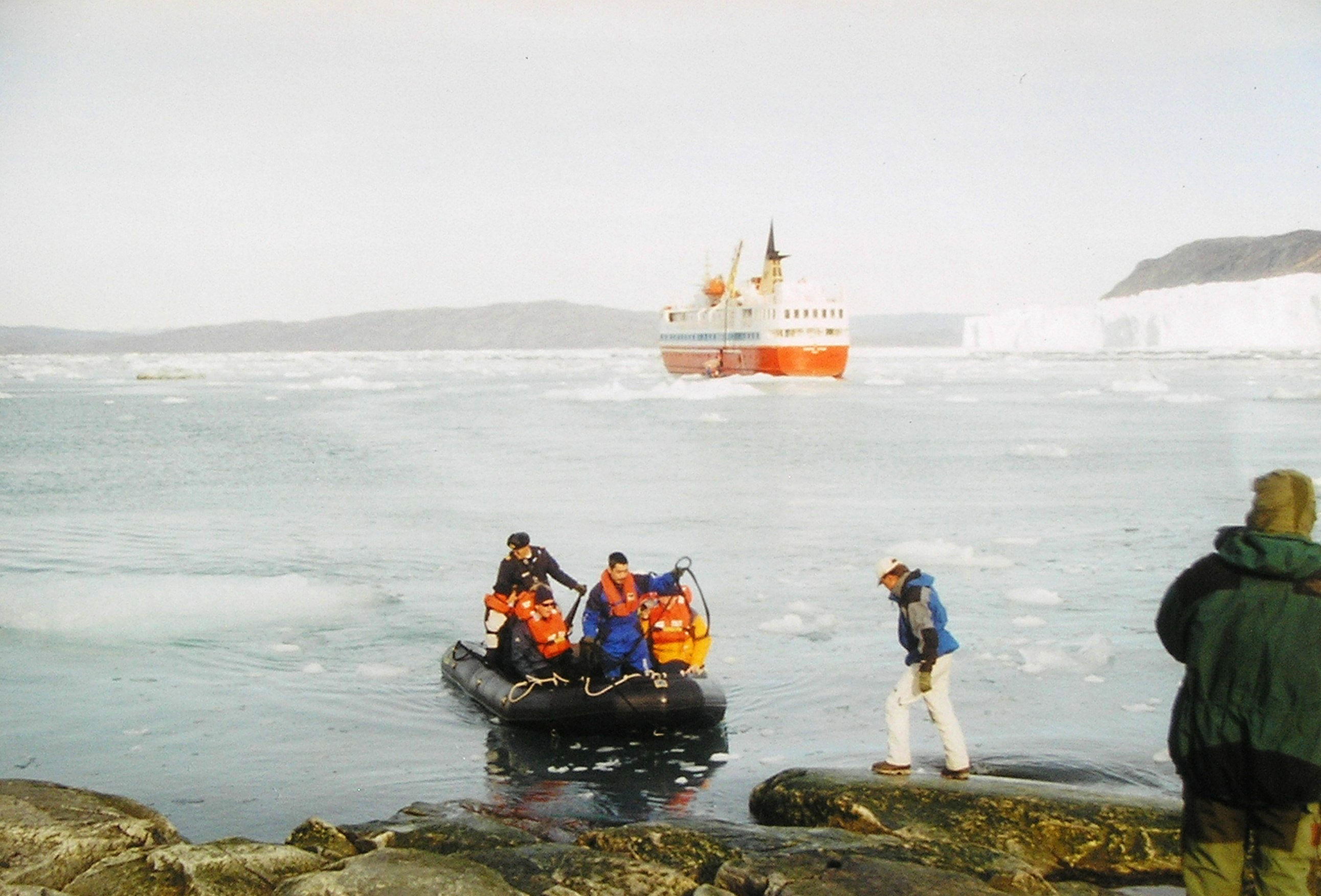
The ship laid to mid-morning off Eqip Sermia, where we were shuttled ashore in groups of ten in Zodiac rubber dinghies. Once ashore we set off on a three-hour walk that turned out to be much tougher than anyone had imagined.
The power of nature
We were now walking in totally unspoiled nature, with crevices, watercourses and boggy areas, truly thankful that we had put on wellington boots. After a while, a harsh wind began to blow and then got worse and worse. We strode forward in a wind that was so strong as to be indescribable. I could literally feel my cheeks flapping as my eyes watered. Life was not made easier by the fact that I had a camera and a video camera around my neck so that I could immortalise the scene once in a while. At the same time, I had to hold Emil by the hand and help him negotiate the stone walls and boggy patches. At one point, when I was not holding Emil by the hand, the wind caught hold of him. He was lifted half a metre in the air and three metres forward, where he landed in some soft moss. Despite his soft landing, he got quite a shock and shed a tear or two.
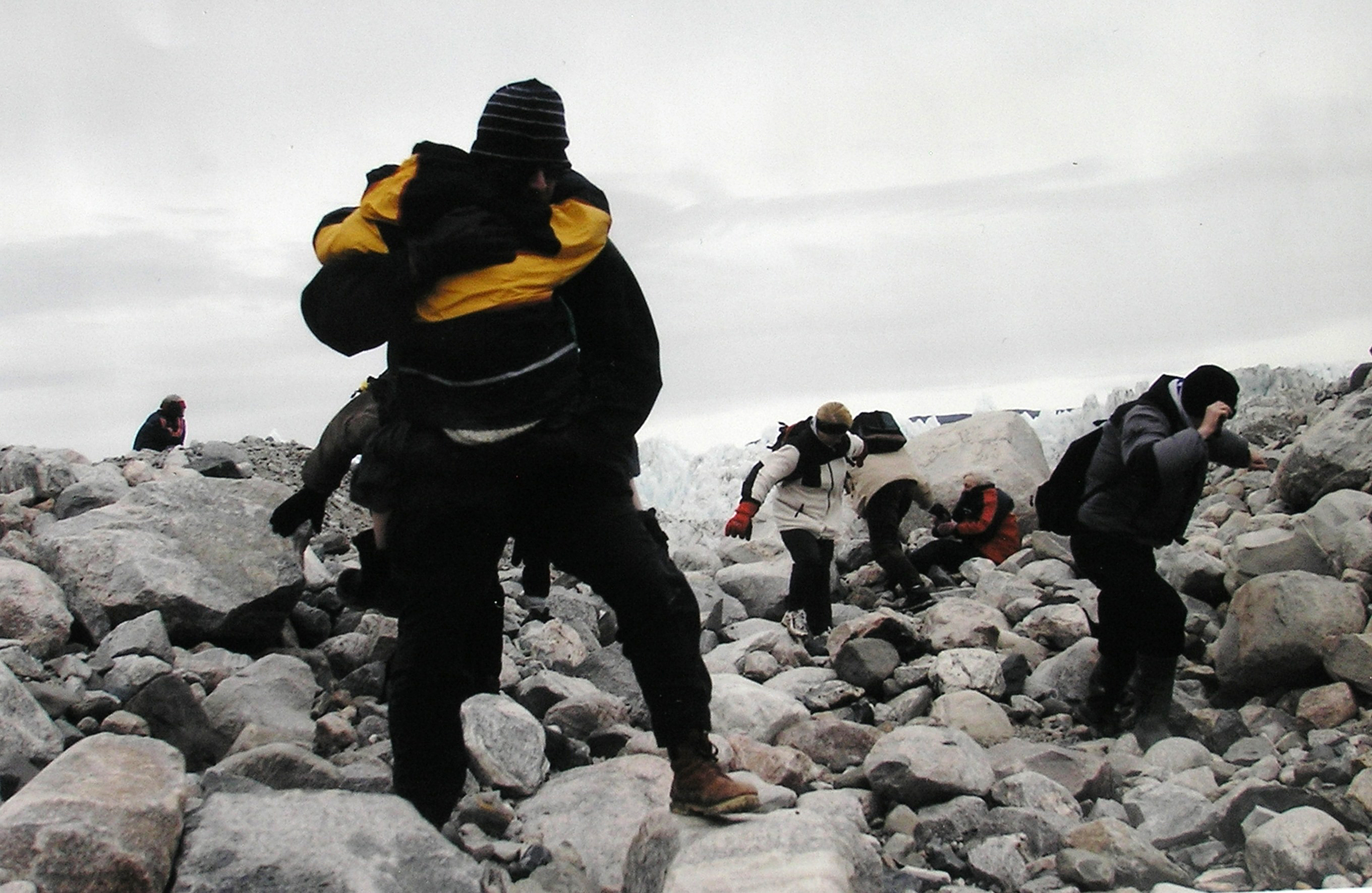
At the end of our walk, we first arrived at a sanded-up area where we had to watch out not to get sand in our eyes. Then we had to climb up a steep stone wall. The wind was at its strongest at precisely this point. But strong wind is actually an understatement. I remembered the winter storm in Denmark in 1999 and thought “What were we so worried about?”. I was later told at the ship that we had been walking in a hurricane with a wind speed of more than 100 kilometres an hour. At the top of the stone wall, Emil sat down and wept – he’d had enough. Fortunately we didn’t need to carry on. We found shelter behind some rocks and opened the lunchboxes we had been given on board the ship. Many others had also brought a beer and a little snaps. That was really welcome right then.
I put my photo equipment into my rucksack so that I would have my hands free on the way down, and on the first steep stage I carried Emil in front of me. He tucked his face into my chest, and I had to manoeuvre him with great difficulty down the other side of the stone wall and back to the boggy area. From here, he was able to walk the rest of the way in the strong wind.
When we finally arrived at the place where we were to be shuttled back out to the ship, the use of rubber dinghies was out of the question. The ship had not been able to lie at anchor and had had to sail off out to the open sea and return when the weather conditions permitted.
We were later informed that the weather conditions at Eqip Sermia can be extremely changeable and that the changes could come about all of a sudden as we had just discovered. We could just as well have ended up taking a walk in completely still weather, which would most certainly have been much more pleasant. But now we had had an experience for life, which I would not have been without.
Sisimiut
After a couple of days living in the primitive world, Thursday was the day we got to know a bit about modern Greenland. We visited Sisimiut.
Sisimiut is Greenland’s most northerly town with an ice-free harbour during the winter and the most southerly town to permit dogsledding. The town is the country’s second-largest after Nuuk. When we were there, the population was 5,369, with 5,123 souls living in the town itself, 131 in the village Itilleq and 115 in another village, Sarfannaq.
We experienced Sisimiut in the rain, so we donned wellington boots and waterproof ponchos and set off to see the sights and do a bit of shopping.
We were back on the ship by midday and after relaxing and having lunch, we departed for our next adventure.
Itilleq
Having seen the “city” it was time to visit a small hamlet. It was also our last visit in Greenland before leaving for home. We visited Itilleq, where we got an impression of what life was like in a Greenlandic hamlet. Itilleq means “dip” or “hollow”. It is beautifully situated some 49 kilometres south of Sisimiut. Since Itilleq is situated on an island with no natural freshwater, they have built an osmosis plant which converts salt water into freshwater. In the old days, they had to bring in fresh water by barge or in a dinghy.
Once again we were shuttled into Itilleq in the Zodiac rubber dinghies. It was a moist, chilly trip, for which reason a lot of people remained on board the ship. But now we were here, we wanted to fit it all in however much trouble we had to go through.
We were received in Itilleq by a local woman wearing the Greenlandic national costume of pearls, sealskin trousers and kamiks, which are traditional sealskin boots. We were offered samples of reindeer meat, seal, whale and fish; and although it didn’t all taste particularly good, we had to try everything. After that, we went to have a look round the hamlet, and we really felt that we were in Greenland. Only 130 people lived there; many of them only speaking Inniut. We were welcomed into a typical Greenlandic home for “kaffemik”, coffee and cake.
On the village’s muddy football pitch, they organised a football match between the local boys and those from our party. Of course, both my boys were to play. Denmark won, and Stefan scored his first three “international goals”.
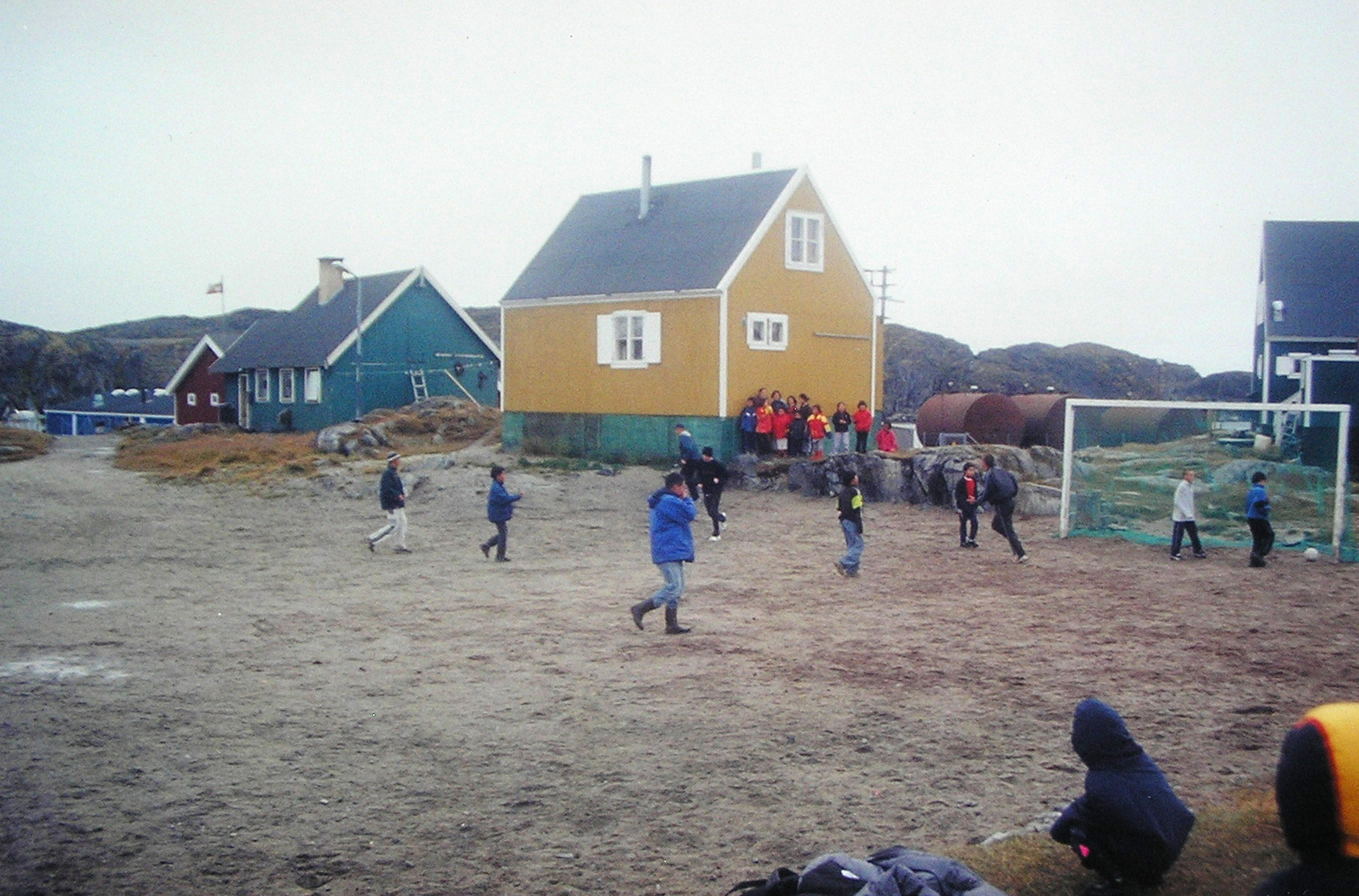
By now we were rather cold, and the trip back to the ship in a rubber dinghy did not exactly help. Several of us got thoroughly soaked before we got back out there.
Farewell to the M/S Sarpik Ittuk
On Friday morning, we were up early to prepare ourselves to disembark from the good ship. The previous evening we had enjoyed a delicious meal of Greenland halibut, musk ox and an ice cream layer cake. The chief purser had held a farewell speech and the entire crew had entered to a round of applause.
After breakfast, we were ferried ashore on a launch because the M/S Sarpik Ittuk could not get into port. We were sailed into port in three groups with me and the boys in the last of them.
Bus breakdown
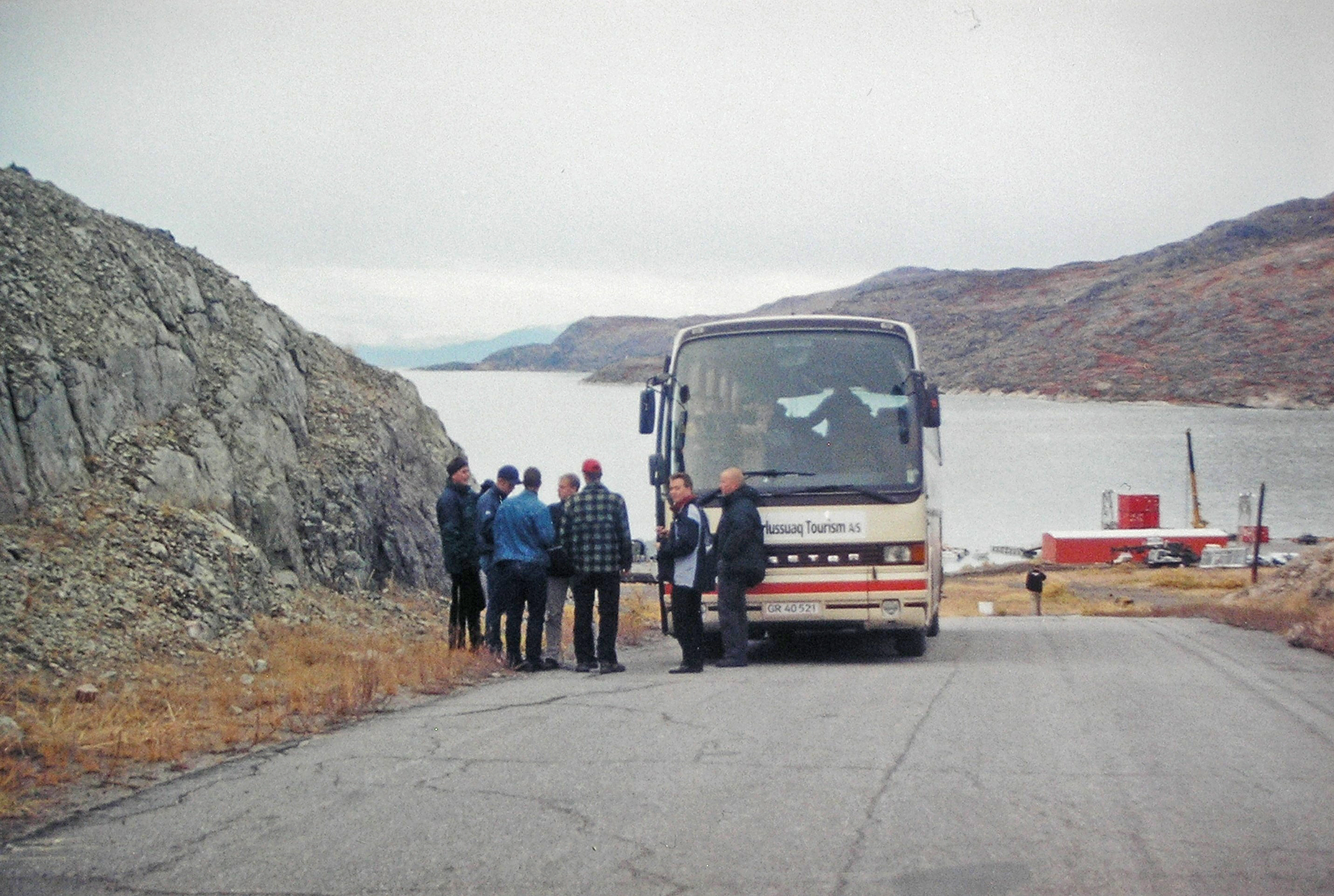
At the harbour, we were picked up by a bus that was to take us to the airport. We had probably driven a kilometre when the bus broke down and could get no further. Various efforts by the driver and the mechanic were to no avail. We stood there forsaken in the middle of nowhere with a broken down bus and no mobile signal because of the crags. The bus driver, therefore, had to walk back to the harbour to find a landline phone to call another bus to pick us up.
Airport problems
At the airport, we found ourselves at the back of the check-in queue and here it turned out that there were other trials and tribulations ahead. Not long before it was our turn to check in, another piece of equipment broke down. This time it was a printer, so we stood there for an hour and waited. While we were standing there it became obvious that there would not be enough seats for all of us on the flight. Some of the seats had to be taken out for a lying-down patient who had to go to Copenhagen University Hospital, and I think the flight was already overbooked. This rather unsettled us and the other passengers, and things didn’t get any better when an airport official with little sense of propriety and a most disagreeable attitude created an unpleasant atmosphere. It was a most unfortunate juncture at which to unsettle passengers who were to fly for the first time after the catastrophe in the United States a few days earlier.
Homeward bound in style
All’s well that ends well, as they say. When it was finally possible to print boarding cards again, it transpired that there was not enough room for us so we were upgraded to business class, where we would be cosseted with extra legroom, gifts, champagne and posh service. Emil asked the steward why we should have tablecloths on the table. He wasn’t used to that kind of thing when flying.
On TV
As was the case on other marathon trips organised by Adventure Marathon, Danish broadcasting was also represented this time. The result was shown on the Sunday sports programme three weeks after the marathon with a feature lasting more than five and a half minutes.
Buy the book here.
