


Journey to the Middle Kingdom
It was with considerable trepidation and “butterflies” in our stomachs that we arrived at Copenhagen Airport on Friday, 21st May 1999. We were supposed to meet at 13.25 but came in good time to make sure we didn’t miss any wonderful impressions.
At the airport, I could see there were a lot of people going on the same journey. There was a total of 25 different groups on the trip to The Great Wall Marathon, and ours was certainly not the only one leaving on that day. But the various groups were well signed, and we soon found our own group, no. 14.
Our tour guide was Søren Dehn, who was in every way both an excellent and extremely pleasant guide. Søren had lived in China for some time and therefore had a broad knowledge of the country, its history and culture. He also had a good command of the language.
The group consisted of 22 travellers. I haven’t seen most of them since, though I have met some by chance. But it would turn out that one acquaintance would be warm and lasting. Bodil and Thomas Thomsen from Tåstrup were no ordinary travellers on this trip. At the time, Thomas was, as mentioned earlier, the chairman of the Danish Athletics Federation and one of the originators of the run. It must have been fate that we were to become such good friends already on the first trip.
Everyone is distinctive in their own ways and have their own amusing stories to tell. One man in the group made a special impression on me, even though he was the person one least noticed. He was seated quite near to us on the plane, and as soon as he sat down, he “buried” himself in a blanket. We saw nothing more of him on the flight. I didn’t envisage him as a marathon runner, but I was mistaken. It turned out that his name was Bent and that he owned a pub in Helsingør (Elsinore). Perhaps in a moment of rashness or light-headedness he entered into a wager with a man in his pub about his performance in the up-coming Great Wall Marathon. At stake were 5,000 Danish kroner and he had to finish within 4 3/4 hours. Bent was “invisible” throughout the trip, but he had his friend Søren with him, who was just as extrovert as Bent was introvert. The trip was packed with many excursions in which Søren participated along with the rest of us, but we didn’t see much of Bent. Søren told us that Bent was either sleeping or – blow me down with a feather – was sitting in his room reading a tourist guide about China! The moral of that story is obvious: why visit the Forbidden City when you can read all about it in a hotel room in Beijing?!
Danish television had brought along a crew, and they were with us in group 14. They generated a focus on Bent’s wager and the race, and he had obviously been gathering a lot of strength during his “Hotel hibernation”, because he ran the race in 4:39:53, thus winning his 5,000 kroner.
The flight from Copenhagen to Beijing takes about nine hours if you fly direct. In 1999, there were several alternatives, depending on which group you had chosen. You could also choose between Air China and the British Airways. However, I have flown every year non-stop with Scandinavian Airlines, SAS. Despite the length of the flight and often limited space, I have generally felt comfortable on my flights. I rarely get much sleep, but reading and watching movies are good ways to pass the time. On long flights, they serve several meals, and that helps to provide some variety. Over the years, I’ve also got to know the regular officials on the run, so there is always someone on the plane that I know – and there’s plenty of opportunity for interesting conversations.
Day one in Beijing
Of course, landing in Beijing for the first time is rather a special experience. Everything is new and exciting. It is one thing to have heard and read about a country, but you only get the right impression when you experience the culture, people, traditions, food and all the rest in person.
When travelling in a group it is usual to have a group visa, which involves checking in together before departure. But in Beijing it requires even more. Here you have to go through the passport check in precisely the same order as shown in the visa. The first person on the list hands over the document to the official and the last person on the list gets the document back. The same procedure applies to the homeward journey. I have never, however, experienced complications when arriving or leaving China. Of course, you have to go through control points, and the paperwork has to be in order, but then that’s not difficult. There are other places in the world where that part of the journey can be quite annoying.
After we had navigated the airport controls and had reclaimed our luggage, we all gathered around Søren Dehn from Albatros Travel, and a local guide joined our group. All groups visiting China have their own guide. In my experience, these have always been young women, which is probably the norm. The local guides have a good command of English as well as a broad knowledge of their country’s culture and traditions. They function partly as a guide for the visitors and partly as a practical helper, who makes sure that everything runs smoothly. I have only the best memories of the local guides. It can be rather trying for Westerners to pronounce Chinese names, but that’s not a problem. The guides always give themselves Western-sounding names we are able to relate to.
The first trip to China left us with an incredible number of new impressions, and something was going on all the time. This was no bathing holiday for sure, and we certainly got our money’s worth.
From the airport, we went straight to Beijing Zoo, arriving at around eight in the morning. This was not to be an all-day affair, but we had to see the pandas. At Beijing Zoo, the Chinese have created a haven for the good-natured pandas, which are otherwise threatened in most of China. This was the best time of day to visit because the pandas are usually most active in the morning, when it’s still cool. We had ample opportunity to study the dear animals before we moved on to the next item on the day’s itinerary.

After our visit to the zoo, the next stop was at the Summer Palace in the north-western part of Beijing. In these beautiful, quiet surroundings, the emperors sought refuge from the heat and dust of summer. A couple of old stoves and a glance into the underground heating flues rather suggested that they also came here in winter. One of the climaxes was strolling down the famous Long Corridor, which is decorated with thousands of very different paintings.

We ate our first meal in China in the restaurant at the Summer Palace. As I would experience many times over the years, we sat down at round tables with room for half a dozen people. In the middle of the table was a “Lazy Susan”, a round platform that could rotate. On this, the waiters placed one delicious dish after the other. There was plenty of meat and vegetables, but many of us felt that rice was in somewhat short supply. We asked for some more, but it was rather a long time coming, and I experienced the same on several subsequent occasions. This is one of the many cultural differences between the Chinese and us from the Western world. In our part of the world, it is only natural to have rice or potatoes on the table at the start of the meal. However, a guide later explained to me that the Chinese regard rice as a filler, which they do not wish to palm off on their guests. Instead, they make sure there is plenty of meat to begin with.
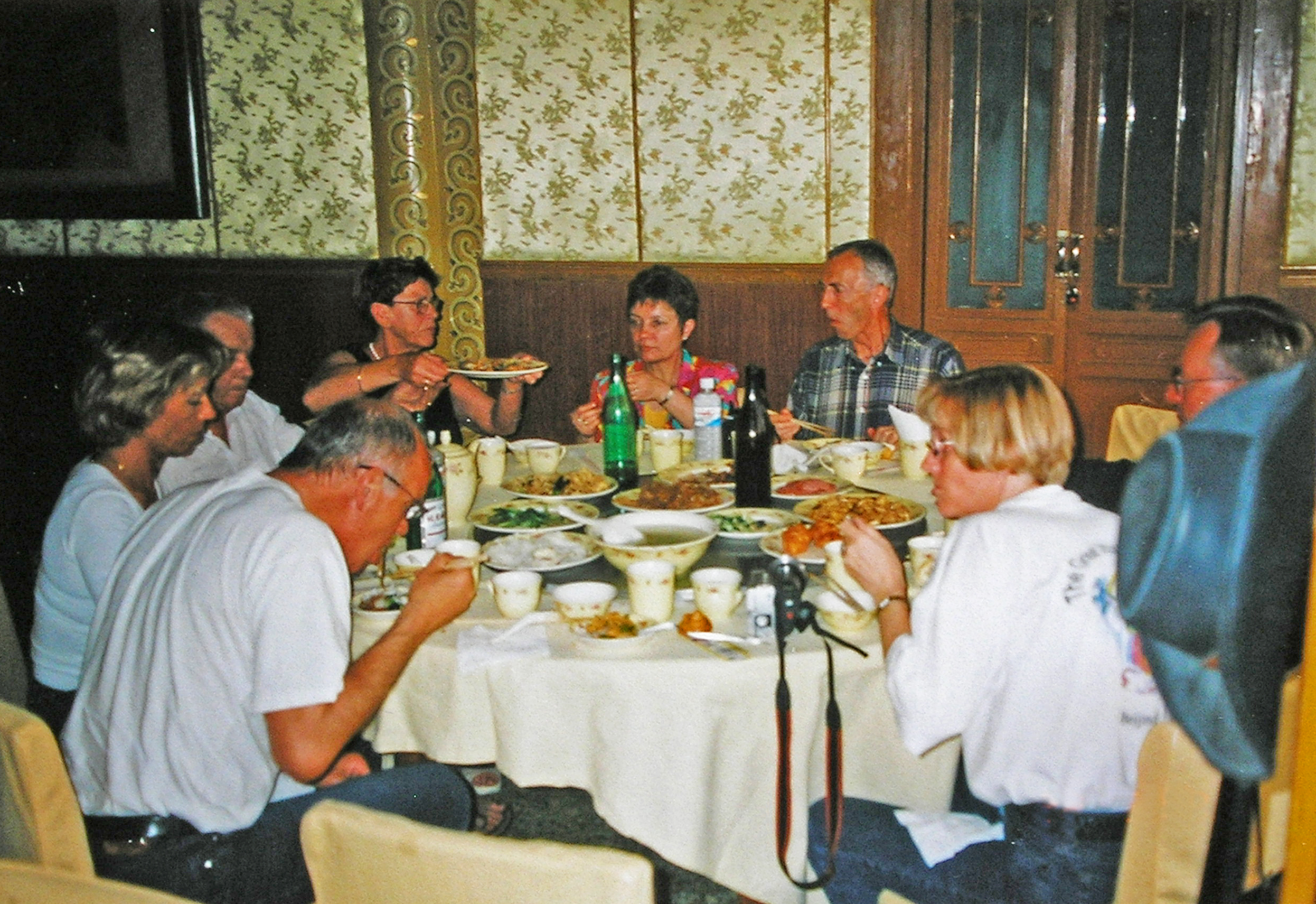
I found eating with chopsticks quite a challenge. I had previously tried eating with them at Chinese restaurants back home and in London, but had never had much success. I decided to study the technique of Thomas Thomsen, who was sitting opposite me. I managed to work out how he did it and by copying him I managed to satiate my hunger. When I told him about it later on, he said that his method was entirely “homemade”. Homemade or not, however, I have since then eaten with chopsticks “the Thomsen way” and it works well enough for me.
Eventually, at around midday, it was time to check in at our hotel, and the buses set off for the Overseas Prime Hotel. I don’t quite know what I expected of the hotel, but I was certainly pleasantly surprised. Members of my family who had travelled in China before me had come home with tales of quite unhygienic conditions. The difference was probably that we were in a big city, in the capital itself. The hotel lies on Beijing’s main drag, Wangfujing. Not in the thick of it, but conveniently close to the Forbidden City and Tiananmen Square. The standard was satisfactory in every sense, and there was everything the heart could desire, with an indoor swimming pool, health centre, business centre and bars. But none of it was much use to us because we didn’t have the time to benefit from the many facilities.
Having checked in, we had a look round the hotel and the immediate locality. We were tempted to take a nap but realised that wouldn’t be so clever if we were to acclimatise ourselves to the local time zone.
In the evening, the whole group met at the hotel reception and went together to a local restaurant, where we ate yet another traditional meal at the roundtables. Afterwards, we went back to the hotel, where we went to bed and immediately fell asleep.
A day packed with new impressions
This trip was not, as I mentioned before, a “bathing holiday”, sleeping in until late morning and enjoying cool drinks at the pool. There were activities all the time. China rose early, and so did we.
After a solid breakfast, the day began by taking us back to the time of the emperors – and the days when the Chinese called the Emperor the Son of Heaven and regarded him as the ruler of the entire world. We started by being driven to Tiananmen Square. We only got a limited impression of it because of renovation work, but there were plenty of other new impressions this day. Close to the square, a gigantic digital clock was counting down in days, hours, minutes and seconds. Søren explained that the countdown was to the day when Macau was to be returned to China. A few years earlier, in 1997, the clock had been used for the same purpose when Hong Kong was taken over, and some years later, it was used for the countdown to the Olympic Games in 2008.

When visiting Beijing for the first time, there are experiences that simply should not be missed. One of them is Chairman Mao’s mausoleum on Tiananmen Square, where the embalmed Chairman lies on view in his glass coffin. Although it was of course a great attraction for tourists, it was mainly the Chinese who wanted to see the Chairman. People from all over this huge country still pour into the capital to get a glimpse of the great liberator who chucked out the last dynasty of emperors and founded the Peoples’ Republic of China. The fact that he ended up with the status of an emperor himself seems to have been suppressed by the Chinese or at best forgiven.
But this visit required patience with the long queues moving only slowly forward. We gradually got close to the entrance, where one could buy flowers for the Chairman, which many of the locals did. They laid the flowers further into the building, and we could see how the guards came and removed them as the piles grew. They were of course returned to where they had come from to be re-sold. An excellent business model, I must say.
The sight of Chairman Mao was in itself not much of an experience, but it was interesting on the whole, and I wouldn’t have missed it. We filed slowly past the glass sarcophagus, where one was neither allowed to pause or take photographs, and we were soon back out on the square again.
There are always lots of cock and bull stories about great people, and Mao and his embalmed body were no exceptions. The story goes that the man in the glass coffin is not Mao at all, because the embalming process went wrong. According to the tale, a peasant who looked like him was found and given the special job. There is no way of knowing of course, but stories, as I said before, are always good whether they are true or not.
Next it was time to visit the symbol of imperial power: the Forbidden City, which was home to all of the 24 emperors. Standing in front of the main entrance the sight was impressive indeed, with an enormous picture of Chairman Mao. I have been told that there are two copies of this picture and that one of them is always away for cleaning and restoring. When necessary, the pictures are switched over so that the Chairman always looks spick and span.
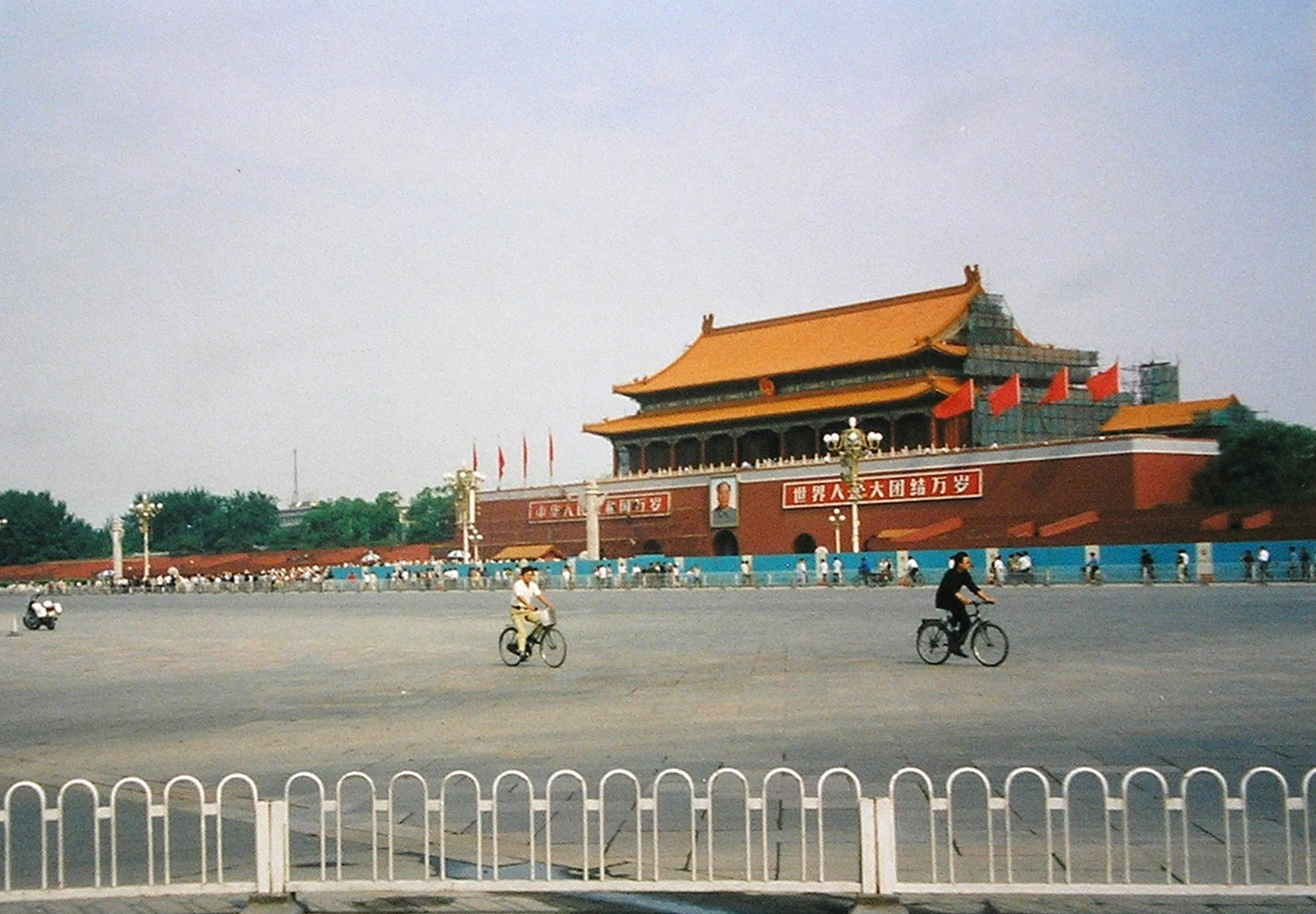
The Palace is awe-inspiring and seems impenetrable, but we were given plenty of time to look around and Søren from Albatros Travel was a highly competent and inspiring raconteur. We also gained insight into the differences between Danish and Chinese working conditions when we passed scaffolding made from tied together bamboo. The Danish works inspectorate would have had a field day here!

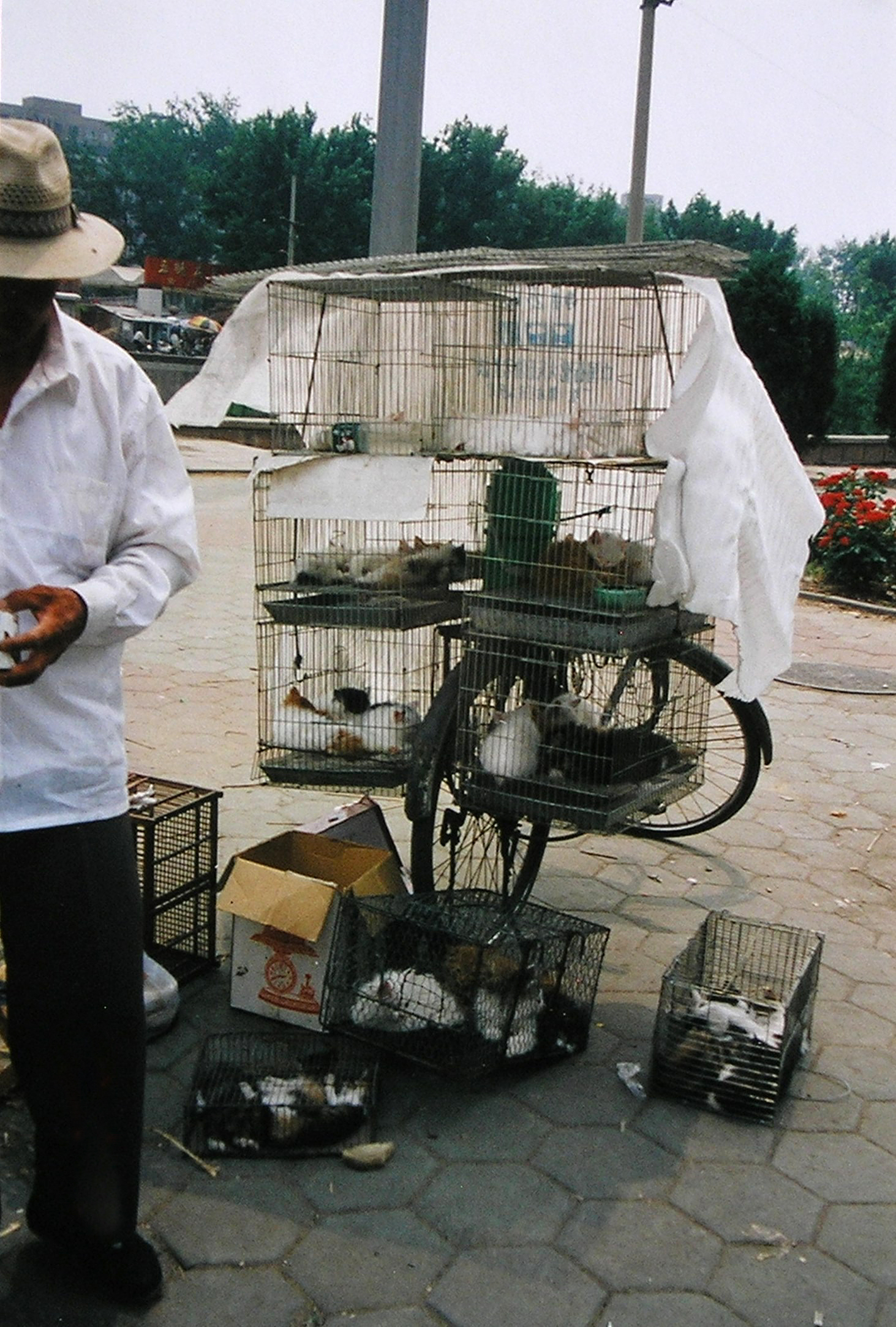
After lunch, we visited the large bird market north of Long Tan Park where Chinese from far and wide come to exchange and buy or simply share good advice about their beloved pets. The animal welfare was not up to European standards, either. Among other things, we saw tiny cages bursting with birds and even some with cats. We saw a trader who came along on a moped with a large bunch of live chickens over his shoulder. In China people go for a walk with their birds, just like we Danes go for a walk with our dogs, so Tweetie could get his daily “exercise”.
The afternoon was rounded off with a visit to the Temple of Heaven, a unique example of the Ming Dynasty architecture built at the same time as the Forbidden City. It is the only shrine to have survived from the Imperial Era. Here the emperors made sacrifices, both to their ancestors and to heaven so as to secure their power.

At the entrance to the Temple of Heaven, I experienced an incident that made quite an impression on me. Of course, I didn’t understand what was said, but there was no doubt that it was not an insignificant conflict. A local woman with a very large professional video camera was in a heated discussion with two police officers who wanted to confiscate her camera. This did not go down well with the woman. To begin with they just shouted at each other, then the officers tried to wrest the camera from her. But she clung to it, which resulted in the officers starting to beat her. It was all rather intense, but we had to move on and so we left. Later, as we were going back to our bus, the three of them were still in the same place, and things had calmed down. The woman still had her camera, and there was no way of knowing what it had all been about.
On our arrival back at the hotel, we were all given bags containing our starting numbers, lap chips, T-shirts and various adverts. There was also a bag for the runners’ companions and blow me down if they weren’t given a T-shirt too. Had I known that I would not have been standing there with the start number and a chip that day. I would also during the months beforehand and not least in the years afterwards have saved a lot of energy and a lot of money. On the other hand, I would have missed out on a lot of exercise and in particular, there were many fantastic experiences I would not have missed for all the tea in China.
But the T-shirts weren’t identical. Both had the logo of The Great Wall Marathon printed on them but on those of the runners were the words “I completed” above the number. I thought maybe it was a bit much to give out T-shirts with this text before the race had been run. During the days that followed I saw runners wearing their new T-shirts. But I was too much in awe to do that.
I never did find out why, all of a sudden, there were T-shirts for everyone on the trip. Perhaps my phone call had set something going at the office of Albatros Travel.
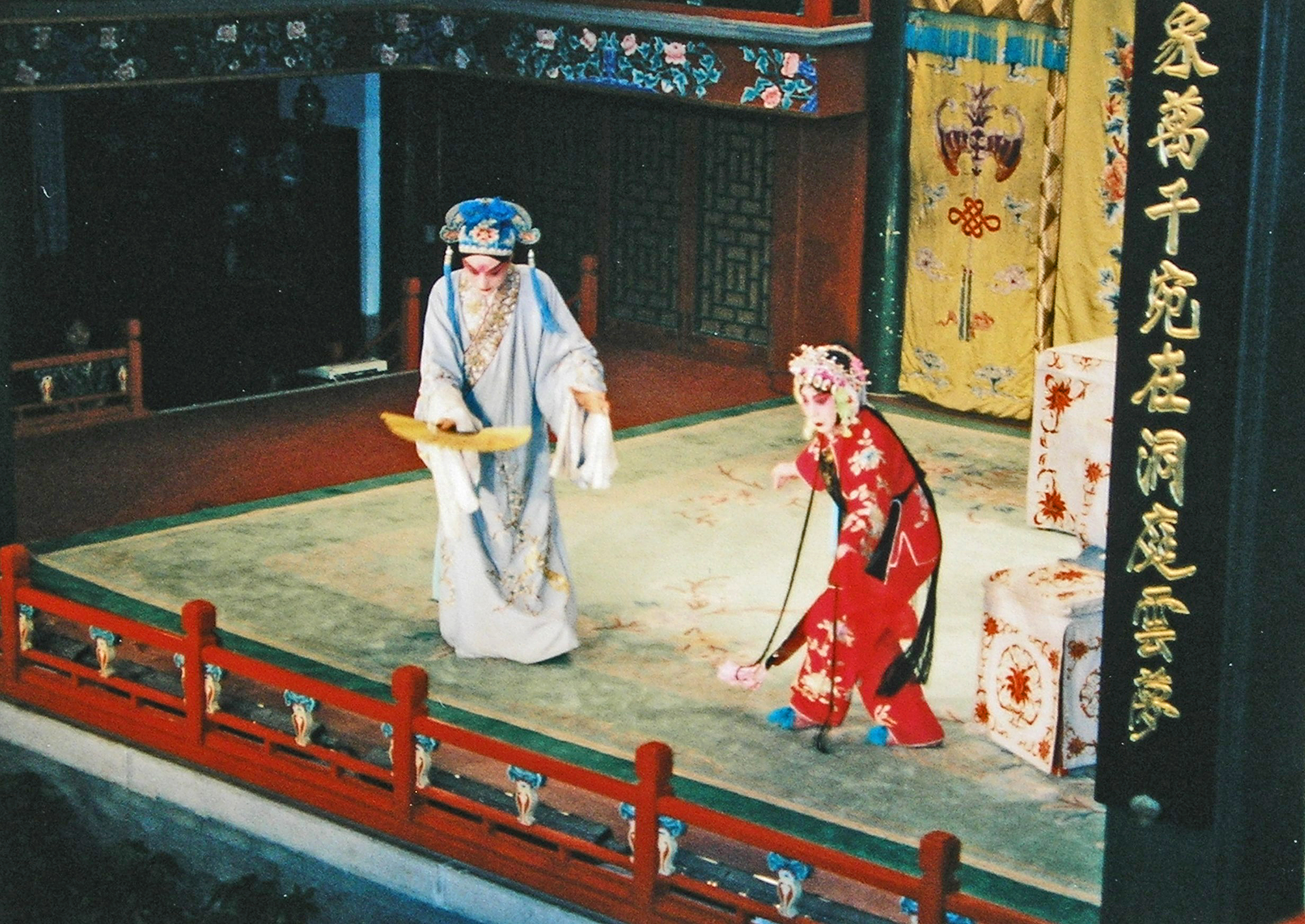
That night we went to the theatre to experience the Peking Opera. Chinese opera has nothing to do with what we regard as opera in the West. Chinese opera is a curious but fascinating mixture of song, dance, acrobatics and pantomime. Our western ears have to accustom themselves to the high tones and traditional, rather curious musical instruments. It was absolutely fascinating to see the lavish costumes and colourfully made up faces on the stage. Chinese opera is a very special experience, which I have later revisited but to which I am unlikely ever to become addicted.
First visit to the Great Wall
On Monday 24th May, it was time for an inspection tour of the running area. Our many buses left Beijing at around 7 a.m. headed for Huangyaguan, so we were up at the crack of dawn. The journey to the running area took us 125 kilometres north-eastwards towards the mountains and lasted about three hours, including a break. We arrived late in the afternoon, and I now saw for the first time the Yin and Yang Square, to which I was to return so many times later.
The area was relatively unknown back then, and only a few tourists had found their way to this remote part of the famous edifice, even though there was plenty of opportunity to romp about and go exploring here.
A lot has happened since that day in May 1999. Thanks to the recurring marathon, the town has become wealthier, which is reflected in conditions there. That’s great for the village, but then as now, we were attracted by the idea of experiencing an adventure marathon, and conditions have become more comfortable over the years than was envisaged at the time of the first run. During the first few years, you could come and go as you pleased, but over the years they’ve installed barriers and ticket controls. There were no seats on Yin and Yang Square, so we had to sit on the bare concrete terrace. Sun screens have also since been built. We had to sit in the baking sun in the early years.
When everyone had arrived, the technical information meeting began, led by Thomas Thomsen. The race we were about to run was described in detail, and our attention was again drawn to the fact that this was not just any old race. It was impressed on us that caution was necessary, the dangerous parts of the course were described and various rules and regulations explained. Nobody could be in doubt that we faced a very tough run and that it would be no shame to pull out, drop out of the run on the way or be removed by officials.
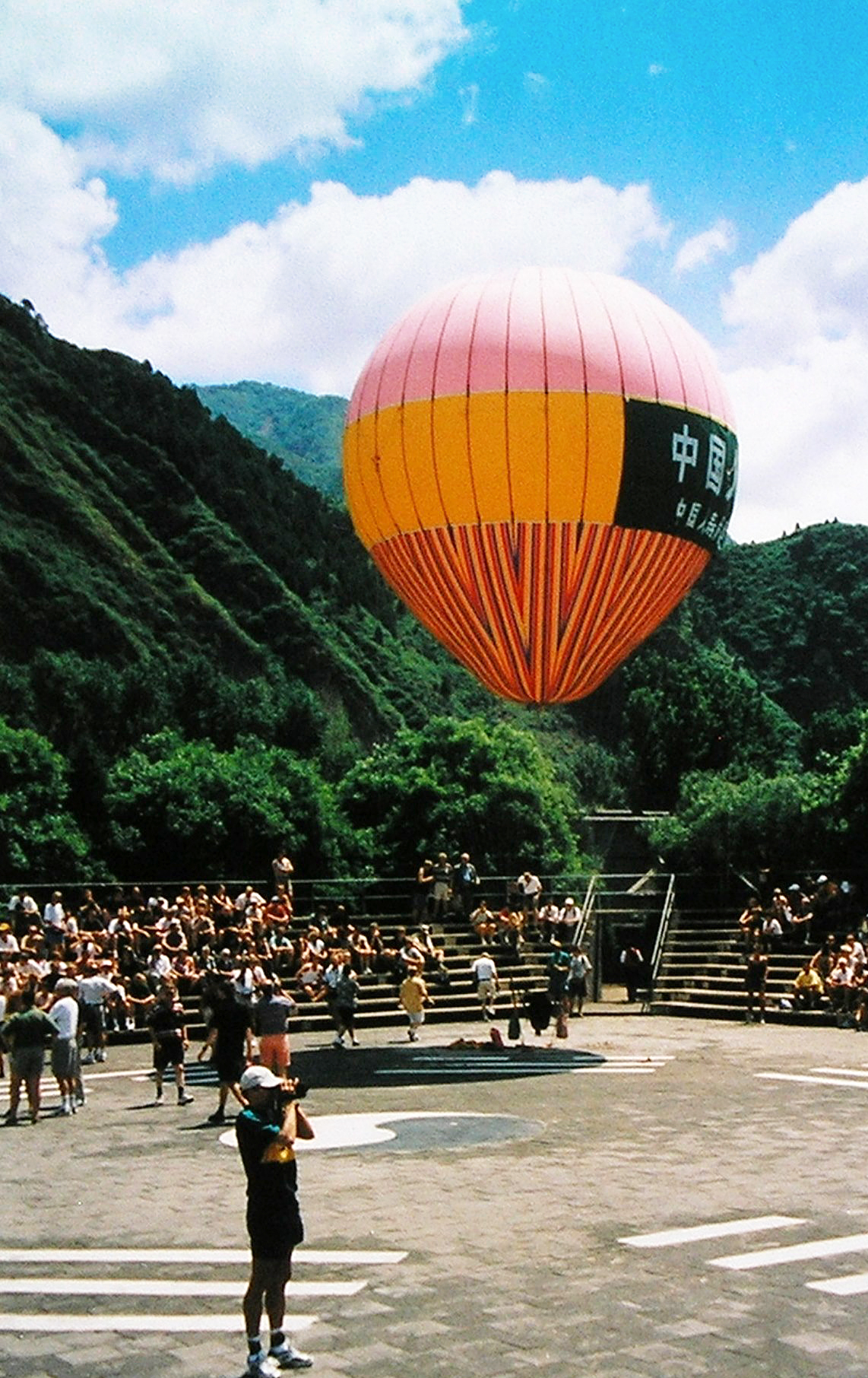
The marathon was actually considered to be so extreme that debutants were directly advised not to run. As for myself, I kept a bit of a low profile because I didn’t want anyone to consider me unsuited to start. I later found out that quite a few other people had chosen this run as their first marathon.
After the information meeting, we were driven up to the start at the top of a peak right next to the Great Wall. Climbing up over the Wall was obligatory for all, so that no one would be surprised when the race began two days later.
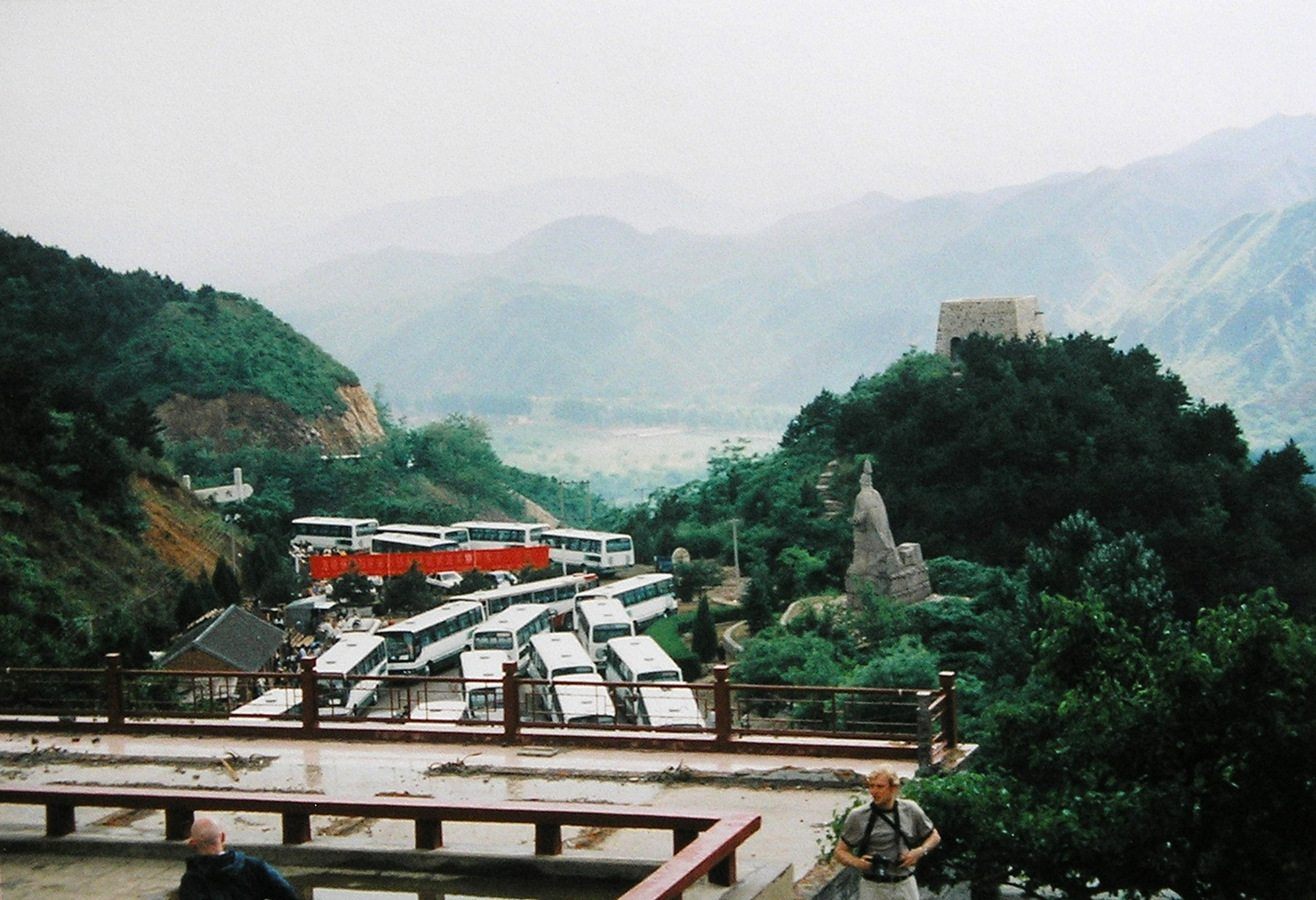
The Great Wall consists of scattered, very long fortifications of earth and stone. Most of it lies within the People’s Republic of China and was built between the end of the 13th century and the beginning of the 16th to protect the Chinese against the Mongols and Turkish tribes. During this period, under the Ming Dynasty, there was also a civil war in China. However, walls had been built here as early as in the third century BC as protection against nomadic tribes from what is now Mongolia and Manchuria. The overall length of the Wall is 8,851.8 kilometres, though parts of it have disappeared, because locals have used it for building purposes. These days, special parts of the Wall are listed structures. It took more than 300,000 men to build it, and it is said that it is both built by and on Chinamen. It was not a volunteer workforce that toiled and moiled on the construction sites, and many lost their lives along the way. Their dead bodies were used as filling in the foundations of the Wall, and legend has it that there lies one body for every metre.
A persistent but mistaken rumour says that the Great Wall is visible from the moon. The moon is around 384,000 kilometres from the Earth, and although the Wall is very long it only measures about ten metres at its widest point. So seeing it from the moon would be the equivalent to being able to see something a millimetre thick at a distance of 38.4 kilometres – which is obviously impossible.
The Great Wall Marathon is run on the part of the Wall that lies at 300-600 metres above sea level. The width of the Wall varies between one and four metres, and in some places you actually run along a narrow path, where passing is normally not advised for reasons of safety.
My first steps on the Wall felt very special. Already at that point in time, I had the feeling that I would run here more than once – even though I had never previously run a marathon. I became really enthusiastic and was gripped with excitement. There was something very special about this place, and I had goose bumps on my arms several times during those few days. It is a very special experience running your first marathon in such incredible surroundings and although I have since run marathons on the seven continents and had some tremendous experiences nothing has yet surpassed The Great Wall Marathon – and probably never will.
For many years, people really did risk life and limb running on the Wall. In several places, you were in danger of falling quite a long way if you weren’t careful. In other places, you had to cling on to masonry or stretched-out ropes, though, over the years, metal railings have been put up in various places. To me The Great Wall Marathon remains a very special and unique experience, but I miss the charm of the challenges of the first few years.
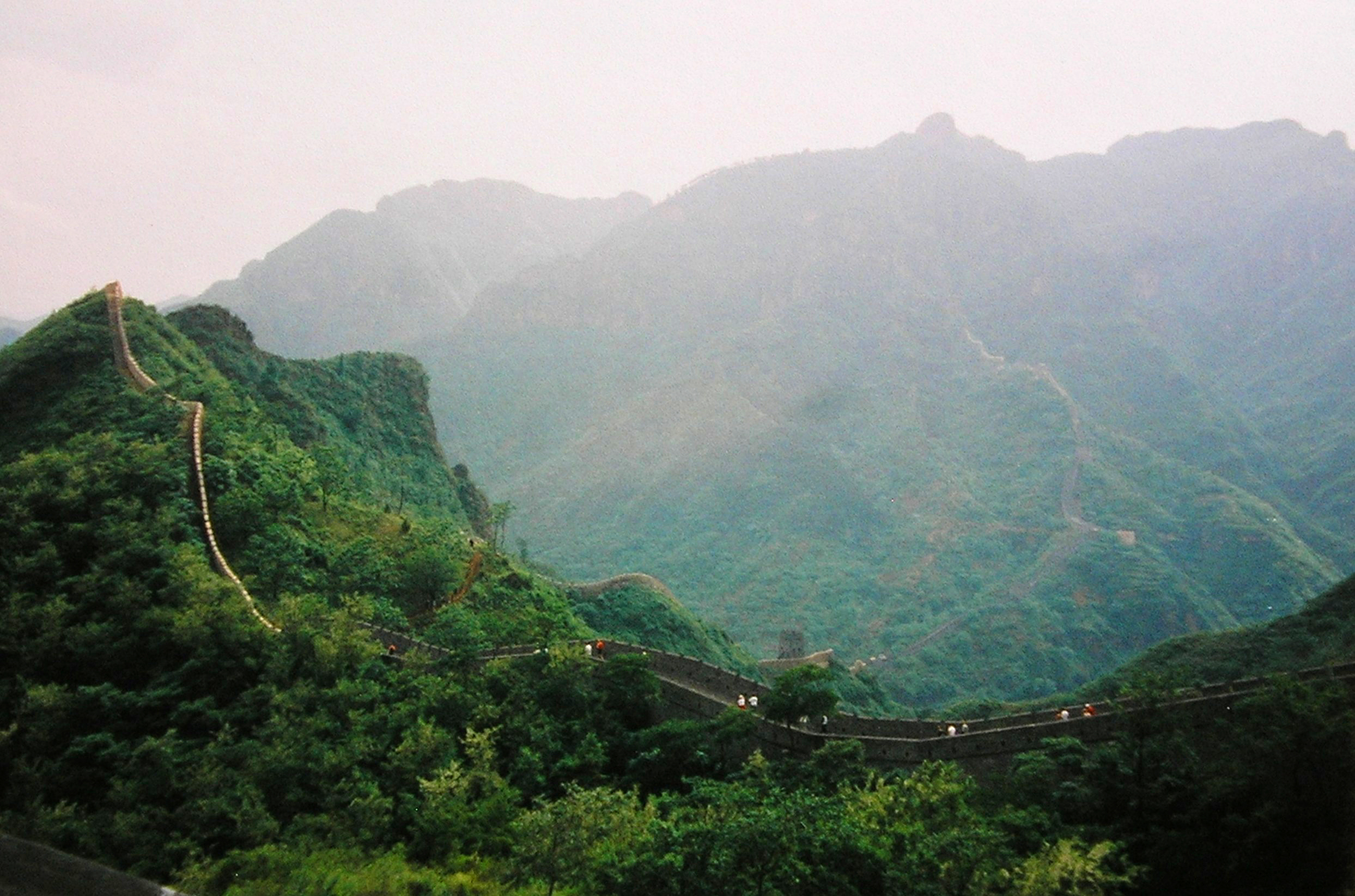
This first walk across the Wall was enthralling, although it was only a tourist trip to show us what to expect. We gave ourselves plenty of time to enjoy the exciting view and take some good photos, at that time on celluloid film. Although we were still only sightseeing, we were left without doubt that the going was going to be tough. There were local helpers with green flags everywhere to show us the way, although that was rather a waste of time because there was nowhere to make digressions. But they also served a more meaningful purpose. It was their job to ensure that we didn’t fall in the places where there were no safety barriers.
The Great Wall Marathon eventually adopted the slogan “5,164 Steps into History”, although, on this first run, the official figure was 3,700 steps. OK, so on the first race we didn’t run around the fort at the end of the Wall near the Yin and Yang Square, but there’s no way there can be 1,464 steps on the fort. The reason for the difference will have to remain one of those unsolved mysteries …
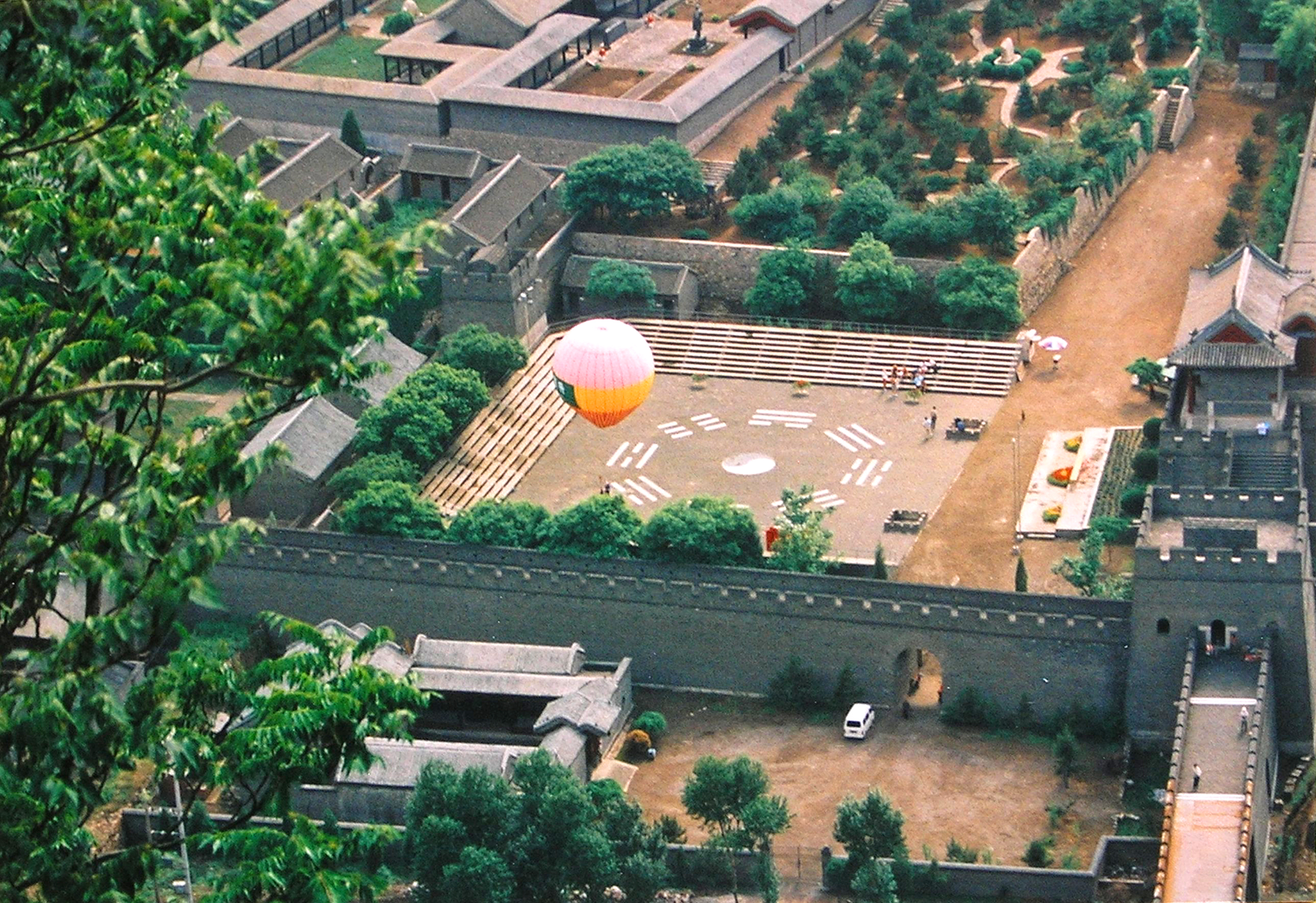
Although we had “only” walked along the Wall, we were not exactly physically unaffected on our return to the Yin and Yang Square. Our calf muscles had begun tightening up, and I worried how things would go during the run itself. Over the years, however, it has been my experience that the cause of the unpleasant tightening was the sudden change from the Wall to level ground. It has never happened to me after the run or, for that matter, on inspection days after the walk round the fort, which is now part of the race.
Having crossed the Wall we had something to eat before continuing on another inspection. We were now driven out to the part of the course where we would be running on dirt and stone tracks and across fields, and we passed through small villages where the local population inquisitively observed all the commotion being made by the foreigners.
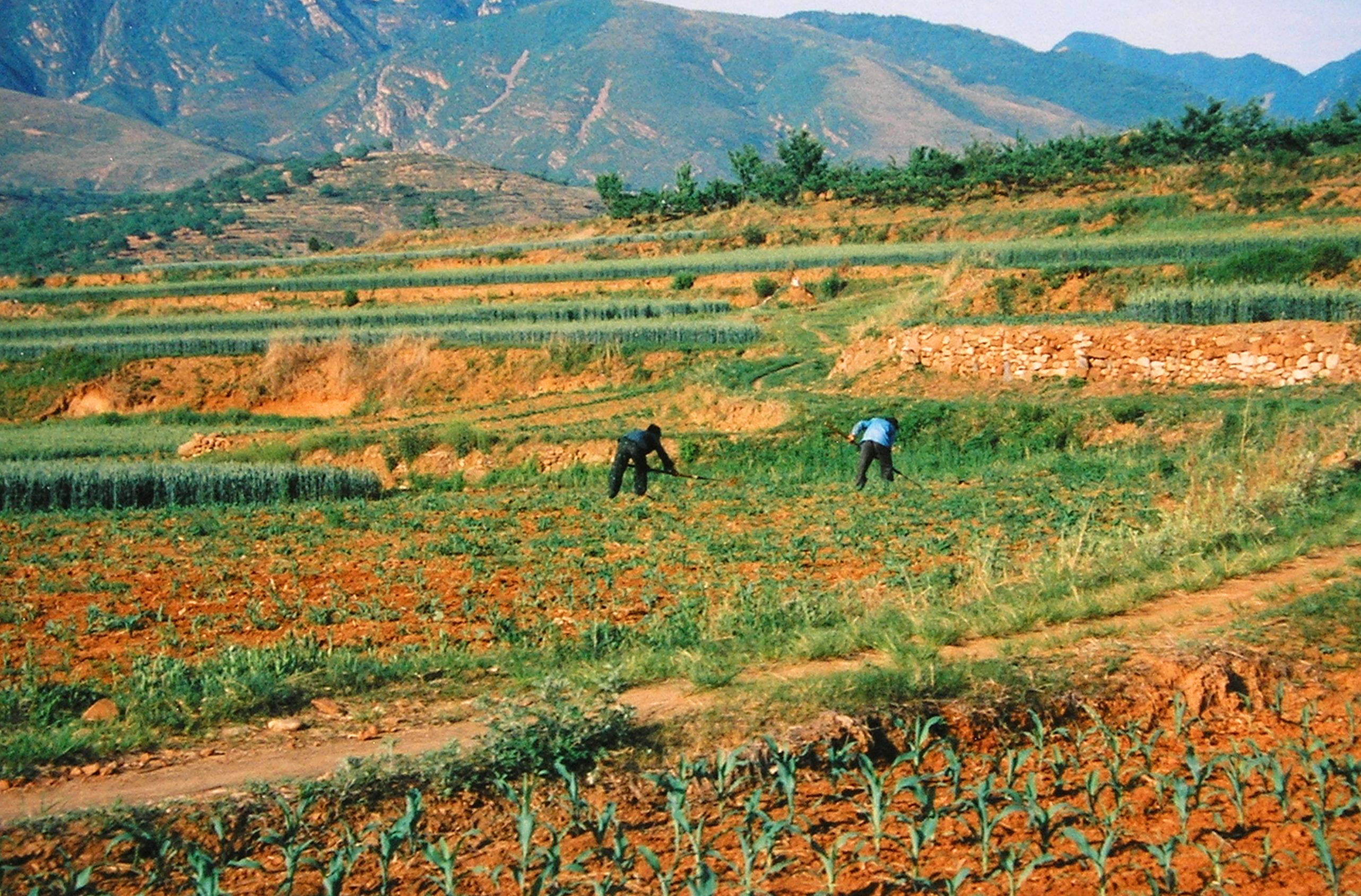
It had been a long day, and we stopped to eat at a restaurant on the way home. It was close to midnight before we returned to our hotel in Beijing, thoroughly exhausted by all the impressions we had encountered.
The day before the day
The day before the big run was yet another day full of activities and new impressions. After breakfast, we visited the local food market where ordinary Chinese do their shopping. Chinese culinary art has a time-honoured tradition of using the freshest ingredients possible. We saw this with our own eyes that same evening when we were presented with a rather extraordinary meal.
After the market, we visited one of Beijing’s many teahouses, and later a rather atypical Lamaist temple in the north-east of the city. This was originally the residence of a prince (later Emperor), and since no one was allowed to live in a place once inhabited by an Emperor, it was converted in 1744 into a Lamaist temple. Special efforts succeeded in saving the buildings from being ravaged by the Red Army during the Cultural Revolution, and today we are able to enjoy the many well preserved statues, including an 18 metre tall Maitreya Buddha carved from a single piece of sandalwood.
Later that day we visited the silk market near the embassy district. At that time, the silk market lay in a large open area with all sorts of different stalls. They sold everything between heaven and earth here, not all of it of particularly good quality. But it was something of an experience to come here for the first time. It was a lively, noisy place; everybody seemed to be shouting. You couldn’t take two steps without being assailed by some pushy trader who would not take no for an answer. They couldn’t see why anyone should not want to buy anything they had to sell. And I did buy some things, learning immediately that you never paid the price asked. Back home in Denmark I’m not the type who haggles for a better price. I may occasionally make cautious enquiries about a possible discount, but I usually simply pay the price asked. On the other hand, here in China I have become a veritable master haggler from the first visit and sometimes have closed deals at a tenth of the original asking price. It’s basically all play acting, and I know from the outset what the trader is saying, so I’m well-prepared. They are really keen to do business with me because I’m Danish, and they just love Denmark. I’m their first customer of the day, so it means a lot to them to do a deal with me because to do so is a harbinger of good fortune. If I tell them that I can buy the goods cheaper at another market, they start emphasising the very special qualities of their items. But one thing is certain. When I smile after securing a bargain, the Chinese smile back. They do, after all, make money on every deal.
Despite my many trips to China, I have not learned the language, although we got “nihau” under our skin on the first trip. It is a word most tourists are familiar with. It means “good day”, “hello”, “hi”. But I also learned the word “buyao” from Søren Dehn on the first trip. Saying “buyao” bluntly informs people you are not interested in buying anything. Sometimes it works, but sometimes they just laugh, repeating “Buyao, buyao”.
We also visited a rather better organised shop, the state-owned Friendship Store. Here, nobody haggled over prices, and it was not teeming with people. When you found something you wanted to buy, you had to go over to the counter and order it. You were then given two copies of a handwritten bill which you handed in to the cashier and paid for your goods. One of the bills would be stamped, and you would go back and pick up your purchase, which in the meantime had been wrapped. Hanne decided to buy a traditional Chinese dress in red. She was to wear it at a big New Year’s party at the Hotel Prindsen in Roskilde to celebrate the millennium. Together we went into a small room that served as a dressing room, with an ordinary door with a handle. But when we wanted to leave we couldn’t open the door and had to call out to the staff for help. While we were waiting, we couldn’t help laughing at the thought of having travelled more than 7,000 kilometres to run a marathon only to end up stranded in a dressing room while the race was being run. That didn’t happen though. A woman came and opened the door for us by sliding a postcard into the crevice by the lock, and Hanne got her new dress. Whether or not she wore it on New Year’s Eve I don’t know. She wasn’t at the Hotel Prindsen, but that’s an entirely different story.
The meal that evening was quite extraordinary. We were to experience how important it was for the Chinese to have fresh ingredients, because we were to have living fish which was a rather odd and also bizarre experience. At the restaurant, we were called out to the kitchen one table at a time to see “our” fish being prepared for cooking. Here we saw how, alive and squirming; a fish was taken out of a water bath, and its belly cut open. The entrails were removed, and cuts were made at the head and several other places on the fish to enable the skin to be lifted. The fish was then rinsed, turned into flour and quickly fried in a pan. Then sauce was poured over it, and it was carried into the table to be consumed. Here lay the fish “breathing” with its mouth wide-open. Of course, it was dead, and what we were seeing were its last reflexes, but now we were supposed to nip off pieces of flesh from under the skin with our chopsticks. None of us felt particularly inclined to eat the fish after that performance. Luckily there were plenty other dishes to choose from.
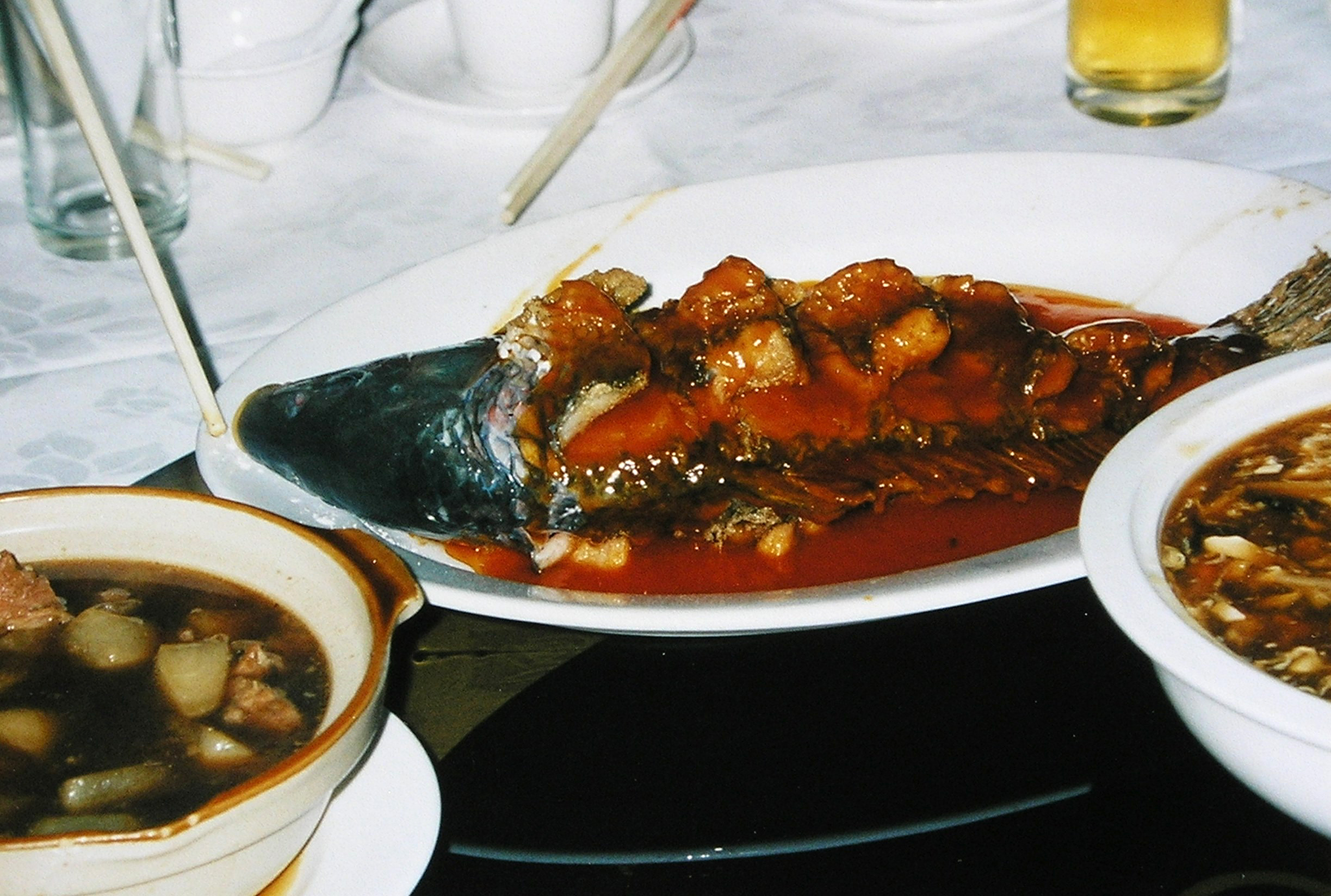
After supper, we were taken to watch traditional Chinese acrobatics and were back at the hotel by 9 p.m., which was late enough considering the programme that lay ahead of us next day.

The big day
Finally came the day we had all been looking forward to. Wednesday, 26th May 1999 – the day of The Great Wall Marathon. When the telephone rang, and a voice said, “nihau” and something more, you couldn’t exactly call it a morning call, because it was actually in the middle of the night. We had prepared what we could the day before. Our kit was ready with the starting number attached to our jerseys with safety pins, and we had bought personal timekeeping chips, which were attached to the laces of our running shoes. Nothing had been left to chance.
I was entirely convinced that I was going to run and that I was going to complete the course. I was literally trembling with excitement and at no point was there any doubt in my mind that I would complete the run – even if I was a debutant as a marathon runner.
After breakfast, it was time for the buses to leave, and all the buses, those with runners as well as spectators were to depart together from the hotel for Huangyaguan. At a collecting point 38 kilometres north-east of Beijing we waited until all the buses had caught up, after which we drove off in convoy to the Great Wall with the runners’ buses up front. It was a wonderful sight to see 19 buses in a long row winding their way through villages and up mountain roads to the great destination of the day. There wasn’t much traffic that early in the morning, not that that would have delayed us, because in front behind and beside us drove motorcycle officers with blue flashing lights securing our passage. It was a euphoric sensation to see the whole cortege of buses and motorbikes. I sat there feeling important, which we all were.
We reached our destination at 9 a.m.
This was undoubtedly a very special day for all of us. We were 306 runners and probably around a similar number of partners, officials, doctors and members of the press. In order to attract attention to the event, the organisers had invited along three celebrities. The actor Lars Bom, known in Denmark and abroad for his role in the TV series “Island Cop” would, like me, be running his first marathon. The media company director Bettina Aller was also among the runners. Not long before this day, she had returned from an expedition to the North Pole. Henrik Ørum had become known nationwide from his participation in the Robinson Expedition on Danish TV3, and he too was to run his life’s first marathon. Free tickets were not that hard to come by in the early years, before the financial crisis turned things upside down. As well as a reporter and photographer, the tabloid newspaper BT had tourists along who had been given a pat on the shoulder by company management. There were other guests on the trip, as well.
But a special celebrity was missing at the start though. I have been told that the organisers had invited HRH Crown Prince Frederik of Denmark to participate in the run. The Crown Prince is an accomplished sportsman who already had several marathons on his CV. The previous month he had run in his father’s homeland, in the Paris Marathon. However, the Court had declined the invitation to this run which was to take place on the Prince’s birthday.
With butterflies in our stomachs, we stood there ready for the great event of the day. The Great Wall Marathon was to be started officially with speeches from a podium in the middle of the square by high-ranking Chinese officials, the chairman of the Danish Athletics Association and Denmark’s ambassador to China, Christopher Bo Bramsen. The latter was able to tell us that never before had so many Danes been gathered in China at one time. That record was undoubtedly broken nine years later during the Beijing Olympics. There was considerable interest in this historic event, and six TV stations were present that day.
After the official speeches, it was time to warm up. This was supervised by Bodil Thomsen, the wife of Thomas Thomsen and a gymnastics instructor for many years. After the warm-up, we were like tensioned bows ready for the start, which went ahead on time at ten o’clock. So as not to end up bunched together along the Wall we were dispatched in groups of 30 to 40 runners at an interval of two or three minutes. We started seven minutes after the first runners were given the off.
Many things were different about this first Great Wall Marathon from the following years. For one, the start of the run was not at Yin and Yang Square, but from the top of a mountain five kilometres away.
When the starting gun went off, we ran northwards, through a wide archway, and then across an open space before coming to the first – but by no means last – steps. “Hitting the wall” is a well-known concept in marathon running, but meeting it after only a few hundred metres is quite unusual! Some of the runners are sure to have decided to run on the steps, but many others chose another tactic at this point. The steps on the Great Wall are extreme. Some are high; some are low; some narrow and some are wide. Not all the steps are quite horizontal, so there were plenty of challenges. When, over the years, I have told people about The Great Wall Marathon, many of them have been rather surprised that we didn’t run the WHOLE race on the Wall, but 2 x 3.5 kilometres is quite enough. You have to try it to really understand it.
The Wall section, as I said, was a challenge, but we took it as it came like most of the rest and looked upon this part as a tourist excursion, though we did focus on getting across the Wall within a reasonable time.
Running on the Wall makes a deep impression. You run through several towers, and the view is incredible in many places. Like everywhere else along the course there were plenty of water stations. It would have been impossible to implement the marathon without the help of local volunteers. Guides and safety officials were everywhere. The many, many bottles of water on the Wall had been carried up there by the Chinese. They do a lot for their visitors; that’s for sure. Every year, the organisers emphasize how important it is for us to behave properly as guests – and that includes taking good care of nature. Not all the locals take it so seriously. One year I heard about some Chinese, who had entered a bag of empty plastic bottles over the Wall to avoid carrying them down to be disposed of properly.
As I mentioned earlier, the course was more primitive that first year than it was later on. In the first few years there were long stretches without balustrades on the left-hand side – in other words, free fall! In some places, the Wall descended so steeply that runners whose shoes did not have a proper grip on the stone had to cling to thick ropes with knots in. Here it was a question of descending slowly enough not to burn your hands or lose your foothold. Doctors, rescue teams and helpers, were ready to help in the event of an accident.
In principle, the first section along the Wall goes downhill. From the top of the mountain, we have to get down to Yin and Yang Square. But in reality, it isn’t as simple as that. We have to go up and down steps from tower to tower, and in several places inside the towers and elsewhere the route turns through 90 degrees. As such, it isn’t possible for people who want to run to find their rhythm. The conditions are far too changeable for that, as was the surface we are running on. There is natural stone in some places and brick in others.
The Goat Track is legendary, and it was one of the main challenges that first year. Unfortunately, it has since been clad with large slabs but in 1999 and the next couple of years it was more of a challenge than it is now. Although the path after that time had been an improvement on the original one, and the route had been cleared, loose stones did occur from time to time. The course goes downhill at this point, and I had to grab hold of branches many times to remain standing. Halfway down the path there was a water station and a primitive toilet.
A bit further down, the worst of our troubles were almost over – this time around. Later in the day we would take the same route but in the opposite direction. Now we were able to look down on the river and the bridge we would have to cross later. The fortress at the Finish and the Yin and Yang Square were also clearly visible. After following a path of dirt and clay, we now turned back onto the Wall and again had to hang on to ropes to get down in safety. A bit further down there was a major curve in the Wall and here, too, there was a free fall to one side. Soon afterwards it was time to leave the Wall again by turning right through 90 degrees, taking a couple of steps down and then turning 90 degrees to the left. On the next stretch were 576 DOWNHILL steps without any protective brickwork.
Having negotiated the steps in one piece we came to a tower where we were to turn sharply right to come out onto the bridge we had previously seen from the mountainside. At the end of the bridge, we came to another tower, and a bit further on we would be finished with running on steps this time around. With a sharp left turn, the steps led us down to the finish with the stands and the Yin and Yang symbol.
The only spectators on the Wall had been the Chinese guards and guides, whom we had greeted with a smile and a “nihau”. Despite the physical rigours, we had enjoyed the run so far and taken the time to enjoy the enchanting view. This was before the advent of smartphones and small digital cameras, so we had no camera with us. Unlike on the Wall, there was plenty going on at Yin and Yang Square. The square was, and is, still at the heart of the run and always packed with various officials, as well as family and friends.
But we immediately left the “eye of the storm” and the roar of all those people on the square. The route now took us through an archway in the foundations of the Great Wall Fort, followed by an immediate right onto the tarmac road. If you needed a doctor or the lavatory, it was now. Personally, I can pee anywhere, so I had no reason to panic.
Now we could run straight ahead at a healthy pace. We had not been able to run properly until now. It was getting towards late morning, and the sun’s rays were getting warmer, so we were thoroughly cooked. I chose the strategy of emptying a bottle of water over my head and body at the water stations. The cold sent a shiver down my spine, but it cooled me down nicely. There was a lot of traffic on the road, so we had to watch out. Many of the vehicles were primitive farm implements with four-stroke engines. They clattered away, oozing black smoke, but at the same time they helped to enhance the special atmosphere.
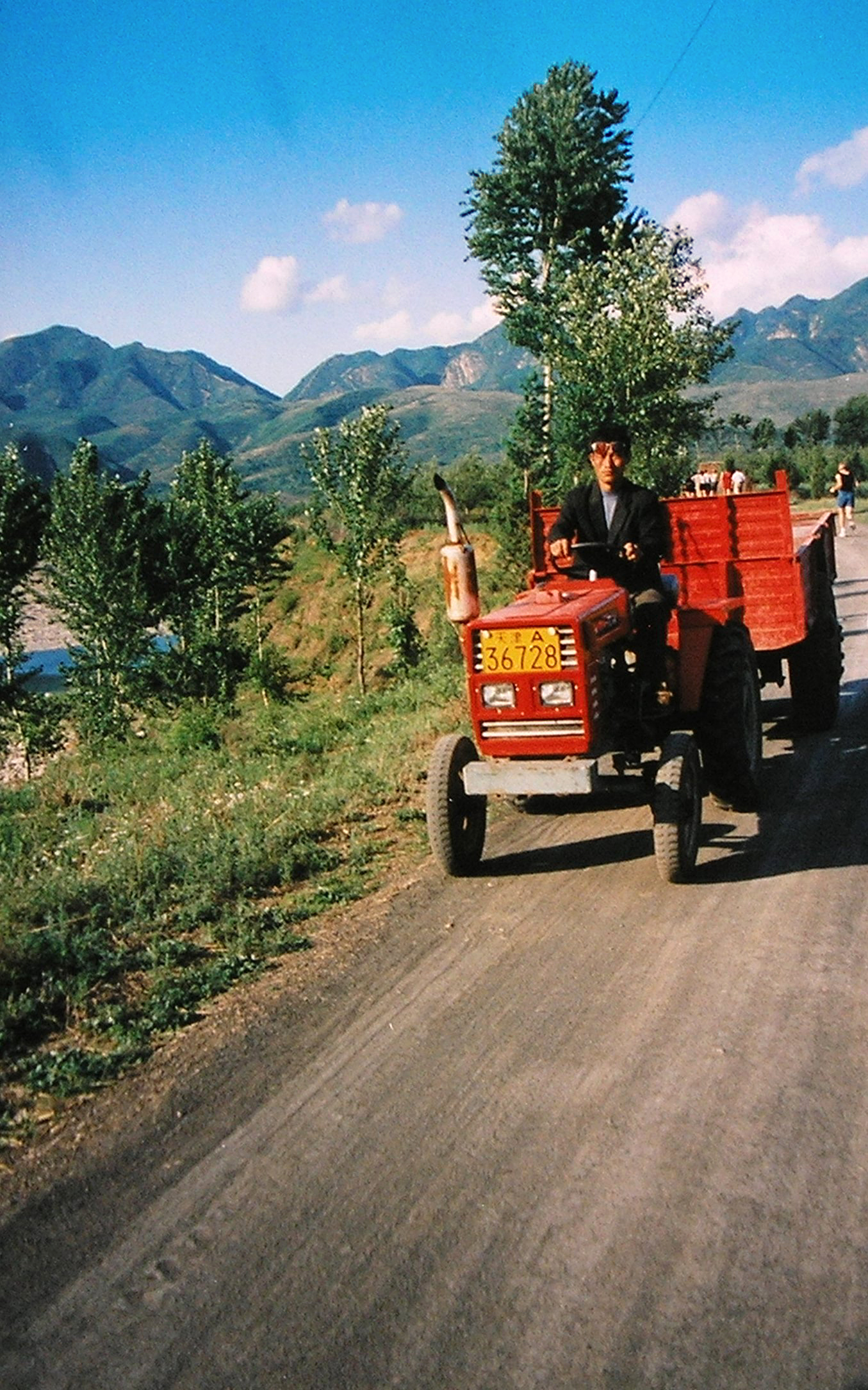
The stretch of the run along the main road was eight kilometres long. Although it was possible to run here, we didn’t always manage to keep going. The heat and our tired legs forced us to walk from time to time. On the left-hand side of the road was the river, and it was along this road that the buses had brought us in, and runners who had dropped out could get a lift back to the finish. On the last part of this stretch, we were led across a parched riverbed and into the village of Xiauing. We were to gather strength here on this stretch because soon afterwards we would face new challenges.
We left the main road now to run along a four-kilometre gravel track. The most obvious sign of modern civilisation – the tarmac road – disappeared, and we were now out in the “Gobi Desert”, as we called it. We ran along a narrow dirt track that was pretty dusty. Whereas earlier we had had to do without spectators and the support of the locals, things had now changed. The day was a great experience for the local villagers as well as for us. Never before had they seen a crowd of people from a country as far away as Denmark come toiling along with sweat on their brows through their humble village. They let out encouraging cries, which we of course did not understand, but there was no doubt what their message was. Happy kids and dumbfounded kids, most of whom were pretty grubby, stood there with big smiles on their faces, raising their hands to slap them against ours as we ran past. It’s not always easy to have a surplus of energy during a race like this but at this stage, people were as optimistic and happy as they could be. It is difficult to explain the pleasure of such an experience. But the surroundings, the many snotty children and toothless old people with big encouraging smiles, and the very feeling of running here and feeling the rush all came together.
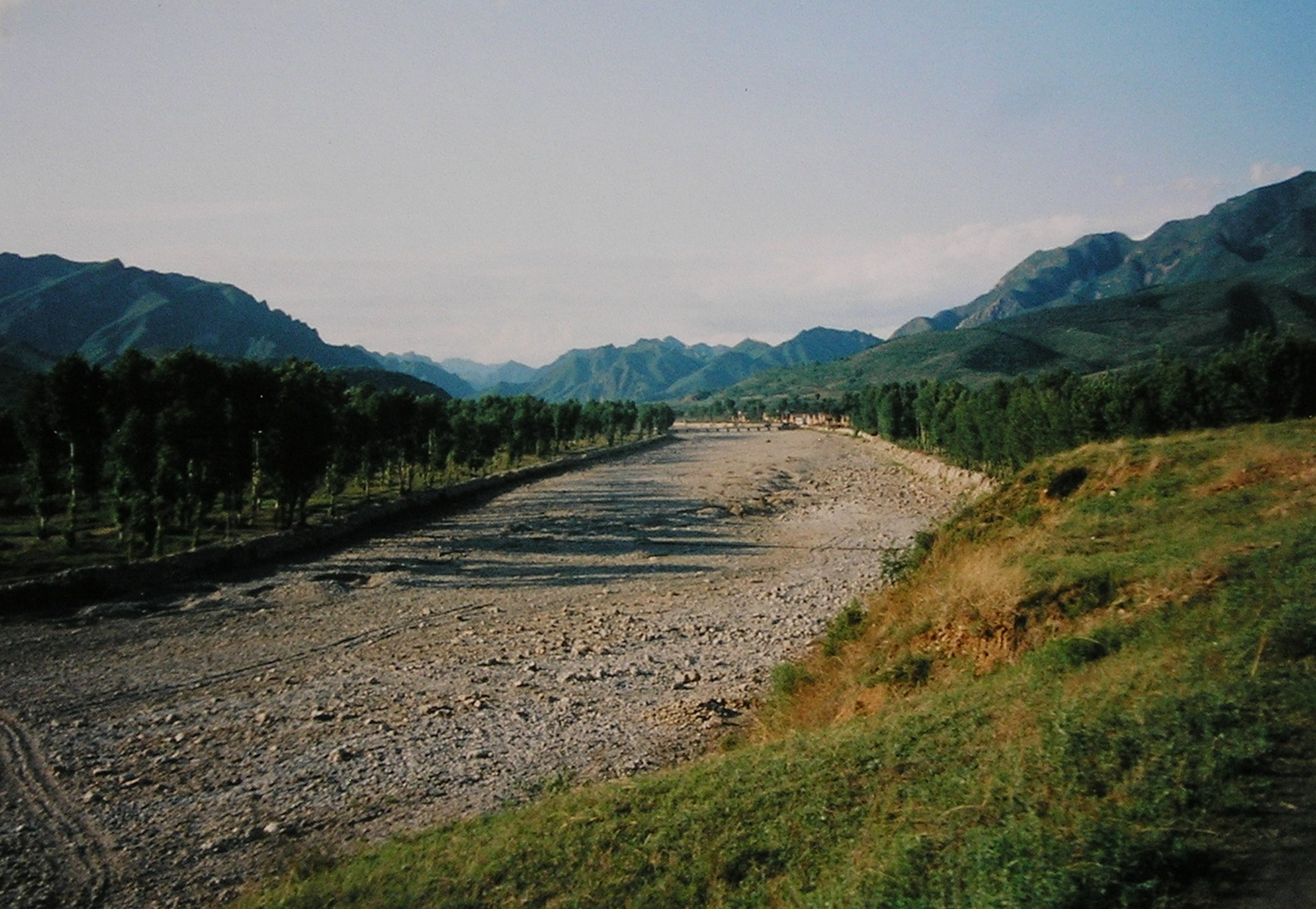
After this stretch of the course, we again crossed the river across a bridge and then ran northwards along the river. Then came one kilometre and a half of dirt and gravel track before we had tarmac under our feet once again. First we followed the course of the river then we ran along an irrigation channel which gave us time to observe this rather strange farming improvement method. After this, we were back on the main road again, this time running in the opposite direction with the river on our right. Now we continued straight ahead for “only” 3.5 kilometres back to Yin and Yang Square. But “only” it was not. It was baking a hot. That day the temperature reached 31°C in the shade, not that there was much shade.
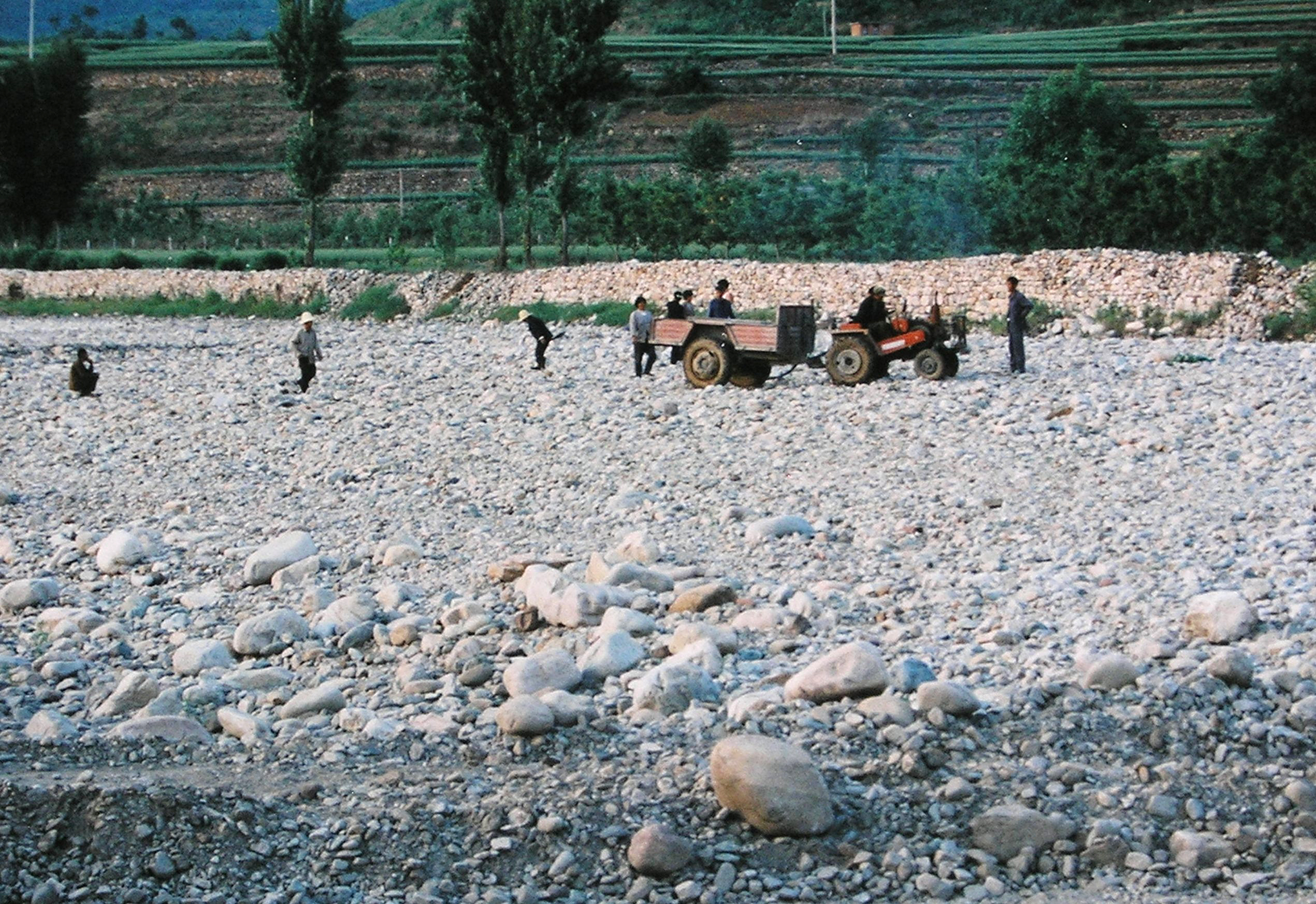
During the entire run, we had plenty to drink and in some places we got energy drinks or bananas. We were also able to hand in our own packed lunches with our names on at the start and pick them up at special places along the route. We had bought some chocolate, but I never did that again. It was all melted and sticky.

When we returned to Yin and Yang Square and headed for the Wall again, we had run 19 kilometres. In all subsequent Great Wall Marathons, we arrived at the Wall for the second time after 34 kilometres. There is no doubt that the first run had an “easier” route than those that followed.
Now we had the opportunity to enjoy a brief encounter with family and friends, and there was also food, a lavatory, and a team of doctors, though we didn’t have time to concentrate on that kind of thing. We carried on quickly towards the Wall. We now had 19 kilometres in our legs; the sun was high in the sky, and we had to battle our way from the square to the top of the mountain. Some of the steps did head downwards, but that was little consolation.
After climbing the first steps and heading out on to the long cobbled section, we were back at the foot of the many steps that would lead us up. On the first section, it was an advantage to grab hold of the outstretched rope to get up safely, and then we followed the extremely narrow goat track. Even though there were no runners coming towards us we had to be careful and alert. This was not the place to overtake, but then again very few would be in a fit state to do so anyway. The path ended with a right-to-left combination, both at 90 degrees and with 11 steps between them.
Here on the Wall I experienced for the first, but certainly not the last time how helpful and considerate runners generally are towards each other. One of the runners was having trouble with asthma but got a blast from another runner’s asthma spray and was ready to continue.
Having left the path we were back on a wide section of brickwork where we could step on it a bit. Not many people were able to do so, though. After a while, we were headed for the Widow Tower, which is probably the technically most difficult part of the whole race, considering the tiredness factor. But there were many challenges on the way. We were soon back at one of the places where there was a rope to hold onto and there was no shame in accepting available aids.
Now there was still a couple of towers left but the worst was over and not long after a water station we reached the tower from which it was more or less downhill all the way to a stone archway on the Wall. The final “easy” steps were passed, and we were soon back at the place where the race started. After this, there was a downhill run of five kilometres.
You had to be very careful going down the mountain. In many places, there was a ten percent gradient, though there were also some straight stretches and some with a gentle incline. At the foot of the mountain, we crossed the river over a bridge and ran through the beautiful archway. We had now run two thirds of the course, and the inclines were behind us. Oh, what the heck, 15 kilometres is no distance! But that’s not how we felt, though. Although I was a marathon debutant, I was the one with the most energy. I had had to control myself during the run, and Hanne had made a special effort to ensure that we could stick together. She had encouraged me on several occasions to run my own race, but I had declined. But now on that flat stretch, I had to be realistic about the situation, and Hanne and I bade farewell, after which I ran my own race and left her behind.
I was now back on the flat tarmac road. I had a stretch of 7.2 kilometres in front of me, which in itself was no big deal. However, the heat was extreme, so I was not exactly spurting. I ran as much as I could but had to walk from time to time, and I made sure to take in plenty of fluid at every station, as well as dousing my head and body with water. Now I came across runners headed in the opposite direction on their way back to the finish, but I didn’t feel envious. I was only focused on my own run, and my passion and desire to reach the finish.
Eventually I was back at Xiaying again, which I also passed through earlier in the day, and there were still a lot of people around. I didn’t have so much surplus energy, though, so I don’t think I smiled as much as before. There were not as many hand slaps as earlier, either. But there were some marathon runners who had enough surplus energy to socialise, and one participant even took the time to play a round of billiards with the locals.
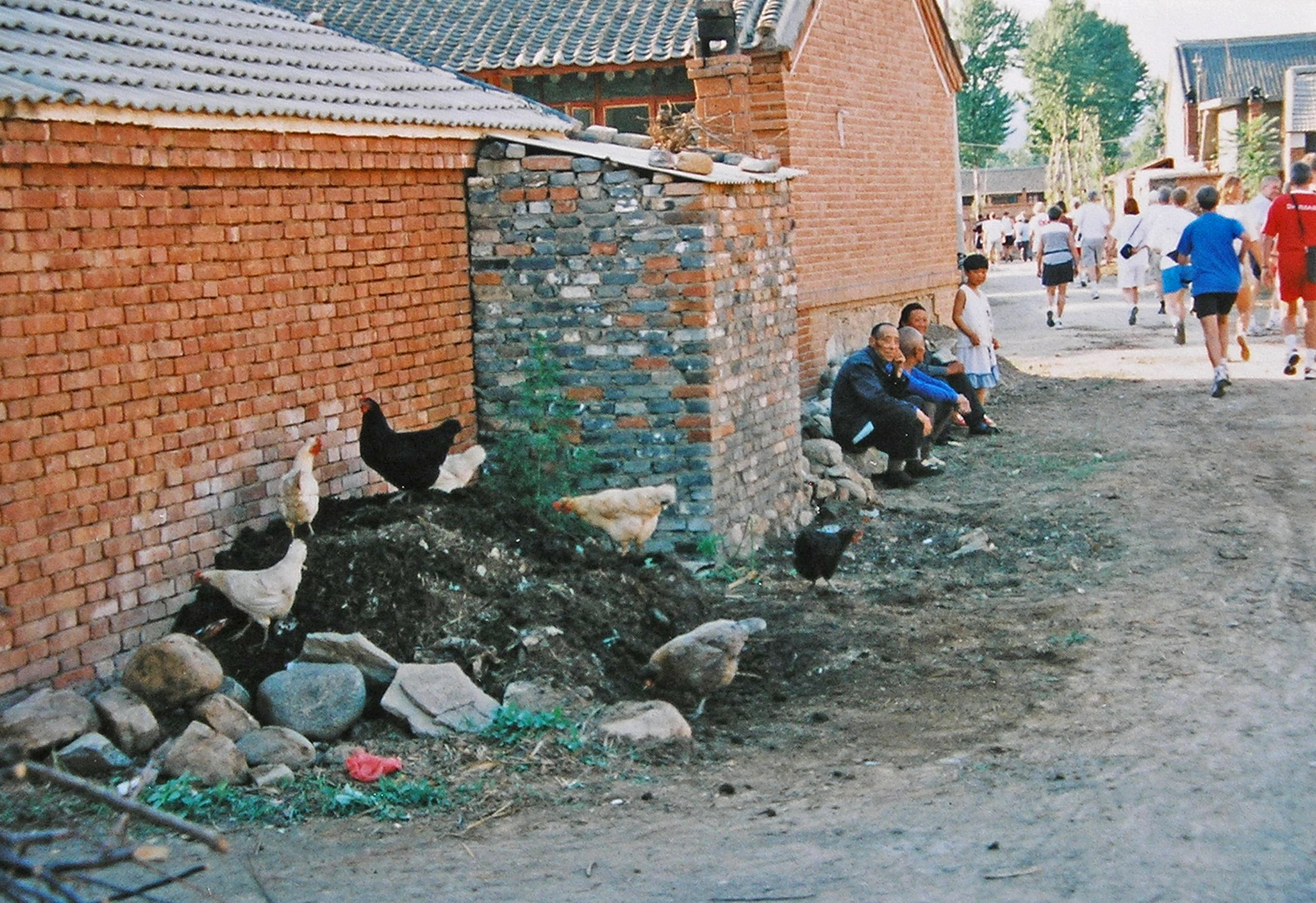
Somewhere in the middle of the village I was to turn a sharp left, after which the route soon changed from tarmac to gravel. It was just as dusty as before, and the heat was extreme. But after crossing the river I was now running alongside it in the knowledge that the dusty gravel track would soon be a thing of the past.
I finally returned to the safe tarmac road. Here, the water station was the stop for the pickup-bus but I was not tempted. Despite being extremely tired, I was “high” and fully focused on completing my life’s first marathon.
Earlier I had seen faster runners than myself on their way to the finish, and now I was on my way to the finish myself and could see the odd runners heading in the opposite direction on their way out into the “Gobi Desert”. We ran around the same loop many times, and one of the runners even managed to take a wrong turn and did an extra loop. This resulted in his running a Great Wall Ultra Marathon of 50 kilometres.
Now I was on the last leg of the run. I had the river on my right and was met everywhere by hearty shouts in Danish as well as Chinese. At one stage a spectator shouted that I was only 800 metres from the finish, but it came as something of a downer when five minutes later I was told the same by somebody else. This would soon turn to triumph, though. Now only one thing counted: THE FINISH.
I had now reached the home stretch, which gave me extra strength, so there was no time to feel sorry for myself. I just focused on finishing. At some stage along the route I had set myself the goal of doing the run within six hours. Now I knew that I would also succeed in doing so. I saw people around me with medals round their necks. They look tired but happy, which I could well understand.
Finally, finally, finally I passed the 42 kilometre signpost and took an immediate left through the archway and onto Yin and Yang Square, which seethed and boiled with atmosphere. This was a profoundly moving moment for me. As I sit here writing these words for my book, I automatically relive all the emotions and feelings; I experienced on that day in May, 1999. The square was packed with elated, jubilant people, runners, spectators and officials. In the midst of it, all stood Thomas at the finishing line, presenting medals to everyone who crossed it. I heard the applause, the shouting and presentations over the loudspeakers. A conversation was going on inside my head saying: “Yes, you did it. Now a beer would be really nice.” The tears wanted out, and my arms came out in goose bumps. This was a very, very big moment, with Thomas standing there in front of me. But nobody could know at the time that this moment would repeat itself many times.
My time was 5:56:54, so I had made it within the six hours I had set for myself during the race. When I arrived I had no idea how long it would take me. I had nothing on which to base any assumptions and had just wanted to complete the run.
Now I really needed something to eat, and perhaps even more important: a beer. After a whole day of water and energy drinks it was time for a change. Over the years, the Chinese began to attach huge importance to entry tickets and food coupons. There was nothing like that in the early years, so I was able simply to pick up as many sandwiches as I wanted, which was great.
Runners kept crossing the finish after me, but of course many more had come in before me. The marathon had been won by Niels Magnus Jensen from Silkeborg. With a time of 3:16:55 he was two hours and 40 minutes faster than me. That was totally surreal. The winning time was fantastic, there having been a further 16 minutes to number two. Lars Bom came in an impressive seventh place on his debut run. He was in the finish area when I crossed the line, and I got him to autograph my start number.

Kersti Jacobsen was the first woman to cross the finishing line, with a time of 3:55:30. She was not just “Mrs Anybody”, having previously won medals in Danish championships in every distance between 1500 metres and 20 kilometres. She had also achieved top positions at international marathons all over the world.
The system at the finish was that everybody simply boarded a bus when they were ready to. When a bus was full, it would drive off towards Beijing. This meant that you didn’t ride home with your own group but with runners who had crossed the finishing line at more or less the same time as yourself.
Hanne made an excellent time of 6:23:10. A total of 306 runners had started for this historic run. Five runners dehydrated in the heat while 60 women and 232 men completed the course. 11 runners dropped out and in three cases; the race management had to stop three runners because their finishing time would have exceeded ten hours. A handful had dropped out before the race, the inspection trip having made its mark.
After Hanne had had something to eat, and we had absorbed the atmosphere of the finish area, it was time to find our way back to Beijing. We went to the car park and climbed aboard the next bus to depart. I must say that I had rather tired legs sitting there in the bus. My shoes went off. I’d had enough of them for that day. I tried to relax, but it was not easy. My body was too restless for that. By the time we reached the capital, it was evening and dark had fallen. The bus stopped at a restaurant, and we got a well-earned evening meal in true Chinese style. Then the bus started ferrying runners and companions to the hotel.
It was really nice to get back to the room with all its comforts. We both needed a bath, so we took it in turns. That was the longest bath I had had in many years. I just lay there and relaxed with a cold beer on the edge of the bath, and after that I needed only one thing: sleep. It didn’t take me long to drop-off.
A well-earned day of rest with no plans
No plans had been made for the daytime hours of the next day and after breakfast we went to town with a couple from Hellerup, Susanne and Claus. We didn’t know them beforehand but got on extremely well with them during the first few days. We didn’t have the energy to do much and just had a look around town. We had heard about an antiques street with an abundance of paintings, calligraphic work and antiques. We had no desire to buy anything, but I wanted to have a look. I’m actually not quite sure that we did find the right place, but we spent some pleasant hours together, with some agreeable breaks for something to drink. At one stage, we had to cross the road via a gangway. It must have been quite a sight for the locals to see four pale-faced Europeans wobbling awkwardly up the steps. We spent the rest of the afternoon relaxing in our room.
Evening with a fine banquet
Early that evening all the participants, runners and spectators alike were driven to a large banquet to celebrate the world’s toughest marathon: The Great Wall Marathon. It was a fine evening with a huge buffet, the presentation of prizes, and speeches. There were prizes for the best runners, and in addition to that Peter Fredberg of the tabloid BT offered merchandise from his newspaper to runners who in some way or the other had done something special or peculiar. Wristwatches and newspaper subscriptions were among the prizes.
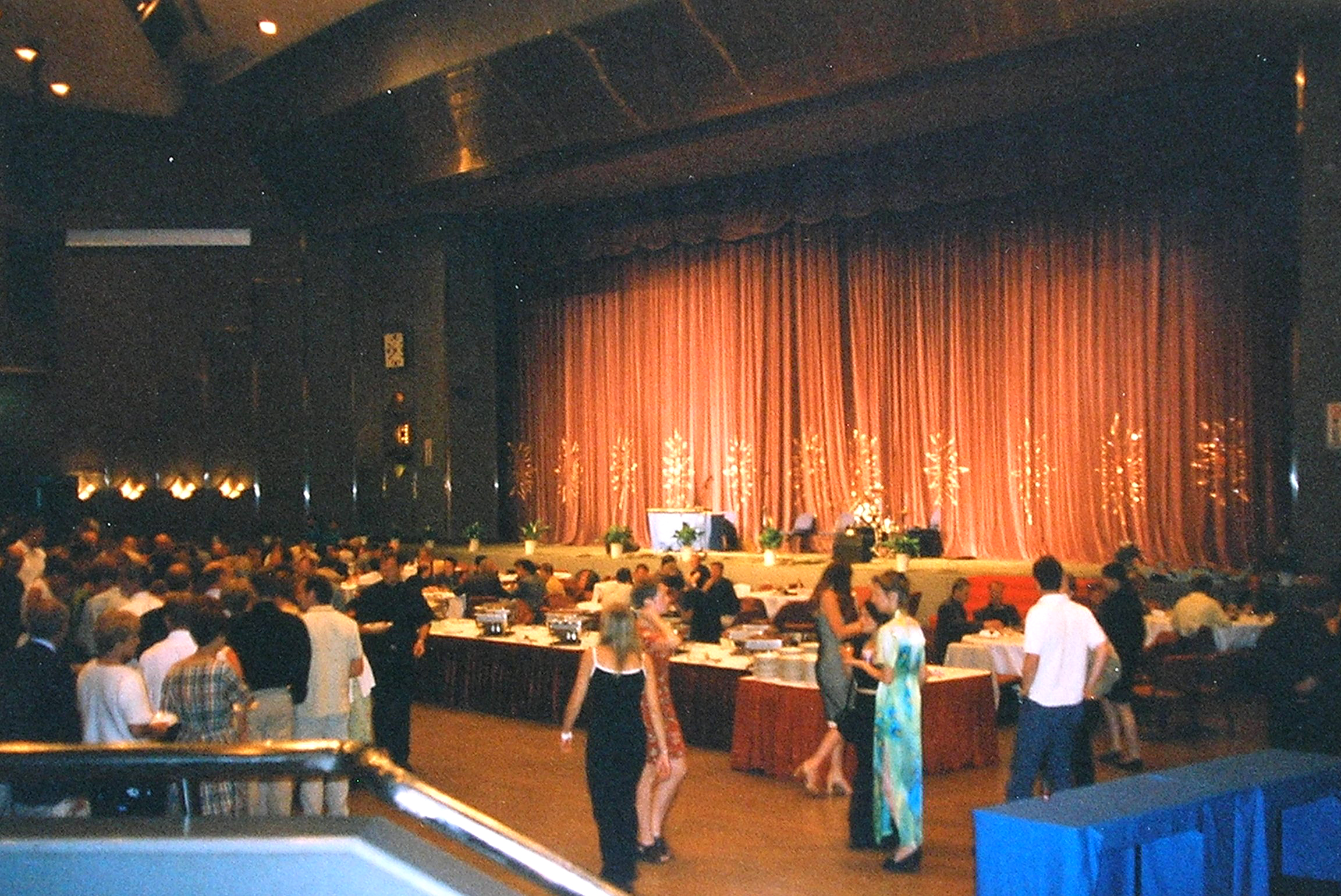
We sat there with our group, enjoying the fact that everyone had got through the hardships of the previous day. Hanne received a BT wristwatch as a consolation prize because she had been beaten by her debutant husband.
Thomas Thomsen made a long speech which he introduced with the words: “Tonight I am the world’s happiest athletics chairman”. There is no doubt that Thomas had been nervous about the event. Being in charge of this marathon had been a tremendous responsibility. Thomas had been seriously worried that we would not leave China without major incidents. It was an extremely tough route with all those steps, many of them very steep, as well as the dangerous paths so close to the abyss. And these extreme conditions had been combined with an expected average temperature of 23°C! It hadn’t helped that the temperature on the day itself actually exceeded 30°C. But now it was all over and had been a success, so Thomas was a very relieved man indeed.
To tremendous applause, it was announced already that evening that The Great Wall Marathon 2000 would be a reality. As soon as the 1999 run had been evaluated, preparations for next year’s run, also in May, would begin. At the same time, they would be investigating the possibility of expanding the event to 2000 participants, of whom half would run. The Wall had its limitations and since the marathon would have to be run with the same high degree of safety as the first year there had to be a ceiling on the number of participants.
They wanted to celebrate the new millennium by organising a rather more international run with participants from various nations, though it was still the intention that the Danes should be the dominant group. The organisers had no idea how many Danes would want to take part, though there was a feeling that the number would be higher than permissible if there were to be room for runners from other countries. It was announced at the banquet that former participants and their family and friends should have first priority and be given the opportunity to register before the event was made public.
The result lists were presented during the evening, as were our diplomas and loads of printed photos. The Internet was not that widely used in those days, so it was not possible to download diplomas or to order photos online. The many images were for sale on a first-come first-served basis. They cost a dollar, or ten Yuan, each. I remember there were a lot of photos of Lars Bom, though we did manage to find some of ourselves, along with our diplomas.
As the evening wore on, the tables were moved to the side, and it was time for music and dance. At that time, the buses had started shuttling people back to their hotels. We were in no hurry and were among the last to leave. We were back at our hotel at 1.30 a.m.
One last day with yet another packed schedule
Even after an evening’s drinking and a festive night we were not allowed to sleep in on the Friday. Søren had invited us to join a voluntary event, and we didn’t want to miss a thing. At that time, we were by no means certain we would ever return to China. As early as 6:30 in the morning we were out in one of the big city’s parks watching people of all ages taking exercise. The older generation preferred unhurried, graceful Tai Chi, a.k.a. shadowboxing, whereas the younger generation went in for Gong Fu. Young and old, alone or in large groups, everybody performed their own special exercises in deep concentration. In some places they were playing badminton and in others they were dancing to music from ghetto blasters. The dance varied from one place to another. There was everything from the waltz and discos to music from the 1970s.

After breakfast at the hotel, it was time for the day’s official schedule. First on the list was a visit to a kindergarten. It was rather interesting to see how disciplined the children were. They stood there neatly lined up in pairs, whereas, in Denmark, they would have been all over the place. The children who came over to shake our hands and say “nihau” were inquisitive and very polite. We were entertained by singing games and dance, and we also watched the children doing paper-cutting. We visited various age groups. Some were in uniform while others wore their own clothes. China is one of the few places in the world where they have succeeded in getting all women into the labour market. There was plenty of work for the kindergarten teachers, all of whom of course were women.

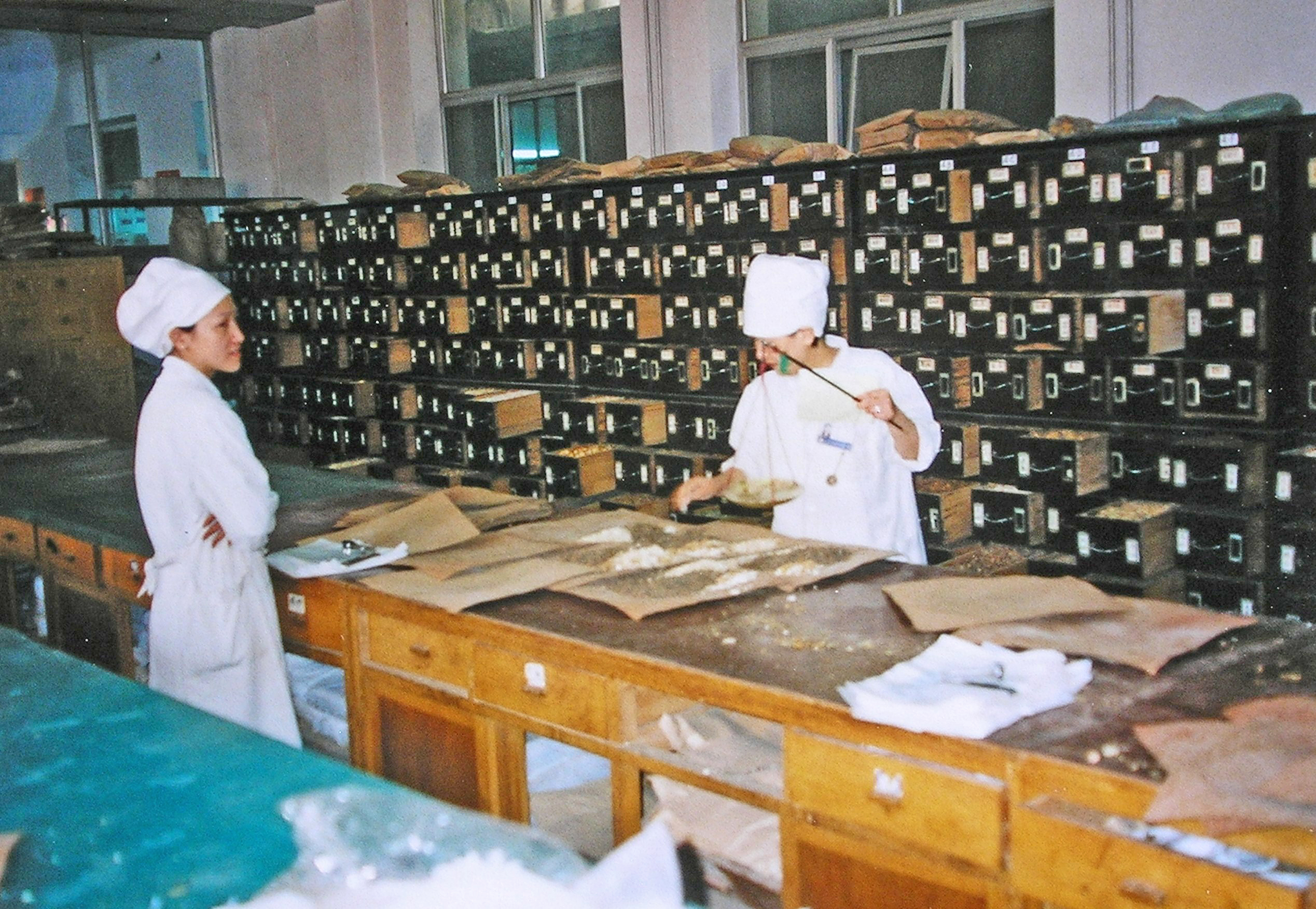
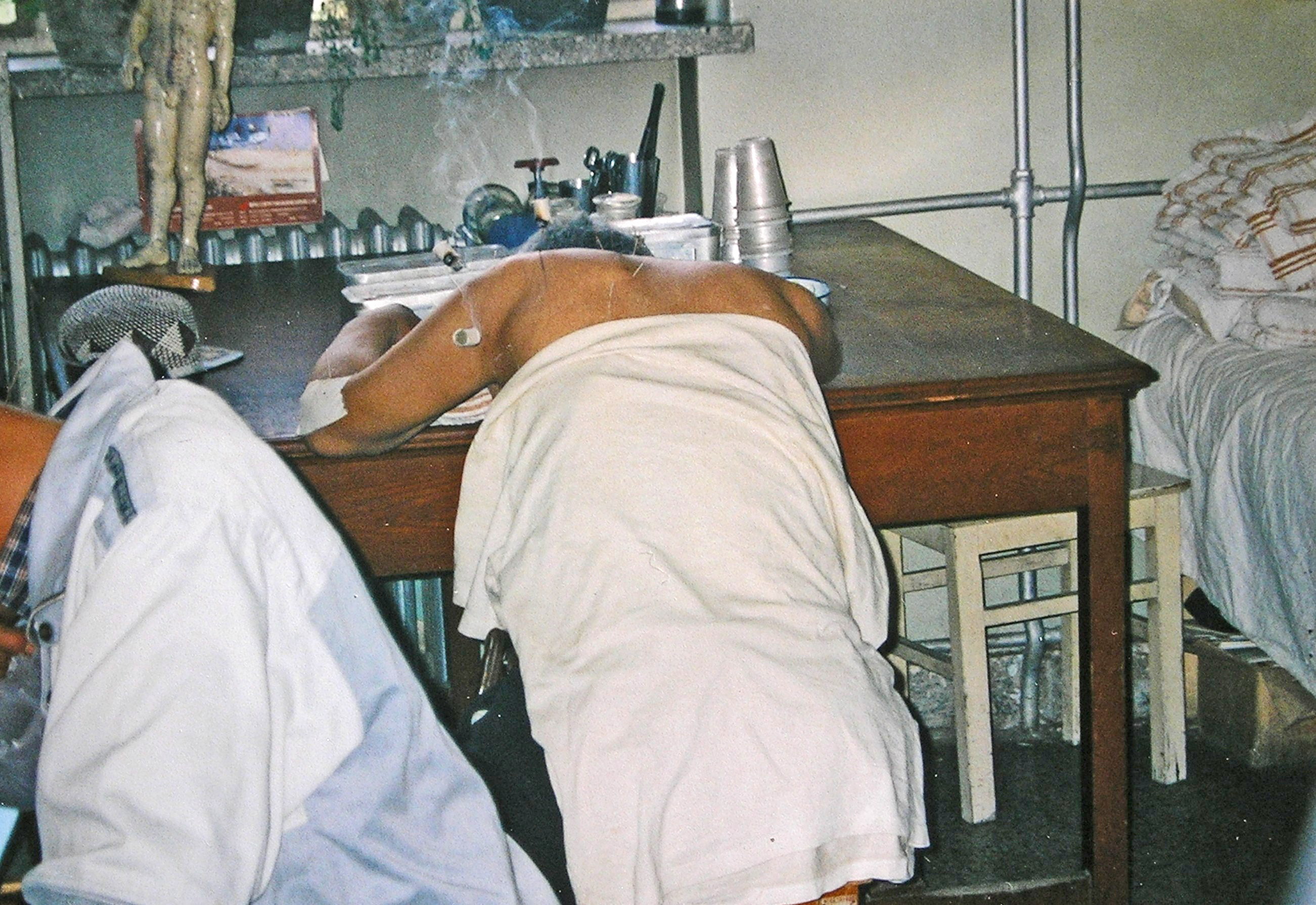
After the kindergarten, we visited a hospital that specialised in traditional Chinese medicine. The Chinese are famed for their medicine, which is based on the principles of Yin and Yang. Any disease is due to some form of imbalance in the body, a balance that can only be restored by taking the right mixture of medicinal herbs combined with acupuncture. First we visited the pharmacy where they were mixing medicines from all sorts of herbs stored in large sets of drawers. At that time, I was working at and co-owner of Wolle’s NatureSystem, and Wolle’s products were based, among other things, on Chinese principles. It felt like being at home at the factory when I walked into the pharmacy and smelt that very special smell of different kinds of herbs.
On the hospital wards lay patients with needles in their bodies. Smoke was emanating from many of the needles which had burning herbs at the top. The patients lay like sardines in a tin for all the tourists to see as they walked past, taking photos and making video. This would have been considered transgressive in Europe, but for the Chinese it was perfectly natural.
The next stop was at one of Beijing’s many atrium hutongs. Here we saw many small, shabby houses, and it all seemed rather poor. There was every suggestion, however, that people were thriving.
The last visit before lunch was a cloisonné factory, where they made colourful vases, jewellery and many other articles sold throughout China. We saw the entire fascinating process from production start to sale in the factory shop and of course it didn’t stop here. We had to buy something to take home with us.

Lunch was our last meal this time around in the company of Bodil and Thomas. Thomas was to attend a meeting with other organisers later that day and couldn’t spend any more time with us. He made a fine speech, thanking our local guide and Søren, who both received a gift.
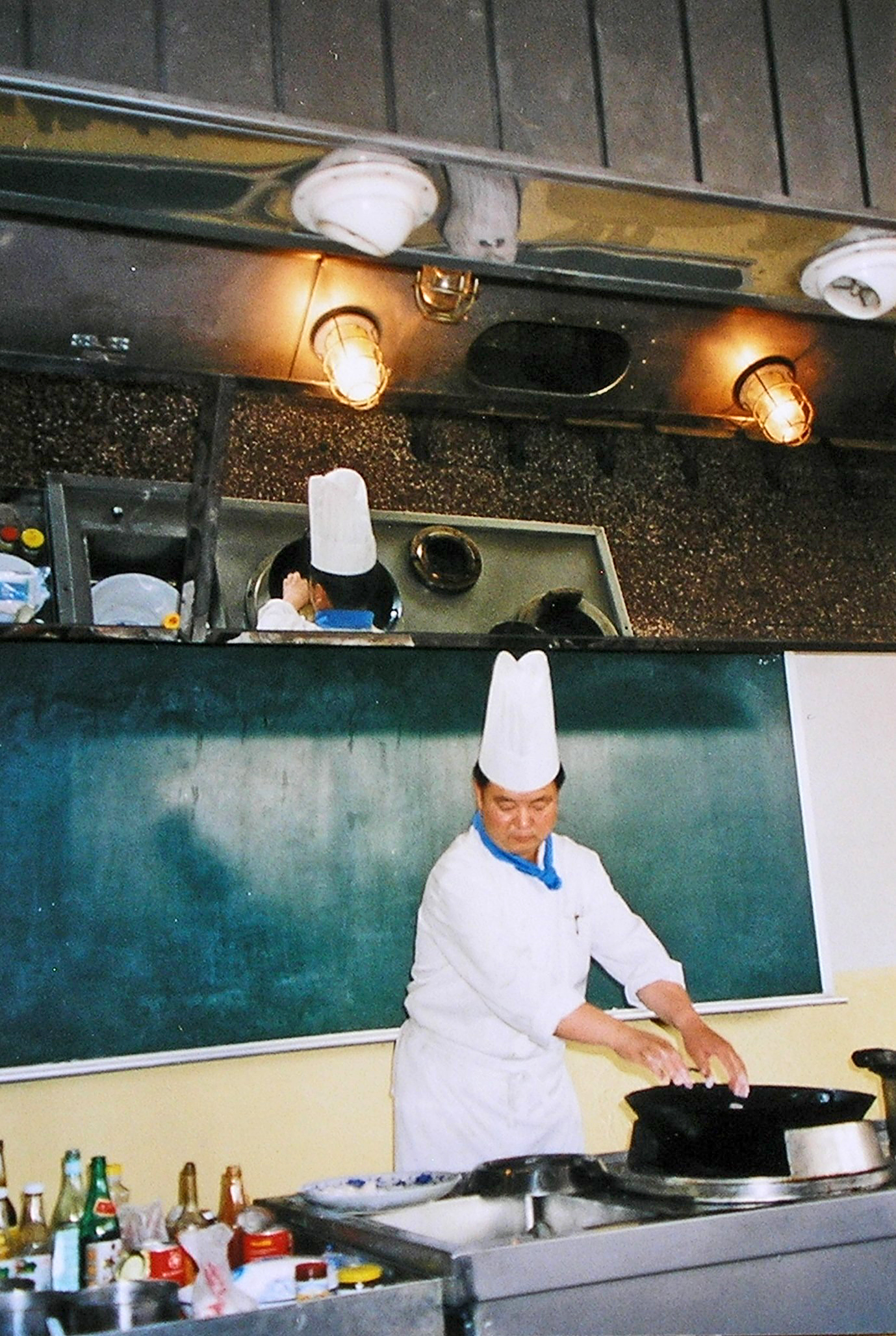
The afternoon’s schedule included a visit to a cookery school. Chinese cuisine is based, among other things, on the opposites Yin and Yang. We went behind the scenes and were given insight into how the gastronomic great power China prepares food for everyday consumption and feasts. In the evening, we tasted yet another Chinese speciality, the almost ritual Peking duck. Many hours of preparation were necessary for the crisp duck skin and tasty duck flesh to be served with small, thin pancakes, hoisin sauce and spring onions.
Time to say goodbye
On Saturday 29th May, it was time to say goodbye to the Middle Kingdom after an enchanting week full of unforgettable impressions to take home. We got up early and had breakfast before a final bus journey to the airport. Once again we had to stand in line in the order dictated by our group visa. But all went well, and we arrived at Copenhagen Airport at 13.15 Danish time. A fantastic journey had come to an end.
Scrapbook, newspaper cuttings, photos and videos to edit
The first trip to China was over, but there were still things to be done. Back home again, I got hold of the tabloid BT for the whole week we’d been away. I was going to make a scrapbook and everything had to be in it. Peter Fredberg had been far from idle. Apart from doing his job he had also run the marathon. There were articles in the paper on six of the days. The focus, of course, was on celebrities like Kersti Jacobsen, Lars Bom, Bettina Aller and Henrik Ørum, but there was also room for more, so the entire week’s events were well covered. We were also able to read about our grand tour in local newspapers during the coming weeks.
Hanne poked her nose in at the website Run4fun, which she thought should write about the run. It hit her like a boomerang when they actually interviewed her.
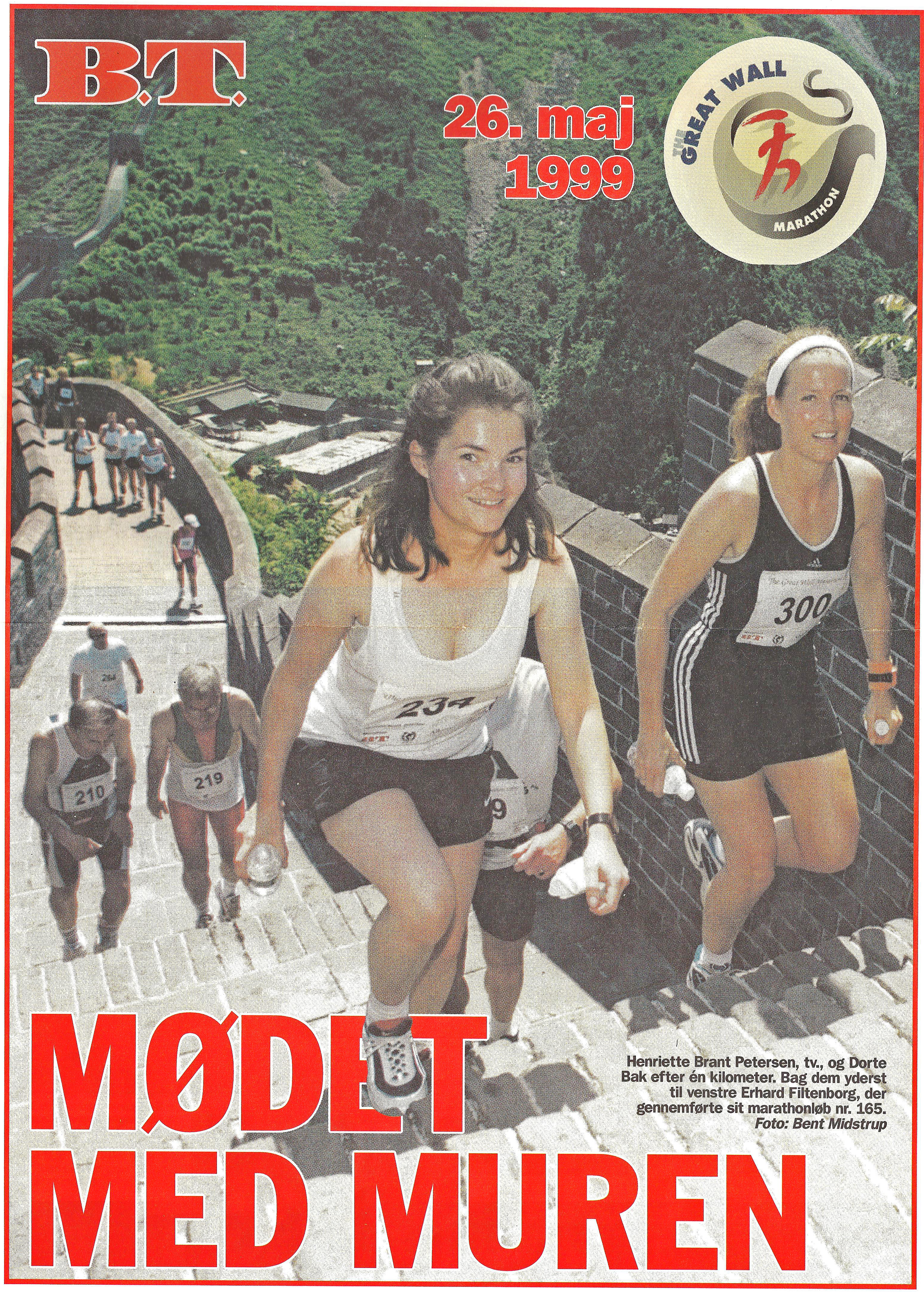
Some weeks after the trip we received a beautiful special eight-page edition of BT. The front page headline was “Meeting with the Wall”. The paper provided good coverage of the historic event, and there was a coupon you could complete and send into Albatros Travel. Here you could sign up for the 2000 run with no strings attached. Participants from the first year would be given priority because they reckoned demand for the next run would be huge.
DR TV’s footage from China was shown in the Sunday sport programme a few weeks after the run. The broadcast lasted eight minutes, and I was caught on camera in one short sequence. While I was running, the journalist Joakim Frøsig asked me how my legs were doing. I looked down at them and answered: “They’re still there”. Of course, I recorded the programme on VHS and kept it. I have also kept my own video footage, about 57 minutes in all.
Buy the book here.
