


Time for revenge
I had long since recovered from my foot injury from the Swiss Alpine Marathon in 2002. On the other hand, I had not got over the fact that I didn’t complete the planned 78 kilometres across the Alps. At the prize presentation ceremony in 2002, I had told the boys that we would return the following year, and we did.
From West to East
The 2002 trip involved some wonderful experiences for all three of us, and a sort of repeat lay ahead of us although we wanted to see something new this time. In 2002, we had travelled around Western Europe and visited three major football stadiums, but now we decided to visit Eastern Europe. This time without football stadiums, though, since the possibilities were not quite the same.
Poland – a different world
On Monday 21st July, we set off on the camping holiday of the year. We took the morning ferry from Gedser in south-eastern Denmark to Rostock. From here we drove through Germany, past Berlin and Cottbus to Poland. As soon as we crossed the border, the GPS system was no longer of any use to us. There were no digital maps of Eastern Europe and from here on we had to rely on old-fashioned road maps.
We were soon to be reminded that we had arrived to a completely different part of the world than the one we were used to. By the roadside stood child beggars, their eyes pleading us to stop, and in some places there were prostitutes waiting for drive-by customers.
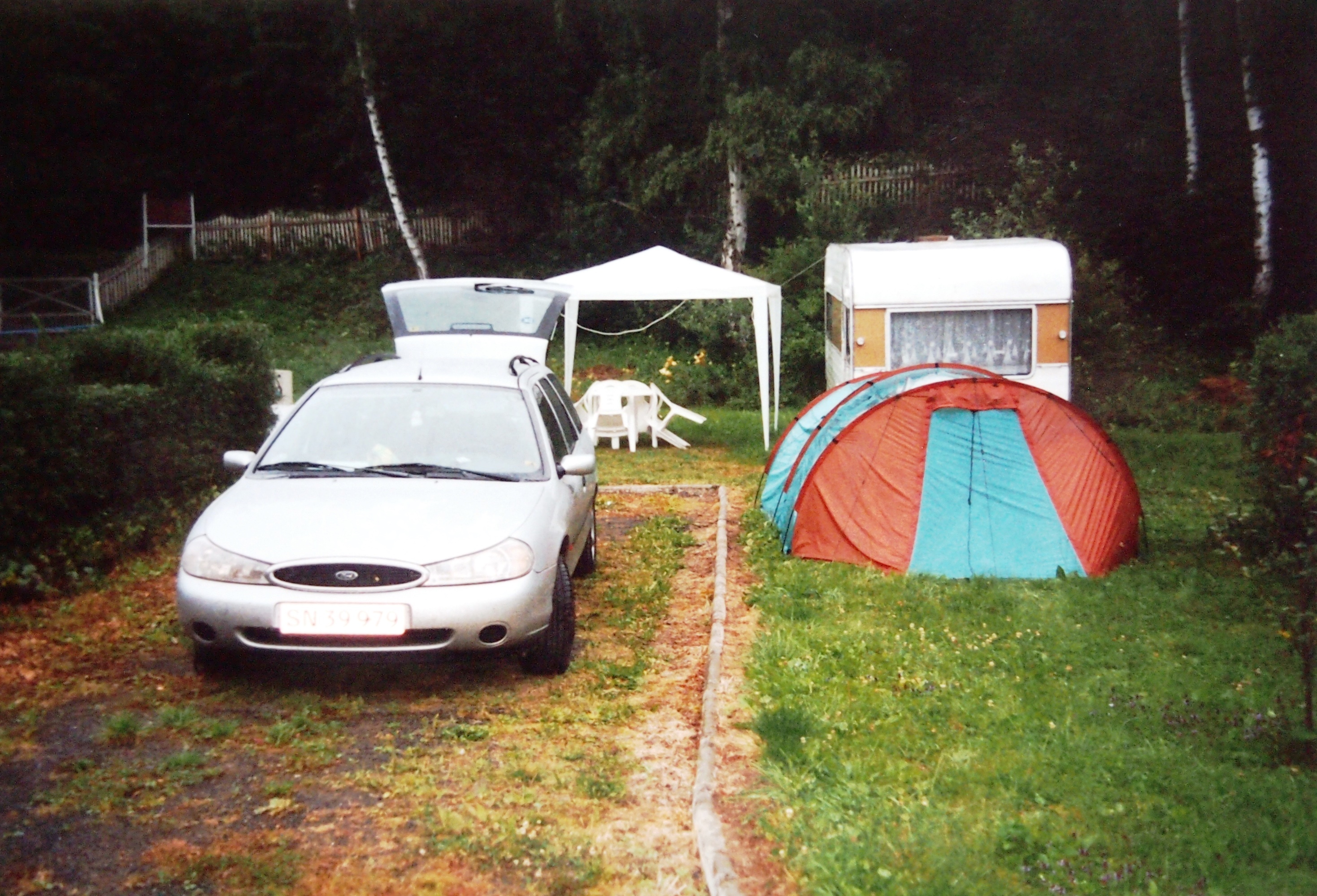
We had originally intended to drive to Warsaw, but we discovered that we would not reach Switzerland on time if we were to spend whole days visiting cities. So we drove to Wroclaw instead and then continued on to the Czech border where we drove past a campsite at the town of Lewin. Since we had no idea when another opportunity would turn up, we decided to spend the night there. It was a small cosy campsite without many facilities. After putting up our tent, we found some rather boring food at the site cafeteria and then turned in.
Passing through
I awoke on the Tuesday morning to the sound of rain drumming on the roof of the tent. Ugh! Oh well, so be it. We were on a camping holiday after all, with everything that goes with this. We packed up and headed for the Czech border just a few kilometres away.
We spent the day in the car, bypassing Brno and heading for Slovakia, where we also bypassed the capital Bratislava and continued on to Hungary. Here we had planned to spend the next night. We drove towards Budapest for a few hours, and a good ten kilometres from the city we found a campsite, where we pitched our tent.
Sightseeing with obstacles in Budapest
It turned out to be a lovely campsite with excellent facilities. We put up our tent and took the bus into the city. Steffen was our guide in Budapest, and we saw the streets and shops he had visited with his school class on a trip the previous autumn. We also dropped by at their hotel and ate a good meal at their “favourite” restaurant. After our meal, we took the bus home, but then things went horribly wrong. We didn’t get off in time and had to walk several circuits asking the way until we gave up and took a taxi back to the campsite.
A day of rough weather
We got up early on Wednesday, had breakfast, packed up our tent and got a move on. That was a lucky choice because it started to rain shortly after we left. We were now on our way out of Hungary headed for Croatia, and when we got there, it started raining rather heavily. We drove past Zagreb at around lunchtime and continued into Slovenia in the direction of the capital Ljubljana, where there were some terrific showers.
We only got to drive through Croatia and Slovenia before entering Italy during the afternoon. Here, too, we were met by periodic wet weather, which made driving quite unpleasant.
Traffic accident
We had a most unpleasant experience in the vicinity of Venice, where we arrived at a row of six to eight toll booths on the motorway. We stopped at one of the innermost booths to the left. We were to pay with cash and had, therefore, come to a complete standstill. On payment, the boom went up and we drove forward into a bay that led straight ahead onto the three-lane motorway. But after a few metres, we were hit from the right by a lorry and trailer which came in from a bay to the right of us. The driver was also joining the three-lane motorway, so he had to feed in, but he hadn’t checked to see if anything else was coming. Apparently, he had neither seen nor heard that he had hit us and just kept on driving.
We drew alongside him and made signs, but his only reaction was to make a derisive gesture. He made no sign of intending to stop, and I drove in front of him to get him to pull over by switching on my warning lights and sticking my hand out of the window to point to the right. But the driver of the lorry didn’t seem to see me. On the contrary, he slowed down to put some distance between us. It was my impression that he hoped that we would get separated, which would put an end to the matter. But I also slowed down and stayed there right in front of him while I called the Italian police – a challenge in itself because they only spoke Italian.
After a quarter of an hour, I finally succeeded in getting the lorry driver to pull into a service area. Here I got the chance to see the damage to my car. The door mirror had been smashed; the front door and bumper had been scratched, the headlamp was ruined and the bonnet dented. The driver only spoke Italian, so I had to explain myself in sign language and by gesticulating. In many Italian words and gesticulations he described an entirely different sequence of events.
Fortunately, my phone call must have made sense, because the police arrived on the scene shortly afterwards. Unfortunately they, too, only spoke Italian. A male officer was in charge of the paperwork while his female colleague surveyed the damage and spoke to the lorry driver and me. As I said, the officers only spoke Italian, although the woman did have a few words of English and German. By means of limited foreign language, gesticulation and drawings I managed to carry on a reasonable “conversation” with her. She got my explanation and, of course, that of the other driver. You didn’t need language skills to understand that he was proclaiming pure innocence.
But I was in no doubt that the female officer had got the gist of what happened, and to my advantage. She could ascertain that I had brought my car to a complete standstill in order to pay, while the lorry, with its automatic payment system, had driven through at some speed and pulled over into another lane without checking properly.
All this took about an hour, after which we were able to continue our journey. I had quite a battle with the insurance company later although the case did end in my favour.
New obstacles
In the evening, we reached Verona, but because of road works it was very difficult to find our way around. By the time we had finally found a campsite everything was taken up, and we had to carry on. We didn’t find another campsite until nine in the evening, so we put the tent up in the dark, had a delicious piece of pizza each in the campsite restaurant and hit the sack in a tent hot as an oven.
Change of plan
We woke up on Thursday morning to the sound of thunder and a tremendous shower. We stayed in the tent until it stopped raining, and we could eat breakfast outside. The air had been cleansed, so we felt really comfortable.
But just as we were about to pack up the tent, it started raining again, this time beating all records. Dressed in rain jackets, we packed up the tent as best we could. The tent was thoroughly soaked and covered in soil and grass, so it had to be packed, along with several other things, in plastic bags.
The idea had been that we would continue to Como, but due to the weather we decided not to camp one more night and to try and drive straight to Davos. I called the hotel and asked if we could spend an extra night and that was no problem.
Back to civilisation
The drive to Switzerland went without a hitch although it did rain quite heavily from time to time. We eventually got up into the Alps away from the motorway and everything slowed down.
Occasionally it was quite a challenge to drive in the Alps without a right door mirror, so in the end we bought a hand mirror in a general store along with some gaffer tape. We then attached our new investment to the miserable remnants of what had once been a door mirror.
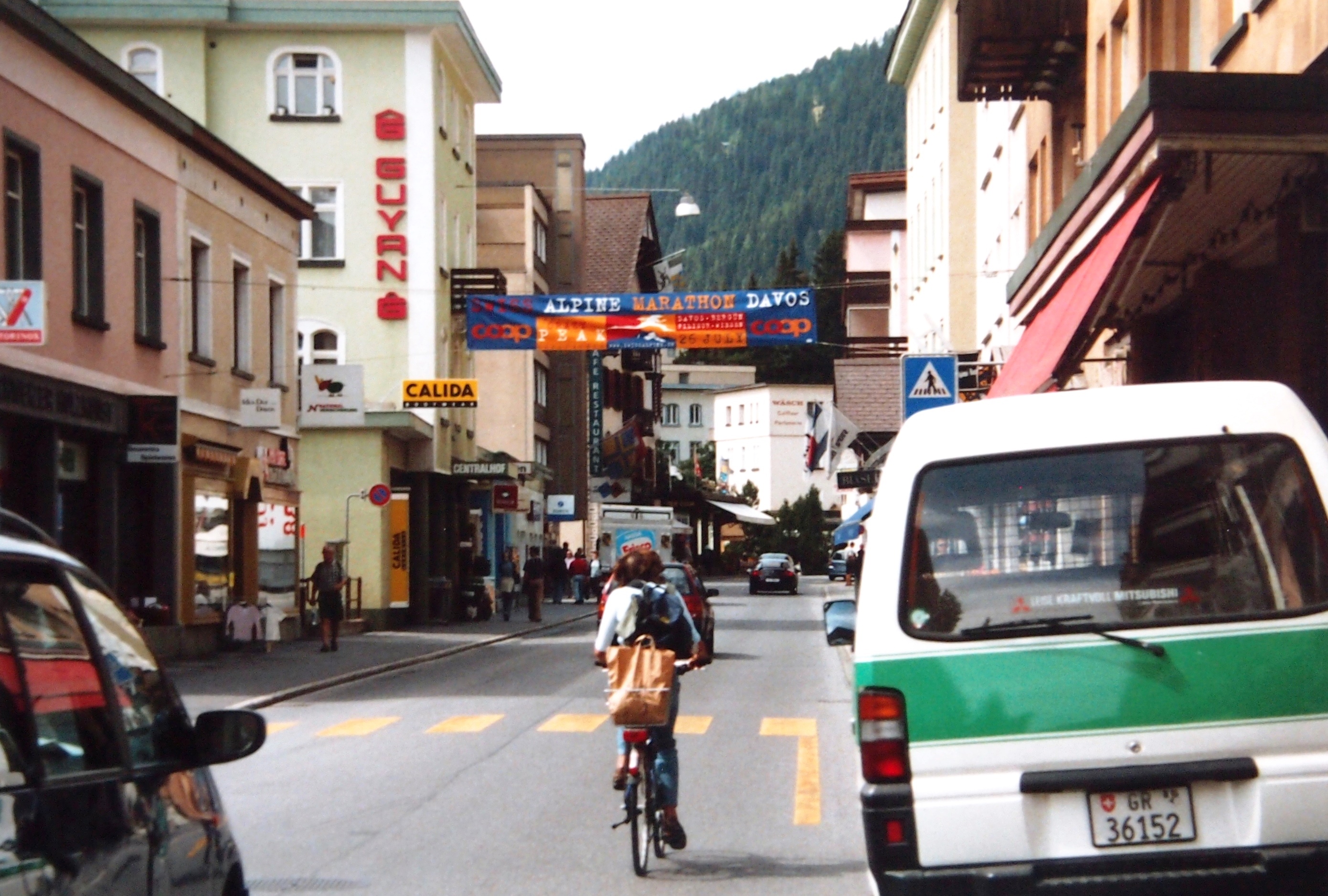
We arrived at the border in the late afternoon, and it began to rain again quite heavily, which slowed us down a bit. However, we finally arrived in Davos in one piece and at the Hotel Beau Sejour, where we were welcomed by the receptionist who remembered us from the previous year. She had also reserved the same good room for us.
We lugged everything up to the room, which soon became so incredibly untidy. We rinsed off the tent under the shower and hung it up in the bathroom. The groundsheet and our towels hung on the cupboard doors. Rainwear had been rinsed and hung up over the shower curtain rail. Other bits of wet clothing were hung up all over the place, and we had laid our sleeping mats and sleeping bags on the floor to dry. It really was a mess, but we were glad to be in the dry with beds, a shower and decent sanitary arrangements.
A relaxed day with good weather
This gave us an extra half day in Davos, and we really appreciated the opportunity to relax and just enjoy life.
We now hung the tent over the balcony in the sunshine, and it was dry by evening. Before going to bed we shrugged off all the grass and dirt. We also got the rest more or less under control, and our room looked like it was supposed to.
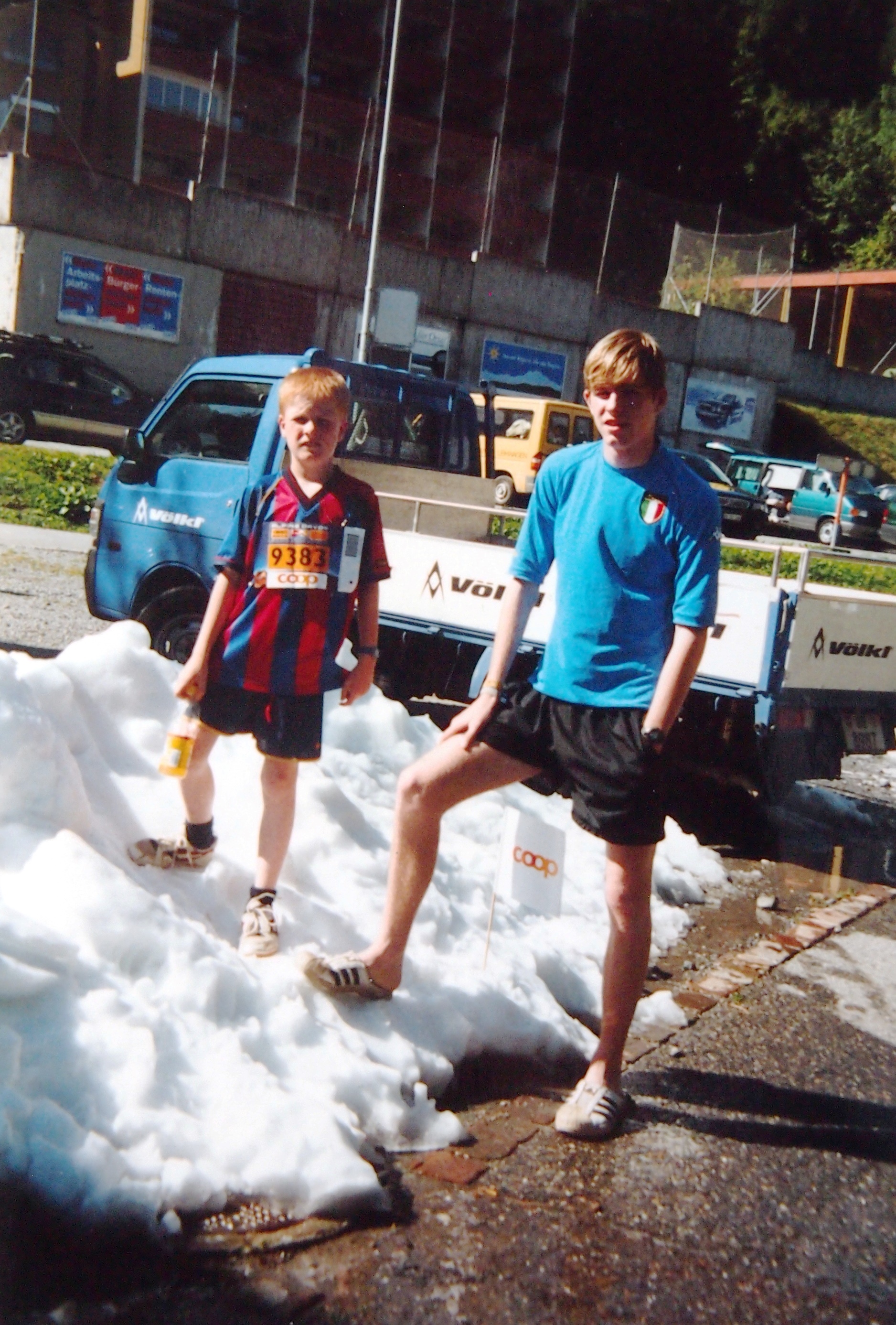
During the day, we went to the Congress Centre to pick up my start number and sign Emil up for the mini-marathon. We then just spent the day wandering round, eating and playing computer games.
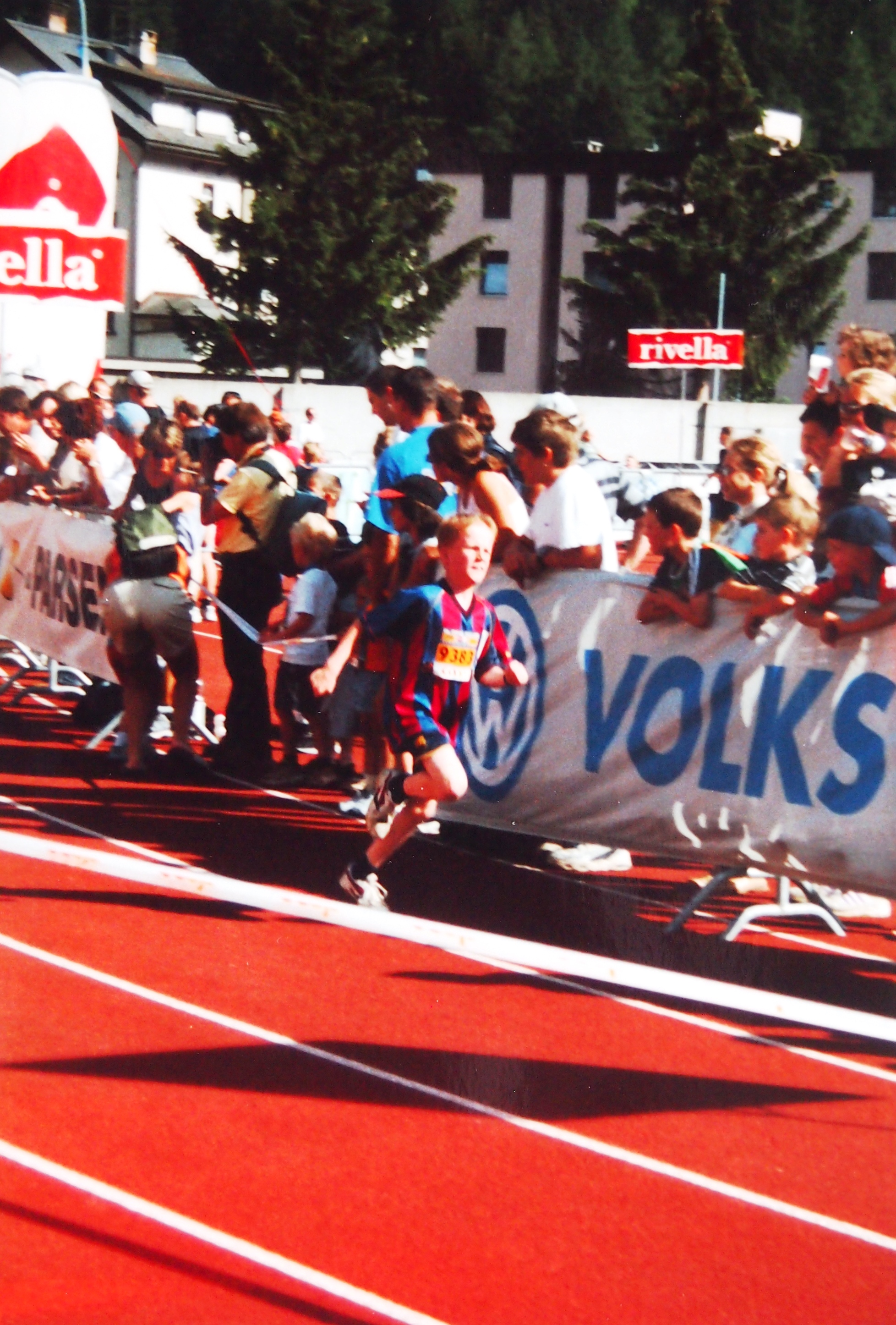
At 5 p.m., we went down to the start, where Emil was to run in the children’s mini-marathon. He did very well, running 2.1 kilometres in ten minutes.
Shortly after the traditional pasta party at the town’s ice rink, we went home to relax and charge up our batteries for the big race of the following day.
A morning fright
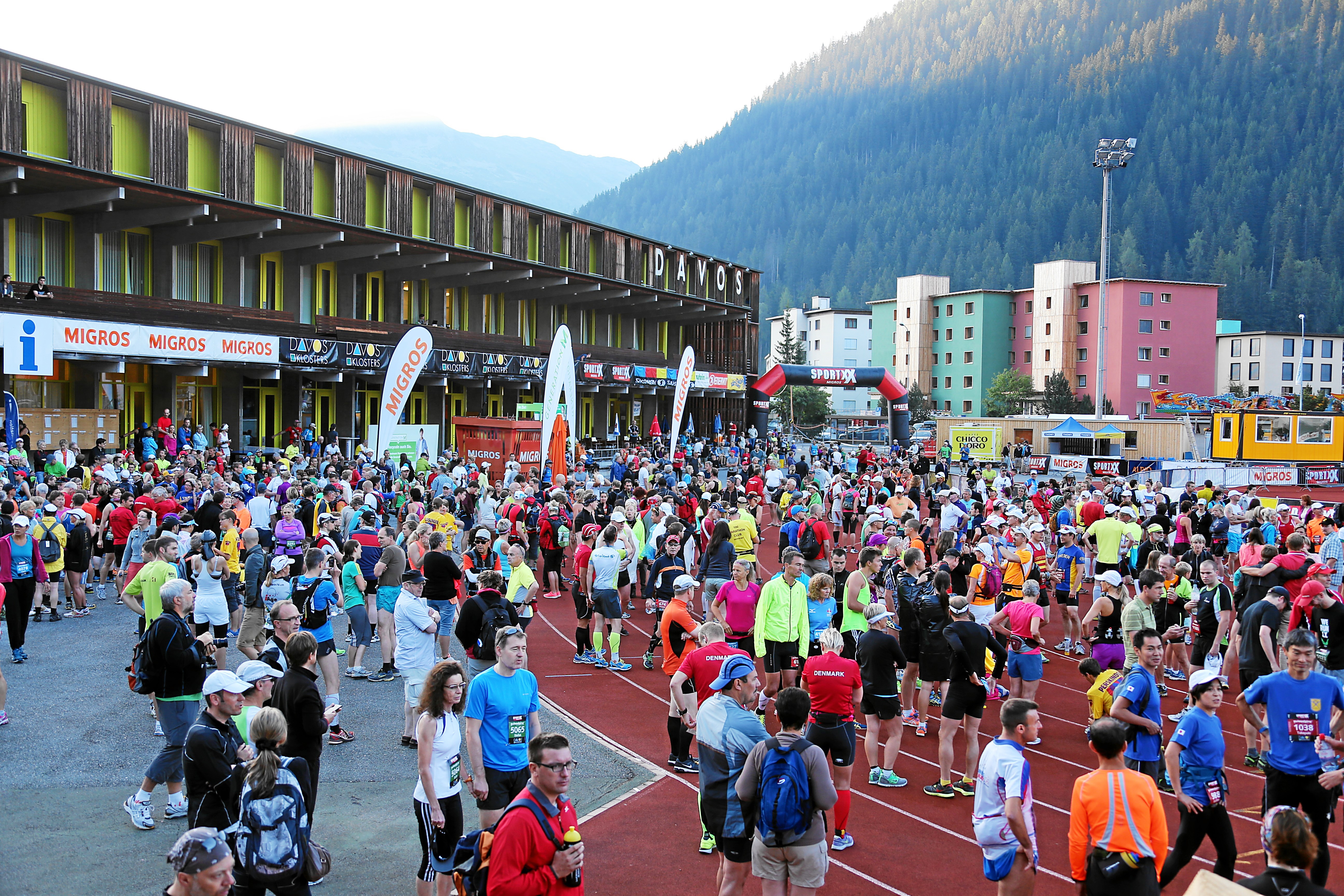
On Saturday morning 26th July, we got up early because the race was to begin at eight. We ate breakfast at the hotel, after which I got changed for the run. But on the way to the start, I had a rather nasty experience. There was a sudden click in the back of my left knee, and I began to limp. I immediately thought back to 2002 when I twisted my ankle and wondered whether I would be able to start at all this year. Fortunately, the pain began to disappear and was gone all together while I was waiting at the start. I didn’t notice it at all after that.
A relief to pass the 30-kilometre mark
It was a great pleasure for me when the starting gun went. I really believed that I would complete the run this time.
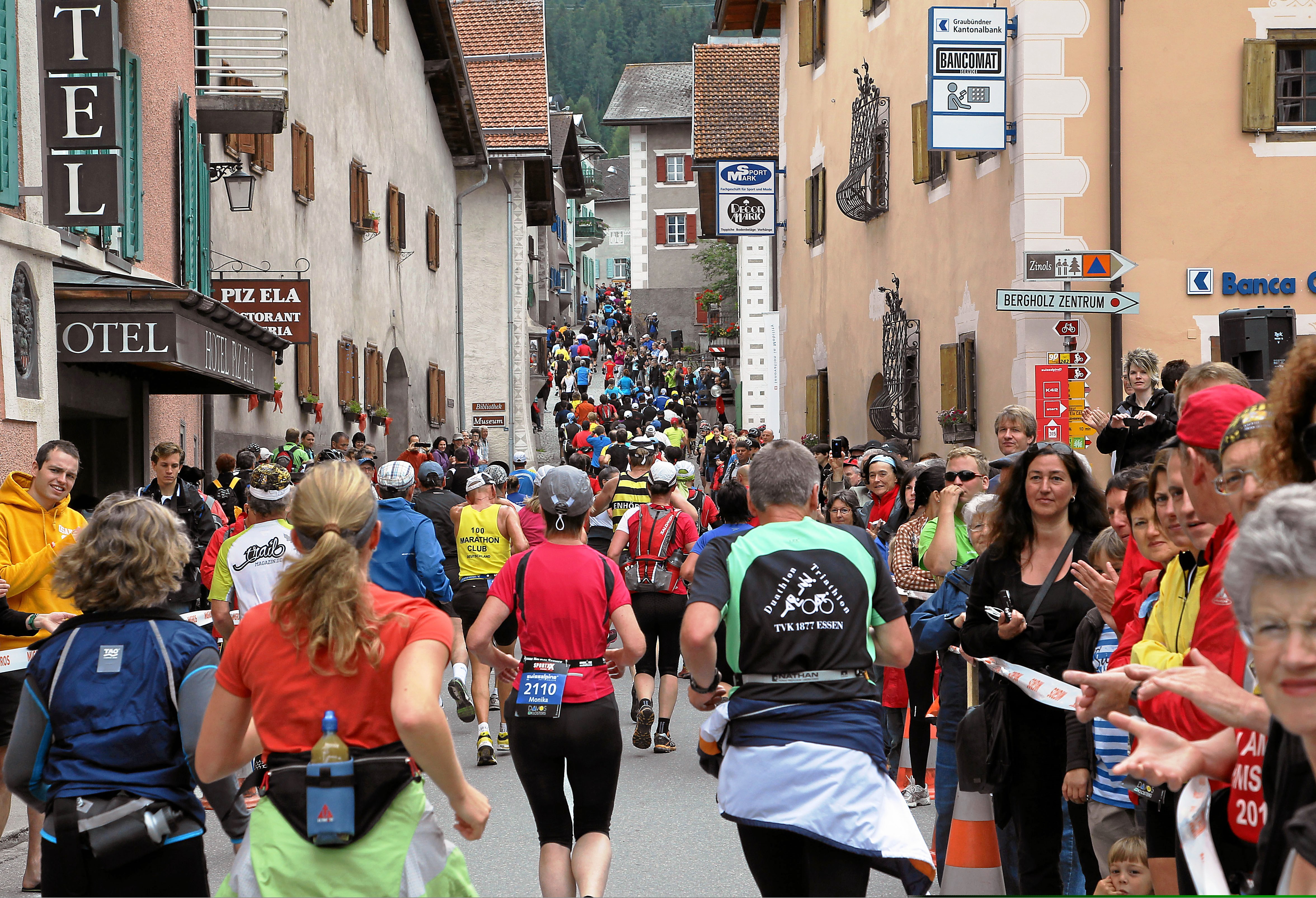
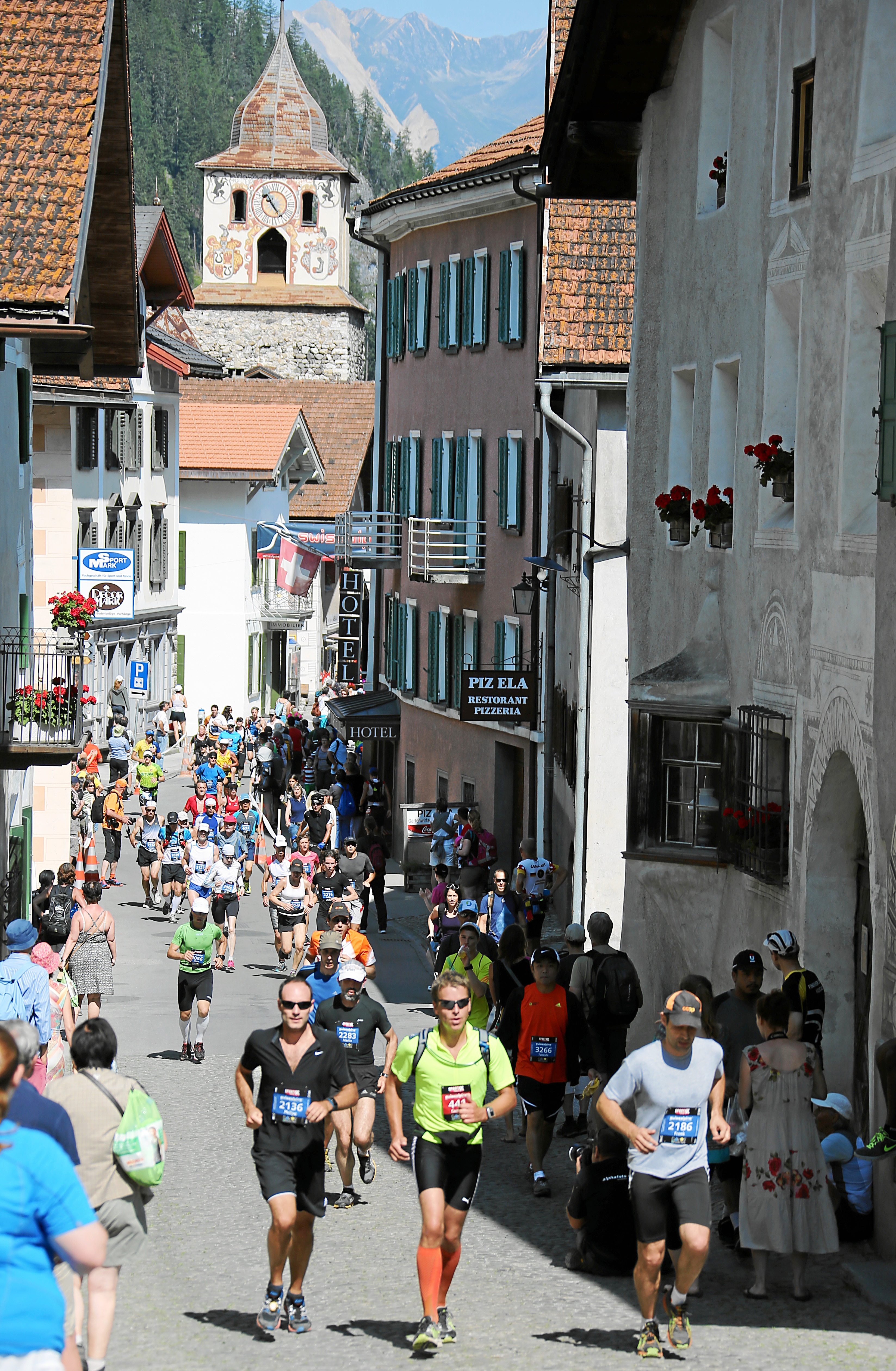
The first few kilometres took us through the town of Davos. After this, the route continued through hilly terrain uphill as well as down, although mostly down to begin with. When I reached the wooded area around the 18-kilometre mark where things went wrong in 2002, there was a lot running around in my head; and when I reached the first aid post where I received my first treatment in 2002, a shudder went through me. But passing the 30-kilometre mark at Filisur, where I had been forced to pull out the previous year was a huge relief. I waved down to the first aid post as I ran on. From this point on, everything would be a Swiss Alpine Marathon course record for me.
Optimism despite trials and tribulations
Now things seemed to be becoming a bit of an uphill struggle, or rather I thought they were. As it turned out they were set to get much worse. After around 32 kilometres, I experienced my first crisis. I had to stop running and start walking, and I had great difficulty envisaging another 46 kilometres ahead of me.
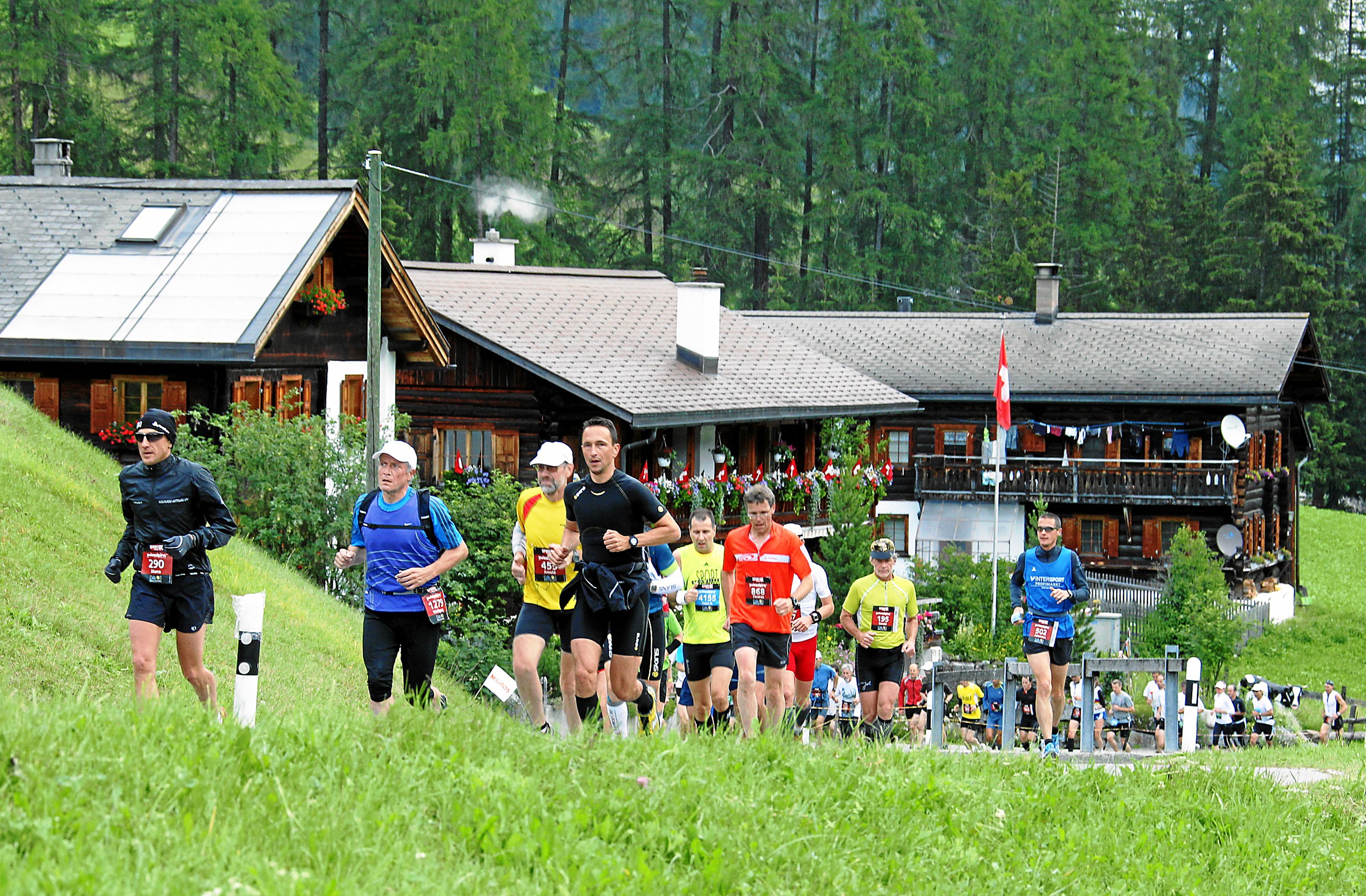
At around 40 kilometres, I came to Bergün, where the marathon finished and those of us continuing on the 78-kilometre run still had just as far to go yet. Here I met a group of Danes cheering with red-and-white flags in their hands. It warmed my heart, and I told them how nice it was to meet them. It had taken me around four and a half hours to get this far, so I had around seven and a half hours in which to manage the remaining 38 kilometres. That ought to be enough – at least in theory. But I was to learn.
Mountaineering
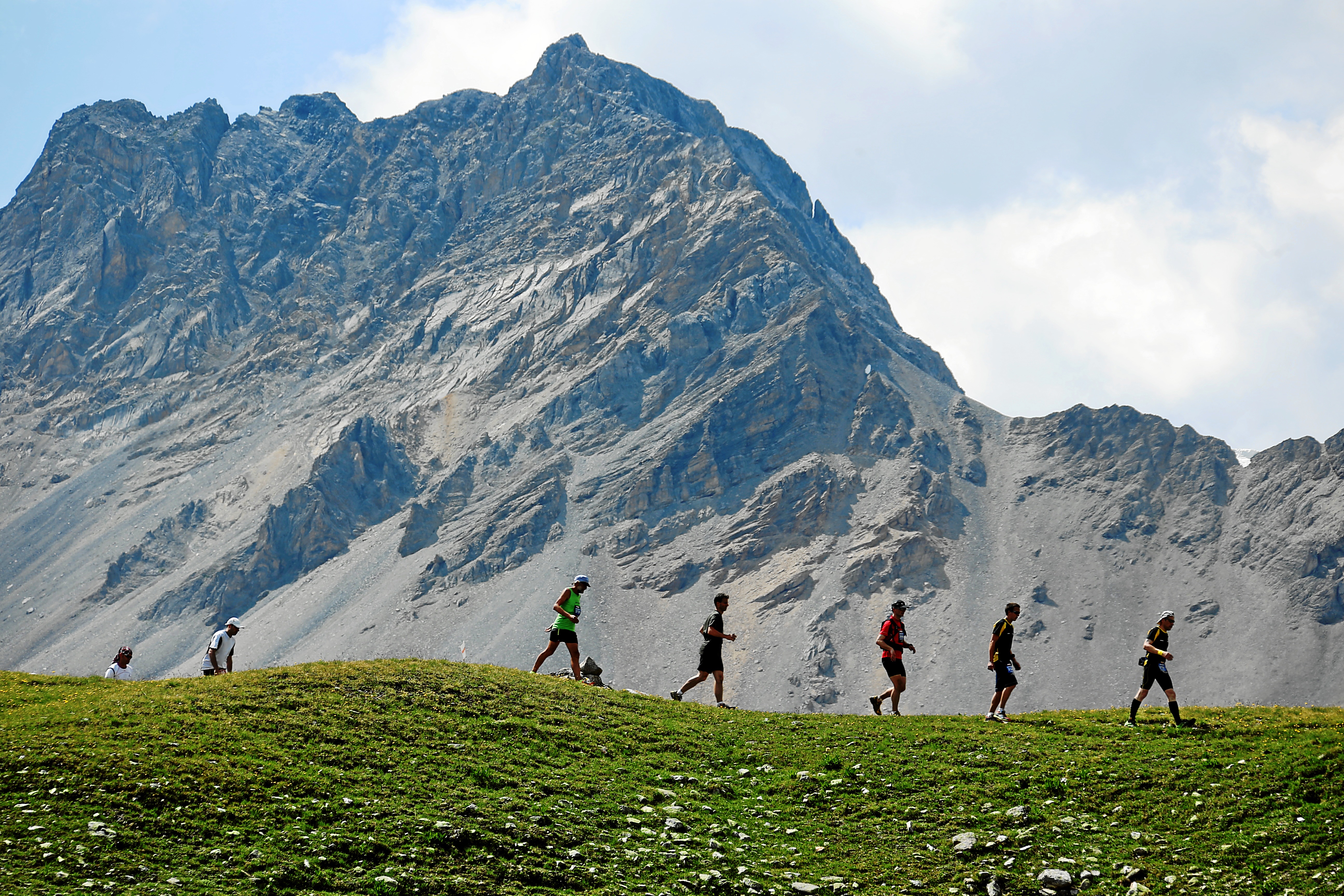
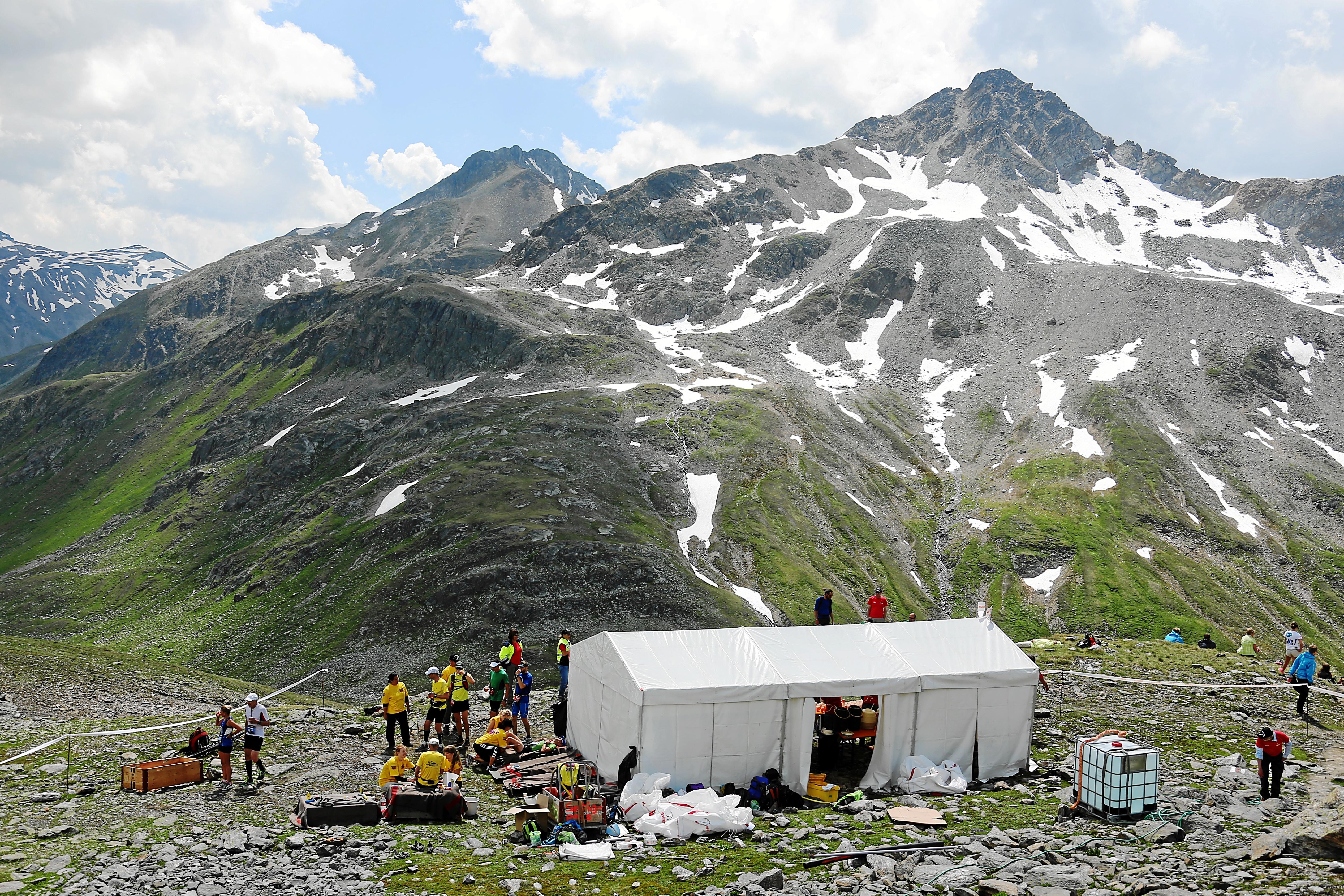
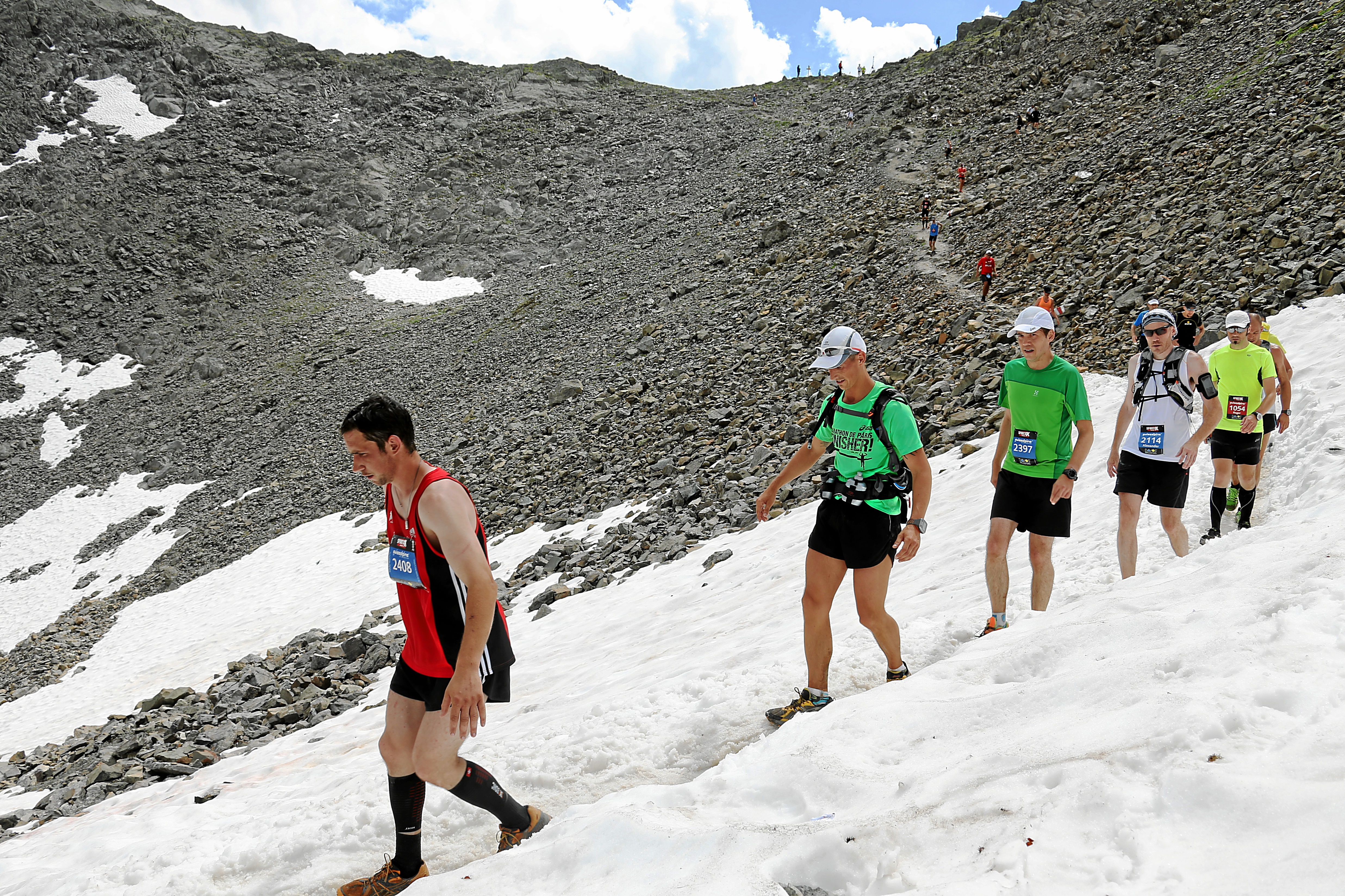
The next many hours had nothing to do with running. It was mountaineering or almost a fight for survival. Now the route took us along narrow paths of dirt and loose stones, and it felt almost as though they were vertical, although it was unlikely to have been that bad. Things were not made much better by the fact that it was a sunny day and therefore frightfully hot. At one of the water stations, I drank nine paper cups of fluid. I had water, energy drink, Coca-Cola, ice tea, bouillon and hot tea. In addition to that, I was given glucose tablets, bananas and various types of energy bars.
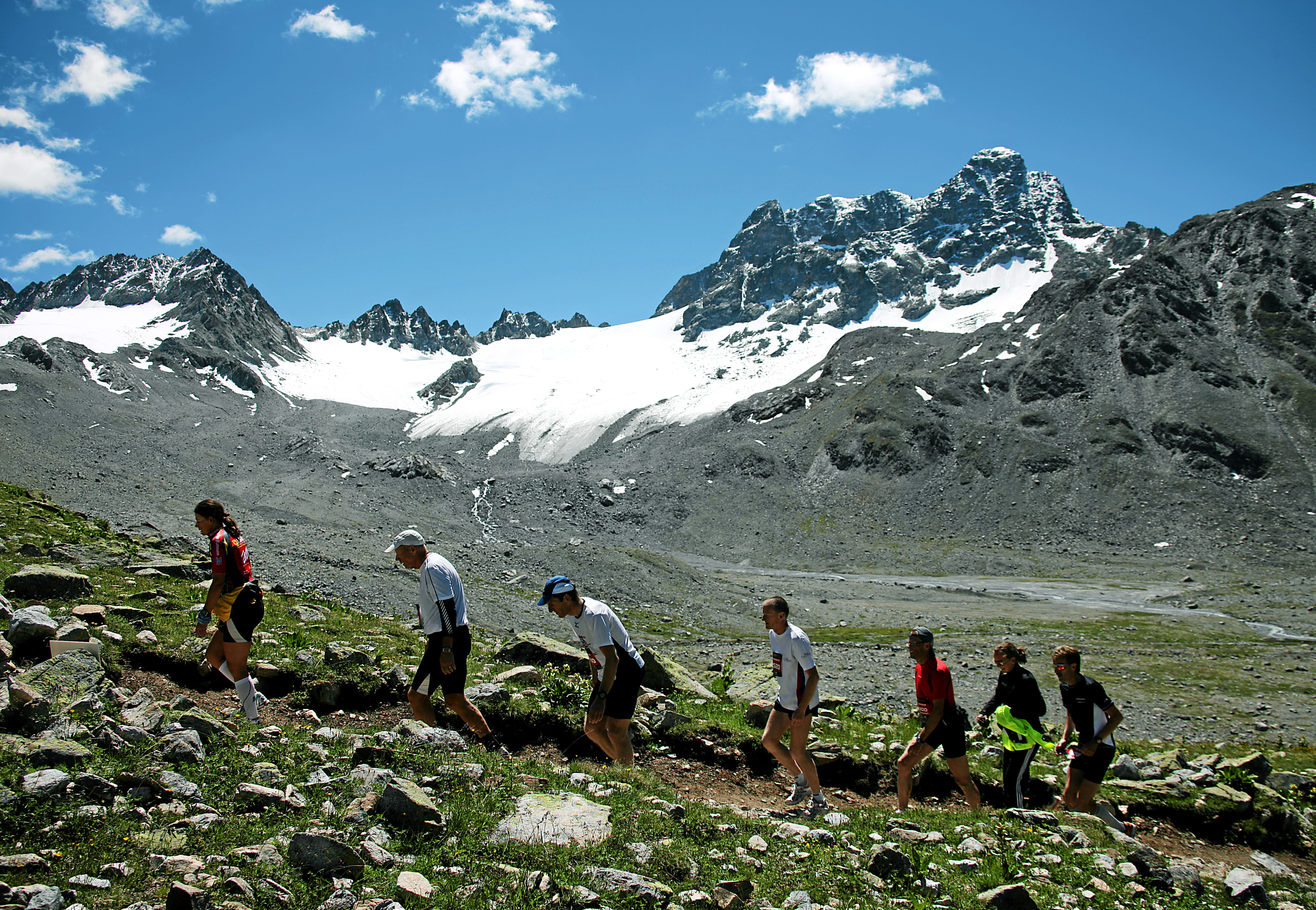
The next five kilometres took an awful long time. It seemed like an eternity and felt as though it would never end. At around 53 kilometres, I reached the top of the alp. I thought it would be downhill from there, which it was, but it was NEVER a “bathing holiday”.
Under pressure of time
Every fifth kilometre was signposted and after I had passed the 50-kilometre post a long time passed before the next one. I began to be convinced that I had missed one of the signs, or that it had disappeared. When I finally saw a post in the distance, I was glad and relieved because I was convinced that it must be 60 kilometres. It was like having a bucket of cold water over my head when I got there to see that I had only come 55 kilometres.
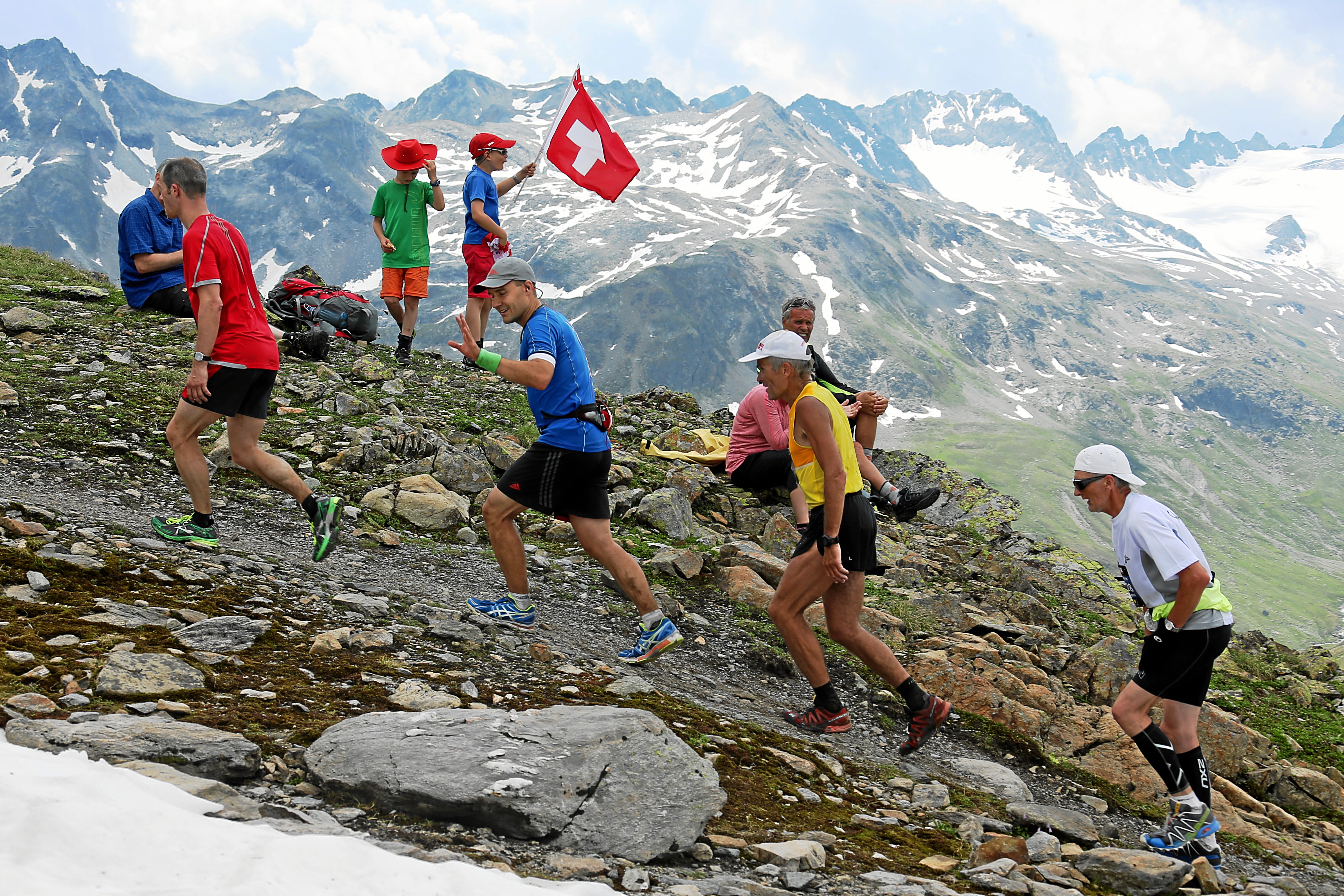
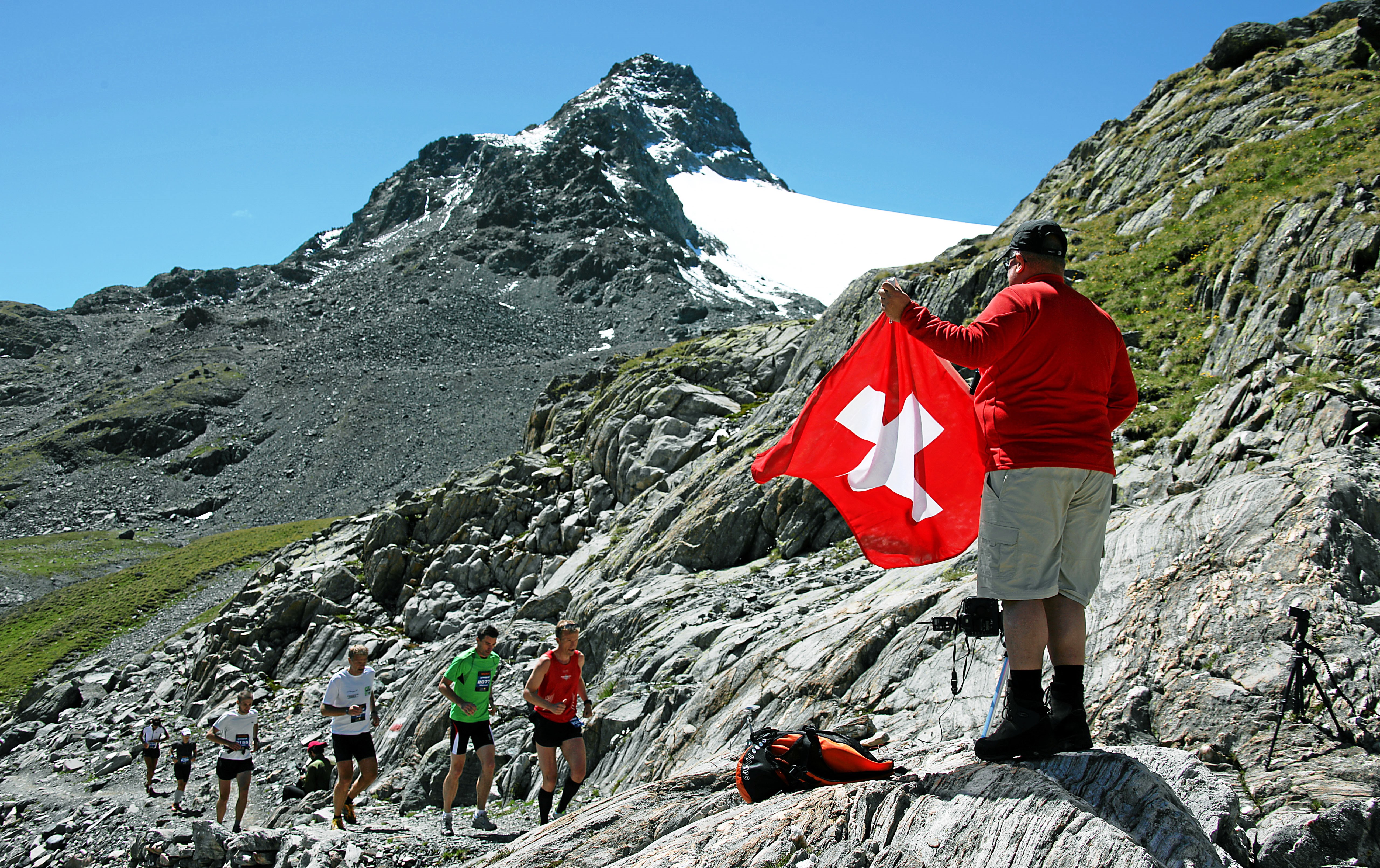
From then on until around 64 kilometres, I went through a mountain pass. I had to walk most of the way although there were some short stretches where I could trot. I began to feel a bit stressed by the pressure of time and was calculating like mad all the time to try and work out if I could get there in time at 8 p.m. I ran whenever I could when I had the energy to do so.
Dispensation – no thank-you
At one stage I met a Danish runner, and we started chatting. He was not worried and assured me that the organisers would not take the 12-hour time limit too seriously and that our efforts would be acknowledged even if it took us a little longer. But this was absolutely no consolation to me. Like previously on Bornholm, I had no intention of finishing on the basis of dispensation from the rules. His words just made me more stubborn and intent on crossing the line in time, so I ran on leaving him behind.
The final ordeal
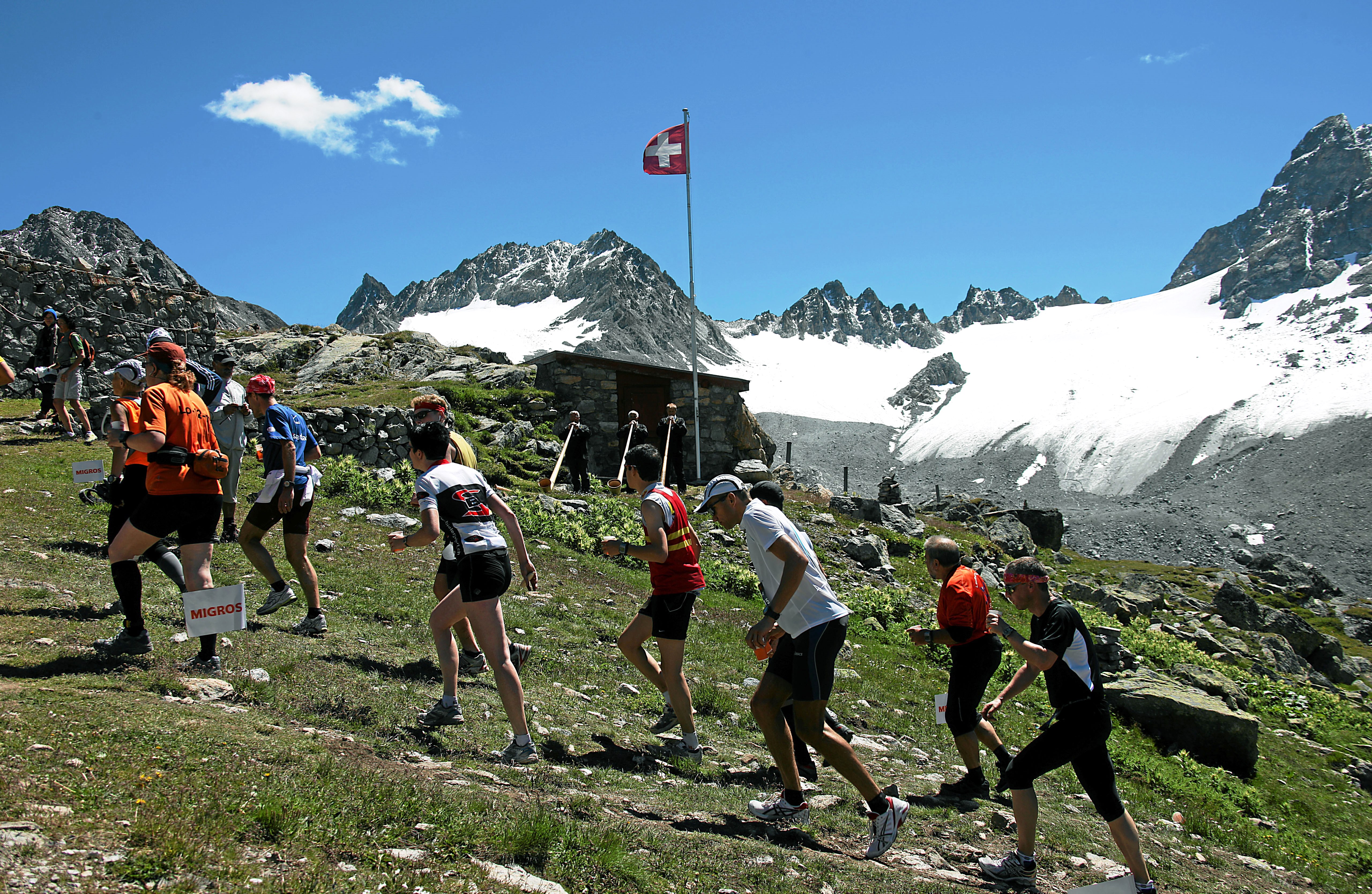
After the mountain pass, came a three-kilometre stretch down the mountainside. Here we were running on perilous rolling stones, so we had to be careful all the time. And that took time too. At one stage, the route crossed a stream, and I managed to dip my left foot in the water, which rather reminded me of China in 2000 when I ended up with blisters. It wasn’t as blisteringly hot here, however, and nothing happened. The worst trials were over by the time I reached 64 kilometres but because I didn’t have much energy left, this was no pleasure run.
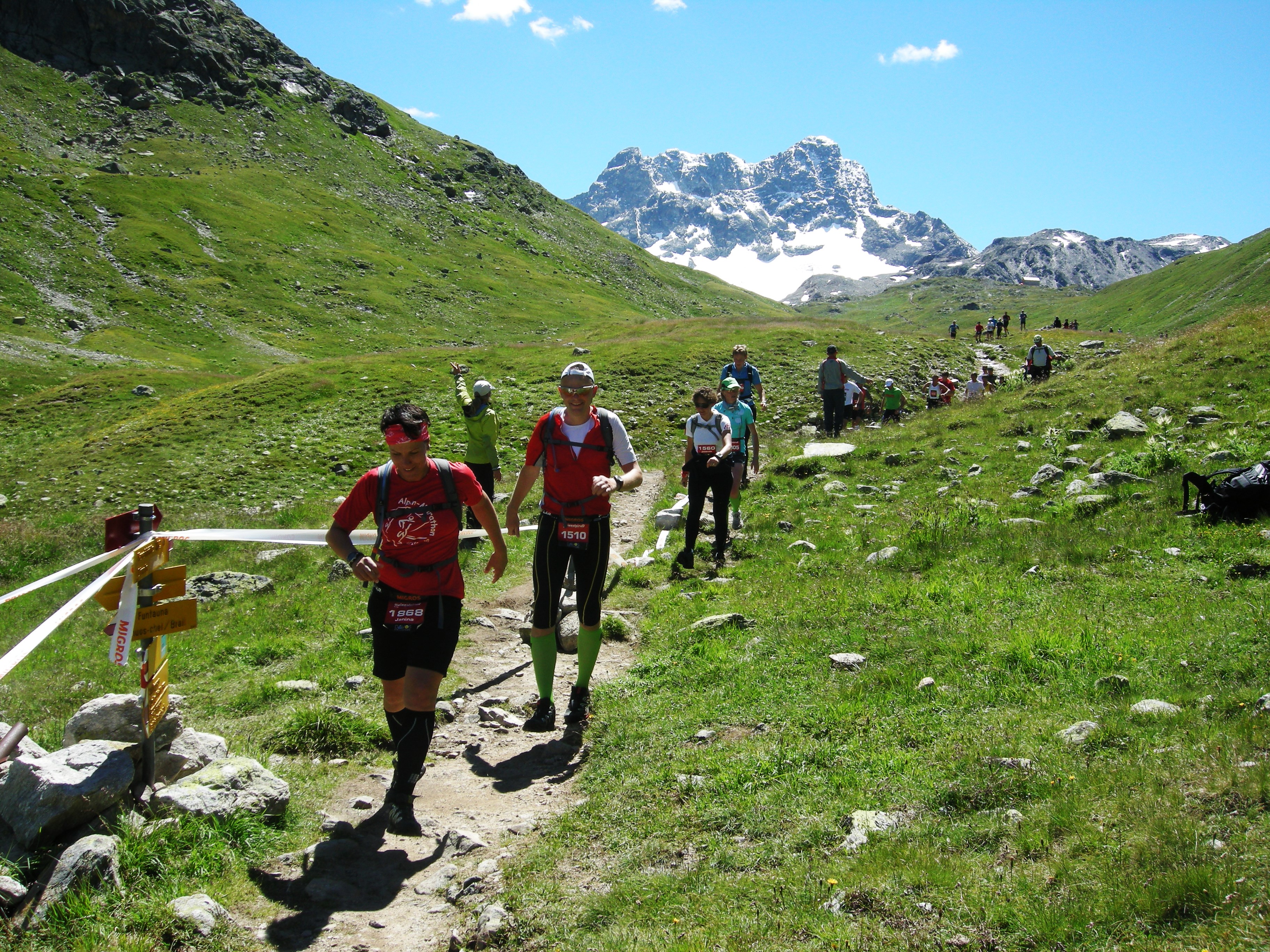
The next 11 kilometres took us along narrow field paths and mainly downhill. I still felt stressed by the 12-hour time limit but had begun to believe that I could succeed if I just kept going.
Calm down
Imagine the joy as I passed the 75-kilometre signpost which was rapidly followed by a tarmac road. The pleasure was brief, however. After a few hundred metres, we turned off down a forest path again, which continued uphill and downhill. Because it wasn’t quite so light anymore you had to use valuable resources to orient yourself.
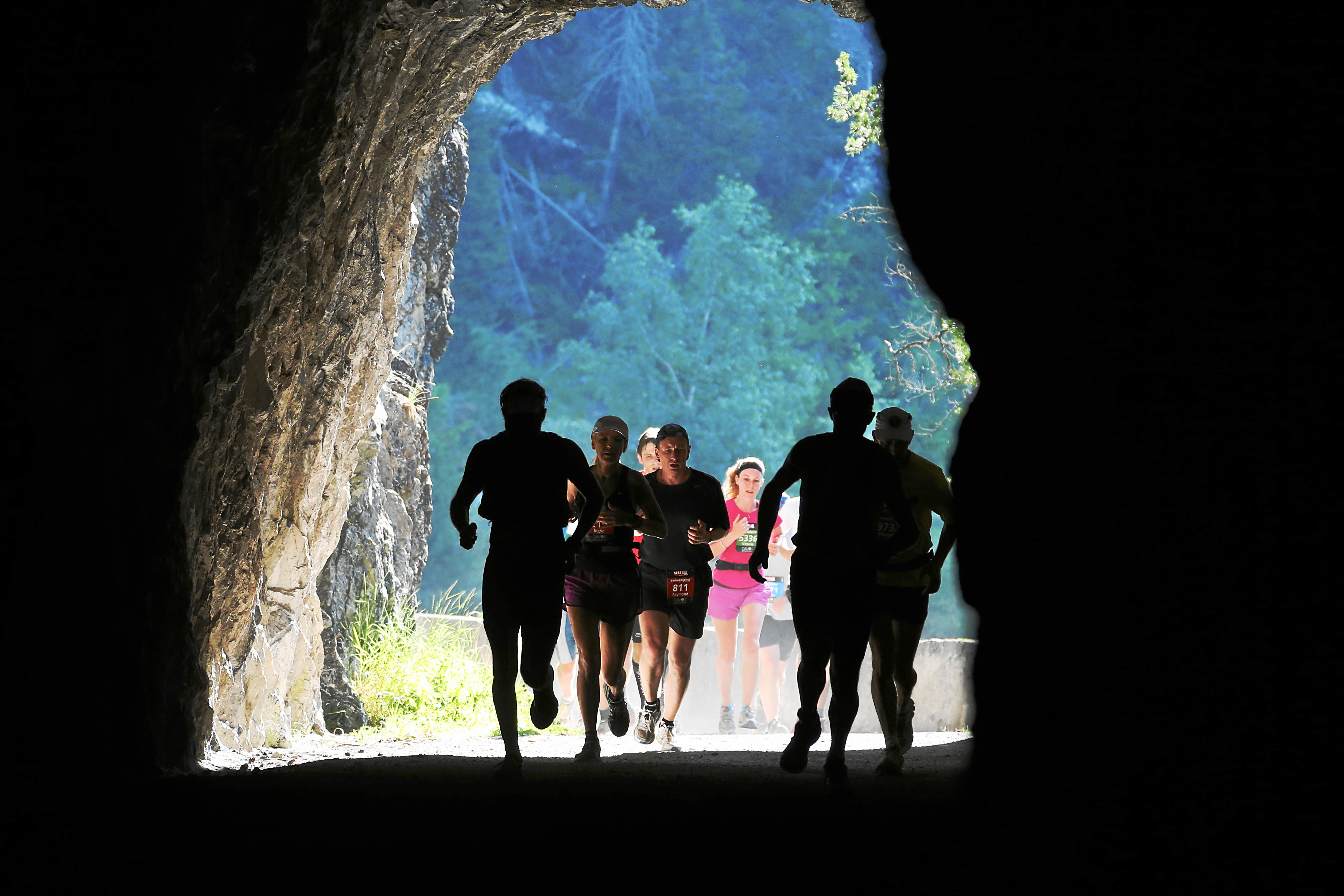
When I left the forest path, there was just over a kilometre left but it was all tarmac. I was now able to hear the loudspeakers at the finish and met spectators along the road, who welcomed me with cheering. I was very touched by the situation. It was now clear to me that I would cross the line within the time limit, and the cheering gave me goose bumps. I think I had tears in my eyes all throughout the final kilometre. I kept on running and saying out aloud: “I did it, dammit. I did it, dammit.”
A fantastic feeling
About a hundred metres before the entrance to the stadium stood a Dane with a Danish flag rooting for me. “Somebody’s been waiting for you for a long time,” he said and gave me his flag. I now ran the last 250 metres into the stadium with the Danish flag in my right hand, giving high-five to the kids standing in the inner circle reaching out their hands to me. It was very moving.
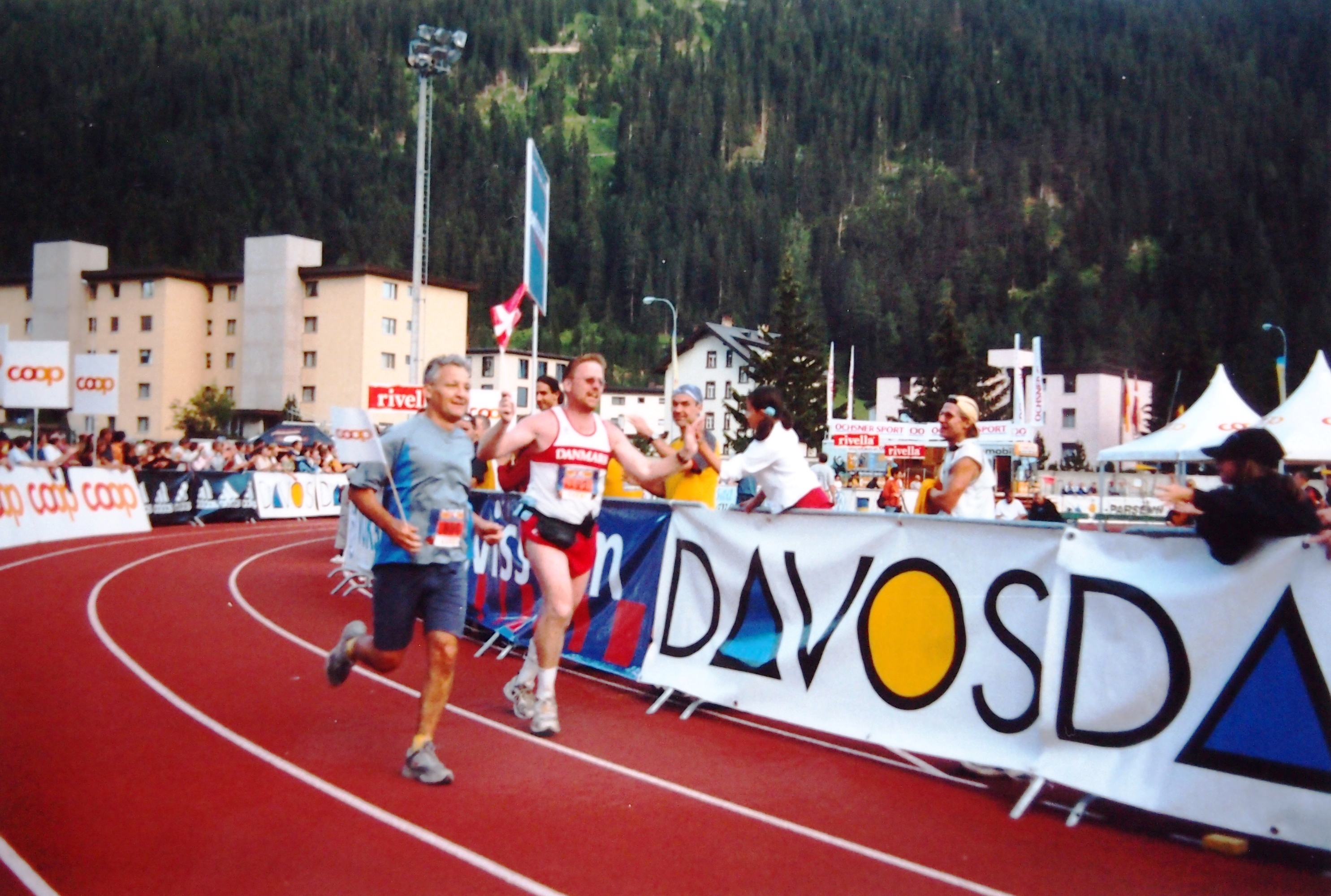
I crossed the line with a time of 11:49, that is to say just 11 minutes before the deadline. Here I was met by Steffen and Emil, who were taking photos and video of me.
Experience of a lifetime
It was indescribable to finish this race, something I had failed to do the year before and which had been an ordeal. Although the run had pushed me to the extreme, it had also been a tremendous experience. It is almost impossible to describe the experiences I had been through and the vistas I had seen. Here there were impressive mountain ranges, ski lifts, streams and rivers, cows with bells around their necks and much more. It is naturally difficult to say which of my running experiences have been the most extreme, but this certainly belonged to the toughest of them all – if not the toughest.
The missing medal
I received a smashing “finisher” T-shirt but no medal. The 78-kilometre runners got a T-shirt while all the other distances got medals. I was rather disappointed by this, although I did later manage to secure a marathon medal, which for me has become the symbol of this fantastic run.
Totally shattered
Getting back to the hotel took a long time. Having to use my legs again that day was almost inhuman. But there was no way round it. The plan was that we would later walk to the ice rink to attend the presentation ceremony. As it turned out I simply didn’t have the energy.
A bath about which nothing should be written
Back in the room, I lay on the bed with a beer and had no energy to do anything but lie down. But I had to take a bath and apply cream to my chafed thighs and armpits, which were hurting like mad. Emil filled the bath and helped me into it because I could barely move my arms and legs. It wasn’t a very thorough bath because I was so thoroughly worn out. I managed to do what I had to, but as I got up and pulled out the plug I felt really awful and was sick into the bathwater. Steffen came and helped me up whilst Emil stood there crying. But I managed to dry myself off, after which the boys help me to bed where I immediately fell asleep.
A restless night
I had a very unrestful night. I dreamt a lot, woke up several times and talked a lot in my sleep. In fact, I talked so much in my sleep that I could remember some of what I said, and there were many swear words.
Once-in-a-lifetime
I got up at eight in the morning, and the boys woke up shortly afterwards. We packed and had breakfast at the hotel. We left just after 10 a.m., and I said to the receptionist that we wouldn’t be back next year because this had been a “once-in-a-lifetime” experience.
Detour for a restaurant that was closed
Steffen wanted to eat at a special Indian restaurant in Luxembourg we had visited in 2001, so we set off for the principality, where we arrived around 5.30 p.m. It was chucking it down with rain at the time, and as we drove past the hotel where we had spent the night in 2001, we decided to stay the night there rather than find a campsite, put up a tent and pack it again in a wet state on Monday morning.
We got a double room where all three of us were to sleep in the same bed. There was not an awful lot of space, but that was okay.
Having found our room and taken a shower, we went out to eat at the Indian restaurant. But as fate would have it, it was closed on Sundays. However, we found another perfectly good restaurant where we had a good meal before returning to our hotel and our shared double bed.
A quiet night
I had spent a restless night last night in Davos, but in Luxembourg I got my beauty sleep and did not wake up until the morning.
The final stretch
Monday morning, we got ready for the final stretch home. The journey was problem-free although Steffen a couple of times did have to adjust the temporary mirror I had taped onto the right side of the car.
We had passed through Germany by late afternoon and arrived at the ferry terminal in Puttgarden. We weren’t able to sail until 5.15 p.m., but had no trouble passing the time. The sailing takes three quarters of an hour, so we did a bit of shopping and before we knew it we had arrived in Rødby. We filled up with petrol otherwise we would not have made it all the way home.
The last part of the journey, through Denmark, went without a hitch, and we were home by eight. We had had a wonderful trip, but were glad to be back. We had driven 3,940 kilometres in a week. And the three of us had shared yet another once-in-a-lifetime experience.
Buy the book here.
